8 Native Plants That Turn Your Quiet Connecticut Garden Into A Pollinator Paradise
Somewhere between the perfect lawn and the Pinterest-worthy flower bed, the bees simply vanished. You probably noticed the quiet before you noticed the reason.
A backyard that looks immaculate from the kitchen window can be utterly barren to a foraging bumblebee. A desert with flowers.
Walk through it slowly, really slowly, and ask yourself: what here actually feeds something? What if your garden has nothing left to offer?
Conventional landscaping often favors curb appeal over ecological value, and pollinators are quietly paying the price. Your ornamental blooms catch compliments but rarely catch bees.
Your trimmed grass looks tidy but offers nothing to a creature running on empty. Native plants flip that equation entirely. They are rooted in the same Connecticut soil. Shaped by the same seasons.
They speak a language that local bees, butterflies, and hoverflies have understood for centuries. Across Connecticut, your garden could hum again.
1. Wild Bergamot / Bee Balm
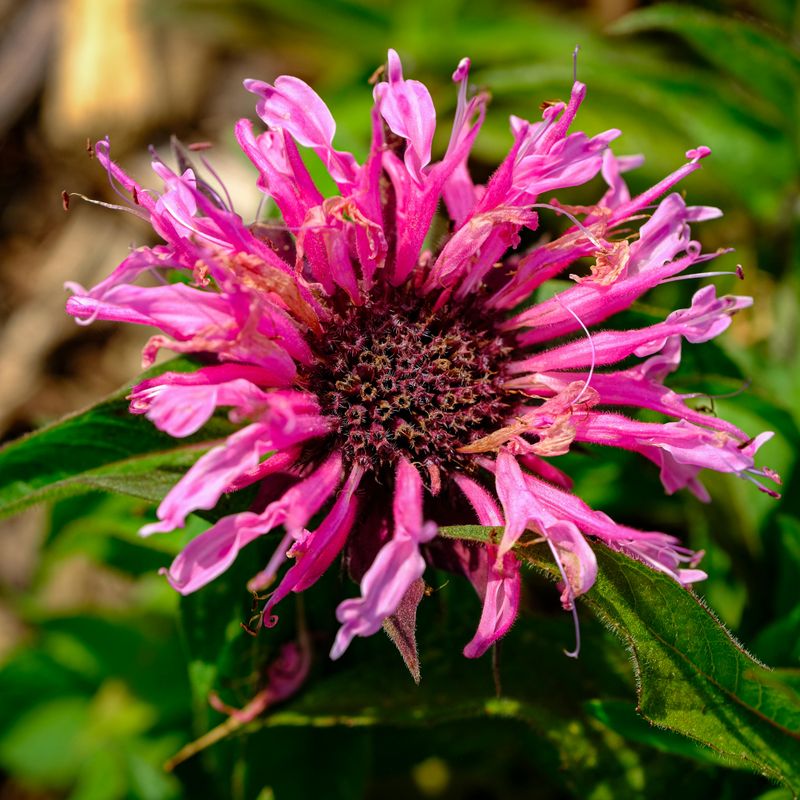
Picture a plant so irresistible to bees that it practically has a waiting list. Wild Bergamot, also called Bee Balm, earns that nickname every single summer.
This native perennial bursts into lavender-pink blooms from July through September. Those ragged, spidery flowers are absolute magnets for bumblebees, honeybees, and native sweat bees.
Growing two to four feet tall, it fits perfectly in a sunny border or meadow garden. It spreads steadily and can become quite vigorous in ideal conditions, so divide clumps regularly to keep it where you want it.
Wild Bergamot belongs to the mint family, and its leaves smell wonderfully herbal when brushed.
Deer tend to pass it by, likely due to its strong herbal scent, which is a quiet bonus for suburban gardeners. Plant it and your garden will hum beautifully well into the final warm days of the season.
This plant supports specialist bees, meaning bees that can only feed on certain flowers. That makes it irreplaceable in a pollinator-friendly landscape. Divide clumps every few years to keep the plant vigorous.
Share the extras with neighbors and spread the pollinator love down the street. If your garden feels quiet in midsummer, Wild Bergamot is the loudest fix you can find at a nursery.
When buying, look for native varieties such as var. fistulosa or var. mollis, and avoid the rubra cultivar, which is non-native and has naturalized in Connecticut. Plant it once and your yard will never be silent again.
2. Eastern Purple Coneflower
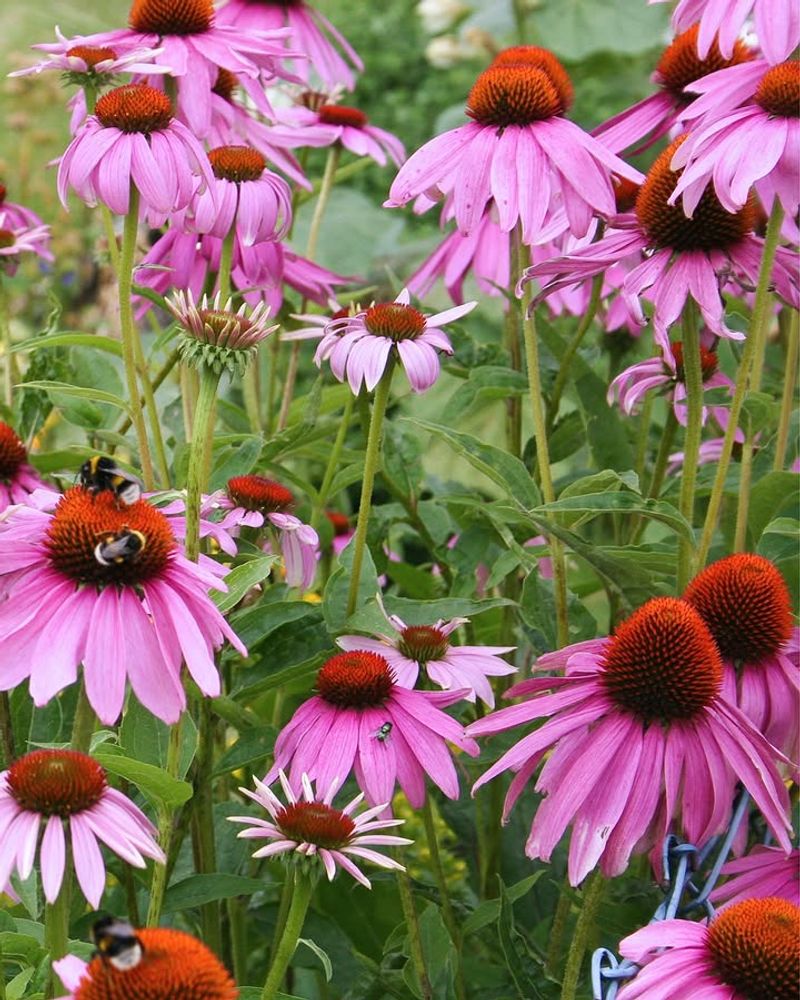
Few flowers stop people in their tracks the way Eastern Purple Coneflower does. That bold, spiky orange cone surrounded by swept-back purple petals looks like a tiny sunhat on a windy day.
Bees absolutely love this plant from midsummer well into fall. Bumblebees especially linger on the cone, working it like a puzzle they cannot stop solving.
Echinacea purpurea grows two to five feet tall in full sun. It handles drought surprisingly well once its roots get established in the ground.
Beyond bees, goldfinches flock to the dried seed heads in late fall. Leaving those cones standing through winter feeds birds and adds sculptural beauty to a frost-covered garden.
Your Connecticut Garden Changes Every Week. Your Plan Should Too.
Gardening in Connecticut changes quickly throughout the season. Every Friday you’ll receive a simple weekly plan showing exactly what to plant, prune, fertilize, harvest, and protect so you never miss the right timing.
This coneflower thrives in average, even poor soil. Rich soil actually makes it flop and sprawl, so skip the heavy fertilizer with this one.
It self-seeds freely, meaning your patch will slowly expand on its own schedule. Thin seedlings in spring if the colony gets too crowded for your space.
One of the most recognized native plants in American gardens, it is widely available at nurseries and garden centers. Look for straight species rather than heavily hybridized cultivars, which can produce reduced pollen compared to the original species.
Plant a small cluster of three or five for the best visual impact. Your garden will reward you with color, wildlife, and the satisfying hum of busy bees all summer long.
3. Bluestem Goldenrod
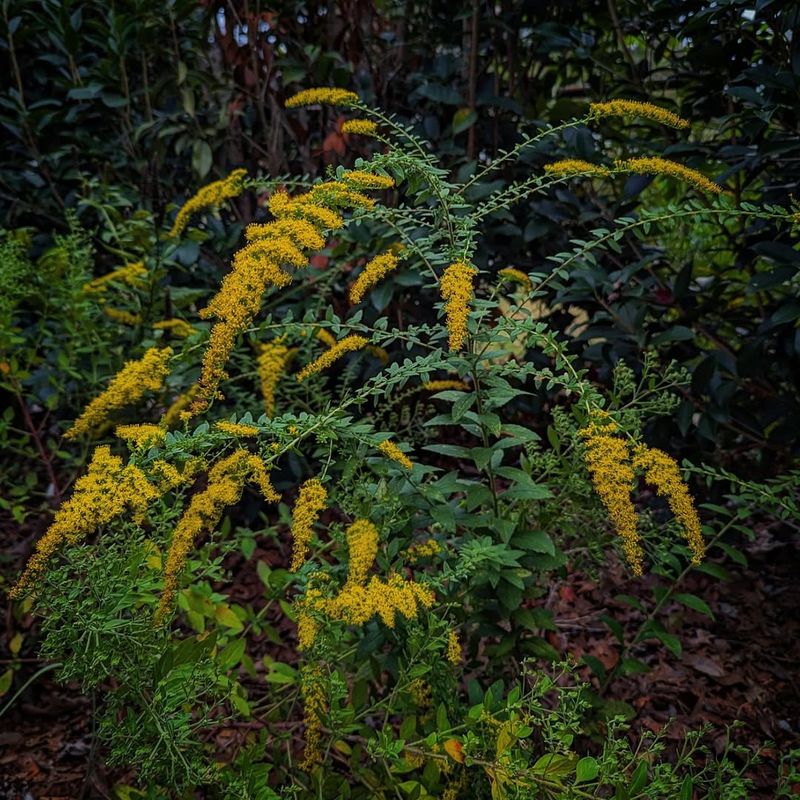
Goldenrod gets blamed for hay fever every fall, but here is the truth: ragweed is the real culprit. Goldenrod just happens to be blooming nearby and gets framed for the crime.
Bluestem Goldenrod, Solidago caesia, is one of the best goldenrods for a shaded or partly sunny spot. Most goldenrods demand full sun, but this one handles dappled light with ease.
Its arching stems are dotted with tiny yellow flower clusters from August through October. That late-season bloom is critical because most other flowers have already faded by then.
Bees need food sources in late summer and fall to build up winter reserves. Bluestem Goldenrod steps in exactly when the buffet elsewhere is closing down.
It grows two to three feet tall and spreads slowly by rhizomes. This makes it manageable compared to some of its more aggressive goldenrod relatives in the wild.
Pair it with New England Aster for a stunning purple-and-yellow autumn combination. That pairing is one of the most bee-friendly plant duos in any native garden.
Bluestem Goldenrod works beautifully along woodland edges or beneath deciduous trees. It fills in spaces where other sun-loving plants simply refuse to grow.
Among native plants that support pollinators in autumn, few are this dependable and this easy. Give it room to arch gracefully and your fall garden will hum with grateful bees until the first hard frost arrives.
4. New England Aster
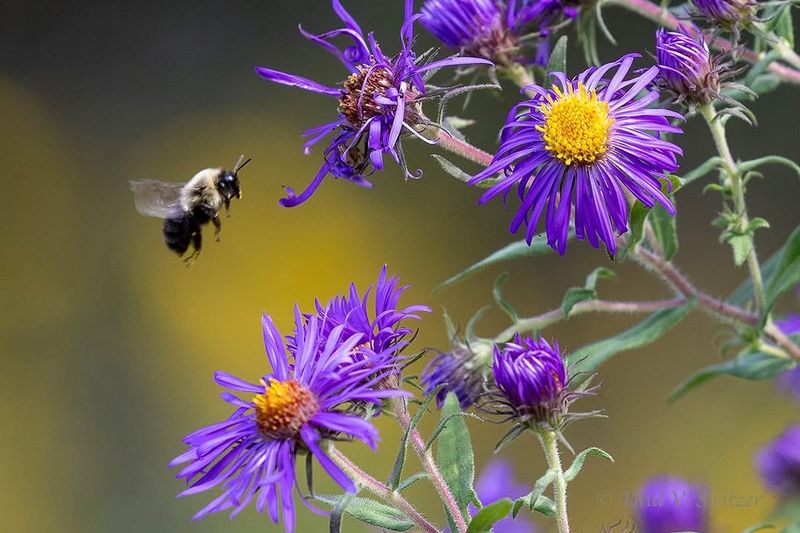
When everything else in the garden is calling it quits, New England Aster throws the season’s best finale. Deep purple flowers with golden centers burst open across the plant from late August through October.
Symphyotrichum novae-angliae is a tall, bushy perennial that can reach five feet in full sun. Pinch it back in early summer to keep it compact and prevent flopping.
Bees swarm this plant like it is the last food truck at a festival. Bumblebees, sweat bees, and mining bees all depend on it for late-season pollen and nectar.
Monarch butterflies also stop on New England Aster during their southward migration through Connecticut. Planting it means your yard becomes a fueling station on one of nature’s great journeys.
It prefers moist, rich soil but adapts to average Connecticut garden conditions without much fuss. Full sun produces the best flowering, though it tolerates light afternoon shade.
This aster self-seeds generously, so remove selectively if you want to control its spread. Or let it roam and create a naturalistic meadow feel across a larger area.
New England Aster is one of those native plants that earns its space by supporting dozens of insect species simultaneously. Beetles, flies, and wasps all visit alongside the bees.
If your Connecticut fall garden feels empty and colorless, this is likely the most impactful plant you can add. One established clump in full bloom will make you wonder why you waited so long to plant it.
5. Black-Eyed Susan
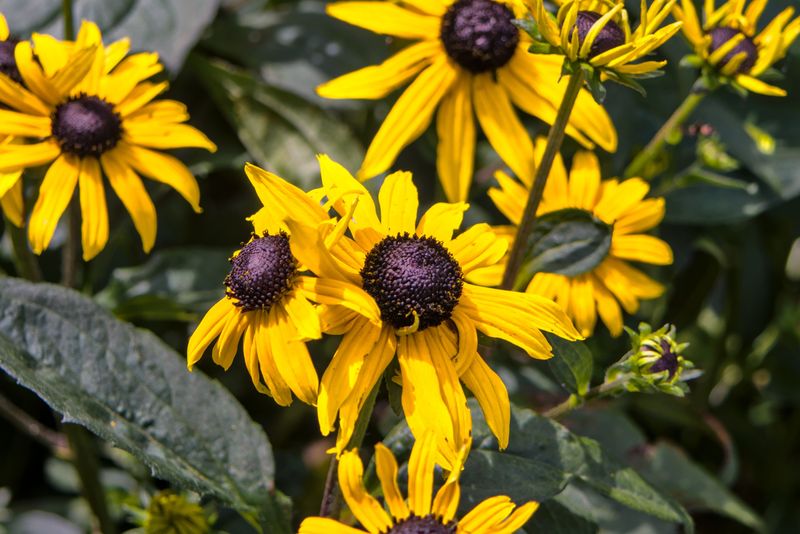
There is something cheerful and no-nonsense about Black-Eyed Susan. It blooms bright yellow with a dark chocolate center, and it does not apologize for being bold.
Rudbeckia hirta is a short-lived perennial or biennial that reseeds so reliably it feels permanent.
Plant it once and it tends to stick around for years on its own, self-seeding freely enough that you may want to thin it occasionally.
Bees love the flat, open flower head because pollen is easy to access. No complicated flower architecture, no hidden nectaries, just a wide-open landing pad covered in food.
It blooms from July through September, with timing varying slightly depending on your growing zone. That reliable season means bees can count on it across multiple months of the year.
Black-Eyed Susan thrives in poor, dry soil where fancier plants struggle and sulk. Roadsides, meadows, and rocky slopes are its natural home, which tells you a lot about its toughness.
It pairs well with Wild Bergamot and coneflower in a classic native plant trio. Together, those three plants cover almost the entire bee-foraging season from early summer to fall.
Goldfinches and other seed-eating birds raid the dried heads in winter. Skipping the fall cleanup lets your garden feed wildlife long after the last bloom fades away.
Among native plants for beginners, Black-Eyed Susan is the most forgiving and rewarding choice available. Plant it in a sunny spot, step back, and watch the bees find it within days.
6. Butterfly Weed
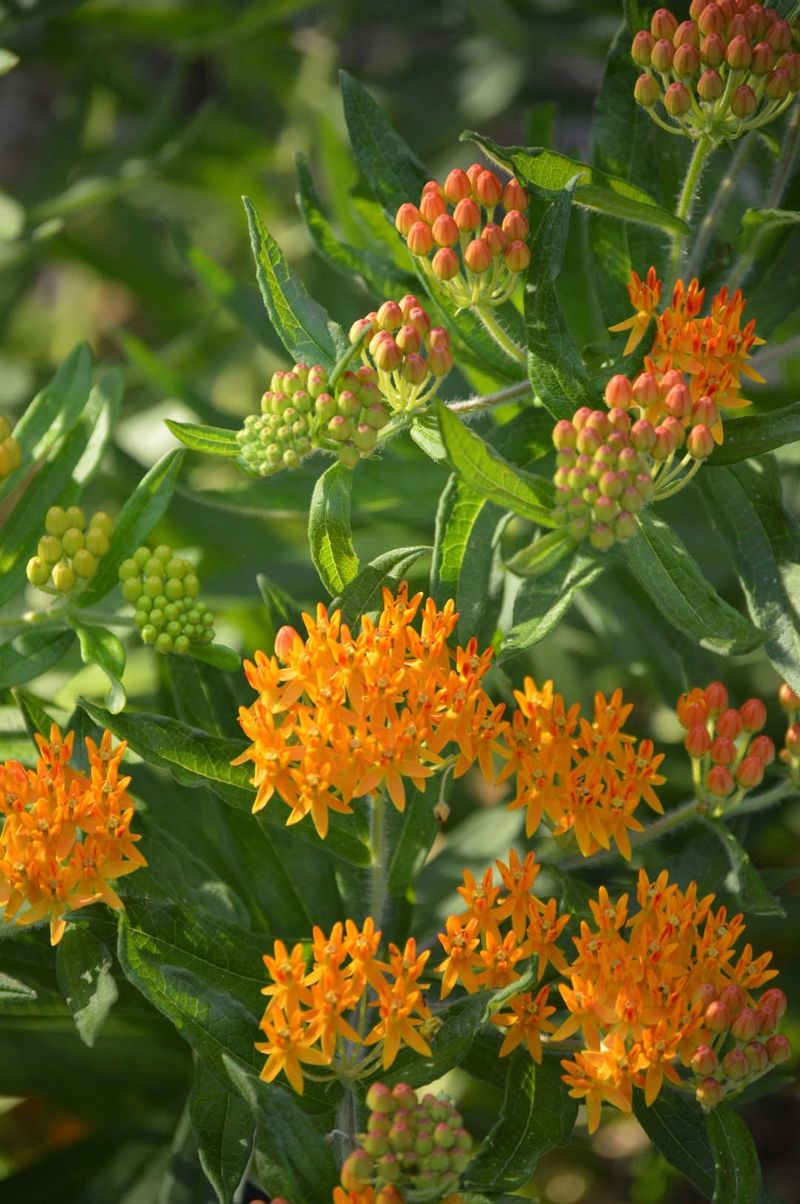
Butterfly Weed has one of the most misleading names in the plant world. There is nothing weedy about this stunning, compact native with its clusters of blazing orange flowers.
Asclepias tuberosa is a milkweed species, making it a valuable host plant for monarch butterflies and a reliable food source during their migration. Bees absolutely adore it too, especially bumblebees and native sweat bees.
It blooms from June through August in full sun, producing those vivid orange flower clusters. The color is so vivid it catches your eye from across the yard on a bright summer afternoon.
Unlike common milkweed, Butterfly Weed stays tidy and compact at one to two feet tall. It fits neatly into a formal border without taking over the surrounding space.
The deep taproot makes it drought-tolerant once established, but that same root means it strongly prefers to stay put once planted. Choose your spot carefully and plant it permanently from the start.
It is slow to emerge in spring, so mark its location to avoid accidentally digging it up. Patience pays off because established plants live for decades with almost no care needed.
Seedpods form after flowering and split open to release silky, windborne seeds in fall. Let a few seedpods mature and you will have free new plants appearing nearby next year.
As one of the most striking native plants available, Butterfly Weed earns every inch of garden space it occupies.
Its beauty, toughness, and ecological value make it one of the most rewarding additions to any pollinator garden.
7. Narrowleaf Mountain Mint
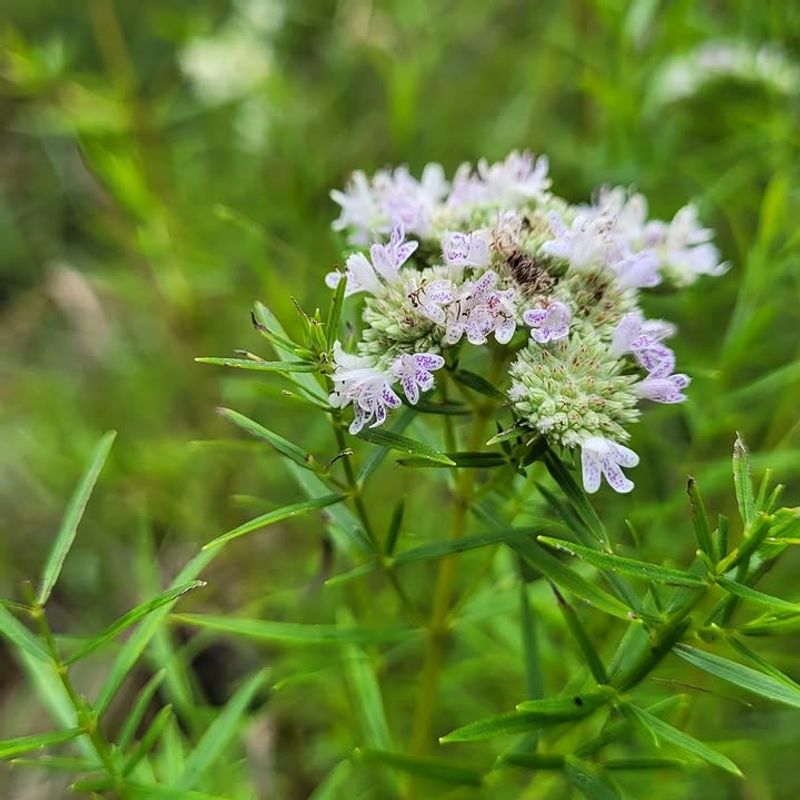
If you want to see more bee species in one afternoon than you ever thought possible, plant Narrowleaf Mountain Mint. This unassuming native is basically a bee convention in plant form.
Pycnanthemum tenuifolium produces small white flowers from July through September. Those tiny blooms may look modest, but they produce extraordinary amounts of nectar for their size.
Researchers have observed a remarkable range of bee species visiting mountain mint, making it one of the most biodiverse plants you can add to a garden.
That kind of biodiversity in your backyard is genuinely rare and worth celebrating out loud. The leaves smell intensely minty when crushed, which is part of its charm.
Brush against it while weeding and your whole garden suddenly smells like a fresh breeze. It grows two to three feet tall in full to part sun and average soil.
Once established, it spreads by rhizomes and can become vigorous over time, so divide it every few years to keep it contained. The payoff is a dense, weed-suppressing colony that earns its space.
Narrowleaf Mountain Mint is tougher than it looks, handling both dry spells and wet feet. That flexibility makes it useful in spots where drainage is inconsistent or unpredictable.
Wasps, beetles, and butterflies also visit alongside the bees, making it a hub of insect activity. Your garden becomes a living ecosystem rather than just a collection of pretty flowers.
Among native plants known for attracting a wide variety of pollinators, mountain mint is consistently one of the most productive options available. Plant it where you can watch it daily, because the activity never gets old.
8. Joe Pye Weed
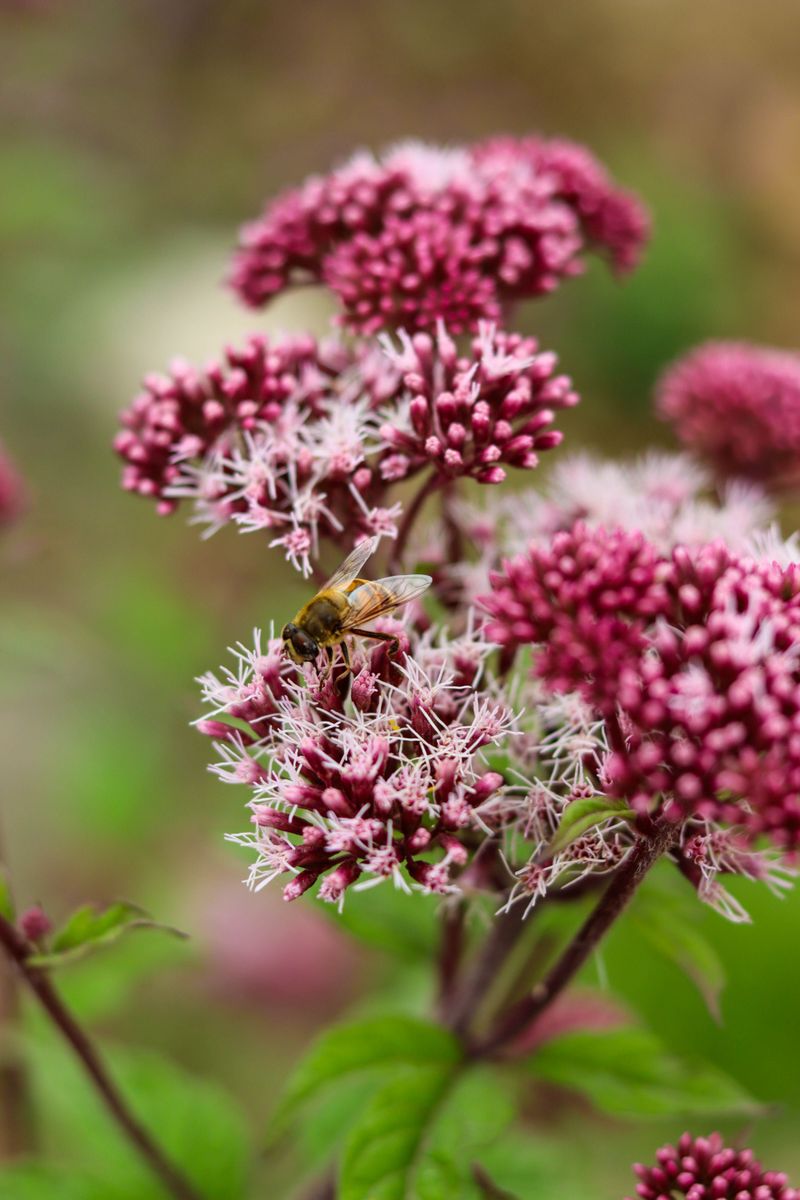
Joe Pye Weed is the gentle giant of the native plant world. It towers five to seven feet tall and produces massive domed flower heads in dusty mauve-pink every late summer.
Eutrochium purpureum blooms from late July through September, bridging the gap between summer and fall. That timing fills a critical window when many other native plants have already finished blooming.
Bumblebees are especially drawn to Joe Pye Weed, often crowding the flower heads in groups. Watch a mature plant on a warm Connecticut August morning and you will count dozens of foragers at once.
The sheer size of this plant makes it a bold structural choice for the back of a border. It creates a living wall of color and buzzing activity that smaller plants simply cannot match.
Joe Pye Weed prefers moist, rich soil and tolerates part shade better than many native plants. Rain gardens and low spots in the Connecticut yard are ideal locations for this moisture-loving beauty.
Its vanilla-scented flowers attract not just bees but also tiger swallowtails and other large butterflies. The fragrance is subtle and sweet, noticeable on still, warm afternoons near the plant.
One popular story traces the name to a traveling healer named Joe Pye, though the true origin remains debated among botanists and historians. Either way, the plant has a long, respected history in North American landscapes.
Among native plants that close out the Connecticut season with drama, few come close to what Joe Pye Weed delivers. Plant it and your garden will hum beautifully until the last warm day of the year.