November Is A Good Time To Check Georgia Peach Trees For These Overwintering Pests
One tiny female bark pest can give rise to thousands of crawling young in a single season. She does it while glued in place under a waxy shell smaller than a pinhead.
That shocks me every time I think about it. Your bare peach branches look calm in late fall, but plenty of hungry guests are tucked into the bark, the trunk base, and those shriveled leftover fruits.
Georgia growers have a real advantage in November. The leaves are dropping, the bark is easy to see, and most pests are sitting still instead of hiding behind foliage.
I believe a slow walk around each tree this month beats any rescue mission in May.
Knowing which signs to look for on those quiet gray limbs can help you spot trouble before it becomes a much bigger problem in spring.
1. Those Tiny Gray Bumps On Peach Bark Deserve A Closer Look
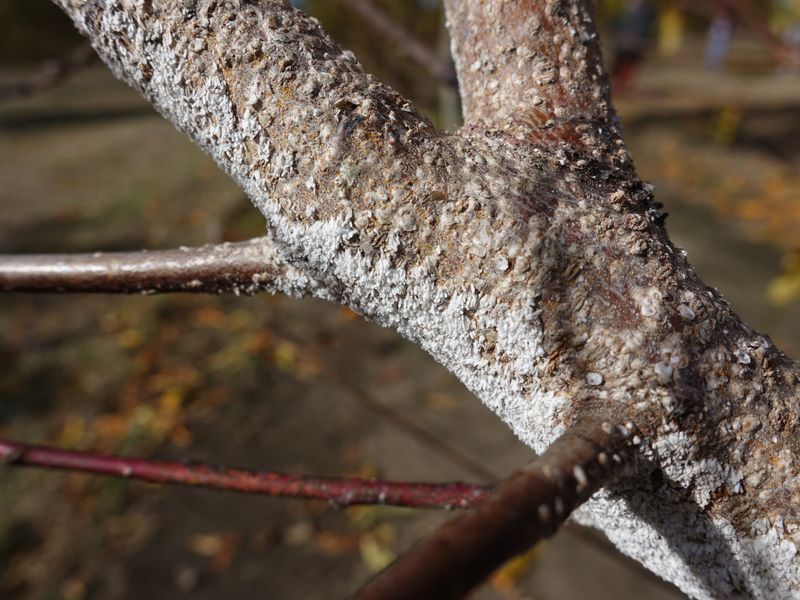
Grab a magnifying glass and a cup of coffee, because the biggest overwintering threat on many peach trees is easy to overlook. Scale insects look like tiny gray, white, or tan crusts stuck to the bark, almost like flecks of dried paint.
Two kinds cause most of the trouble in Georgia. San Jose scale forms small, round, gray covers with a raised dot in the center.
White peach scale builds white, fluffy-looking clusters, often packed thickly on the trunk and older limbs.
Each bump is a living insect feeding on sap through a thin mouthpart. A heavy crust weakens limbs, slows growth, and can make whole branches decline over a few seasons.
University of Georgia Extension specialists rank scale among the most important pests for peach growers in the state.
Here is a quick trick I like. Scratch a few bumps with your fingernail.
If you see a yellowish, slightly moist spot underneath, the scale is alive and active. Dry, flaky crusts that crumble usually mean older, inactive covers.
Check branch crotches, the shady side of the trunk, and spots under loose bark. Those protected corners are favorite gathering places, and finding them now gives you a head start on control.
2. Dormant Oil Sprays Smother Scale While Peach Trees Rest
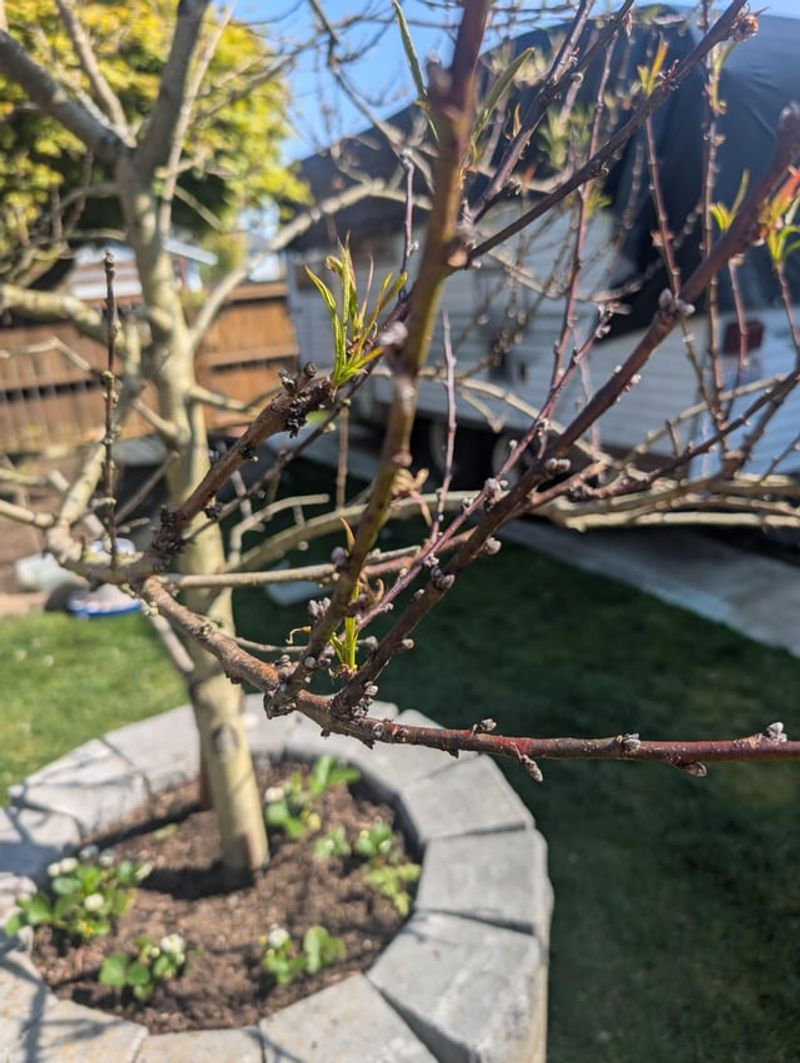
Once you know scale is present, the fix is surprisingly gentle. Horticultural oil coats the insects and blocks their breathing pores, so they suffocate under the film.
Timing matters a lot. UGA recommends applying oil after leaves have fallen, usually from late November through winter, before buds begin to swell.
Many Georgia growers aim for two applications per dormant season when scale pressure is heavy, with thorough coverage being the real secret.
Pick a calm day when temperatures sit between about 40 and 70 degrees. You want no freezing weather for at least 24 to 48 hours after spraying, and no rain in the forecast.
Oil applied right before a hard freeze can injure buds and bark.
Coverage is where most backyard sprays fall short. Soak every limb, the trunk, and the tops of branches until they look wet and shiny.
Any scale left dry survives to breed again in spring.
Always read the product label for mixing rates. Some labels suggest a stronger dormant rate for winter and a lighter rate later.
Skip oil on trees under drought stress, and give them a good drink a few days before you spray.
3. Gummy Sawdust At The Trunk Base Means Peach Tree Borers
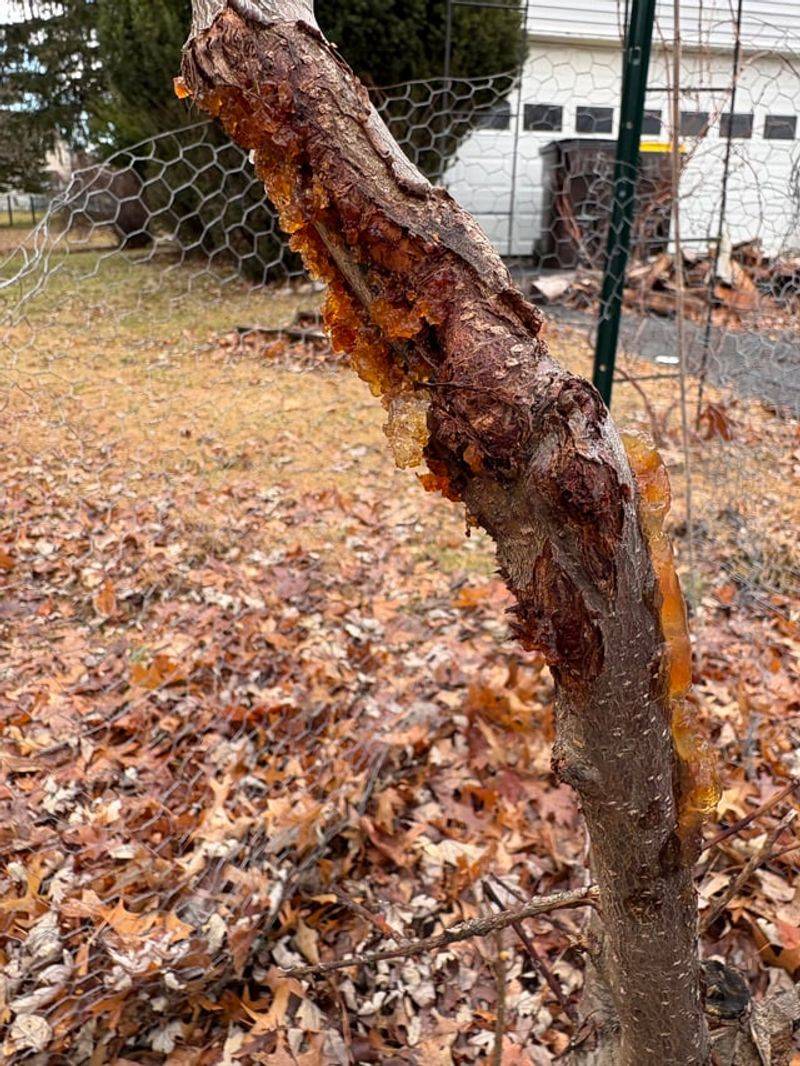
Kneel down at the foot of your peach tree and look right where the trunk meets the soil. Amber gum mixed with reddish-brown, sawdust-like crumbs is the calling card of the peachtree borer.
The adult is a clearwing moth that looks a lot like a wasp. Females lay eggs near the trunk base in late summer and fall.
The hatching larvae tunnel under the bark, and many spend the winter feeding there as creamy white caterpillars with brown heads.
A close cousin, the lesser peachtree borer, prefers wounds and cankers higher up on limbs and branch crotches. Its oozing spots appear around old pruning cuts, cold injury, or areas damaged by equipment.
Borer tunnels can girdle young trees and leave older ones weak and slow. In my experience, young trees in their first few years suffer the most because they have so little trunk to spare.
Pull back a few inches of soil and mulch to check for gum below the soil line. Mark any trees with fresh frass.
That simple map helps you focus treatment, careful digging, or extra attention next season.
4. Shriveled Peach Mummies Hide Brown Rot All Winter
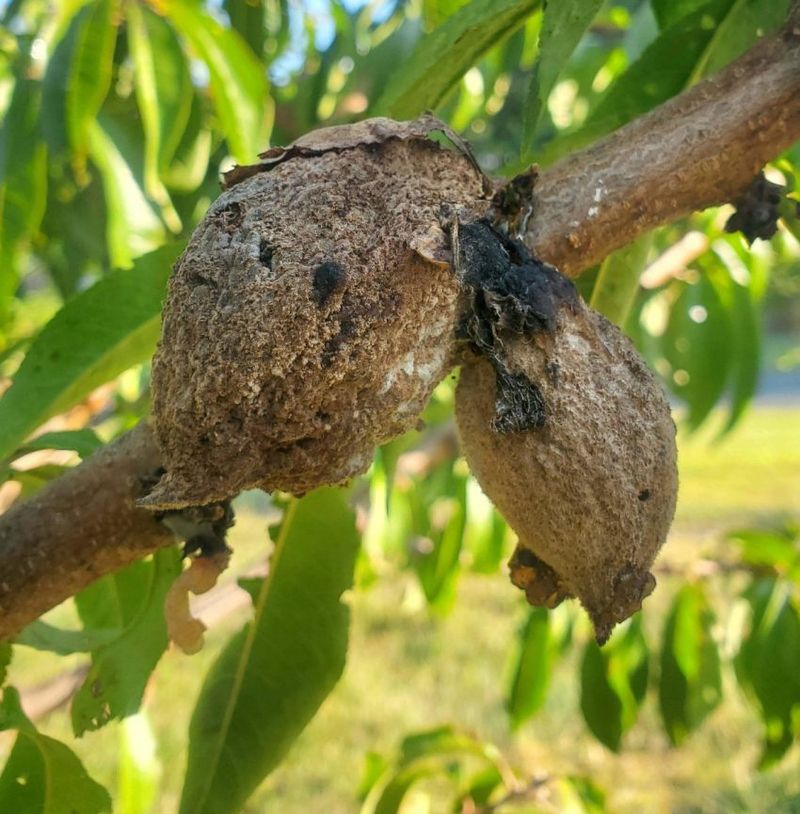
Those wrinkled, rock-hard peaches still dangling from the branches are not cute fall decorations. They are mummies, and they carry the brown rot fungus straight through winter.
Brown rot is one of the most damaging peach diseases in the Southeast. The fungus survives in mummified fruit on the tree, in old fruit on the ground, and in small sunken cankers on twigs.
When spring rains arrive, it releases spores that infect blossoms and, later, ripening fruit.
Honestly, I find these little shriveled leftovers easy to forget. They blend right in with bare twigs once the leaves fall.
November is a perfect time to spot them because nothing hides them anymore.
Pull every mummy off the branches by hand or with a pole tool. Look for small cankers around where old fruit hung, often showing a bit of gum.
Prune out those twigs too.
Bag the material and toss it in the trash rather than your compost pile. Home compost rarely heats up enough to stop the fungus.
A few minutes of picking now can noticeably cut disease pressure when blossoms open next spring.
5. Raking Under Peach Trees Clears Out Plum Curculio Hideouts
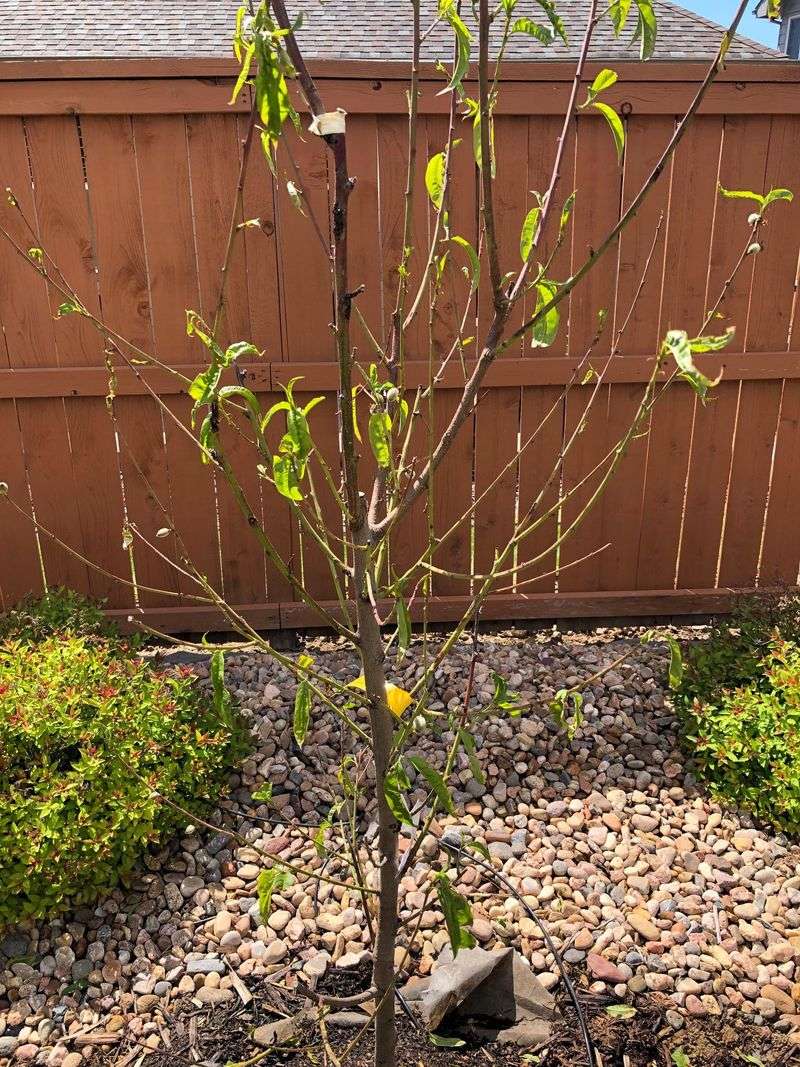
Some of the sneakiest pests skip the tree entirely and bunk down nearby. Adult plum curculios, small snout-nosed beetles, spend winter in leaf litter, hedgerows, and woody edges near orchards.
Plum curculio is a major peach pest across Georgia. In spring, females cut crescent-shaped scars in young fruit and lay eggs inside.
Infested peaches often drop early or end up with wormy flesh.
That is why a tidy orchard floor matters so much. Rake up fallen leaves, dropped fruit, and other debris under and around each tree.
Removing fallen fruit also cuts down on brown rot spores waiting in the soil.
I like doing this chore on a sunny afternoon, and it feels great to see clean ground under the canopy. Keep grass and weeds mowed short around trees, too.
Tall grass gives voles and insects cozy cover.
Do not pile the debris right next to the orchard. Bag it, burn it where local rules allow, or move it far away.
Woodland edges are hard to control, so focus on the area you can manage. A clean floor will not stop every beetle, but it makes your yard less welcoming.
6. Copper Sprays At Leaf Fall Help Head Off Peach Leaf Curl
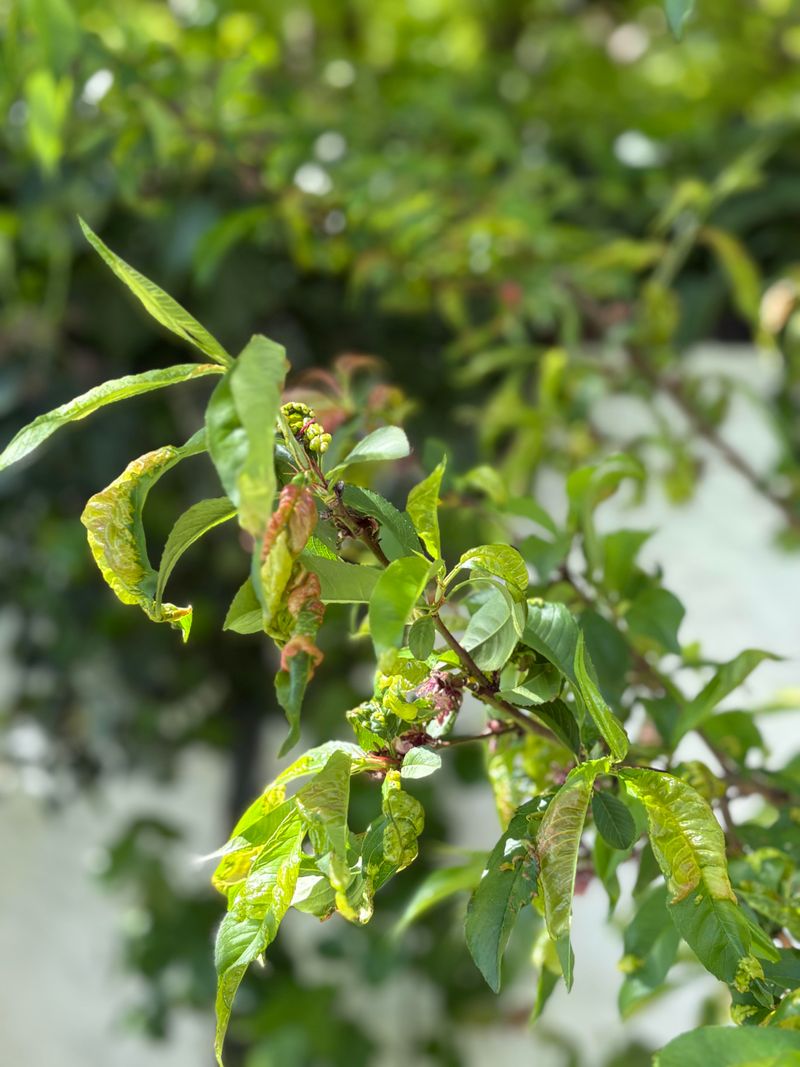
Insects get most of the attention, but a few disease troublemakers settle onto peach buds for winter too. Peach leaf curl and bacterial spot are two that Georgia growers know well.
Leaf curl spores rest on the bark and bud scales all winter. In cool, wet springs they infect unfolding leaves, which pucker, thicken, and turn reddish.
Once you see those twisted leaves, it is too late to spray for that year.
Bacterial spot bacteria overwinter in twig cankers and leaf scars. They cause tiny holes in leaves and pitted spots on fruit.
Varieties differ a lot in resistance, which is worth remembering when you plant new trees.
Extension guidance commonly suggests a copper spray around leaf fall to protect fresh leaf scars. A second dormant application before bud swell targets leaf curl.
Follow label rates closely, because too much copper can injure peach tissue.
Here is a fun fact. Peach leaf curl tends to be a bigger problem in north Georgia mountain counties, where springs stay cooler and wetter longer.
Down in the warmer middle and south, bacterial spot usually steals the spotlight instead.
7. Pruning Shears Can Wait Until Late Winter For Peaches
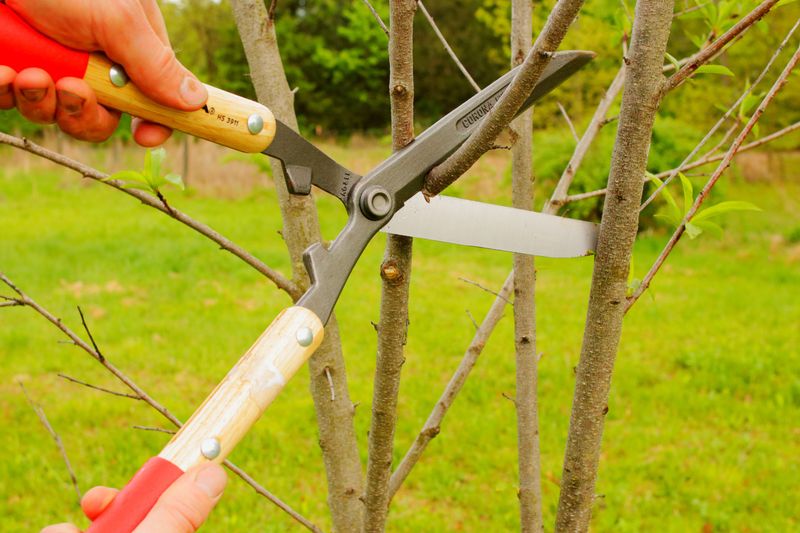
Plenty of advice online says November is prime pruning time for peaches. In Georgia, though, the experts at UGA suggest something different, and I think it is worth knowing why.
Peaches pruned too early in winter tend to be more prone to cold injury. Fresh cuts made in fall also give fungal canker diseases and lesser peachtree borers an easy entry point.
Most Georgia guidance recommends main pruning in late winter, often February through early March, closer to bloom.
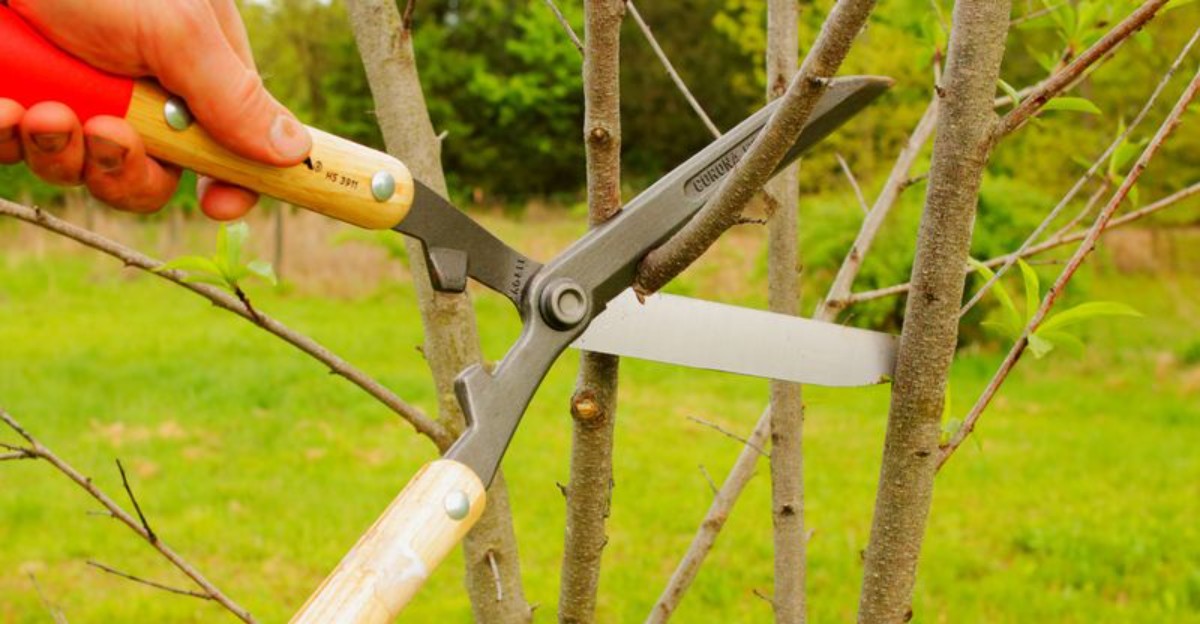
November still has a pruning role, just a small one. Snip out obviously broken branches, twigs with brown rot cankers, and limbs crusted heavily with scale.
Removing those now gets infected material out of the orchard before spring.
Make clean cuts just outside the branch collar. Disinfect your shears between trees if you are cutting diseased wood, using a household disinfectant according to the product instructions.
Save the shaping work for later. In late winter you will open the center of the tree into a vase shape.
That improves air flow and sunlight, which helps fruit color and keeps brown rot from lingering in damp, crowded branches.
8. A November Peach Orchard Walk Sets Up A Sweeter Summer
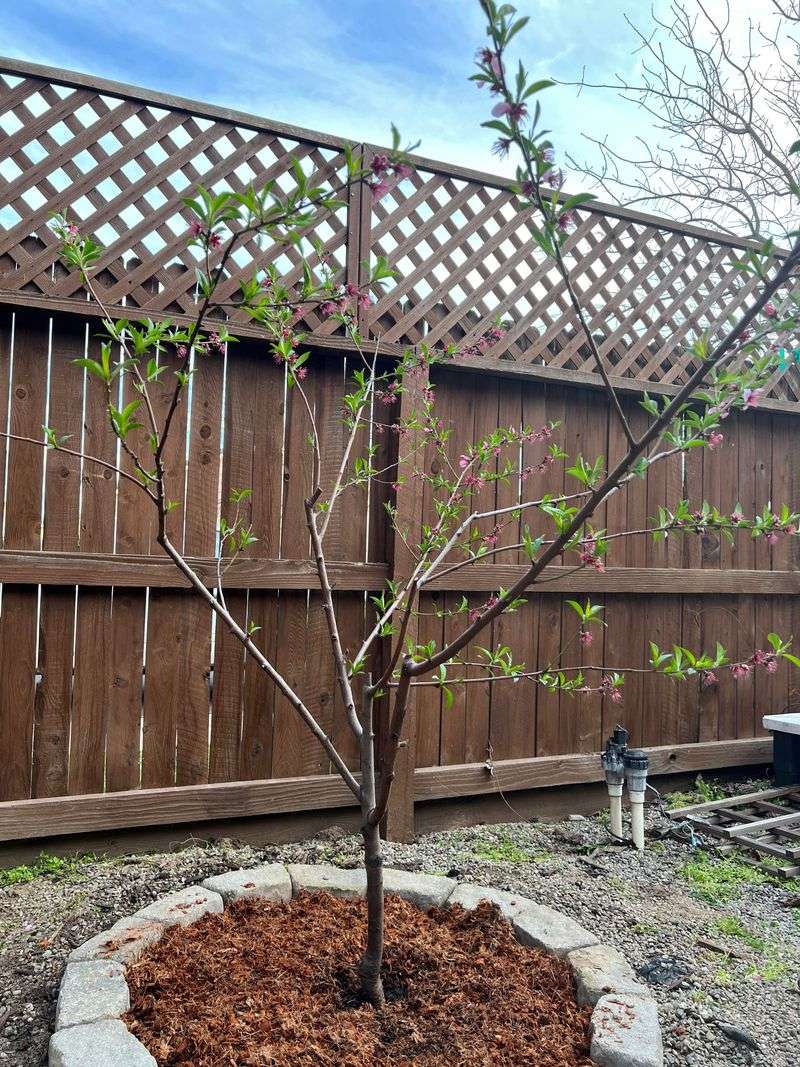
Here is my favorite part of the whole routine. A simple notebook and one slow walk can shape your entire peach season.
Visit each tree and jot down what you find. Note scale crusts, gummy trunk bases, mummies, cankers, and any odd spots.
Writing it down helps you plan oil sprays, copper timing, and which trees need extra attention.
Keep your tools ready, too. A pump sprayer, gloves, pruning shears, trash bags, and a rake handle most of the work.
Check that your oil and copper products have not expired and that labels list peaches.
Remember that healthy trees fight pests better. Watch for poor drainage, compacted soil, or grass crowding the trunk.
A soil test through your county UGA Extension office costs little and tells you exactly what nutrients your trees need before spring.
If you are unsure what you are seeing, snap clear photos and bring samples to your local Extension agent. They help home growers identify pests every day.
By taking a few hours this month, you trade winter guesswork for a real plan, and that usually shows up as juicier, cleaner peaches next summer.