The California Succulent That Blooms Only Once Every Several Years
For years, this California succulent can sit quietly in a yard looking almost unchanged. Then one season, something extraordinary happens.
A towering flower stalk begins rising from its center, eventually becoming so tall and dramatic that it can transform the entire landscape around it.
The event is rare enough that many homeowners never see their plant reach this stage, which makes the first signs especially exciting.
It is also the beginning of a major transition for the plant, not simply another round of flowers.
Once the stalk appears, growth shifts rapidly and the familiar rosette starts heading toward the final chapter of its life cycle.
That does not necessarily mean the garden loses the plant altogether, though. New growth may already be waiting nearby.
If a giant stalk has suddenly appeared in your yard, understanding what comes next can help you enjoy the spectacle and prepare for the changes that follow.
1. The Plant That Makes You Wait Years For Flowers
Patience is not something most of us are great at, but the agave has made it an art form. Most flowering plants bloom every single year without fail.
The agave does things very differently. It can spend 10, 20, or even 30 years just growing quietly before it ever produces a single flower.
During all those years, the plant is not being lazy. Far from it.
Every season, the agave is collecting sunlight, storing water in its thick fleshy leaves, and building up a massive reserve of energy deep inside its core. Think of it like a battery that takes decades to fully charge.
Native to dry, rocky regions across the southwestern United States and Mexico, agaves are built for tough conditions. California has several native species, including the Shaw’s agave and the coastal agave, both found in the southern and central parts of the region.
These plants do not need much water or rich soil to survive. They are remarkably self-sufficient.
Gardeners who plant agaves need to accept that the bloom may not come in their lifetime. Some people plant one as a gift for future generations.
That kind of long-term thinking is rare, but it speaks to just how special this plant really is. Waiting for an agave to bloom is one of the most rewarding experiences a plant lover can have.
2. One Giant Bloom Stalk Changes Everything
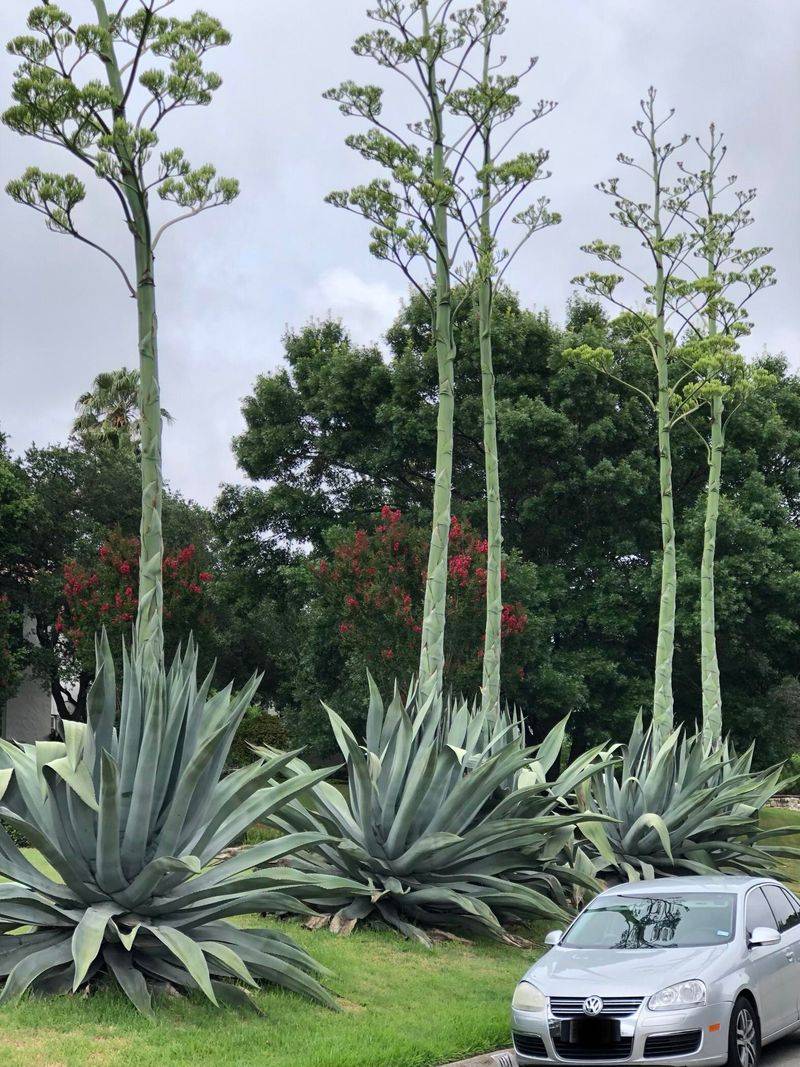
When the agave finally decides it is time, everything changes fast. Right from the very center of the plant, a thick green stalk begins to push upward with surprising speed.
At first it looks like a giant asparagus spear poking out from the middle of the rosette. Within just a few weeks, that stalk can shoot up to heights that genuinely shock first-time observers.
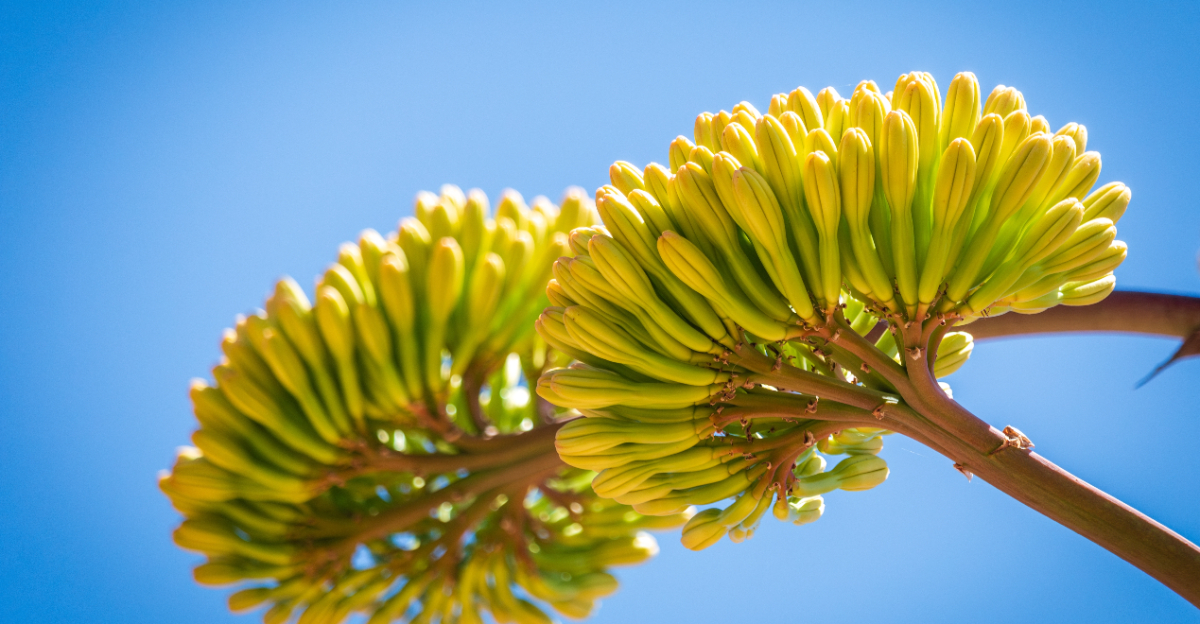
The stalk is not just tall. It is loaded with branches near the top, and each of those branches holds clusters of tubular yellow or greenish flowers.
The whole structure can weigh hundreds of pounds when fully grown. It is one of the most dramatic flowering events in the entire plant kingdom.
Your California Garden Changes Every Week. Your Plan Should Too.
Gardening in California changes quickly throughout the season. Every Friday you’ll receive a simple weekly plan showing exactly what to plant, prune, fertilize, harvest, and protect so you never miss the right timing.
Up close, the flowers smell faintly sweet and produce large amounts of nectar. That nectar draws in a wide variety of visitors including bats, bees, and birds.
The bloom stalk essentially becomes a busy feeding station for local wildlife for several weeks.
For people who have been watching a particular agave for years, the moment the stalk appears feels almost like a celebration. Neighbors come over to look.
Hikers stop to take photos. The agave, after years of quiet existence, suddenly becomes the most talked-about plant in the neighborhood.
One stalk truly does change everything around it.
3. Why The Flower Spike Seems To Appear Overnight
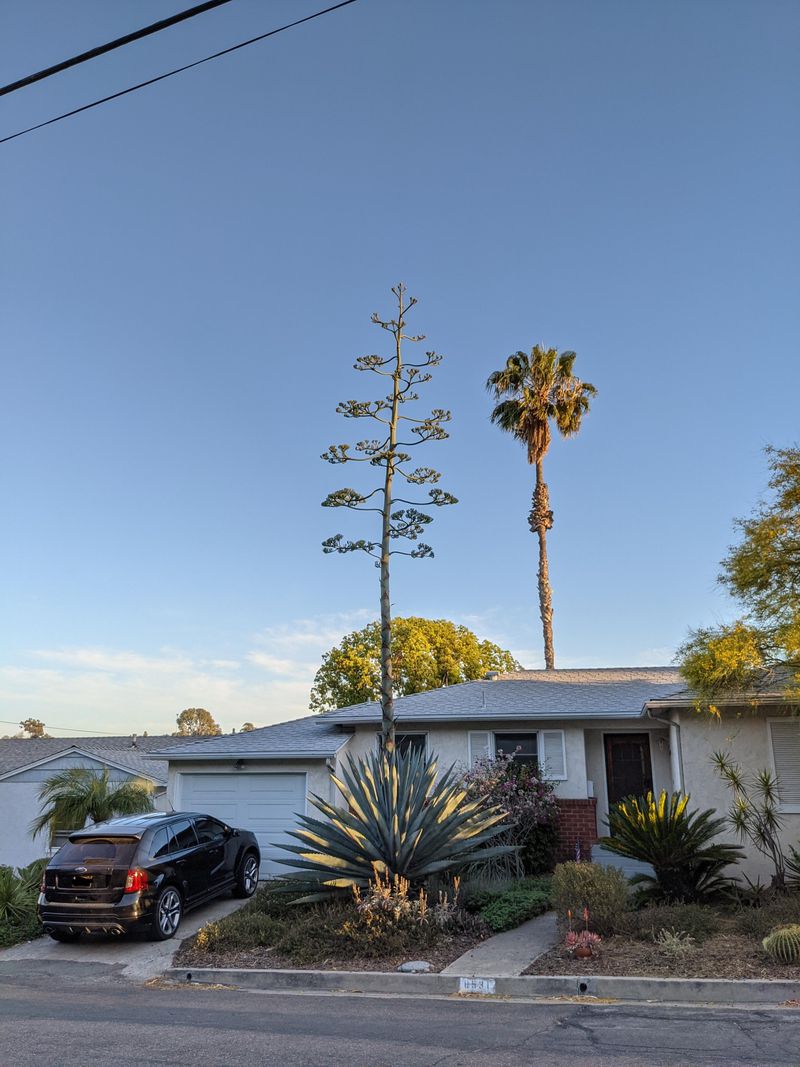
One of the most surprising things about the agave bloom is just how quickly it seems to happen. You can walk past a plant on Monday and notice nothing unusual.
By Friday, there is a stalk rising several feet into the air. It almost feels like a magic trick.
The science behind this rapid growth is fascinating. For years, the agave has been storing a special kind of sugar called fructans deep in its core.
When the plant finally triggers its bloom, it converts all of that stored sugar into energy and channels it directly into the growing stalk. The result is a growth rate that can reach several inches per day.
This burst of energy is entirely fueled by reserves built up over many years. The plant is essentially spending everything it has saved in one dramatic push.
No extra watering or fertilizing from you is needed. The agave handles the whole process on its own terms.
Gardeners who know what to look for can sometimes spot early signs that a bloom is coming. The very center of the plant, called the heart, may look slightly different or more tightly packed than usual.
But for most people, the stalk appears so suddenly that it genuinely feels like an overnight surprise. That element of surprise is a big part of what makes this event so exciting to witness.
4. Decades Of Growth Leading To One Big Show
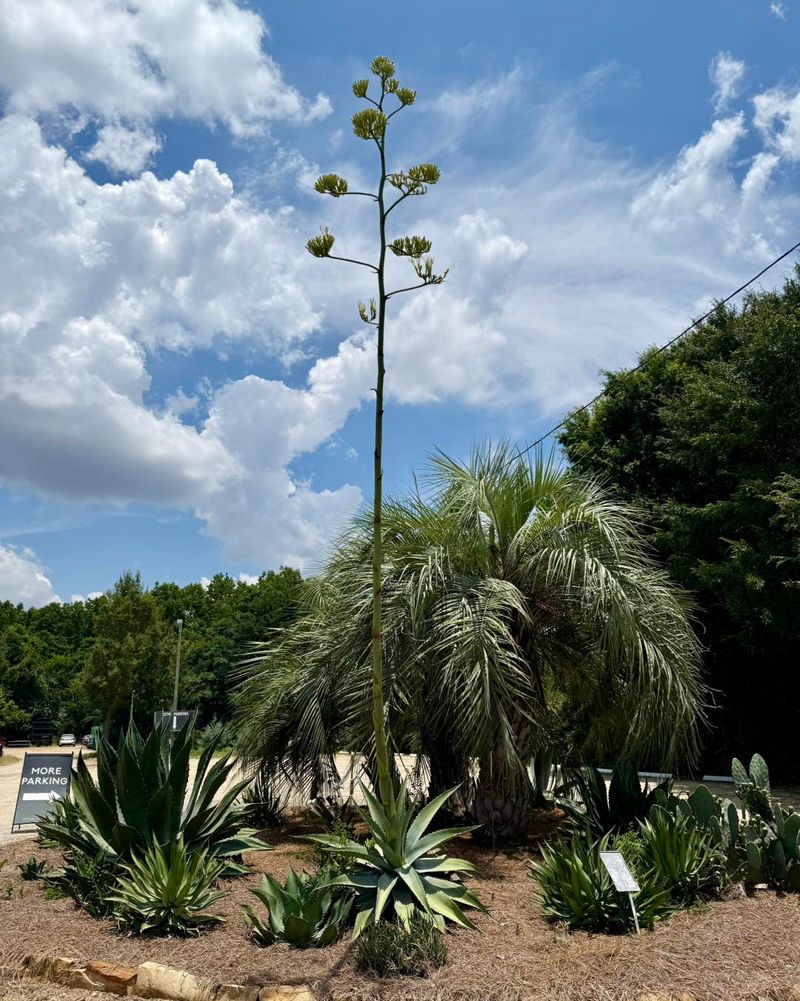
Every year that passes adds to the agave’s eventual performance. While other plants in the garden go through their annual cycles of growing and resting, the agave is playing a much longer game.
Each season, it adds a few new leaves to its rosette and quietly expands its root system deeper into the soil.
The number of years before blooming depends on the species and the growing conditions. In cooler or shadier spots, the wait can stretch to 30 years or more.
In hot, sunny locations with well-drained soil, some agaves bloom in as few as 10 years. Either way, the buildup is slow and steady.
There is something almost poetic about a plant that spends decades preparing for a single moment. It puts everything into that one grand performance, holding nothing back.
The bloom stalk is not just a flower. It is the culmination of an entire lifetime of quiet, steady work.
For plant enthusiasts, watching an agave grow over the years builds a real sense of connection. You notice when new leaves appear.
You watch the rosette get wider and fuller. By the time the bloom stalk finally shoots up, you feel like you have earned the right to celebrate alongside the plant.
Decades of patience lead to one unforgettable big show that makes every year of waiting worthwhile.
5. That Towering Stalk Can Reach Serious Heights
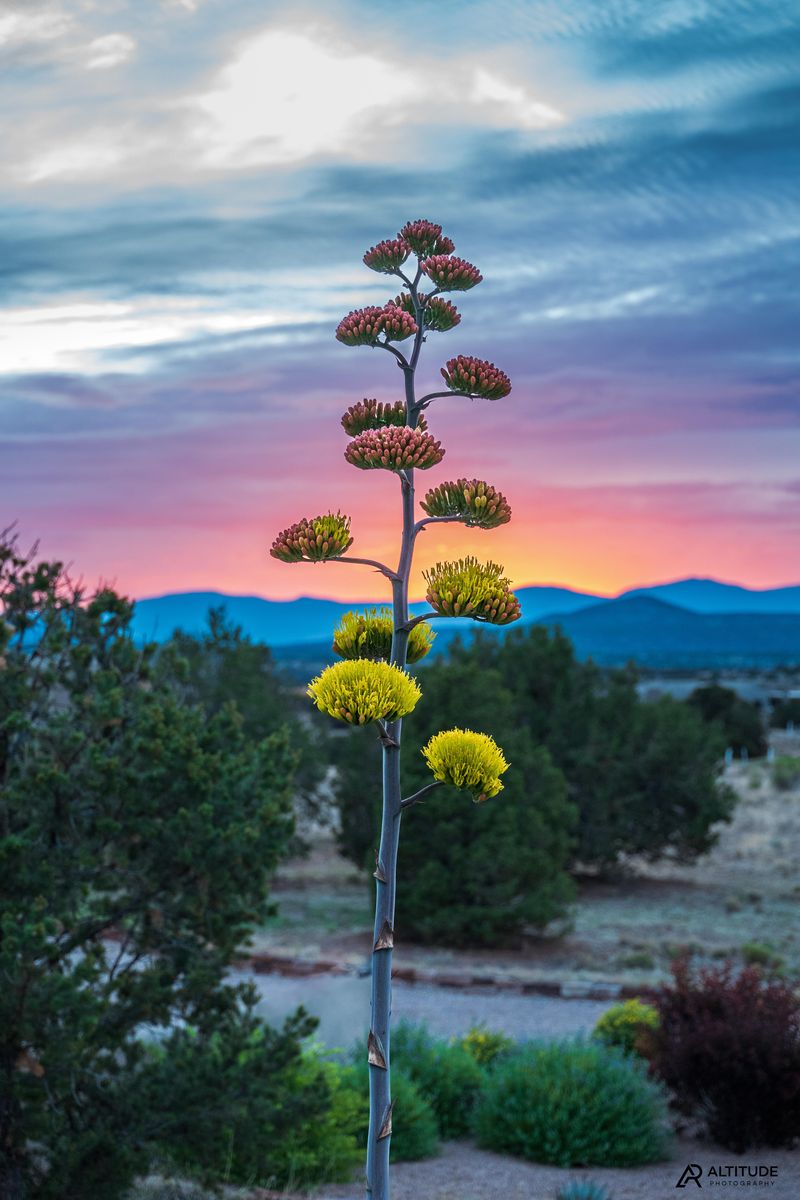
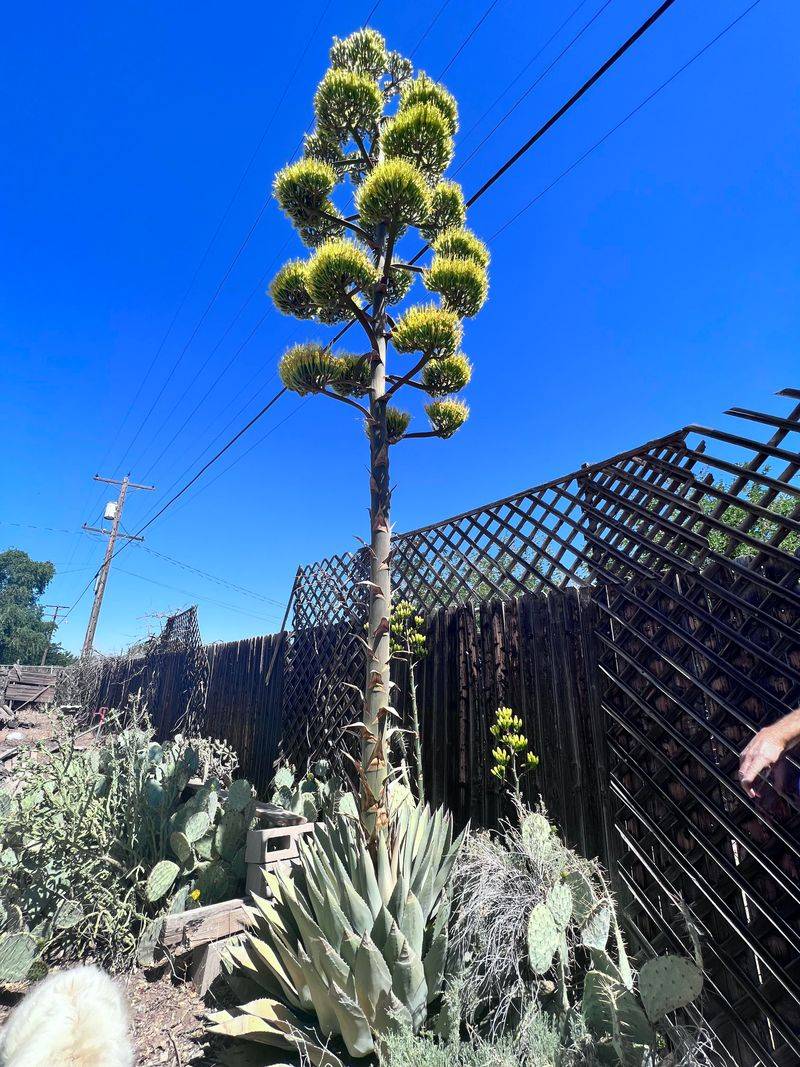
Few things in the plant world can match the sheer visual impact of a fully grown agave bloom stalk. Depending on the species, these stalks can reach anywhere from 15 to 30 feet tall.
Some exceptional specimens have been measured even higher than that. Standing next to one is a humbling experience.
The American agave, also known as Agave americana, is one of the tallest bloomers found in California. Its stalk is thick at the base and tapers slightly as it rises, branching out near the top into a dramatic candelabra shape loaded with flowers.
The whole structure looks almost prehistoric.
That height serves an important purpose. By lifting the flowers high above the surrounding vegetation, the plant makes them easier for pollinators to spot from a distance.
Bats flying at night, hummingbirds zipping through the brush, and large bees all benefit from having a clear flight path to the blooms.
For homeowners with agaves in their yards, the height of the bloom stalk can come as a genuine shock. Some people do not realize just how tall it will get until it starts growing.
Make sure the area around your agave has enough clearance so the stalk can rise freely without hitting fences, power lines, or roof overhangs. Planning ahead saves a lot of headaches later.
6. Why The Main Plant Fades After Blooming
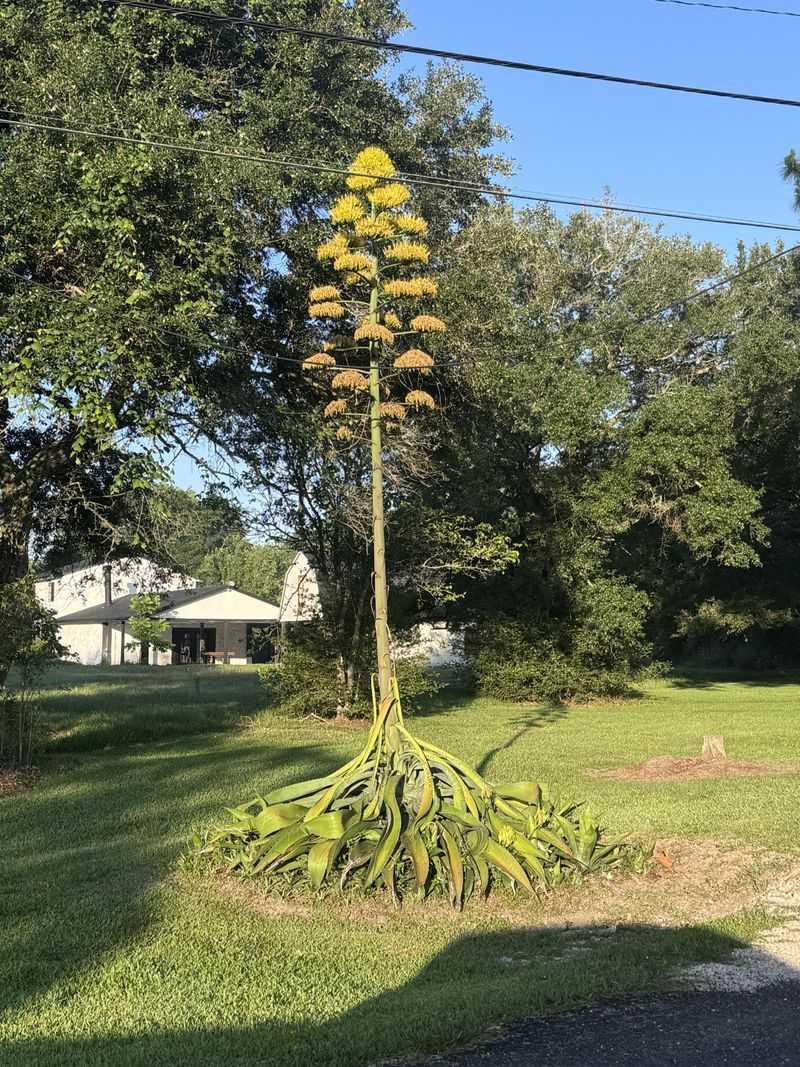
After all those years of waiting, the agave puts everything it has into that one bloom. And when the flowering is done, the main plant begins to fade.
This is completely normal, even though it can be a little sad to watch. The agave is what botanists call monocarpic, meaning it reproduces once and then its main body fades away.
The reason comes down to biology. The plant has used up its entire reserve of stored energy to produce the bloom stalk, the flowers, and the seeds.
There is simply nothing left to sustain the central rosette once that process is complete. The leaves slowly turn yellow, then brown, and the plant gradually shrinks back into the soil.
This is not a sign that you did anything wrong. No amount of extra water or care will reverse the process once the bloom is done.
The agave has completed its life cycle exactly as nature intended.
The fading process can take several months. During that time, the dried stalk and rosette actually provide habitat for small insects and birds.
Even in its final stages, the plant is giving something back to the ecosystem around it. Many gardeners choose to leave the dried structure standing for a while before removing it.
It adds a striking sculptural element to the garden even after the bloom has finished.
7. Baby Agaves Keeping The Story Going
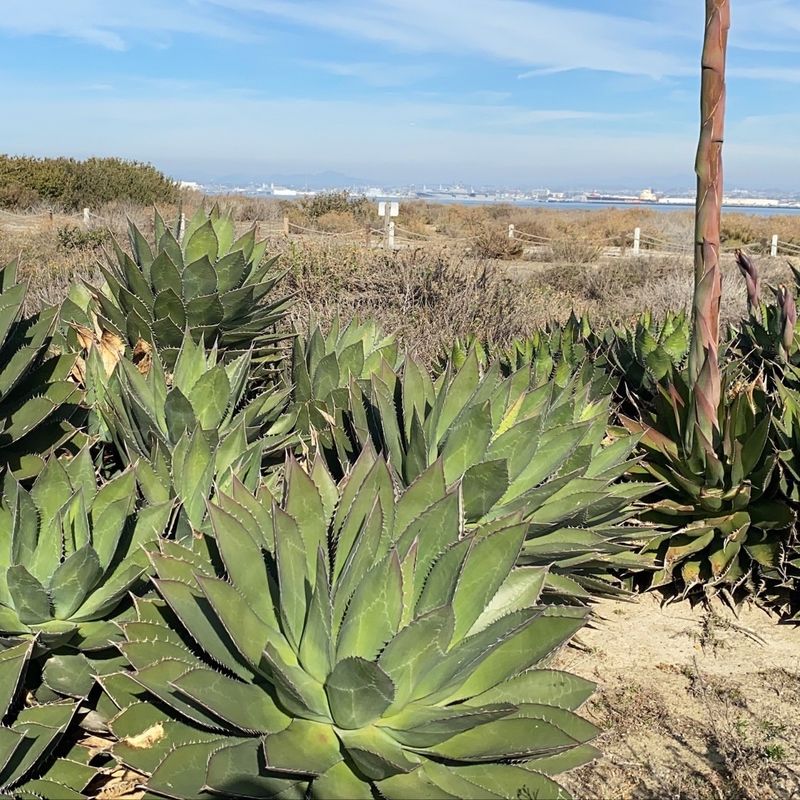
Here is the part of the story that makes everything feel less bittersweet. Before and during the bloom, most agave plants produce small offshoots called pups.
These baby plants grow right at the base of the parent plant, pushing up through the soil with their own tiny rosettes of spiky leaves. They are exact clones of the parent.
Pups can start appearing years before the parent plant ever blooms. By the time the main plant begins to fade, there may be a whole cluster of young agaves already established and ready to carry on.
The garden does not go bare. Instead, a new generation is already in place.
Gardeners can leave the pups right where they are to form a natural colony. Or they can carefully dig them up and transplant them to new spots in the yard.
Transplanting is best done in spring or early fall when temperatures are mild. Use a sharp, clean shovel to cut the pup free from the parent root system.
Each pup will eventually grow into a full-sized agave and repeat the whole cycle. Planting pups in different spots means you could have multiple agaves blooming at different times over the years.
It is a wonderful way to keep the story going across your entire landscape without ever needing to buy a new plant from the store.
8. Hummingbirds And Pollinators Finding The Flowers Fast
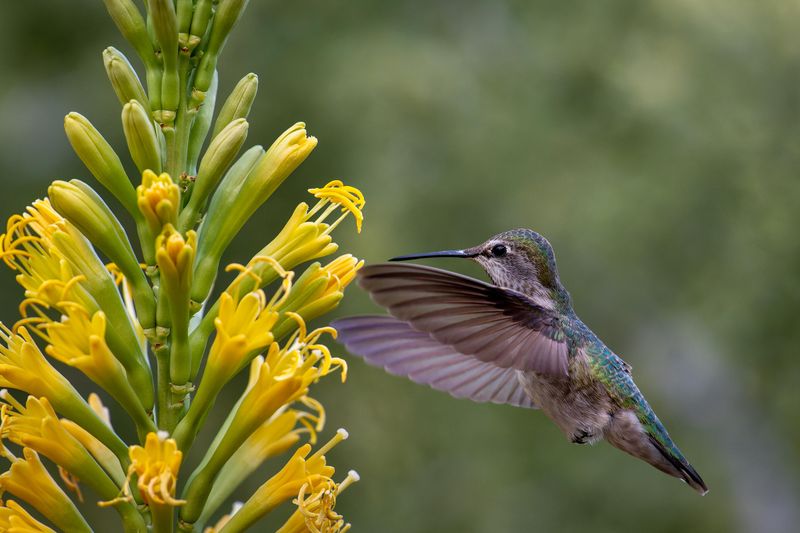
Word travels fast in the animal world when an agave decides to bloom. Within days of the flowers opening, the stalk becomes a popular destination for all kinds of wildlife.
Hummingbirds are usually among the first to show up, drawn in by the bright yellow flowers and the rich nectar inside each tubular bloom.
In California, Anna’s hummingbirds and Allen’s hummingbirds are frequent visitors to agave blooms. These tiny birds hover with incredible precision, poking their long beaks deep into the flowers to reach the nectar.
As they feed, pollen sticks to their heads and gets carried from flower to flower, helping the plant set seed.
Bees, wasps, and butterflies also visit the blooms during daylight hours. At night, the activity does not slow down.
Lesser long-nosed bats, which migrate through the southern parts of our state, are important nighttime pollinators for agaves. These bats evolved right alongside agave plants over millions of years.
Planting an agave in your yard is like adding a wildlife magnet to your landscape. When the bloom finally arrives, you get a front-row seat to one of nature’s best pollination shows.
Grab a pair of binoculars and a comfortable chair, because once the flowers open, the action around that stalk is genuinely non-stop from sunrise to well after dark every single day.