Pennsylvania Trees With Roots Less Likely To Lift Pavers In Small Yards
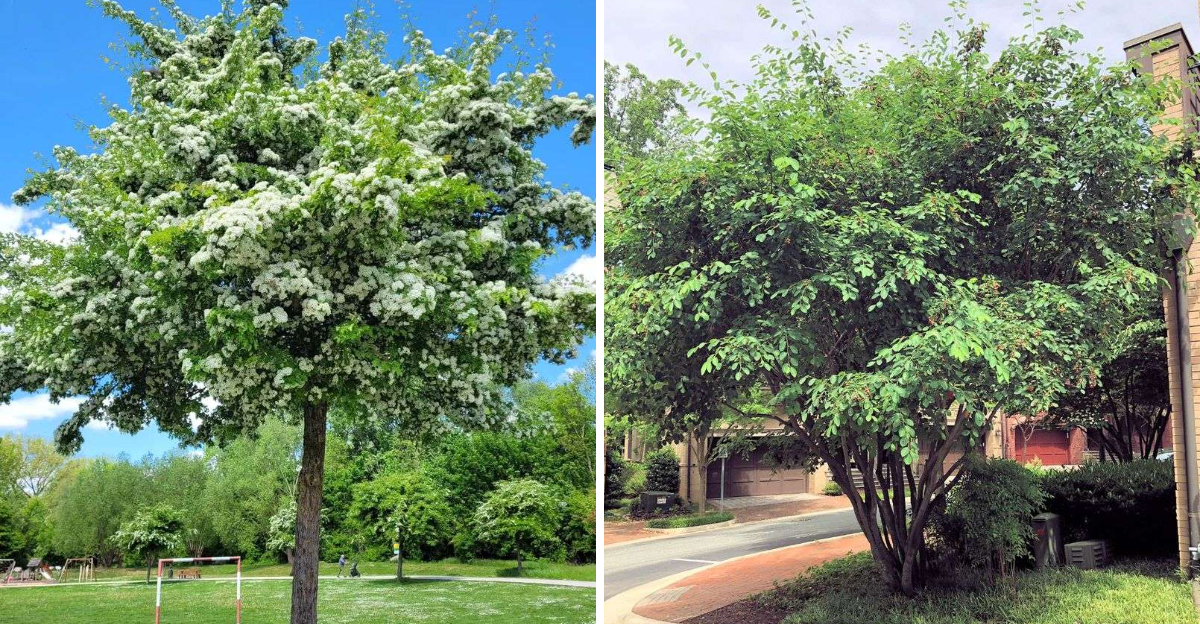
Have you ever watched a beautiful yard slowly turn into an expensive repair project because of a tree that seemed perfectly manageable when it was planted? Lifted pavers, cracked walkways, heaved patio stones that shift a little more every season.
Most Pennsylvania homeowners who end up in this situation planted the wrong tree in the wrong spot, not because they made an obvious mistake, but because nobody told them what that tree’s roots were going to do over time.
Root behavior is one of the most overlooked factors in tree selection for small Pennsylvania yards.
Not all tree roots are equally aggressive or equally damaging to hardscape. Some trees develop deep root systems that go down rather than out, reducing the surface conflict with pavers and foundations significantly.
Others stay at a more manageable spread at the scale relevant to a small yard. Choosing trees with these characteristics from the start is far easier and far less expensive than dealing with the consequences of choosing wrong.
Here are the Pennsylvania trees whose root systems are least likely to create hardscape problems and why each one earns its place on this list.
1. Eastern Redbud
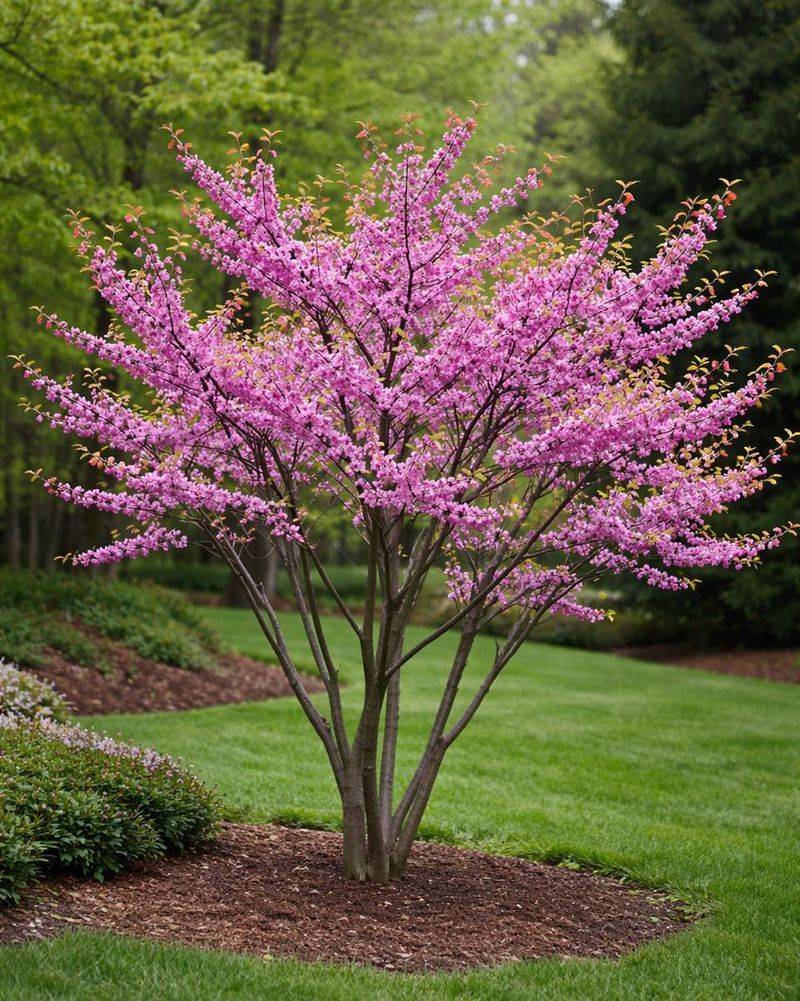
Few trees announce spring quite like the Eastern Redbud. Before its heart-shaped leaves even appear, the entire tree bursts into clusters of rosy-pink flowers right along its branches and trunk.
It is one of the most eye-catching small trees you can plant in a Pennsylvania yard, and it brings a lot of personality to compact spaces.
Eastern Redbud typically tops out at 20 to 30 feet tall with a similar spread, making it well-suited for small yards. Its root system is generally non-invasive and tends to stay deep rather than spreading aggressively near the surface.
That means your pavers, walkways, and patios are at much lower risk of being pushed up or cracked over time.
Planting one near a patio or garden path gives you a beautiful overhead canopy without the constant worry of root damage. It grows at a moderate pace, so you will not find yourself dealing with rapid root expansion in just a few seasons.
Give it well-drained soil and a spot with full sun to partial shade for the best results. Beyond its good looks, Eastern Redbud supports native bees and butterflies, which makes it a smart ecological choice too.
The flowers are actually edible and have a mild, slightly sweet flavor. In fall, the foliage turns a warm yellow, adding another layer of seasonal interest.
For Pennsylvania homeowners who want beauty, wildlife value, and paver-friendly roots all in one package, Eastern Redbud is a top-tier choice worth considering for any small landscape.
2. Serviceberry
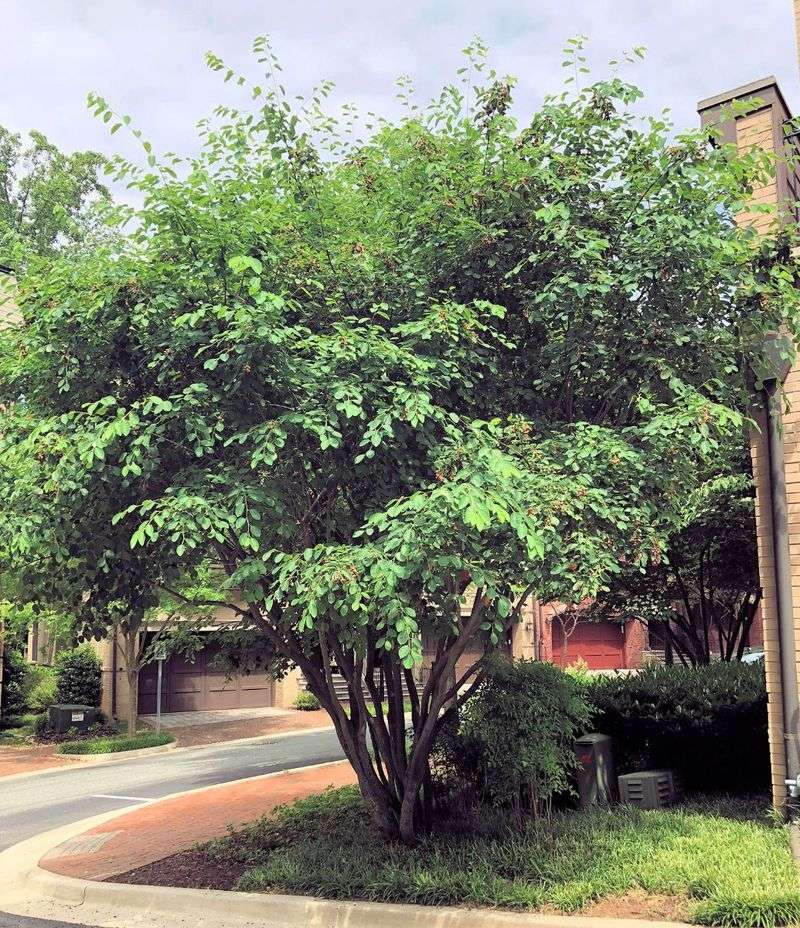
Serviceberry is one of those trees that earns its place in a yard four times over, once for each season. In early spring, it produces delicate white flowers that arrive just as the weather starts to warm.
By summer, small reddish-purple berries appear, which birds absolutely love. Come fall, the leaves turn shades of orange, red, and gold.
Your Pennsylvania Garden Changes Every Week. Your Plan Should Too.
Gardening in Pennsylvania changes quickly throughout the season. Every Friday you’ll receive a simple weekly plan showing exactly what to plant, prune, fertilize, harvest, and protect so you never miss the right timing.
In terms of size, Serviceberry is a great fit for small Pennsylvania yards. Most varieties grow between 15 and 25 feet tall, and some stay even smaller when grown in shrub form.
The roots tend to be fine and fibrous rather than thick and spreading, which greatly reduces the risk of paver damage near patios or walkways.
Planting a Serviceberry close to a garden path is a practical and beautiful decision. Its canopy is open and airy, letting light filter through without completely shading out the plants below.
It also tolerates a range of soil types, including slightly moist conditions, which is helpful in yards where drainage is not perfect.
Did you know Serviceberry fruit was historically dried and used like raisins by Indigenous peoples across North America? Today, the berries are still used in jams and pies.
Beyond their culinary use, the berries attract over 40 species of birds, making this tree a natural feeding station.
For a small yard where you want seasonal interest, wildlife activity, and no paver headaches, Serviceberry delivers on every front without taking up too much space or causing root problems.
3. Flowering Dogwood
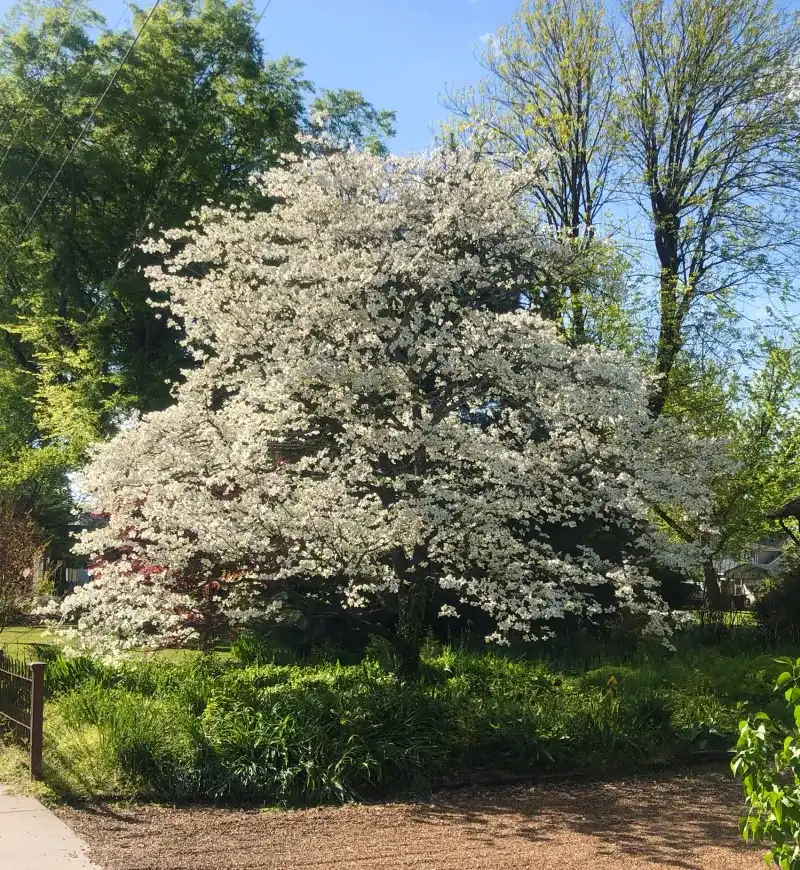
Flowering Dogwood has a reputation that stretches far beyond Pennsylvania. It is one of the most beloved native trees in the eastern United States, and for good reason.
Its large, showy white or pink bracts open in mid-spring and cover the tree in a way that looks almost unreal. It feels like the tree is showing off, and honestly, it has every right to.
For small yards with pavers, Flowering Dogwood is a smart pick. It typically reaches 15 to 25 feet at maturity and grows at a slow to moderate rate.
Its root system stays relatively shallow but spreads outward in a gentle, non-aggressive pattern. When planted with enough space between the trunk and hardscaping, it rarely causes paver lifting or cracking.
Soil quality matters a lot for this tree. Flowering Dogwood prefers well-drained, slightly acidic soil with good organic content.
Poorly drained or compacted soil stresses the tree and can make it more vulnerable to disease. Giving it the right conditions from the start sets it up for a long, healthy life in your landscape.
In fall, the foliage turns deep red and small red berries appear, which are a favorite food source for birds heading south for winter. The tree also provides excellent horizontal branching structure that adds visual interest even after the leaves have dropped.
Planting it near a patio gives you shade, color, and wildlife activity across multiple seasons. It is a tree that rewards patient, thoughtful placement in a small Pennsylvania yard.
4. American Hornbeam
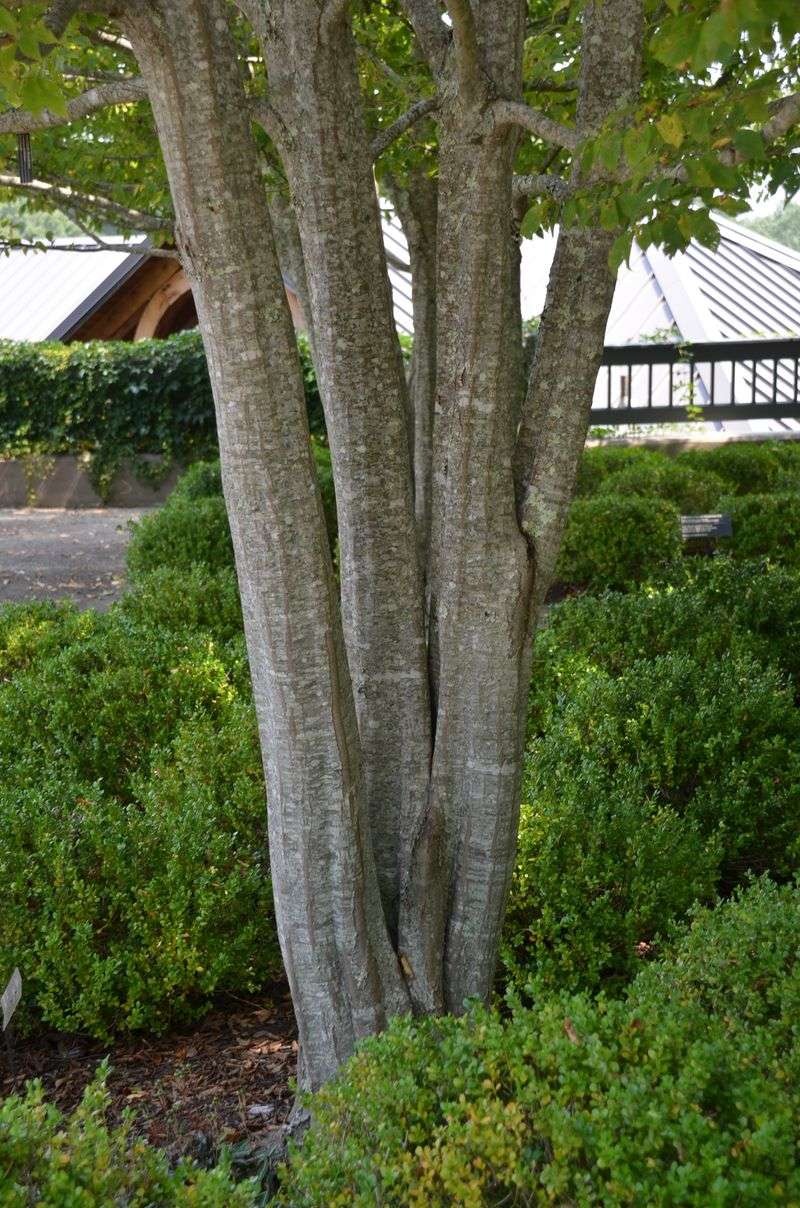
American Hornbeam goes by a fun nickname: musclewood. If you look closely at its smooth gray bark, you will see rippling, muscle-like ridges running along the trunk and branches.
It looks like the tree has been hitting the gym. Beyond its cool appearance, this tree is one of the most underused small trees in Pennsylvania landscapes.
Growth is slow and steady for American Hornbeam, which is actually a big advantage in a small yard. It typically reaches 20 to 35 feet tall over many decades, meaning you will not wake up one morning to find it has outgrown its space.
Its roots are also relatively compact and non-invasive, making it a low-risk choice near pavers, patios, and walkways.
This tree naturally grows along stream banks and forest edges in Pennsylvania, so it handles shade and moist soils better than most. If your yard has a spot that stays a little damp or does not get full sun, American Hornbeam will thrive where other trees might struggle.
It adapts well to urban conditions too, handling pollution and compacted soil with more tolerance than many native species.
In fall, the leaves turn shades of orange, red, and yellow, giving it one last burst of seasonal color before winter. Small nutlets on dangling clusters attract birds and small mammals throughout the colder months.
For a yard where you want a tree with character, slow root development, and four seasons of interest, American Hornbeam is a genuinely rewarding and paver-friendly choice.
5. Fringetree
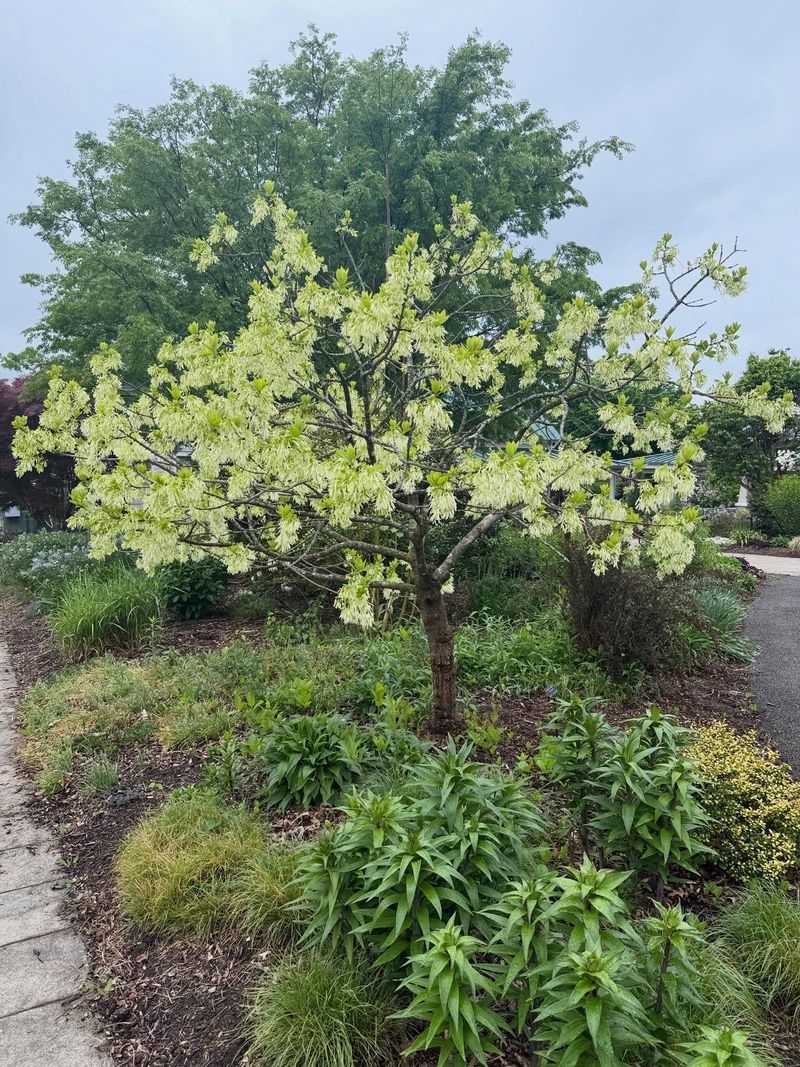
Fringetree is the kind of plant that stops people in their tracks. In late spring, it produces long, wispy white flower clusters that hang like soft fringe from every branch.
The fragrance is light and sweet, and on a calm evening near a patio, it fills the air in the most pleasant way. It is one of those trees that makes neighbors stop and ask what it is.
Typically growing as a large shrub or small tree, Fringetree reaches about 12 to 20 feet tall in most Pennsylvania landscapes. It grows slowly, which keeps its root system modest and contained.
Near pavers or garden paths, this slow growth pattern is a real advantage because the roots simply do not develop the mass or spread needed to cause structural damage.
Fringetree is native to the eastern United States, and it thrives in Pennsylvania’s climate without much fuss. It does well in full sun to partial shade and tolerates a range of soil conditions, though it prefers moist, well-drained spots.
Planting it near a patio or path gives you a beautiful focal point that performs well without demanding a lot of maintenance.
Female plants produce small, olive-like blue berries in late summer that attract birds, particularly thrushes and catbirds. Male plants tend to have showier flower displays, so if maximum bloom impact is your goal, seek out a male specimen.
Either way, Fringetree brings fragrance, seasonal beauty, and wildlife value to a small yard without the root-related risks that come with larger, faster-growing trees.
6. Pagoda Dogwood
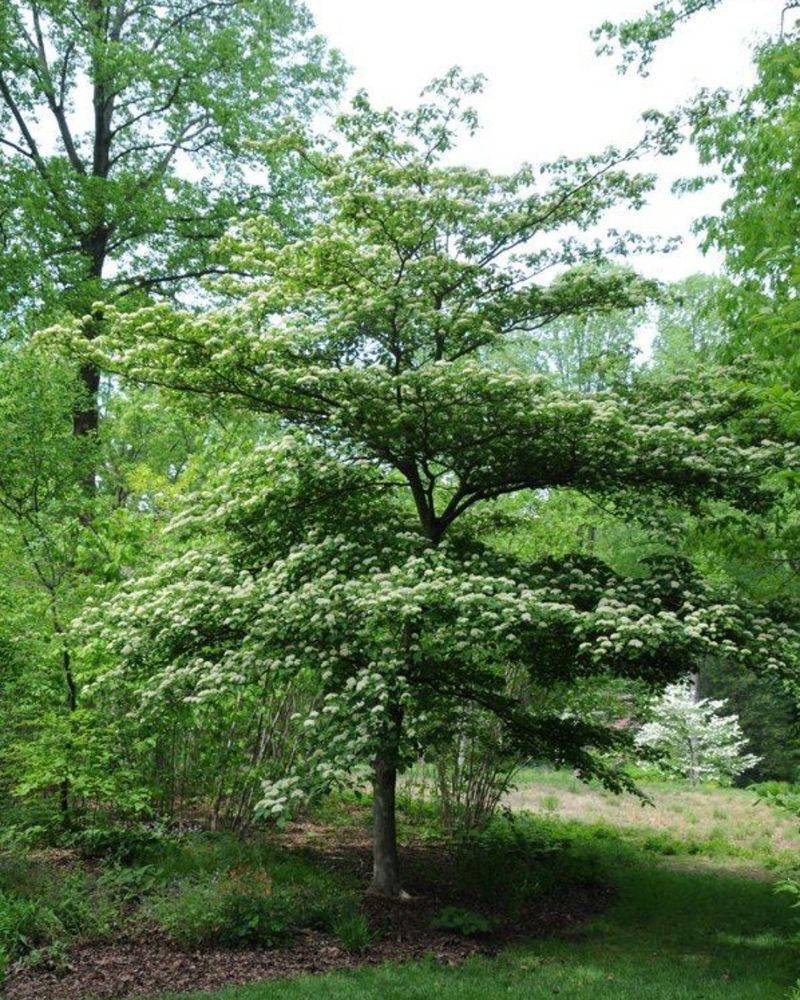
Pagoda Dogwood has one of the most distinctive silhouettes of any small native tree in Pennsylvania. Its branches grow in distinct horizontal layers, almost like a series of shelves stacked one above the other.
This architectural quality makes it a natural focal point in a woodland-style garden, and it looks just as good in winter when the leaves are gone as it does in full bloom.
In late spring, flat-topped clusters of creamy white flowers cover the layered branches. By midsummer, those flowers give way to small blue-black berries on bright red stems, which birds find irresistible.
The fall foliage shifts to rich shades of red and purple, rounding out an impressive four-season display in a compact package.
Size-wise, Pagoda Dogwood fits well in small yards. It usually grows between 15 and 25 feet tall with a wider spread, but its root system stays relatively restrained.
Placing it where its roots have room to spread naturally, away from the immediate edge of pavers, reduces any risk of surface root interference. A buffer of even a few feet between the trunk and hardscaping goes a long way.
This tree prefers partial shade and cool, moist, well-drained soil, making it a great candidate for spots that other trees might not handle well. It is also a host plant for several native insects and provides important habitat value in residential landscapes.
For Pennsylvania homeowners who want a tree with genuine visual drama and ecological purpose, Pagoda Dogwood is a standout option that keeps root concerns to a minimum.
7. Hawthorn
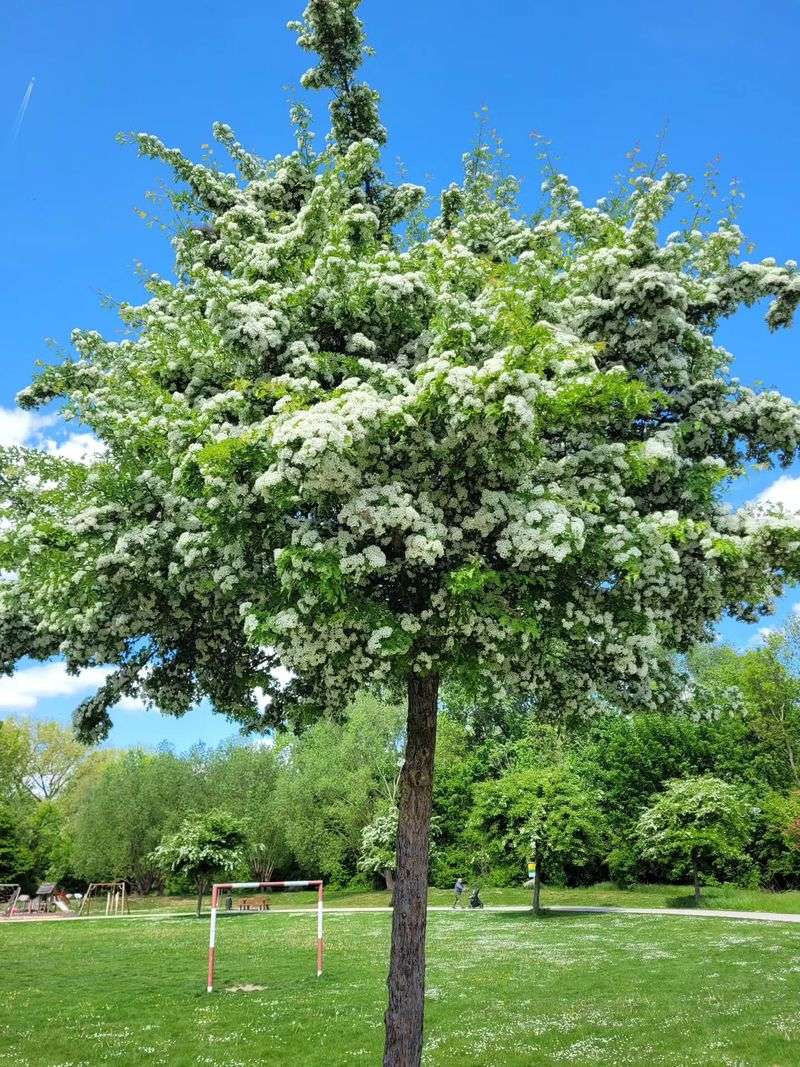
Hawthorn trees have a long history in American landscapes, and for good reason. Many species stay small and compact, making them well-suited to residential yards with limited space.
They are tough, adaptable, and offer something interesting in nearly every season, from spring flowers to fall fruit to a dense branching structure that provides winter texture.
In spring, Hawthorns produce clusters of white or pinkish flowers with a light fragrance that attracts bees and other pollinators. By fall, small red or orange berry-like fruits called haws cover the branches.
These haws are an important food source for birds like cedar waxwings, robins, and thrushes, especially during colder months when other food sources are scarce.
For paver-friendly planting, Hawthorn is a solid option. Most varieties grown in Pennsylvania reach 15 to 30 feet tall, and their root systems are generally moderate and non-invasive compared to larger shade trees.
Planting with a reasonable distance between the trunk and your walkway or patio reduces any chance of surface roots becoming an issue over time.
One thing to keep in mind is that many Hawthorn varieties have thorns, some quite sharp. This can actually be a benefit if you want a natural barrier along a property edge, but it is worth considering when deciding where to place the tree.
Thornless varieties are available if you prefer a safer option near high-traffic areas. With the right placement and variety selection, Hawthorn brings seasonal color, wildlife value, and manageable size to a small Pennsylvania yard without posing a serious threat to your hardscaping investment.