Plant Four O’Clocks In Your Arizona Yard And Watch Them Open As The Evening Heat Fades
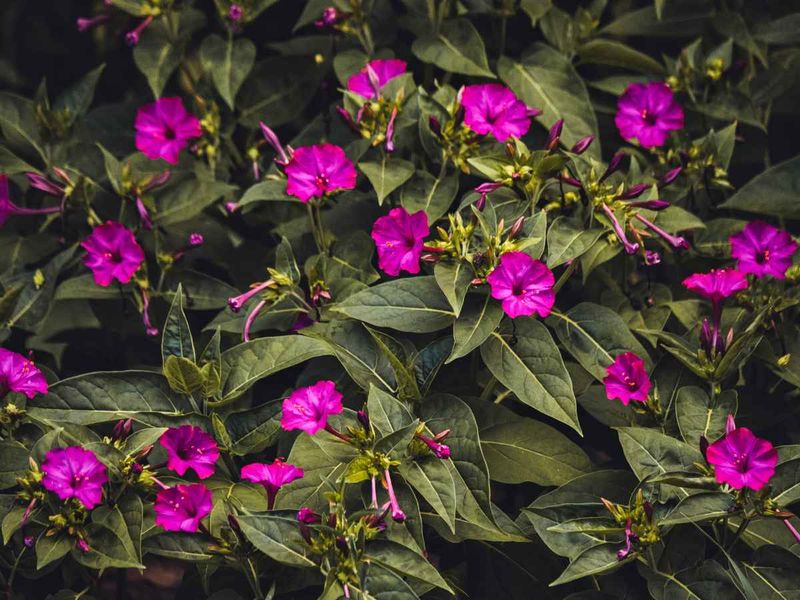
Few flowering plants match the satisfaction of watching blossoms appear just as the sun dips low and the yard finally feels livable again. The common four o’clock, Mirabilis jalapa, pulls that off most evenings in a Phoenix or Tucson yard, usually opening sometime in the late afternoon or around dusk and staying open through the night.
It handles full desert sun, uses relatively little water once roots are established, and its fragrant flowers can bring nocturnal pollinators into the garden. Getting the most from this plant takes some honest preparation, especially if your soil hides a hard caliche layer underneath.
Meet the four o’clock featured in this guide
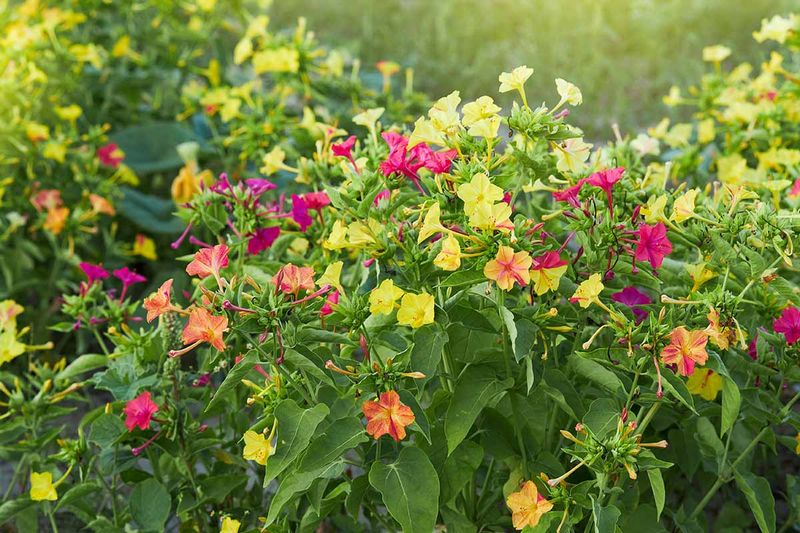
The common garden four o’clock sold at most Arizona nurseries is Mirabilis jalapa, sometimes called marvel-of-Peru. It originated in tropical America, not the Sonoran Desert, so it is an introduced ornamental rather than a regional native.
The NC Extension plant profile for Mirabilis jalapa notes that the plant typically reaches 18 inches to 4 feet tall and spreads 12 to 24 inches wide, so plan for a generous clump rather than a compact accent.
Arizona also has native four-o’clock species, most notably Mirabilis multiflora, the Colorado four o’clock, which grows wild at elevations ranging from roughly 2,500 to 6,500 feet. That plant is a different species with a different native range and should not be treated as interchangeable with the garden ornamental covered here.
M. jalapa shows up in the University of Arizona’s low-desert flower guide as a full-sun, low-water, fragrant, and reseeding plant. Its winter behavior depends on your specific site: a sheltered south-facing bed in Phoenix may let the tuberous root survive and resprout, while a frost-exposed spot in a higher Tucson neighborhood is more likely to kill it back to the ground or finish it entirely.
Treat it as potentially perennial in a favorable microclimate, but plan for annual replacement if frost is a realistic risk at your address.
Its flowers follow a dusk-to-night schedule
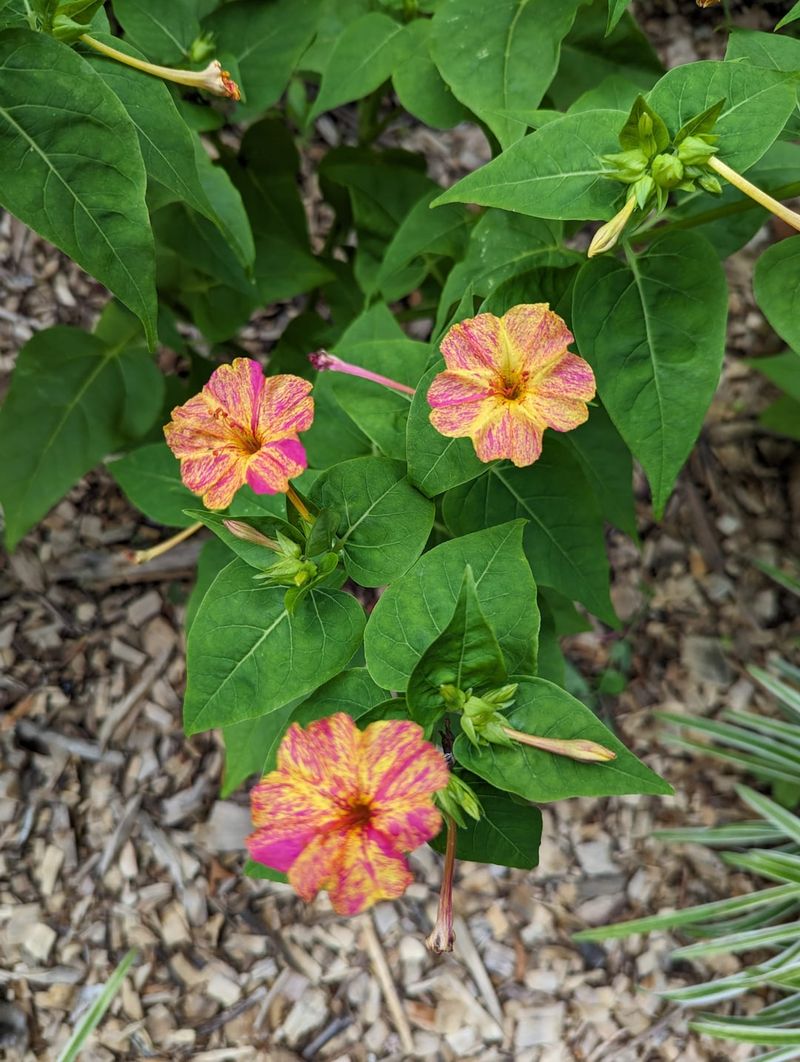
Calling this plant a four o’clock sets up an expectation that needs a small correction before you plant one. The flowers do not open on a precise schedule tied to a specific hour or to a measurable drop in air temperature.
Research on Mirabilis jalapa bloom timing, including published studies on Mirabilis reproductive biology, confirms that flowers generally open in the late afternoon or around dusk, remain open overnight, and close or fade the following morning. Cloud cover, humidity, rainfall, and cultivar can all shift when a given flower decides to open.
On a bright, hot Phoenix afternoon with no cloud cover, expect blooms closer to dusk or even after. On an overcast monsoon day, some flowers may open noticeably earlier.
Individual flowers last just one night, so the plant depends on a continuous supply of new buds to keep the display going through the warm season.
Fragrance is part of the payoff. The scent intensifies as flowers open and carries well through still evening air, which is part of what makes the plant appealing for a patio or outdoor seating area.
Your Arizona Garden Changes Every Week. Your Plan Should Too.
Gardening in Arizona changes quickly throughout the season. Every Friday you’ll receive a simple weekly plan showing exactly what to plant, prune, fertilize, harvest, and protect so you never miss the right timing.
The overall impression is a soft, shifting display rather than a clockwork event, and that is actually a better fit for Arizona’s variable summer evenings.
Low-desert heat is manageable; hard caliche is not
Mirabilis jalapa handles low-desert heat well once it is established. The University of Arizona’s low-desert flower guide lists it for full sun and low water use, and that combination holds up through Phoenix summers when the plant has a functioning root zone.
Full sun supports the most consistent flowering, but planting against a west-facing block wall or in a spot that collects reflected heat from pavement adds transplant stress that the plant has to survive before it can thrive.
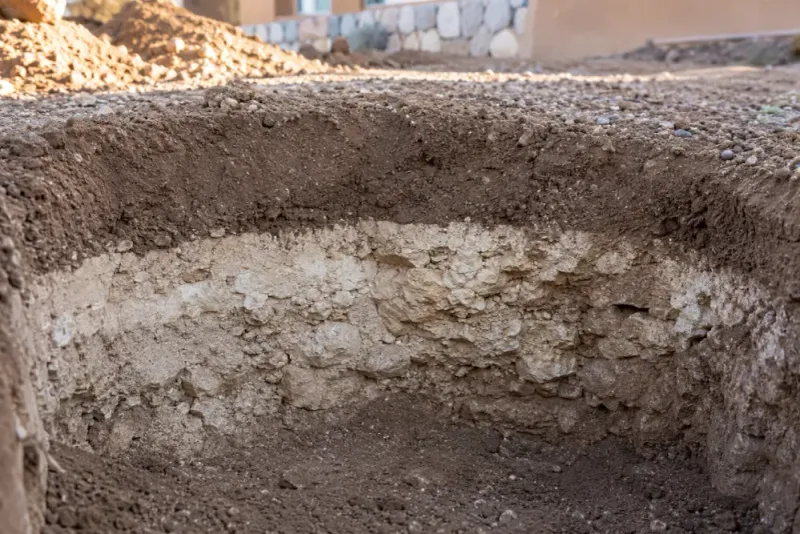
Hard caliche is a separate problem entirely. A compacted, cement-like caliche layer can block roots from reaching deeper soil, reduce the aeration roots need, and turn a planting hole into a slow-draining pocket that stays wet after irrigation.
Before assuming your soil is simply alkaline and manageable, check how deep and how hard the layer is. Loose caliche-influenced soil and a solid caliche pan are not the same obstacle, and the approach for each is different.
Getting that distinction right before planting saves a lot of frustration later.
Prepare the root zone before planting
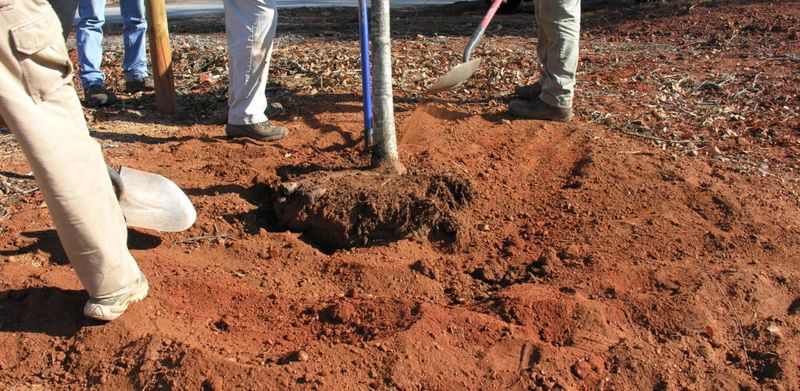
Start by digging a test hole at least 18 inches deep where you plan to plant. Fill it with water and watch what happens over the next hour.
If the water drains away steadily, your drainage is workable. If it sits with little movement, you likely have a compacted layer or very dense soil that will trap roots in saturated conditions after irrigation.
When you hit hard caliche, the University of Arizona’s guidance on managing caliche in the home yard recommends breaking through the layer with a pick or chisel, removing solid chunks where practical, and confirming that water can escape downward before you plant anything. Do not simply dig a wide hole in caliche and fill it with good soil.
Without an exit path for water, that amended pocket becomes a container with no drainage, and roots sitting in standing water will rot faster than they would in unimproved ground.
If breaking through the layer is not practical because it is too thick or too deep, shift your plan. A raised or mounded bed built above the native soil gives roots room to develop in a free-draining medium.
A container works well for shallow caliche sites and lets you control the growing medium entirely. Whatever setup you choose, give the plant enough horizontal room for a spreading clump, roughly 12 to 24 inches across at maturity, and make sure irrigation is accessible from the start of establishment.
Choose a lower-stress planting window

Timing a new planting to avoid the worst heat stress is practical advice for most low-desert ornamentals, including four o’clock. Fall and early spring both offer more moderate temperatures than the stretch from late May through August, and roots that go into the ground during cooler weather have a better chance to develop before they face their first brutal season.
University of Arizona Extension guidance on growing plants in Tucson consistently points to fall as a lower-stress window for establishing new plants, noting that spring installations face increasing heat and drying winds as the season advances. For four o’clock specifically, this is general low-desert guidance rather than a species-specific proven rule.
Your local frost risk, plant size at installation, exposure, and whether you have reliable irrigation access all shape the decision more than any single calendar date.
A small transplant going in near a west-facing wall in late March needs more careful irrigation and possibly some afternoon shade cloth during its first few weeks than the same plant installed in October. If you are starting from seed, warm soil temperatures support germination, so a late-spring start with careful watering can work if you stay on top of irrigation through the first summer.
Fall planting of established transplants, with consistent watering through winter, sets up the best chance for a strong bloom display the following warm season.
Water consistently during establishment

Low water use is one of the reasons four o’clock earns a spot in Arizona yards, but that description applies to an established plant with a developed root system, not a fresh transplant. During the first growing season, the plant needs consistent irrigation to push roots into the surrounding soil.
Skipping waterings during that phase slows establishment and increases the chance that the first serious heat wave sets the plant back significantly.
Once roots are established, you can reduce irrigation frequency and let the soil dry out more between waterings. How often that means watering depends on your soil texture, whether the plant is in native ground, a raised bed, or a container, and how much reflected heat the site receives.
A plant in a container dries out faster than one in the ground and needs more frequent checks during the hottest months. A plant in a raised bed with a coarse, fast-draining mix falls somewhere between the two.
Watch the plant rather than following a fixed schedule. Wilting in the early morning, before the day heats up, is a sign the plant needs water.
Wilting only in the afternoon heat and recovering by evening is normal for many plants in a Phoenix summer and does not always mean the soil is dry. Persistent wet soil is as damaging as drought for this plant, so good drainage and appropriate irrigation together are both part of keeping it healthy.
The evening display can support night visitors
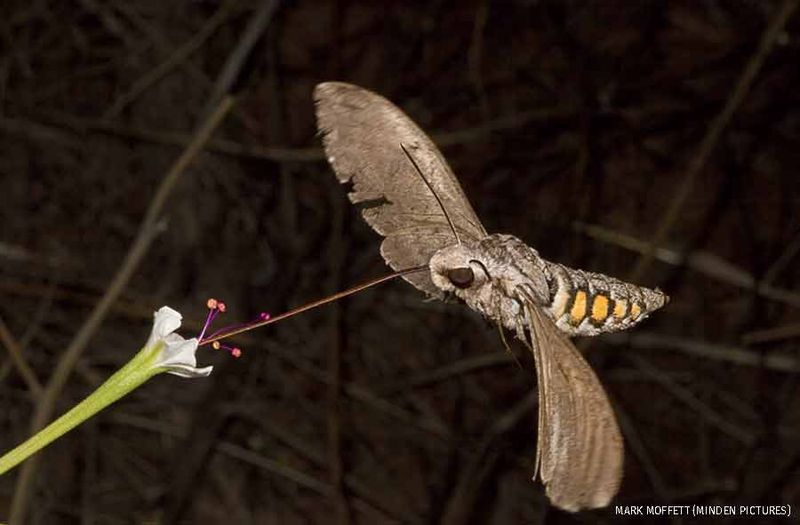
The combination of evening opening, tubular flower shape, and strong fragrance makes Mirabilis jalapa a reasonable candidate for nocturnal pollinator visits. University of Arizona Extension materials on sphinx moths list four o’clocks among the plants that adult sphinx moths visit for nectar.
Sphinx moths, sometimes called hawkmoths, are common in Arizona and are capable of hovering at flowers much like hummingbirds, so a yard with evening-blooming fragrant plants can be part of a habitat that supports them.
Whether you actually see moth visits depends on factors outside the plant’s control. Local moth populations, nearby pesticide use, competing nectar sources, and weather all play a role.
A yard that has been heavily treated with broad-spectrum insecticides is less likely to host moth activity regardless of what flowers are blooming. Four o’clock does not guarantee visitors, and it is not a pest-control plant.
Its wildlife value is habitat contribution, specifically nectar availability at a time when relatively few other garden plants are open.
Readers who want to encourage night pollinators should limit unnecessary pesticide applications in and around the planting area. Grouping several plants together rather than placing a single specimen in an otherwise bare bed also improves the chances that foraging moths find and return to the location.
The evening fragrance is pleasant for people at the same time, which makes this a functional and enjoyable plant for outdoor living spaces.
Manage volunteers and handle the plant carefully
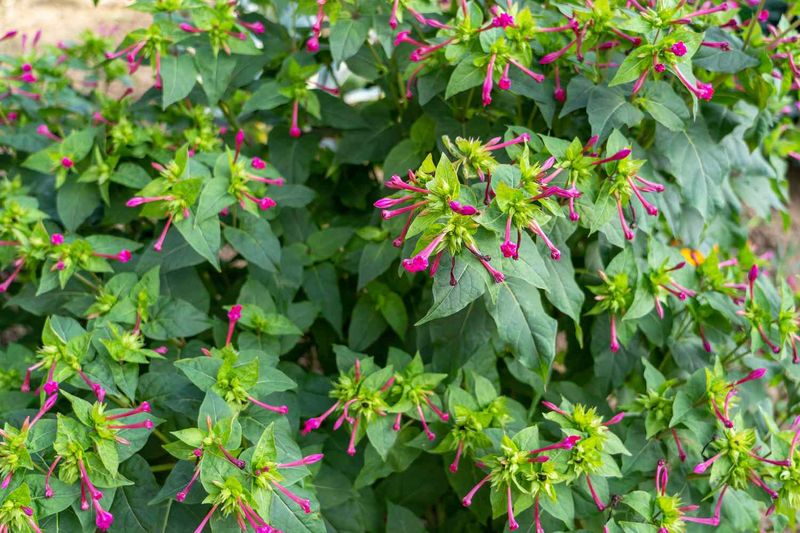
Four o’clock can reseed generously in a warm, irrigated bed. Each spent flower produces a single dark, wrinkled seed capsule, and a mature plant can drop quite a few of them over a season.
In a favorable spot, volunteer seedlings will appear the following spring and can spread the planting beyond its intended boundaries if left unchecked. Removing seed capsules before they fully dry and drop, or pulling volunteer seedlings while they are small, keeps the plant where you want it without much ongoing effort.
The reseeding tendency is manageable, but the toxicity concern deserves straightforward attention. The seeds and roots of Mirabilis jalapa are listed as poisonous, with reported symptoms including stomach pain, nausea, vomiting, and diarrhea after ingestion.
Handling the roots and plant parts may also cause skin irritation in some people. Wear gloves when digging, dividing, or removing plants, and wash hands afterward.
Keep seeds and roots away from children and pets who might chew or mouth plant material. The dark seed capsules are small and can look like something edible to a young child or a curious dog.
If four o’clock is on your list but your yard is heavily used by young children or animals with a habit of chewing plants, place it in a bed that is not their primary play area. The plant has real value in the right setting, and a little awareness about these two drawbacks makes it a much easier addition to manage.
Expect a useful dusk plant, not a no-preparation miracle
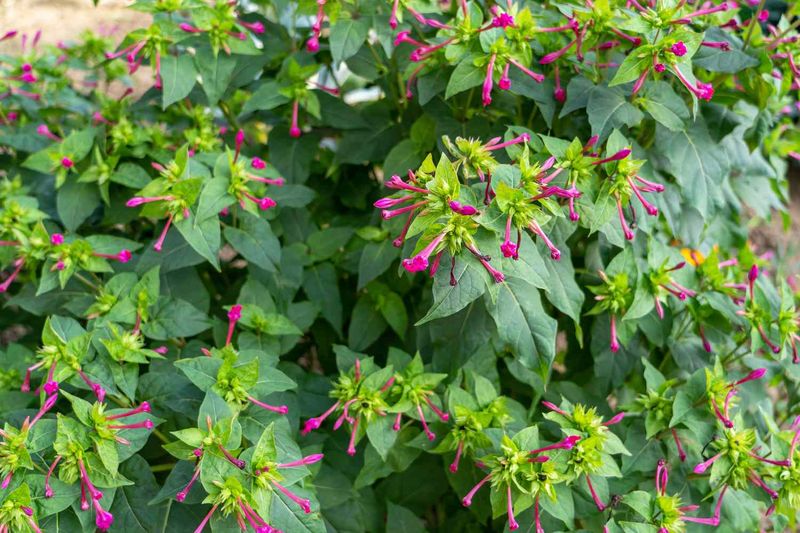
Four o’clock earns a place in a Phoenix or Tucson yard when the conditions are right: a sunny spot with a well-drained root zone, consistent irrigation during establishment, and a plan for reseeding and safe handling. The supported benefits are real.
Late-day flowers, evening fragrance, lower water use after roots develop, and the possibility of sphinx-moth visits are all reasonable expectations for a plant installed and maintained correctly.
Caliche correction, frost exposure, and your specific microclimate determine whether the plant thrives or struggles, so site preparation matters more than any single care tip. As for the title’s promise, the flowers usually open around dusk, but not on a schedule you can set a watch by, and not simply because the evening heat is fading.
That unpredictability is part of what makes checking the garden at dusk worth the walk outside.