7 Airy Companion Plants That Make Arizona Rose Beds Look Lush Instead Of Leggy
Roses in the low desert often end up with tall, bare canes and blooms perched on top like lollipops. The fix is not more water or fertilizer, but the right neighbors planted around their feet.
Airy, heat-tough companions fill the gaps, shade the soil, and bring in helpful insects that may keep pests in check. Here are seven picks that handle Phoenix and Tucson summers while making your roses look full and happy.
1. Catmint
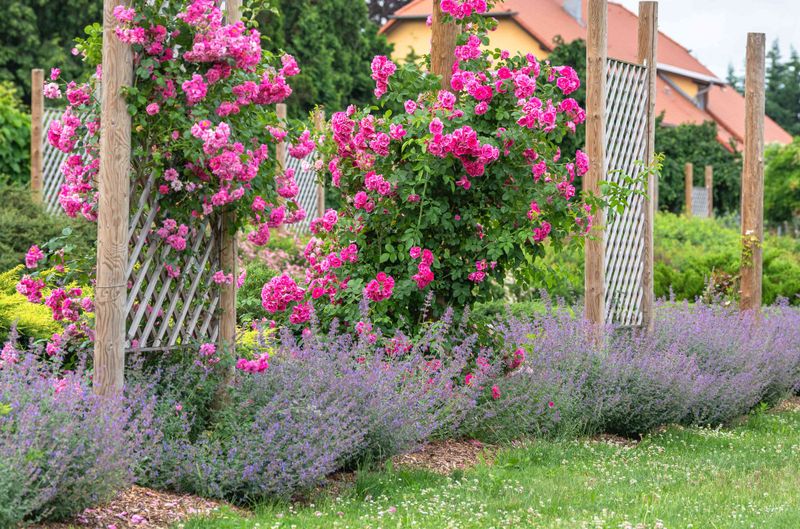
Picture a pale blue cloud rolling right up to the knees of your roses. Catmint does exactly that, forming loose mounds that hide the woody lower canes without crowding them.
Your roses suddenly look like they grew in a meadow instead of a parking strip.
The real bonus is what shows up for dinner. Catmint flowers tend to draw ladybugs and lacewings, two insects that happily snack on aphids.
In a desert bed where spring aphid outbreaks can hit fast, having that patrol nearby may reduce the need for sprays.
Catmint also keeps an open, breezy habit. Air can move freely around rose stems, which helps leaves dry quickly after watering.
That matters during humid monsoon weeks when fungal spots like to appear.
For Arizona, choose a compact type like Walker’s Low and plant in fall, October or November, so roots settle before summer. Give it morning sun and some afternoon relief if your bed bakes against a west wall.
Once established, deep watering every week or so in summer usually keeps it going.
Shear it back by about a third after the first flush. A second wave of blooms often follows, carrying color well into early summer.
2. Lavender
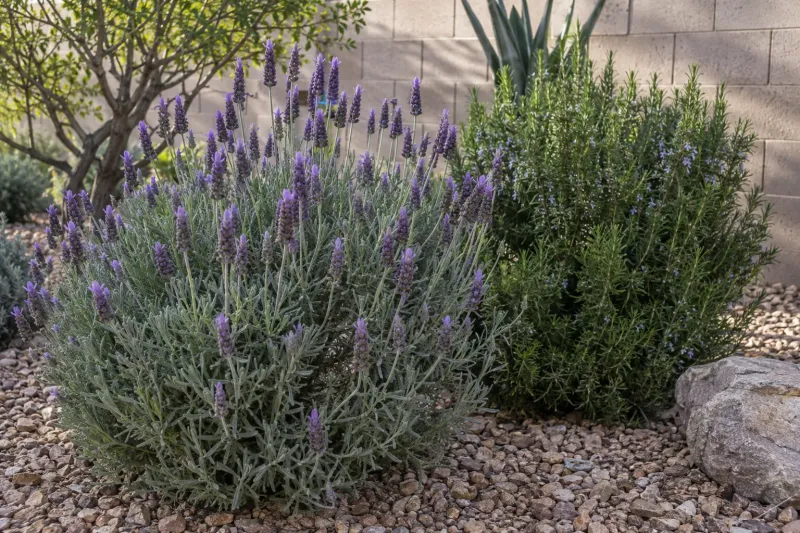
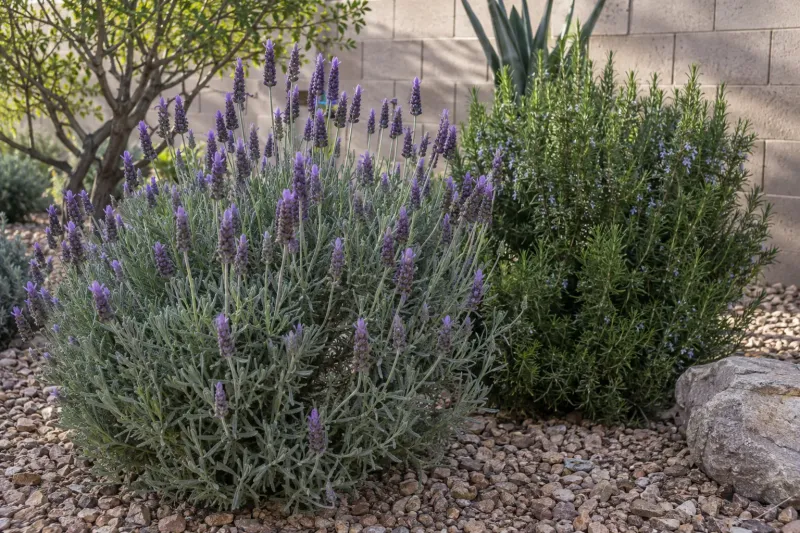
Lavender and roses have been sharing garden beds for centuries, and the desert gives that old friendship a fresh twist. Both love full sun and fast-draining soil, so they agree on most of the basics.
Lavender just asks for a little less water once it settles in.
Its upright wands of purple add vertical motion between rose shrubs. Those spikes sway in the breeze and cover bare stems with a soft, misty screen.
The silvery leaves also cool down the look of a bed during brutal July afternoons.
Fragrance does some quiet work too. Strong lavender oils may make the area less inviting to aphids and nibbling rabbits, which are common visitors in Phoenix and Tucson yards.
Meanwhile, bees and hoverflies pile onto the blooms, and hoverfly larvae are known aphid hunters.
Here is the Arizona secret: Spanish and Spanish hybrid lavenders tend to handle our heat far better than English types. Plant them in fall on a slight mound so roots never sit soggy.
Caliche can trap water, so loosen the soil well first.
Skip rich compost around lavender. Lean, gritty ground keeps it compact and long-lived, while your roses get their extra feeding a few feet away.
3. Russian Sage
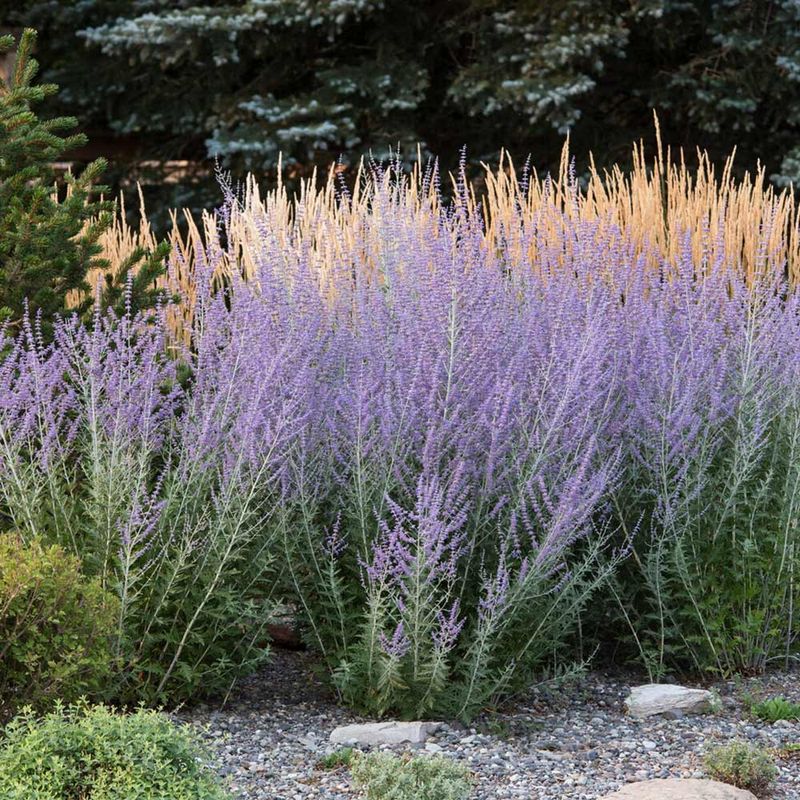
Ever seen a plant that looks like purple smoke? Russian sage earns that description every summer, sending up see-through spires dotted with tiny violet flowers.
Your Arizona Garden Changes Every Week. Your Plan Should Too.
Gardening in Arizona changes quickly throughout the season. Every Friday you’ll receive a simple weekly plan showing exactly what to plant, prune, fertilize, harvest, and protect so you never miss the right timing.
Planted behind or between roses, it creates a soft haze that makes the whole bed feel deeper and fuller.
Toughness is its calling card. Russian sage shrugs off 110 degree days, alkaline soil, and long gaps between waterings once it is rooted.
When roses slow down in midsummer heat, this plant keeps the bed from looking tired.
The silvery stems and leaves carry a sharp, herbal scent. That aroma may help discourage aphids and whiteflies, and rabbits usually pass it by.
Bees, on the other hand, can’t seem to stay away, which adds a busy, lively buzz to your yard.
Give it room, since mature plants can reach three to four feet tall and wide. Place it toward the back of the bed so roses stay visible up front.
A spot with full sun keeps stems sturdy instead of floppy.
Cut it down to about a foot tall in late winter, around February. Fresh growth returns quickly in spring, and the airy show begins again as temperatures climb.
4. Ornamental Alliums and Chives
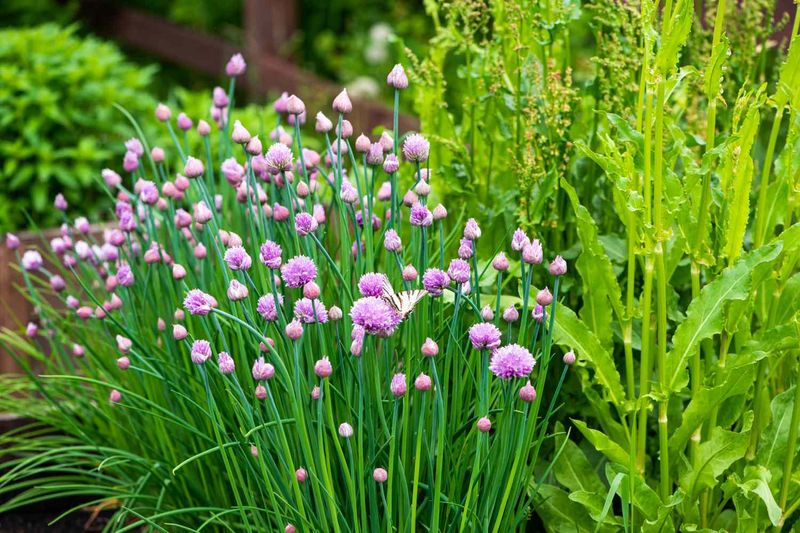
Old-time rose growers swore by tucking garlic and chives under their bushes. There is good reason behind the folk wisdom, since onion relatives give off sulfur compounds that may help keep aphids at a distance.
Some gardeners also notice fewer issues with black spot nearby.
Looks count here as well. Chives make tidy grassy clumps topped with lilac pom-poms, perfect for edging the front of a bed.
Taller ornamental alliums float round globes above the foliage like little planets, adding a playful, structured accent among the ruffled roses.
In the low desert, timing is everything. Plant allium bulbs and chive starts in fall, from October through November.
They grow through our mild winter and bloom in spring right alongside the first big rose flush.
Many ornamental alliums go dormant once heat arrives, so pair them with a summer filler that steps in afterward. Chives often hang on with a bit of afternoon shade and regular drip watering.
Fun fact: you can snip chive leaves for dinner without hurting the plant. A rose bed that also feeds you scrambled eggs garnish is a pretty good deal for a few square feet of soil.
5. Desert Verbena
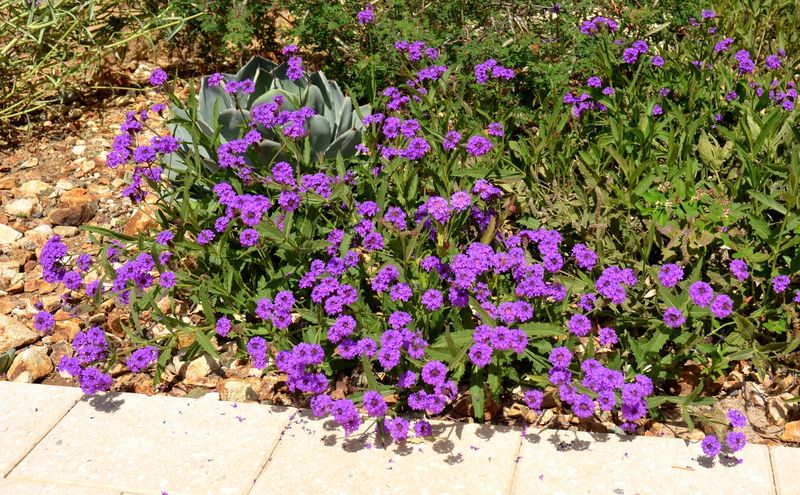
Butterflies treat a patch of verbena like a roadside diner with the lights always on. Desert verbena, a native to the Southwest, produces clusters of purple flowers for weeks on end.
Swallowtails, skippers, and painted ladies stop in regularly, turning your rose bed into real habitat.
Its spreading, low habit is what fixes leggy roses. Stems creep outward and knit into a loose carpet, covering bare soil and hiding knobby canes.
That living mulch also shades the ground, which can help roots stay a bit cooler and hold moisture longer.
Because it is native, desert verbena is built for our conditions. It handles rocky, alkaline ground and needs much less water than the roses beside it.
Just keep the drip emitter for verbena slightly away from the rose emitters so it doesn’t stay too wet.
Plant in fall or very early spring. Bloom usually peaks in spring, and plants may pause during the hottest weeks before perking up after monsoon rains.
Trim straggly stems to keep the mat dense.
Desert verbena can be short-lived, but it often reseeds. Let a few flowers set seed and new plants tend to pop up nearby, refreshing the carpet for free.
6. Artemisia
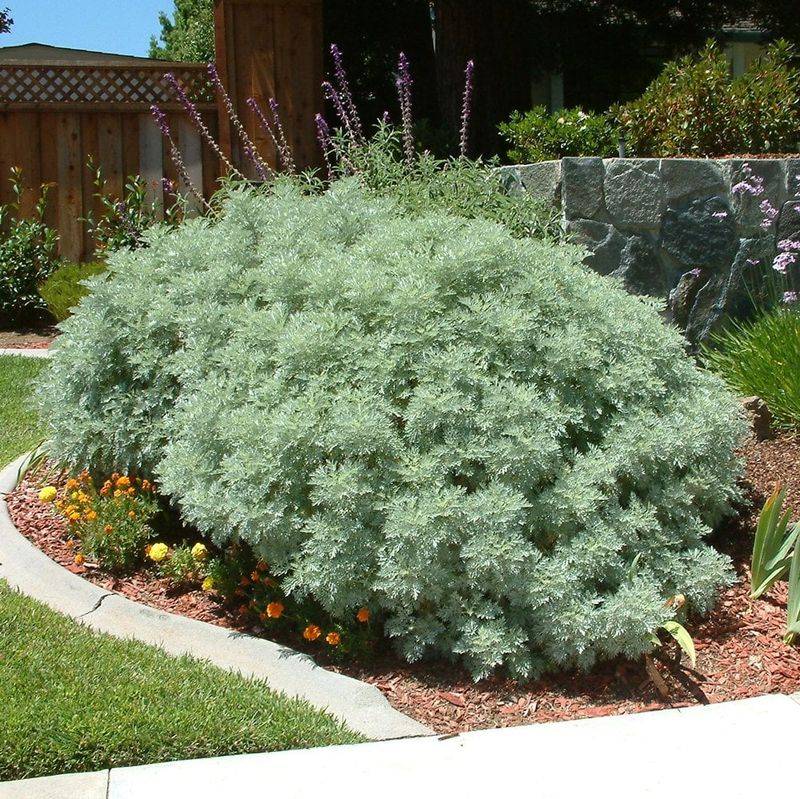
Sometimes the best partner in a bed doesn’t need a single flower. Artemisia wins its spot on pure texture, with feathery silver leaves that glow against red, coral, and deep pink roses.
The contrast makes rose colors pop, almost like a frame around a painting.
Silver foliage is a desert survival trick. Those pale, fine leaves reflect sunlight and lose less moisture, which is why artemisia handles heat, drought, and poor soil with barely a complaint.
Caliche and alkaline ground rarely slow it down.
Its aromatic leaves carry a bitter scent that many pests and rabbits seem to avoid. Placing clumps near rose bases may make the area a little less appealing to munching critters, though results vary yard to yard.
Pick a mounding variety like Powis Castle, which stays airy and soft rather than sprawling. Give it full sun and lean soil, and water deeply but rarely once it is rooted.
Too much water or fertilizer makes it floppy.
Keep one or two feet between artemisia and your roses. Some types release compounds that can slow nearby plants, so a little breathing room keeps everyone thriving.
A light trim in late winter keeps the silver mound tidy.
7. Arizona Red Shades Blanket Flower
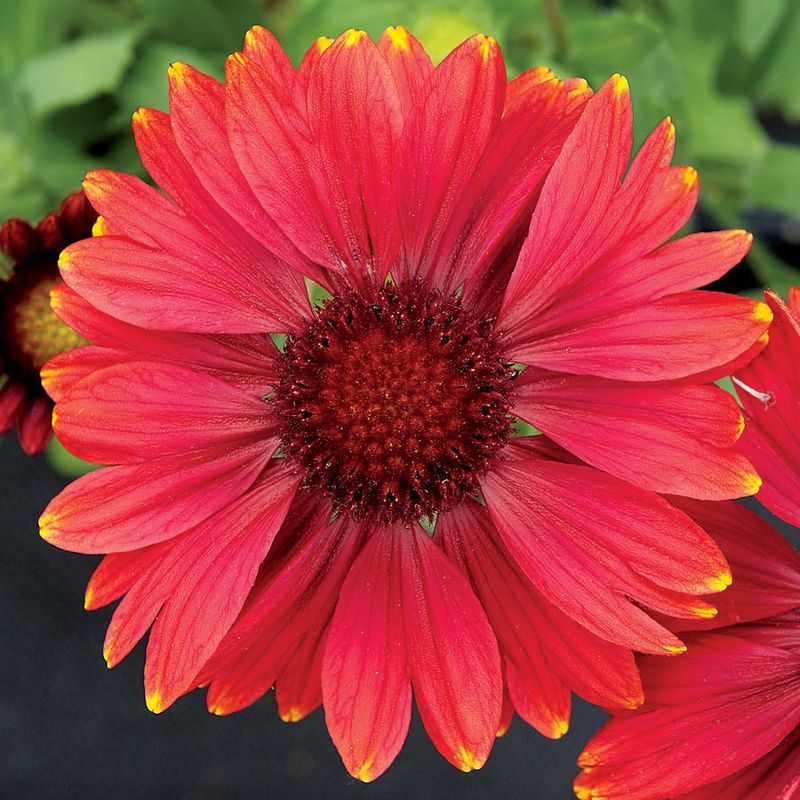
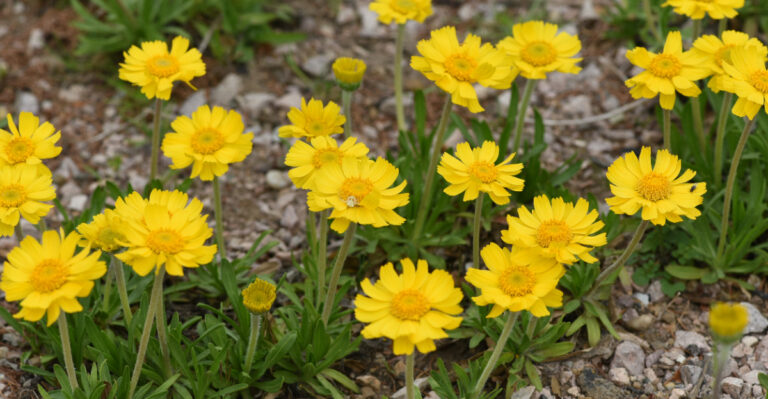
With a name like Arizona Red Shades, this blanket flower practically comes with a local address. Its rusty red, daisy-like blooms look like tiny desert sunsets, and they keep coming for months.
Next to warm-toned roses, the color combo feels bold and cheerful.
Blanket flower grows in an open, loose shape that fills gaps without smothering. Stems stand at different heights, so the planting looks layered and natural.
That airy spacing lets breezes reach rose canes and keeps the bed from looking stiff.
Butterflies and native bees visit often, adding motion and helping pollination across the yard. Seed heads left on late in the season may also draw small finches looking for a snack.
Every bloom does double duty as decor and habitat.
Once established, it handles drought well and actually prefers lean, sharp-draining soil. Overwatering is the main way to lose it, so give it its own drip line or water lightly.
Plant in fall or early spring in full sun.
Deadhead spent flowers to encourage fresh buds. By the time your roses rest in the summer heat, blanket flower is usually still glowing, keeping that front border full and lively.