8 Reasons Hard Pruning Sets Back Your Missouri Crape Myrtle
Your crape myrtle is quietly suffering. And you might be the one causing it.
Someone on the block drags out the loppers each season, hacks their tree to blunt wooden fists, and somehow convinces you that looks like good gardening. It doesn’t.
That yearly ritual even has its own name: crape trimming gone wrong. It spreads through yards not because it works, but because it looks decisive.
Is your tree flourishing, or just pushing through? Each hard cut triggers panic regrowth, thin whippy shoots that crack under their own weight.
The branch structure weakens. The wounds stay open. In colder climates like Missouri, upper branches may not survive a difficult winter, and that damage is worth reading separately from anything you did with the loppers.
Wait until late spring to see what leafs out, then remove only weak wood back to healthy growth. Crape myrtles are self-shaping trees, built by design to need almost nothing from you.
Once you understand what happens inside the vascular tissue after those cuts, Missouri gardeners will tell you, you will never reach for those loppers with confidence again.
Ready to find out what your tree has been quietly pushing through all along?
1. Cutting The Tree Back Way Too Hard
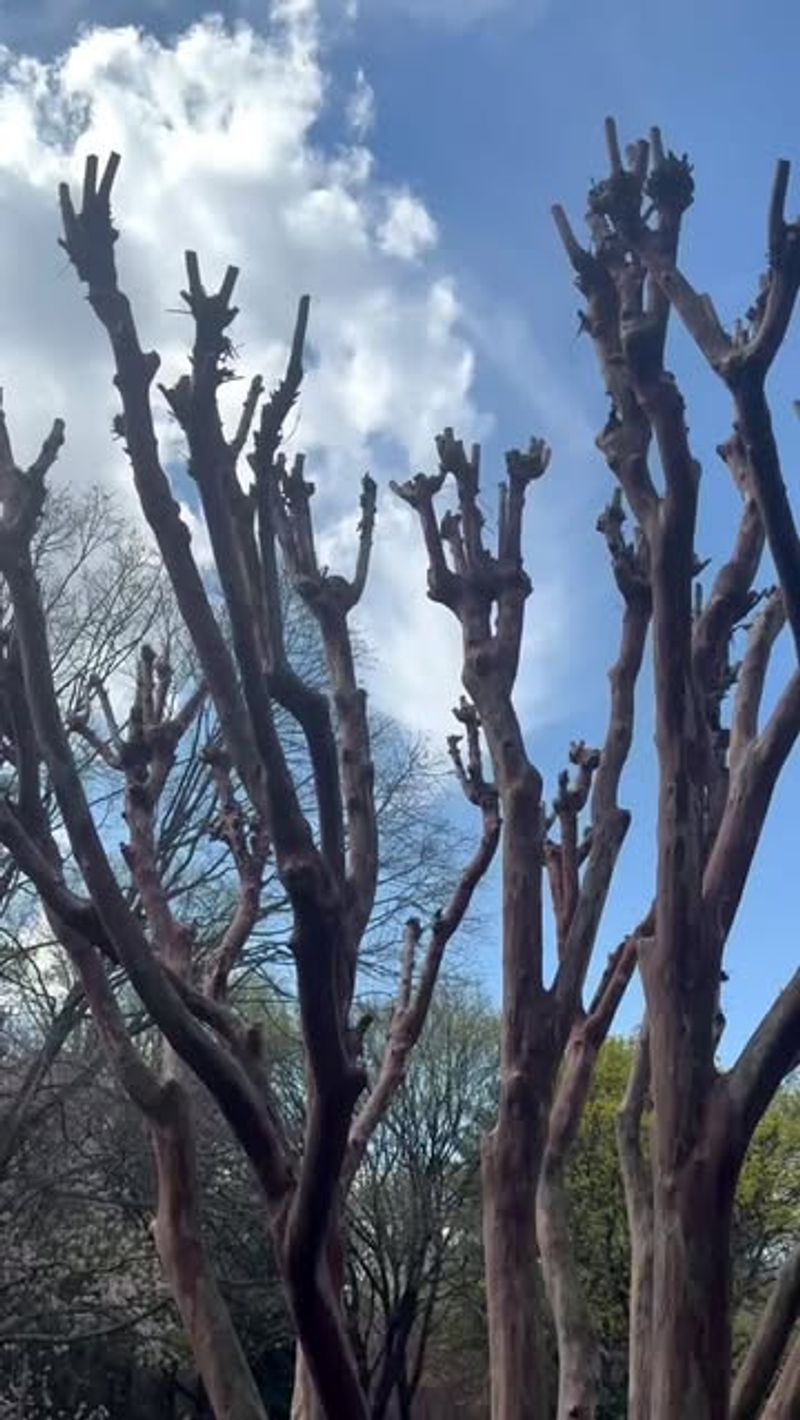
Grab your loppers and step back for a second. Every spring, countless crape myrtles across the country get chopped down to thick, ugly stubs in a ritual that feels like maintenance but acts more like punishment.
This practice, widely known as hard topping, strips the tree of its natural shape, and sets off a chain of damage that compounds with every passing year. Crape myrtles are not shrubs.
They are small to medium trees with a naturally graceful branching structure that took years to develop.
When you cut those branches back to the same spot each spring, you are not trimming the tree, you are removing its natural branch structure.
The wounds left behind are far too large for the tree to seal properly, and that is where the real trouble begins.
Missouri gardeners often follow what their neighbors do, and the neighbor learned it from someone else, and so on.
The hard-cutting habit spreads like a rumor, passed from yard to yard without anyone stopping to ask whether it actually helps. Spoiler alert: it does not.
Scientists and certified arborists have repeatedly confirmed that crape myrtles bloom on new growth, meaning they will flower whether you cut them or not. Cutting them hard does not improve blooms.
It just creates stress, wounds, and structural weakness that the tree spends years trying to overcome.
Your crape myrtle deserves better than a yearly session with the loopers, and understanding why starts right here.
2. Ugly Knobby Knuckles Form At The Cut Points
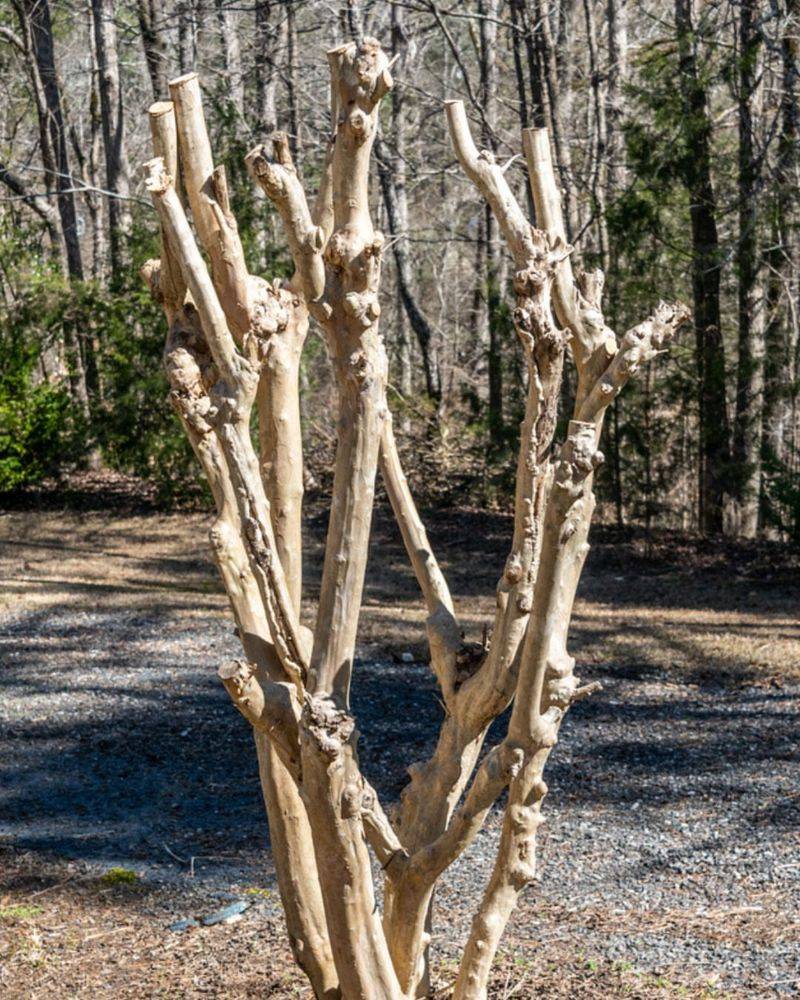
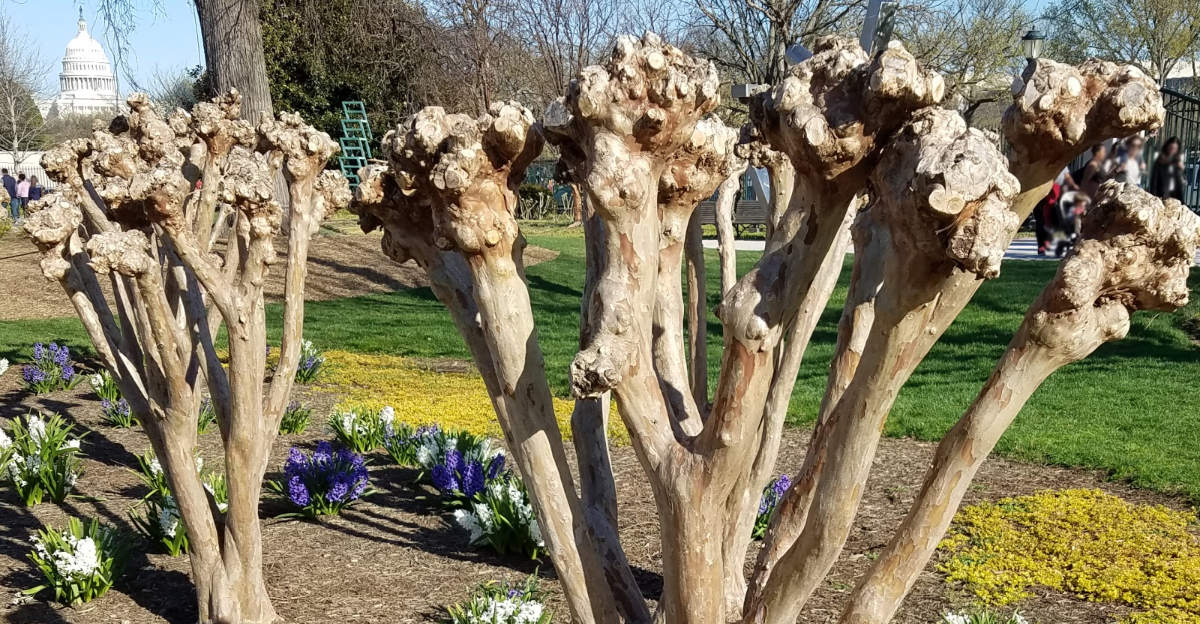
Those bumpy, swollen lumps at the top of a pruned crape myrtle are not normal growth. They are the tree’s desperate attempt to heal wounds that are simply too large to close.
Every time a thick branch gets cut, the tree tries to wall off the injury by forming callus tissue around the edges of the wound.
Your Missouri Garden Changes Every Week. Your Plan Should Too.
Gardening in Missouri changes quickly throughout the season. Every Friday you’ll receive a simple weekly plan showing exactly what to plant, prune, fertilize, harvest, and protect so you never miss the right timing.
But when the same spot gets cut year after year, the callus builds up into those swollen, irregular knobs gardeners have started calling crape knuckles. Crape knuckles are permanent.
Once they form, they do not go away, even if you stop cutting. They sit at the top of the trunk like swollen fists, making the tree look disfigured and unnatural for the rest of its life.
Beyond the appearance, these knobby formations are structurally weak points. The wood inside is not as strong as the original branch tissue.
That structural weakness means branches sprouting from knuckles are more likely to give way under the weight of blooms or during a Missouri summer storm.
Homeowners often mistake these knuckles for a sign that the tree is healthy and responding well to pruning.
Actually, the opposite is true. The larger and more pronounced the knuckles, the more trauma the tree has experienced over time.
A tree with smooth, naturally tapering branches has never been hard-pruned, and it shows in the best possible way.
If your crape myrtle already has knuckles, the kindest thing you can do right now is put the loppers away and let the tree begin its slow recovery.
3. The Tree Panics And Sprouts Weak, Spindly Shoots
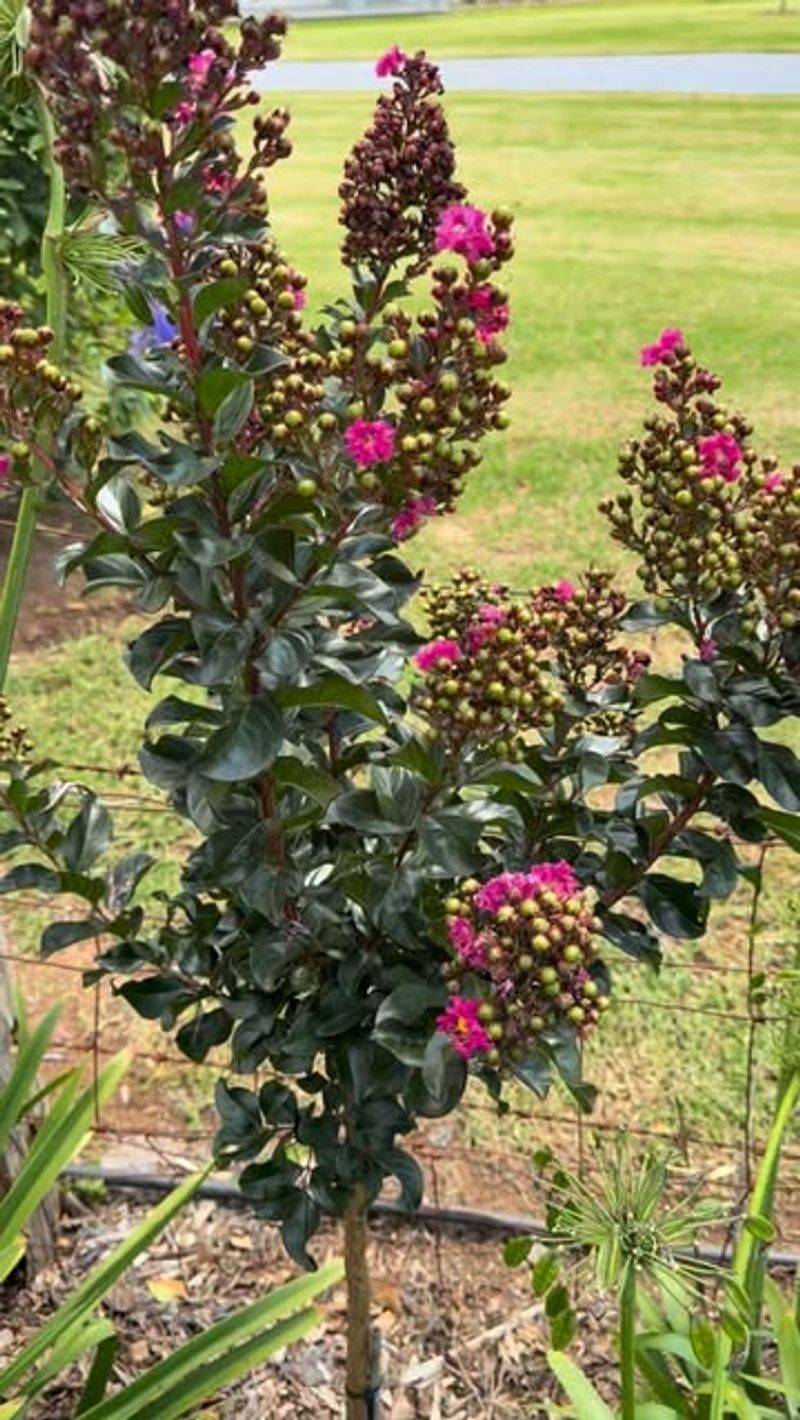
Panic mode looks different on a tree than it does on a person, but it is just as real. After a hard cut, a crape myrtle responds by pushing out as many new shoots as it possibly can from the wound site.
These shoots are called water sprouts, and they grow fast, straight up, and in clusters that look more like a wild bush than a graceful flowering tree. The tree is not thriving; it is scrambling.
Water sprouts are thin, soft, and packed too close together. They lack the structural integrity of natural branches because they grew in a hurry rather than over time.
Sunlight cannot reach the inner shoots when they are crowded like that, so many of them weaken and droop before the season ends.
The ones that survive are still fragile, and they will be cut off again next spring, resetting the whole exhausting cycle.
Meanwhile, the tree wastes enormous amounts of stored energy producing shoots it will never get to keep.
From a distance, all that new green growth can look lush and vigorous. Up close, it is a mess of crossing, rubbing branches that create poor air circulation and invite fungal problems.
A healthy crape myrtle should have an open, airy canopy where light filters through gracefully. Instead, hard-pruned trees end up looking like overgrown brooms stuck on top of poles.
Breaking this cycle means resisting the urge to cut in spring and trusting that the tree already knows how to grow beautifully on its own.
4. Energy Reserves Get Drained
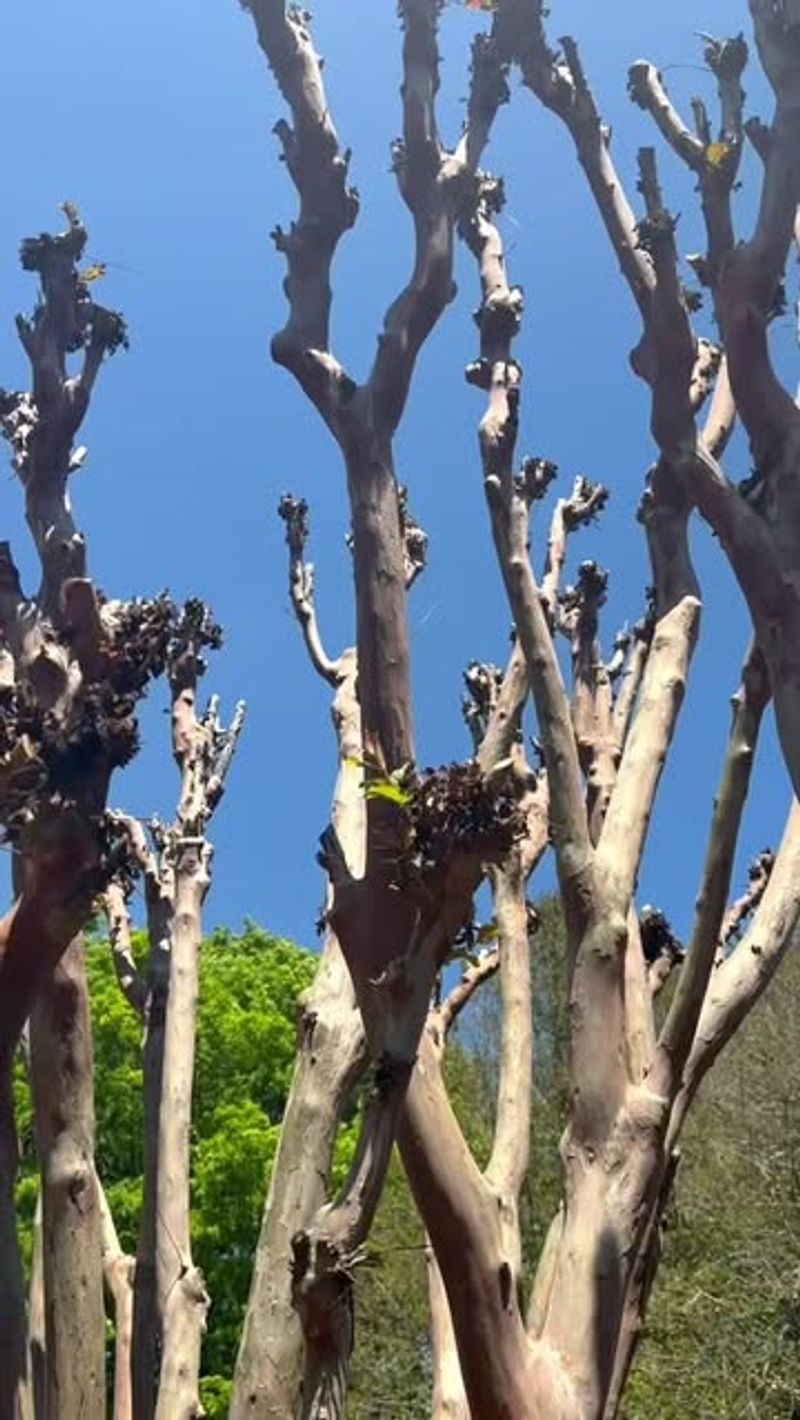
Trees run on a budget, and pruning is expensive. Every leaf and branch stores carbohydrates that the tree uses to fuel root growth, flower production, and healing.
When you remove a large portion of the canopy all at once, you are not just cutting branches; you are wiping out a significant chunk of the tree’s energy savings account.
For a crape myrtle, losing that stored energy in one afternoon of pruning can set the tree back for an entire growing season.
After a hard cut, the tree has to redirect all available energy toward regrowing what was lost. Root development slows down. Bloom production takes a back seat.
The immune system, if you can call it that, gets stretched thin as the tree tries to do too many things at once with too few resources.
In a tough Missouri summer with heat and drought stress layered on top, a recently hard-pruned tree is operating on fumes. Young crape myrtles are especially vulnerable to this energy drain.
A tree that gets cut hard before it has had time to establish a deep, strong root system may struggle for years to bounce back.
Older trees are more resilient, but repeated annual cutting chips away at even the most established specimens over time.
Think of it like this: every hard cut is a withdrawal from an account that needs years to replenish.
Choosing light, selective trimming instead of heavy cutting keeps that energy account full and your tree performing at its absolute best season after season.
5. Fewer And Weaker Blooms Each Season
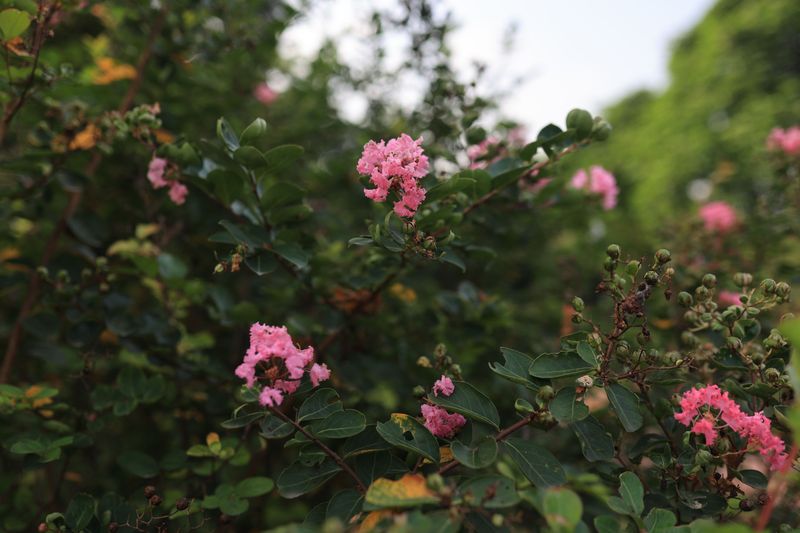
Hard topping promises better blooms. It delivers fewer. Crape myrtles bloom on new growth, so cutting harder does not force more flowers.
A hard-pruned tree spends most of its season recovering, leaving little energy for the blooms that make these trees so beloved.
Natural, unpruned crape myrtles produce dozens of flower clusters on the tips of hundreds of graceful arching branches. Each branch tip is a potential bloom site.
When you cut those branches back to stubs, you reduce the number of available bloom sites dramatically.
The new water sprouts that grow from the stubs do eventually bloom, but the clusters are smaller and positioned awkwardly on thin, weak wood that bends under the weight.
The overall effect is a sparse, disheveled display compared to what the tree could offer. Gardeners who stop hard-pruning their crape myrtles and switch to minimal, selective trimming are often stunned by the transformation within just two or three seasons.
The canopy fills out naturally, the branch tips multiply, and suddenly the tree is covered in blooms from top to bottom. That is the crape myrtle doing what it was born to do, without interference.
Giving your tree the freedom to grow on its own terms is the single most powerful step toward the jaw-dropping summer color you have always wanted from it.
6. Wounds That Never Fully Heal
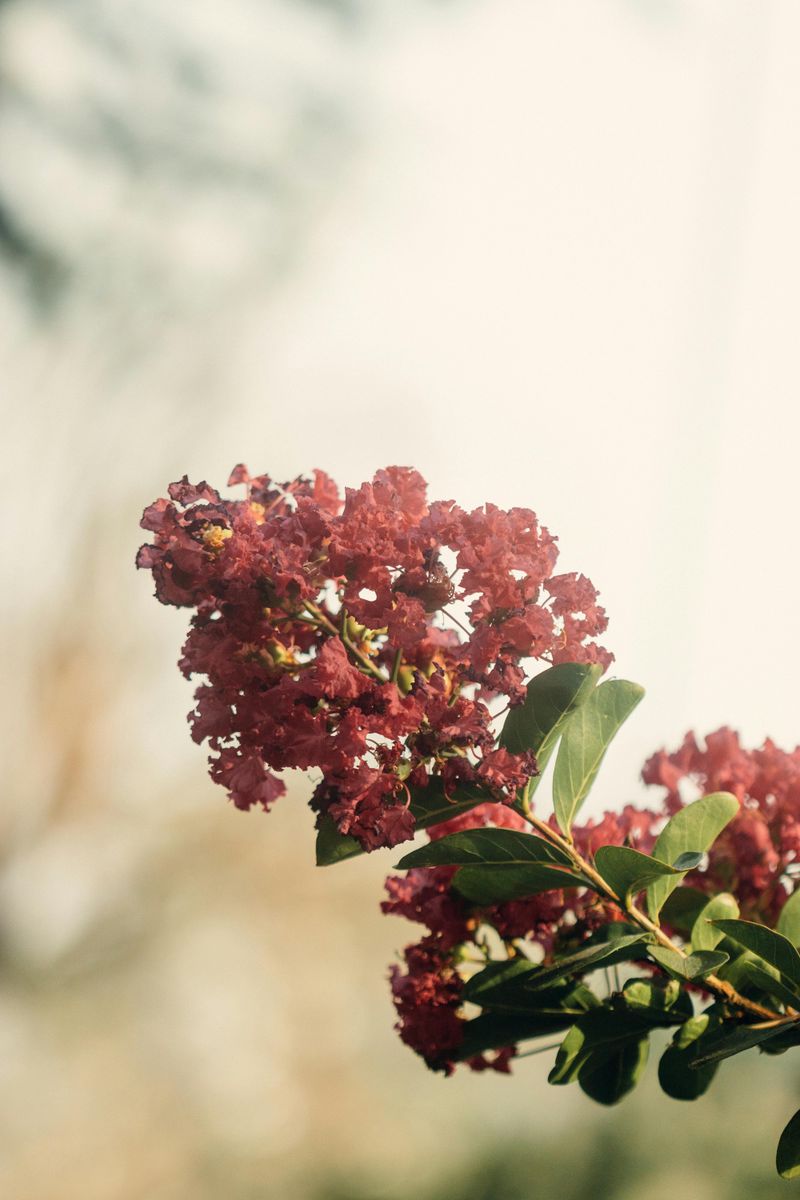
A small, clean cut on a young branch heals relatively quickly. A large, blunt cut through a thick trunk? That is a different story entirely.
Trees heal wounds by growing new tissue around the edges, slowly sealing the exposed wood from the outside in.
But when the wound is larger than a few inches across, that sealing process can take many years, and in some cases, the tree never fully closes the gap. Open wounds are open invitations.
Exposed wood on a crape myrtle can attract boring insects, harbor bacteria, and allow moisture to seep into the heartwood where rot can develop slowly over time.
Missouri’s humid summers create the perfect conditions for this kind of internal damage to accelerate.
By the time you notice something is wrong on the outside of the trunk, the damage inside may have progressed further than surface signs suggest.
What makes this even more frustrating is that many gardeners do not connect the dots between their annual pruning habit and the tree’s declining health years later.
The wounds from five springs ago are still affecting the tree today, even if they look partially healed on the surface.
Cutting just outside the branch collar and never removing more than a quarter of the canopy at once gives wounds the best chance of closing cleanly.
Even better, avoid large cuts altogether and let the tree develop the way nature intended.
7. Fungal Disease And Bark Damage
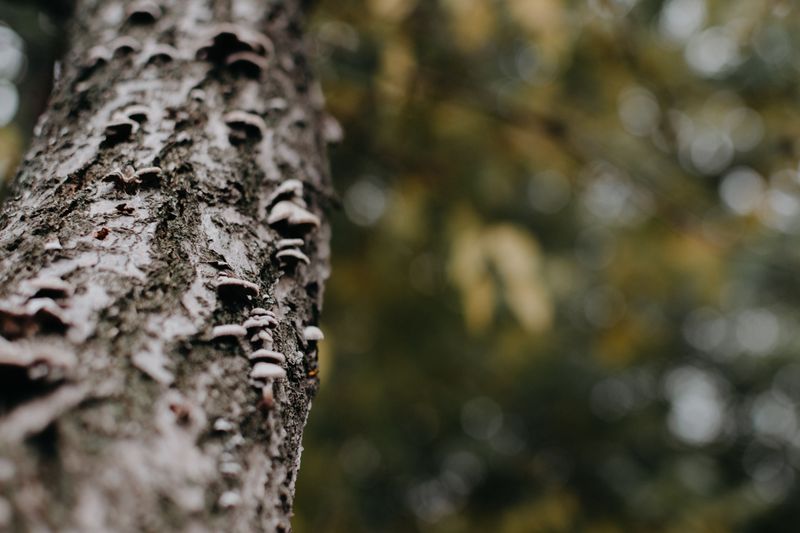
Fungi love a stressed tree. When a crape myrtle has been hard-pruned, its defenses are down and its wounds are open.
That exposed, weakened state creates exactly the kind of crowded, low-airflow environment where fungal spores thrive.
Powdery mildew is the most common offender, coating leaves and stems with a chalky white film that blocks sunlight and slows photosynthesis. In Missouri’s warm, humid summers, it spreads fast.
Bark damage is another serious consequence that often gets overlooked. When large branches are removed, the exposed wood at the cut site can crack and split as it dries out in the summer heat.
These cracks run down into the bark below the cut, creating entry points for pathogens and insects that the tree has no way to block.
The bark is the tree’s first line of defense, and once it is compromised, trouble tends to follow quickly. Fungal infections on a pruned crape myrtle are not just cosmetic problems.
Severe powdery mildew can stunt growth, reduce flowering, and weaken the tree over multiple seasons.
Combined with the other stressors caused by heavy cutting, a fungal infection can significantly weaken the tree across multiple growing seasons.
The good news is that healthy, properly maintained crape myrtles with good air circulation and natural canopy structure are far more resistant to fungal problems.
Keeping your pruning minimal and thoughtful is one of the best disease-prevention strategies available to any home gardener in the region.
8. Pruning Is Simply Not Necessary For Blooming
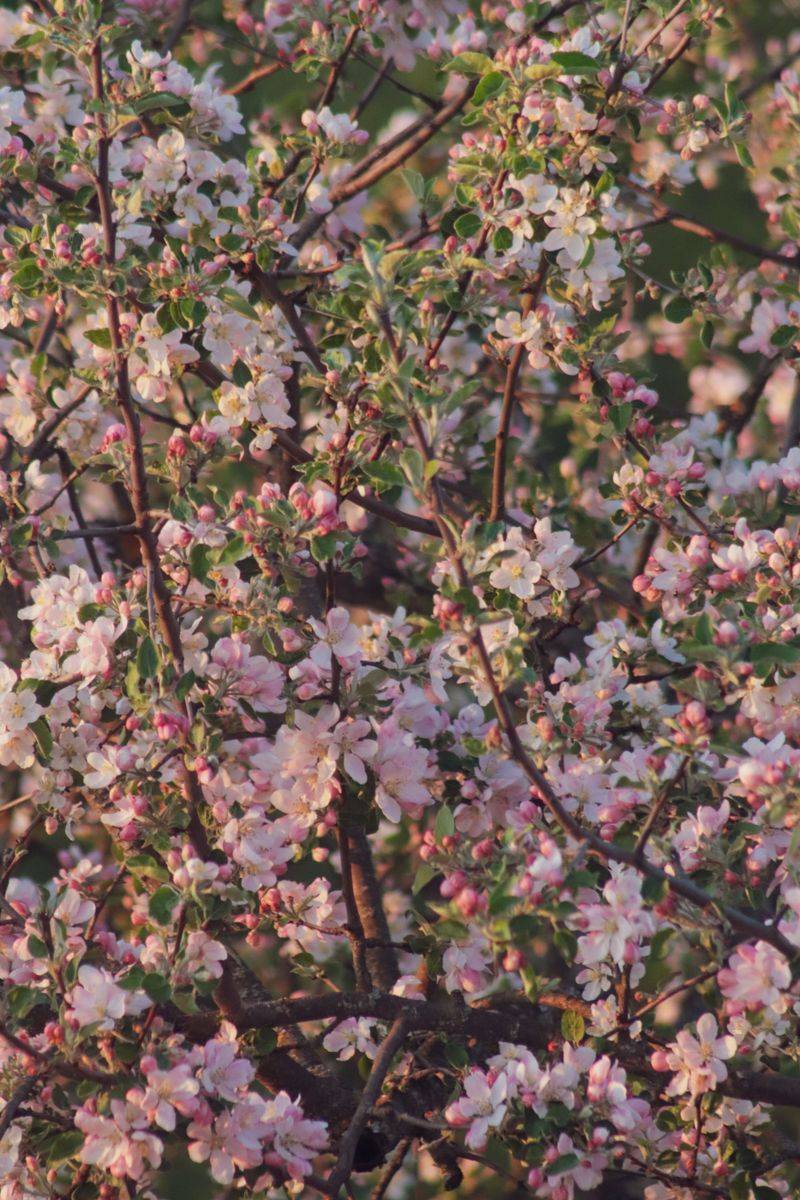
Nobody told the crape myrtle it needed a haircut to bloom. Left completely alone in the right growing conditions, a crape myrtle will produce stunning flowers every single summer without a single cut.
The tree’s blooming cycle is driven by warmth and sunlight, not by how aggressively you pruned it last February.
This is the foundational truth that makes hard topping so unnecessary and so avoidable. The only pruning a crape myrtle genuinely benefits from is light, selective work.
That means removing crossing branches that rub together, trimming off suckers at the base, and occasionally thinning a few interior branches to improve airflow. None of that requires cutting back to stubs.
All of it can be done with hand pruners on branches no thicker than a finger, leaving the tree’s overall shape and structure completely intact. That kind of thoughtful maintenance takes twenty minutes and causes zero lasting harm.
Missouri crape myrtle owners who have made the switch to hands-off care consistently report that their trees look better, bloom more fully, and require far less attention overall than the hard-pruned trees in neighboring yards.
The natural form of a mature crape myrtle, with its smooth, peeling bark and sweeping branch structure, is genuinely one of the most attractive features any landscape can offer. You do not need to cut that away to get beautiful results.
Put the loppers back in the shed, step away from the tree, and let your crape myrtle show you exactly what it is capable of when you finally get out of its way.