Reasons Your Texas Tomatoes Are Still Green In Early September
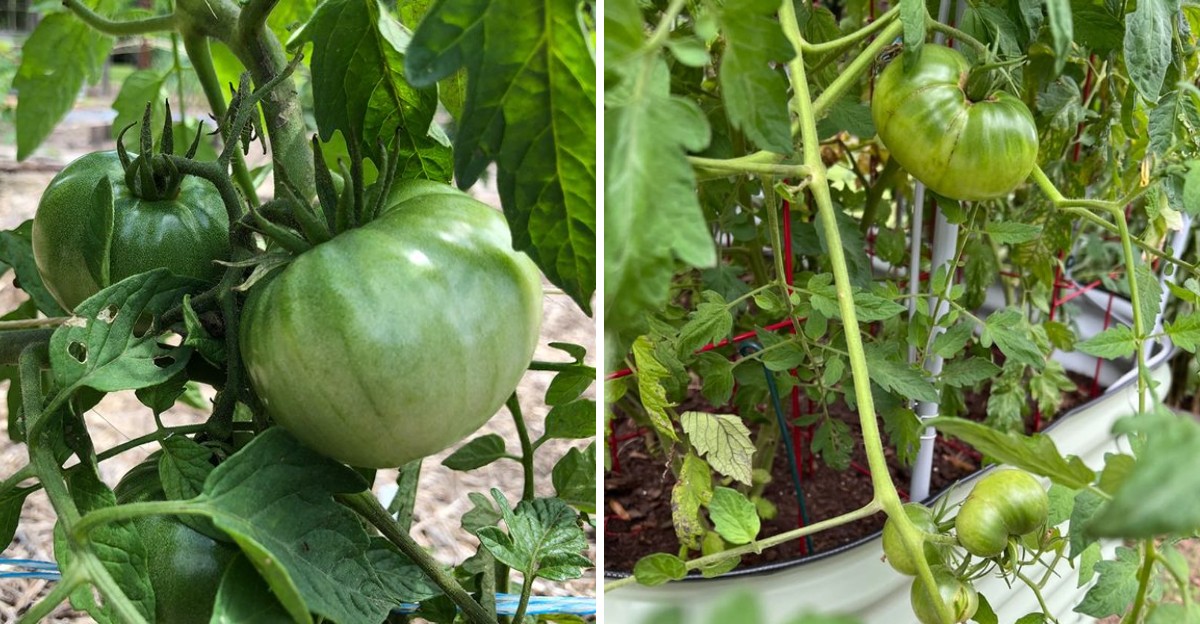
Same cluster of tomatoes on the fence for two weeks now. Full sized. Firm. Green as a pool table.
Nothing looks wrong either, which is the frustrating part. Leaves are fine, fruit is plentiful, and the color simply never arrives.
Here’s what many Texas gardeners don’t know about ripening: it’s a chemical process with strict temperature limits, and a Texas summer blows past every one of them.
Pigment production shuts down above a certain point. The hormone driving the whole process nearly disappears when it gets hot enough.
So the plant isn’t failing. It’s paused.
Add heat-related blossom drop, fall planting schedules, and a couple of common feeding mistakes, and green September fruit starts looking entirely normal.
Curious which explanation applies to your garden?
1. Extreme Heat Pauses Ripening Chemistry
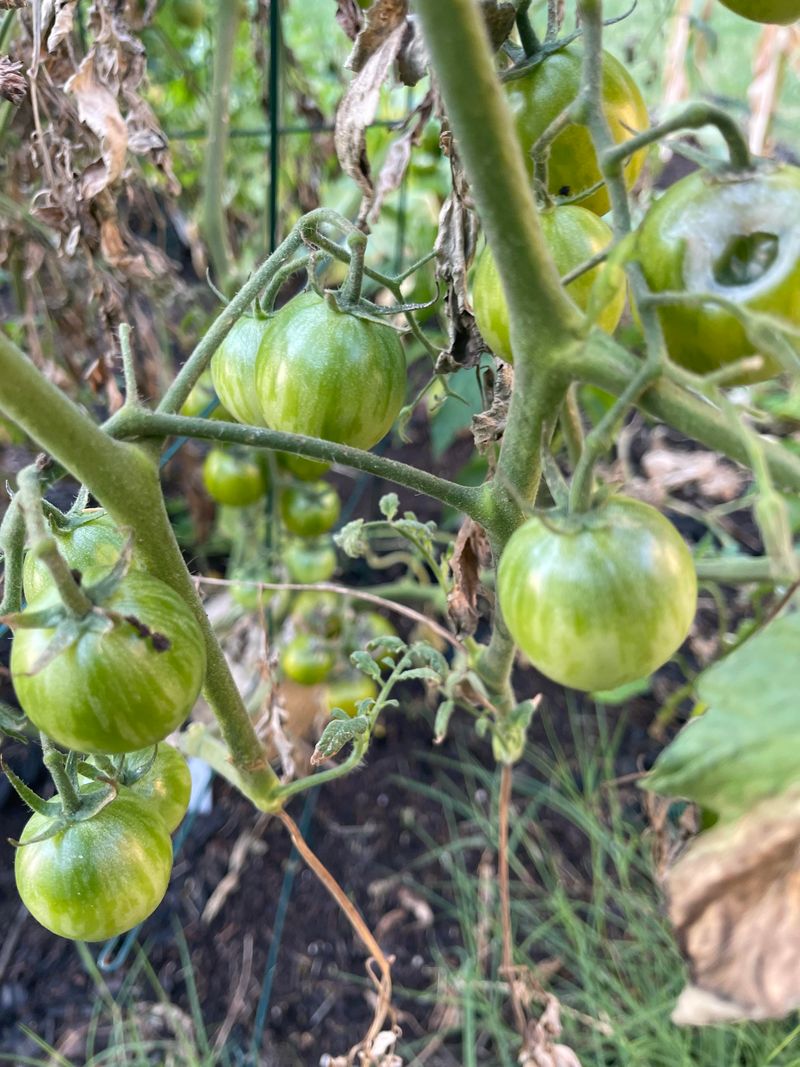
Sunburned shoulders, midday wilting, and not one hint of pink. That combination points at the thermometer.
Once daytime temperatures settle above roughly 85 degrees, tomato plants stop producing lycopene and carotene. Those are the pigments responsible for red and orange color.
Push past about 93 degrees and the slowdown deepens considerably. Ethylene, the hormone that triggers ripening, drops sharply in that heat.
Fruit can be fully grown with mature seeds inside and still sit there green. Nothing broken about it.
Texas summers hit those numbers without effort. A stretch of 100-degree afternoons with nights near 80 keeps fruit above the cutoff around the clock.
Ripening doesn’t fail under those conditions. It waits.
Tomatoes color best between roughly 68 and 77 degrees. Anything far outside that window slows the process.
That range explains why September fruit behaves better than August fruit. Weather does most of the work.
Shade cloth rated around 30 to 40 percent trims several degrees off the canopy during brutal afternoons. Deep watering two or three times weekly keeps roots from adding stress.
A thick mulch layer holds soil moisture and moderates root-zone temperature. Both help without promising much.
Skip the panic responses. Extra fertilizer, daily sprinkling, and stem pinching cannot override chemistry.
2. Blossom Drop Delayed Fruit Set Earlier
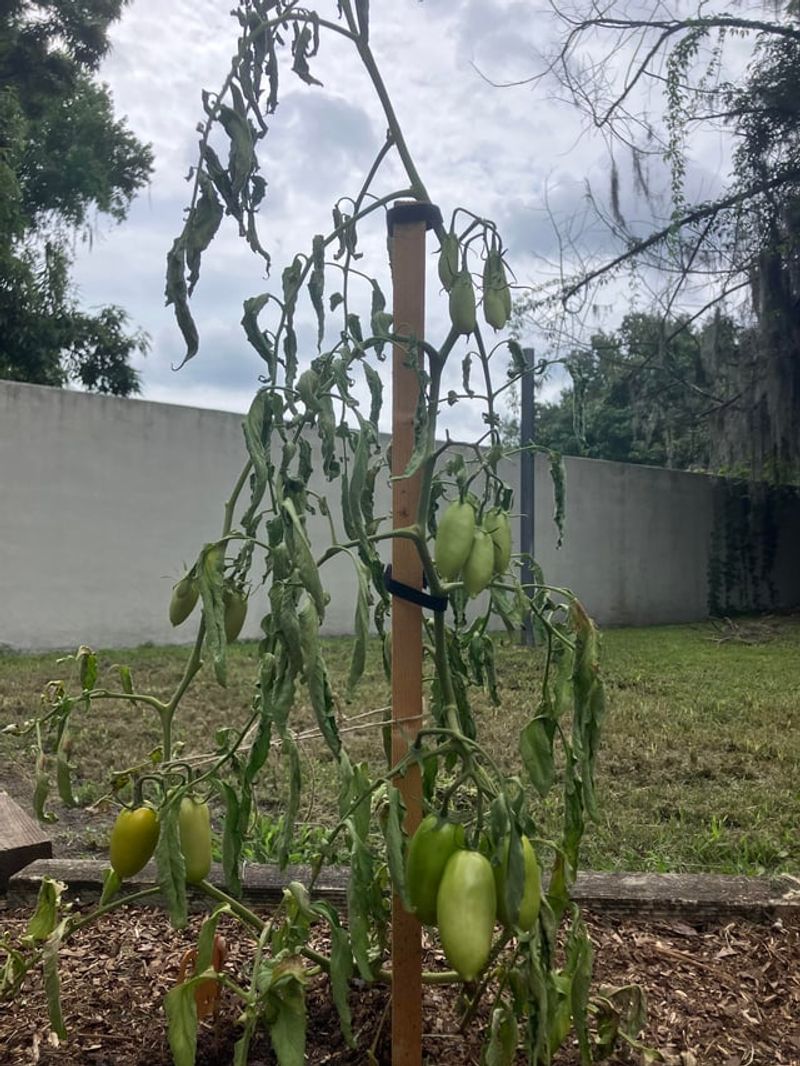
Yellow flowers scattered across the mulch back in July weren’t random. Tomato pollen turns sterile when daytime highs climb past roughly 92 degrees.
Nights staying above 75 compound that problem. Blooms open, fail to pollinate, and drop.
Weeks of that pattern leave a gap in the harvest calendar. The plant kept growing while setting almost no fruit through peak heat.
Fruit set resumed only when weather eased slightly. Often very late July or into August.
From open flower to ripe tomato takes roughly 45 to 60 days depending on variety and fruit size.
Run that arithmetic and early September green fruit makes complete sense. Those tomatoes are simply young.
Humidity contributes as well. Pollen clumps in sticky air and refuses to release, so fruit set stalls even on days that feel manageable.
Tapping flower clusters gently in the morning improves pollination on the next round of blooms. Cheap and occasionally effective.
Timing beats troubleshooting going forward. Spring transplants going in early enough to flower before mid-June usually clear the blossom drop window.
Your Texas Garden Changes Every Week. Your Plan Should Too.
Gardening in Texas changes quickly throughout the season. Every Friday you’ll receive a simple weekly plan showing exactly what to plant, prune, fertilize, harvest, and protect so you never miss the right timing.
Fall transplants set fruit as heat backs off through September. Two different strategies, same goal.
Keeping plants healthy during the drop period pays off later. A vine holding its leaves through August produces flowers the moment conditions allow.
3. A Second Planting Is Still Catching Up
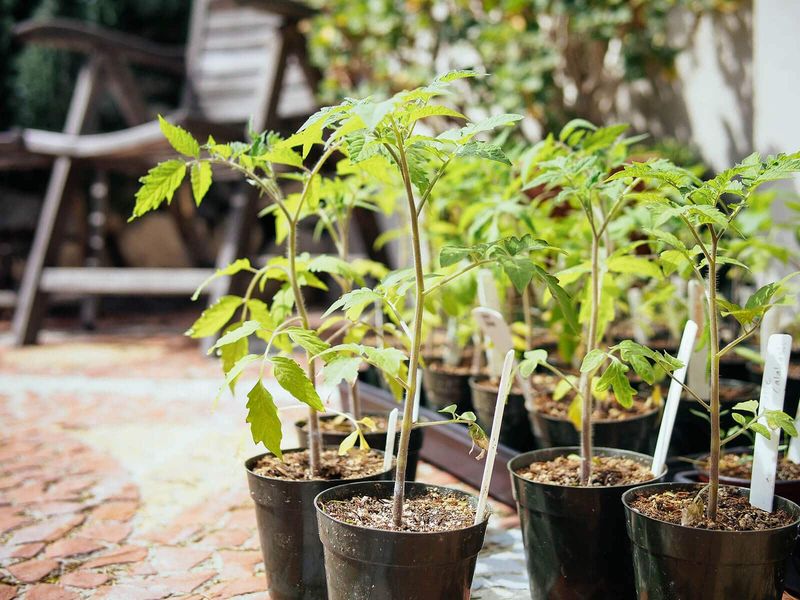
Texas gardeners often run two tomato crops per year, and that habit explains plenty of September green.
Standard guidance describes a spring planting followed by a second round timed to carry fruit into fall. The fall crop is supposed to look immature right now.
Transplant dates vary considerably across the state. Many regions set fall transplants from late June through August.
South Texas gardeners plant later than the Panhandle. Geography shifts everything.
Count backward from your average first freeze date to check your own schedule. Most varieties need roughly 70 to 85 days from transplant to first ripe fruit.
Add a couple weeks for heat delays and the math often lands in October or November. That timeline is normal rather than late.
So a plant loaded with small green fruit in early September may be exactly on schedule.
Fall crops carry a real advantage too. Ripening in cooler weather produces better color and often richer flavor than fruit struggling through August.
Cooler nights also reduce cracking and sunscald. Quality improves noticeably.
Protection becomes the main task later. Row cover or an old bedsheet draped over plants pushes harvest past an early cold snap.
Watch the forecast rather than the calendar, since Texas freeze dates swing by weeks between years.
4. Excess Nitrogen Favors Vines, Not Fruit
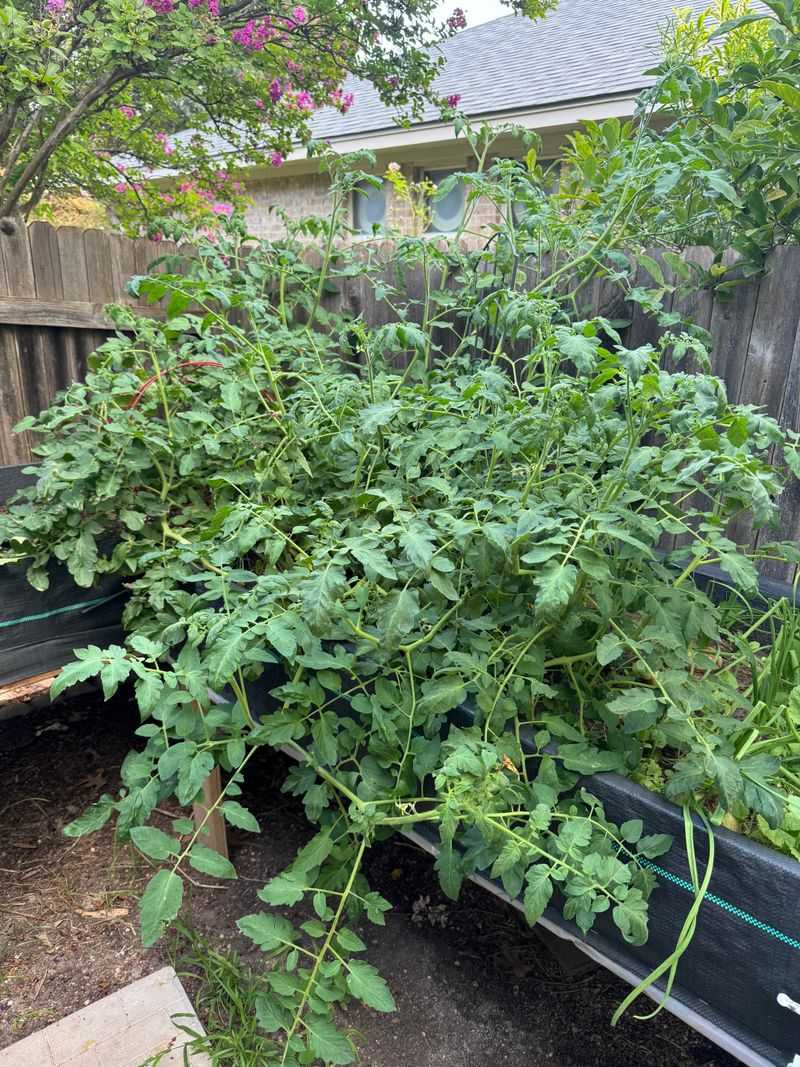
Chest-high leafy growth, thick stems, deep green foliage, and hardly a tomato in sight. Overfeeding is usually the explanation.
Nitrogen builds leaves and shoots. A plant swimming in it chooses vines over fruit every time.
Lawn fertilizer drift causes plenty of these situations. A high-nitrogen blend applied near the garden does it easily.
Compost heavy with fresh manure produces the same result. The vine looks impressive and yields very little.
Fruit already on the plant can stall too. Energy that should move into sugars and pigments goes into new shoots instead.
Removing that pressure helps more than any product would.
Switch to a fertilizer lower in the first number with more phosphorus and potassium. Side-dress lightly once fruit reaches golf ball size.
Repeat three to four weeks later. Light and frequent beats heavy and occasional.
A soil test through your county Extension office removes guesswork for about the cost of two transplants.
Many Texas soils already hold plenty of phosphorus, so blind feeding wastes money and contributes to runoff problems.
Watch the growing tips for a diagnostic clue. Pale spindly new growth signals hunger while thick curling dark growth signals excess.
Easing off nitrogen won’t turn green fruit red overnight. It stops the plant from stalling further.
5. Beefsteak Varieties Struggle More In Heat
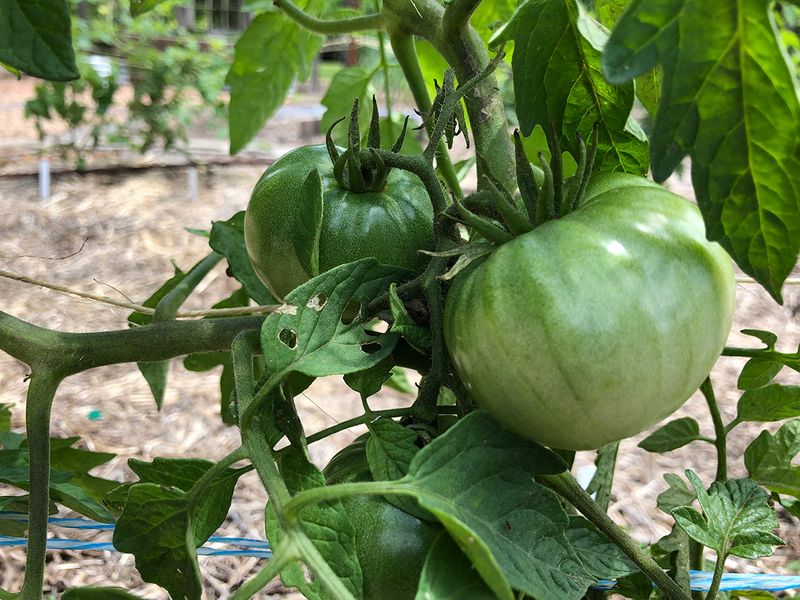
Big slicing tomatoes have a reputation, and toughness isn’t part of it.
Beefsteak types need more days on the vine, sometimes 80 to 90 from transplant. Every one of those days has to cooperate.
Texas Augusts rarely cooperate. That’s the whole problem.
Large-fruited varieties also shed blossoms faster in heat. Their pollen fails at temperatures heat-tolerant hybrids handle without trouble.
Fruit set arrives late and thin as a result. Add the longer ripening window and green September fruit becomes almost predictable.
Breeders addressed this directly. Solar Fire, Heatmaster, Phoenix, Tycoon, and Celebrity were all selected to set fruit under conditions like these.
Small-fruited types keep producing when big slicers quit. Juliet and most cherry tomatoes fall in that category.
Solar Fire came out of Florida breeding work aimed at hot humid summers. It has since become a staple in Texas trial gardens.
None of this requires abandoning a favorite heirloom. Plant one or two for flavor and back them up with heat-tolerant hybrids for volume.
That mix keeps the counter full through both seasons.
Timing matters as much as variety selection. Beefsteaks planted early in spring often finish before the worst heat arrives.
Using them for a fall crop is a gamble, since heavy fruit may not color before the first freeze.
6. Fruit May Not Have Reached Breaker Stage
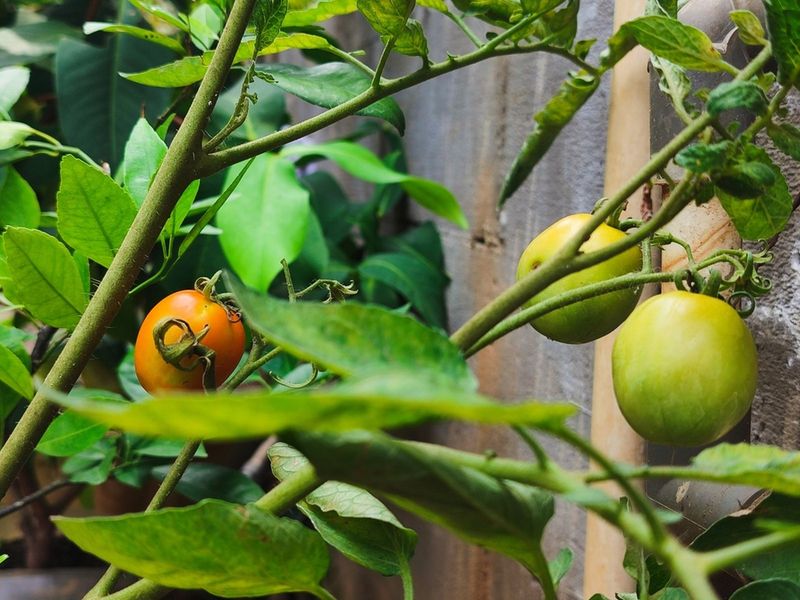
Growers use a specific term for the moment ripening truly begins. Breaker stage.
A tomato reaches it when the blossom end shows the first faint tan or pink blush, generally across less than ten percent of the fruit.
Everything before that point is green in the fullest sense. No process has started yet.
Mature green comes just before breaker. Fruit has reached full size, skin looks glossy rather than dull, and seeds slip away from a knife instead of getting sliced.
Cut one open if you’re curious. That test settles the question immediately.
The distinction matters at harvest. Fruit at mature green or beyond finishes ripening indoors on a counter.
Immature green fruit picked early never develops decent color or flavor. No technique changes that.
Paper bags and banana neighbors only work on fruit that has already crossed the line. Ethylene speeds a process that’s already possible.
It cannot start one that isn’t. Physiology sets the limit.
For small hard shiny green fruit, the practical answer is nothing. Water steadily, keep leaves healthy, and wait.
One exception deserves noting. Fruit at breaker stage during a brutal heat wave often colors better indoors than on the vine.
Picking then protects it from sunscald and cracking. Store near 70 degrees, out of direct sun, and never refrigerate.
7. Pruning Leaves Will Not Speed Things Up
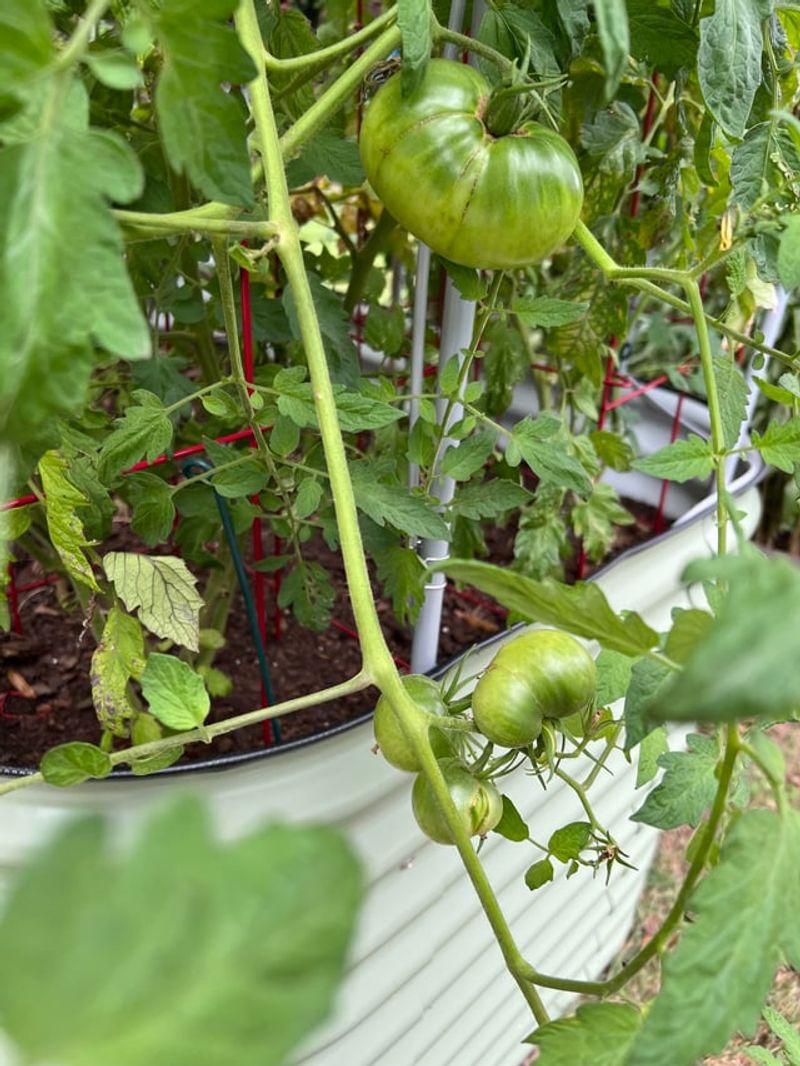
Stripping leaves to let sunlight reach fruit ranks among the most persistent garden myths.
Sunlight doesn’t ripen tomatoes. Temperature and ethylene do, and the entire process happens inside the fruit.
Light hitting the skin contributes nothing. That’s the part people find hard to accept.
Leaves are the factory. They produce the sugars that give a tomato flavor and shade fruit from afternoon sun.
Pull them off and you invite sunscald, meaning pale leathery patches on the shoulders. Damage rather than progress.
Light thinning does have a place. Removing lower leaves touching the soil slows disease spread.
Opening the center slightly improves airflow in humid weather. Wholesale defoliation accomplishes neither.
Skip the other shortcuts too. Root pruning, trunk slicing, and withholding water all stress the plant without affecting pigment production.
Those tricks circulate widely and never hold up. Physiology doesn’t negotiate.
Relief arrives on its own schedule instead. As September progresses, Texas highs typically slide into the 80s with nights in the 60s and low 70s.
Ripening chemistry restarts as temperatures approach that 68 to 77 degree range.
Gardeners often report a sudden rush of color after the first real cool front. Fruit sitting green for weeks blushes within days.
Keep plants watered and lightly fed so they’re ready for that moment.
8. What To Do While You Wait
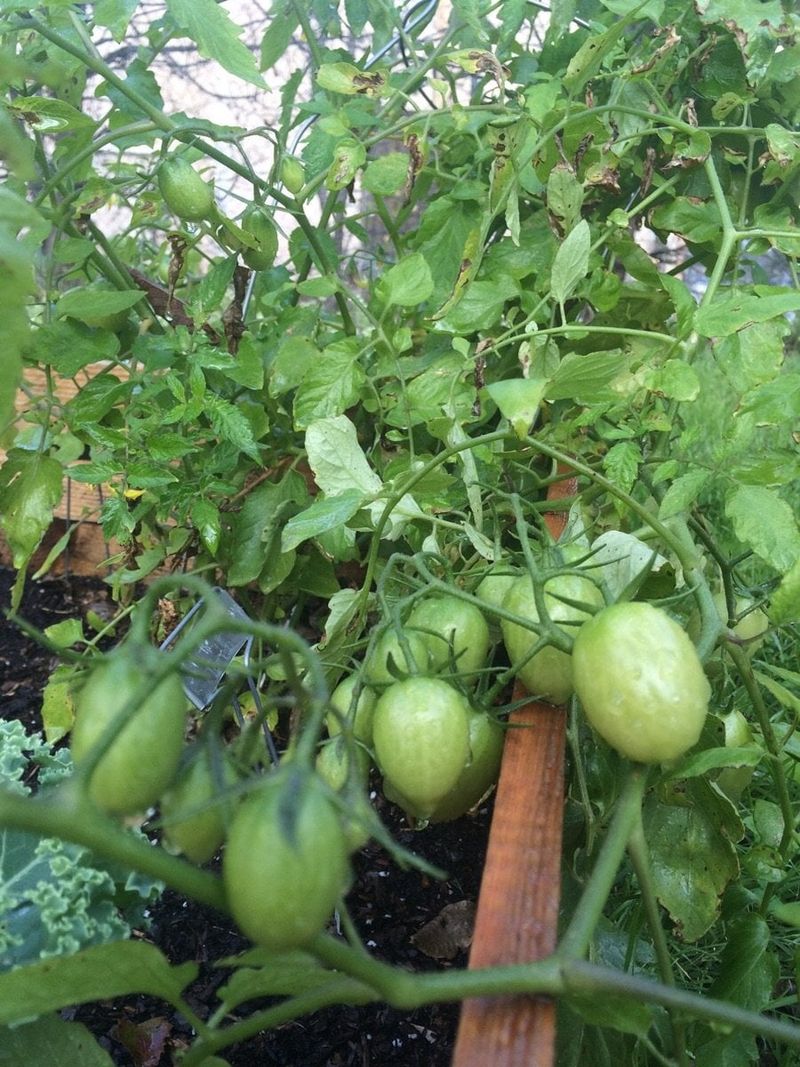
Waiting isn’t the same as doing nothing. A few habits protect the crop through the remaining heat.
Water deeply and consistently, two or three times weekly rather than daily sprinkling. Deep roots handle heat considerably better.
Inconsistent moisture causes its own problems. Cracking and blossom end rot both trace back to swings between dry and saturated.
Maintain two to three inches of mulch across the root zone. Soil temperature moderates and moisture lasts longer.
Watch for spider mites, which thrive in hot dry conditions and cause stippled bronzed leaves. A strong water spray handles early populations.
Stink bugs and leaf-footed bugs both feed on ripening fruit, leaving pale corky spots beneath the skin. Hand removal works at garden scale.
Support heavy fruit before it pulls stems down. Cages and stakes both prevent losses during storms.
Feed lightly rather than heavily, using a lower-nitrogen product every few weeks.
Remove any fruit showing rot or heavy damage. That directs energy toward what remains.
Keep foliage as healthy as possible, since those leaves feed the fruit and shade it simultaneously.
Then watch the forecast. The first cool front does more than anything else on this list.