Scorpions Can Still Be Active in Arizona in October – How to Inspect Safely
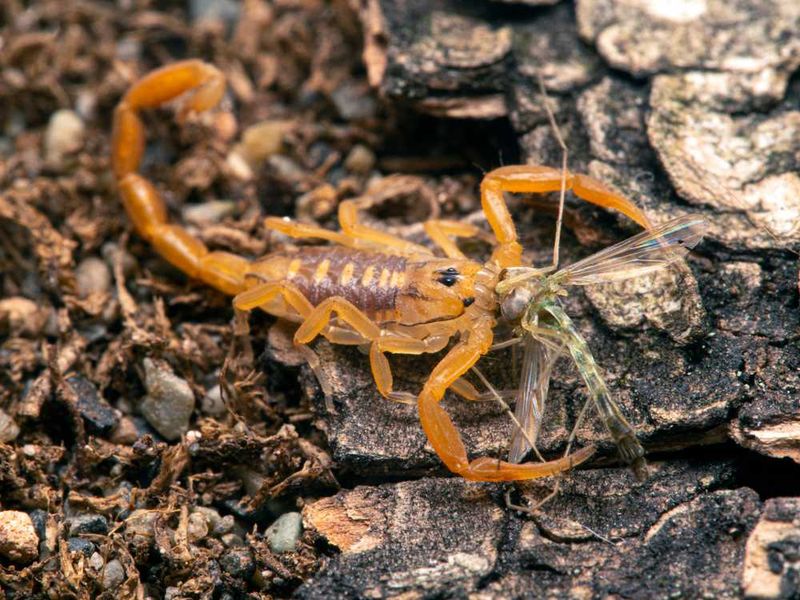
Scorpions do not follow a neat calendar, and October in the low desert can still bring warm nights that keep them moving. You may spot a small one near your back door and wonder if it just hatched, but the truth about scorpion life cycles is a bit more complicated than that.
Knowing how to check your yard safely, what you are actually looking at when you find a tiny scorpion, and how to make your home less welcoming can go a long way toward reducing unwanted encounters.
October Can Bring Activity, but It Is Not a Proven Baby-Scorpion Peak
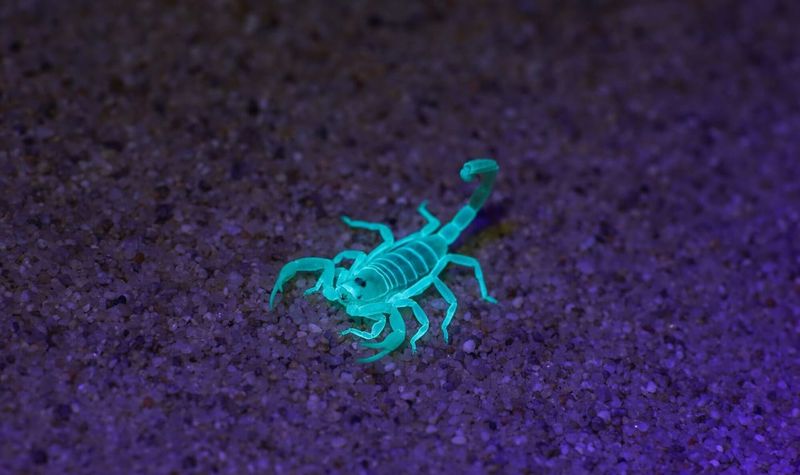
Plenty of people in the Phoenix and Tucson areas head into October expecting scorpion season to be winding down, but that assumption can get you into trouble. Nighttime temperatures in the low desert often stay well above 70 degrees Fahrenheit deep into fall, and warmer nights tend to keep scorpions on the move.
The idea that October is when baby scorpions become especially hard to spot is not backed up by the sources reviewed for this article.
A University of Arizona Poison Center expert, cited in University of Arizona Health Sciences reporting on scorpion season, describes May through October as the broad active season for Arizona bark scorpions, with activity peaking around June. That is a general estimate, not a guarantee for every yard or every year, and it does not single out October as a month when small scorpions are uniquely hard to detect.
What the evidence does support is this: if your nights are still warm, scorpions may still be active. Local conditions, including your specific neighborhood’s heat retention, landscape irrigation, and shelter opportunities, matter more than the calendar date.
Treating October as a month when caution is still reasonable makes sense, but there is no need to treat it as a special danger window for newborn scorpions.
A Small Scorpion Is Not Necessarily a Newborn
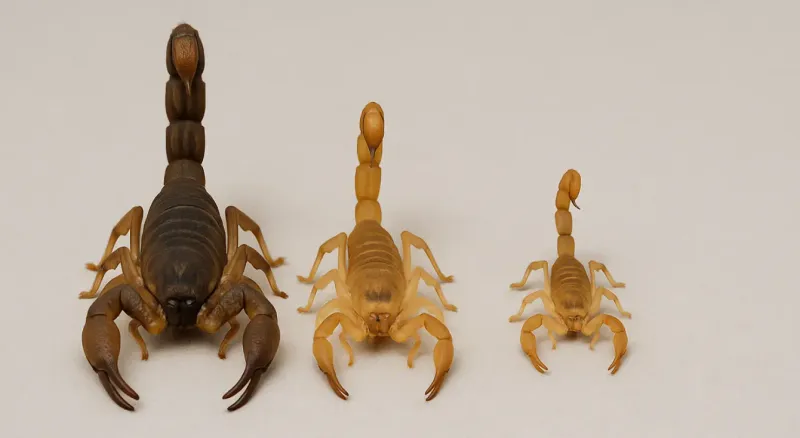
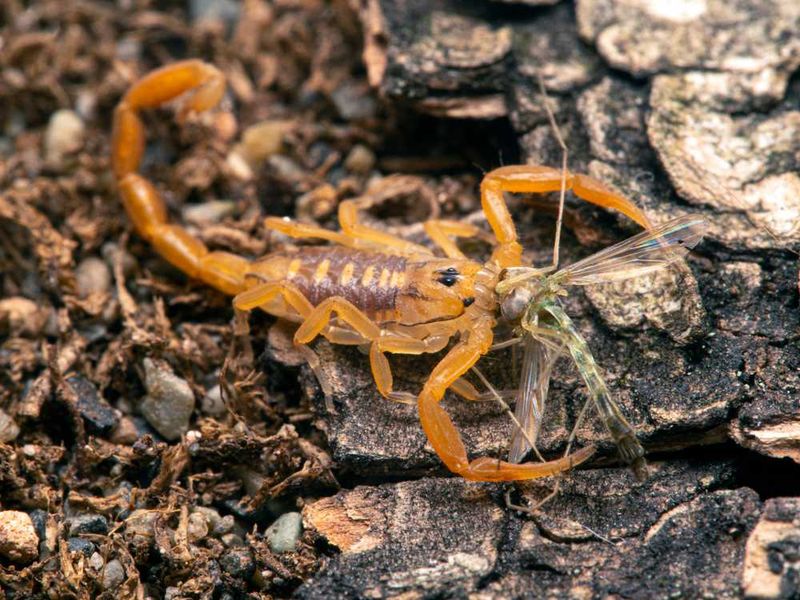
Spotting a scorpion that looks tiny and assuming it just hatched is an easy mistake to make. Arizona bark scorpions give live birth rather than laying eggs, and the young, sometimes called scorplings, are born fully formed.
According to the Arizona-Sonora Desert Museum’s bark scorpion fact sheet, births occur in summer, not in October, and the young spend roughly one to three weeks riding on the mother’s back before they disperse on their own.
Once a scorpling leaves its mother, it does not stay tiny for long. Juveniles continue growing by molting their exoskeleton multiple times over the course of months, gradually reaching adult size.
A small scorpion you find in your yard in October is far more likely to be a juvenile working through its growth stages than a freshly born scorpling from that same week.
Recognizing this distinction matters because it changes how you think about the risk. A juvenile bark scorpion can still sting and deliver venom just as an adult can.
Size alone does not tell you the scorpion is harmless or newly arrived in your yard. Treat any scorpion you encounter, regardless of size, with the same respectful distance you would give a full-grown adult.
Your Arizona Garden Changes Every Week. Your Plan Should Too.
Gardening in Arizona changes quickly throughout the season. Every Friday you’ll receive a simple weekly plan showing exactly what to plant, prune, fertilize, harvest, and protect so you never miss the right timing.
How to Check for Scorpions After Dark
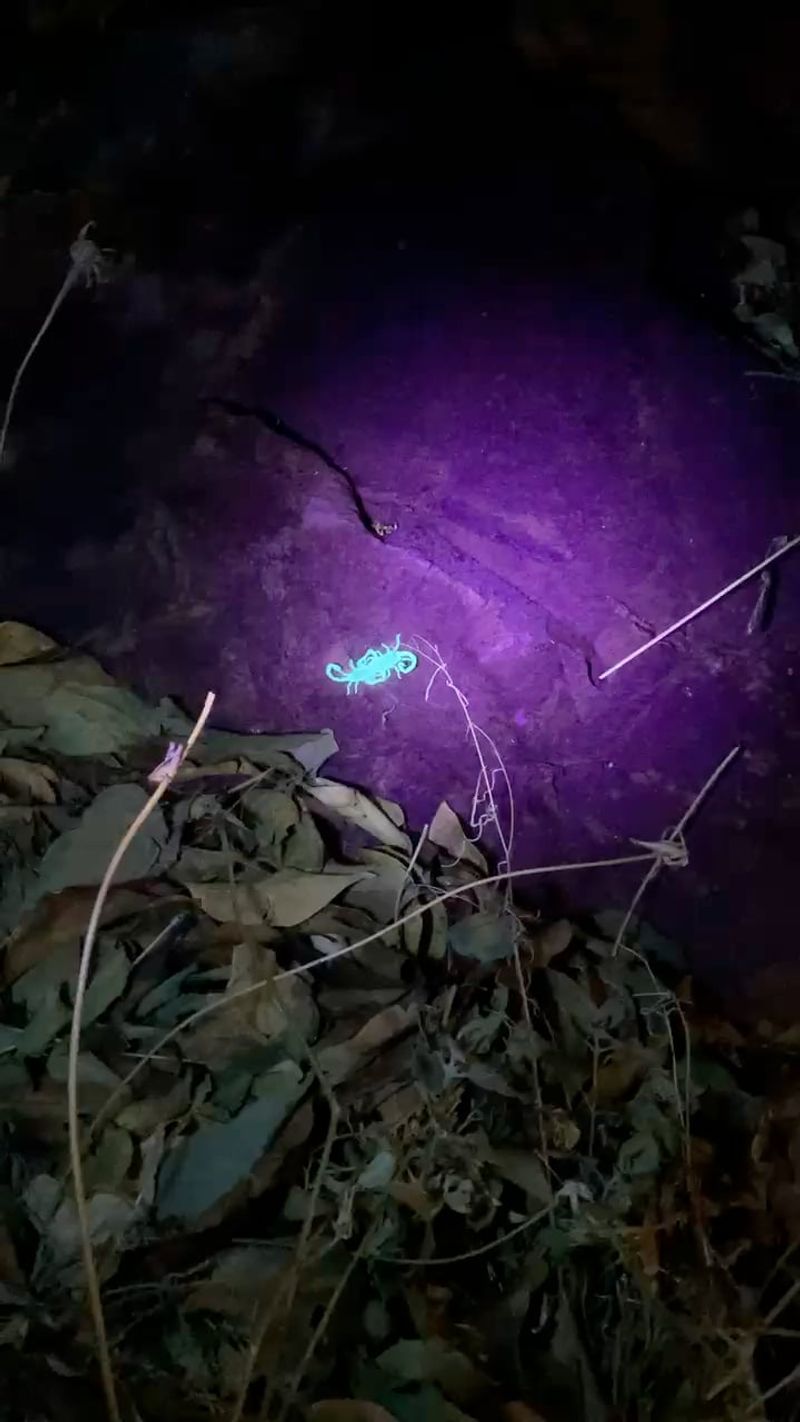
Scorpions spend daylight hours tucked under cover and become most active after the sun goes down. That behavior makes nighttime the most productive time to look for them around your yard, patio, and the exterior walls of your home.
A UV or black light flashlight is a practical tool for this kind of check because Arizona bark scorpions fluoresce under ultraviolet light, making them visible as a bright greenish glow against darker surfaces.
University of Arizona Cooperative Extension guidance on scorpion management includes an important safety note: never look directly into the UV light. Keep the beam aimed at the ground, walls, and objects in front of you rather than pointing it toward your face or anyone else’s eyes.
Scan slowly along the base of walls, under potted plants, around water features, and near any debris or yard materials where a scorpion might shelter.
Even a careful UV scan will not guarantee you find every scorpion present. Some may be tucked in spots the light cannot reach, and the glow can be subtle on rough or heavily textured surfaces.
Use the inspection as useful information, not as a complete all-clear. If you spot one, keep your distance and do not attempt to pick it up or move it with your hands.
Cover, Walls, and Water Can Shape Where Scorpions Hide
Bark scorpions are not randomly distributed across a yard. They gravitate toward protected spaces that offer shelter from heat and predators: crevices in block walls, gaps under rocks, the underside of loose bark on wood piles, and voids inside building structures.
In low-desert neighborhoods, hollow concrete block walls are a well-known refuge because they provide darkness, moderate temperature, and multiple entry points.
Irrigated landscapes add another layer of attraction. Drip systems and lawn watering keep soil moist and support the insects and other invertebrates that scorpions eat.
According to University of Arizona Extension guidance on scorpions of the desert Southwest, this combination of food availability and sheltered cover makes irrigated suburban yards genuinely hospitable habitat for bark scorpions throughout the warm months.
Rain and heavy irrigation can also prompt scorpion movement in ways that surprise homeowners. When the refuges scorpions rely on get flooded, such as soil cavities or low wall gaps, the animals may relocate to drier spots, sometimes moving closer to or into a structure.
That does not mean every scorpion in the yard will head indoors after a monsoon storm, but it is worth being more observant in the days following heavy watering or rainfall, especially around entry points to your home.
Reduce Entry Points and Handle Yard Materials Carefully
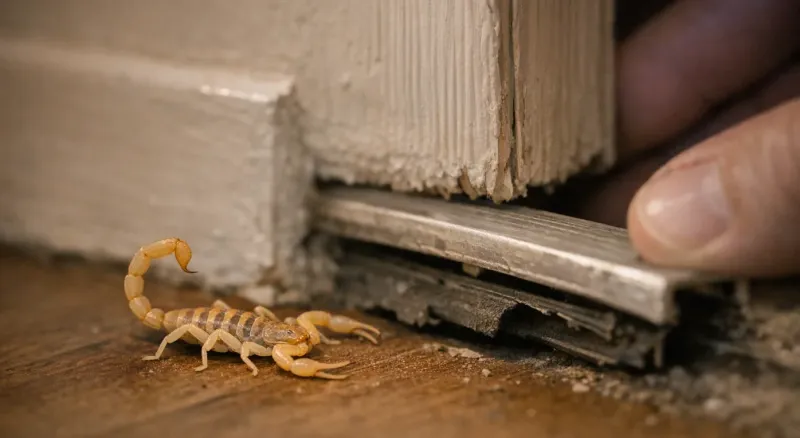
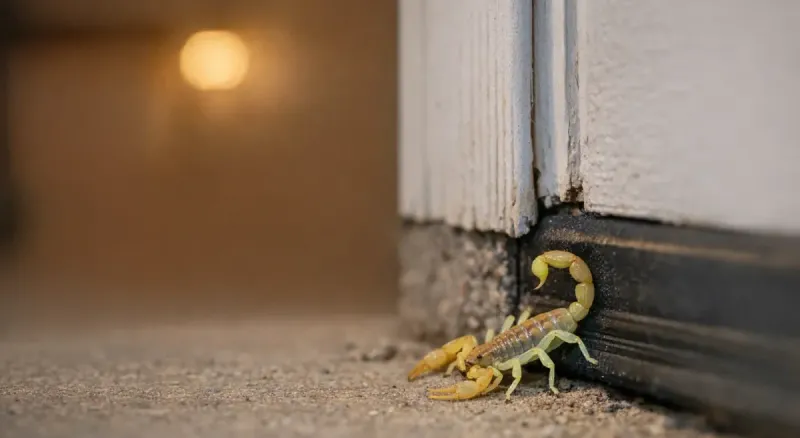
Once you know where scorpions tend to shelter, you can start making your home and yard less convenient for them. Gaps around doors are one of the most common entry points, and replacing worn or compressed door sweeps is one of the most straightforward fixes.
A sweep that no longer makes firm contact with the threshold leaves enough space for a scorpion to slip through, particularly slender bark scorpions that can compress their bodies remarkably flat.
Beyond doors, University of Arizona Community IPM guidance on scorpion season recommends sealing gaps around pipes, utility lines, and any openings in the exterior wall. Reducing piles of rocks, firewood, and yard debris close to the house removes the sheltered staging areas scorpions use before moving toward a structure.
Personal habits also make a difference when scorpions have been seen indoors or near entry points. Wearing shoes at night rather than going barefoot is a simple precaution that costs nothing.
Use gloves when moving rocks, bark, or stacked materials in the yard, since a scorpion sheltering underneath may react defensively. Shoes and clothing left on the floor are worth shaking out before putting them on, as scorpions occasionally shelter inside them overnight.
None of these steps promises a scorpion-free home, but together they meaningfully lower the chances of an unexpected encounter.
Pesticides Alone Are Not a Reliable Fix
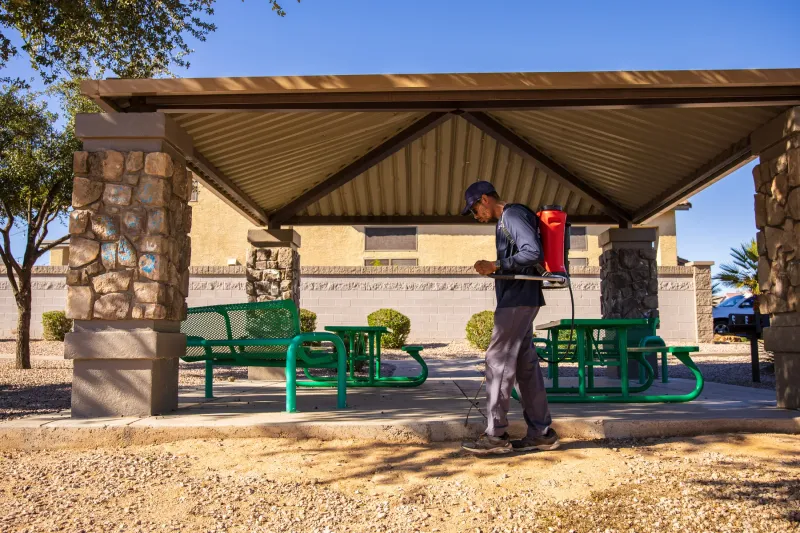
Many homeowners reach for a spray can as a first response when they start seeing scorpions, and while pesticides are part of the conversation, they are not the centerpiece of a sound management plan. University of Arizona Cooperative Extension is direct on this point: pesticides alone cannot reliably manage scorpion populations.
Scorpions spend most of their time in sheltered spots that sprays may not reach, and their hard exoskeleton and low contact rate with treated surfaces limits how much exposure they actually receive.
The more durable approach combines the habitat changes and exclusion steps described in the previous section with professional support when the problem persists. University of Arizona Extension guidance notes that for ongoing or severe infestations, a licensed pest-management professional may be the appropriate next step.
A professional can assess entry points and harborage areas that a homeowner might overlook and apply targeted treatments in a way that complements exclusion rather than replacing it.
Managing expectations honestly matters here. Even a thorough combination of exclusion, habitat modification, and professional treatment will reduce the likelihood of scorpion encounters rather than eliminate them entirely.
Scorpions are well established in low-desert Arizona, and the goal of any management program is meaningful risk reduction, not a guarantee that your yard will be completely clear.
What to Do if Someone Is Stung

A scorpion sting is alarming, and the first few minutes after it happens tend to be the most anxious. The clearest guidance comes from University of Arizona Cooperative Extension: call Poison Help at 1-800-222-1222 right away for advice specific to the situation.
Poison control specialists can help assess the severity of the sting and tell you whether a trip to urgent care or an emergency room is necessary.
While you are on the phone or immediately after, wash the affected area with soap and water and apply a cool compress to help with discomfort. According to University of Arizona Extension’s guide to scorpions of the desert Southwest, children face a greater risk of severe effects from bark scorpion stings than healthy adults do, so a child who is stung should be evaluated promptly even if symptoms seem mild at first.
Symptoms that call for urgent medical attention include difficulty breathing, muscle twitching, unusual eye movements, drooling, or any sign that the person is having trouble controlling their body. Not every sting produces severe symptoms, and reactions vary depending on the person, the scorpion species, and the amount of venom delivered.
Arizona is home to multiple scorpion species, and while the bark scorpion is the one of greatest medical concern, other species can sting and cause serious reactions in people who are sensitive to venom.
Use Warm Nights as a Reason to Be Careful, Not to Panic
October in the low desert is not some uniquely dangerous month for scorpion encounters, and no evidence reviewed for this article supports the idea that babies are suddenly harder to spot this time of year. What is true is that warm nights extend the window when scorpions remain active, and in Phoenix and Tucson that window can stretch well past what people in cooler climates would expect from a fall month.
That reality calls for reasonable caution rather than alarm. Keeping door sweeps in good shape, reducing yard debris near the house, doing an occasional UV check of exterior walls and common shelter spots, and wearing shoes after dark are habits that pay off throughout the warm season, including October.
University of Arizona Extension guidance frames these steps as risk reduction, and that framing is exactly right.
A scorpion in your yard is not a crisis. It is part of living in a desert ecosystem, and the creatures have been here far longer than the neighborhoods built around them.
The practical steps covered in this article will not make your property scorpion-proof, but they will make unexpected close encounters less likely. Steady, low-key attention to your yard beats a single panicked response every time.