Should You Keep Your Christmas Cactus in the Dark in Arizona to Get Blooms?
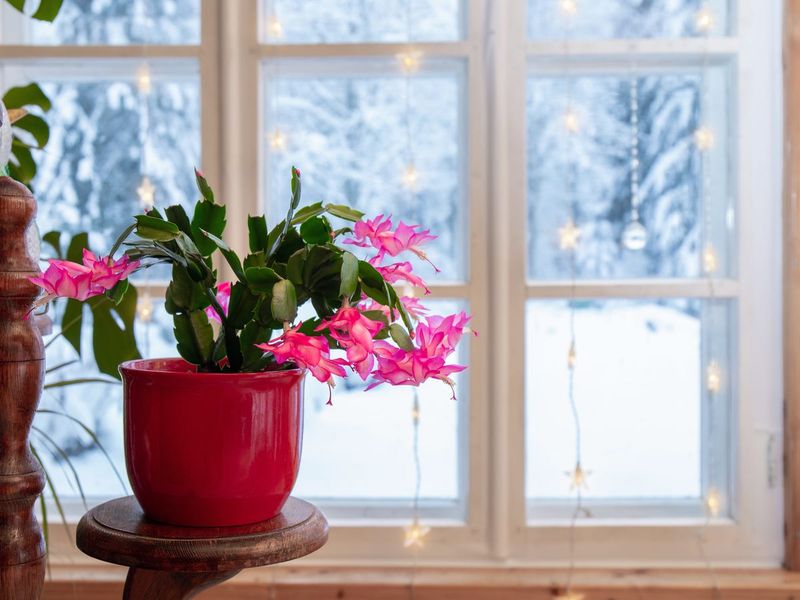
A Christmas cactus can sulk for months, then burst into bloom after a few weeks of longer nights. Plenty of gardeners hear that the secret is darkness and start tucking plants away all day.
That advice needs a small but important fix, especially in sunny Arizona homes with bright windows. Once you understand what the plant actually senses, the routine gets much simpler and much less stressful.
Darkness Is a Nighttime Cue
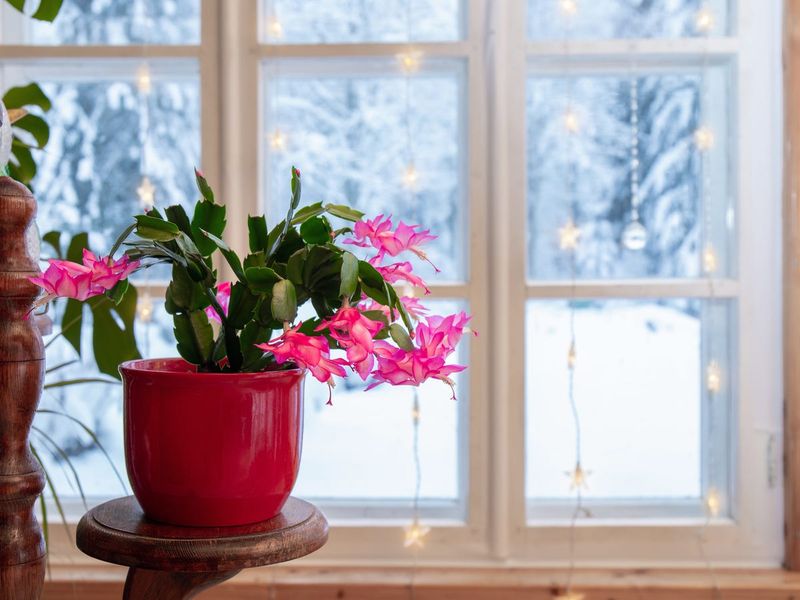
Keeping your plant in a closet all day sounds logical, but it would starve the plant of light. Holiday cacti want bright, indirect light during the day, just like most healthy houseplants do indoors.
Flower buds form in response to shorter days and longer nights, according to Iowa State Extension guidance on holiday cacti. Cooler temperatures also play a part, which we will get to in a later section of this guide.
So the real cue is a long, uninterrupted night, not a long stretch of gloom that lasts all day. Treat darkness as a nightly bedtime for the plant, not a full-time living arrangement for it.
Continuous darkness would not help the plant in any way, since leaves still need daylight to make food. A plant shut in a closet around the clock for weeks would likely weaken and drop its buds.
Once that distinction sinks in, the schedule becomes much easier to plan, and the next section covers the hours. Bright mornings and afternoons followed by a long quiet night is the whole idea for a plant hoping to bloom.
Think of it as a daily rhythm with bright light through the window and a dark night. Your cactus will follow that pattern once buds start to set, though timing varies by plant.
Choose a Night Length as a Starting Point
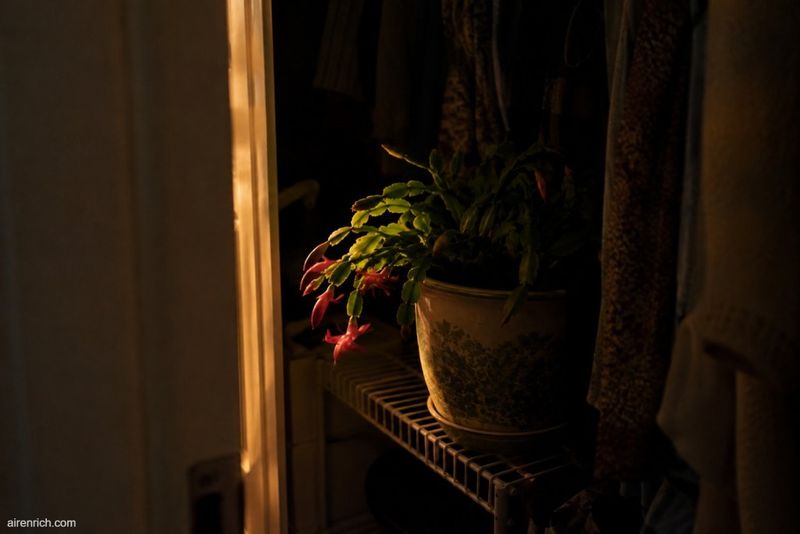
A handy starting point is 12 to 14 hours of uninterrupted darkness every night for several weeks. The rest of the day, the plant should sit in bright, indirect light near a window.
University of Arizona Cooperative Extension advice suggests that routine should run for six to eight weeks. That window gives the buds enough time to form before the plant settles back into normal care.
Treat those numbers as a starting point, not a fixed rule, because experts do not all agree. Some sources suggest shorter nights, and others ask for noticeably longer ones, depending on the plant.
Iowa State Extension says some varieties respond to about 12 hours of darkness, which fits the lower end here. Others may need 14 to 16 hours before buds begin to form, so a bare plant may want longer nights.
A simple example shows how to adjust without guessing wildly or changing everything at once in your home. If twelve hours brings no buds after several weeks, try stretching the night a little longer.
Mark the start date on a calendar so you can count the weeks without guessing later. Plants ignore calendars, yet gardeners forget dates surprisingly fast, and a simple note saves real confusion by early November.
Set Up a Routine Around Household Light
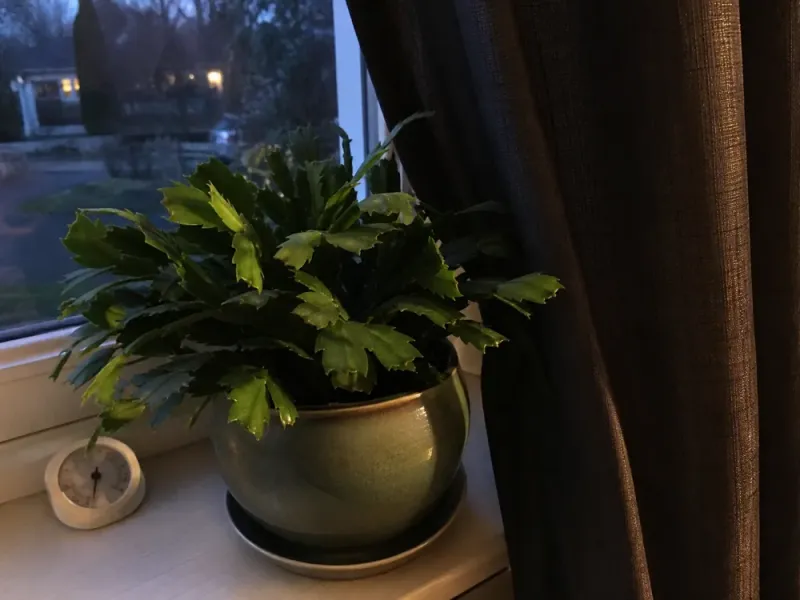
Many bedrooms and guest rooms are dark after bedtime, and that may be all your plant needs. If nobody switches on a lamp there overnight, the plant can stay exactly where it already sits.
Trouble starts with ordinary household light, such as a hallway lamp or a porch light shining through a window. Even brief interruptions can break up the long night the plant is trying to sense each evening.
In that case, University of Florida IFAS Extension suggests a closet or another dark spot for the night. University of Arizona advice points the same way, with the focus on a long, uninterrupted night.
Then comes the part people skip, which is carrying the plant back to bright, indirect light each morning. The closet works like a bedroom for the plant, not a permanent address during daylight hours.
A small routine makes the nightly move easy to remember, especially if you attach it to another habit. Carry the pot at bedtime, then bring it back to the window after breakfast so the schedule feels automatic.
Move the pot gently and keep the same side facing the light when you can each time. Small habits like that keep stress low while the plant sets buds over those weeks indoors.
Arizona Does Not Need a Special Darkness Rule
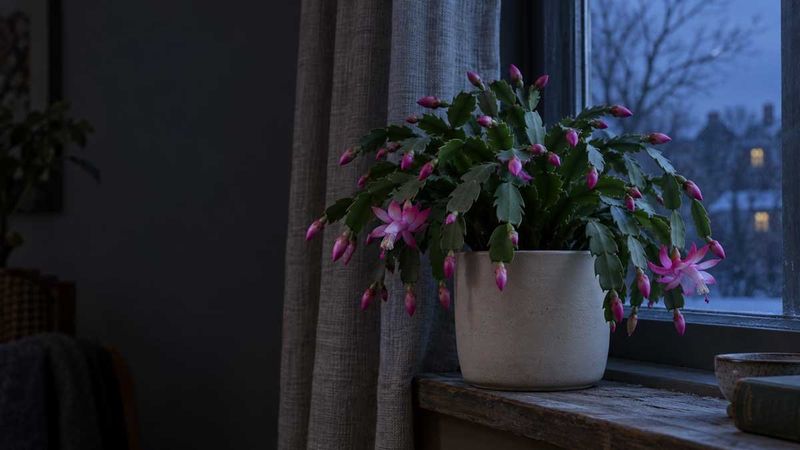
Arizona gardeners do not need a secret desert method, because holiday cacti respond to the same cues everywhere. What changes from home to home is the actual light and temperature the plant experiences indoors.
Walk through your house one evening and look for stray light near the plant before bedtime. Lamps and bright hallway bulbs can both cut the night short, even if you barely notice them.
Temperature works alongside day length, and a warm room can get in the way of bud formation. Iowa State says temperatures above 70°F can prevent flowering, even when the nights are long enough.
For general indoor care, Iowa State gives a range of 60 to 70°F, which many indoor rooms can reach. For a cooler spot during bud initiation, it suggests 55 to 65°F, so treat these as guidance, not a recipe.
A controlled study of one Schlumbergera truncata cultivar called ‘Madisto’ found flowering varied with day and night temperatures. It tested only that cultivar, so it cannot give every Arizona household an exact temperature prescription.
Practical clue: a cooler, dark spare room may suit the plant better than a warm, bright living room at night. A cheap thermometer near the pot shows what the plant actually feels, so you can adjust gently.
Check Which Holiday Cactus You Own
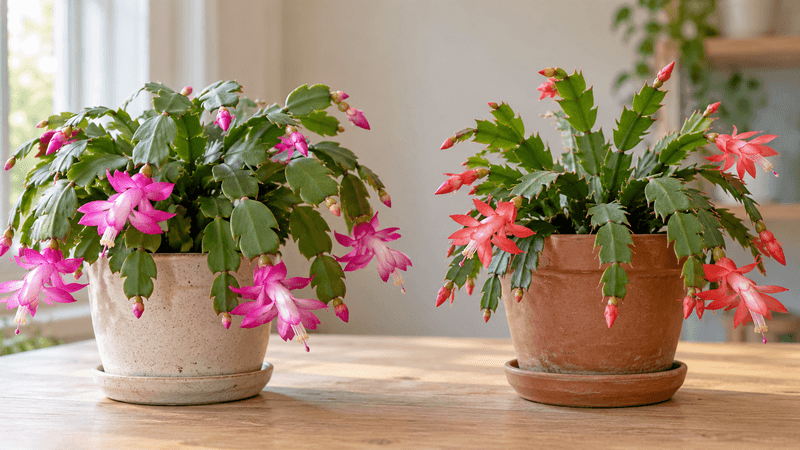
The plant labeled Christmas cactus at the store may actually be a different holiday cactus altogether. People and retailers use the name loosely, so a label alone rarely settles the question for you.
Look closely at the flat stem segments for a quick clue about which type you own. University of Arizona guidance notes that Thanksgiving cactus segments have pointed edges that can look almost toothed.
True Christmas cactus segments have rounder, more symmetrical edges with smoother outlines and a softer overall look. Compare a few segments side by side in good light, since one leaf can mislead you.
Why bother sorting out the type when the care looks so similar from plant to plant? Types can differ in flowering timing and sometimes in the cues they follow, so expectations matter.
A plant with pointed segments that blooms near Thanksgiving is not misbehaving and does not need fixing. It is simply following its own schedule, so judge your plant by its type, not just its label.
Keep Conditions Steady as Buds Develop
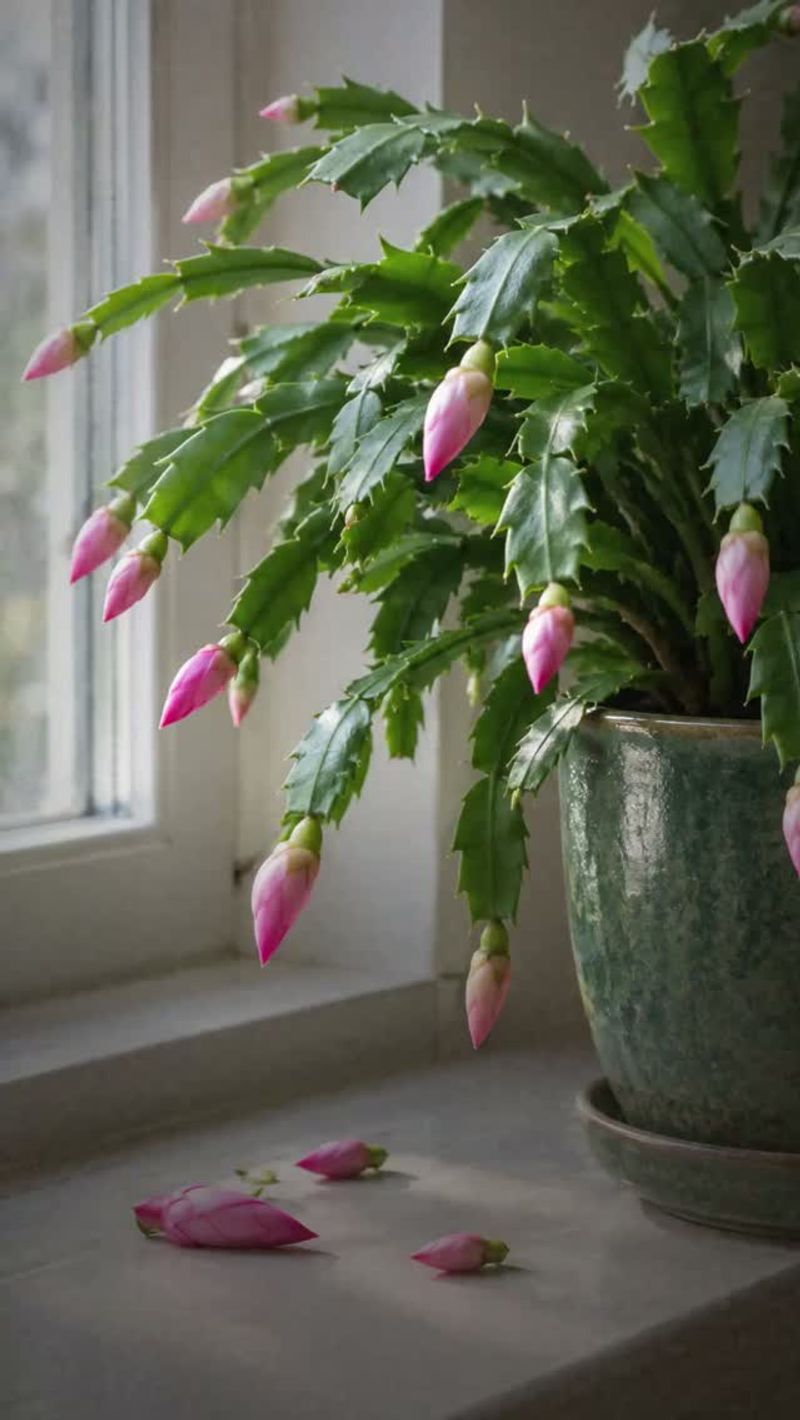
Once tiny buds show up at the stem tips, your job shifts from encouraging them to protecting them. Keep giving the plant bright, indirect light during the day, just as you did while the buds were forming.
Buds can be touchy about sudden changes, so resist the urge to rearrange the room now. Extension sources link abrupt shifts in light, location, watering, or temperature to bud drop, so keep each one steady.
Watering needs a middle path, and a well-drained potting mix makes that path much easier to follow. Excessively dry soil and soggy soil can both stress the plant and put the buds at risk.
Skip any idea of sending the plant outside into the cold to force buds, because sudden changes can backfire. Indoor light and temperature are the conditions to manage, and steadiness matters more than drama in a home.
A steady cycle of bright days and long nights, plus calm care, can encourage a good flower show. No routine can promise blooms by Christmas, because plant type and temperature also shape the timing.
So water gently, leave the pot where it sits, and let the buds do their slow work. Flowers arrive on the plant’s schedule, and a calm gardener makes that schedule easier to keep.