8 Signs A Skunk Is Secretly Living In Your New Jersey Yard
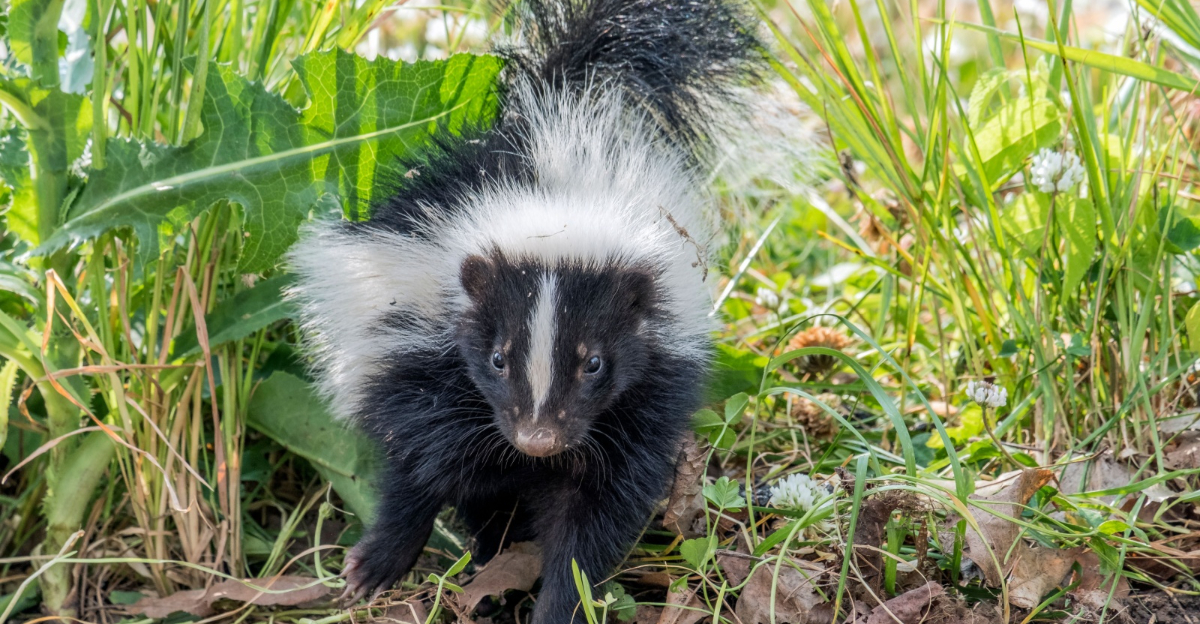
You did not invite a skunk into your yard. It invited itself. Skunks are quiet, strategic, and shockingly good at staying hidden until something goes wrong.
By the time most New Jersey homeowners catch on, the skunk has already moved in. It has set up shop and made itself completely at home under the deck or behind the shed.
The problem is not just the smell. Skunks dig up lawns, raid garbage, and send pets into a full panic. And because they work the night shift, you can go weeks without ever spotting one. What you will notice are the clues they leave behind.
A mysterious hole near the fence. Trash scattered across the driveway. A dog that refuses to go outside after dark. These are not random yard problems.
They are signs something striped and bold has decided your property is the perfect place to live. Here is what to watch for.
1. Foul Odor That Comes And Goes

That smell hits you like a wall. One moment the air is fine, and the next your whole backyard reeks of something sharp, sulfuric, and deeply unpleasant.
A skunk does not spray every day, but when it does, the odor lingers for hours. If you keep catching that distinctive musky scent in your yard without explanation, a skunk may be closer than you think.
The smell tends to come and go because skunks spray defensively. They react when startled by a predator, a curious pet, or an unsuspecting homeowner stepping outside at the wrong moment.
The scent glands contain a sulfur-based chemical called thiol. That is what makes the odor so persistent and nearly impossible to neutralize.
Even a partial spray or a skunk marking its territory can leave behind a faint but noticeable trace. Pay attention to whether the smell is stronger near your deck, shed, or fence line, because those are prime nesting spots.
Wind can carry the scent across your entire yard, so the smell may not lead you straight to the source. Track where the odor is strongest at different times of day to narrow down the location.
Trust your nose on this one. If the smell keeps coming back, a skunk is the most likely suspect in your New Jersey yard.
2. Small Cone-Shaped Holes In Your Lawn
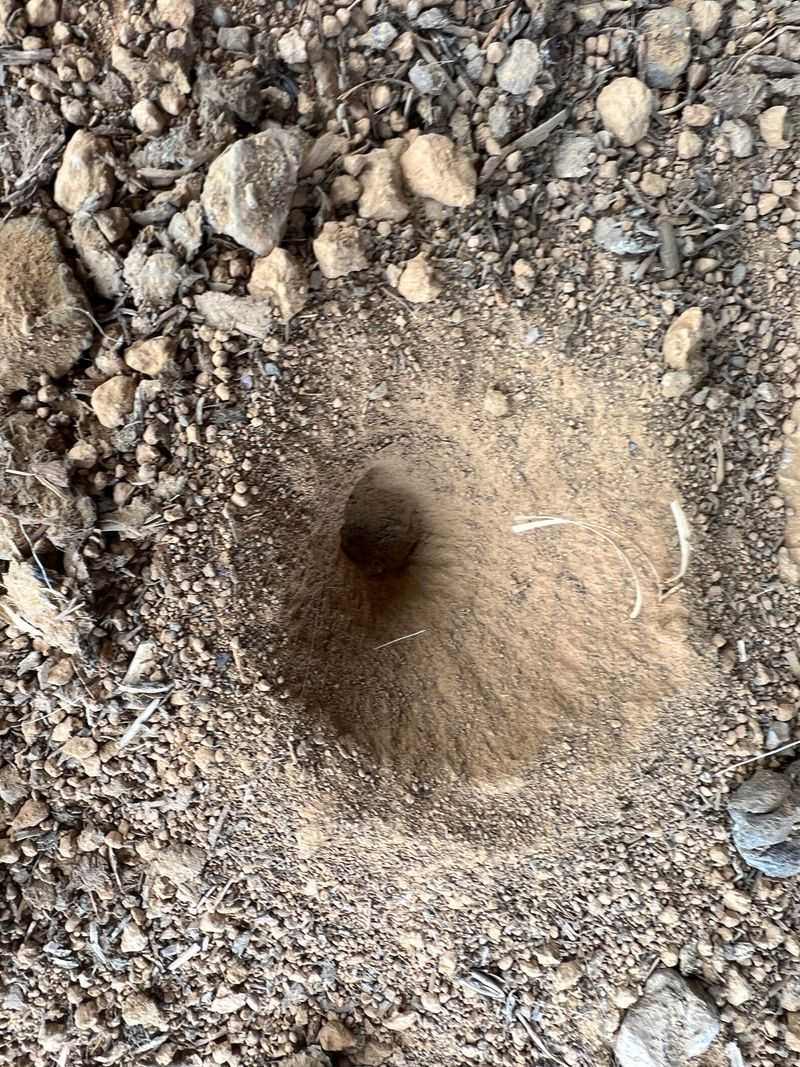
Your lawn looked perfect on Friday, and by Sunday morning it looks like something went to town with a tiny shovel. Small, cone-shaped holes scattered across the grass are one of the most reliable signs that a skunk has been foraging overnight.
Skunks are insectivores at heart, and they love digging up grubs, beetles, and earthworms from the soil. Each hole is typically about two to three inches wide and shaped like a little funnel.
That shape is a clear giveaway that a skunk did the digging. Squirrels dig deeper and messier holes, while birds peck at the surface without displacing much soil.
A skunk’s digging style is precise and shallow, targeting the top few inches of ground where grubs tend to live during warmer months. You might notice clusters of these holes near garden edges or beneath trees where organic matter accumulates.
Your New Jersey Garden Changes Every Week. Your Plan Should Too.
Gardening in New Jersey changes quickly throughout the season. Every Friday you’ll receive a simple weekly plan showing exactly what to plant, prune, fertilize, harvest, and protect so you never miss the right timing.
If your lawn has a grub problem, it is essentially sending out an open invitation. Skunks can detect grub activity beneath the soil surface and will return to those areas night after night.
A grub infestation can actually attract skunks from a wide surrounding area. Treating the underlying pest problem may help discourage future visits.
Checking your lawn in the early morning under good light makes these holes much easier to spot. New holes appearing overnight in different locations are a reliable pattern to watch for.
If that keeps happening, you almost certainly have a regular skunk visitor foraging through your yard on a nightly basis.
3. Overturned Garbage Cans And Scattered Trash
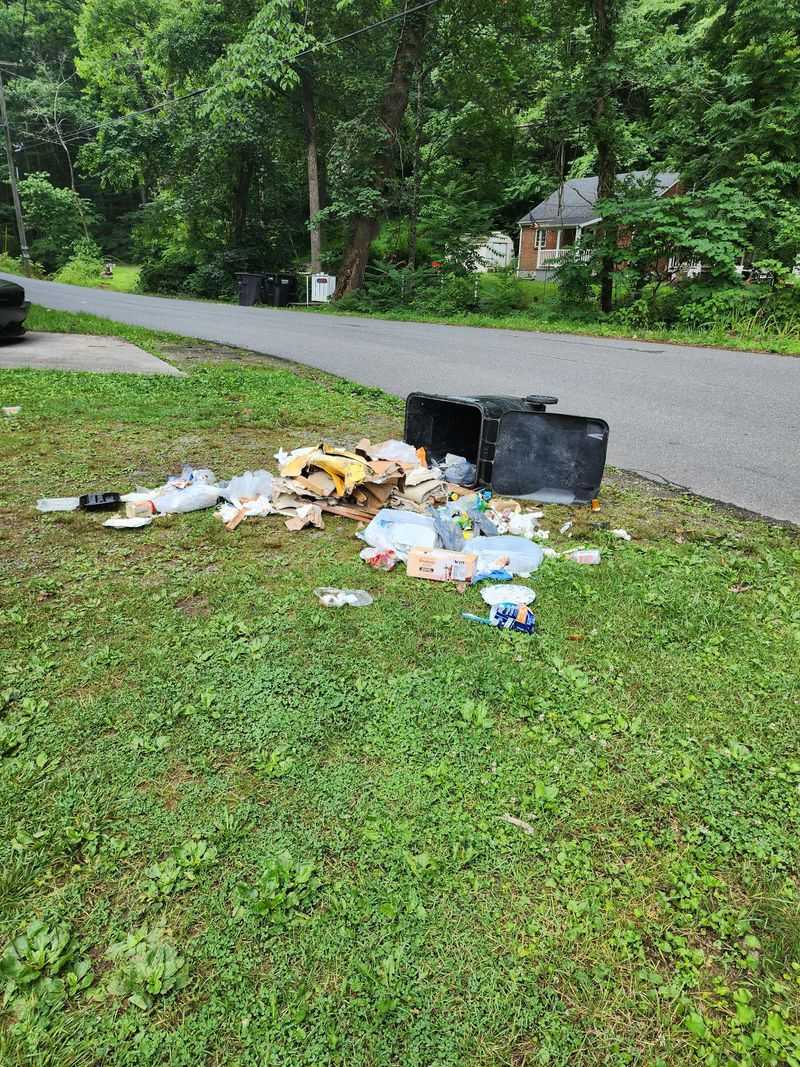
You wake up, walk outside, and your garbage cans are completely flipped over with trash spread halfway across the yard. Before you blame raccoons, consider that skunks are equally enthusiastic trash raiders.
They are a lot bolder than most people expect. Skunks are opportunistic omnivores, meaning they will eat just about anything that smells like food.
Leftover scraps, meat packaging, fruit rinds, and even old bread crusts are all fair game for a hungry skunk prowling your property after dark. The difference between skunk and raccoon damage can sometimes be subtle.
Skunks tend to knock over lighter cans and scatter food scraps in a fairly concentrated area. Raccoons are more methodical and tend to drag items farther from the source, while skunks stay close and eat on the spot.
Securing your garbage cans with bungee cords or locking lids is one of the simplest ways to reduce nighttime visits from both species. Keeping cans inside a garage or shed until collection morning makes an even bigger difference.
If your trash keeps getting hit in the same spot night after night, the culprit has likely established a routine and lives nearby. Skunks are creatures of habit, and once they find a reliable food source, they will return consistently until something changes.
A secured trash area removes one of the biggest reasons a skunk would choose to stick around your property long-term.
4. Tracks In Soft Soil Or Mud
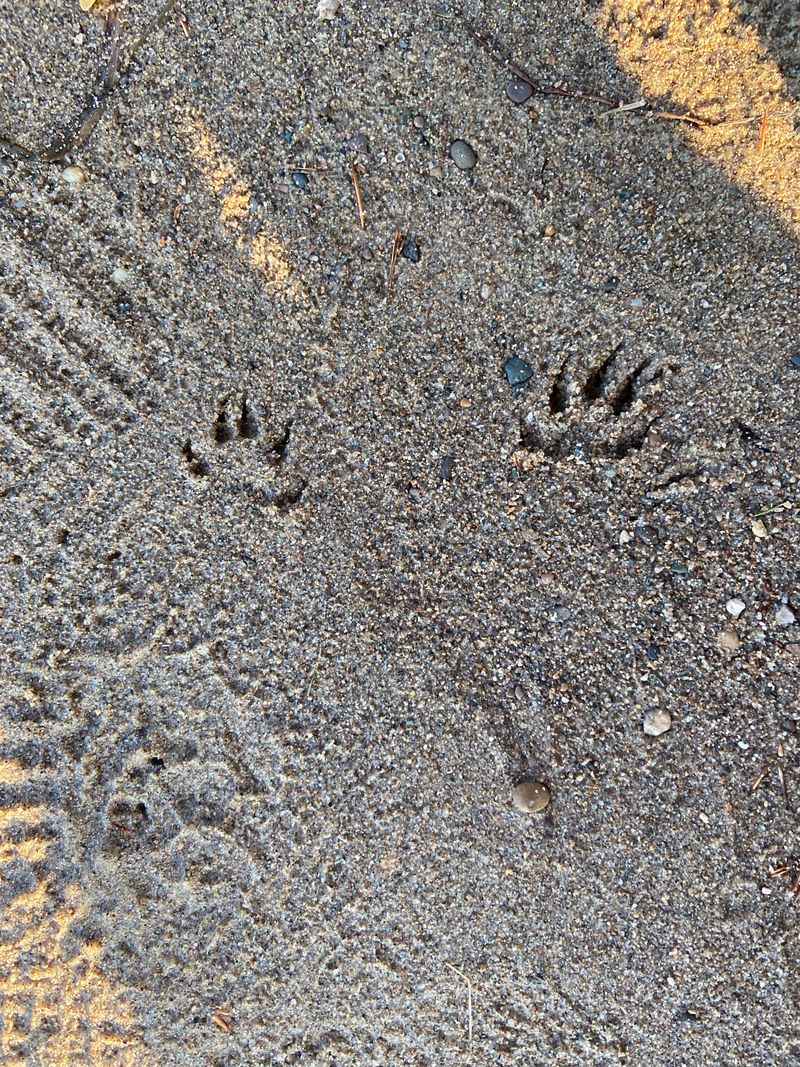
Mud and soft garden soil are basically a skunk’s signature pad. After a rainy night, the ground near your garden beds, fence line, or shed foundation becomes a perfect surface for capturing exactly who has been wandering around while you slept.
Skunk tracks are distinctive once you know what to look for. They show five toes on both the front and back feet, with visible claw marks extending slightly ahead of each toe pad.
Front paw prints are typically smaller and rounder, measuring about an inch and a half wide, while back paw prints are slightly longer and narrower. The stride pattern tends to be short and waddling, with prints spaced closely together.
Skunks do not move in long bounding strides the way rabbits or squirrels do. Comparing the tracks you find to a reference chart online can quickly confirm whether your nighttime visitor is a skunk, opossum, or raccoon.
Placing a thin layer of sand or loose soil near suspected entry points under your deck or shed can help capture clearer prints. Checking these areas after rain or early in the morning gives you the cleanest evidence.
Once you have a clear photo of the tracks, identification is usually straightforward. Each animal leaves a meaningfully different print, and a quick comparison takes only a few minutes.
Finding fresh tracks repeatedly in the same corridor means the skunk has a consistent travel path through your yard. That is a strong clue about where it shelters.
5. Droppings Near Your Garden And Fence Line
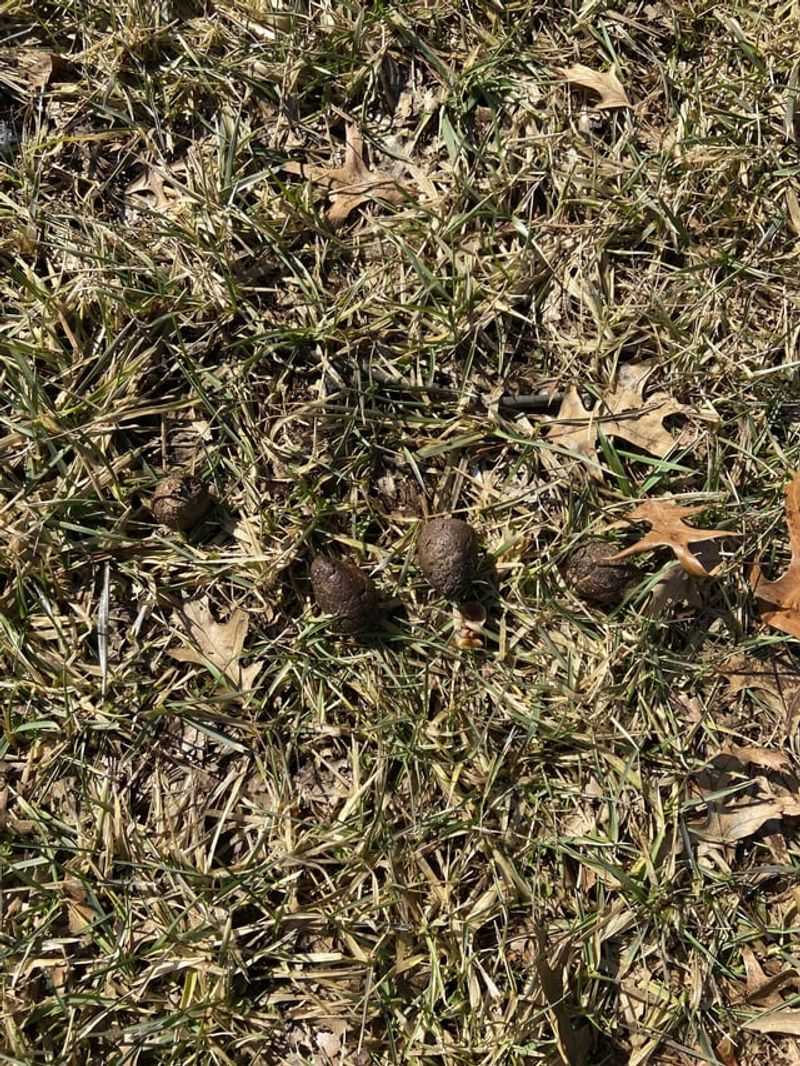
Finding droppings near your garden is never a pleasant discovery. It is also one of the most telling clues that a skunk has claimed your yard as home territory.
Skunks tend to leave droppings in consistent locations, often along fence lines or at the base of structures they travel regularly. The spots repeat because skunks are creatures of habit.
Skunk droppings look somewhat similar to cat feces but tend to contain visible remnants of insects, berries, or seeds. They are typically cylindrical, about half an inch in diameter and one to two inches long.
The presence of beetle casings or berry seeds is a reliable way to distinguish skunk waste from that of a neighborhood cat or small dog. A skunk’s digestive system does not fully break down hard exoskeletons, so those fragments stay visible.
Finding fresh droppings repeatedly in the same area suggests the skunk has established a regular patrol route. Skunks are territorial and tend to mark specific zones they consider their foraging ground.
Wear disposable gloves when cleaning up and avoid direct contact, since skunk waste can carry parasites and bacteria. Sanitizing the area after removal helps discourage re-marking.
Consistent droppings near your garden fence are a clear signal. Your skunk visitor feels right at home in your New Jersey yard.
6. Damaged Garden Beds And Uprooted Plants
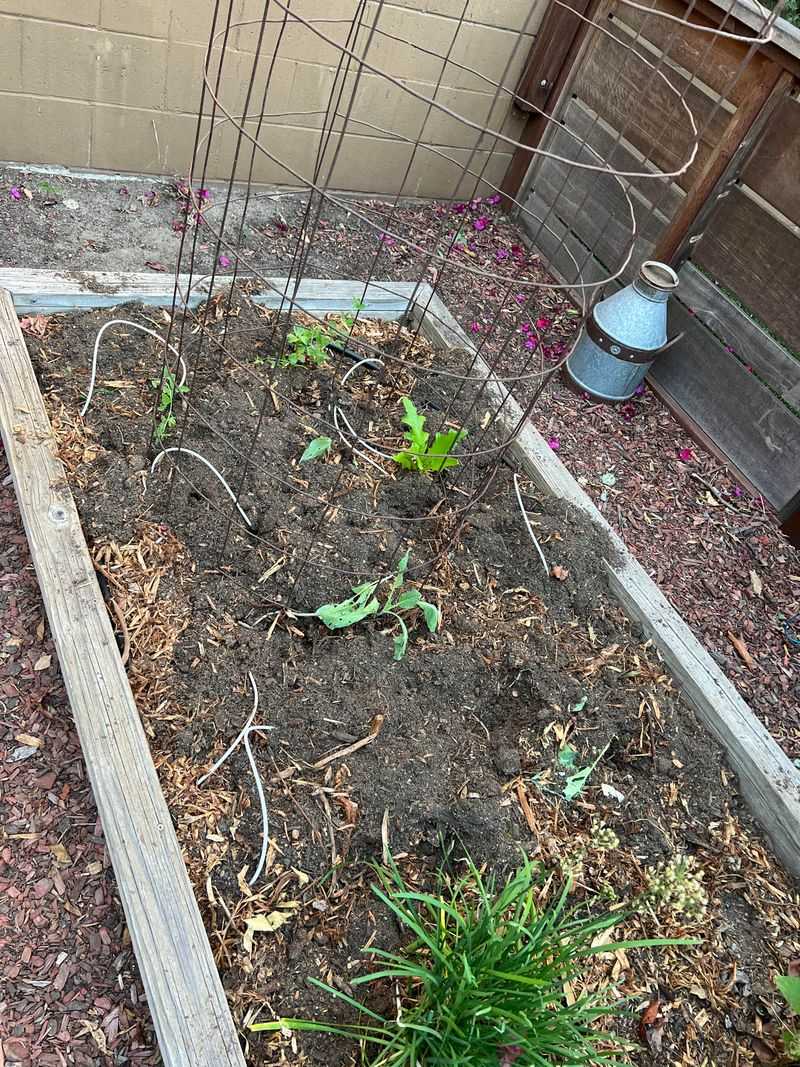
You planted those tomatoes with care, and now half the bed looks like something went digging through it at three in the morning. Garden damage is one of the most frustrating signs of a skunk presence.
It often gets blamed on deer or rabbits before the real culprit is identified. Skunks do not eat plants the way deer or groundhogs do.
Their digging for insects and grubs causes significant collateral damage to garden beds. They root around beneath mulch and loose soil, dislodging seedlings and disturbing root systems in the process.
The damage pattern tends to look scattered and random. It lacks the clean, browsed edges that deer typically leave behind.
You might notice overturned mulch and shallow furrows along bed edges. Some plants may appear lifted or tilted as though something pushed up from below.
Bulb gardens are particularly vulnerable, since skunks sometimes accidentally uproot bulbs while searching for grubs. Planting bulbs with a layer of hardware cloth just beneath the soil surface can help protect them.
A motion-activated sprinkler near garden beds is an effective, non-harmful deterrent. Skunks dislike sudden bursts of water and will typically avoid areas where they have been surprised before.
Protecting your garden now means fewer mornings spent replanting seedlings that disappeared overnight.
7. Pets Acting Agitated And Anxious Outdoors

Your dog has been out in this yard a hundred times, but tonight something is different. The moment you open the back door, your normally confident pup freezes at the edge of the patio, refusing to go near the far corner of the fence.
Animals are far more attuned to scent than humans are. Your pets can detect skunk presence long before you get a whiff of anything.
Dogs and cats will often act restless, bark at nothing visible, or refuse to enter certain areas when a skunk is nearby. Cats tend to puff up and hold their ground, while dogs might whine, pace, or scratch at the back door.
Both reactions are worth paying attention to, especially if the behavior is new. A pet that has already encountered skunk spray will become hyper-alert around the same locations for days afterward.
Their nose is essentially telling them the threat is still present. Keeping pets inside after dark during warmer months reduces the chance of a confrontation significantly.
Skunks are not aggressive by nature, but they will spray if a dog rushes them. That is a situation nobody wants to deal with at ten o’clock at night.
Your pet’s anxiety is a valuable early warning system. Listen to it before the situation escalates in your New Jersey yard.
8. Sightings At Dusk Or Dawn
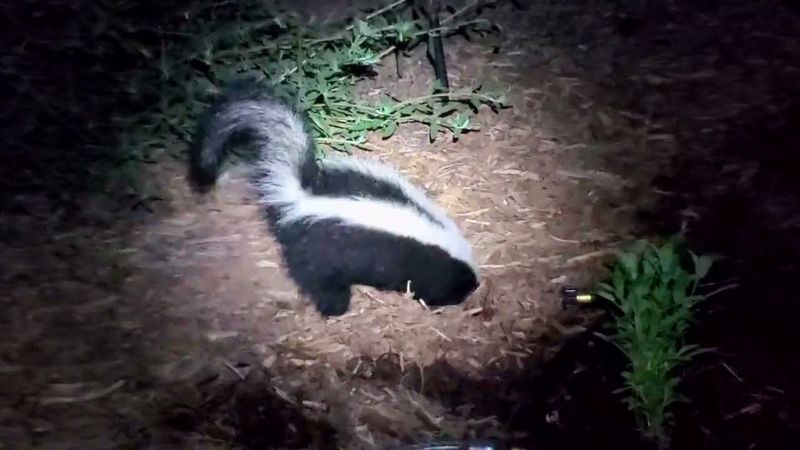
There it is. A low, waddling silhouette moving across your lawn just as the sun dips below the tree line. Spotting a skunk at dusk or dawn is the most direct confirmation possible that one has taken up residence nearby.
Skunks are crepuscular but also active well into the night. You are most likely to spot one from dusk through the late evening hours.
Seeing one at these times almost certainly means the animal is living within a short distance of where you spotted it.
A skunk moving in a purposeful, unhurried direction is typically heading toward a known food source. It may also be returning to its den.
If it emerges from or disappears toward a specific structure like a deck or shed, take note. That structure is almost certainly its nesting location.
Skunks caught in the act rarely spray unless directly threatened or cornered. Observing one from a window or at a safe distance of fifteen feet or more is generally safe and gives you valuable information.
A single sighting at dusk might be a passing visitor. Two or three sightings in the same area over consecutive evenings means the animal is established on your property.
At that point, contacting a licensed wildlife removal professional is the safest course of action. Knowing what you are dealing with puts you back in control of your New Jersey yard.