Some Arizona Desert Trees Are Showing Stress After Prolonged Heat and Uneven Moisture
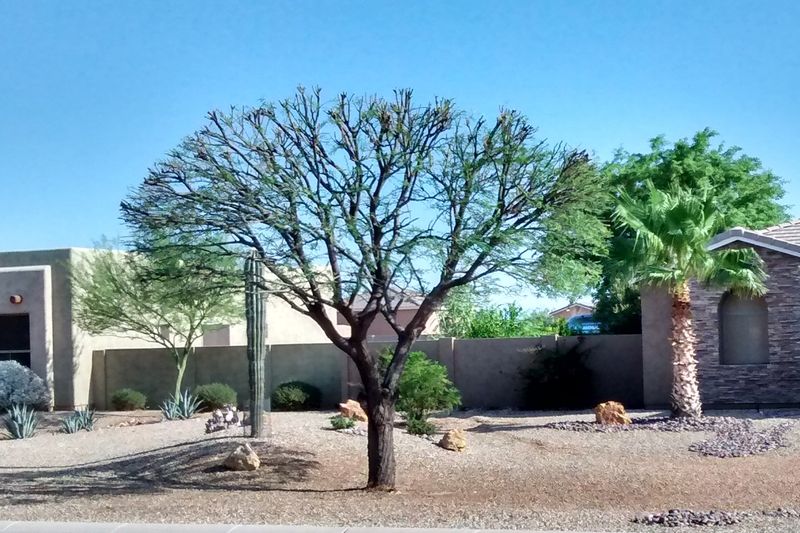
A yard tree with crispy leaves or bare branches can make any Arizona homeowner worry. Reports of tree stress have been popping up around the state after long stretches of heat and uneven moisture.
But rainfall has been very different from one place to the next, so not every tree is facing the same problem. Here is how to read the signs, check your soil, and water in a way that actually helps.
Arizona’s rainfall story changes from place to place
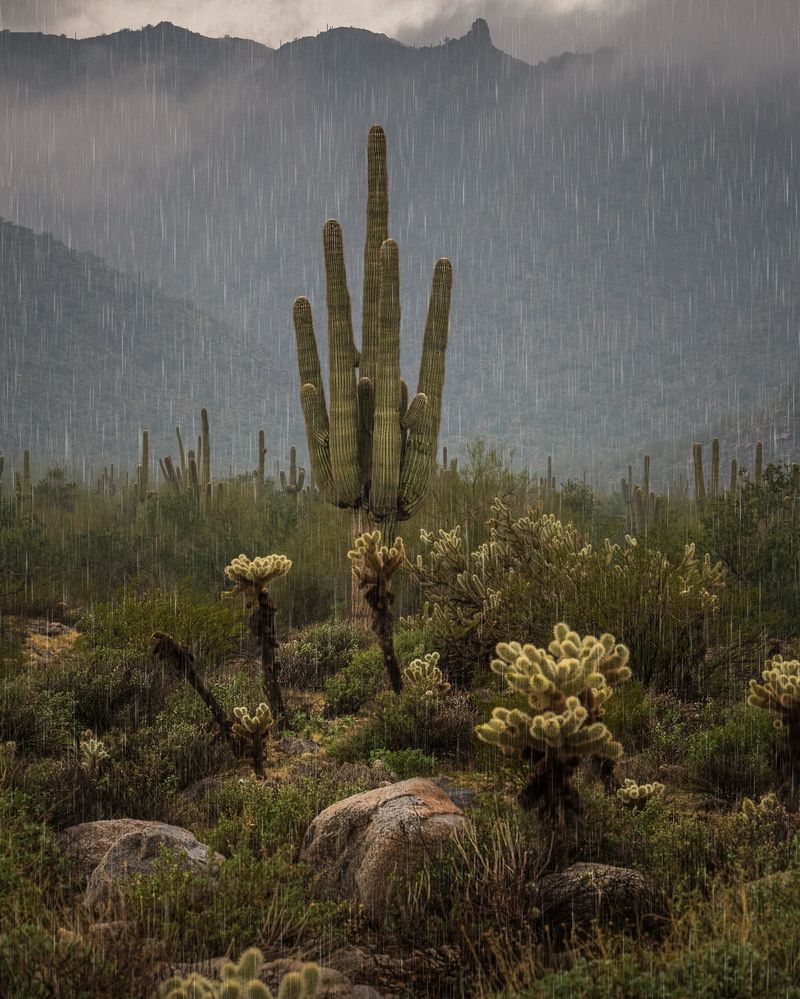
Rain in Arizona rarely falls evenly, and the last couple of years prove it. Tucson had its driest water year on record in 2024-25.
The following water year, 2025-26, finished above normal.
Phoenix tells a different story. Rainfall there in 2025 came in slightly above the yearly average, helped by a wet late-season recovery.
A tree in north Tucson and a tree in the East Valley may have had very different years.
The statewide drought picture is mixed too. In its July 14, 2026 update, the Arizona Department of Water Resources described worsening drought across much of the state and long-term drought that lingers, while noting wetter conditions in southeastern Arizona.
Averages hide a lot. Tucson rainfall totals varied widely across the metro area, so a citywide number cannot tell you what your own yard received.
That is why this article sticks to specific places and periods instead of describing one statewide dry spell.
Treat the headlines as background, then look at your own soil and your own tree.
Reports of tree stress do not describe every yard
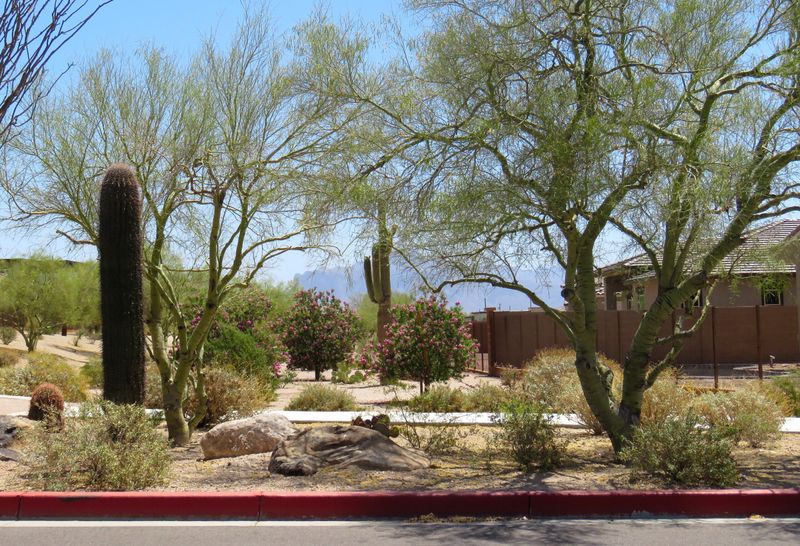
Arizona Extension experts reported drought-related stress in landscape trees in Phoenix and other parts of the state in 2025. The stress showed up most often where trees received little supplemental water.
That is a useful clue, but it describes some trees, not all of them.
A tree on a well-managed drip line with deep soil moisture may look perfectly fine right now. A tree that has been left to survive on rainfall alone is a likelier candidate for trouble.
Forest reporting is a separate matter. The state’s 2025 drought report found more drought-related tree loss in forests than in 2024, but it focused on forest species and certain regions.
Those findings do not tell you how a palo verde in a Mesa front yard is doing.
Drought can leave trees more vulnerable, yet individual problems still need individual diagnosis. A stressed-looking tree is a reason to investigate, not a reason to assume.
Tree stress can surface after the dry spell
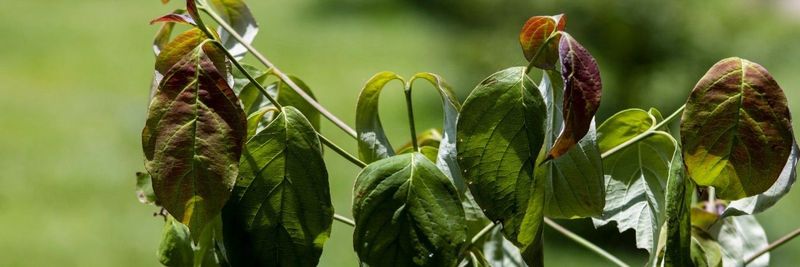
Trees keep time differently than we do. A stretch of intense heat or a long moisture shortfall can leave its mark well after the weather changes.
Reduced growth or even loss of a tree may not show up until the following year or two.
Picture a mesquite that went through a harsh summer with little extra water. It might leaf out normally in spring, then drop branches or grow very little the next season.
The cause and the symptom can be months apart.
Your Arizona Garden Changes Every Week. Your Plan Should Too.
Gardening in Arizona changes quickly throughout the season. Every Friday you’ll receive a simple weekly plan showing exactly what to plant, prune, fertilize, harvest, and protect so you never miss the right timing.
That delay is why recent rain totals cannot tell you how a tree is doing. A wet monsoon can be spotty, may not soak the full root zone, and does not reverse earlier stress overnight.
Recovery after a long hard stretch can also be slow.
The reverse is true as well. Plenty of rain does not guarantee a tree is healthy, and a dry year does not guarantee a tree is struggling.
Condition depends on the tree, its roots, and its site.
Which symptoms deserve a closer look?
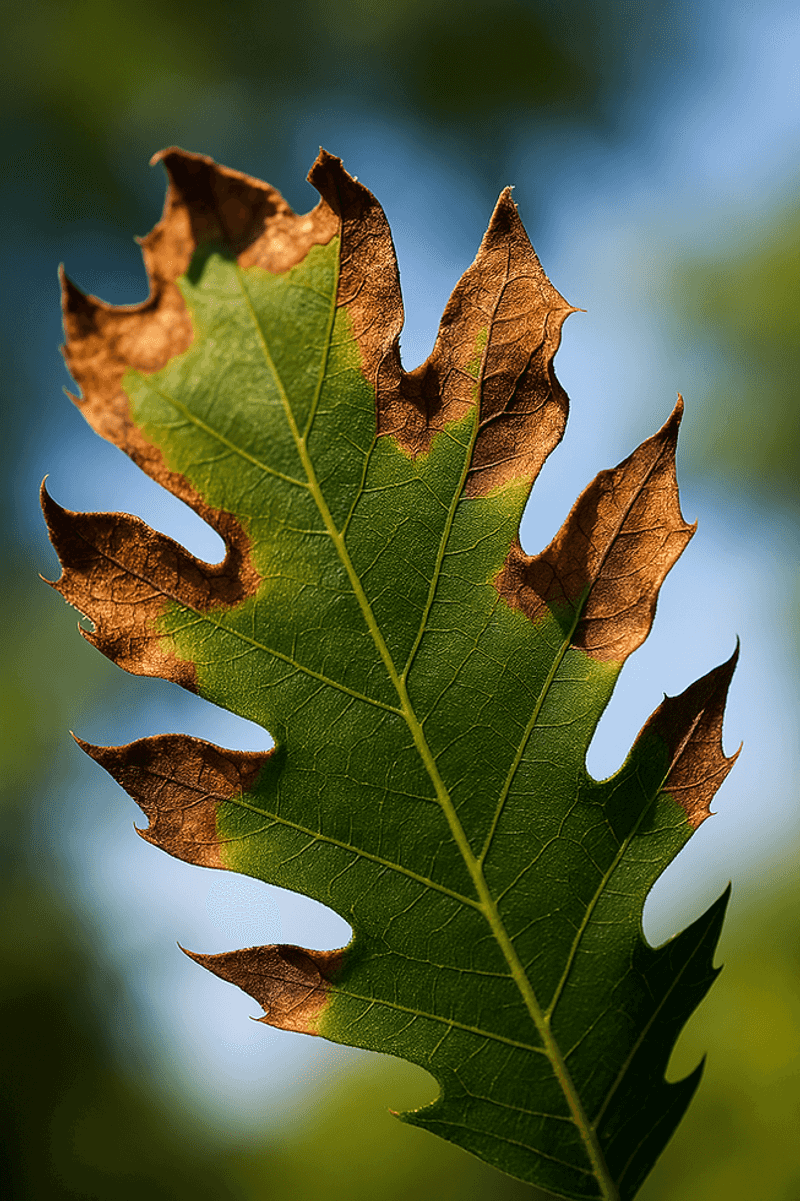
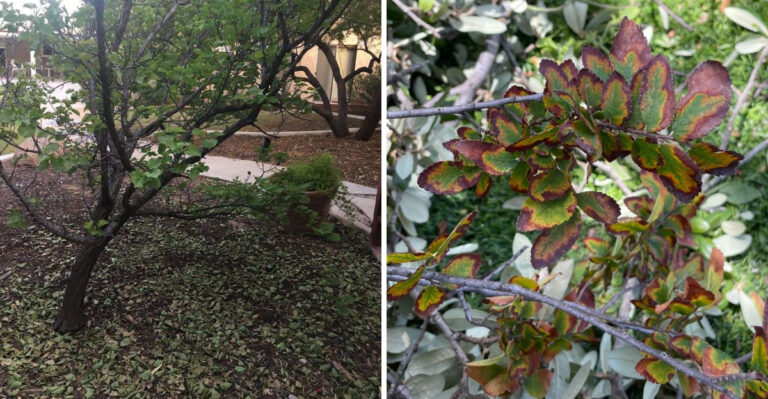
Trees under heat or water stress tend to send visible signals. Wilting, browning or drying leaves, leaf drop, branch dieback, sunscald on bark, and slowed growth are all on the list.
Each one is worth noticing.
Still, they are clues and not a verdict. Plenty of other problems produce the same look, so a brown canopy alone does not prove a drought problem.
Extreme heat can scorch foliage even when soil is moist. Saturated soil can suffocate roots and make leaves droop just like a thirsty tree.
Pests, disease, strong wind, and compacted soil can all do similar damage.
Take a walk around the tree. Are the symptoms on one side only, or all over?
Did they begin after a landscaping project, a new irrigation schedule, or a heat wave? Are there holes in the bark, sticky residue, or insects on the leaves?
Jotting down answers to these questions gives you a better starting point than guessing. It also helps if you later call an arborist or your local Extension office.
Check soil moisture before changing irrigation
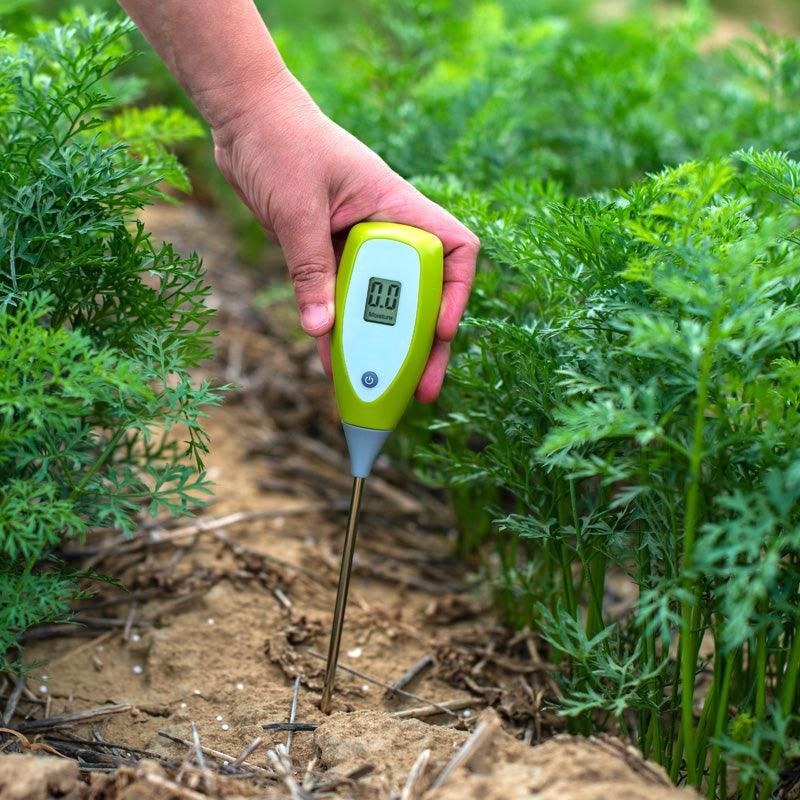
Before you add water or cut back, find out what the soil is doing. Surface dirt in the desert dries fast and can mislead you.
Push a soil probe or a long screwdriver down into the root zone and notice how easily it slides and whether the soil at depth feels damp or bone dry.
Next, think back over recent weeks. Did the weather turn hotter or windier?
Did the irrigation timer get changed, a emitter clog, or a landscaper adjust settings? Small shifts can matter more than the season.
Then look for insects, chewed bark, oozing sap, or other damage that points away from water.
This simple check sorts out the possibilities. Dry soil at depth suggests the tree needs a better soak.
Wet, heavy soil suggests excess water or poor drainage, and more irrigation would make things worse. Moist soil with obvious pests points toward another cause entirely.
Adding water to every droopy tree is a habit worth skipping.
Deep watering must reach the root zone
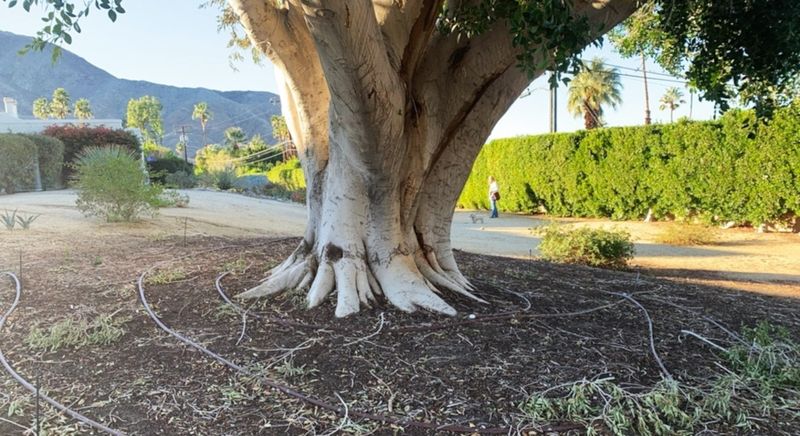
When an established tree does need water, aim for slow and deep. A quick spray at the trunk wets only the top layer and misses most of what the tree uses.
Fine roots that take up water are generally farther out, and for many trees that zone reaches to and beyond the edge of the canopy, called the drip line.
Soaker hoses, a slow trickle from a hose, or several drip emitters spread around the canopy can work well. The goal is steady moisture that sinks in rather than running off across hard desert soil.
Then confirm it worked. Push a soil probe in the day after watering and see how far down the moist soil goes.
Arizona Extension gives a typical tree-root depth of 18 to 36 inches, and its drought guidance describes 2 to 3 feet for many trees. Treat those as typical ranges.
Roots in caliche, compacted fill, or sandy wash soil can behave differently.
Let your probe, not a number, tell you whether the water got where it needed to go. Frequent shallow watering is not a fix, and it can keep roots near the surface where they are more exposed to heat.
Let the tree and site—not a calendar—set the next step
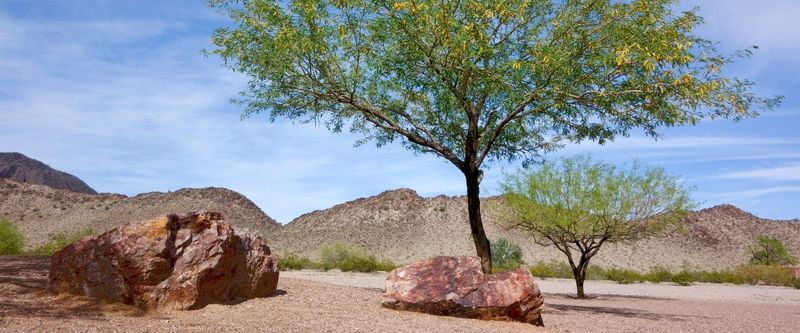
No single schedule fits every yard. A young ironwood, an old shade tree on clay, and a mesquite in sandy soil will each need something different.
Species, age, soil, weather, recent rain, and your irrigation setup all play a part.
Arizona Extension advises letting soil dry between irrigations, since too much water can harm trees just as too little can. Desert-adapted does not mean immune, though.
Even native trees can struggle through repeated heat and long gaps without supplemental water.
So watch, probe, and adjust. Look at the leaves, check the soil at depth, and think about what changed lately.
If the signs stay puzzling, an arborist can help sort out the cause.
A tree reads the soil under it, not the headlines about it.