Stop Leaving Tall Dahlias Unstaked Before Ohio Weekend Storms
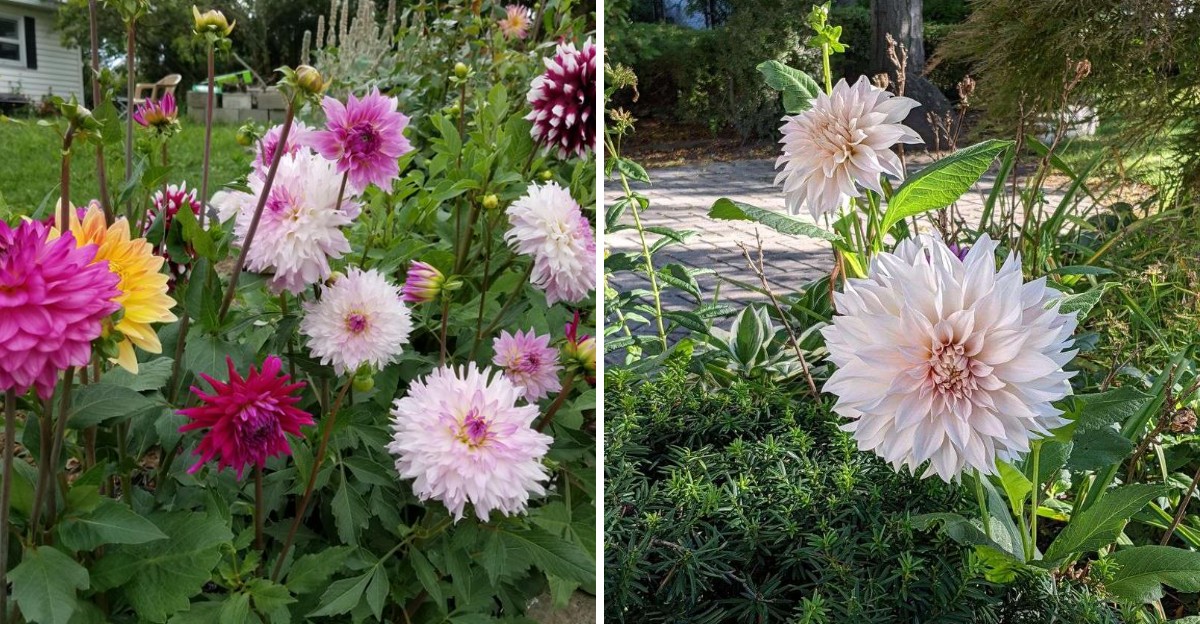
Saturday morning after a Friday night storm, the five-foot Cafe au Lait you babied since May is lying flat across the mulch, snapped clean at the base.
Three unopened buds sit pressed into the mud, ruined before they ever got the chance to open properly this season.
Ohio summer storms show up fast, and tall dahlias carrying heavy flower heads on hollow stems are the first thing in the garden to go down.
Most gardeners assume staking is optional decoration, something to add later if a plant starts looking wobbly on its own.
The frustrating part is that the fix takes a couple of minutes, and it works best when you do it long before the plant looks like it needs help.
Top Heavy Blooms Snap In Wind
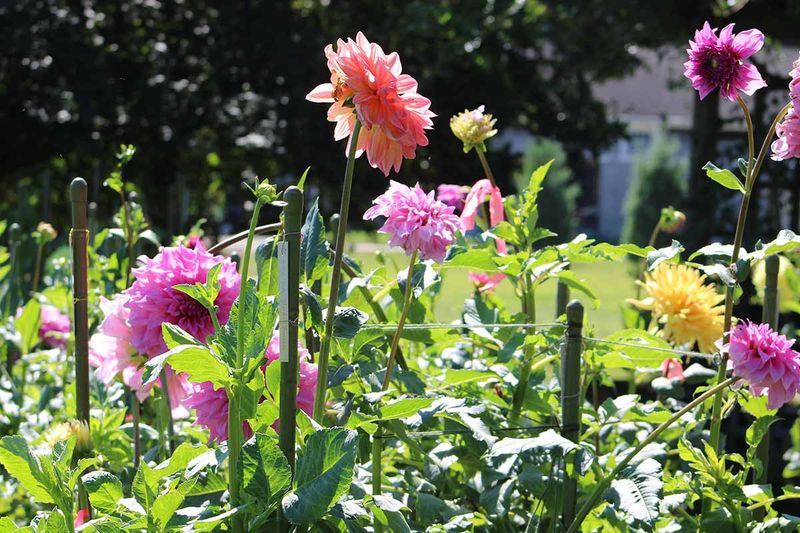
A dinnerplate dahlia bloom can stretch wider than a dinner plate, sometimes ten inches across, and it sits on a stem that is hollow inside its structure.
That combination is a problem waiting for a windy Saturday afternoon to arrive. Weight up high plus a fragile support below equals a snapped stalk eventually.
Tall varieties often reach four to five feet by August, and each branch may carry several buds at once during peak season.
After a soaking rain, those petals hold water like a sponge, adding even more weight to an already top-heavy structure balanced precariously.
When a gust pushes the top of the plant sideways, all that force lands on one weak spot near the base or on a brittle branch joint.
Hollow stems are the real weak link in this whole equation. Unlike a woody shrub that bends and springs back, a dahlia stem creases and then tears apart.
Once the tissue splits, water and sugar cannot move past the break, so the branch above it wilts within a day of the damage occurring.
Ohio makes the problem worse because summer storms here arrive fast, often with straight-line winds and heavy downpours in the same ten minutes.
Knowing this changes how you plan for the whole growing season ahead. The taller the variety listed on the tuber label, the more serious you should be about support.
Stake At Planting Not After Growth
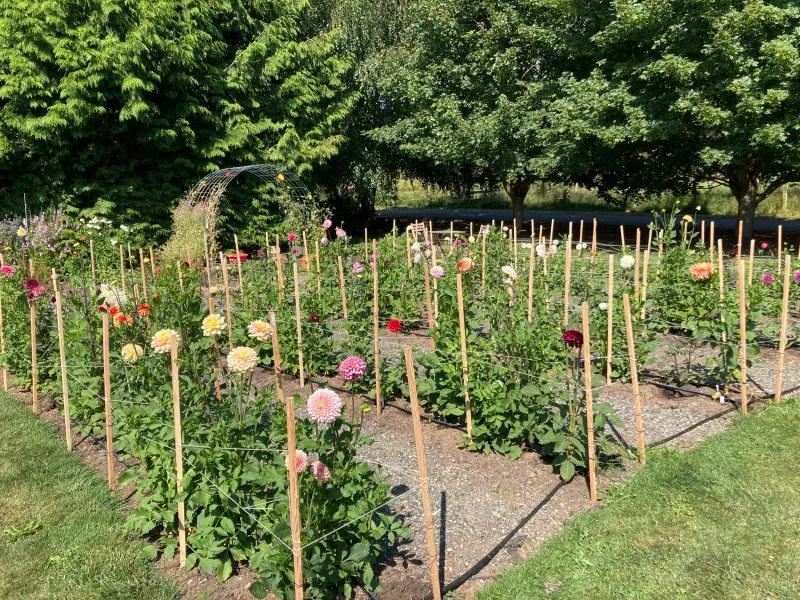
Here is the tip most gardeners learn the hard way after losing a favorite plant. The stake goes in the ground the same day the tuber does, without exception.
Extension horticulturists, including those at Ohio State University Extension, recommend setting supports at planting or while plants are still small and manageable.
A stake driven in later can spear the tuber clump and the thick roots feeding it, causing damage you cannot see until weeks afterward.
Picture a mature dahlia in July sitting in the ground. Under the soil sits a fist-sized cluster of tubers with feeder roots spreading a foot or more.
Pushing a sharpened stake through that mass causes wounds you cannot see immediately, and those wounds invite rot that shows up weeks later as a sudden collapse.
Doing it early is genuinely simple though. Dig your planting hole, place the tuber with the eye facing up, then drive a sturdy stake six to twelve inches deep.
Your Ohio Garden Changes Every Week. Your Plan Should Too.
Gardening in Ohio changes quickly throughout the season. Every Friday you’ll receive a simple weekly plan showing exactly what to plant, prune, fertilize, harvest, and protect so you never miss the right timing.
Backfill, water, and you are done for the season without much additional effort required beyond that initial setup.
A five to six foot stake is a reasonable length for tall types, since you lose part of it underground once driven in properly.
One habit helps enormously going forward. Mark each stake location with a plant tag listing the variety planted there for future reference.
Loose Ties Prevent Stem Damage
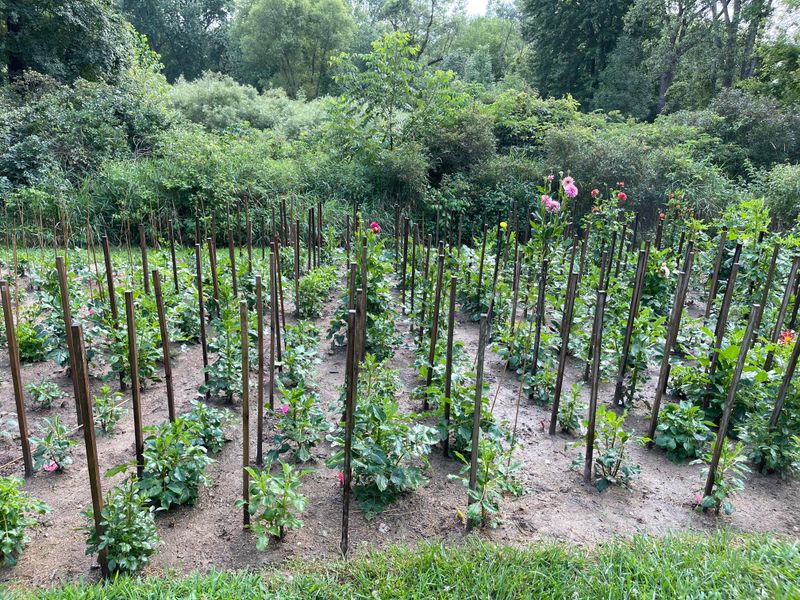
Tight string is the second most common mistake after late staking, and it causes real damage over time without gardeners realizing it.
A stem that measures pencil-thin in June can be as thick as a broom handle by late summer, and any tie cinched snugly against it will slowly saw into the tissue.
Leave a gap between the tie and the stem itself. Wrap soft material in a loose figure eight, with one loop around the stake and one around the stem.
Room to wiggle is exactly what you want here, because the plant needs to sway a little without being thrown around violently in wind.
Material matters more than people expect when choosing ties. Strips of old T-shirt, cotton twine, or coated plant wire spread pressure over a wider area effectively.
Thin nylon line and bare wire concentrate force into a single point and girdle the stem instead, cutting into it over time.
Start tying when the plant reaches about a foot tall, then add another tie every twelve to eighteen inches as it climbs higher.
Three or four ties on a five-foot plant beat one heroic tie in the middle, which just creates a hinge for the wind to break against.
Tie below a leaf node when you can manage it, so the tie has something to catch against instead of sliding down the smooth stem freely.
Multiple Stakes Support Bigger Clumps
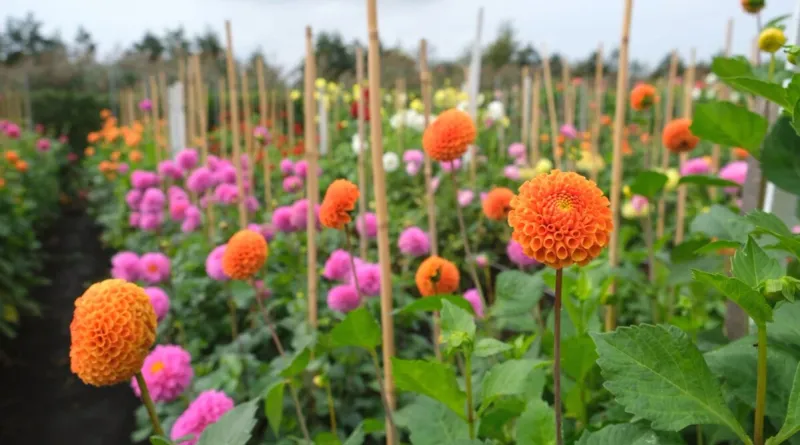
One stake handles one stem reasonably well on its own. A three-year-old clump that sends up six or seven thick shoots is a different animal entirely.
A single post in the middle just gives the outer stems something to snap against during a storm rather than actual support.
Try the corral method instead for larger, established clumps. Set three or four stakes around the plant, roughly in a square, then run twine between them at knee height.
Every stem stays inside the box this way, and no single stem carries the whole load of wind and rain by itself.
Growers with long rows often use a variation called the Florida weave for efficiency across many plants at once. Stakes go in every few feet down the row.
It is fast, cheap, and holds up better than individual ties when a squall line rolls in from the west unexpectedly.
Ready-made options work too for smaller setups. Tomato cages, peony rings, and concrete reinforcing wire cut into circles all give tall dahlias something to grow through.
Place those over the planting spot in spring while the shoots are still short, since forcing a cage down over a bushy plant means snapping branches.
Clumps in containers need extra thought too, because the pot itself can tip over entirely. Anchoring matters as much as height in this whole process.
Storms Test Every Weak Point
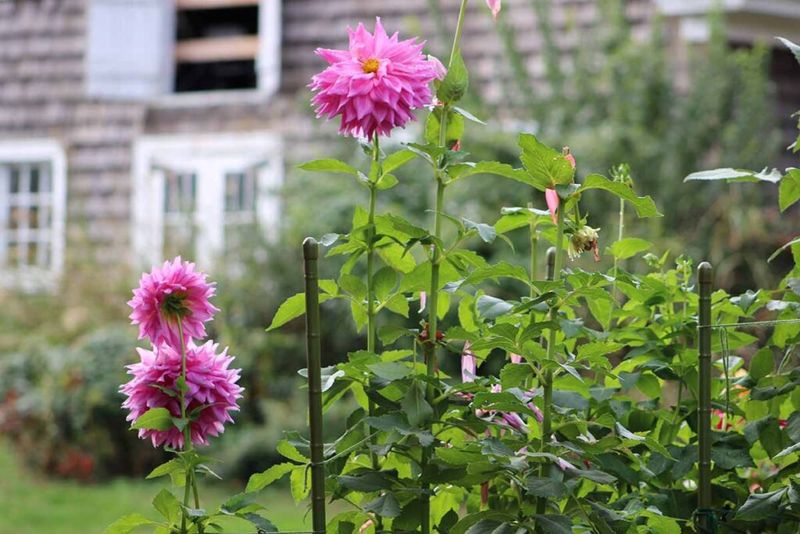
Ohio weather does not ease into things gradually the way some regions do. A July afternoon can go from still and sticky to strong straight-line gusts in under fifteen minutes.
That sudden shift is what exposes lazy staking done earlier in the season without proper attention paid to detail.
Weak points show up in predictable places once tested by real wind and rain. The stake that only went four inches into the soil leans over immediately.
The single tie at mid-height becomes a pivot point, so the top half folds completely under pressure from the storm.
A plant tucked against a fence catches wind funneling through a gap and takes double the beating compared to open ground nearby.
Rain adds a second problem on top of wind. Saturated clay soil loses its grip, so a stake that felt solid in dry June can wobble free.
Heavy, water-filled blooms then work like a lever on that loosened post, making the whole structure unstable quickly.
Walk your beds before a forecast storm and give each stake a firm push with your hand to test it. Anything that shifts needs attention.
Wind direction is worth noticing too when planning support. Most Ohio storms track in from the west or southwest, hitting those stems first.
A Few Minutes Saves The Whole Plant
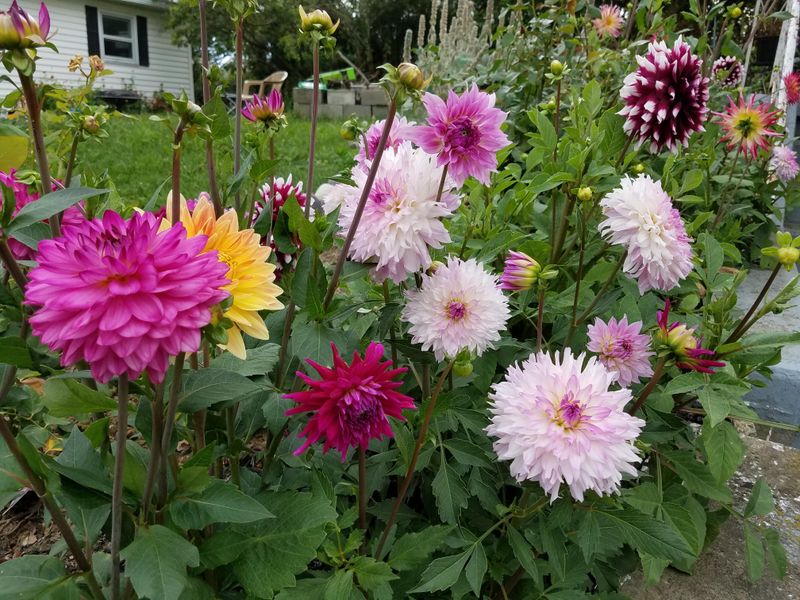
Two minutes per plant in May is roughly what proper staking costs a gardener willing to plan ahead. One stake driven in beside the tuber and a tag pushed in next to it.
Compare that with what a broken dahlia costs you in July after months of careful tending throughout the growing season.
Do the math on a single plant honestly. A named tuber runs five to fifteen dollars, plus months of watering, feeding, pinching, and pest patrol along the way.
A stem that snaps at the base in one storm erases all of it entirely, and the season is too short in Ohio to start over easily.
There is a smaller cost too worth mentioning here. Each tie takes about thirty seconds, and a tall plant needs three or four across the whole summer season.
Broken stems are not always a total loss though, which is worth knowing before giving up on a damaged plant. If a branch cracks but stays attached, a splint sometimes saves it.
A clean break at soil level usually means the top is finished, though the tuber below often survives and resprouts if the season is still young enough.
Gardeners who stake early also spend less time fussing later in the season when storms roll through unexpectedly. Front-loading the work is the whole trick here.
Check Ties After Every Storm
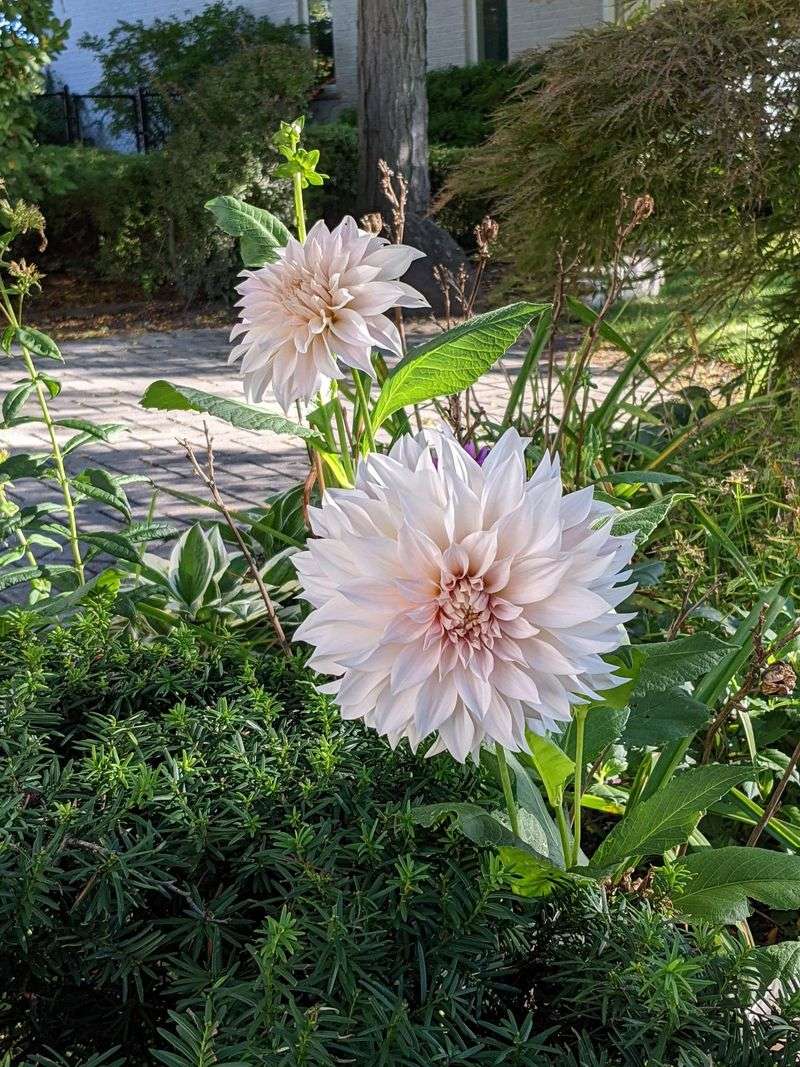
Staking is not a one-and-done chore, and that is the part people skip most often after the initial setup earlier in the season.
After every storm, walk the row with a spool of twine in your pocket and look at three things carefully. Stake depth, tie tightness, and cracked stems.
Push each stake sideways to test its hold. Soaked soil often loosens the base, and a quick re-drive or a second stake beside it restores the hold.
Slide a finger under each tie next during your inspection. Anything that no longer moves freely has become a tourniquet, so cut it and retie with slack.
Look for shiny pinched rings or split tissue where a tie has been rubbing against the stem over time without your noticing.
Broken branches deserve a decision, not a delay in addressing the damage. Cut damaged stems back to a healthy node so the plant sends energy elsewhere.
Add ties as growth continues throughout the season without stopping at just the initial setup done back in spring.
Late-season checks matter most for this particular flower. Ohio gets some of its strongest wind in September, right when dahlias hit peak bloom and peak weight.
Keep a small kit by the back door for convenience during storm season. Soft ties, scissors, spare stakes, and a marker ready to grab quickly.