8 Sunflower Varieties Indiana Gardeners Can Still Plant In July
Indiana summers move fast, and by mid-July the tomatoes are already sprawling while the lettuce has long since bolted. But your garden isn’t finished yet.
Sunflowers are the trick smart Indiana gardeners reach for right now. Most varieties shoot up and bloom in just 50 to 70 days flat.
Plant them this week, and you’ll have towering gold heads nodding over your fence line before the kids are even back in school.
It doesn’t matter if you’re working with a sprawling backyard plot or a couple of five gallon buckets crammed onto an apartment balcony. Sunflowers don’t ask for much, just sun, water, and a little patience.
Below are varieties built for exactly this kind of late season push, picked for speed, color, and the kind of curb appeal that makes neighbors stop and ask what you planted.
1. Sunspot
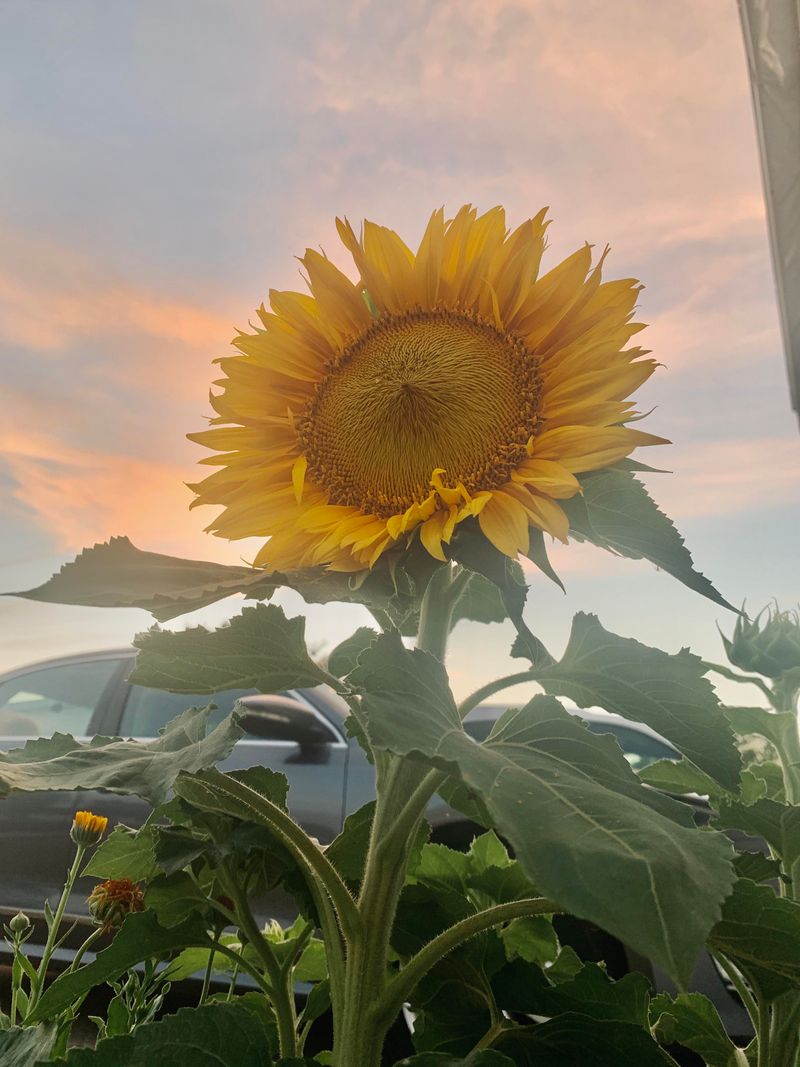
Sunspot sunflowers prove that small plants can make a strong visual impact. This compact variety grows only about two feet tall, but it produces blooms that stretch up to ten inches across.
That is a notably large flower for such a short plant. Gardeners in Indiana love Sunspot because it fits almost anywhere.
Containers on a deck, raised beds, or a narrow border along a fence all work perfectly for this compact, high-performing plant.
It matures in around 55 to 60 days, so a July planting in Indiana gives you blooms with plenty of margin before fall.
The single large bloom per stem makes Sunspot ideal for cut flower arrangements. Snip one and drop it in a mason jar, and you have instant kitchen decor that costs almost nothing.
The petals are a rich, buttery yellow that almost glows in late summer light. Because Sunspot stays short, wind is less of a problem.
Taller sunflower varieties can snap in Indiana’s late summer storms, but Sunspot holds its ground without staking. That alone makes it a low-stress choice for busy gardeners.
Direct sow seeds about an inch deep in a spot that gets at least six hours of full sun. Water consistently for the first two weeks while roots establish.
After that, Sunspot is surprisingly drought-tolerant and practically takes care of itself until bloom time arrives.
2. Pacino
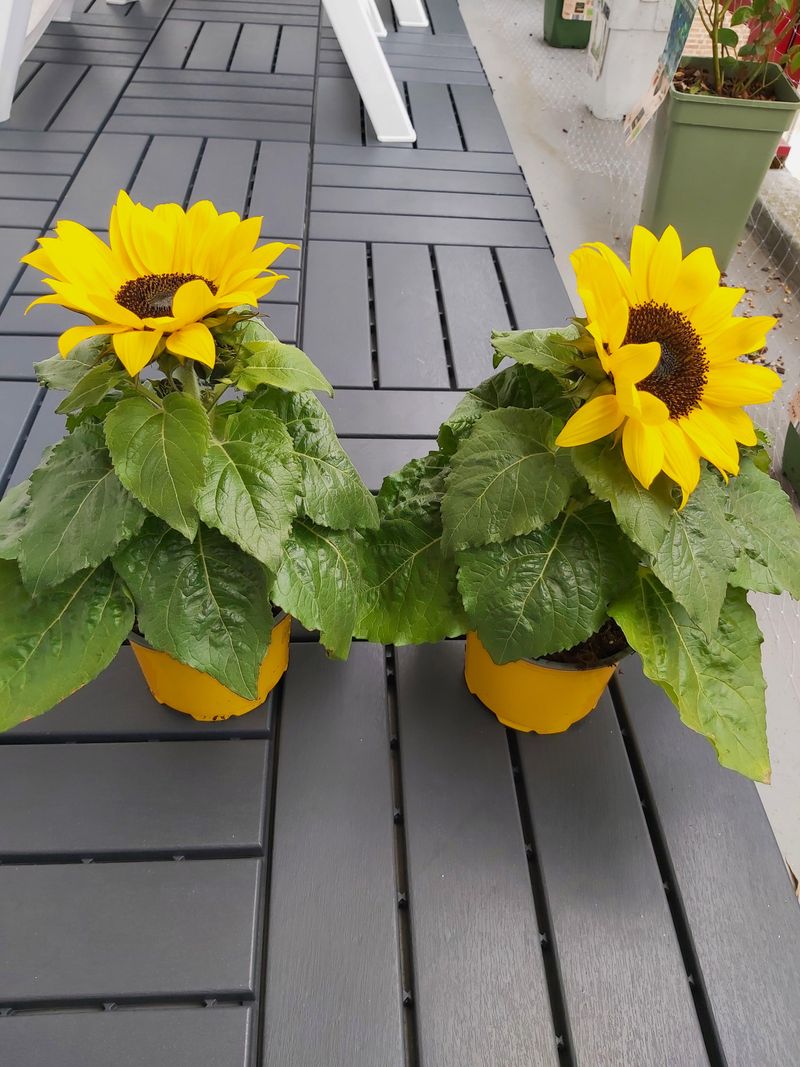
If you have ever wished for a sunflower that keeps giving instead of offering just one bloom and calling it done, Pacino is your answer. This branching dwarf variety produces multiple flowers on a single plant, extending your color season well into late summer.
It tops out around 12 to 16 inches tall, making it one of the most container-friendly sunflowers you can grow.
Pacino matures in roughly 60 to 90 days depending on the seed source, so a July start in Indiana is still workable if you plant early in the month.
The cheerful lemon-yellow petals surround a classic dark center that reliably attracts pollinators. Bees will be visiting your porch or patio constantly once this plant hits its stride.
Planting Pacino in a pot at least 12 inches wide gives the roots enough room to spread. Use a well-draining potting mix and place it somewhere that soaks up full sun from morning to afternoon.
Your Indiana Garden Changes Every Week. Your Plan Should Too.
Gardening in Indiana changes quickly throughout the season. Every Friday you’ll receive a simple weekly plan showing exactly what to plant, prune, fertilize, harvest, and protect so you never miss the right timing.
Water when the top inch of soil feels dry, and avoid letting the pot sit in standing water. One underrated benefit of Pacino is its long vase life after cutting.
The stems are sturdy, and the blooms hold up well for over a week indoors. Pair them with zinnias or cosmos for a late summer bouquet that looks professionally arranged.
Gardeners looking for small-space picks often overlook Pacino, but it deserves a top spot on every July planting list. Its size, output, and reliability make it hard to beat.
3. Ring Of Fire
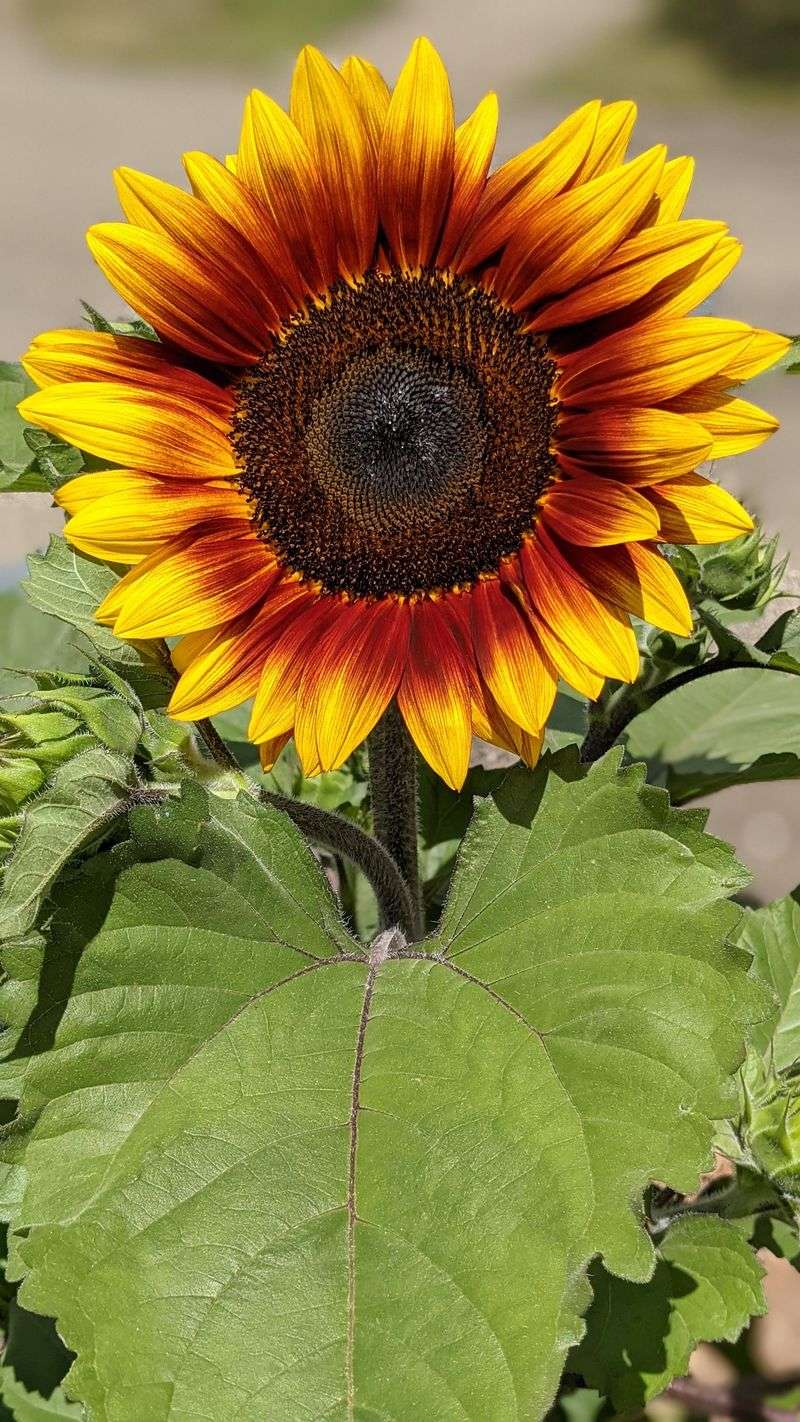
Ring of Fire stands out visually in a garden with petals that shift from deep burgundy red at the base to bright golden yellow at the tips.
This variety grows four to five feet tall. It’s a later-blooming type, often needing 70 to 120 days depending on the source, so an early July planting in Indiana still gives it enough time before frost.
The flowers are medium-sized, usually around five inches across, and they branch freely to produce multiple blooms per plant. More blooms means more of that fiery color through August and September.
Ring of Fire is pollen-free, which is a major plus for anyone cutting flowers to bring indoors. No yellow dust on your tablecloth or windowsill, just pure visual drama.
Florists and home arrangers both tend to love this variety for that reason. Direct sow seeds about a half-inch deep in loose, well-draining soil with full sun exposure.
Thin seedlings to about 12 inches apart once they reach three inches tall. Crowding reduces airflow and can invite fungal issues during Indiana’s humid August stretches.
The color palette of Ring of Fire pairs beautifully with ornamental grasses and late-season rudbeckia.
Plant a small cluster near a fence or trellis and let the colors build on each other. By late August, that corner of your garden will look like it belongs in a magazine spread.
4. Teddy Bear
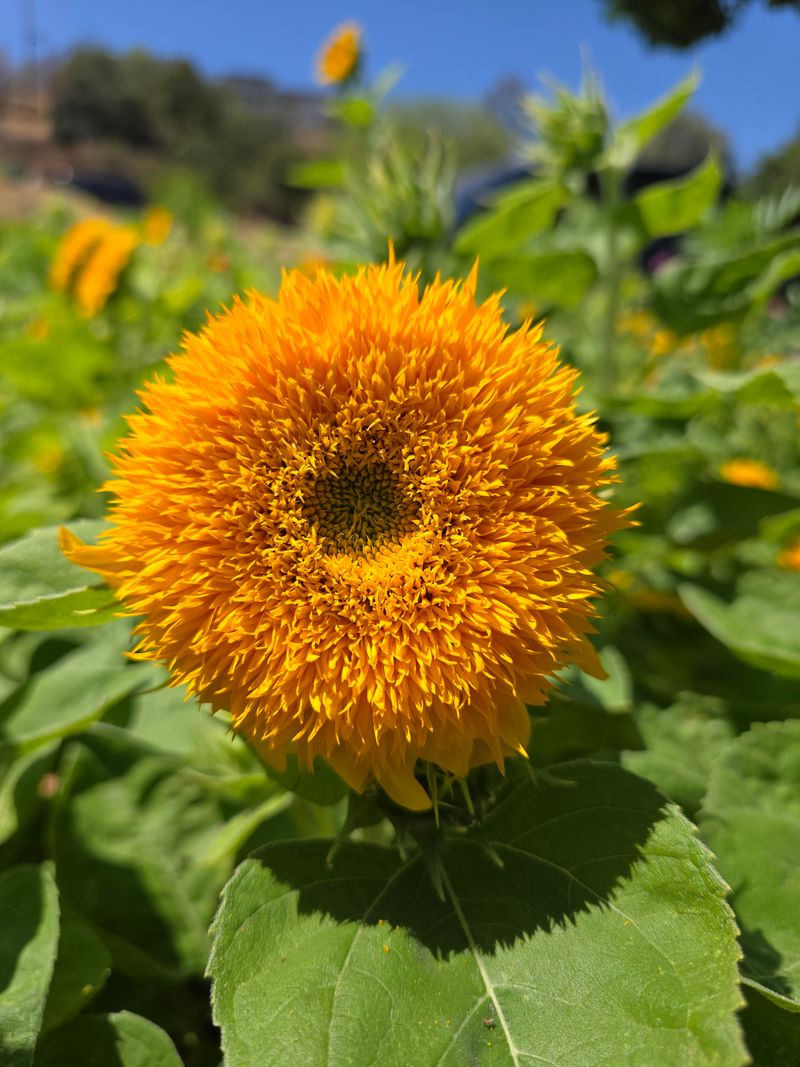
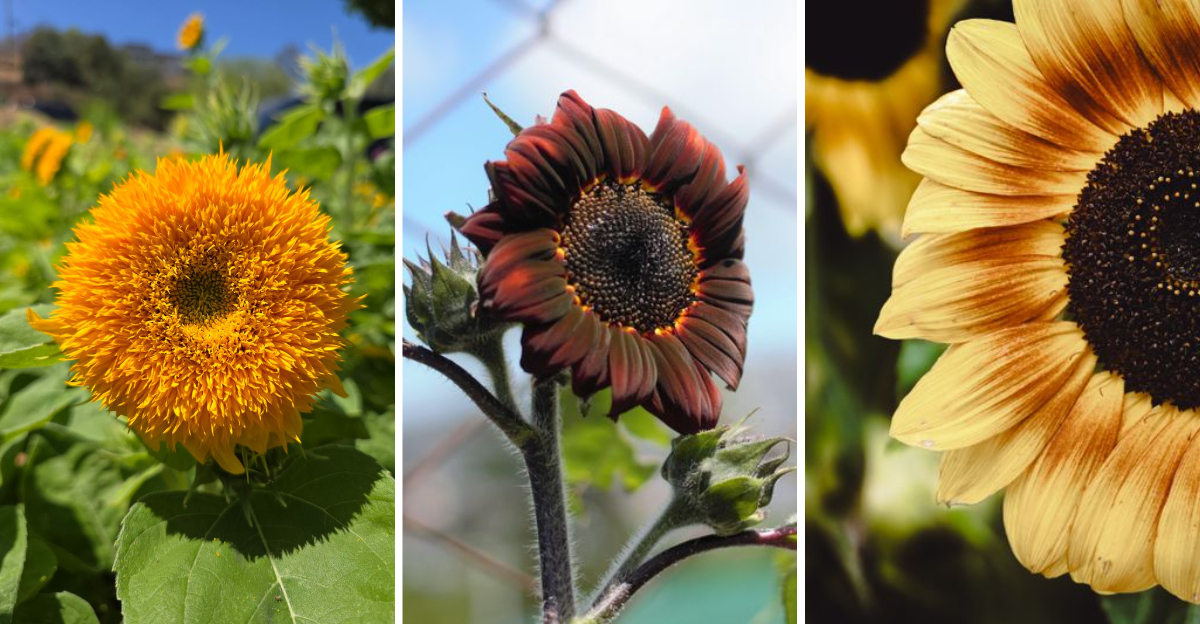
Teddy Bear sunflowers look like a sunflower crossed with a pompom, producing a dense, soft, and cheerful bloom.
The blooms are fully double, meaning layer after layer of golden petals fill in so tightly that the dark center is completely hidden. Children go absolutely wild for these, and honestly, adults do too.
Growing about two to three feet tall, Teddy Bear is compact enough for raised beds and large containers.
It matures in around 55 to 75 days depending on the supplier, so a July planting in Indiana still gives you blooms before summer winds down.
The fluffy texture makes it stand out dramatically next to traditional flat-faced sunflower varieties. Soil prep matters more for Teddy Bear than for some other types.
Loose, well-amended soil with good drainage helps the roots stay healthy through Indiana’s occasional late summer downpours.
Add compost before planting and you will notice stronger stems and bigger blooms as a result.
Because the petals are so densely packed, Teddy Bear holds up longer in a vase than single-petal types. Cut stems when the outer petals are just beginning to open and condition them in cool water overnight.
They will last up to ten days inside with fresh water changes every couple of days. Sunflower varieties Indiana gardeners pick for cutting gardens should always include Teddy Bear.
Its unique texture, compact habit, and long vase life make it one of the most rewarding warm-season flowers you can grow in the Hoosier State.
5. Autumn Beauty
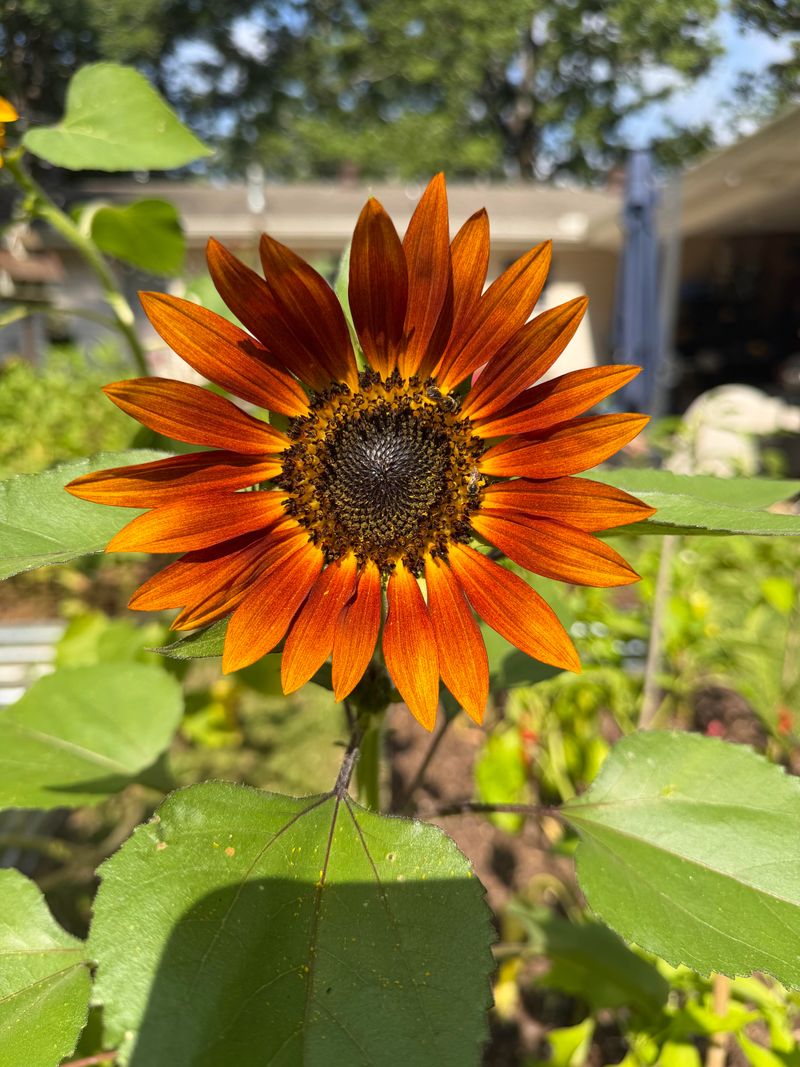
Autumn Beauty is essentially a sunflower variety that cannot decide which color it wants to be, and that indecision is its greatest strength.
Plants in the same seed packet produce blooms in shades of deep red, burnt orange, golden yellow, and soft bronze.
No two plants look exactly alike, which gives your garden a wild, painterly quality that feels effortlessly designed.
This variety grows five to seven feet tall and matures in about 70 to 100 days depending on the seed source, so planting early in July gives it the best shot at blooming before Indiana’s first frost.
A July planting in Indiana puts blooms right at peak season, when the light starts turning that gorgeous amber color typical of late August. The timing could not be more perfect for the color palette Autumn Beauty brings.
Autumn Beauty branches heavily, meaning each plant produces multiple stems loaded with medium-sized blooms.
More stems means more cut flowers, and these varieties hold up beautifully in arrangements that lean into fall tones.
Pair them with dried grasses, eucalyptus, or marigolds for arrangements that feel seasonal and sophisticated.
Plant seeds directly in the ground about an inch deep and 18 inches apart to give branching room. Full sun is non-negotiable for Autumn Beauty since shaded plants tend to stretch and produce fewer blooms.
Water at the base of the plant to keep foliage dry and reduce fungal pressure during humid stretches.
Once established, Autumn Beauty is surprisingly self-sufficient. Remove spent blooms regularly to encourage new flower production and keep the plant looking tidy through the end of the season.
6. Moulin Rouge
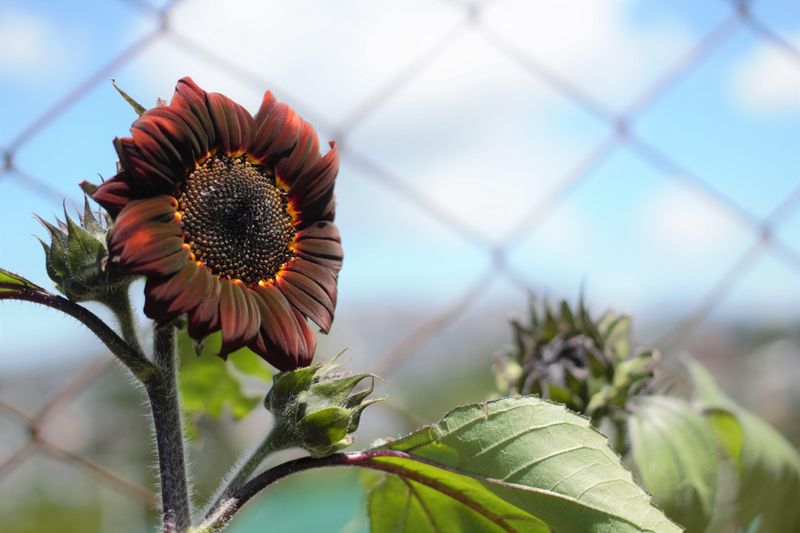
Moulin Rouge is a sunflower variety that draws attention quickly. The petals are a deep, velvety burgundy red that almost looks unreal against a blue summer sky.
No yellow here, just a bold, saturated color from a plant that takes about 60 to 70 days to reach its full, show-stopping potential.
Growing three to four feet tall, Moulin Rouge fits well into mid-border plantings without overshadowing smaller companions. It branches moderately, offering a handful of blooms per plant rather than one giant single head.
Each flower measures around four inches across with a dark chocolate center that deepens the rich color effect.
A July planting in Indiana works well with this variety because the 60 to 70 day window lands in late August or early September.
That timing gives you blooms when the garden often feels like it is winding down. Moulin Rouge steps in and gives everything a second act worth watching.
Cut Moulin Rouge stems early in the morning when temperatures are cooler. Place them immediately in cool water and let them condition for several hours before arranging.
The deep color holds well even as the blooms age, which is not always the case with lighter-colored varieties.
This variety pairs stunningly with cream-colored dahlias, blush zinnias, or silvery dusty miller. The jewel-toned petals create a contrast that feels rich and intentional rather than accidental.
Gardeners who grow Moulin Rouge once almost always make space for it again the following year.
7. ProCut Bicolor
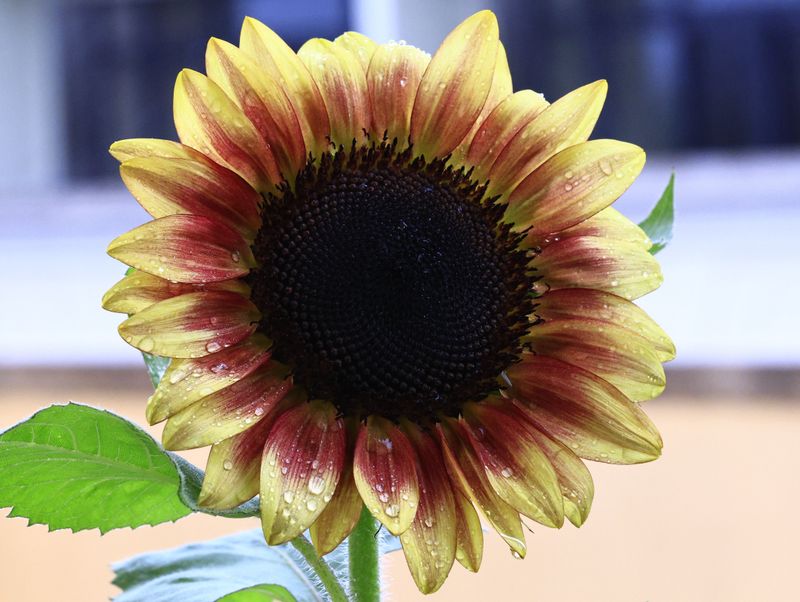
ProCut Bicolor was bred specifically for cut-flower use. Developed specifically for the cut flower industry, this variety produces single-stem blooms on strong, straight stalks that hold up beautifully from garden to vase.
The petals fade from bright yellow at the tips to creamy white near the center, creating a gradient effect that looks almost hand-painted.
This variety matures in an impressively fast 50 to 65 days, making it one of the quickest options for a July planting in Indiana.
Even if you start seeds in mid-July, you can realistically expect blooms by early September. That speed is a genuine advantage when the growing window is getting shorter.
ProCut Bicolor grows four to five feet tall with sturdy stems that rarely need staking. It is pollen-free, which means no mess when you bring bouquets inside.
The blooms also have a longer-than-average vase life, often lasting ten days or more with proper care.
Space seeds about six inches apart for tight, straight stems that compete for light and grow tall without branching much.
This spacing mimics commercial production methods and results in cleaner, more uniform cut stems. Water consistently at the base and avoid wetting the foliage to reduce disease pressure.
Sunflower varieties Indiana gardeners choose for farmers markets or home cutting gardens should put ProCut Bicolor near the top of the list.
The combination of speed, stem quality, and unique two-tone color makes it one of the most practical July plantings available.
8. Early Black Heart Sunflower
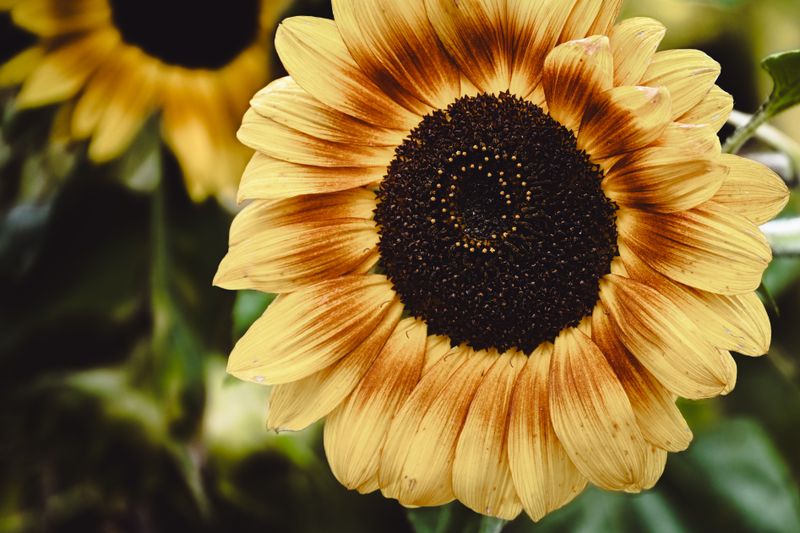
Early Black Heart earns its name from the near-black center disk that sits at the heart of each golden bloom.
The contrast between those deep, dark centers and the bright yellow petals is bold, graphic, and visually distinct. It has a well-composed, intentional-looking appearance.
Maturing in just 55 days, Early Black Heart is one of the fastest sunflower varieties you can plant in Indiana during July. Seeds going in the ground on July 1st could easily be blooming by late August.
For gardeners who feel like they missed the window, this variety is the proof that they absolutely have not.
Plants reach five to six feet tall on a single main stem, producing one substantial, eye-catching bloom rather than a cluster of smaller ones.
That single-stem habit is common among early hybrid varieties bred for speed. Once the first wave of flowers opens, more follow steadily for several weeks.
Prepare your planting spot by loosening the soil at least eight inches deep and mixing in a handful of balanced granular fertilizer.
Sunflowers are heavy feeders, and giving them a nutrient boost at planting time pays off in stronger stems and more prolific blooming.
Water deeply twice a week rather than shallowly every day to encourage deep root development.
Early Black Heart also attracts goldfinches once the seed heads mature. Leaving a few stalks standing after the season ends gives local birds a food source heading into fall.
Growing sunflower varieties Indiana wildlife depends on is one of the most rewarding parts of gardening.