Hummingbird Look-Alike Moths Are Fooling Gardeners Across Tennessee This September
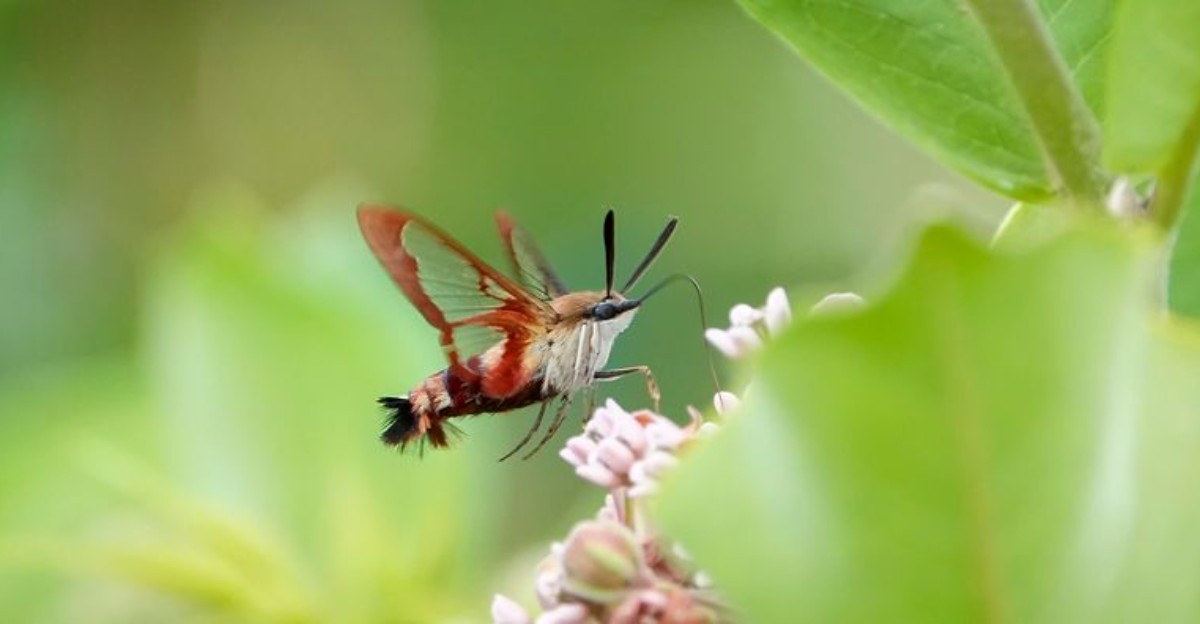
A blur hovers over your phlox, wings buzzing into smoke. Wings beat faster than any bird you truly know. Your phone rises, certain you have finally caught proof. Suddenly it drifts sideways, pauses, then drops softly onto a bloom.
Then a curled tongue slowly unrolls right before your eyes. That tongue tells you it is no hummingbird. Tennessee porches are buzzing with the exact same argument today. Knoxville neighbors insist it is a baby hummingbird.
Nashville gardeners tell you it has striped antennae instead. Chattanooga just wants somebody to finally settle the dispute.
Moths rarely earn credit for looking this convincing. This particular species mimics hummingbirds with close precision.
Gardens across Tennessee apparently give you the perfect stage. Bee balm just became the unlikely center of backyard confusion.
Clues sit in plain sight, waiting for a closer look. Once you spot the giveaway, you cannot unsee it on your porch.
Why Early September Sightings Spike Across The State
Late summer in Tennessee runs on a tight schedule, and early September sits right in the thick of it. These moths often appear in a later seasonal wave, timed with the last strong bloom before cooler weather arrives.
Warm afternoons and mild evenings hand them long feeding windows, so backyard reports climb from Memphis all the way to Bristol. Gardeners usually spot one while trimming zinnias or dragging a hose around at five o clock.
September also delivers a flush of late bloomers such as ironweed, blue mistflower, and phlox that got cut back for a second show. Those plants stack their blossoms into tight clusters, which suits a hovering feeder beautifully.
Ruby-throated hummingbirds are migrating through at the same moment, and that overlap sets up the confusion. Two hovering shapes work the same flowerbed, so the eye grabs the familiar answer first.
Cool mornings slow the moths a little, meaning early risers get the calmest, clearest looks. By nine or ten, the insects warm up and start running long loops through the border.
Sunny days that follow a good rain seem to produce the busiest activity, probably because nectar flow picks back up. Some neighbors report spotting them around the same time, though this varies widely.
Keep your phone in your pocket through the whole month and check the flowerbed twice a day. Once the flight pattern clicks in your memory, you will pick these visitors out from clear across the yard.
Hummingbird Clearwing, The Olive-And-Wine Charmer
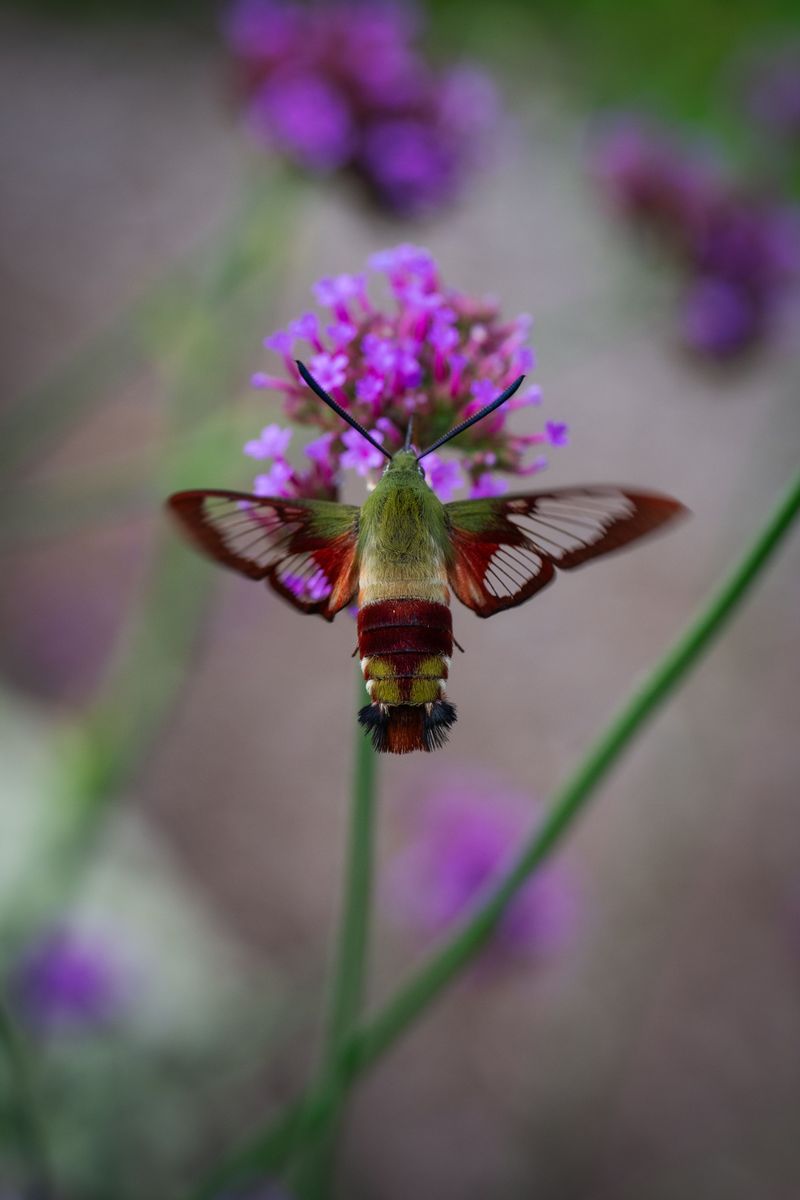
Picture a plush olive-green sweater paired with a burgundy skirt, and you have the hummingbird clearwing. Scientists call it Hemaris thysbe, and it is the larger of the two look-alikes fluttering around Tennessee yards.
The body stretches roughly an inch and a half to two inches long, with a wingspan close to two inches. A ruby-throated hummingbird runs about three and a half inches, so size alone offers a decent first hint.
Its back wears a fuzzy olive or golden-tan coat, while the rear half of the body glows reddish brown, like brick dust or old wine. Pale legs and a light-colored underside round out the outfit.
Your Tennessee Garden Changes Every Week. Your Plan Should Too.
Gardening in Tennessee changes quickly throughout the season. Every Friday you’ll receive a simple weekly plan showing exactly what to plant, prune, fertilize, harvest, and protect so you never miss the right timing.
Wings carry a dark reddish border around wide clear panels, which is where the clearwing name comes from. In flight those borders flash like tiny stained glass frames.
Range covers the eastern United States and much of Canada, and Tennessee sits comfortably in the middle of it. Middle Tennessee gardeners with bee balm patches tend to see the highest numbers.
Adults feed during daylight, favoring mid-morning through late afternoon, which is exactly when gardeners are outside working. That timing explains the flood of confused text messages sent to county extension offices each fall.
Fun bit of history: the species carries a name inspired by a classical love story. A tiny moth with a literary nickname feels oddly fitting for something that fools people daily.
Snowberry Clearwing, The Bumblebee Body Double
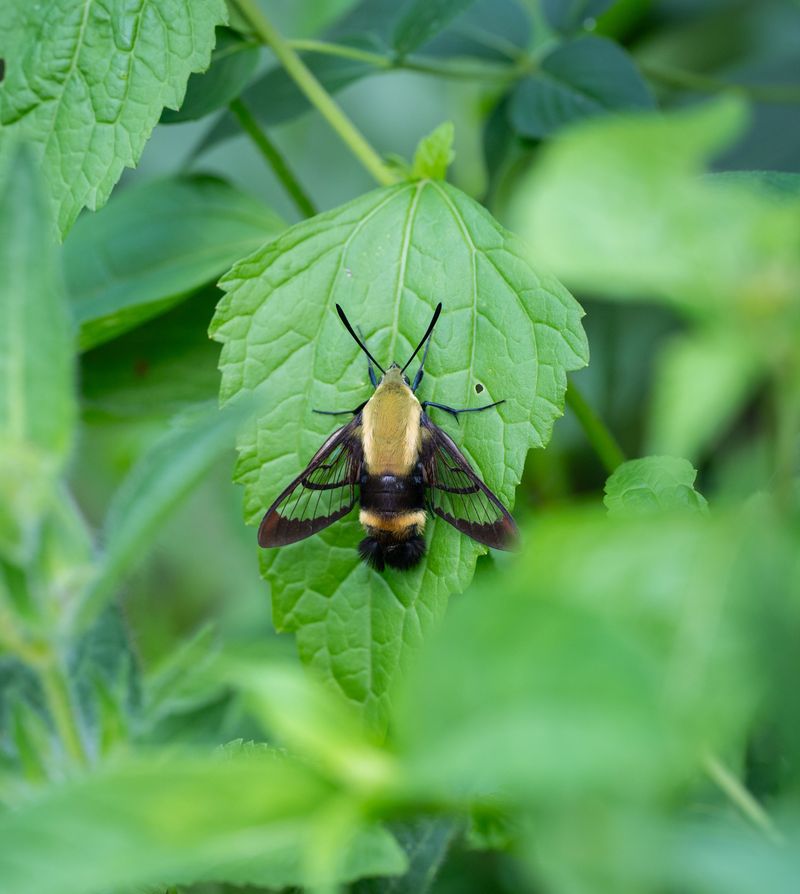
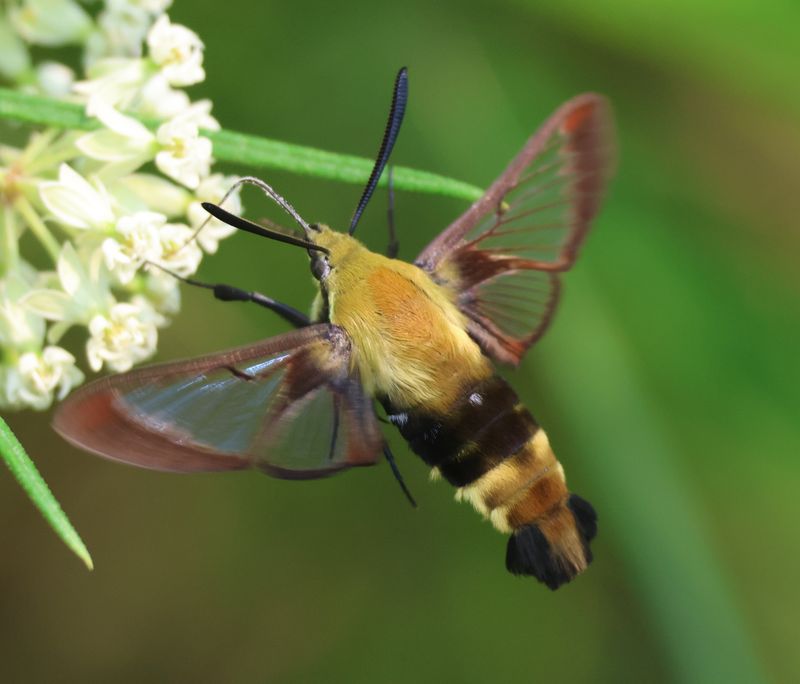
Its cousin took a different costume approach and went straight for bumblebee cosplay. The snowberry clearwing, or Hemaris diffinis, wears fuzzy yellow and black bands that fool birds and gardeners alike.
Look for a black stripe running through the eye and down the side of the body, a little like a bandit mask. Legs are dark, and the tail tuft often flares out in a black fan.
Size runs slightly smaller than the hummingbird clearwing, generally an inch to an inch and a half. The flight sounds buzzier, too, which pushes the bumblebee impression further.
Mimicking a stinging insect is a clever defense trick called Batesian mimicry. Predators that got a bad experience from an actual bee tend to leave the harmless copycat alone.
Tennessee gardeners find them working lantana, butterfly bush, verbena, and clumps of native mistflower. West Tennessee sightings often come from open, sunny yards with plenty of low nectar plants.
Handling one is unnecessary, though the species carries no sting, no bite, and no interest in people. The fuzzy body is scales, not fur, and those scales rub off if you grab it.
Neighborhood kids adore this one because it looks like a bee that learned to hover backward. Point it out during a backyard walk for a quick, hands-on identification example.
Antennae Settle The Argument Quickly
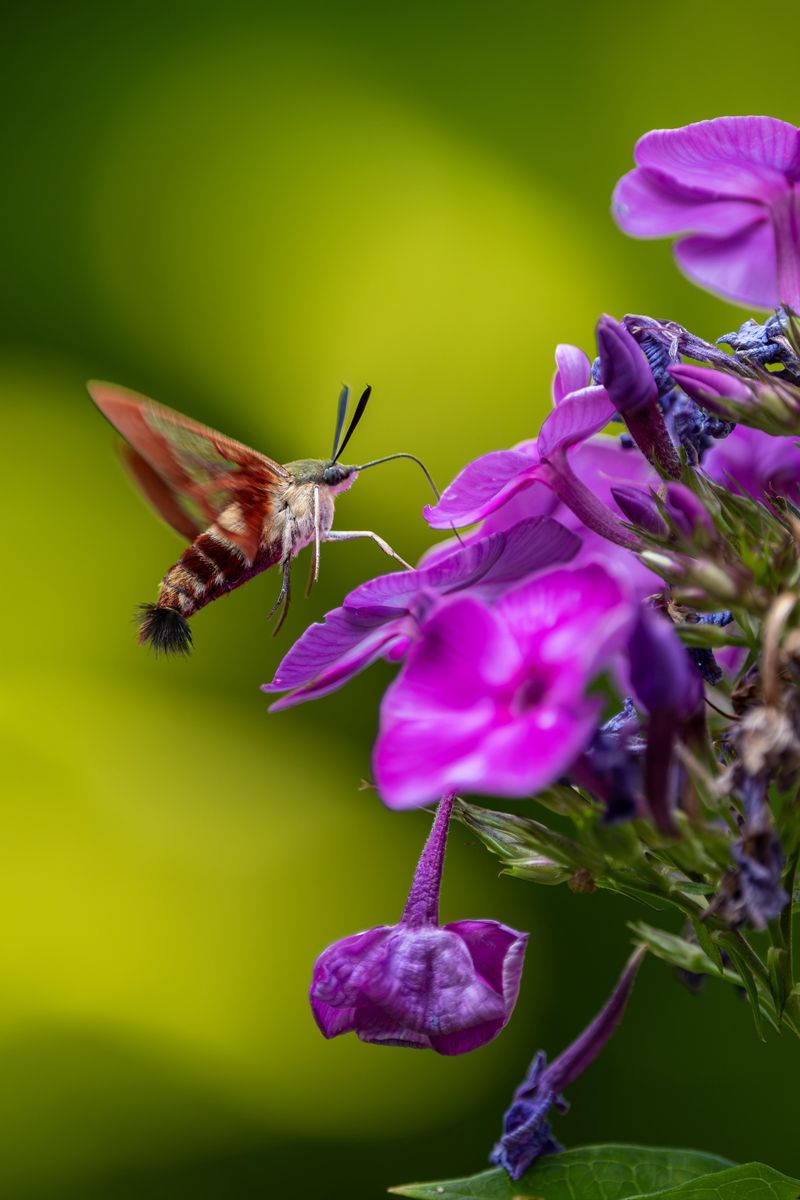
Arguments over the mystery visitor end fast once somebody looks at the head. Birds carry a bill and no antennae, while these moths sport two thick antennae that curve into a little hook at the tip.
The antennae look like slim clubs, thicker at the far end than at the base. On a photo blown up on a phone screen, they read as two dark eyebrows sticking out front.
A ruby-throated hummingbird has a long needle-thin bill and a smooth, feathered head. There is no fuzz, no antennae, and no coiled tongue tucked underneath.
Eyes give another clue. Moth eyes are large, round, and dark, sitting on the sides of the head, while a bird eye looks small and bright against feathers.
Try this trick with kids: ask them to find the eyebrows. It turns identification into a game, and the answer sticks for years afterward.
Body texture helps too, since moth scales look plush and slightly shaggy up close. Feathers lie flat in neat overlapping rows and catch light differently.
Six legs versus two is the final tiebreaker, though legs tuck up during hovering and can be hard to see. Wait until the insect grips a flower cluster and the count becomes obvious.
Snap a burst of photos and zoom in later on the couch. The antennae show up in at least one frame, and the mystery closes without any guessing.
See-Through Wing Panels And The Scales That Fall Away
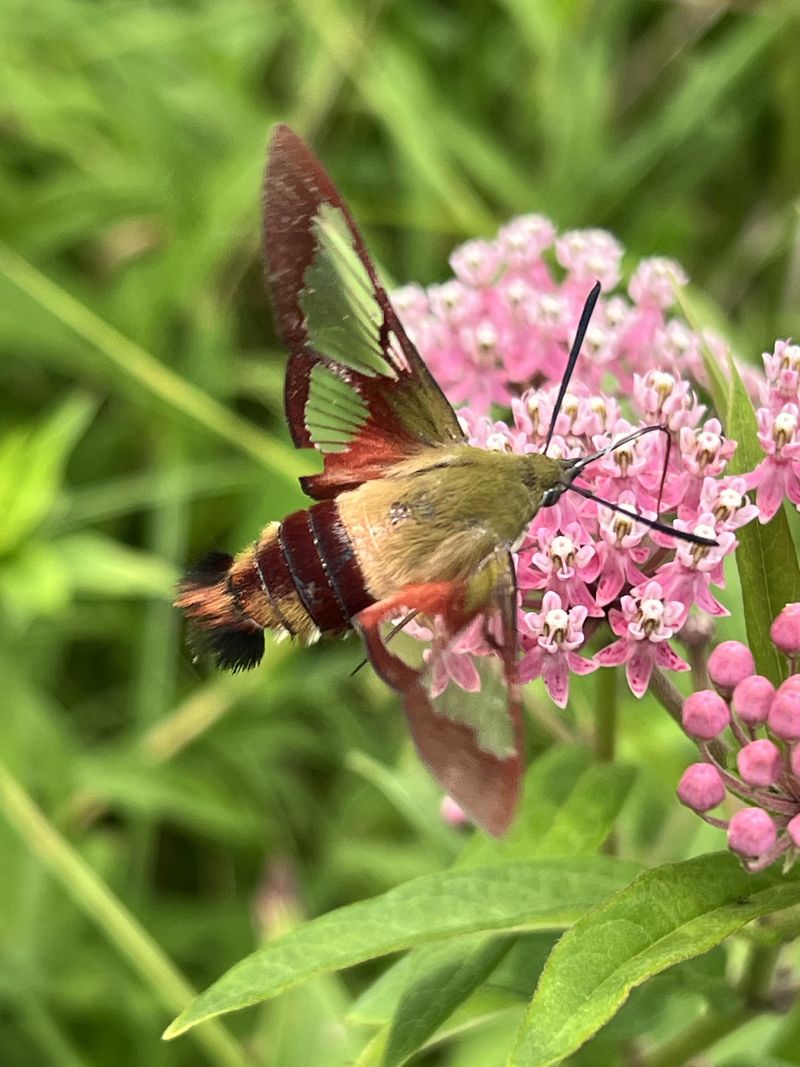
Freshly emerged clearwings look nothing like the adults you meet in the garden. Their wings start out covered in scales, giving them a solid, ordinary moth appearance.
During the first few flights, those loose scales shake free and drift off like glitter. What remains is a windowpane of clear membrane framed by a dark reddish or brown border.
Wing veins stay visible through the clear panels, which looks remarkable in a backlit photo. Morning sun behind the insect turns the borders into glowing outlines.
Transparency serves a purpose beyond looking cool. Clear wings make the shape harder for birds to track, and they help sell the bee disguise from a distance.
Wingbeat speed is fast enough to produce an audible hum, similar to a bee. That hum is lower and buzzier than the thin whir of a hummingbird.
Older individuals sometimes show tattered wing edges by mid-September after weeks of hard flying. A ragged border does not slow them much, though flight looks slightly wobblier.
If you find a shed scale dust smudge on a window screen, that is often from a moth resting nearby. Harmless stuff, and it brushes right off.
Watch for the flash of clear panels as the insect banks away from a flower. Once you catch that see-through glint, you will spot it again from twenty feet out.
Sideways Slides And Quick Pauses
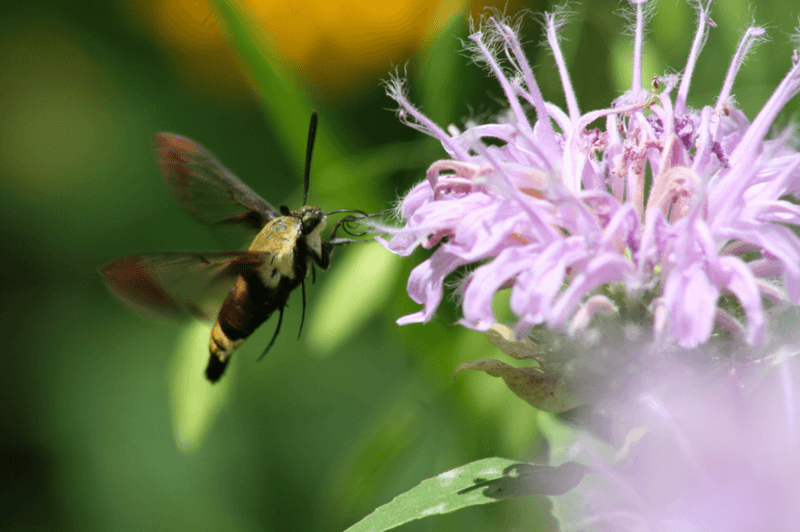
Flight behavior gives away more than color ever will. A hummingbird holds its body at a tilt and hovers with a steady, controlled pose, pausing at feeders for a full second or longer.
The moth keeps its body fairly level and bounces, slipping sideways and backward between blossoms in short hops. Think of a bumper car with excellent manners.
Feeding visits run quick, often under a second per flower before the insect shifts to the next bloom in the cluster. Watching one work a phlox head feels like watching a sewing machine.
Legs come into play as well, since many clearwings brush or grip petals while feeding. Hummingbirds hover free without touching the flower at all.
Sound differs too. A bird produces a thin, high whir, while the moth adds a low buzz that carries a couple of feet.
Height is another clue worth noting. These moths tend to work the lower and middle layers of a border, while hummingbirds swing high and drop in from above.
Try standing still for two minutes near a nectar patch around eleven in the morning. Movement patterns become obvious once you stop chasing and start observing.
Tennessee gardeners sometimes get both at one shrub, which makes for a fantastic side-by-side lesson. Compare them in the same glance and the differences become clear, a useful side-by-side comparison.
The Tongue That Unrolls Like A Party Favor

Under that fuzzy head sits a coiled straw called a proboscis, and it stays rolled up like a watch spring when not in use. Unrolled, it can reach a length close to the body itself.
Tubular flowers are the reason for such a tool. Bee balm, phlox, salvia, and honeysuckle hide their nectar at the bottom of narrow tubes that shorter-tongued insects cannot reach.
The moth hovers, extends the straw, and threads it into the flower without landing. Precision like that during rapid flight is a notable natural adaptation.
Pollen collects on the face and front legs during feeding, so these insects do real pollination work. Gardeners get flower service in exchange for nectar, which seems like a fair trade.
Watch closely and you may see the tongue swing forward before the insect reaches the bloom, almost like aiming. Photographers love catching that half-extended moment.
Rainy stretches keep them grounded because nectar gets diluted and flying costs energy. Sightings bounce back on the first bright afternoon afterward.
A shallow dish of sugar water offers nothing to these visitors, since they want flowers, not feeders. Planting nectar sources beats any store-bought setup.
Next time one visits, count the flowers it hits in ten seconds. The number surprises people, and it explains why a single moth can pollinate an entire phlox patch before lunch.