That Blue Tailed Skink In Your Virginia Yard Is More Helpful Than You Think
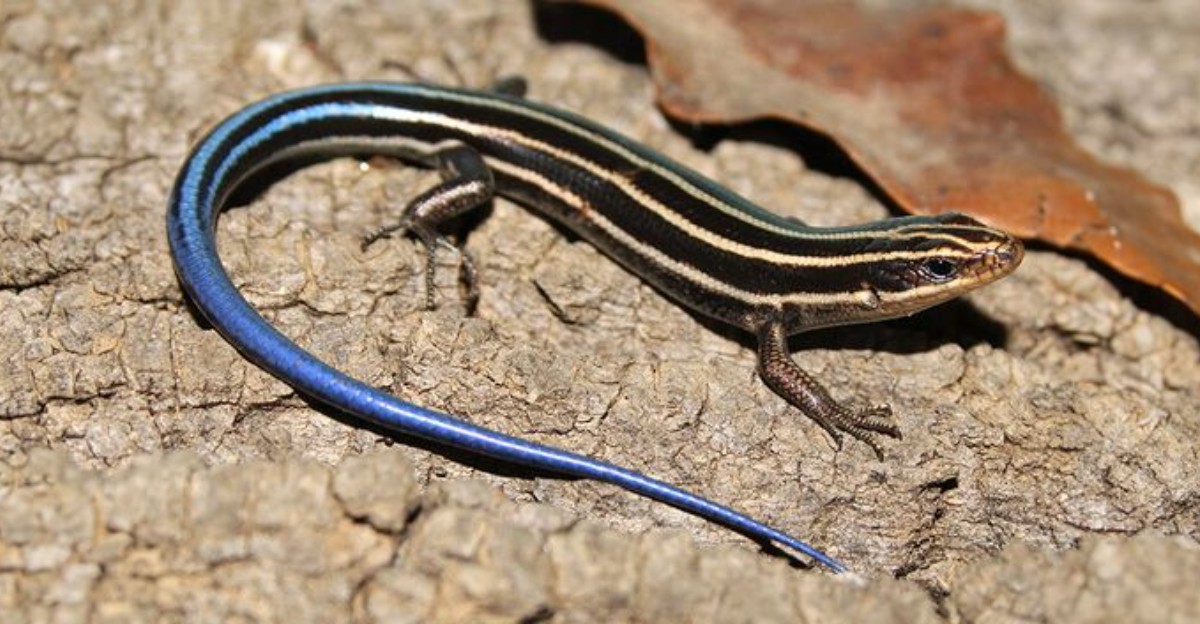
A flash of electric blue disappears beneath a porch step, and you may have just spotted one of Virginia’s most interesting backyard visitors.
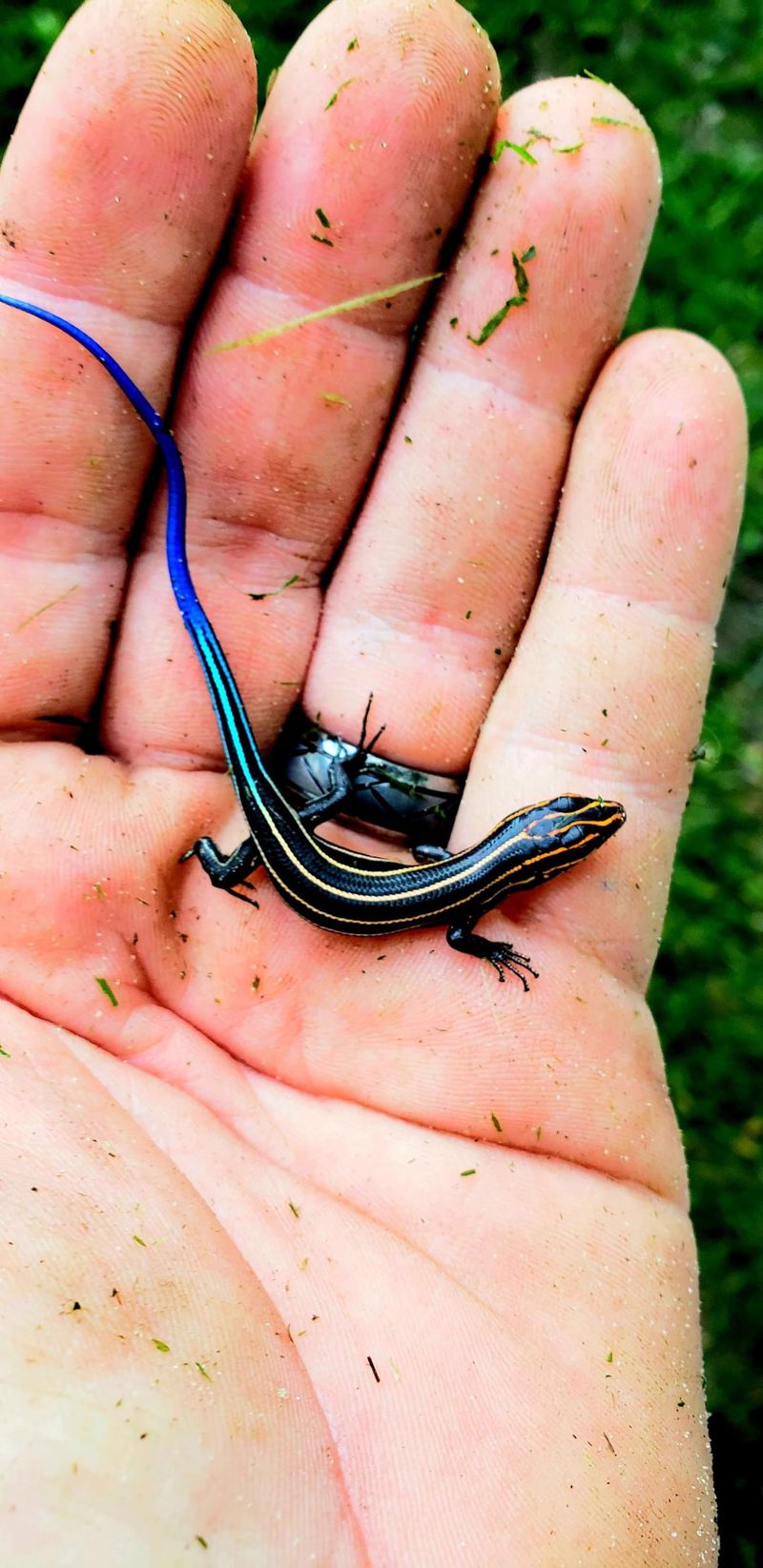
Young five-lined skinks are easy to miss, but their bright tails and quick movements make them unforgettable once you notice them.
Many homeowners mistake these little lizards for unwanted guests, but they are actually valuable parts of the yard ecosystem.
Skinks help control small insects, provide food for other wildlife, and thrive in simple backyard spaces with logs, leaf litter, and sunny spots to warm up.
Once you understand what these tiny reptiles are doing around your property, that blue streak may become a welcome sight.
Five Lined Skinks Help Keep Unwanted Insects Under Control
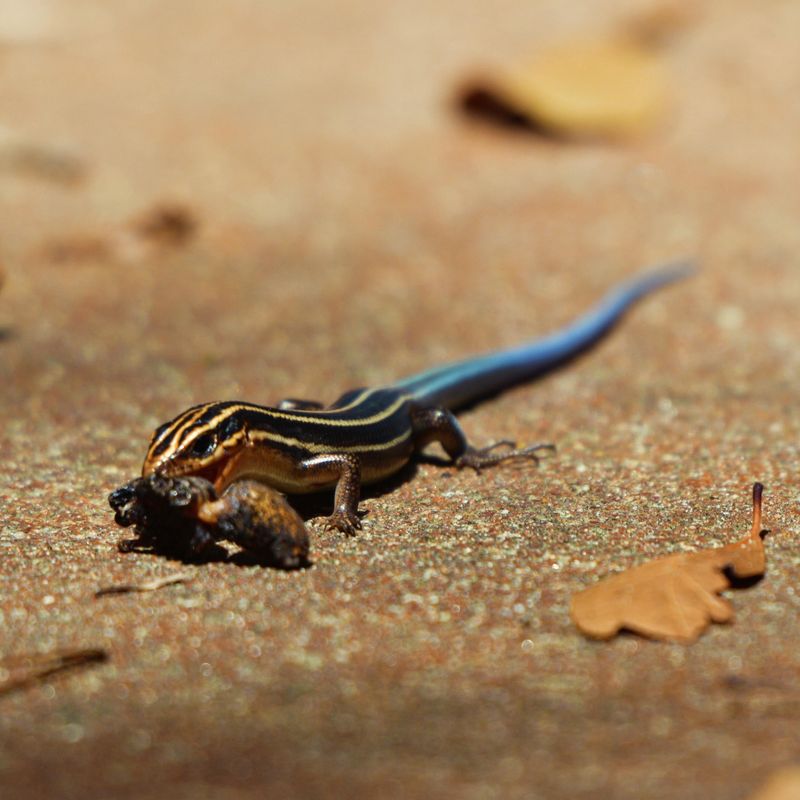
Picture a tiny patrol officer working your flower beds from sunrise until dusk. That is roughly what a five-lined skink does every warm day.
These lizards are insectivores, which means most of their menu is made up of bugs and other small invertebrates.
Crickets, beetles, grasshoppers, caterpillars, spiders, millipedes, slugs, and even termites can become skink snacks when they are found while hunting through leaf litter and garden spaces.
Gardeners tend to notice the results before they notice the lizard. Fewer chewed leaves, fewer beetles clinging to the tomato stems, fewer slugs sliding across the hostas after a rainy night.
A single skink will not clear out an infestation on its own, of course. But a healthy group of them working the same half acre adds up to real, steady pressure on pest numbers.
What makes them especially useful is where they hunt. Skinks poke into mulch, under boards, along stone edges, and into leaf litter, which are exactly the damp spots where soft-bodied pests like to hide.
They also work for free and require no refilling, unlike traps or sprays. If you want to encourage that free service, ease up on broad insecticides in your yard.
Pesticides remove the food supply and can harm the skinks themselves. Leaving a few untreated corners gives these lizards a reason to stick around.
Skinks Provide A Natural Food Source For Larger Wildlife
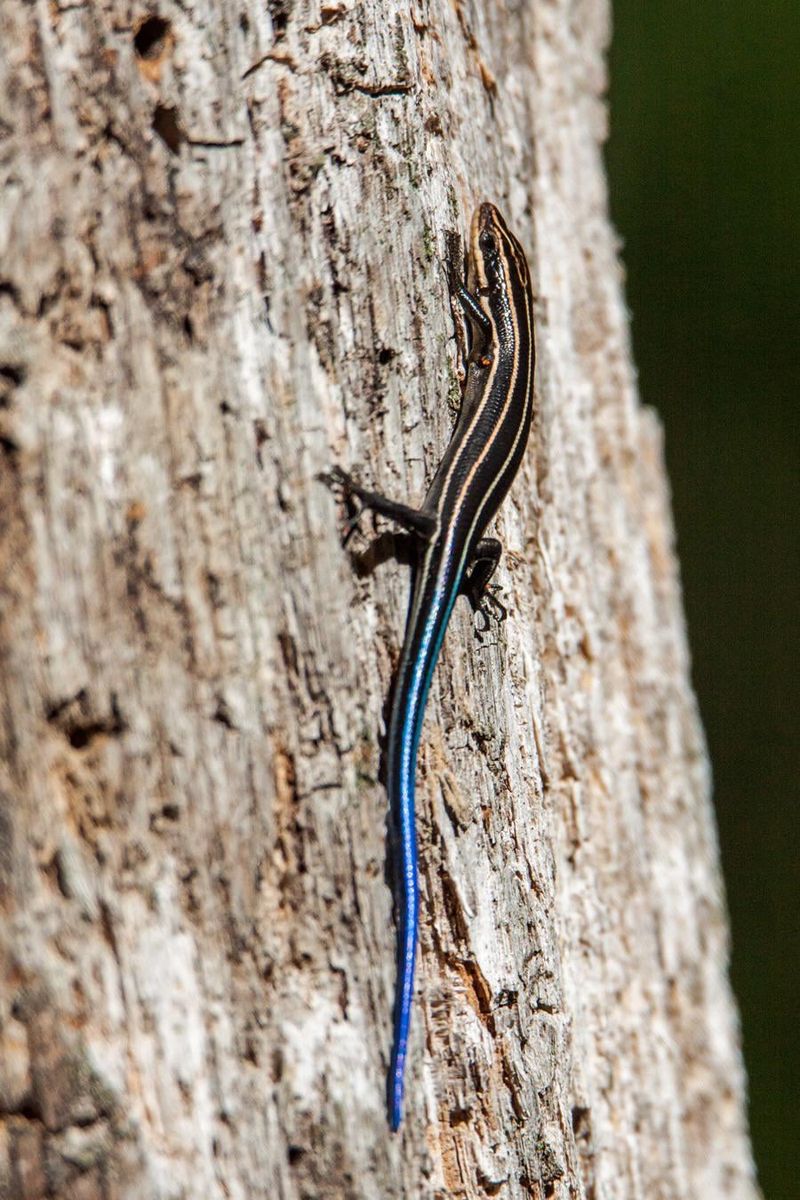
Ask any hawk circling over a neighborhood and it will tell you skinks matter. Small animals like these sit near the middle of the food chain, and plenty of bigger creatures depend on them.
Snakes are among the most regular skink hunters. Cornsnakes, black racers, milk snakes, and scarlet kingsnakes all pursue them through woodpiles and leaf litter.
Birds join the chase too. American crows, kestrels, sharp-shinned hawks, and northern shrikes have all been recorded taking skinks when the chance appears.
Mammals get in on it as well, including foxes, raccoons, opossums, skunks, shrews, moles, and weasels. Outdoor house cats also hunt skinks, which is one strong reason to keep pet cats indoors.
Now for the famous trick. That glowing blue tail on a young skink is not just decoration, it works as a decoy.
When a predator grabs the tail, it breaks away and keeps twitching on the ground. The startled attacker focuses on the wiggling piece while the skink slips off into a crack or under a log.
Your Virginia Garden Changes Every Week. Your Plan Should Too.
Gardening in Virginia changes quickly throughout the season. Every Friday you’ll receive a simple weekly plan showing exactly what to plant, prune, fertilize, harvest, and protect so you never miss the right timing.
The lizard regrows a replacement over time, though the new tail is usually duller and shorter. Scientists call this trick caudal autotomy, which is a fancy label for a very practical escape plan.
Knowing all this changes how a backyard looks. Every skink sunning on a warm stone is helping feed the songbirds, snakes, and foxes that make Virginia yards feel wild.
Their Presence Adds Native Wildlife To Your Yard
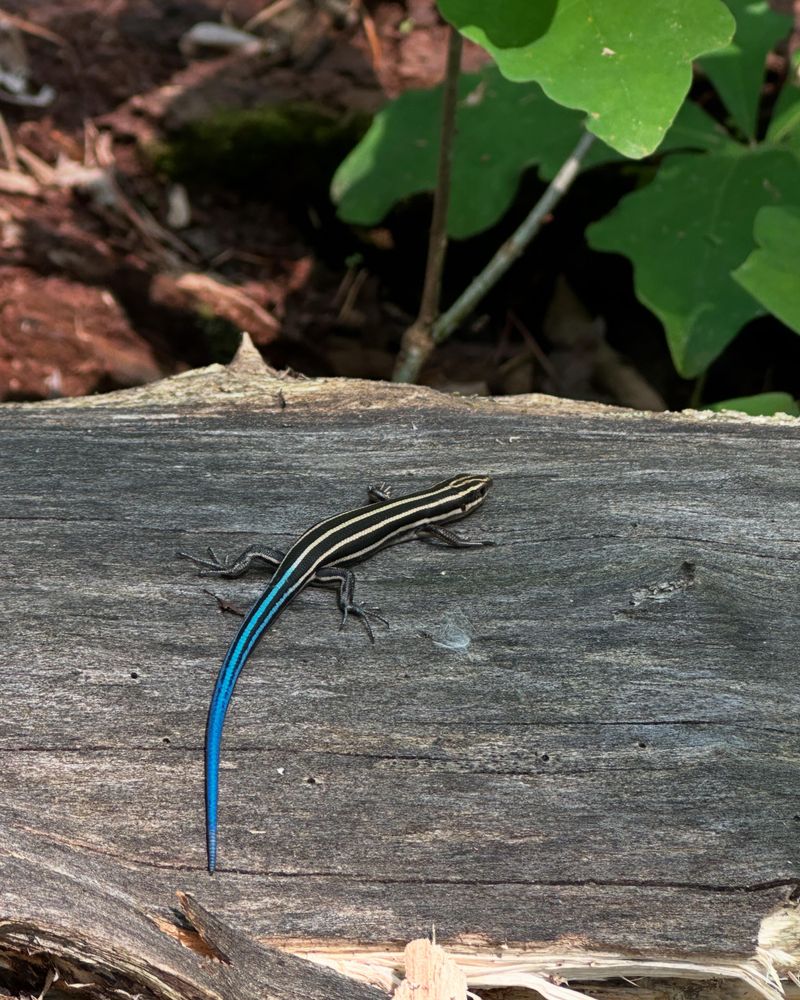
Not every creature in your yard actually belongs there. The common five-lined skink, known to scientists as Plestiodon fasciatus, absolutely does.
Herpetologists consider it one of the most frequently seen lizards across the state, from the coastal plain to the foothills. It has been part of these woods and clearings far longer than any of our neighborhoods have existed.
The blue tail people talk about belongs mostly to the youngsters. Juveniles wear dark bodies with five crisp cream stripes and that startling cobalt tail.
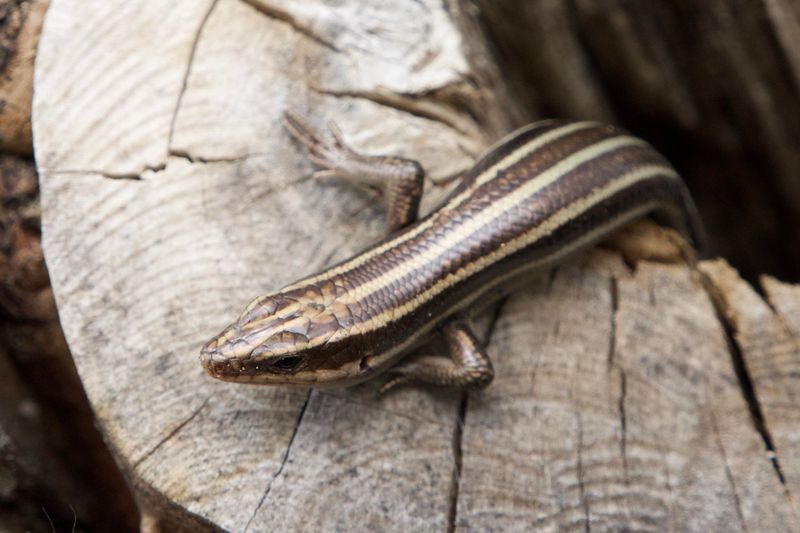
As they mature, the colors fade toward brown and bronze, and breeding males develop a bright orange-red head. Many homeowners assume they are seeing two different species when it is really one lizard at different life stages.
Virginia also hosts close relatives with blue-tailed babies, including the broad-headed skink and the southeastern five-lined skink. Telling them apart takes a careful look at scales, so most folks just enjoy the show.
Native species like these matter because they evolved alongside local plants, insects, and predators. They fit the system instead of straining it, unlike introduced species that arrive without natural checks.
Welcoming them costs almost nothing. A brush pile in a back corner, a few flat stones, and some unraked leaves give native lizards what they need.
There is real satisfaction in knowing the wildlife on your patio is genuinely local. That blue-tailed visitor is a small piece of Virginia’s original landscape still holding on.
Skinks Support A More Balanced Backyard Food Web
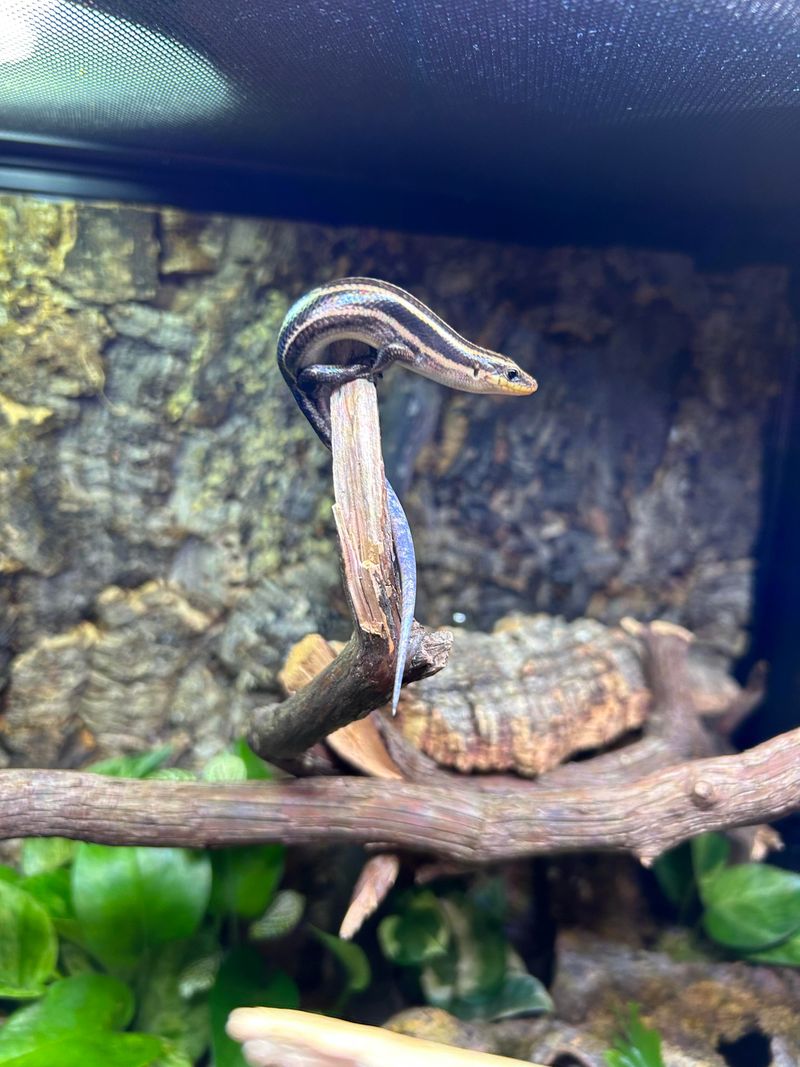
Think of your yard as a giant connected puzzle where every piece touches several others. Skinks happen to sit right in the middle of that puzzle.
They eat downward, taking in crickets, beetles, spiders, and worms. They also feed upward, supplying meals for snakes, birds, and small mammals.
That double role makes them what ecologists call a mid-level link. Remove the link, and both sides of the chain feel the gap.
Without skinks and similar small predators, certain insect populations can swell quickly during warm summers. Meanwhile, hungry snakes and birds have fewer options and may move on to other territory.
Balance in a backyard rarely looks dramatic. It shows up as fewer pest outbreaks, more birdsong, and plants that manage without constant chemical help.
Skinks also move nutrients around in ways people seldom think about. Bugs eaten near the compost pile become energy that later feeds a hawk two neighborhoods away.
Supporting that balance is simpler than most homeowners expect. Skip blanket pesticide treatments, keep a bit of ground cover, and let a corner of the property stay slightly wild.
Watering thoughtfully helps too, since skinks favor moist, shaded ground over baked bare dirt. A shallow dish tucked near shrubs can serve insects and lizards alike.
Small choices stack up over seasons. A yard with skinks tends to be a yard where the whole system runs a little smoother on its own.
These Harmless Lizards Do Not Damage Gardens Or Property
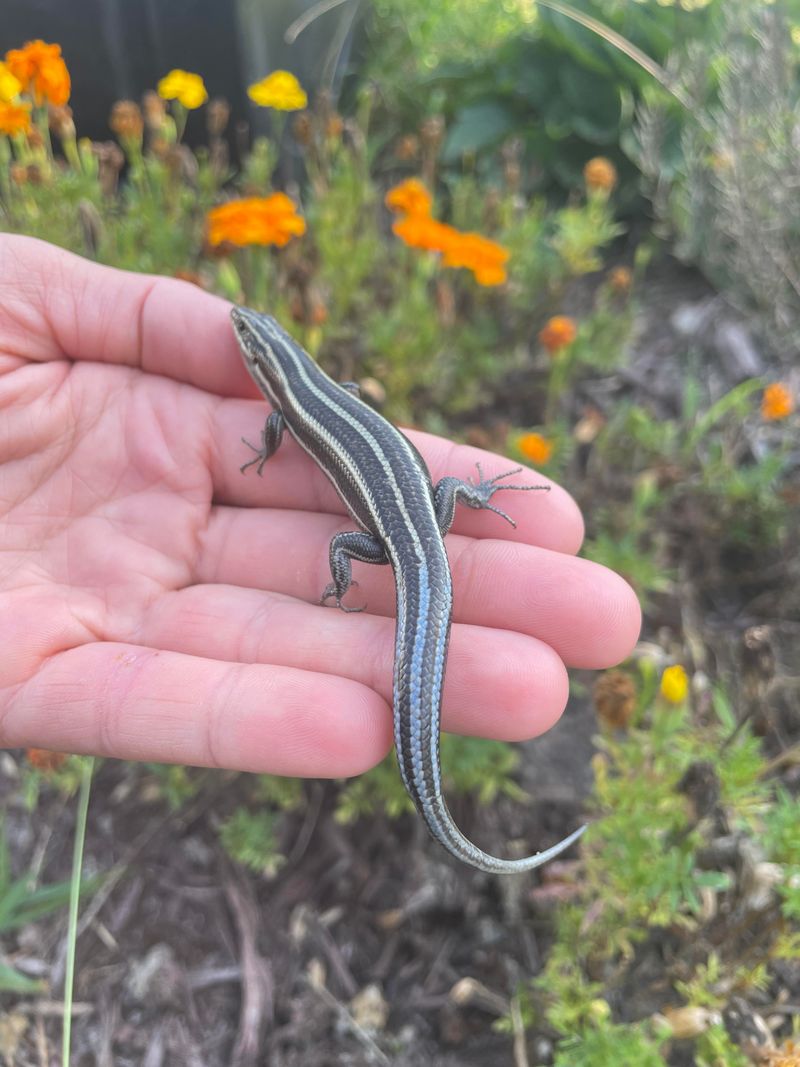
Let’s settle a worry that comes up constantly at garden centers. Skinks do not chew your vegetables, gnaw your siding, or tunnel under your foundation.
Their diet is made up of insects and other small invertebrates, period. Lettuce, strawberries, and tomato vines hold zero appeal for them.
They also carry no venom and pose no threat to people. A cornered skink might nip if you grab it, and the pinch feels roughly like a firm pencil poke.
Best practice is simply to leave them be. Handling stresses the animal and can cause the tail to break off unnecessarily.
Pets are the bigger concern in most yards, since curious dogs and hunting cats chase skinks with enthusiasm. Supervising outdoor time protects the lizards and spares your pet an unpleasant mouthful.
Occasionally one wanders indoors through an open door or a gap in weatherstripping. Rather than reaching for a broom, guide it gently into a container with a piece of cardboard and set it free near a shady shrub.
Sealing small gaps around doors and vents prevents repeat visits without harming anything. That same sealing work keeps out plenty of actual pests.
Here is the honest takeaway for gardeners. A skink patrolling your raised beds is doing unpaid pest patrol, not plotting against your produce.
Once folks understand that, the panic fades fast. Many end up bragging about the lizards living under their deck.
Skinks Make Use Of Yard Spaces That Other Wildlife May Overlook
That scruffy corner behind the shed, the one you keep meaning to clean up, is prime real estate. Skinks move right into spaces most homeowners write off as clutter.
Wood piles, brush stacks, old stumps, and fallen logs all serve as skink apartments. Loose bark, thick underbrush, and gaps in stone walls work just as well.
They favor moist, partly wooded ground with plenty of cover nearby. Yards that back up to trees or hedgerows often host the healthiest numbers.
Sunlight matters just as much as shade. Being cold-blooded, skinks need warm surfaces to raise their body temperature before hunting.
You will spot them flattened on logs, deck boards, rocks, and even foundation blocks during mid-morning. A quick shadow sends them scurrying under the nearest object.
Nesting habits are equally resourceful. Females tuck their eggs into rotting logs, loose soil, stumps, and sometimes forgotten bags of potting mix or compost piles.
Females guard the clutch, often remaining with the eggs until they hatch. That level of parental care is unusual among lizards and worth appreciating.
If you want more skinks, leave a low brush pile in a back corner and skip raking every leaf. Flat stones near a shrub border make excellent basking platforms.
Tidy yards look nice from the street. Slightly untidy yards are where the interesting wildlife actually lives.
Their Presence Can Signal A Backyard With Healthy Natural Habitat
Some creatures act like report cards for the land they live on. Skinks fall squarely into that category.
Because they depend on insects and sheltered ground habitat, they may decline in areas that are heavily sprayed or stripped of cover. Spotting several in your yard suggests the ground beneath your feet is doing well.
Healthy skink habitat usually means healthy insect populations. Healthy insect populations mean food for songbirds, frogs, and pollinators too.
It also hints at good soil moisture and decent ground cover. Leaf litter, decaying wood, and shaded edges hold the humidity these lizards prefer.
If you rarely see one, small changes can shift the odds. Reduce pesticide use, let leaves stay under shrubs through winter, and hold onto a log or two.
Planting native shrubs and perennials boosts the insect buffet that supports everything else. Virginia natives like inkberry, spicebush, and little bluestem work beautifully in home landscapes.
Keeping cats indoors makes a measurable difference as well. So does slowing down with the string trimmer along fence lines and stone borders.
Take a minute this spring to watch one closely. The jerky movements, the quick head tilt, the sudden sprint into a mulch pile are all oddly entertaining.
A yard with blue-tailed skinks is a yard with something going right. Treat that flash of blue as a compliment from nature and enjoy the free pest control.