That variegated ivy at the nursery looks charming – until it swallows your Oregon fence and won’t let go
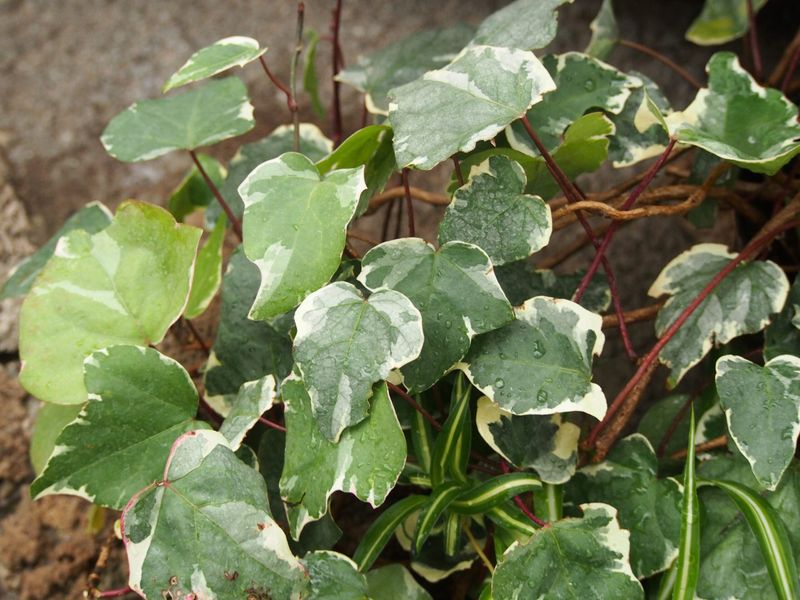
Something about a variegated ivy display at the nursery just reaches out and grabs you – those creamy white edges, the glossy green centers, the way it drapes so convincingly over the little trellis prop. Oregon gardeners west of the Cascades know the feeling well: the plant looks manageable, almost innocent, and before long it is riding home in the back seat.
The trouble is that “variegated ivy” describes a look, not a plant, and what grows behind that pretty tag can turn a weekend fence-painting project into a multi-season ordeal you did not sign up for.
The nursery tag matters more than the pretty leaves
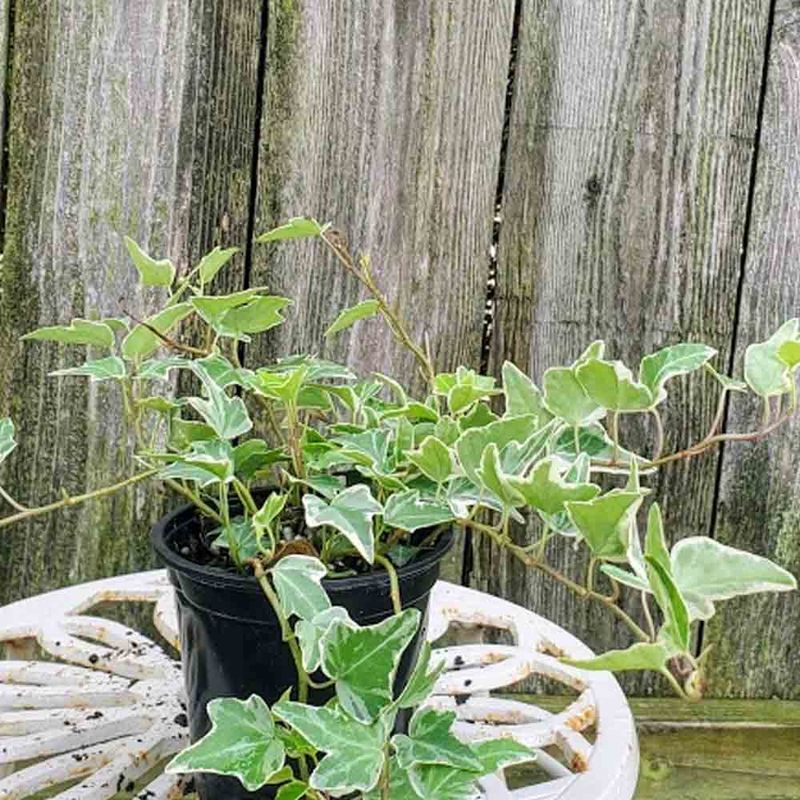
Reaching for a variegated ivy at the nursery feels like a reasonable move. The leaves are striking, the price is usually modest, and the label promises ground cover or a climbing accent with very little drama.
But “variegated ivy” tells you about the color pattern on the leaf, not the species underneath it, and that distinction matters a great deal before you plant anything in western Oregon.
Flip the pot over or look for the smallest text on the tag. What you want is the botanical name – something like Hedera helixHedera hibernica or – plus the cultivar name in single quotes.
Those two pieces of information tell you far more than the leaf pattern ever could. A plant sold as “variegated ivy” might be a cultivar of English ivy, Atlantic ivy, or a less common Hedera species, and cultivar behavior can vary enough that the Oregon ivy management resource packet cautions that many cultivars are difficult to distinguish from one another by appearance alone.
Variegation is a color trait, not a behavioral one. A cream-edged leaf does not mean the plant grows more slowly, stays sterile, or skips the invasive tendencies of its parent species.
Some gardeners assume that a variegated form must be a tamer selection, but that assumption has no reliable support. A plant can carry striking variegation and still root wherever a stem touches soil, still produce berries that birds carry into natural areas, and still attach to your fence with the same aerial roots as its all-green relatives.
The safe habit is simple: read the full botanical name before buying, look it up against Oregon’s current noxious-weed lists, and ask nursery staff if the tag is incomplete. Admiring the leaves is fine.
Knowing exactly what you are bringing home is better.
Why western Oregon is where the regret grows
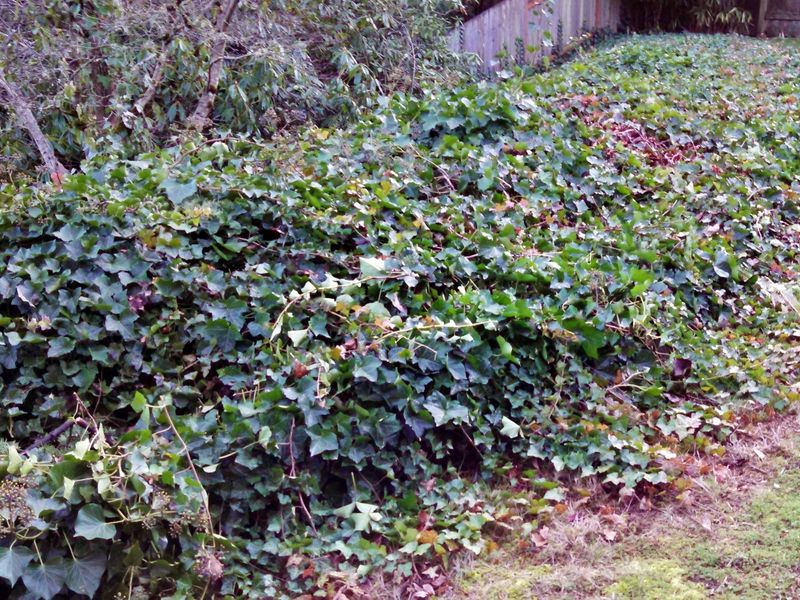
Not every corner of Oregon has the same relationship with ivy. East of the Cascades, the drier climate keeps most Hedera species from spreading aggressively.
West of the Cascades, the story is different in ways that matter to anyone gardening in the Willamette Valley, the Coast Range foothills, or the Portland metro area.
The Oregon Department of Agriculture lists both English ivy (Hedera helixHedera hibernica) and Atlantic ivy () as B-listed noxious weeds, describing their distribution as widespread on the west side of the Cascades, where they are considered very invasive. The mild, wet winters and long growing season that make western Oregon so hospitable for vegetable gardens and perennial borders also create near-perfect conditions for established ivy to expand year-round.
Your Oregon Garden Changes Every Week. Your Plan Should Too.
Gardening in Oregon changes quickly throughout the season. Every Friday you’ll receive a simple weekly plan showing exactly what to plant, prune, fertilize, harvest, and protect so you never miss the right timing.
ODA’s noxious-weed profile for English and Atlantic ivy places the heaviest concern squarely in this maritime region, not statewide.
Established ivy spreads in two directions at once. Vegetatively, stems that touch the ground can root at their nodes, and fragments left behind after cutting can take hold if conditions are right.
Sexually, mature plants produce small flowers on upright stems with larger, less-lobed leaves that look quite different from the familiar juvenile foliage. Those flowers become dark berries that birds eat and carry into natural areas, which is one reason ivy shows up so persistently along creek corridors and in forest parks far from any garden.
That juvenile-to-adult transition is worth understanding because OSU Extension’s ivy removal guide notes that keeping ivy trimmed and out of its mature, flowering form can reduce seed production. Trimming, though, is not the same as control, and control is not the same as eradication.
In western Oregon’s climate, a plant that gets ahead of you in spring can be genuinely hard to catch up with by fall.
The fence does not just disappear beneath ivy
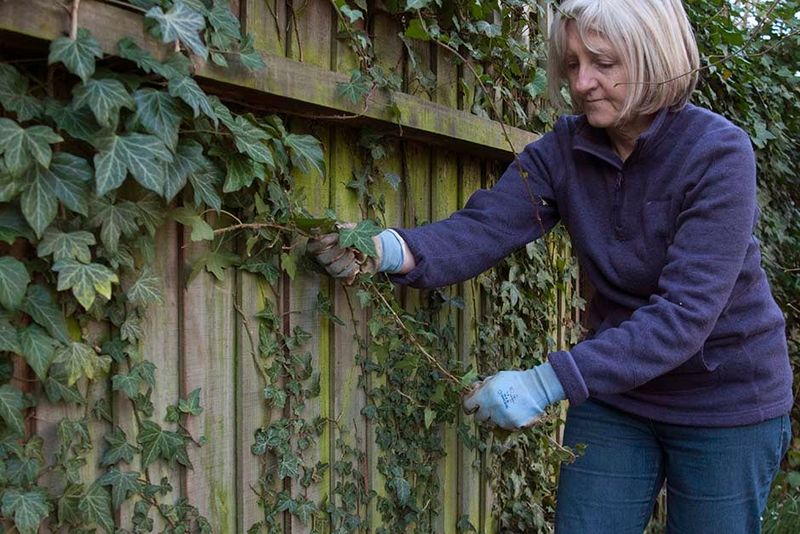
There is a moment, usually a few years in, when ivy on a fence stops looking like a charming green backdrop and starts looking like a project. The vines thicken, the layers build up, and what began as a few trailing stems becomes something that feels almost structural.
That feeling is not entirely wrong.
Ivy attaches to surfaces using aerial rootlets that press into wood grain, paint, and mortar. On a young vine, those rootlets are easy to pull away cleanly.
On older growth, the attachment deepens, and multiple overlapping vines can fuse into thick woody masses that do not simply peel off. OSU Extension’s home-landscape ivy guide offers a candid estimate: freeing roughly two to four linear feet of well-established fencing can take about an hour, depending on fence type, vine age, and density.
That number is not a guarantee, but it is a useful gut-check before you start.
One of the less obvious problems is what the ivy hides. Moisture trapped between the vine mass and the fence boards creates conditions that accelerate rot, and the coverage makes it impossible to inspect the wood until the vines come off.
A fence that looked solid may turn out to need repainting, spot repairs, or even partial replacement once it is exposed. OSU also notes that a long-established ivy-covered fence may have been partly supported by the ivy itself, so removing the vines can reveal structural weakness that the plant was quietly masking.
None of that is inevitable. Outcomes depend on the fence material, the ivy species and cultivar, how long the vines have been growing, and the existing condition of the fence before ivy arrived.
A cedar fence that has been up for three years with a modest ivy covering is a very different situation from a twenty-year-old wood fence buried under a foot of layered growth. The point is to go in with realistic expectations rather than assuming the fence will look fine once the ivy is off.
A fence removal plan starts low and comes back later
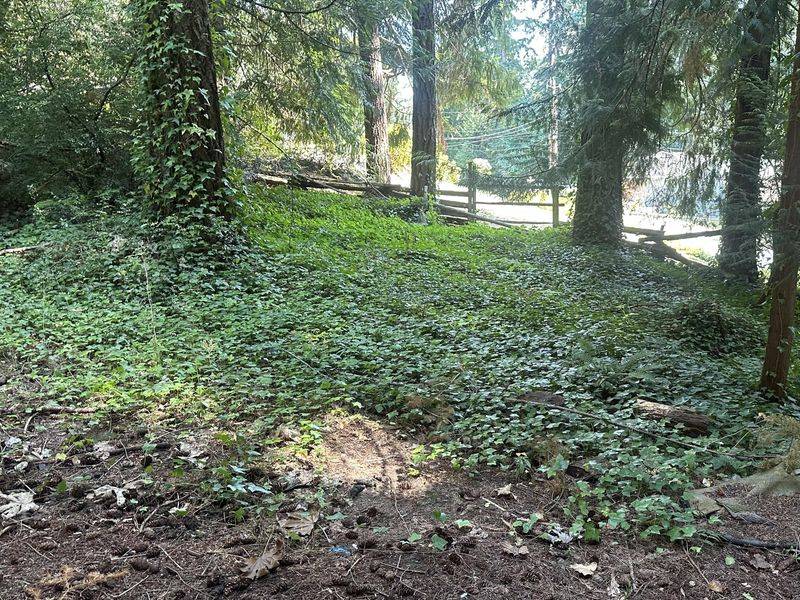
Gear up before you start. English ivy sap and plant material can cause skin irritation, itching, rash, or blisters in people who are sensitive to it, and sensitivity can develop after repeated exposure even if earlier contact caused no reaction.
Poison Control’s guidance on skin problems from outdoor plants recommends wearing gloves and protective clothing and washing any exposed skin promptly if sap contacts it. Long sleeves, close-toed shoes, and eye protection are worth the minor inconvenience.
Work in manageable sections rather than trying to clear the entire fence in a single session. Start at the base of the fence: cut the main stems low with loppers or hand pruners, then use a pry bar or gloved hands to peel the vine mass away from the fence surface.
Older aerial rootlets may leave stubs or discoloration on the wood, but they usually release with patient work. Pull or dig out the root crowns in the soil at the base of the fence wherever you can reach them, because leaving roots behind is the main reason ivy returns.
Mechanical removal – cutting, pulling, and digging – is the safest general starting point around fences, desirable plants, and mixed plantings. Selective herbicide use is possible in some situations, but applying it near desirable plants, tree roots, or painted surfaces requires more care and planning than most fence jobs warrant.
Mechanical work done thoroughly and followed up consistently is usually the more practical route for a home gardener.
Once the fence is cleared, assess what you have. Wood that has been covered for years may need cleaning, drying time, and repainting.
Some boards may be soft enough to need replacement. Treat that assessment as useful information, not a catastrophe – you could not have seen it until the ivy came off.
Then mark your calendar: new shoots from remaining roots or rooted stem fragments will appear within weeks in a western Oregon spring, and catching them early makes each follow-up session much shorter than the first one.
Trees require a boundary, not a dramatic tug-of-war
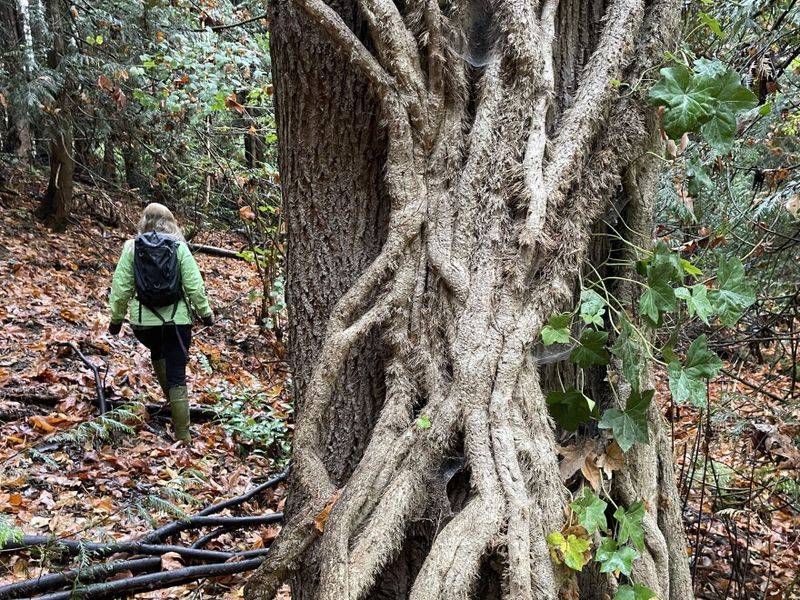
Ivy on a tree calls for a different approach than ivy on a fence, and the most important rule is also the most counterintuitive: do not pull the vines out of the canopy. When ivy climbs high into a tree, the upper growth can die after the connecting stems are cut at the base, but dead and drying material in a canopy becomes unpredictable.
Pulling on it risks dislodging branches, stripping bark, or bringing down heavy material from above.
The safer sequence starts at ground level. Cut every vine growing around the trunk, working your way around the full circumference and cutting each stem at two points to remove a short section.
This interrupts the connection between the roots and whatever is growing above. Then clear ivy from the base of the tree, working outward from the trunk.
OSU Extension recommends creating a cleared buffer of three to five feet around the trunk as a practical management target, which interrupts regrowth and protects the root zone while longer-term removal continues. Portland’s natural-area guidance uses a six-foot radius as its working standard, though both figures are management recommendations rather than precise biological thresholds.
After the lower vines are cut, ivy remaining in the canopy may die over the following months. Dead material can stay lodged in branches for a long time and may fall without warning, so be aware of what is overhead when you are working near the tree afterward.
The OSU Extension forest-land ivy publication notes that heavy, long-established ivy growth can add significant weight and wind resistance to a tree, with outcomes that vary depending on the tree’s condition, the density of the infestation, and site factors.
Any job that involves climbing, working overhead, using a chainsaw above shoulder height, or dealing with an unstable or leaning tree belongs with a qualified tree-care professional. OSHA specifically warns against chainsaw operation above shoulder height or from a ladder, and those risks do not disappear just because the goal is ivy removal.
When in doubt about a tall tree, call an arborist before you pick up a saw.
Check the ivy for birds before you disturb it
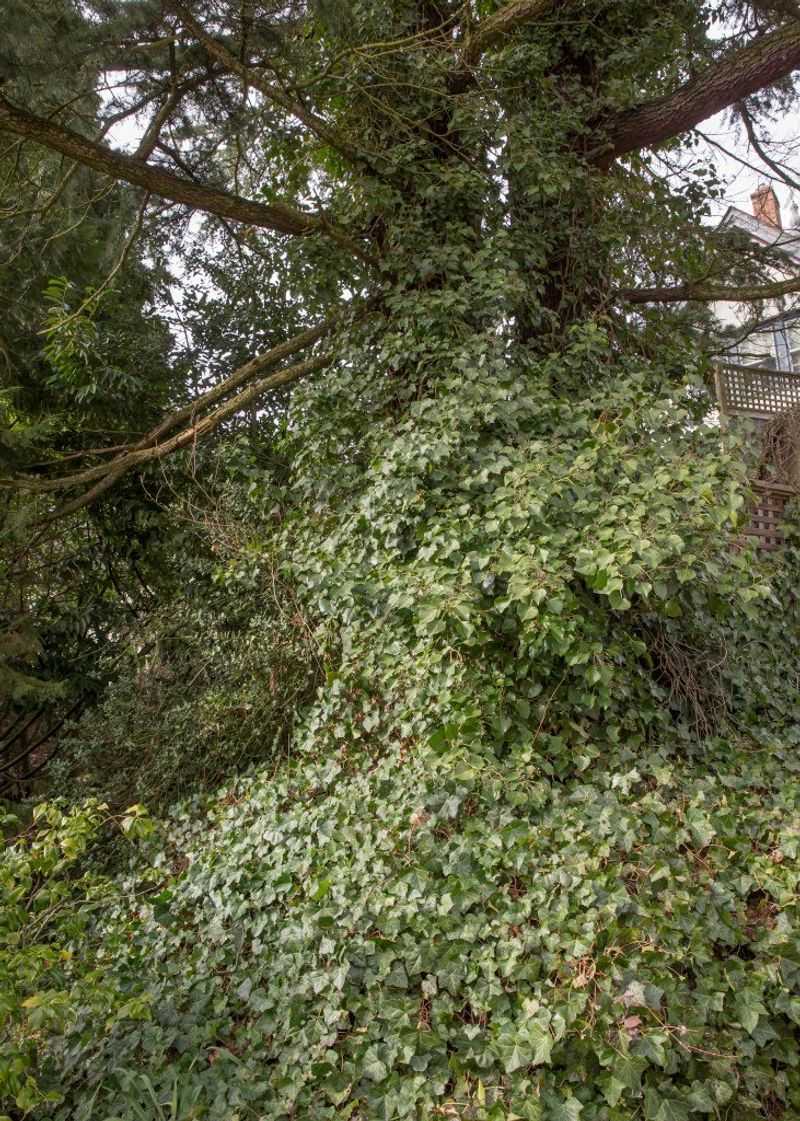
Before any tools come out, spend a few minutes looking carefully at what you are about to disturb. Dense ivy on trees, fences, and the ground can shelter active bird nests, and disrupting an active nest is both ecologically harmful and, for many species, a federal concern under the Migratory Bird Treaty Act.
Walk the length of the fence or around the tree and look into the ivy mass at several heights. Listen for alarm calls from nearby adult birds, which can signal a nest you have not spotted yet.
If you find an active nest with eggs or young birds, stop work in that area and wait. Timing your removal thoughtfully costs you a few weeks at most and avoids a much worse outcome for the birds using the space.
For Portland gardeners, Portland Bureau of Environmental Services guidance on protecting nesting birds identifies ivy-covered trees and dense ground ivy as potential nesting habitat and recommends avoiding disruptive vegetation work around active nests. Portland’s preferred timing for disruptive removal work is August 1 through January 31 when possible.
That window reflects local conditions and local guidance; gardeners elsewhere in Oregon should check applicable state or local wildlife guidance for their area rather than treating Portland’s dates as a statewide rule.
The presence of birds in or near ivy is worth noting without overstating. Some birds eat ivy berries and some use ivy-covered structures for cover or nesting, but ivy is not a native-habitat substitute.
Its berries spread the plant into natural areas, and its dense ground coverage displaces the native understory plants that Oregon’s wildlife actually depends on. Caring for the birds using your ivy today and removing the ivy responsibly are not contradictory goals – they just require a little sequencing.
Removal ends only when the follow-up and disposal are finished
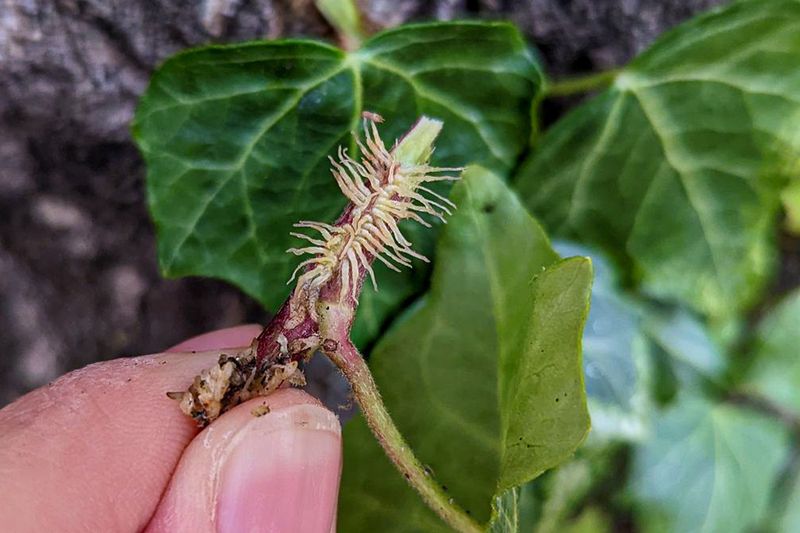
Cutting ivy back to the ground feels like an ending, but the roots do not know that. Established ivy can resprout from root crowns, rooted stem fragments, and pieces of stem left in the soil, and in western Oregon’s mild, moist climate, that regrowth can be surprisingly vigorous within a single season.
Planning for follow-up is not pessimism – it is just accurate.
Return to the cleared area every three to four weeks during the growing season and pull any new shoots as soon as they appear. Early-stage regrowth pulls easily and takes only a few minutes per visit.
Skipping follow-up visits and letting regrowth establish for a full season means starting a much larger job the next time. OSU Extension’s ivy removal guide is direct on this point: expect regrowth and build repeated visits into your plan from the beginning, rather than treating one clearing session as the finish line.
Disposal is where many well-intentioned removal projects go sideways. Home composting is strongly discouraged for ivy because stems and fragments can survive and reroot.
Beyond that, the rules differ by location. Portland’s Bureau of Environmental Services directs residents to place pulled invasive plants in the trash rather than in yard-debris or compost bins, and Portland’s invasive plant guidance is specific about keeping ivy out of the green bin.
Other Oregon jurisdictions may allow disposal through controlled municipal composting facilities that reach temperatures high enough to kill plant material, but that is not the same as a standard curbside yard-debris pickup. Check with your local hauler or disposal facility for the rule that applies to your address before you bag anything.
All of which circles back to the nursery moment that started this. Identifying the plant by its botanical name before buying, choosing a non-invasive alternative, or containing an existing plant before it reaches the fence line is genuinely easier than what comes after.
The charming variegated leaves are still charming – knowing what they belong to just lets you make a choice you will not spend a weekend regretting.