The 6 Most Overused Florida Palms (and Better Choices for Your Zone)
In the early 1970s, a tiny planthopper spread a disease that stripped thousands of tall trees from Miami’s skyline. Neighborhoods had planted the same kind of tree on nearly every block, so the trouble moved fast.
I still think about that story every time I drive past a row of identical trunks in Florida. Copying the neighbor’s yard feels safe, yet it can leave whole streets open to one hungry pest or disease.
You might notice some popular picks also look frazzled and yellow long before any big storm rolls through town. I’d bet good money that many of them simply landed in the wrong zone or the wrong patch of soil.
Florida also grows a handful of tough natives that shrug off salty wind and surprise cold snaps. Some famous favorites are wearing out their welcome fast, while a few humble locals are more than ready to take their place by your porch.
1. Coconut Palm
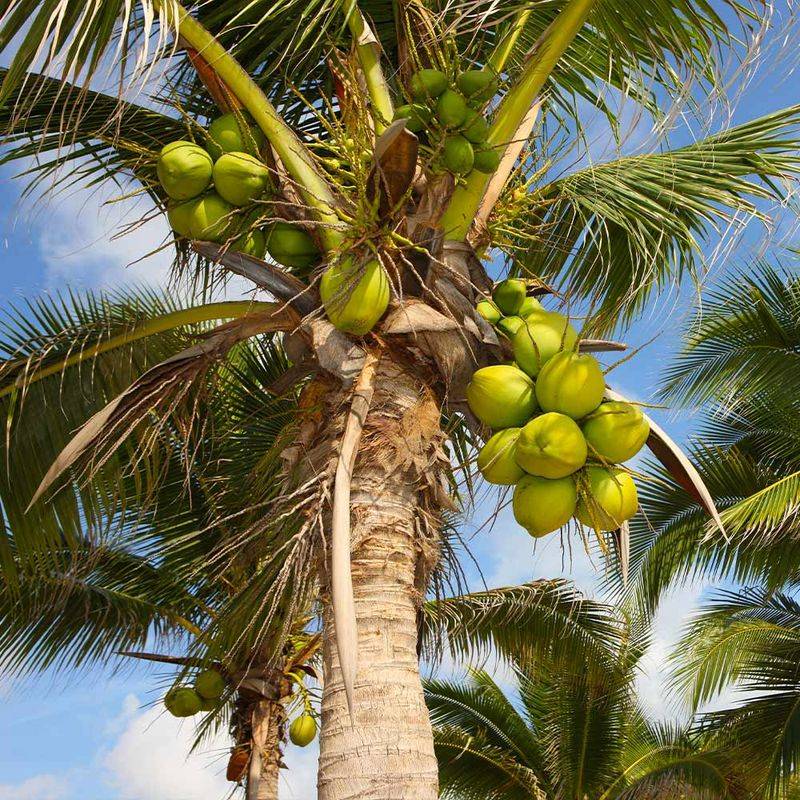
Few trees shout vacation louder than a coconut leaning over the sand with its heavy nuts swaying overhead. I love the look too, but that postcard charm hides a surprising list of headaches for homeowners.
Cocos nucifera needs steady warmth and really belongs in USDA zones 10b and 11 along the southern coast. Temperatures dipping into the upper twenties can scorch the fronds badly, so northern yards are a risky gamble.
The bigger worry is a phytoplasma disease spread by a tiny planthopper that turns fronds yellow from the bottom up. Older Jamaica Tall coconuts were hit hard, and infected palms rarely recover once symptoms appear in the canopy.
Falling coconuts are another real concern, since a single ripe nut can weigh several pounds or more. You need to keep these trees well away from driveways and the spots where kids like to play.
Many homeowners pay to have the nuts trimmed off once or twice a year, which adds steady costs. That chore becomes trickier as trunks climb past forty or fifty feet, so plan for a professional crew.
Coconuts crave full sun and fast-draining sandy soil, plus a palm fertilizer rich in potassium and magnesium. Skipping those nutrients often leads to yellow, weak older fronds that hang limply around the trunk.
If your heart is set on one, ask your nursery about Malayan Dwarf or Maypan types. Those selections have shown better resistance, though no coconut variety is fully immune to the disease.
2. Queen Palm
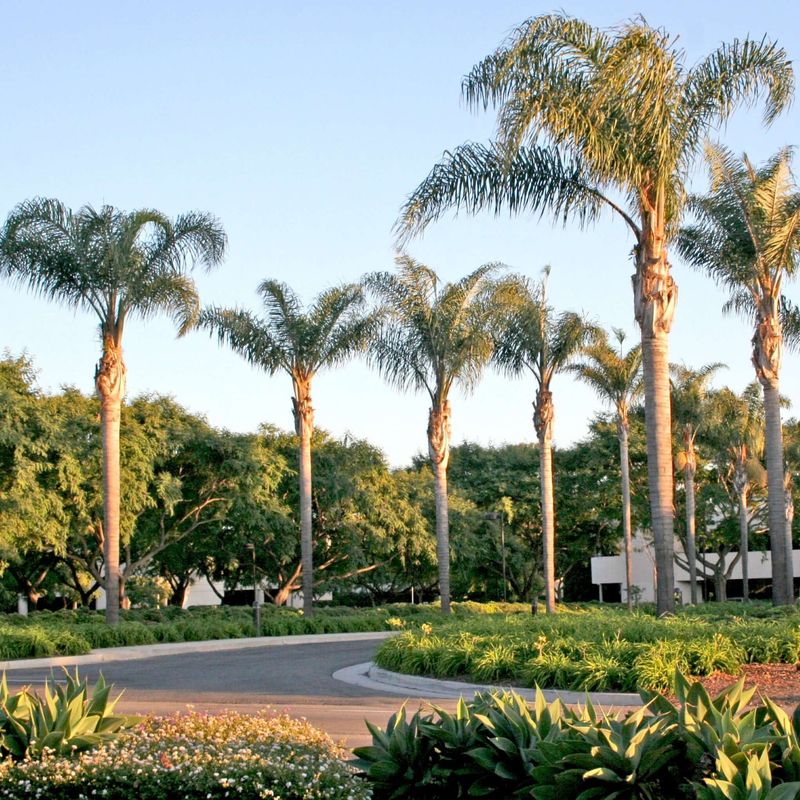
Walk through almost any newer subdivision and you will spot queen palms lined up like matching lampposts. They grow fast and cost little at big-box stores, which explains why builders plant them by the truckload.
Syagrus romanzoffiana hails from South America and handles light frost, growing well in USDA zones 9b through 11. Its feathery fronds arch gracefully from a smooth gray trunk that can eventually reach about fifty feet.
I have to admit the trouble starts underground, because our alkaline sandy soils lock up manganese. Without enough of it, new fronds emerge stunted and crispy, a condition growers commonly call frizzletop.
Potassium shortages show up too, leaving older leaves with orange speckles and frayed, brittle leaflet tips. A slow-release palm fertilizer applied a few times a year helps, but deficiencies often return quickly.
Storm season is another weak spot, since queens rank among the palms most likely to snap during hurricanes. UF/IFAS wind studies place them in the low resistance group, which is worth remembering near roofs.
Old fronds also cling to the trunk instead of dropping cleanly, so you end up trimming more often. Their orange fruit clusters fall in sticky heaps that attract flies and stain pool decks or walkways.
Personally, I would only plant one where you can feed it faithfully and keep it far from buildings. Otherwise, the native sabal we cover later handles neglect and wind far better than this pretty import.
3. Pygmy Date Palm
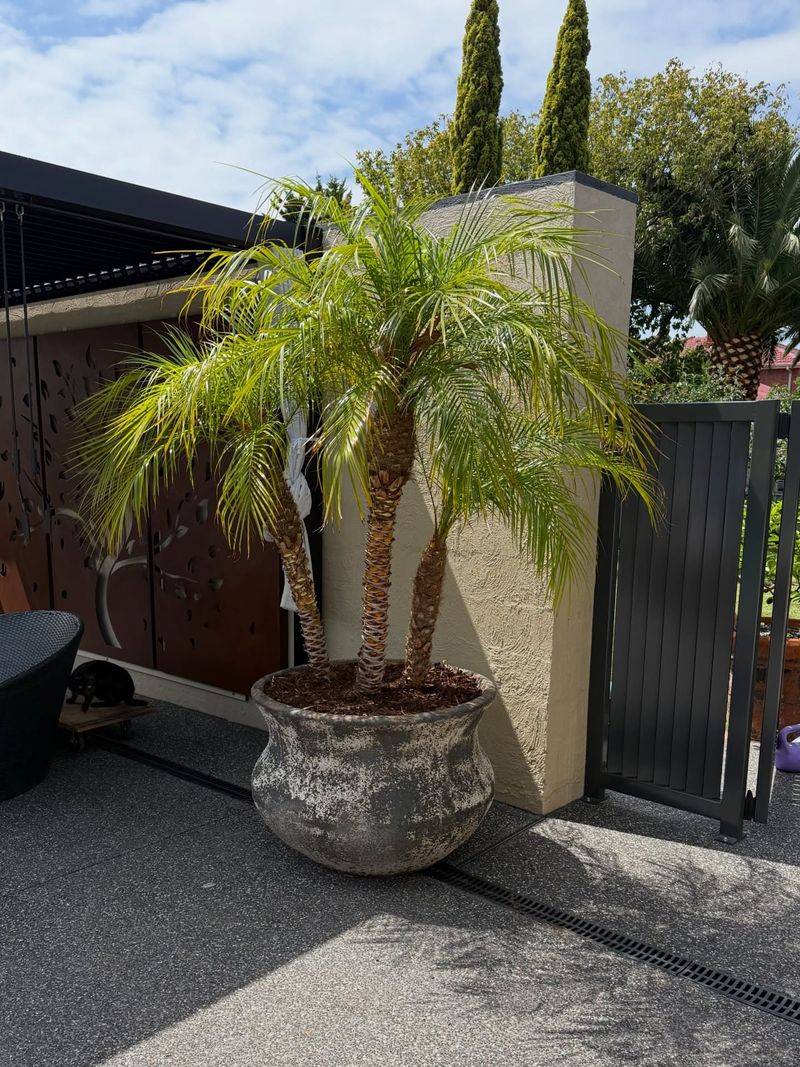
Tucked beside countless front doors, the pygmy date looks like a palm someone shrank in the dryer. Its tidy size makes it tempting, and I understand why landscapers reach for it again and again.
Phoenix roebelenii usually tops out between six and twelve feet, with soft arching fronds and a slender trunk. Nurseries often pot two or three together, which creates that charming multi-trunk look you see everywhere.
Watch your fingers, though, because long needle-sharp spines guard the base of every single leaf stem. Placing one right beside a walkway or pool means guests will eventually brush against those hidden needles.
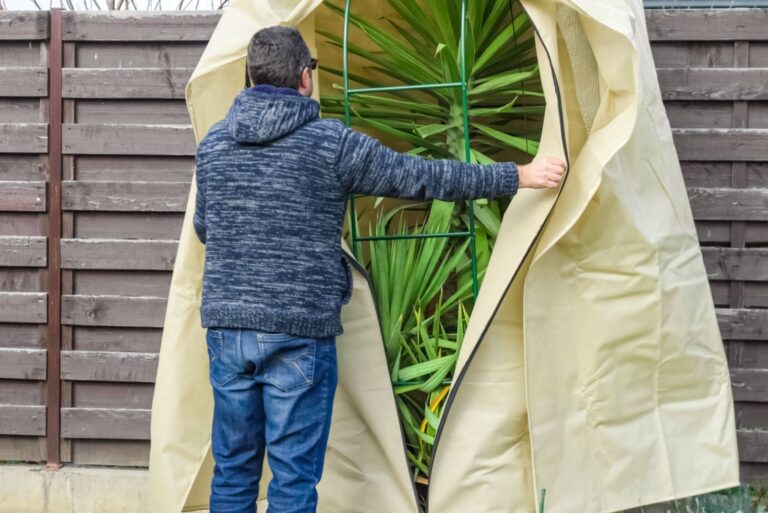
Cold is a limit too, since this palm suits USDA zones 10 and 11 and needs covering farther north. In zone 9b, a frost cloth on chilly nights can save the fronds from ugly brown burn.
What surprises me most is how often these little palms look hungry, even in well-kept Florida yards. They are prone to potassium and manganese shortages that show up as yellow speckles or frizzled new growth.
Pruning green fronds makes things worse, because the palm pulls stored nutrients from those older leaves. Wait until a frond turns fully brown before cutting, and feed with an 8-2-12 palm fertilizer instead.
Salt spray bothers it as well, so beachfront gardeners usually see better results with tougher natives. Ganoderma butt rot can also strike, and sadly there is no cure once that fungus moves in.
4. Foxtail Palm
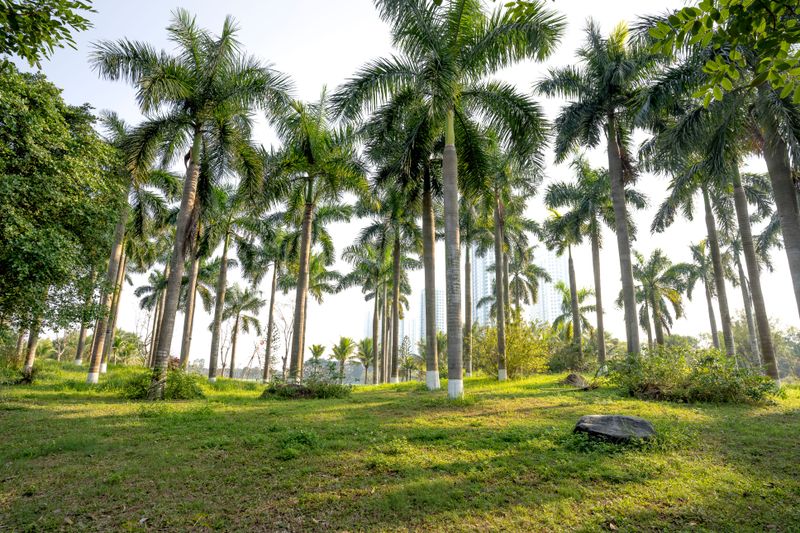
Run your eyes up a foxtail palm and the fluffy fronds really do resemble a bushy tail. Leaflets sprout in every direction around the stem, giving it a plush, almost cuddly look from the street.
Wodyetia bifurcata comes from a small rocky area in Queensland, Australia, and was only described by science in 1983. Nurseries fell hard for it, and within a few decades it popped up in yards all over the south.
It grows quickly to around twenty or thirty feet, topped by a bright green crownshaft and red fruit clusters. I love that it drops old fronds on its own, which keeps pruning chores pleasantly light.
So why does it make this list, when it looks so good in nursery pots and catalog photos? Cold is the first reason, because it belongs in zones 10 and 11 and sulks below about thirty degrees.
Plenty of buyers in cooler central counties plant them anyway, then watch the fronds brown after a hard freeze. Hardy-looking nursery tags rarely mention that risk, so checking your zone first saves money and frustration.
Foxtails also struggle in alkaline soil, where potassium and manganese shortages leave leaflets spotted and frizzled. Feed them three times a year with a palm fertilizer that includes slow-release potassium and magnesium.
Soggy ground is another enemy, so pick a sunny spot where rainwater drains away within an hour or so. Give it good drainage and steady meals, and it can still shine in the warmest southern yards.
5. Areca Palm
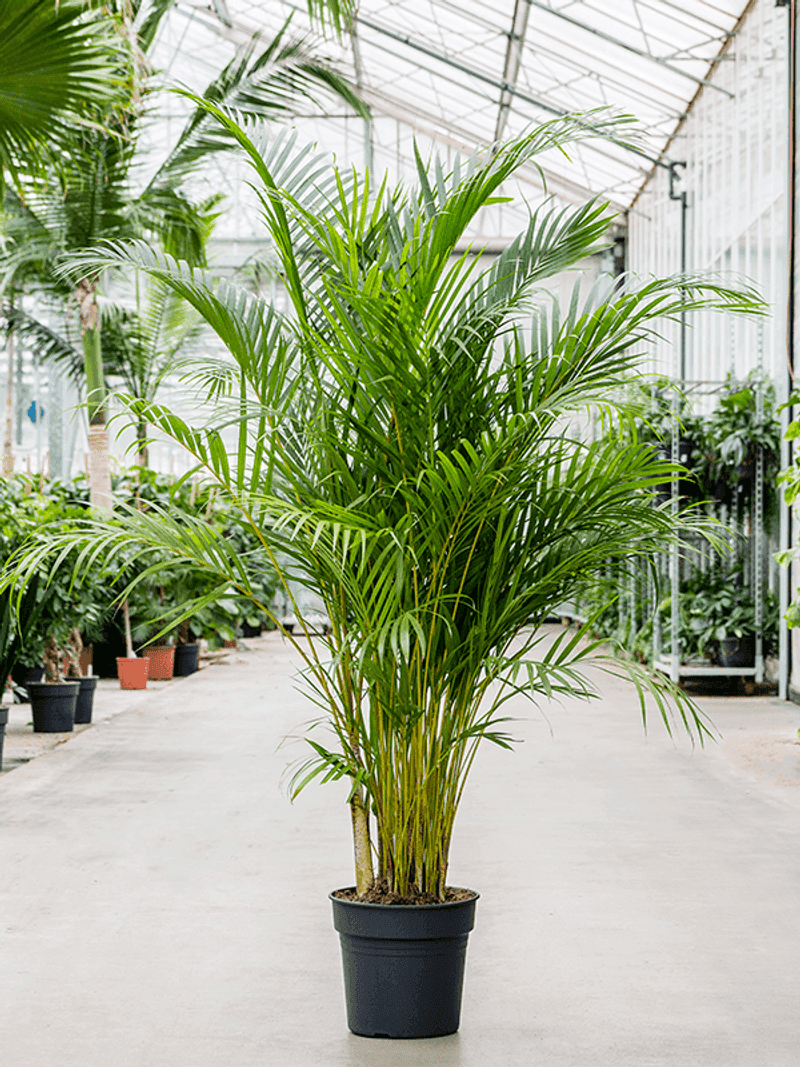
Whenever someone wants a fast green wall between houses, the areca palm seems to be the first suggestion. Its feathery clumps and golden stems do look lush, and I get the appeal in a narrow side yard.
Dypsis lutescens comes from Madagascar and grows as a dense cluster of canes reaching twenty feet or more. Gardeners also call it the golden cane palm, and its curving fronds earn it the nickname butterfly palm.
Cold is a sticking point, since arecas belong in USDA zones 10 and 11 and burn in frost. Hedges planted farther north can look scorched and patchy for months after a single chilly night.
The bigger concern for me is that UF/IFAS lists this palm with caution status in South Florida. That rating means it can spread beyond gardens, so managing seedlings around your hedge is a smart habit.
Arecas also need plenty of potassium, and hungry clumps show translucent yellow spots on their older leaflets. Spider mites and scale insects enjoy the crowded canes, especially in sheltered spots with little air movement.
A clump that thick also takes regular thinning, or the inner stems turn weak and shabby over time. Cut out a few of the oldest canes at ground level each year to keep air flowing.
If privacy is the goal, consider native screening shrubs or the clumping saw palmetto covered below. Your neighbors still get their space, and you get a hedge that asks for far less fuss.
6. Canary Island Date Palm
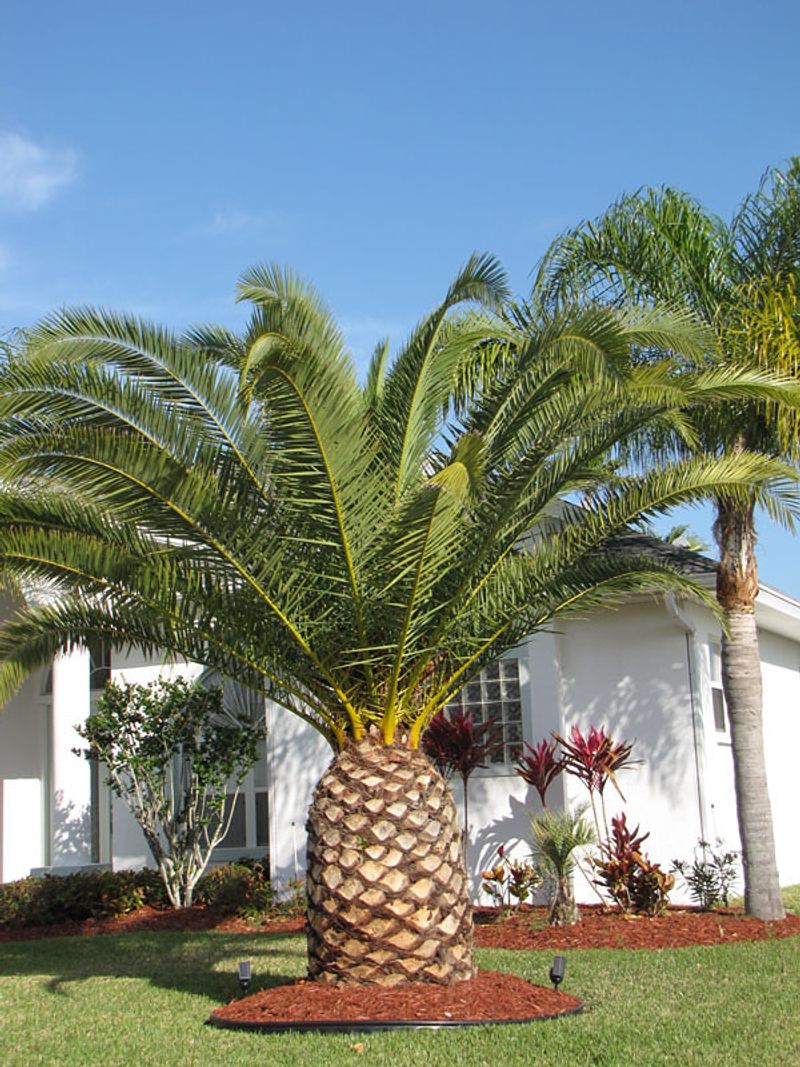
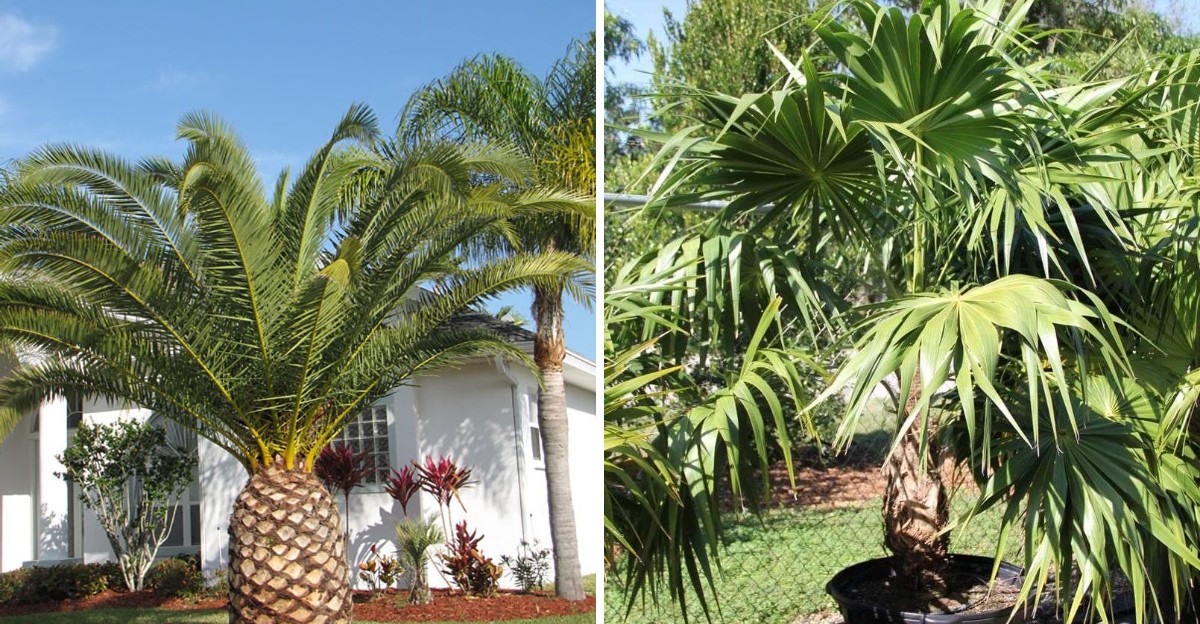
Standing under a mature Canary Island date palm feels a bit like meeting a giant pineapple with a crown. The trunk alone can be three feet thick, and the fountain of stiff fronds stretches wider than most driveways.
Phoenix canariensis eventually reaches fifty feet or more, with a canopy spreading twenty to thirty feet across. It handles cold well for a palm, growing in USDA zones 9 through 11 across much of the state.
I believe size is the real problem, because people plant this giant in tiny front yards. Within a decade, those spiny fronds start poking at windows and blocking sidewalks from every angle.
Those spines are no joke, since the lower leaflets turn into stiff needles several inches long. Trimming requires thick gloves and long sleeves, and many owners eventually hire an arborist for the job.
Disease adds another layer of worry, especially Fusarium wilt, which spreads easily on dirty pruning saws. Ask your trimmer to sanitize tools or use a fresh blade before touching your palm on each visit.
Magnesium deficiency is common too, showing up as wide yellow bands along the edges of older fronds. A palm fertilizer with added magnesium, spread under the canopy a few times a year, helps a lot.
Please skip the popular pineapple cut, where crews strip away healthy green fronds for a neat look. Removing that much living foliage drains nutrients, so only trim fronds that have turned fully brown.
7. Sabal Palm
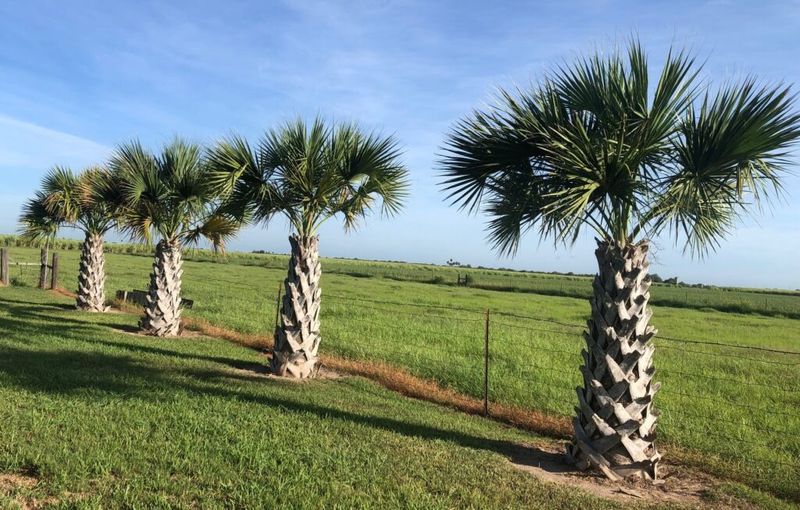
Lawmakers named the cabbage palm the official state tree back in 1953, and honestly, it earned the title. Sabal palmetto grows wild from coastal hammocks to pine flatwoods, shrugging off conditions that flatten fancier imports.
It thrives in USDA zones 8 through 11, so it works from the Panhandle down to the Keys. Mature trees often reach forty to fifty feet, topped by a round crown of big fan-shaped leaves.
What I admire most is its storm record, since sabals regularly rank among the most wind-resistant palms tested. After hurricanes, you can usually find them standing tall while neighboring trees lie tangled in the street.
It tolerates salt spray and occasional flooding, and established trees rarely need extra water during dry spells. The soil can be sand or clay, as long as heavy rain does not sit around the roots.
Transplanting tip: most of the roots are cut during digging, and new ones grow back from the trunk base. Water newly planted sabals often for several months, and consider removing the fronds to reduce stress.
Wildlife loves this tree as much as I do, especially the bees buzzing around its creamy summer flowers. Later in the year, its small black fruits become a welcome feast for songbirds and hungry raccoons.
Feed it lightly with a palm fertilizer a couple of times a year, and trim only fully brown fronds. Leaving the crisscross leaf bases on the trunk adds charm, and ferns sometimes sprout right in those pockets.
8. Saw Palmetto
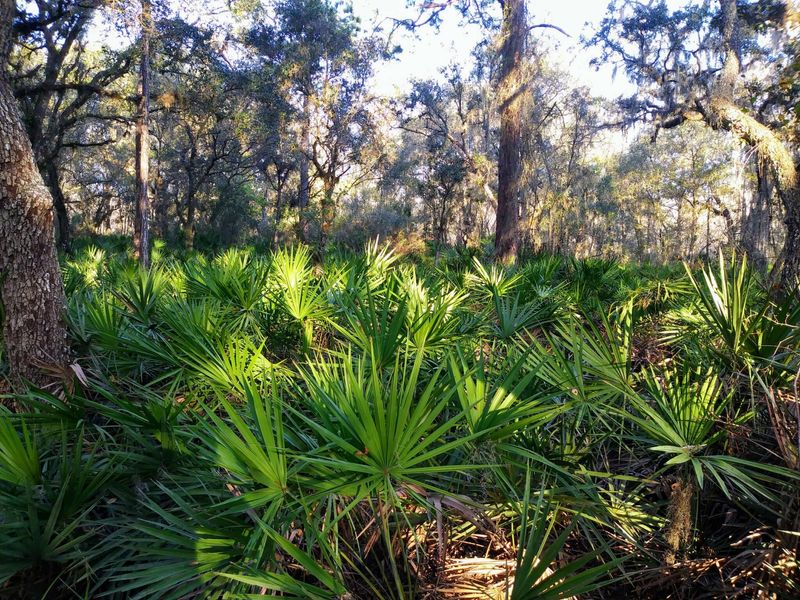
Brush past a saw palmetto in shorts and you will instantly understand how it got its name. Tiny teeth line every leaf stem, and they grab bare skin just like a little kitchen saw.
Serenoa repens is a shrubby native palm with stems that often creep along the ground instead of rising tall. It usually stays between four and eight feet high, spreading slowly into broad, fan-leaved clumps over many years.
I love the silver form found along the east coast, which glows almost blue under bright afternoon sun. Green types are more common elsewhere, and both look stunning tucked beneath pines or along a fence line.
Toughness is the real selling point, since this palm handles USDA zones 8 through 11 with ease. It grows happily in poor sand, and established clumps rarely need watering even during long dry stretches.
Spring flower spikes buzz with bees, and the plant is a valuable honey source for local beekeepers. By late summer, dark berries feed black bears along with a long list of other hungry wildlife.
Planting tip: buy container-grown palmettos, because wild clumps are notoriously hard to dig up and move. Young plants grow slowly, so set them where you will not need to relocate them later.
Keep them a few feet from paths so nobody gets scratched, and trim only browned fronds when needed. Honestly, I think a low palmetto border beats a struggling hedge of imported palms almost every time.
9. Florida Thatch Palm
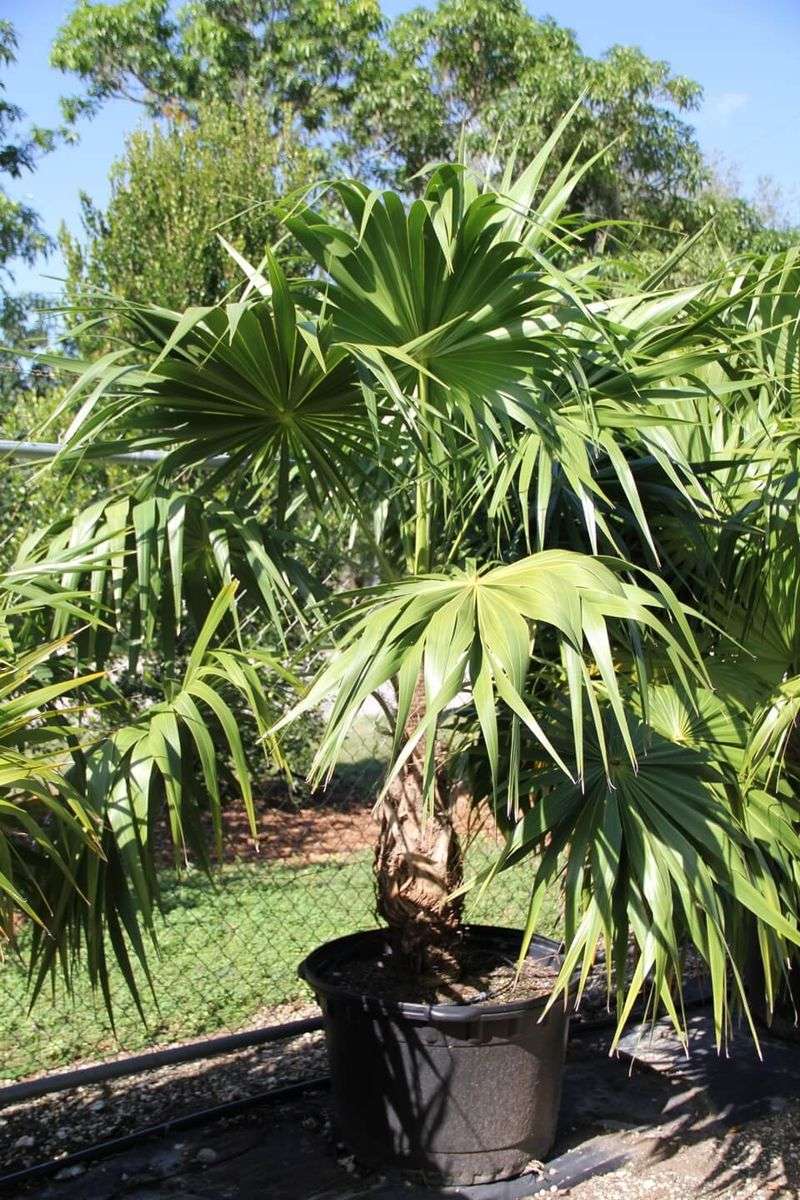
South of Miami, a slim native with glossy fan leaves has been weathering salty breezes for ages. Thrinax radiata grows wild in the Keys and along nearby coasts, often right behind the dunes.
It stays fairly compact, usually reaching fifteen to twenty-five feet with a slender gray trunk, even after decades. The bright green leaves droop softly at the tips, giving the crown a relaxed, breezy look I adore.
Salt tolerance is its superpower, and it shrugs off ocean spray better than most palms sold at local nurseries. It also holds up nicely in strong winds, which matters a lot for coastal homeowners during storm season.
Its range is the catch, since this palm belongs in USDA zones 10 and 11 for the best results. Gardeners farther north should stick with sabals or saw palmettos, which laugh at winter cold snaps.
Plant it in full sun or light shade, in sandy soil that drains quickly after summer downpours. Water regularly during the first season, then let it lean on rainfall once roots settle into place.
Small creamy flowers appear on arching stalks, followed by little white fruits that birds happily snatch up. Because it grows slowly and stays narrow, it fits nicely beside patios or tucked into tight entryways.
Feed it twice a year with a slow-release palm fertilizer, and remove only fully browned leaves. You’re in for a pleasant surprise when a palm this easygoing turns heads more than any pricey import.