The Backyard Features That Attract More Carolina Wrens In Georgia
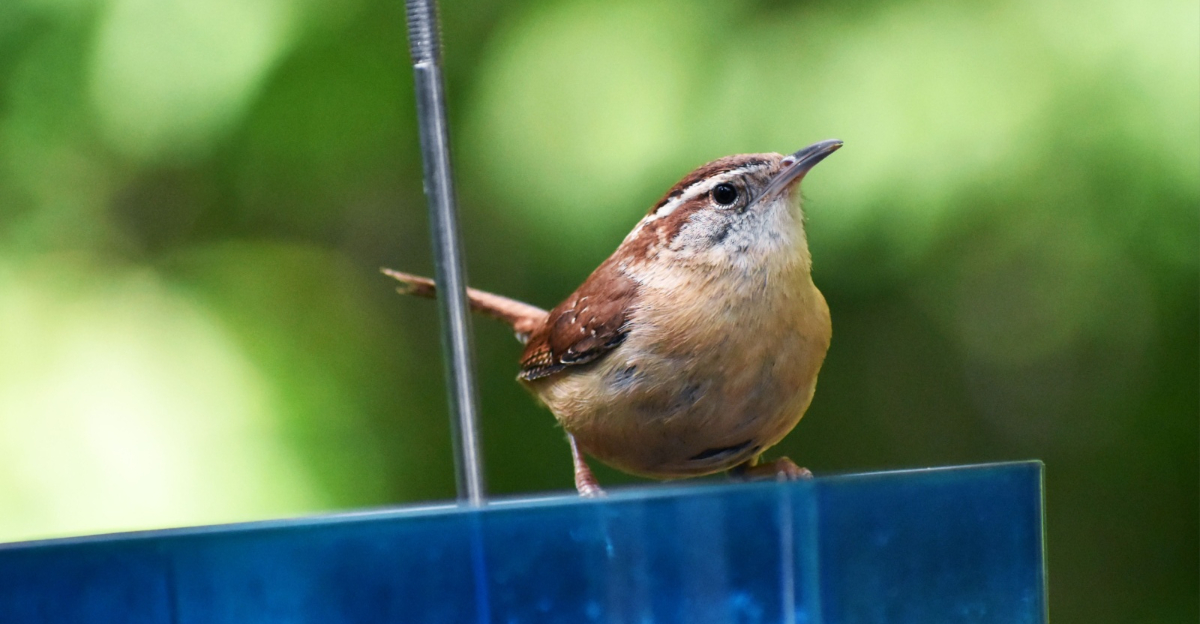
Carolina wrens are proof that the best things really do come in small packages, and if you’ve ever had one belt out a surprisingly powerful song from somewhere deep in a shrub three feet away, you know exactly what that means.
These rust-colored little birds are year-round Georgia residents, which makes them one of the more rewarding backyard wildlife goals a homeowner can have.
Unlike a lot of birds that pass through seasonally, wrens stick around, and once they feel comfortable in a yard they tend to stay close and make themselves very much at home.
The key to attracting them isn’t finding the perfect feeder.
It’s building the kind of habitat they actually want to live in: layered cover, native plants, leaf litter, clean water, and quiet spots where they can nest and explore without feeling exposed.
1. Dense Shrubs And Brushy Edges
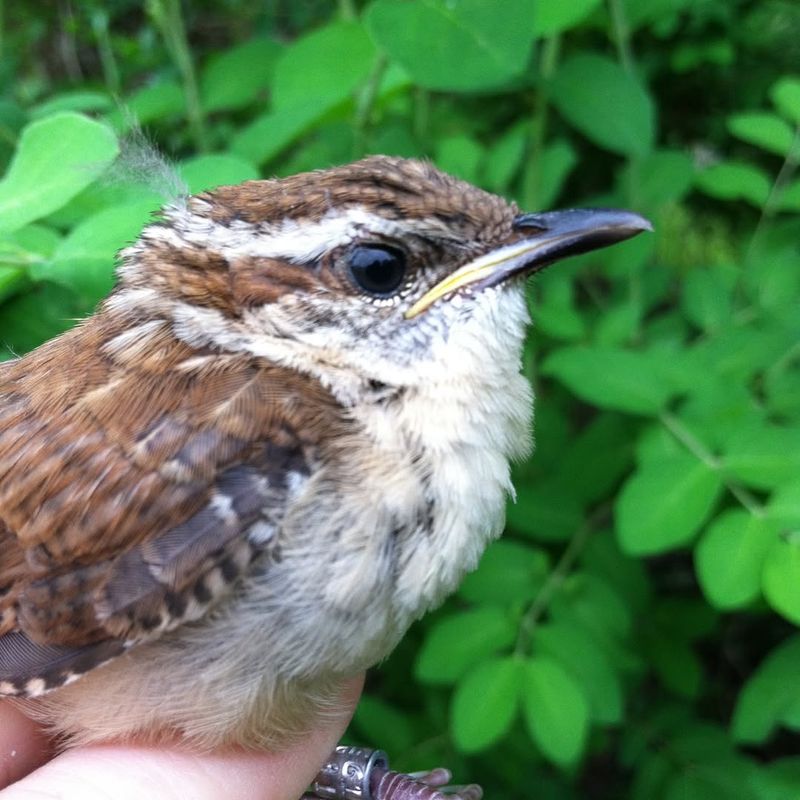
Rustling sounds from inside a thick shrub border often mean a Carolina wren is already working through your yard. These birds are built for low, tangled spaces.
They forage close to the ground, moving through dense stems and leaves in search of insects, spiders, and small invertebrates hiding in the shadows.
In Georgia, shrubs like wax myrtle, American beautyberry, native viburnums, and wild azaleas create exactly the kind of brushy edge wrens seek out. A yard with open lawn from fence to fence offers very little for these birds.
But a border of layered shrubs along a fence line or property edge changes everything.
Brushy edges also provide a sense of safety. Carolina wrens rarely venture far from cover, so a shrub-lined yard gives them a corridor to move through without feeling exposed.
Even a modest planting of three to five native shrubs clustered together can make a real difference.
Georgia homeowners who let shrub borders grow a little fuller and wilder tend to notice wrens more often than those who keep everything trimmed tight and tidy.
2. Native Plants That Support Insects
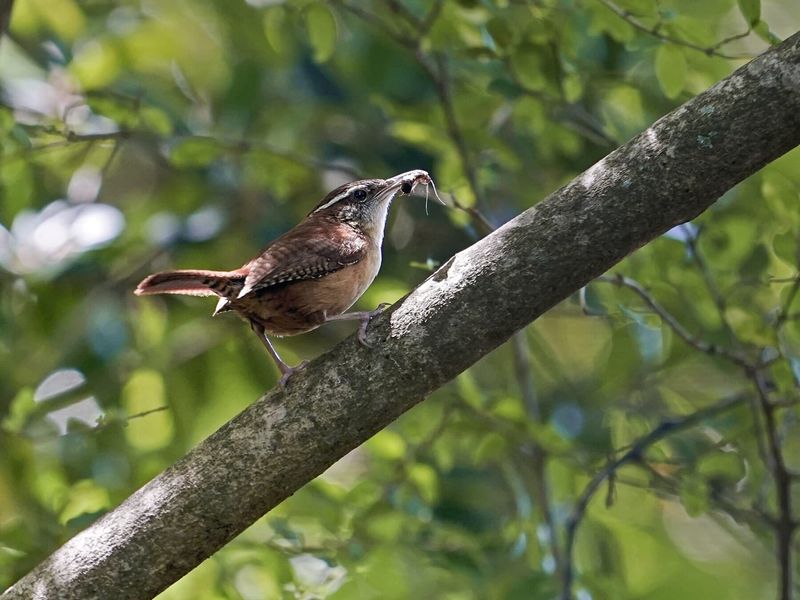
Watch a Carolina wren move through a native plant bed and you will quickly understand why insects matter more than seed for this species. Wrens feed heavily on insects, caterpillars, beetles, spiders, and other small invertebrates.
Native plants are the foundation that keeps those food sources available throughout the year.
Non-native ornamentals often support very few insects compared to plants that evolved alongside Georgia wildlife. Native species like oakleaf hydrangea, coneflower, goldenrod, native grasses, and black-eyed Susan provide habitat for hundreds of insect species.
Those insects become food for wrens and their nestlings.
One of the most valuable things a Georgia gardener can do is swap even a few non-native shrubs or groundcovers for native alternatives. The change does not have to happen all at once.
Starting with a small native plant bed near a fence or woodland edge gives wrens a reliable foraging area close to the cover they prefer.
Over time, a yard with diverse native plantings supports a web of insect life that keeps Carolina wrens returning season after season.
Your Georgia Garden Changes Every Week. Your Plan Should Too.
Gardening in Georgia changes quickly throughout the season. Every Friday you’ll receive a simple weekly plan showing exactly what to plant, prune, fertilize, harvest, and protect so you never miss the right timing.
3. A Loose Brush Pile
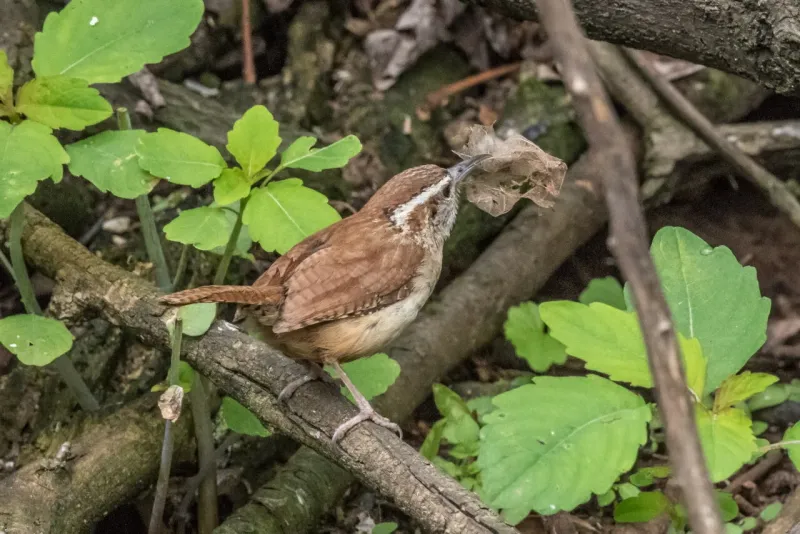
A pile of fallen branches in the back corner of a yard might look untidy at first glance, but for a Carolina wren, it looks like a five-star foraging spot. Brush piles create exactly the kind of jumbled, sheltered microhabitat that wrens explore with great enthusiasm.
Beetles, spiders, pill bugs, and small insects gather in the cool, moist spaces beneath the debris.
Building a brush pile in Georgia is straightforward. Stack larger branches on the bottom to create open spaces underneath, then layer smaller twigs and leaves on top.
The pile does not need to be enormous. Even a loose mound about three feet wide and two feet tall provides useful cover and foraging habitat.
Placing it near existing shrubs or a woodland edge makes it even more attractive.
Brush piles also give wrens a sheltered spot to retreat to during cold snaps, which do happen in Georgia during winter. They offer protection from wind and a place to roost on chilly nights.
Rather than hauling fallen branches to the curb, consider stacking them into a purposeful brush pile that works hard for the wildlife in your yard.
4. Leaf Litter Under Shrubs
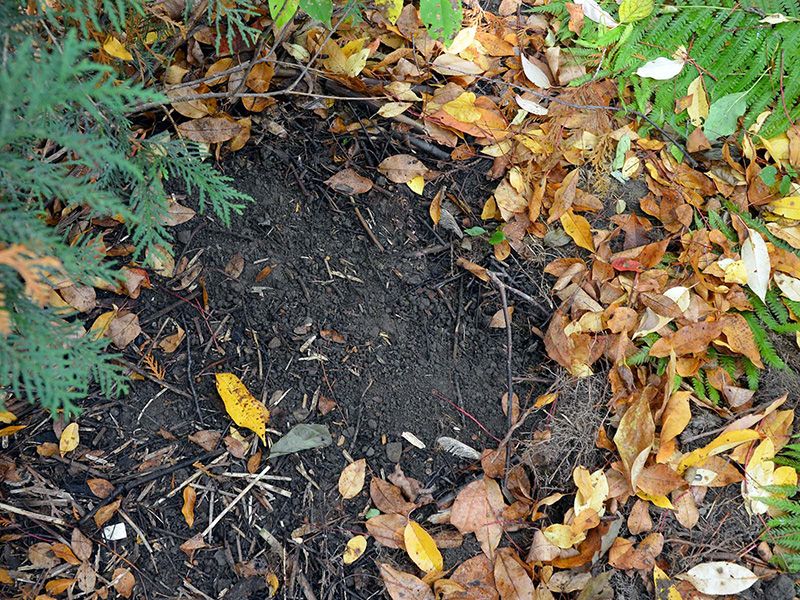
Leaf litter under azaleas and shrubs might be the most underappreciated feature in a wren-friendly Georgia yard.
When fallen leaves accumulate naturally beneath plants, they create a rich layer of decomposing organic material full of the insects and invertebrates that Carolina wrens spend their days hunting.
Raking this layer away removes a primary food source.
In Georgia, oak leaves in particular break down slowly and host large numbers of invertebrates as they decompose.
Leaving a layer of leaves under shrubs, along fence lines, and in shaded garden corners gives wrens a reliable foraging zone right through winter when other food sources can be harder to find.
Many gardeners worry that leaf litter looks messy, but a light layer under shrubs looks quite natural and actually benefits the plants too by holding soil moisture and moderating temperature.
Wrens will scratch and flip through leaves with their feet and bill, hunting for hidden insects beneath the surface.
A Georgia yard that keeps leaf litter in place under its shrubs and trees will almost certainly see more wren activity than one that is blown clean every fall.
5. Quiet Nesting Nooks
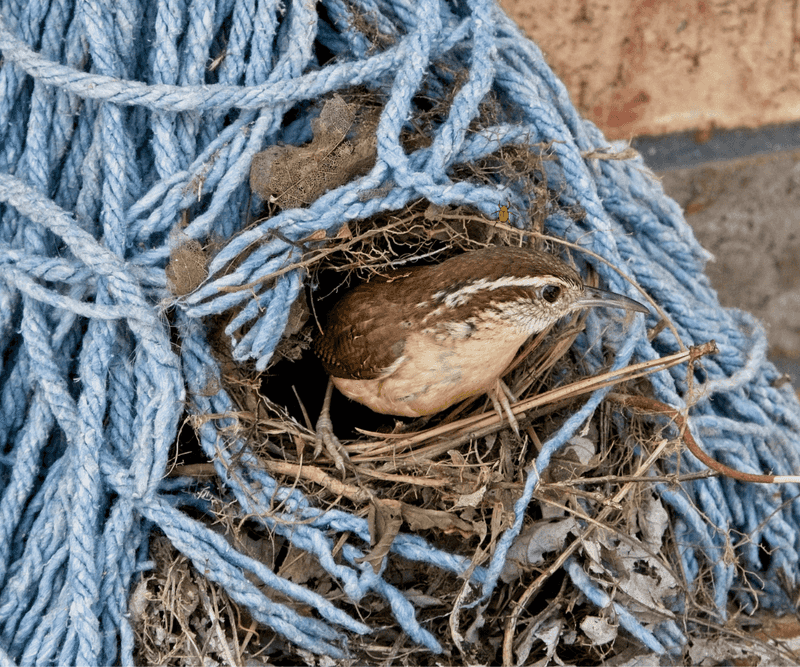
Carolina wrens are famously creative nesters. They will tuck a nest into a hanging fern on a Georgia porch, inside an old boot left in a shed, behind a stack of flower pots, or deep in a tangle of climbing vines against a fence.
What these spots share is shelter from above, low visibility, and a sense of enclosure that makes the birds feel secure.
Creating quiet nesting nooks in a Georgia yard does not require much effort.
Leaving a hanging basket up near a sheltered porch corner, allowing a climbing vine to thicken against a fence, or positioning a stack of garden materials in a shaded spot can all invite wrens to investigate.
The key is keeping those areas undisturbed once a wren shows interest.
Foot traffic, loud activity, and pets moving through a nesting area can discourage wrens from completing a nest. Setting aside one quieter corner of the yard, even a small one, gives these birds a place to raise a family with minimal stress.
Georgia homeowners who notice wrens carrying nesting material are often rewarded with the cheerful, loud song of a territorial male defending his chosen spot nearby.
6. A Wren-Friendly Nest Box
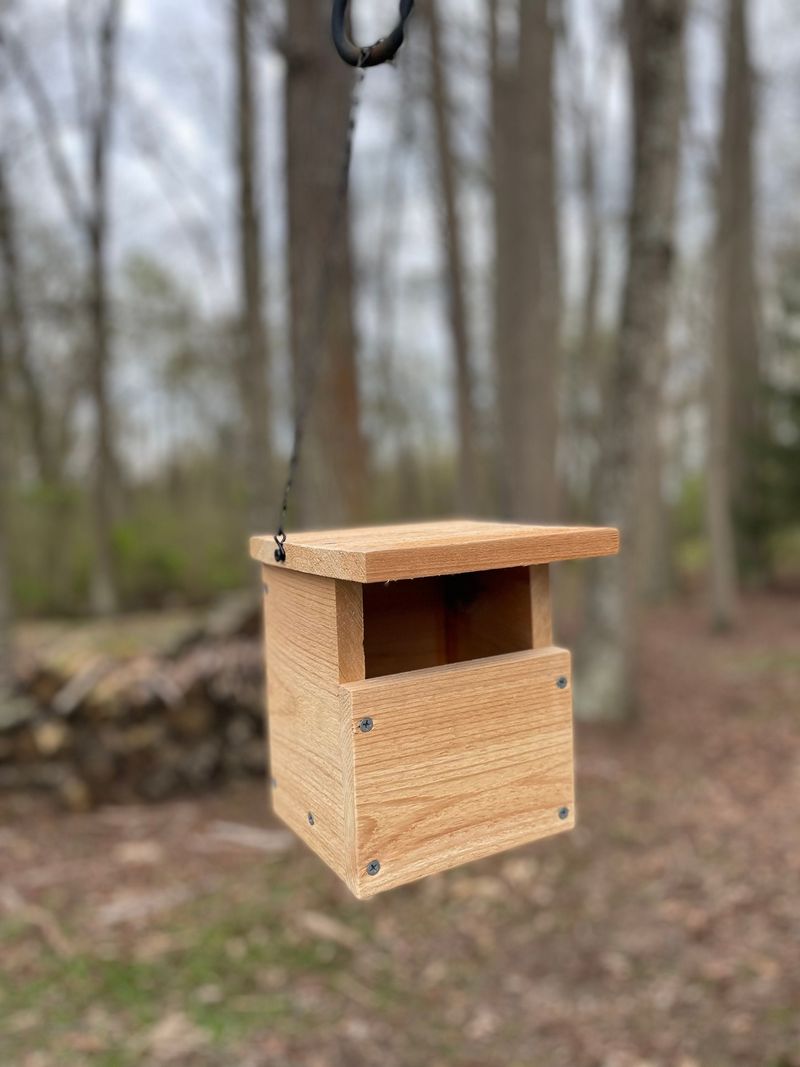
Not every Georgia yard has the kind of tangled vines and overgrown corners that wrens naturally gravitate toward for nesting, but a well-placed nest box can fill that gap. Carolina wrens will use nest boxes readily when the dimensions and location are right.
The entrance hole should be about one and a half inches in diameter, and the box should have an interior floor of roughly four by four inches.
Placement matters as much as the box itself. Mounting a wren box low, between five and ten feet off the ground, near dense shrubs or a fence line puts it within the wren’s preferred range.
Facing the entrance away from prevailing weather and toward partial shade helps keep the interior comfortable during Georgia summers.
Unlike cavity-nesting species that prefer isolated boxes on poles in open areas, Carolina wrens like boxes positioned close to cover. A nest box mounted on a fence post beside a shrub border or at the edge of a wooded area fits their habits well.
Checking and cleaning the box each fall prepares it for the next season and removes old nesting material that could harbor parasites. A well-maintained box can attract wrens for multiple seasons.
7. Fresh Water For Drinking And Bathing
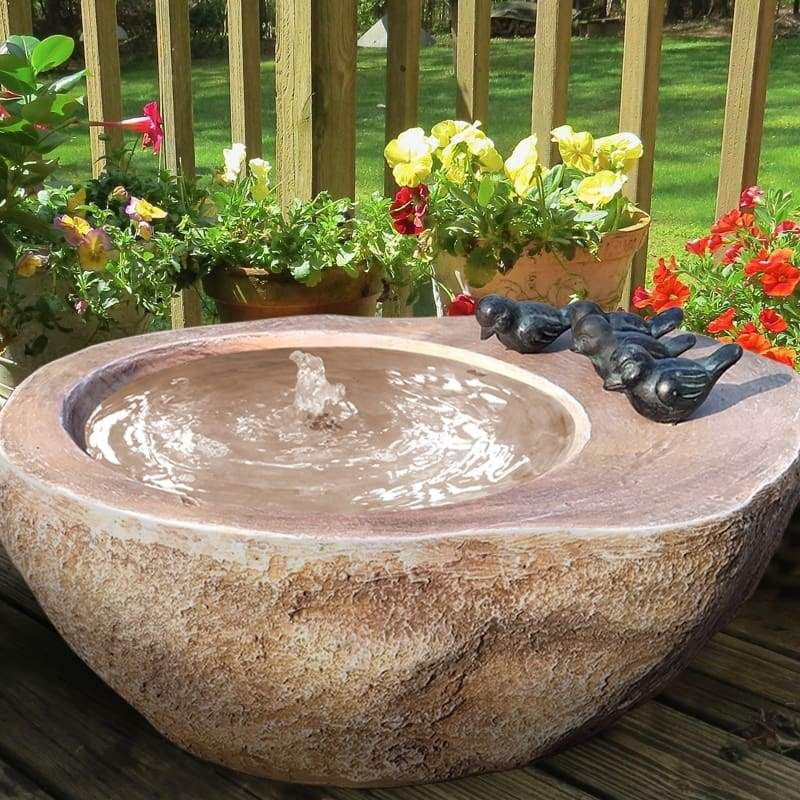
A shaded birdbath tucked near shrubs does more for Carolina wrens than one sitting out in the middle of an open lawn. Wrens are cautious birds that prefer to approach water from nearby cover, take a quick drink or bath, and retreat back to the shelter of dense plants.
A birdbath positioned close to shrubs or low plantings fits that behavior well.
The bath itself should be shallow, no deeper than about one to two inches in the center. Carolina wrens are small birds and can struggle in deeper water.
Adding a few flat stones to a deeper basin gives them a secure footing and keeps the water at a usable depth. Changing the water every couple of days keeps it fresh and reduces the chance of mosquito breeding, which matters in Georgia summers.
Moving water is especially attractive to many birds, including wrens. A small dripper or solar-powered pump that keeps the water gently circulating can draw wrens in from a surprising distance.
The sound of dripping water carries through a yard and catches the attention of birds moving through nearby shrubs.
Even a modest water feature in a shaded Georgia garden corner can become a busy spot for wrens and other backyard wildlife.
8. Reduced Pesticide Use
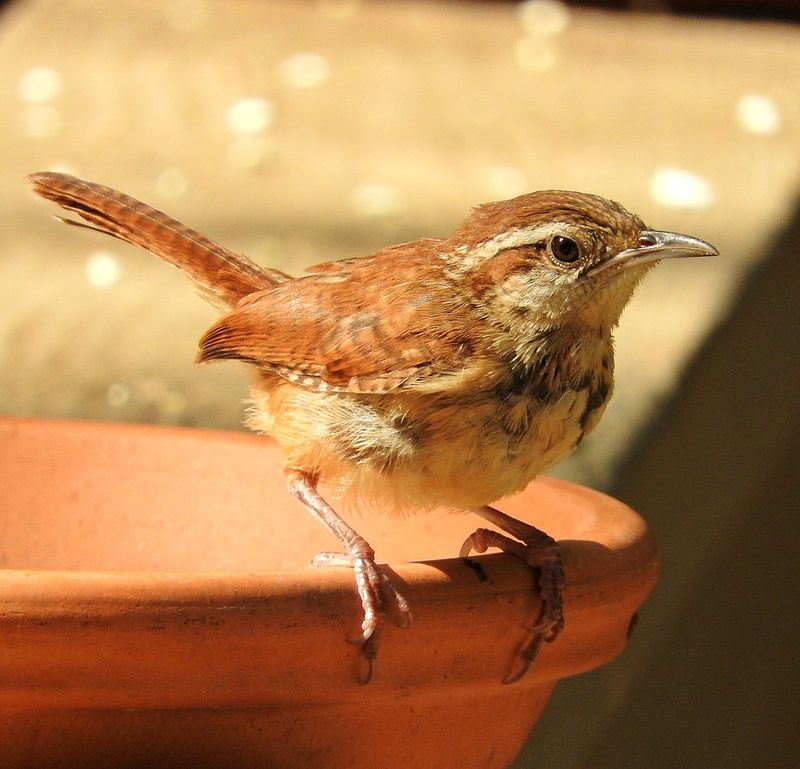
Fewer pesticides in the yard means more insects, and more insects means more food for Carolina wrens. It really is that straightforward.
Insecticides applied to lawns, shrubs, and garden beds reduce the populations of beetles, caterpillars, spiders, and other invertebrates that wrens depend on as their primary food source.
A yard that is regularly sprayed can look tidy while quietly offering very little for insect-eating birds.
Georgia gardeners who reduce or eliminate pesticide use often notice more insect activity in their plantings within a single season. Native plant beds in particular recover quickly when chemical pressure is removed.
Wrens and other insectivores tend to follow the insects, so a yard with a healthy, untreated insect community becomes a more attractive foraging territory.
Reducing pesticide use does not mean tolerating plant damage without any response. Spot-treating specific problems with targeted, less-toxic options causes far less disruption to the broader insect community than routine broad-spectrum spraying.
Focusing on soil health, native plant diversity, and natural predator populations can reduce pest pressure over time without heavy chemical intervention.
A Georgia yard managed with wrens in mind will generally be one where chemical inputs are kept to a thoughtful minimum.
9. Suet Or Peanut Feeders In A Sheltered Spot
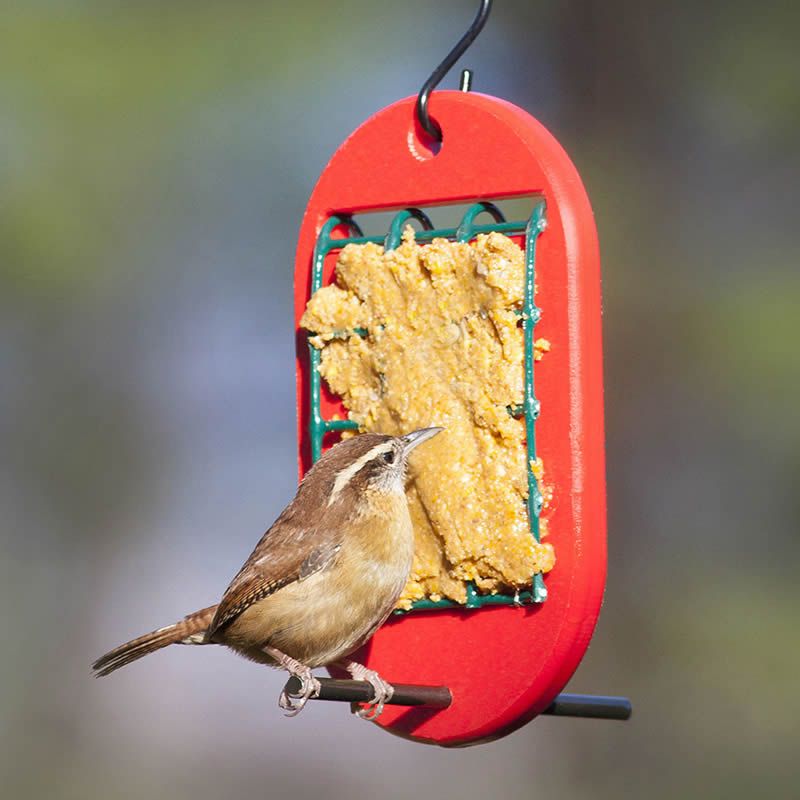
Feeders alone will not bring Carolina wrens into a yard, but the right feeders in the right spot can absolutely supplement a habitat-rich Georgia garden. Suet and peanuts are the two feeder offerings that wrens respond to most reliably.
They are high-fat, high-protein foods that match the nutritional profile of the insects wrens eat naturally, making them a practical supplement especially during cold stretches in Georgia winters.
Placement is the most important factor when setting up a feeder for wrens. Hanging a suet cage or peanut feeder low, within a few feet of dense shrubs or a brush pile, gives wrens the sense of security they need to visit comfortably.
Wrens are far less likely to use feeders mounted high on poles in open areas. A feeder tucked into a sheltered garden corner near cover fits their habits much better.
Mesh peanut feeders and suet cages both work well. Some Georgia gardeners have success simply scattering peanut pieces or suet crumbles on a low platform feeder placed near shrubs.
Keeping the feeder clean and stocked through winter gives wrens a reliable energy source during the months when insects are less abundant.
Feeders work best as one piece of a larger habitat-focused approach rather than the centerpiece of wren attraction.
10. Layered Planting Near Fences Or Woodland Edges
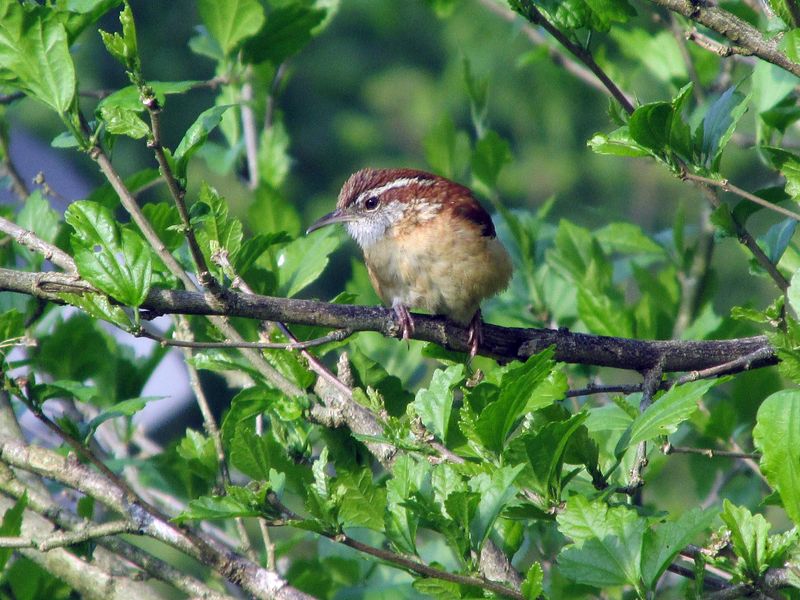
One of the most reliable ways to bring Carolina wrens into a Georgia yard regularly is to create layered planting near a fence line or woodland edge.
Wrens move through vertical layers of habitat, foraging at ground level in leaf litter, searching shrubs at mid-height, and occasionally moving into lower tree branches.
A planting that offers all of those layers in one area becomes a complete wren corridor.
Near a fence or woodland edge, try combining a small canopy tree or large shrub at the back, a layer of mid-height native shrubs in the middle, and a low groundcover or leaf-litter zone at the front.
Plants like native viburnums, sweetshrub, sparkleberry, and ferns work well together in Georgia and provide both structure and insect habitat across multiple layers.
Woodland edges are naturally productive for Carolina wrens because they provide the transition zone between open space and dense cover that these birds prefer.
Mimicking that edge effect along a fence line or property border brings that productive habitat into a managed Georgia yard.
Even a planting strip ten to fifteen feet wide can create enough layering to support foraging wrens through every season. The result is a yard that feels lively and full of bird activity without looking overgrown or neglected.