The Best Drought-Tolerant Plants For Virginia’s Relentless Summers
Virginia summers have a way of sending distress signals through the garden: yellowing leaves, drooping stems, that unmistakable look of a plant that has given up. It does not have to go that way.
Some plants are genuinely built for this climate, the kind that settle in, spread their roots deep, and treat a two-week dry spell like a minor inconvenience.
These are not boring, utilitarian survivors either. They bloom in bold colors, attract pollinators, and hold their shape when everything around them is struggling.
The eight plants below have earned their place in Virginia gardens specifically because they deliver through the hardest part of the growing season. No babysitting required.
1. Black-Eyed Susan (Rudbeckia Hirta)
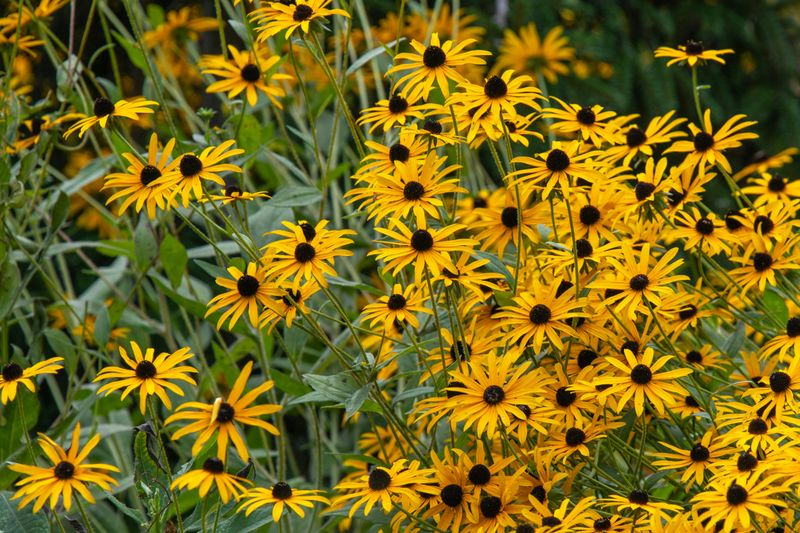
Picture a field of golden-yellow blooms swaying in a hot summer breeze, completely unbothered by the scorching sun. That is the Black-eyed Susan in its natural element, thriving where other flowers tap out.
Native to much of North America, this cheerful wildflower has deep roots in the Mid-Atlantic region. It evolved to handle dry, rocky soil and blazing temperatures without missing a beat.
Black-eyed Susans grow one to three feet tall and bloom from late June through September. That long blooming window makes them one of the most reliable color sources in a summer garden.
Plant them in full sun and well-drained soil, and they will reward you with almost no maintenance. They are incredibly forgiving of clay-heavy or sandy soil types common across the state.
Pollinators go absolutely wild for these flowers. Bees, butterflies, and goldfinches all flock to them, making your yard a reliable stop for pollinators all season long.
Removing spent blooms encourages more flowers throughout the season. If you skip it, the seed heads feed birds well into the fall months.
They spread readily by self-seeding, so one small patch can grow into a stunning meadow-style display. Just thin them out each spring if they start getting a little too enthusiastic.
Black-eyed Susans pair beautifully with coneflowers and ornamental grasses for a layered, naturalistic look. Once established, they handle summer drought like seasoned pros, asking for almost nothing in return.
2. Coneflower (Echinacea Purpurea)
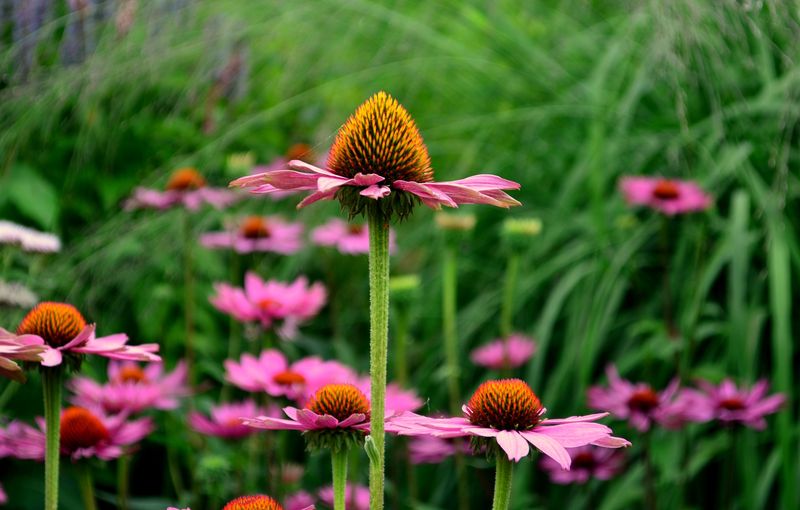
Coneflowers are the kind of plant that shows up, does the work, and never complains. They are tough, stunning, and built for exactly the kind of punishing heat Virginia summers dish out.
Native to the eastern and central United States, Echinacea purpurea has deep taproots that reach far down into the soil. Those roots are essentially a built-in drought survival system.
The blooms are bold and eye-catching, with rosy-purple petals that sweep back from a spiky, copper-colored center. They start flowering in early summer and keep going well into fall.
Full sun is where coneflowers feel most at home, though they can handle light afternoon shade. Plant them in average, well-drained soil and step back, because they practically grow themselves.
One of the best things about coneflowers is how much wildlife they attract. Monarch butterflies, swallowtails, and native bees visit repeatedly throughout the bloom season, drawn back by the steady supply of nectar.
Your Virginia Garden Changes Every Week. Your Plan Should Too.
Gardening in Virginia changes quickly throughout the season. Every Friday you’ll receive a simple weekly plan showing exactly what to plant, prune, fertilize, harvest, and protect so you never miss the right timing.
Leave the seed heads standing after bloom season ends. Finches and chickadees will pick them clean through the colder months, making your garden a year-round habitat.
Coneflowers multiply over time through both self-seeding and root division. Every three to four years, dig up and divide the clumps to keep plants healthy and vigorous.
Their herbal reputation is well-earned too, since Indigenous communities used Echinacea for centuries as a natural remedy. Growing them means you get beauty, wildlife value, and a little botanical history all in one plant.
3. Butterfly Weed (Asclepias Tuberosa)
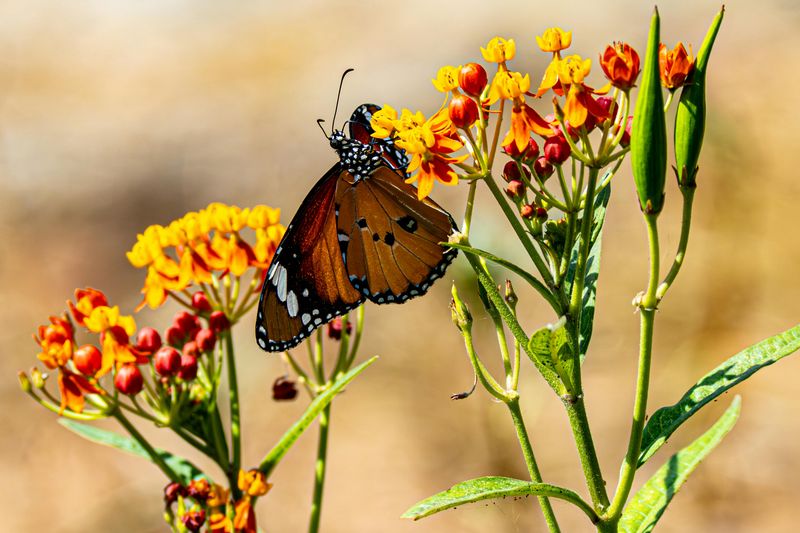
Forget everything you think you know about milkweed being weedy or boring. Butterfly Weed is a showstopper with fiery orange blooms that practically glow in the summer heat.
It is one of the few milkweed species that does not produce that sticky white sap. That makes it easier to handle and more versatile in mixed garden beds.
Asclepias tuberosa grows from a thick, deep taproot that stores water like a natural reservoir. Once established, it can go weeks without rain and look completely unfazed.
Plant it in full sun and sandy or well-drained soil for the best results. Avoid heavy clay if possible, since wet roots are one of the few things that can actually set it back.
The blooms typically arrive in early summer and can last into August, with some plants producing a second flush later in the season. Monarchs, fritillaries, and hummingbirds all make regular stops at these vibrant clusters.
Butterfly Weed is also a critical host plant for monarch caterpillars. Planting it supports the monarch butterfly, a species that has seen significant population decline across much of its North American range.
It pairs wonderfully with Black-eyed Susans and Little Bluestem for a native plant trio that handles drought with ease. The contrasting colors create a dynamic, layered garden look that feels wild and intentional at the same time.
Patience is key when starting from seed, since it can take two to three years to fully establish. But once it settles in, it comes back stronger every single season.
4. Little Bluestem (Schizachyrium Scoparium)
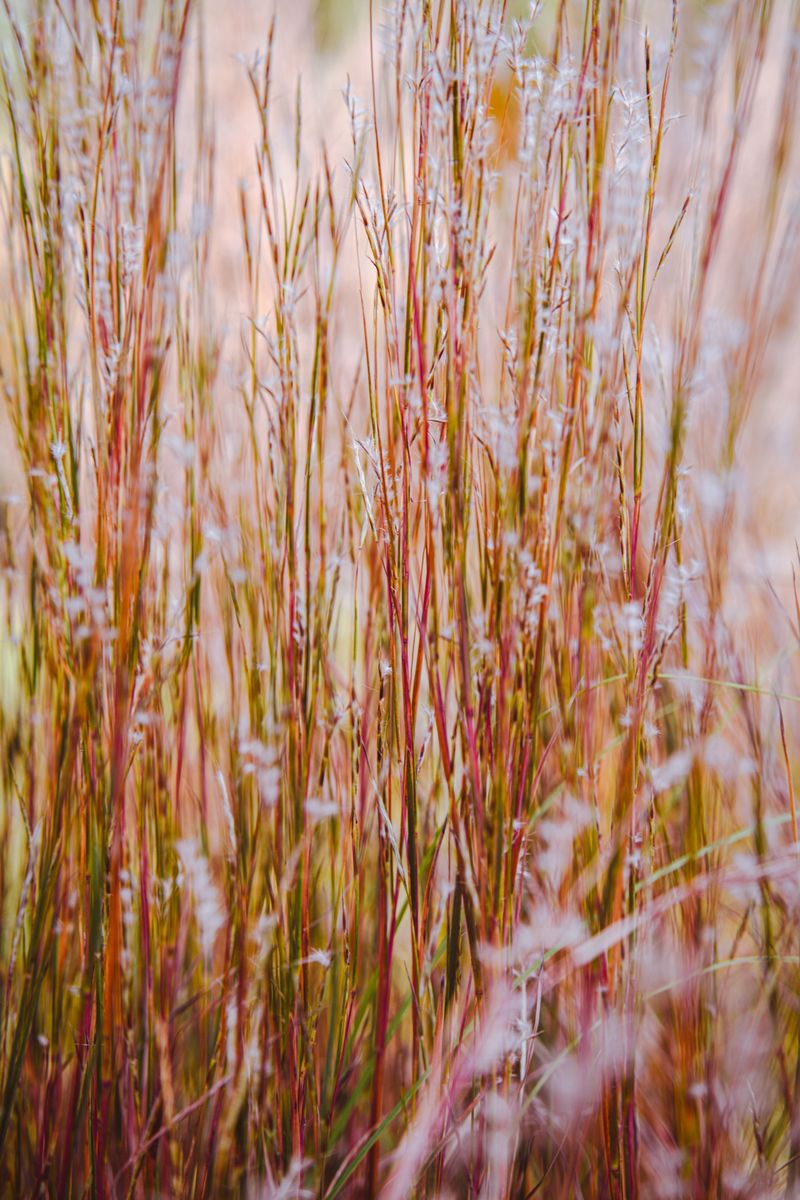
Most ornamental grasses look good in spring and fall apart by August. Little Bluestem does the opposite, getting more beautiful as the heat cranks up and the rains disappear.
This native prairie grass is deeply rooted in American soil, literally and historically. It once covered millions of acres of the eastern and central United States before European settlement reshaped the landscape.
Little Bluestem starts out blue-green in spring, then shifts to stunning shades of copper, burgundy, and rust as summer intensifies. By fall, it looks like someone painted each blade by hand.
It grows two to four feet tall in loose, airy clumps that sway gracefully in the breeze. That movement adds a soft, flowing texture that hard-leaved plants simply cannot replicate.
Full sun and lean, well-drained soil are all it needs to thrive. Rich, overly fertile soil actually makes it flop and lose its upright, sculptural shape.
Leave it standing through winter for maximum visual impact and wildlife benefit. Birds feast on the seeds, and the dried stems provide shelter for overwintering insects.
Cut it back hard in late winter or early spring, right before new growth begins. This reset encourages fresh, vigorous growth and keeps the clump looking tidy and healthy.
Little Bluestem is an anchor plant for drought-tolerant gardens across the Mid-Atlantic. It asks for nothing and delivers season-long beauty that makes every neighboring plant look better by association.
5. Salvia (Salvia Nemorosa)
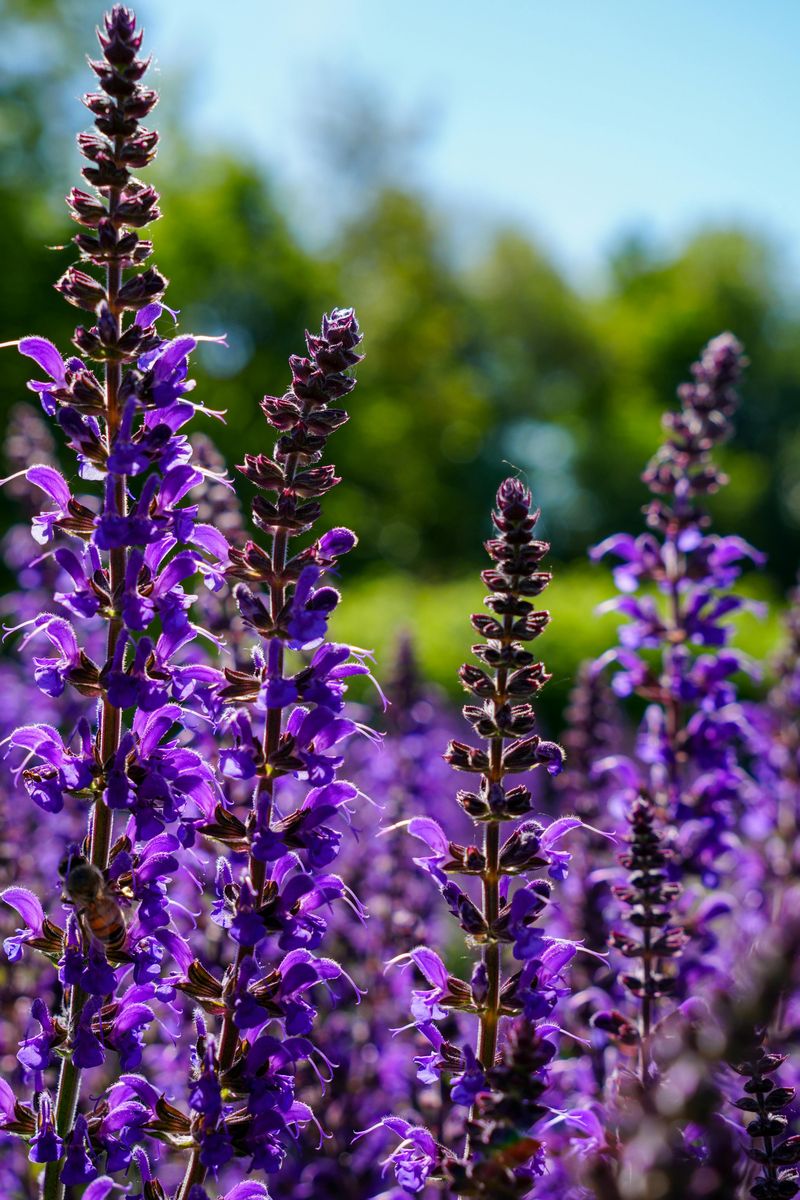
Image Credit: © Irene Ästhetik / Pexels
There is something almost electric about a mass planting of Salvia nemorosa in full bloom. Those upright purple spikes seem to vibrate with color, even on the hottest, driest days of summer.
Native to central Europe and western Asia, this perennial salvia has adapted beautifully to the Mid-Atlantic climate. It handles heat, humidity, and dry spells with surprising grace.
The blooms emerge in late spring and continue through midsummer in shades of violet, blue, and deep purple. Removing spent spikes triggers a fresh flush of flowers that typically appears within a few weeks.
Salvia nemorosa grows twelve to twenty-four inches tall in compact, well-behaved mounds. It is one of those rare plants that looks polished and structured without any fussing from the gardener.
Plant it in full sun with good drainage and it will thrive with minimal supplemental watering. The aromatic foliage is naturally deer-resistant, which is a huge bonus in suburban and rural gardens alike.
Bees are obsessed with salvia. Bumblebees, honeybees, and native mason bees work the flower spikes from morning until dusk during peak bloom.
It pairs strikingly with yellow-blooming plants like Black-eyed Susans or Coreopsis, creating a bold color contrast. That purple-and-gold combination is a classic garden pairing that never goes out of style.
Salvia nemorosa is a long-lived perennial when sited correctly. Give it sun, drainage, and a little room to breathe, and it will anchor your garden bed for years to come.
6. Sedum/Stonecrop (Hylotelephium Spectabile)
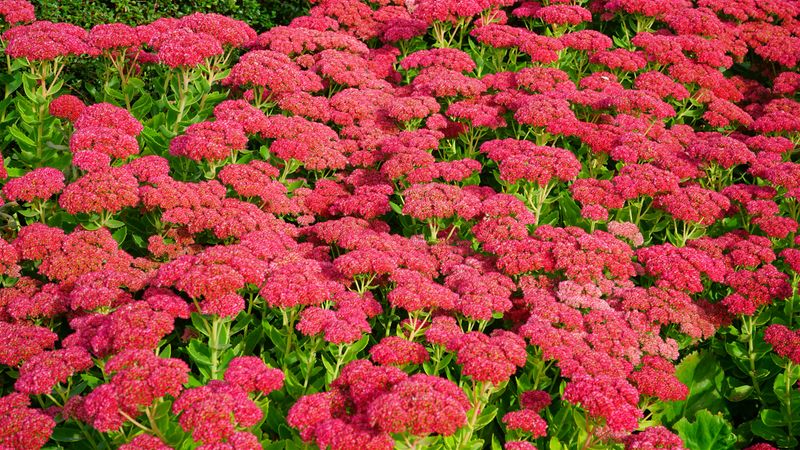
Sedum stores water in its thick, fleshy leaves, giving it a built-in buffer against dry spells that would stress most other perennials.
Hylotelephium spectabile, commonly called Showy Stonecrop, is a bold, architectural plant that earns its keep from spring through frost. The blue-green foliage alone is worth growing it, even before the flowers arrive.
Blooms appear in late summer and fall, right when most other flowers are fading from the heat. The flat-topped flower clusters open in shades of pink, rose, and dusty mauve.
Those late blooms are a lifeline for pollinators heading into autumn. Bees and butterflies flock to sedum when almost nothing else is left in the garden.
Plant sedum in full sun and fast-draining soil for the best performance. It tends to struggle in wet conditions, so avoid low spots or heavy clay without amendment.
Growing twelve to twenty-four inches tall, it works beautifully as a border plant or mid-garden anchor. The upright stems stay sturdy without staking, even in wind and rain.
Sedum partners naturally with ornamental grasses and late-season asters for a fall garden that feels rich and layered. The combination of textures, from flat flower heads to feathery grass plumes, is visually satisfying.
One of the best drought-tolerant plants for Virginia gardens, sedum rewards neglect with beauty. The less you fuss over it, the more it seems to flourish and impress.
7. Beautyberry (Callicarpa Americana)
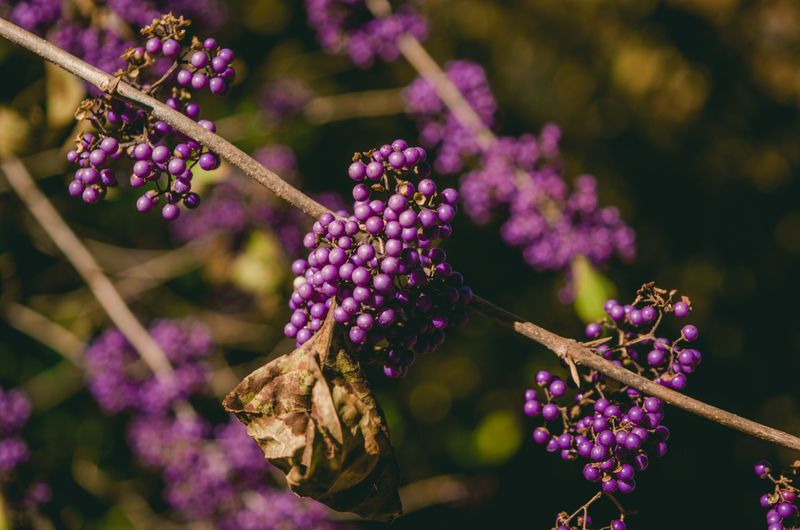
No shrub on this list turns more heads than Beautyberry in late summer. The clusters of electric purple berries that line every branch look almost too vivid to be real.
American Beautyberry is native to the southeastern United States, including much of Virginia. It evolved alongside the region’s hot, humid summers and dry spells, making it naturally well-suited to local conditions.
The show starts subtly with small, pale pink flowers in early summer. By August, those flowers transform into dense, jewel-toned berry clusters that steal the spotlight completely.
It grows four to eight feet tall and wide in an arching, graceful shape. Prune it back hard in late winter to keep it compact and encourage the most prolific berry production.
Beautyberry handles partial shade better than most drought-tolerant shrubs. This makes it especially useful under tree canopies or along woodland edges where other sun-lovers struggle.
Wildlife absolutely depends on it during late summer and fall. Many bird species, including mockingbirds, robins, and cardinals, feed on the berries through late summer and into fall.
The berries also have a fascinating history as a natural insect repellent. Indigenous communities crushed the leaves and rubbed them on skin, and modern research has backed up this traditional use.
Beautyberry is one of those plants that makes non-gardeners stop and ask what it is. Planting it guarantees a conversation piece and a wildlife magnet rolled into one spectacular shrub.
8. Creeping Thyme (Thymus Serpyllum)
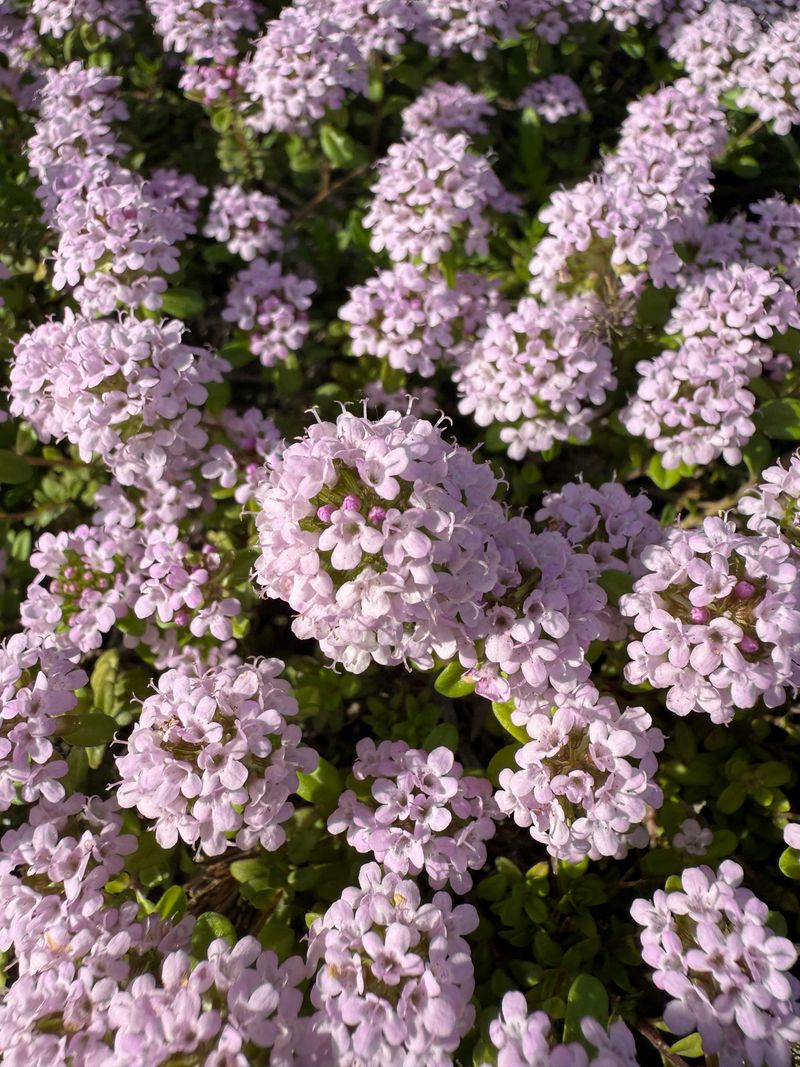
Image Credit: © Yuvi🌸 / Pexels
Creeping Thyme is the ground cover that refuses to quit. It spreads steadily between stepping stones, over rocky slopes, and across dry hillsides, blooming all the while without a drop of extra water.
This low-growing herb stays just two to four inches tall, forming a dense, fragrant carpet of tiny leaves. Walk across it and the leaves release a pleasant, herby fragrance that carries surprisingly far on a warm afternoon.
In late spring and early summer, the plant erupts in tiny pink, lavender, or magenta flowers. That bloom is so dense it can turn an entire pathway edge into a ribbon of color.
Creeping Thyme is one of the best drought-tolerant plants for Virginia gardeners dealing with problem areas. Slopes, gaps in hardscaping, and sun-baked spots that nothing else will touch are exactly where it shines.
Full sun and well-drained soil are non-negotiable for strong growth. In overly moist or shaded conditions, it gets sparse and leggy, losing that tight, lush mat formation.
Pollinators are wild about the blooms, especially bees. A patch in full flower hums audibly on warm afternoons, which is one of the most satisfying sounds a garden can make.
Unlike traditional lawn grass, Creeping Thyme skips the mowing, fertilizing, and weekly watering altogether once it settles in. It is the ultimate low-maintenance solution for hot, sunny spots that drain your time and patience.
For gardeners tired of fighting their landscape, this little plant offers a genuine sense of relief. Plant it once, let it spread, and enjoy a fragrant, flowering carpet for seasons to come.