The Best Plants That Thrive Under Pine Trees In Oregon
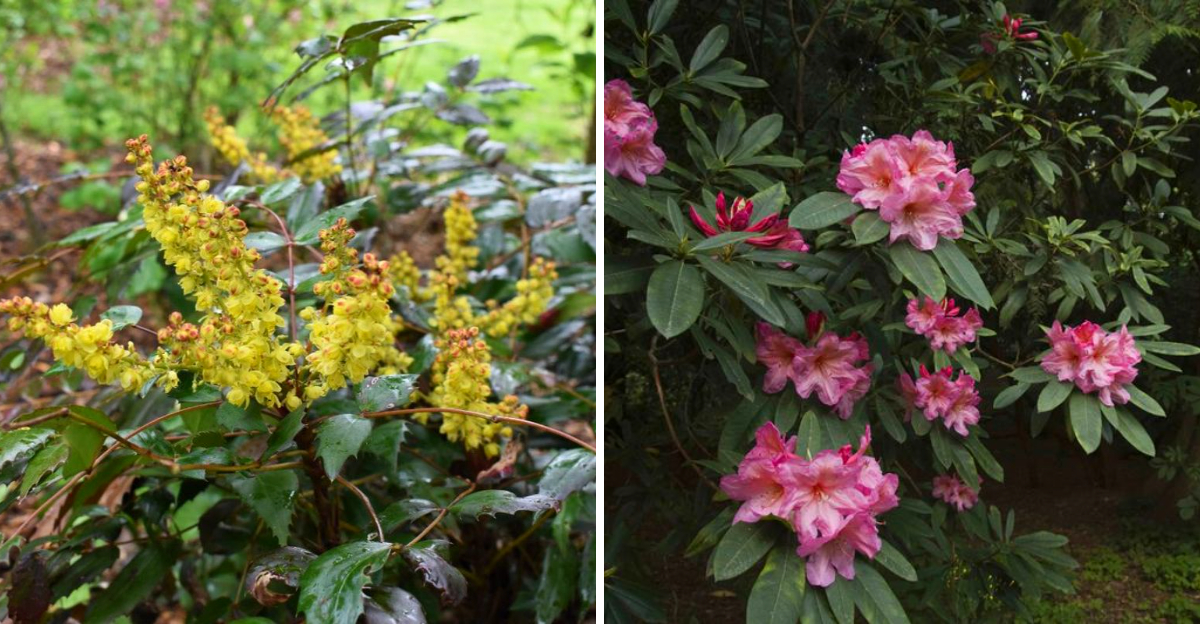
The bare patch under a pine tree is one of those garden problems that makes Oregon homeowners feel like they have tried everything. You plant something, it struggles.
You try again with something else, same result. The shade is dense, the surface roots grab every drop of moisture before anything else gets a chance, and by July the soil under there is dry in a way that feels almost aggressive.
The good news is that the pine needle acidity theory that gets blamed for this problem is mostly a myth. The real culprits are root competition and summer moisture loss, and those are actually workable problems.
The right combination of native shrubs, ferns, and groundcovers, along with some organic matter and early establishment watering, can turn that stubborn bare patch into a genuinely attractive woodland-style planting.
1. Western Sword Fern Handles Dry Shade
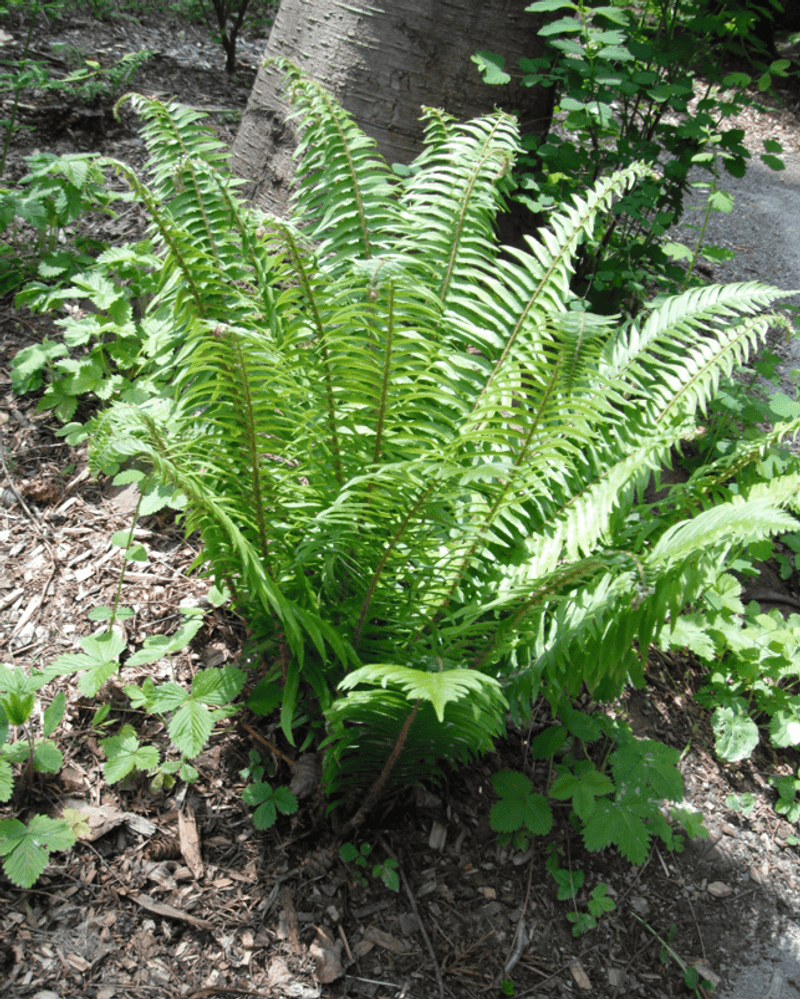
Walk through almost any shaded Oregon forest and you will likely spot the bold, arching fronds of western sword fern growing beneath the trees.
This native fern is one of the more dependable choices for pine understories in Oregon, where dry summer shade makes most plants struggle.
It is not a flat groundcover, so expect fronds that arch upward and outward, creating a layered, woodland feel rather than a tidy carpet.
Planting sword ferns in groups of three or more tends to give the most natural look and helps them fill in more effectively over time. They do best with some organic matter worked into the soil at planting and consistent moisture during their first two summers.
After that, established plants handle dry summers with far more ease than many other shade-loving options.
Place sword ferns beneath the outer canopy of a pine rather than tight against the trunk, where root competition and deep shade are most intense. A layer of mulch helps the soil hold moisture and stay cooler through summer.
This fern suits side yards, shaded beds, and woodland-style borders throughout Oregon where other plants simply give up.
2. Salal Fills Pine Shade With Evergreen Cover
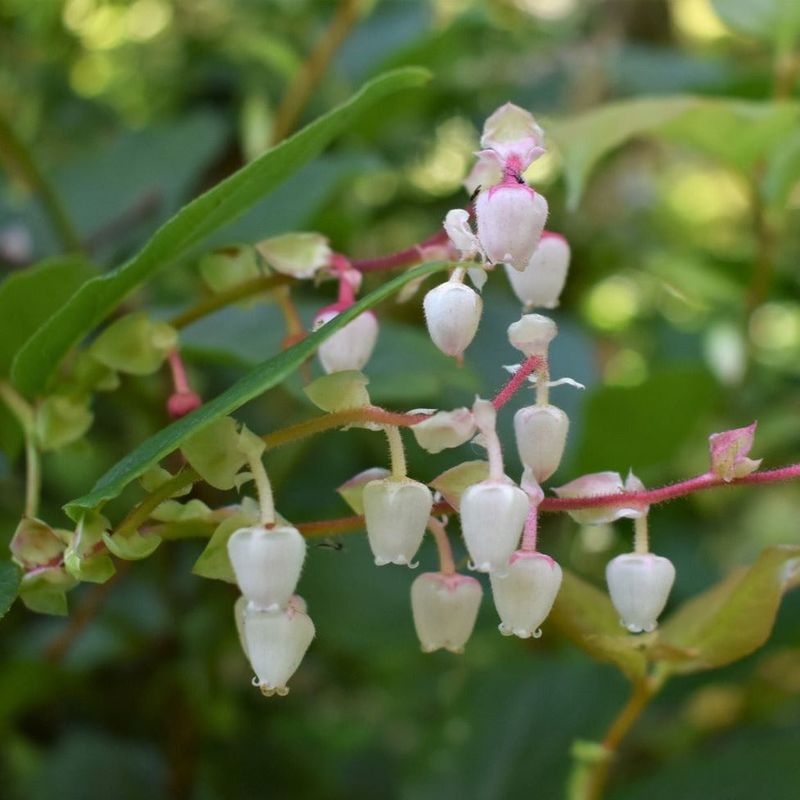
Few native shrubs in Oregon can match salal when it comes to creating dense, evergreen cover in dry shade.
This low-to-medium shrub spreads gradually by underground stems, slowly filling in bare areas beneath pines with glossy, leathery leaves that stay green year-round.
In Oregon’s coastal ranges and western valleys, salal is a familiar sight beneath conifers, and it brings that same woodland character to home gardens.
Salal works best where it has room to spread without crowding out smaller plants you want to keep. Give it a spot beneath the outer canopy of a pine or along a woodland-style bed where its spreading habit is welcome rather than a problem.
It tolerates fairly deep shade but tends to grow more densely and produce more of its small pink flowers when it gets a bit of filtered light.
Getting salal established takes patience. Water regularly through the first dry season and mulch well to keep roots cool.
Your Oregon Garden Changes Every Week. Your Plan Should Too.
Gardening in Oregon changes quickly throughout the season. Every Friday you’ll receive a simple weekly plan showing exactly what to plant, prune, fertilize, harvest, and protect so you never miss the right timing.
Once it settles in, it becomes a tough, low-maintenance evergreen layer that handles Oregon’s summer dry spells without much help. It pairs well with sword ferns and Oregon grape for a layered native planting under pines.
3. Cascade Oregon Grape Spreads Slowly Under Trees
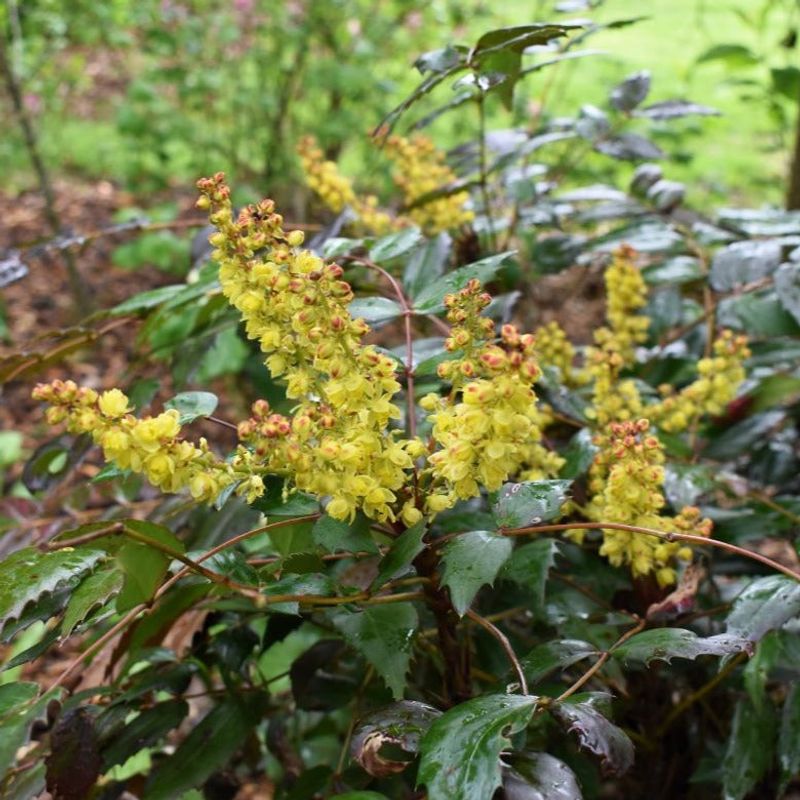
Low-growing and spiny, Cascade Oregon grape moves through shaded ground at its own quiet pace, spreading slowly by underground runners to form a dense, knee-high layer of evergreen foliage.
It is a native Oregon shrub that handles shade and dry soil better than many ornamental groundcovers, making it a solid candidate for pine understories where conditions are tough but not extreme.
Bright yellow flower clusters appear in early spring, followed by blue-black berries that birds find appealing. The foliage turns bronze or reddish in winter, adding seasonal color to shaded beds.
For an Oregon woodland planting under pines, this plant brings year-round texture without demanding constant attention once it has settled in.
Patience matters with Cascade Oregon grape. It spreads slowly, especially in dry, root-filled soil, so do not expect fast coverage.
Mulch around plants helps conserve moisture during dry summers, and supplemental watering through the first couple of seasons gives roots a much better chance to establish.
Place it beneath the outer canopy rather than directly against the trunk, where competition from tree roots is less severe.
Over time, it can build a reliable low layer beneath Oregon pines.
4. Tall Oregon Grape Adds Spiny Structure
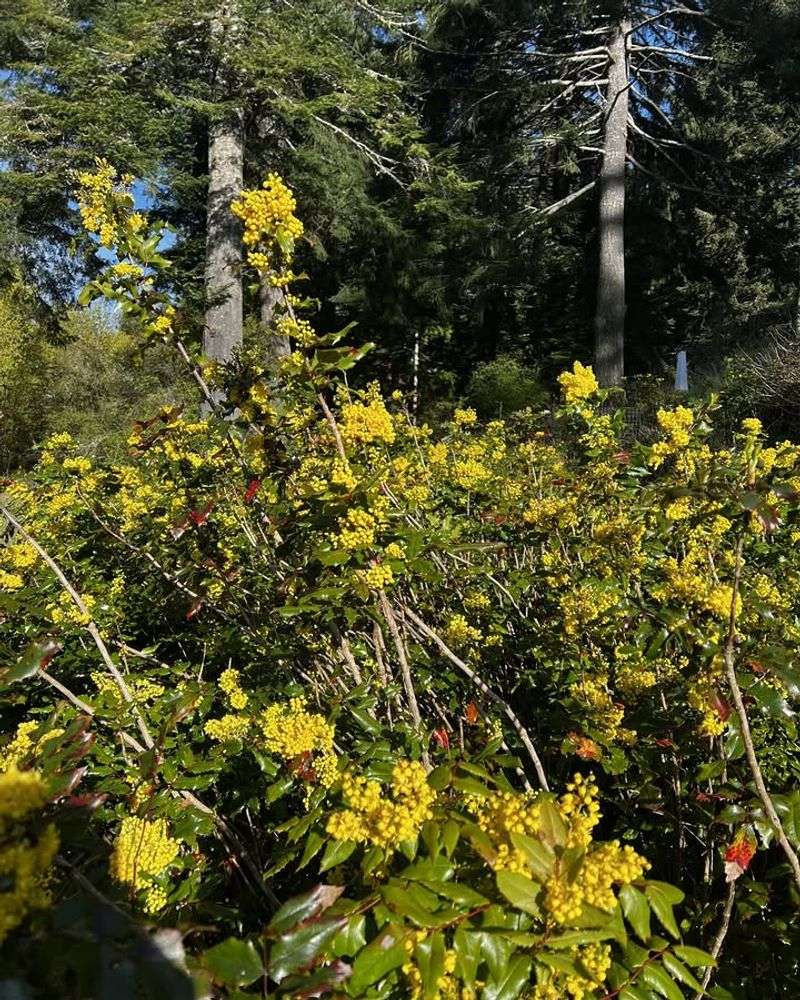
Standing upright with bold, spiny leaves and clusters of bright yellow spring flowers, tall Oregon grape brings a kind of architectural confidence to shaded edges that few other native shrubs can match.
It is a familiar sight in Oregon woodlands and native plant gardens, and it suits pine-edge plantings where the canopy is open enough to let in some filtered light.
Tall Oregon grape fits better near the outer dripline of a pine or along a woodland border than in the darkest, driest spot directly under the canopy. In very dry root zones with heavy competition from pine roots, it may struggle to look its best.
Give it a spot with decent organic matter in the soil, some mulch, and regular water during its first two summers in the ground.
After establishment, this shrub handles dry summers reasonably well, though it appreciates occasional deep watering during extended hot spells.
The blue-black berry clusters that follow the spring flowers are a reliable draw for birds and add another season of interest.
Tall Oregon grape can reach six feet or more at maturity, so give it space to develop its full, upright form rather than crowding it against other large shrubs or structures.
5. Oregon Wood-Sorrel Carpets Cool Shade
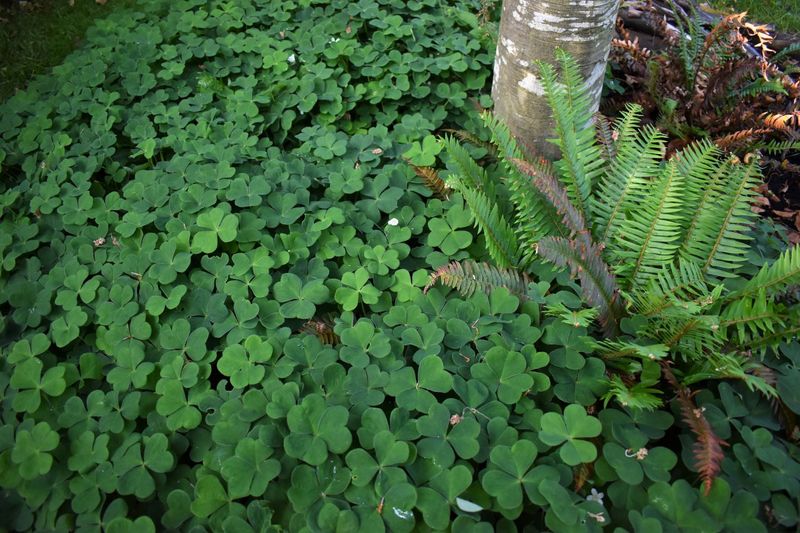
Delicate and low to the ground, Oregon wood-sorrel forms a soft carpet of clover-shaped leaves across cool, shaded forest floors throughout western Oregon.
It is a native groundcover that self-seeds and spreads gently, filling in gaps between larger plants with a fine-textured layer that feels genuinely woodland in character.
Small white or pale pink flowers appear in spring and add a quiet charm to shaded beds.
This plant suits spots where the soil holds some organic matter and does not dry out completely during summer.
It is not the toughest choice for the driest, most root-compacted areas directly under a mature pine, but along the outer canopy edge or in beds where moisture is more consistent, it performs beautifully.
In those spots it can carpet the ground in a way that few other native plants manage so gracefully.
Oregon wood-sorrel works well as a filler between sword ferns, Oregon grape, or other larger plants in a woodland-style planting.It tends to go dormant during the driest summer months and returns when moisture comes back in fall.
Adding compost to the soil before planting and mulching lightly around established patches gives it the best chance of filling in well.
It pairs naturally with other Oregon natives in shaded beds.
6. Fringecup Self-Seeds In Woodland Beds
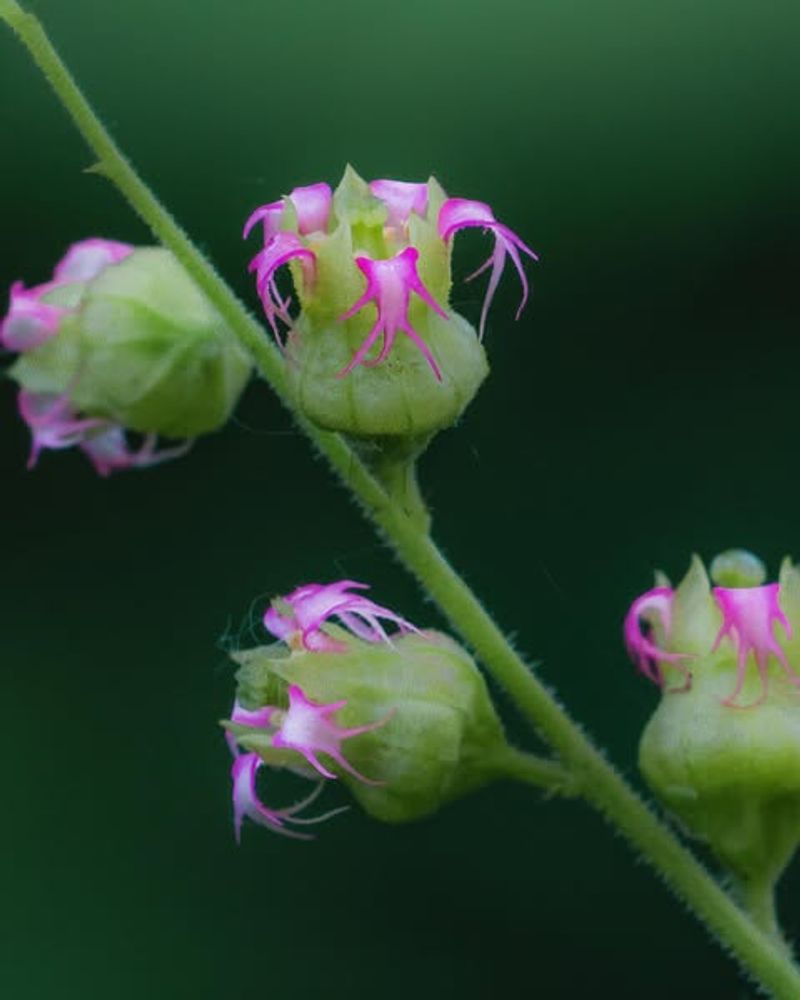
Fringecup is the kind of plant that settles into a woodland bed and quietly makes itself at home, seeding around in a natural, unhurried way that suits informal plantings far better than tidy, controlled borders.
Native to moist, shaded habitats in Oregon and the Pacific Northwest, it produces tall, slender flower spikes in spring that rise above a basal rosette of rounded, softly hairy leaves.
The flowers are small and intricate, with fringed petals that give the plant its common name. They are not showy in a dramatic sense, but they add a delicate, naturalistic quality to shaded beds that feels right in a woodland-style Oregon garden.
Because fringecup self-seeds, it tends to pop up where conditions suit it and skip the spots where they do not, which makes it a reliable naturalizer over time.
Fringecup does best where the soil has some organic matter and stays reasonably moist through spring. It tolerates dry summers better once established, but it is not a plant for extremely dry, root-packed ground.
Use it along pine edges, in shaded beds with other natives, or at the outer dripline where conditions are less severe. It pairs well with sword ferns and Oregon wood-sorrel for a layered, naturalistic feel.
7. Western Red Columbine Flowers In Light Shade
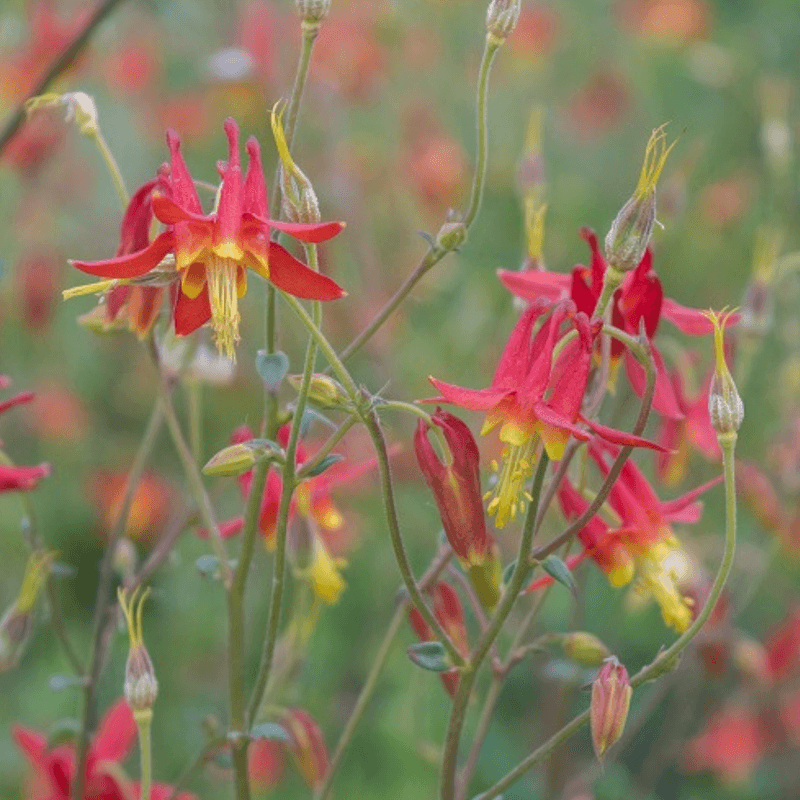
Nodding red and yellow flowers on slender stems make western red columbine one of the more eye-catching native plants for lightly shaded Oregon gardens.
It blooms in spring and early summer, bringing a splash of warm color to woodland edges and open pine borders where most other shade plants offer only foliage.
Hummingbirds are strongly attracted to the tubular flowers, which adds another layer of life to a pine-edge planting.
Western red columbine suits light shade and open pine edges rather than dark, dry ground directly under a mature pine canopy. In those more severe spots, it tends to look stressed and may not flower well.
Near the outer dripline or along a woodland border where filtered light reaches the ground, it performs much better and tends to self-seed naturally over time.
Plant it in soil with some organic matter added and water it regularly through the first dry season. After that, established plants handle Oregon’s dry summers with moderate ease, though a deep watering during extended heat helps.
Western red columbine is a short-lived perennial that self-seeds to maintain its presence in the garden. Pair it with fringecup, sword fern, or Oregon wood-sorrel for a varied, seasonally interesting native planting at pine edges in Oregon.
8. Oceanspray Suits Open Pine Edges
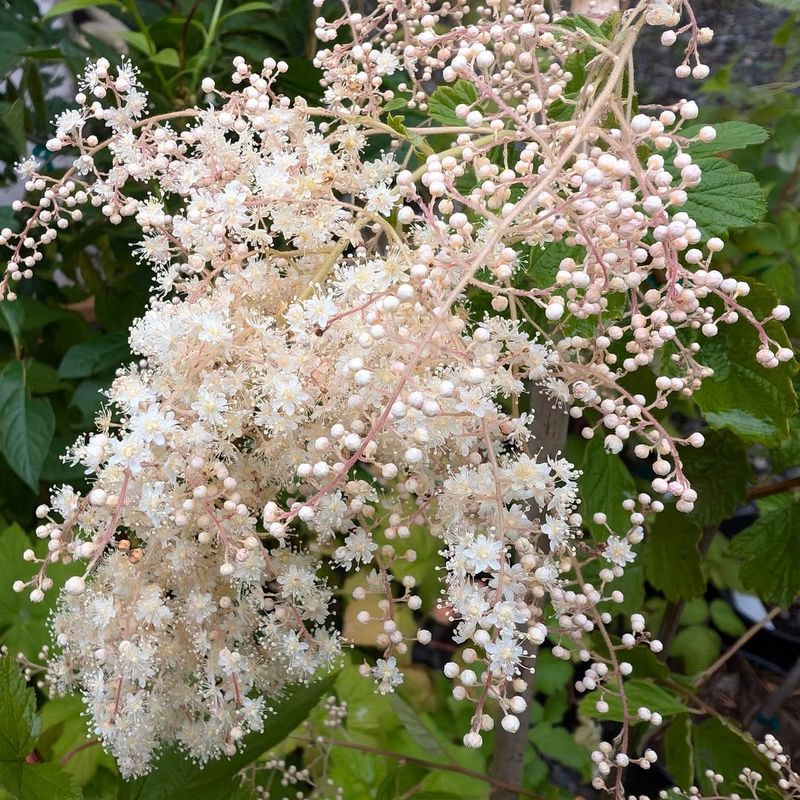
Creamy white flower plumes cascade from oceanspray’s arching branches in early summer, making it one of the more visually striking native shrubs for open Oregon landscapes.
It is a deciduous shrub that can reach eight to ten feet at maturity, so it belongs near open pine edges and outer driplines rather than squeezed into a tight understory spot beneath a dense canopy.
Oceanspray is naturally found along roadsides, open woodland borders, and forest edges throughout Oregon, where it gets more light than a deeply shaded pine understory provides.
It tolerates dry summer conditions reasonably well once established, which makes it a practical choice for the sunnier, more open side of a pine planting where the canopy thins and light reaches the ground more consistently.
Give oceanspray room to develop its full, arching form. It works well as a background shrub in a mixed native border, along the edge of a larger tree island, or at the transition between a pine-shaded bed and a sunnier part of the garden.
Water it through the first summer and mulch around the base to help roots establish. Once settled, it is a low-maintenance shrub that rewards gardeners with seasonal flowers, interesting seed heads, and good wildlife value through fall and winter.
9. Osoberry Builds An Informal Shrub Layer
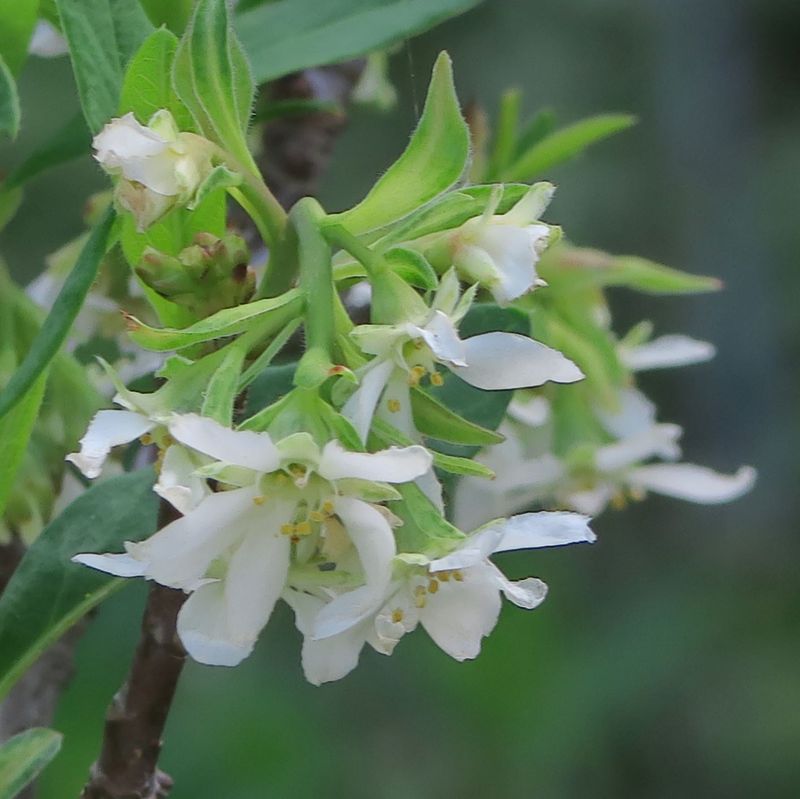
One of the earliest native shrubs to flower in Oregon, osoberry pushes out small clusters of white blooms in late winter or very early spring, often while the ground is still cold and the rest of the garden looks bare.
That early bloom time alone makes it worth considering in a woodland-style Oregon planting, and the small orange-to-dark-purple berries that follow are a reliable food source for birds.
Osoberry builds an informal, multi-stemmed shrub layer that suits naturalistic woodland gardens far better than formal, clipped borders. It spreads by suckers over time, gradually forming a colony that fills in shaded areas with upright stems and bright green leaves.
In an Oregon pine understory, it works best where there is enough light and moisture to support it, such as beneath an open canopy or near the outer dripline.
This is not a low groundcover, and it is not a plant for the tightest, driest spots against a pine trunk. Think of it as a mid-story shrub that bridges the gap between large pines above and lower groundcovers below.
Plant it with mulch, water it through its first dry season, and give it space to spread naturally. Over time, osoberry adds seasonal interest, wildlife value, and a genuinely Oregon-native character to shaded garden spaces.
10. Pacific Rhododendron Needs Moisture To Settle In
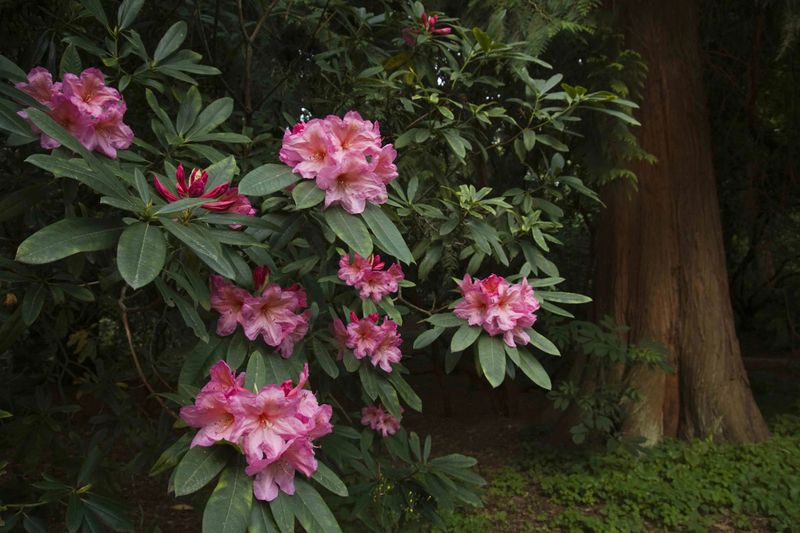
Big, bold pink flower clusters and large evergreen leaves make Pacific rhododendron one of the most recognizable native shrubs in Oregon’s forested landscapes.
It grows naturally in the understories of coniferous forests across the Oregon Coast Range and Cascades, which makes it a natural candidate for pine-edge plantings where conditions come close to mimicking its native habitat.
The catch is moisture. Pacific rhododendron can struggle in settings where summer soil becomes extremely dry, especially during establishment.
It needs well-drained but organically rich soil, consistent moisture during its first two or three summers, and a good layer of mulch to keep roots cool. Without that early care, it may decline rather than settle in, even in otherwise suitable shade conditions.
Place Pacific rhododendron where it gets dappled or filtered light rather than deep, dense shade.
Near the outer dripline of a pine, beneath a higher canopy, or along a woodland border with some morning light tends to work better than a spot tight against a trunk.
It can grow quite large over time, so give it space to develop its full form. In the right Oregon setting, with enough organic matter, decent drainage, and establishment watering, it can become a long-lived, stunning focal point in a shaded native planting.