The 10 Best Rock Garden Plants For California Front Yard
Rock gardens have a way of making a California front yard feel instantly more striking. There is something about the mix of stone, texture, and sculptural plants that looks clean, natural, and full of personality all at once.
Done well, it does not feel sparse or stiff. It feels bold, relaxed, and beautifully suited to the landscape.
That is what makes choosing the right plants so important. A great rock garden plant does more than sit between stones and behave itself.
It brings color, shape, softness, or drama to the whole scene and helps the yard feel thoughtfully put together.
Some spill gently over edges, some stand tall and architectural, and some surprise you with blooms that light up the space.
In a California front yard, that mix can look especially good, giving the landscape a polished feel without losing its charm.
Once the right plants settle in, a rock garden can turn a basic front yard into something that feels far more memorable.
1. Dudleya
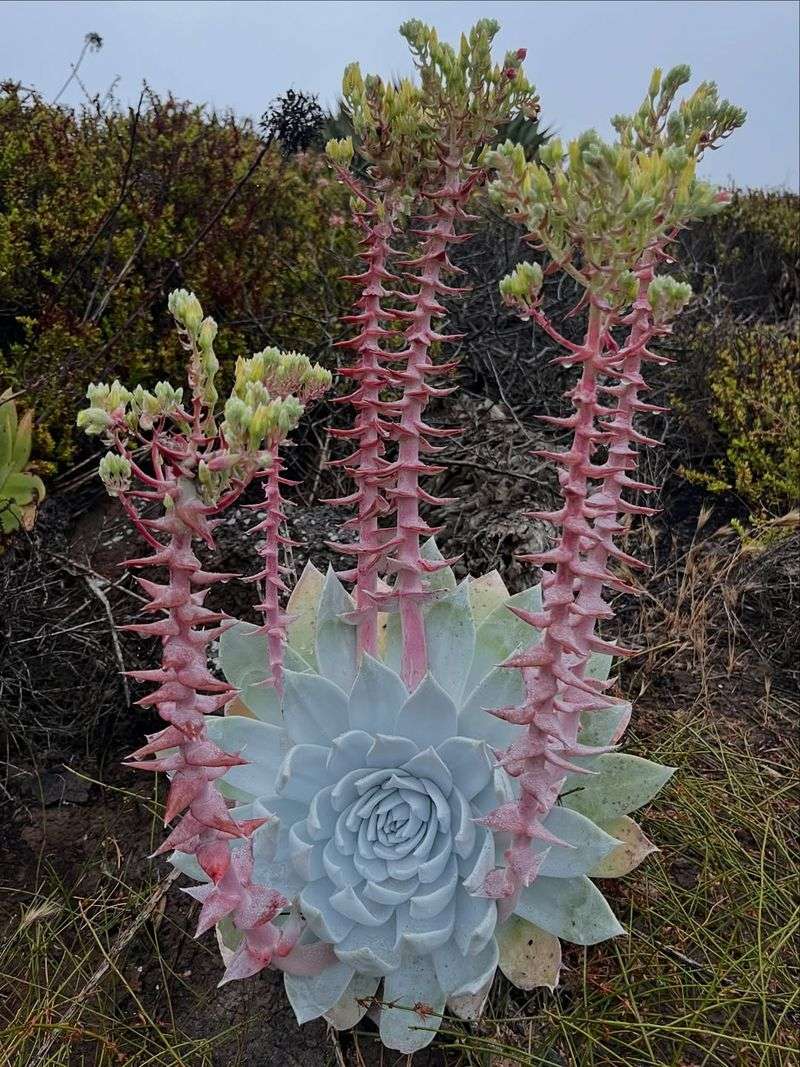
Few plants look as naturally at home in a California rock garden as Dudleya. Sometimes called liveforever, this native succulent has been growing along California’s cliffs and rocky hillsides for thousands of years. It practically belongs here.
Dudleya forms beautiful rosettes of thick, chalky-silver or green leaves that store water like tiny reservoirs.
That means it handles California’s dry summers without breaking a sweat. It asks for very little in return, just good drainage, some sunshine, and the occasional deep watering during long dry stretches.
One thing to know is that Dudleya does not like wet roots. Plant it on a slope or between rocks where water drains away quickly. Sandy or gravelly soil works perfectly.
It grows slowly but steadily, and once established, it rarely needs attention.
In spring, Dudleya surprises you with tall flower stalks that shoot up and bloom in shades of red, orange, or yellow.
Hummingbirds absolutely love these blooms. If you want a plant that is native, drought-tolerant, and genuinely beautiful, Dudleya is a top pick for any California front yard rock garden.
2. California Fuchsia
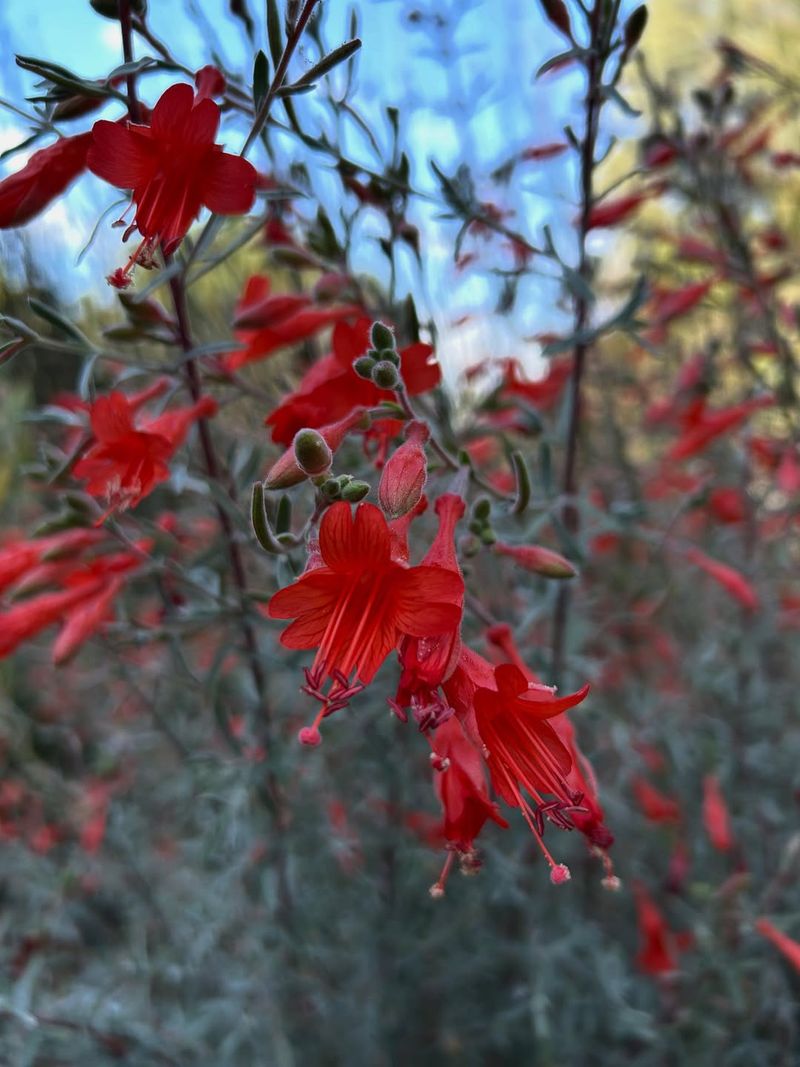
If you want color that practically shouts from your front yard, California Fuchsia is your answer.
Also known as Epilobium canum, this native California plant produces brilliant red-orange tubular flowers that bloom from late summer into fall, right when most other plants are winding down.
Hummingbirds are wild about California Fuchsia. The long, narrow blooms are shaped perfectly for hummingbird beaks, so planting this in your rock garden basically turns your front yard into a hummingbird hangout. That alone makes it worth growing.
California Fuchsia spreads low and wide, making it a great groundcover between rocks. It handles full sun and dry conditions like a champ, which is exactly what you need in a California rock garden. Once established, it needs almost no watering during summer.
After the blooms fade in winter, cut the plant back hard. It will come back fresh and full in spring. Plant it in well-draining soil and give it a sunny spot, and it will reward you with seasons of bold color.
Your California Garden Changes Every Week. Your Plan Should Too.
Gardening in California changes quickly throughout the season. Every Friday you’ll receive a simple weekly plan showing exactly what to plant, prune, fertilize, harvest, and protect so you never miss the right timing.
Few plants offer this kind of late-season drama with so little effort in a California front yard.
3. Sulphur Buckwheat
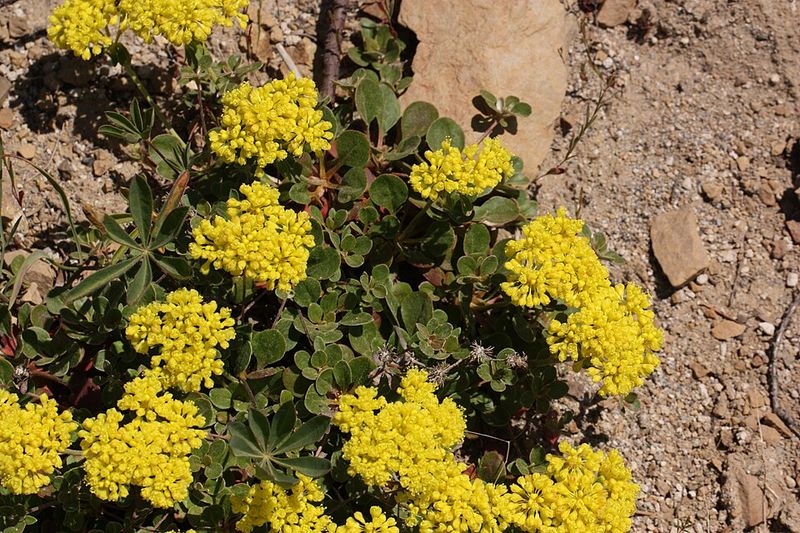
Bright yellow flowers popping up between rocks is exactly the kind of cheerful scene Sulphur Buckwheat creates in a California front yard.
Eriogonum umbellatum, its scientific name, is a native wildflower that thrives in rocky, dry conditions across California and much of the western United States.
The flowers are small but grouped into rounded clusters that glow a warm golden-yellow in full sun.
They bloom in late spring and early summer, and even after the blooms fade, the dried seed heads stay attractive through fall and winter. So you get visual interest for most of the year.
Sulphur Buckwheat is a pollinator magnet. Bees, butterflies, and other beneficial insects flock to the flowers, making your rock garden a lively, buzzing ecosystem.
It is a low-growing, spreading plant, so it works beautifully as a filler between larger rocks or boulders.
Plant it in full sun with excellent drainage. It handles poor, dry soil without complaints, which makes it ideal for the challenging conditions of a California rock garden.
Water it occasionally during the first season to help it get established, and then step back and let it do its thing. It is tough, reliable, and genuinely gorgeous.
4. Kinnikinnick
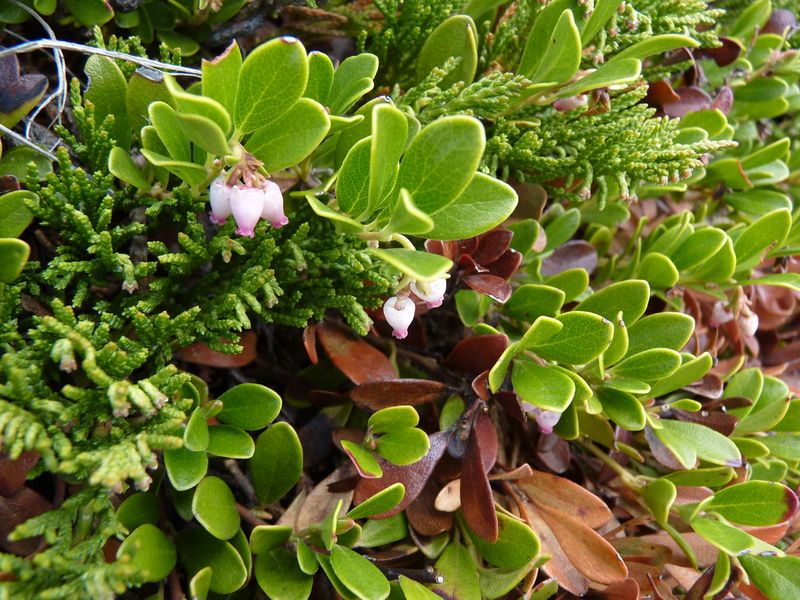
Not many groundcovers can match the year-round good looks of Kinnikinnick, also known as Arctostaphylos uva-ursi.
This low, creeping plant hugs the ground tightly and spreads slowly over rocks like a living green carpet. It is a native plant well-suited to California’s cooler coastal and mountain zones.
In spring, tiny pink or white bell-shaped flowers appear along the stems. By summer and fall, those flowers turn into bright red berries that birds absolutely love.
The glossy, dark green leaves stay evergreen all year, so your rock garden never looks bare or dull, even in winter.
Kinnikinnick prefers well-drained, slightly acidic soil and does best in full sun to partial shade. It is especially popular in Northern California rock gardens where conditions can be cooler and foggier. Once established, it is very drought-tolerant and low-maintenance.
One practical tip: do not overwater it. Kinnikinnick is sensitive to soggy roots, so planting it between rocks where water drains freely is the smart move. It spreads slowly, so give it time to fill in.
The patience pays off because this plant looks stunning and holds up beautifully through California’s varied seasons year after year.
5. Groundcover Manzanita
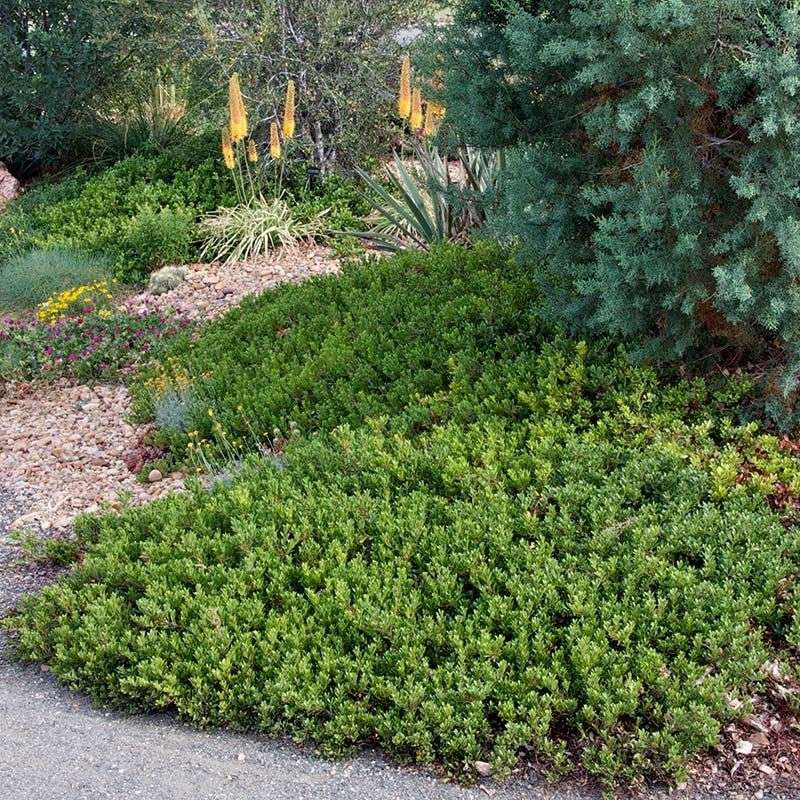
California is famous for Manzanita, and the groundcover varieties are some of the best-kept secrets in rock garden design.
Unlike the tall shrubby Manzanitas you might see on hiking trails, groundcover types like Arctostaphylos edmundsii or ‘Emerald Carpet’ stay low and spread wide, making them perfect for filling space between rocks.
The tiny, urn-shaped pink or white flowers appear in late winter or early spring, giving you color when little else is blooming.
After flowering, small reddish berries develop, which birds enjoy snacking on. The evergreen leaves are small, glossy, and attractive all year long.
Groundcover Manzanita is incredibly drought-tolerant once established, which makes it a natural fit for California’s dry summers.
It thrives in full sun and fast-draining soil. Rocky or sandy ground suits it just fine, which is exactly the kind of environment a rock garden provides.
Give it some space to spread when you plant it, because it can grow several feet wide over time. Avoid overwatering, especially in summer.
Manzanita is a true California native, and planting it in your front yard rock garden is one of the best ways to celebrate the state’s natural beauty while keeping your water bill low.
6. Rock Cress
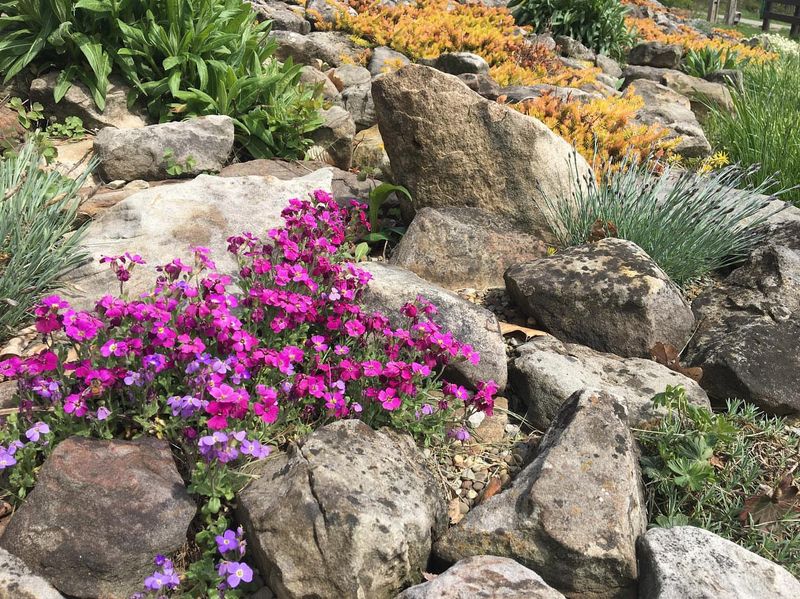
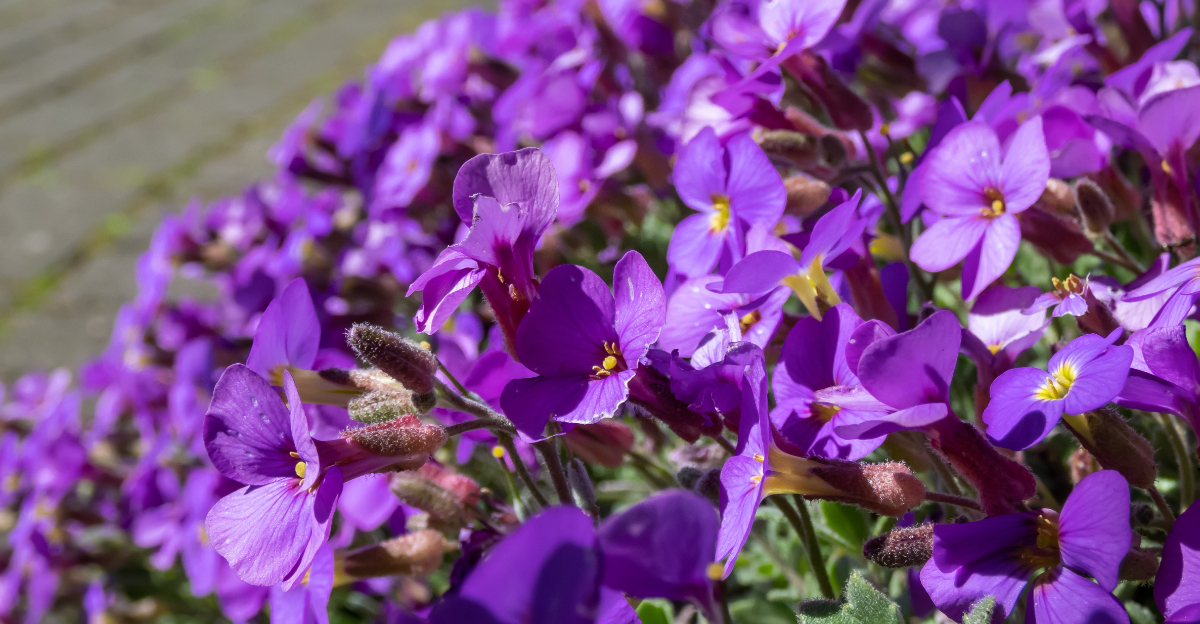
Picture a waterfall of purple and white flowers tumbling over rocks every spring. That is exactly what Rock Cress, or Aubrieta, brings to a California front yard rock garden. It is one of those plants that stops people in their tracks when it is in full bloom.
Rock Cress is a low-growing perennial that forms dense mats of foliage. In spring, it erupts with clusters of small, four-petaled flowers in shades of purple, lavender, pink, and white. The blooms are so thick they almost completely hide the leaves underneath.
It is a showstopper.
After blooming, trim the plant back by about one-third. This keeps it tidy and encourages fresh, healthy growth for the following season.
Rock Cress prefers full sun and excellent drainage, which makes it a natural fit for rocky slopes and raised rock gardens across California.
It handles dry conditions reasonably well once established, though a little water during the hottest California summer months helps it stay looking its best.
Plant it near the edges of rocks or walls where it can spill over naturally. The cascading effect it creates is one of the most visually stunning things you can add to a California front yard.
7. California Oatgrass
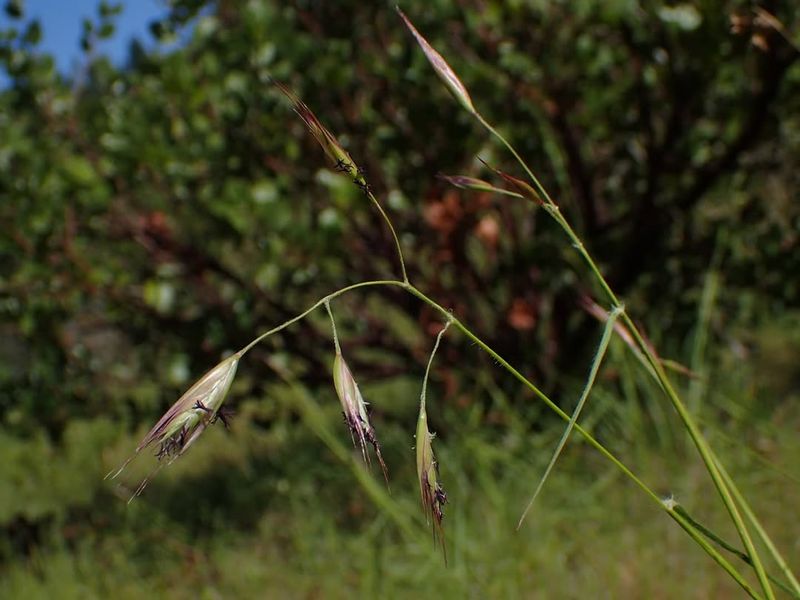
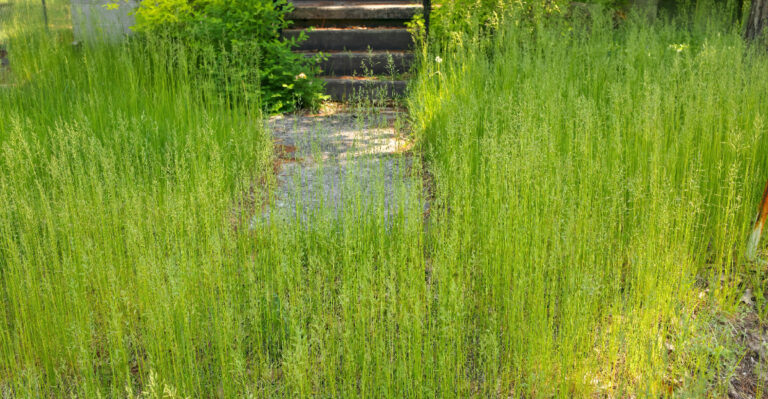
Ornamental grasses bring movement and texture to a rock garden, and California Oatgrass, or Danthonia californica, does this better than almost any other native grass.
Its slender blades arch gracefully in the breeze, creating a soft, flowing contrast against hard rocks and boulders.
California Oatgrass is a true native, meaning it evolved right here in California and knows exactly how to handle the state’s climate.
It tolerates drought, poor soil, and dry summers without much fuss. It grows in clumps and stays relatively compact, so it fits neatly into a rock garden without taking over.
The grass produces delicate seed heads in late spring that sway gently in the wind and catch the light beautifully.
Over time, the blades take on golden tones that look warm and natural in a rock garden setting. It works especially well alongside flowering plants like Dudleya or California Fuchsia, providing a textural contrast that makes both look better.
Plant California Oatgrass in full sun to partial shade with well-drained soil. Water it occasionally during its first growing season to help it settle in.
After that, it largely takes care of itself, which is exactly the kind of low-maintenance beauty every California front yard rock garden needs.
8. Seaside Daisy
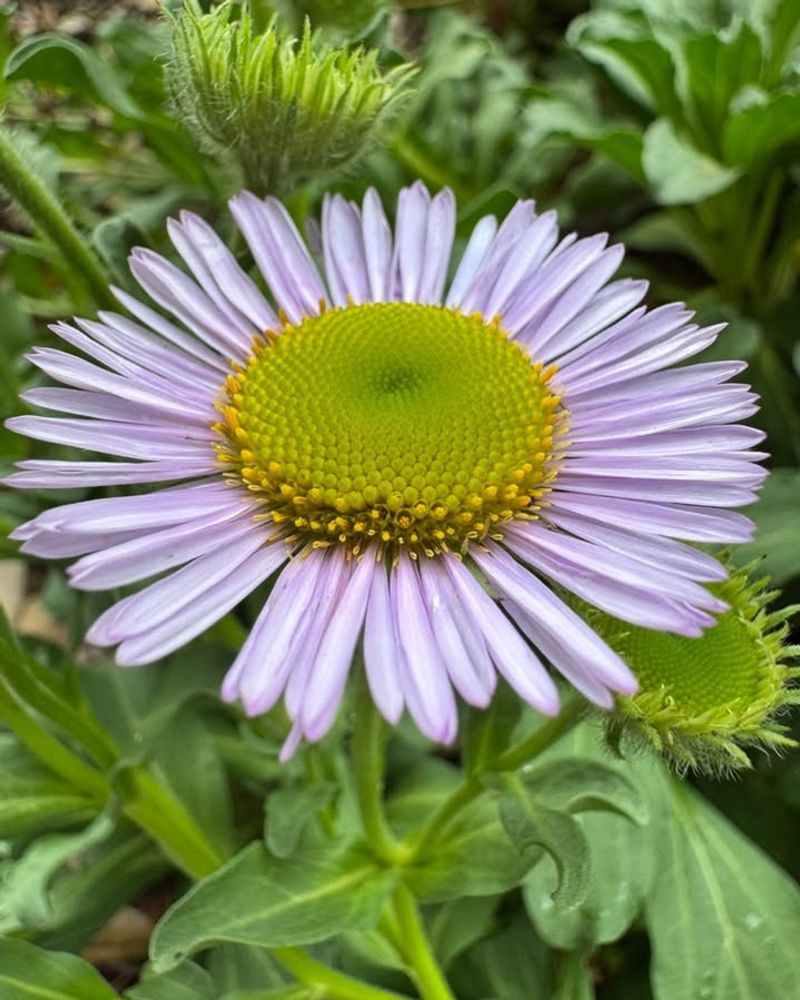
There is something undeniably cheerful about a daisy, and Seaside Daisy, or Erigeron glaucus, brings that cheerfulness to California rock gardens in a big way.
This California native is especially popular along the coast, where it thrives in the mild, foggy climate and salty air.
Seaside Daisy produces a continuous parade of lavender-purple flowers with bright yellow centers from spring all the way through fall.
That is an impressively long blooming season. The flowers sit above compact, low-growing mounds of blue-green foliage that look tidy and attractive even when the plant is not in bloom.
One of the best things about Seaside Daisy is how adaptable it is. It grows well in full sun or partial shade, handles coastal winds, and tolerates dry conditions once established.
It works perfectly as a border plant or a filler between rocks in a California front yard rock garden.
Deadhead the spent blooms occasionally to encourage more flowers to form. Give it well-drained soil and water it moderately during hot summer spells.
Pollinators like bees and butterflies visit the flowers regularly, adding life and activity to your garden.
If you want reliable, long-lasting color with minimal effort, Seaside Daisy belongs in your California rock garden.
9. Blue-Eyed Grass
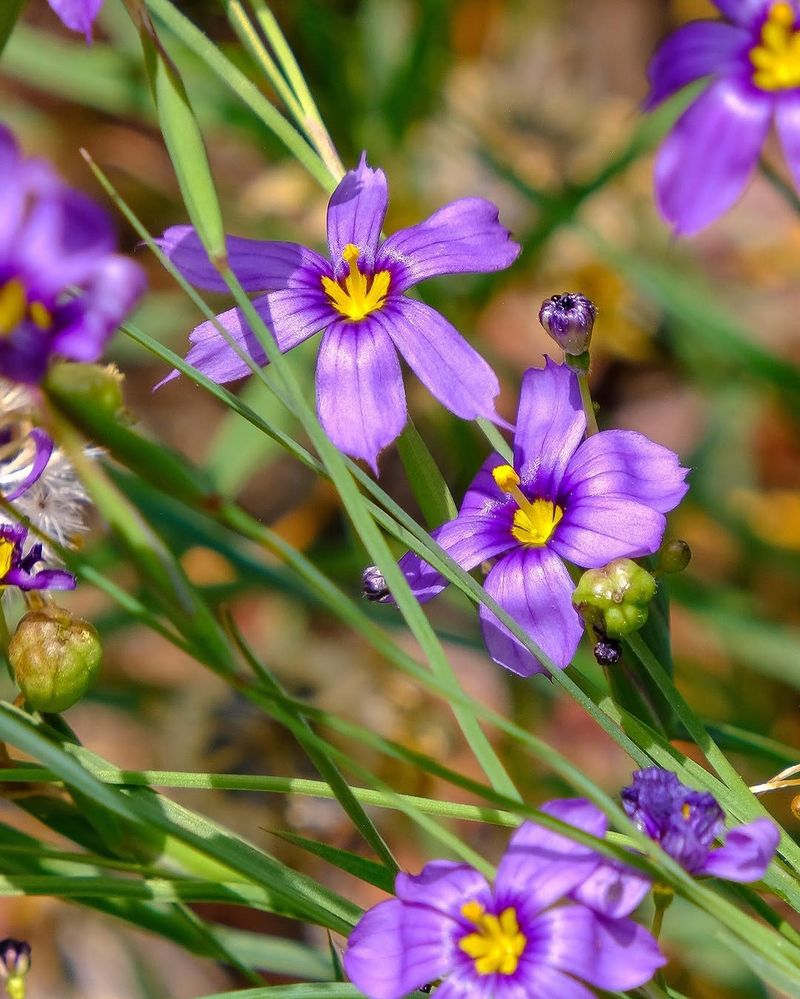
Do not let the name fool you. Blue-Eyed Grass, or Sisyrinchium bellum, is not actually a grass at all.
It is a member of the iris family, and its delicate star-shaped flowers in blue-purple with a bright yellow center are among the most charming blooms you will find in any California rock garden.
The plant forms small, upright clumps of narrow, grass-like leaves that blend beautifully with actual grasses and rocks.
In spring, the flowers appear in abundance, creating a subtle but lovely display. Up close, each bloom is intricate and beautiful.
From a distance, the clumps of blue flowers add a cool, calming color to the rock garden.
Blue-Eyed Grass is native to California and naturally grows in meadows, grasslands, and rocky slopes throughout the state.
It adapts well to a variety of conditions, including full sun, partial shade, and different soil types, as long as drainage is good.
Water it regularly during the first season to help it establish strong roots. After that, it handles California’s dry summers quite well on its own. It self-seeds gently, so over time you may find new plants appearing nearby.
That slow, natural spread makes it a charming and easy-going addition to any California front yard rock garden.
10. Creeping Sage
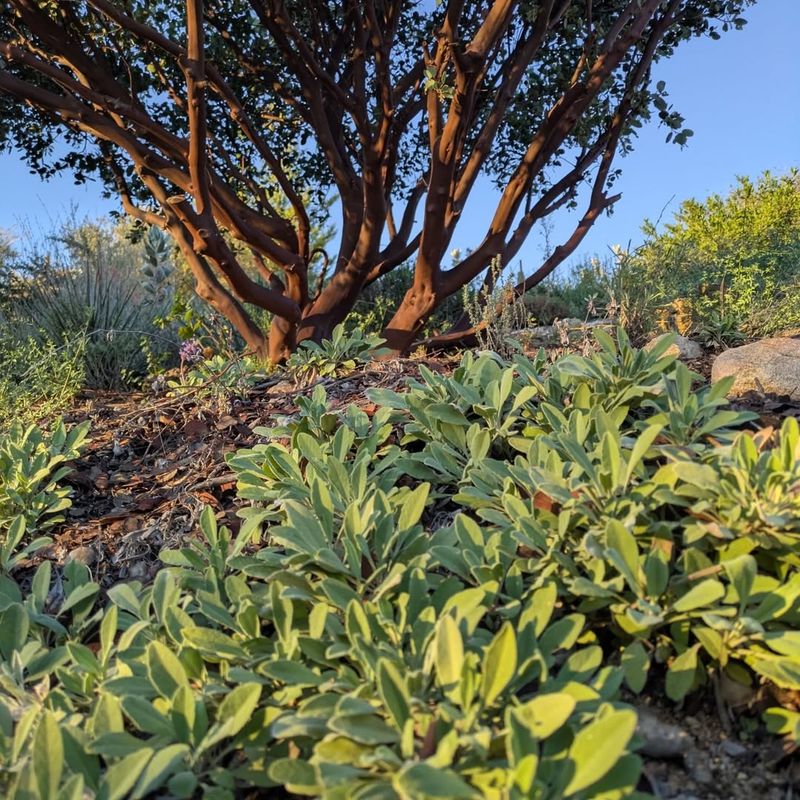
Walk past Creeping Sage on a warm California afternoon and you will immediately notice its wonderful fragrance.
Salvia sonomensis, commonly called Creeping Sage, is a low-growing California native that spreads across rocks and slopes with quiet, steady charm. It smells amazing and looks great doing it.
The plant forms a dense, spreading mat of gray-green, aromatic leaves that stay attractive all year.
In spring, small spikes of pale lavender to purple flowers rise above the foliage, attracting bees, butterflies, and hummingbirds. It is a pollinator paradise in a compact, well-behaved package.
Creeping Sage is built for California conditions. It thrives in full sun, handles dry summers with ease, and asks for very little water once established.
It loves rocky, fast-draining soil, which makes it one of the most naturally suited plants for a California front yard rock garden.
It also helps control erosion on slopes, which is a practical bonus. Trim it lightly after flowering to keep it neat and encourage fresh growth.
Avoid overwatering, especially in summer, because soggy roots are its one real weakness. Plant it between boulders or along rock edges where it can spread freely.
Creeping Sage rewards you with fragrance, color, and year-round greenery that feels unmistakably Californian.