The Best Time To Stop Watering Your Christmas Cactus So It Thrives In Michigan
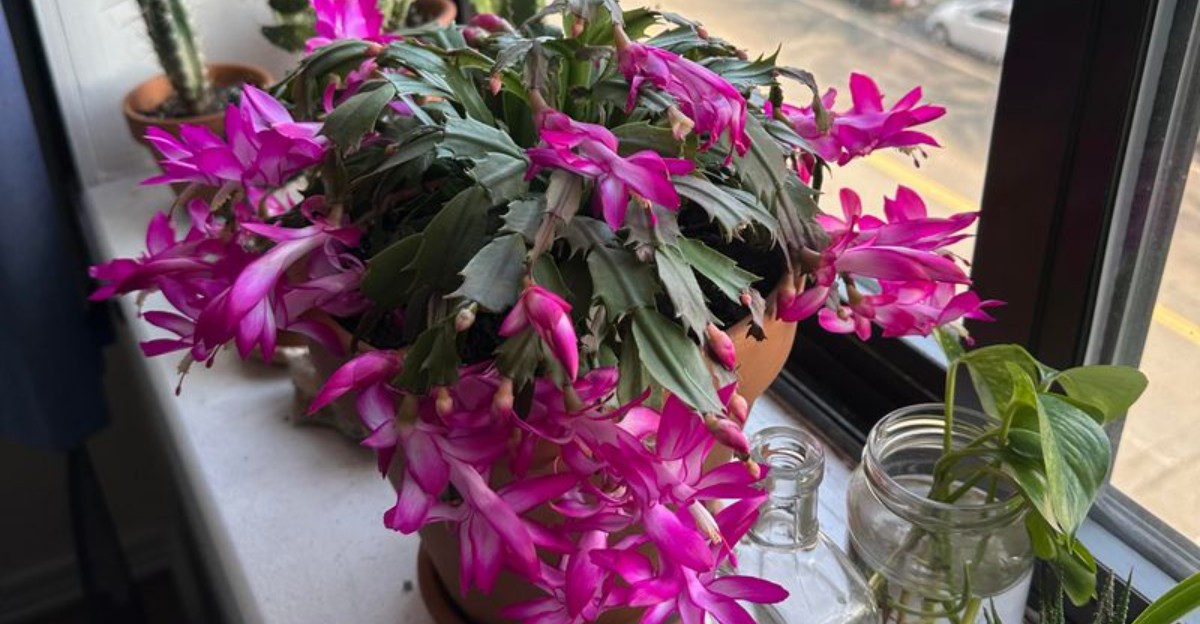
Most houseplants like steady moisture. A Christmas cactus is different, and its watering needs change with the season. In fall, the plant prepares to bloom.
A slightly drier period helps signal that it is time to set buds. Keep the soil soaking wet, and you may get leaves but no flowers. Go too dry, and the plant drops its buds before they open.
The trick is knowing when to ease off and by how much. Michigan homes add another factor, because furnaces dry the air and change how fast soil dries out. Water too little and the segments shrivel.
Time it well, and the plant responds with a burst of color. It is a small adjustment with a big payoff.
1. Reduce Water At Key Times, But Never Stop Completely
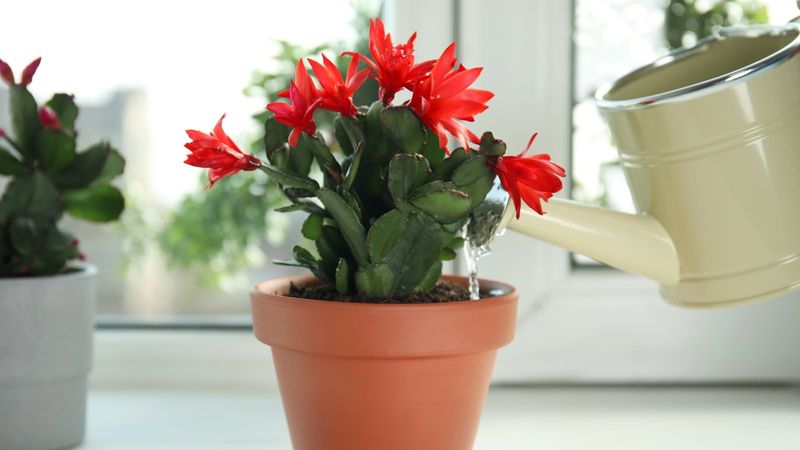
Many people hear the word cactus and picture a dry desert plant that barely needs a drink. The Christmas cactus, known by its scientific name Schlumbergera, breaks that rule in a big way.
Back home in the humid mountain forests of southeastern Brazil, it grows on tree branches and mossy rocks where mist and rain keep its roots damp.
Because of that rainforest background, its roots expect regular moisture. Desert cacti store water and can handle weeks of drought, but your holiday plant simply is not built that way.
Leave it bone dry for too long, and its flat green segments start to wrinkle, go limp, and turn a dull reddish color.
So the real goal is to water less at certain times, not to stop. Two seasons call for lighter watering. The first is the fall bud-setting period, and the second is the short rest that follows blooming.
Even during those stretches, give the plant a light drink whenever the soil has dried out.
A simple finger test works wonders here. Push your finger into the soil about an inch deep. If it feels dry, add water slowly until the soil is damp but not soggy, then let any extra drain away.
Michigan gardeners sometimes read old advice about drying out the plant in fall and take it too far.
They stop watering entirely, and the stressed plant drops buds or refuses to bloom at all. Easing back gently keeps your cactus happy, healthy, and ready to put on a colorful show when snow starts falling outside.
2. Ease Off In Early Fall As Nights Cool
September brings crisp mornings, apple orchards, and a quiet signal your Christmas cactus has been waiting for all summer.
As the season shifts, the plant starts thinking less about growing and more about flowering. A small change in how you water can give that process a helpful push.
Slightly drier soil works together with cool nights and long hours of darkness. When all three line up, the plant stops pushing out new stem segments and begins forming tiny flower buds at the tips.
Think of it as nature flipping a switch from growth mode to bloom mode. Starting in September, let the top inch or two of soil dry before you water again.
Your Michigan Garden Changes Every Week. Your Plan Should Too.
Gardening in Michigan changes quickly throughout the season. Every Friday you’ll receive a simple weekly plan showing exactly what to plant, prune, fertilize, harvest, and protect so you never miss the right timing.
You will probably find yourself watering a little less often than you did in July and August. That is exactly right, as long as the soil never stays completely dry for long stretches.
Temperature and darkness matter just as much as water. Aim for nights around 50 to 60°F, or give the plant about 12 to 14 hours of uninterrupted darkness each night.
A spare bedroom that nobody uses after dinner can work beautifully, since lamps and TV light can confuse the plant.
Here is the good news for Michigan growers. Our September and October nights naturally drop into that cool range, which makes bud formation much easier than in warmer states. Many people in the Mitten see buds appear without any special tricks at all.
Pair cooler air with lighter watering, and you set the stage for a flower-packed holiday season.
3. Bring It In Before It Gets Too Cold Outside
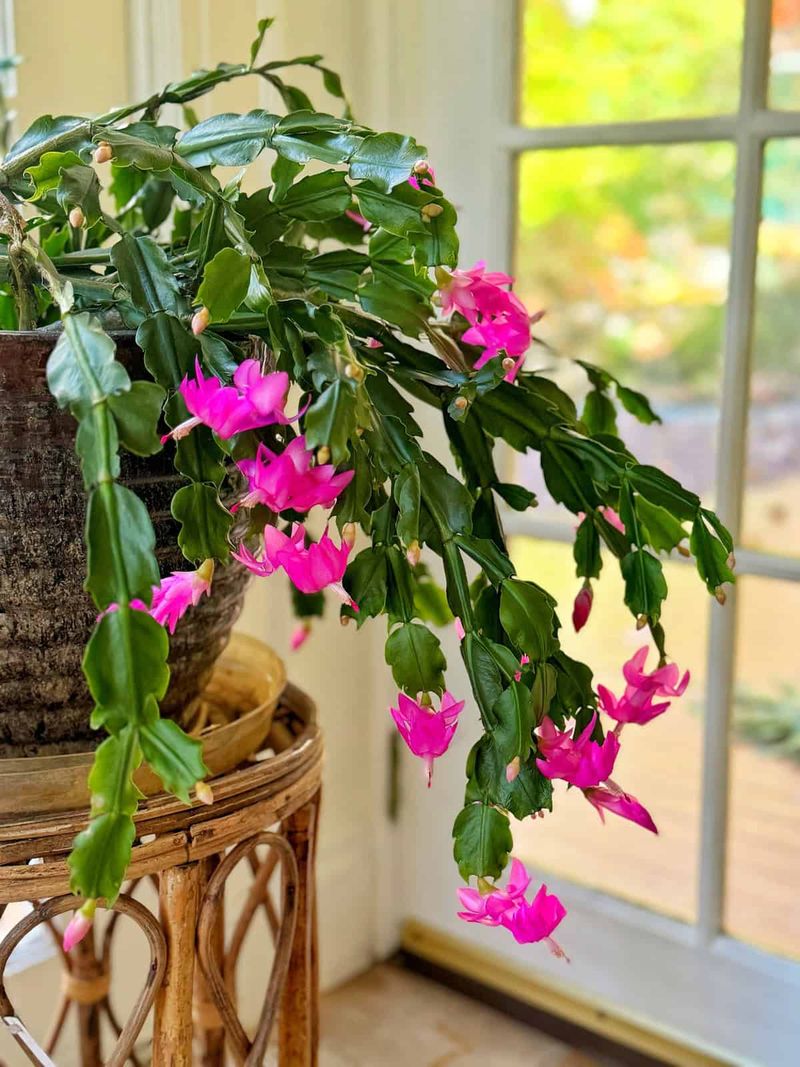
Summer on the patio feels like a vacation for a Christmas cactus. Fresh air, gentle rain, and dappled shade help it grow lush and full. Once fall arrives, though, the timing of its trip back inside makes a big difference in how you water it.
Outdoors, rain gives the plant frequent drinks, and breezes dry the soil quickly. Indoors, everything slows down. The air is still, there is no rain, and the soil holds moisture far longer, so the plant needs much less water than it did outside.
Waiting too long brings a different problem. A Christmas cactus does not handle frost, and cold snaps can damage its segments and leave them mushy. Bring your plant inside when nighttime temperatures start dropping toward about 50°F.
Before you carry it through the door, take a few minutes to inspect it. Look under the segments and around the pot rim for mealybugs, aphids, spiders, or slugs. A gentle rinse with the hose a day or two earlier can wash away many unwanted hitchhikers.
Once the plant is settled indoors, change your watering habits right away. Skip the summer routine and check the soil before every drink, watering only when the top inch feels dry. You may notice you water half as often as before, and that is perfectly normal.
Michigan weather keeps everyone guessing. By late September, outdoor nights often slide into the 40s, sometimes with little warning. Keep an eye on the forecast, and plan the move a little early rather than late to keep your plant safe and comfortable.
4. Keep Soil Lightly Moist Once Buds Form
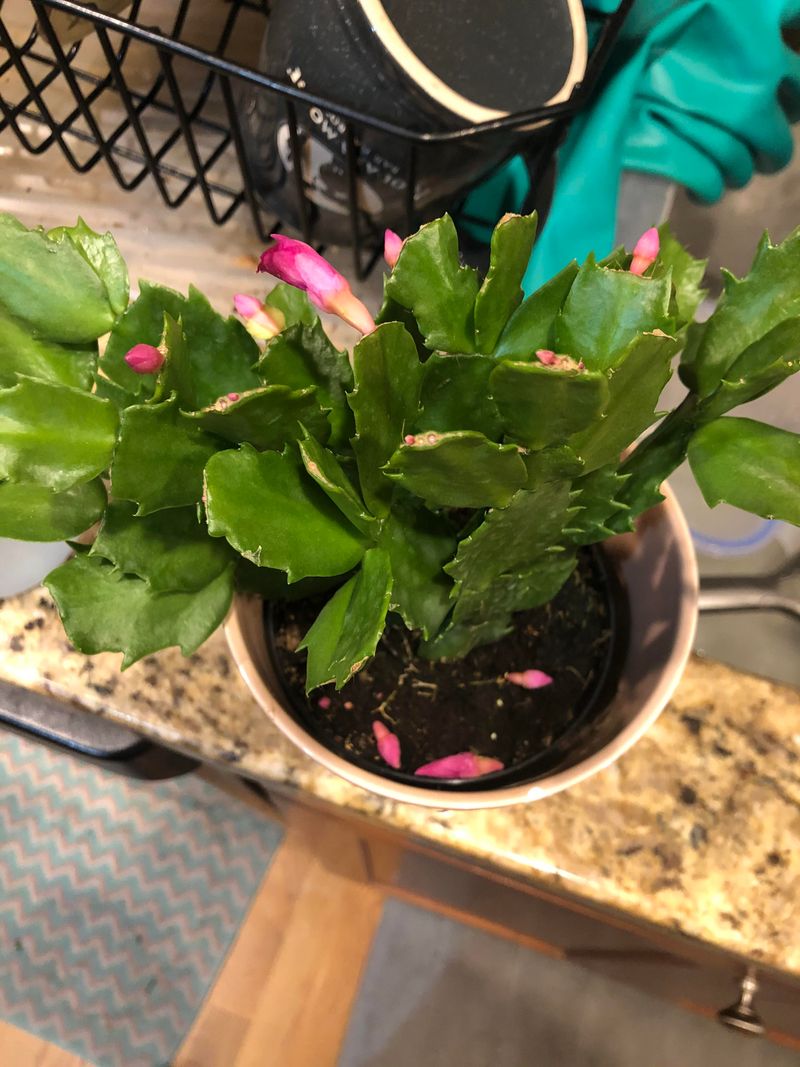
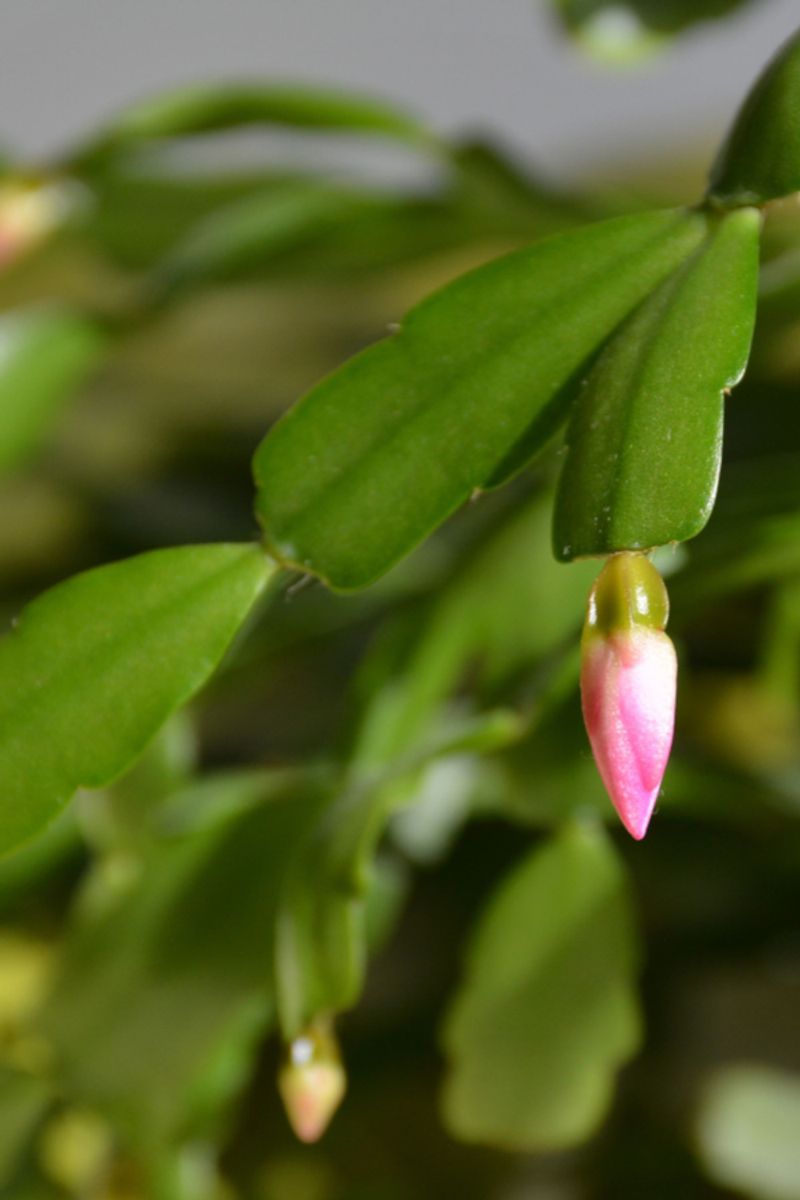
Few things feel as exciting as spotting those first little buds on the tips of your plant. They start out tiny and pinkish, then swell day by day like small promises of color. Now is the moment when steady watering becomes more important than ever.
Developing buds need a regular supply of moisture to open fully. When soil dries out completely, the plant protects itself by dropping buds it cannot support.
Big swings from very dry to very wet cause the same heartbreak, so consistency is the name of the game.
Once buds are visible, water whenever the top inch of soil feels dry. The goal is lightly and evenly moist soil, similar to a wrung-out sponge. Water slowly, let the extra drain out, and empty the saucer after about 15 minutes so the roots never sit in a puddle.
Movement can also upset a budding plant. Changes in light, temperature, or drafts often trigger bud drop, even when watering is perfect. Pick a good spot with bright, indirect light and leave the plant there until the flowers finish.
That might mean resisting the urge to move it to the dining table for a holiday party. If you really want it front and center, choose its spot before buds form. Your patience will pay off with a much fuller display.
Bud drop ranks as one of the most common holiday cactus disappointments in Michigan homes. Dry winter air, chilly doorways, and busy holiday schedules all play a part. A simple watering check every few days keeps those precious buds right where they belong.
5. Check Soil More Often Once The Heat Comes On
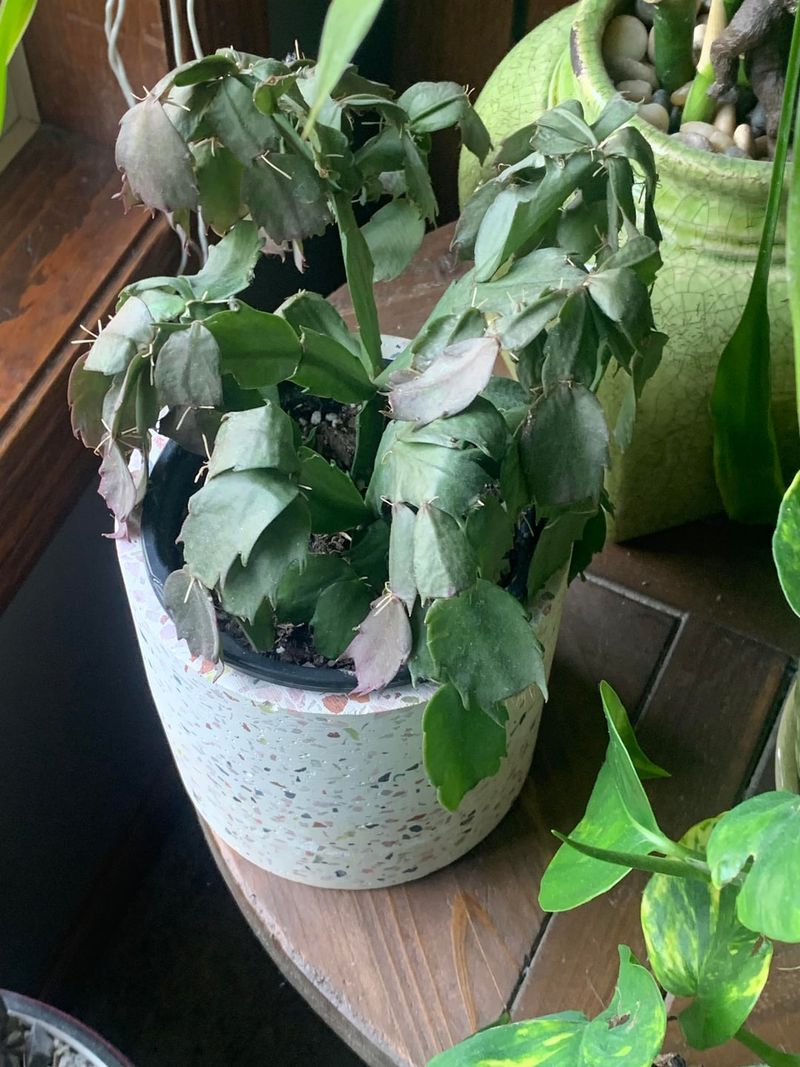
Click. The furnace kicks on for the first time in fall, and suddenly your whole house feels different. Your Christmas cactus notices too, even if it cannot tell you about it.
Warm, dry indoor air pulls moisture out of potting soil much faster than you might expect.
Plants sitting near heat vents or radiators feel the effect most. Soil that stayed moist for a full week in early fall may dry out in just a few days once heating season begins. That quick shift catches many plant lovers off guard.
The fix is simple. Check soil moisture with your finger every few days instead of once a week. When the top inch feels dry, give the plant a good drink and let the extra drain away.
Placement matters a lot, too. Keep your cactus away from heat vents, radiators, space heaters, and fireplaces. Blasts of hot air dry out the segments and can cause buds to drop before they ever open.
Raising humidity helps your plant feel more at home. Group it with other houseplants, since plants release moisture into the air around them.
You can also set the pot on a tray filled with pebbles and water, keeping the water level below the pot bottom so the roots stay out of standing water.
Michigan homes often run the heat from October well into April, sometimes even May. That is a long stretch of dry indoor air for a plant from a misty Brazilian forest. Staying alert to soil moisture all winter keeps your cactus plump, green, and blooming.
6. Water Less In Cool Rooms
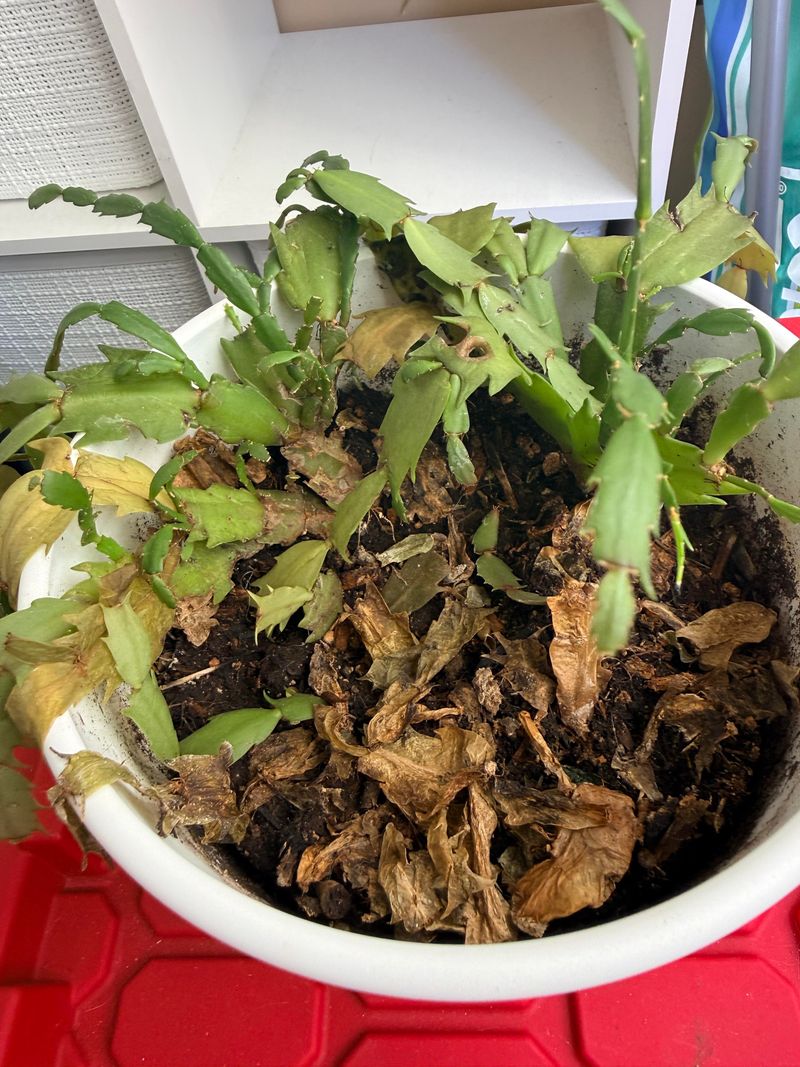
Ever notice how a wet towel takes forever to dry in a cold room? Potting soil behaves the same way. When your Christmas cactus lives in a cool space, its water needs drop more than many people realize.
In a room around 50 to 60°F, the plant uses water slowly, and moisture lingers in the soil for days.
Watering on a strict calendar schedule, like every Sunday, can leave roots sitting in wet soil. Over time, that soggy situation leads to root rot, one of the biggest threats to this plant.
Let the soil guide you instead of the calendar. Wait until the top inch feels dry before reaching for the watering can. When you do water, water thoroughly so moisture reaches all the roots, then wait longer before the next round.
The right soil and pot make this much easier. Christmas cactus loves a fast-draining mix, so blend regular potting soil with orchid bark or perlite for extra airflow. Always choose a pot with drainage holes, because even careful watering can go wrong without them.
Clay or terracotta pots offer a small bonus. They breathe and help extra moisture escape faster than plastic. That can be a real help in a chilly room where soil dries slowly.
Plenty of Michigan gardeners keep their cactus in a cool spare room or beside a chilly window on purpose.
The cooler air encourages buds and helps blooms last longer. Just remember that cooler air also means less water, and your plant will reward you with healthy roots and lasting flowers.
7. Give It A Rest After Blooming
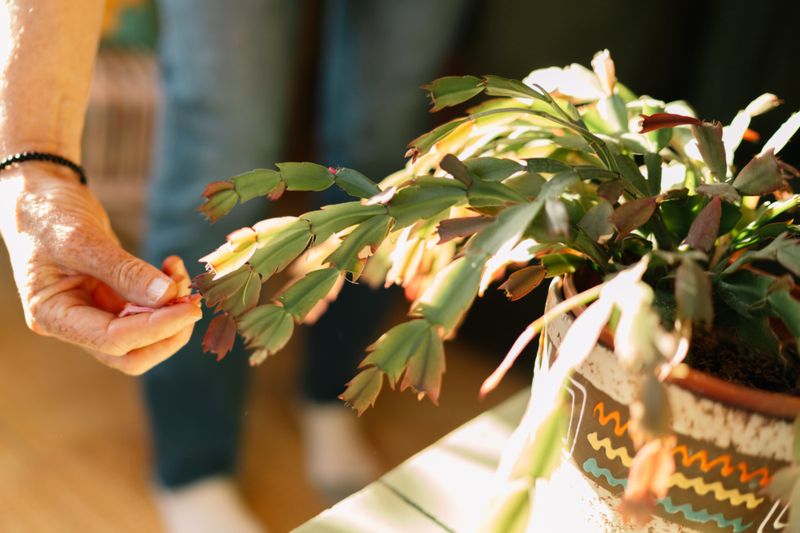
After weeks of dazzling flowers, your Christmas cactus has earned a break. Blooming takes a lot of energy, and once the last petals fall, the plant naturally slows down. Giving it a little quiet time now sets it up for a strong year ahead.
During this rest period, lighter watering helps the plant recover before spring growth begins. Its roots do not need as much moisture while it is taking things easy.
A short pause also helps prevent soggy soil during a time when the plant is not actively growing.
Once the final flowers drop, water less often for about six weeks. Let more of the soil dry between waterings, perhaps the top two inches instead of just one. Keep an eye on the segments, though, and give a drink if they start looking wrinkled or limp.
Skip the fertilizer during this stretch. Feeding a resting plant is like offering a big meal to someone trying to nap. Save the plant food for spring, when fresh growth can actually use it.
Light still matters during the break. Keep your cactus in bright, indirect light, such as near an east-facing window or a few feet from a sunny one.
Strong direct sun can scorch the segments, while deep shade weakens the plant. In Michigan, many Christmas cactus plants finish blooming in mid to late winter.
That timing lines up nicely with nature, since days slowly start getting longer after the winter solstice. A calm six-week rest lets your plant wake up refreshed just as spring light returns.
8. Return To Regular Watering With Spring Growth
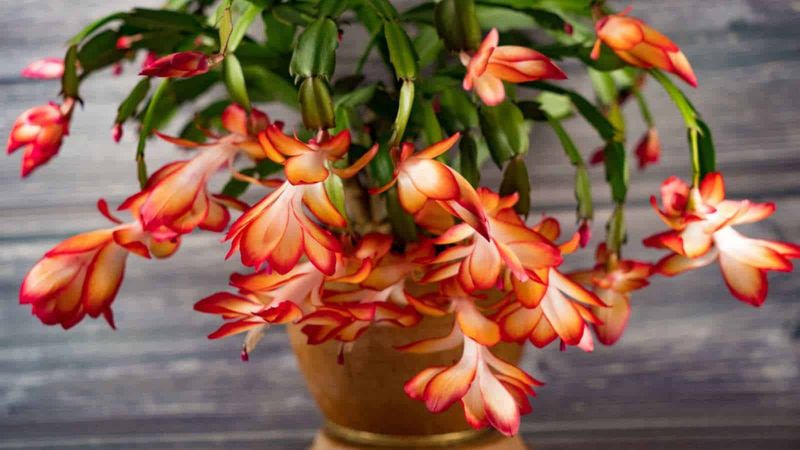
Tiny, bright green segments popping out from the stem tips mean spring has officially arrived for your Christmas cactus. Those fresh little pads are more than just pretty. They carry next winter’s flowers, because buds form at the tips of new growth.
Healthy, steady growth now leads to more blooms later. Consistent moisture gives the plant what it needs to build strong, full stems through spring and summer. A thirsty plant grows slowly, while a well-watered one fills out beautifully.
When you see new segments, go back to a regular watering routine. Water whenever the top inch of soil feels dry, and keep pouring until water drains from the bottom of the pot. That deep soak helps the whole root system, not just the top layer.
Feeding can start again, too. Use a balanced houseplant fertilizer at half strength about once a month through summer. Stop feeding in late summer so the plant can shift its focus to forming buds in fall.
A summer outdoors often gives your cactus a real boost. Once nights stay above about 50°F, move it to a shady spot, like under a tree or on a covered porch. Avoid hot afternoon sun, which can bleach and burn the segments.
Michigan springs can be slow to warm, but growth starts as days lengthen. Many gardeners wait until late May or early June before moving plants outside for good. A happy summer in fresh air often leads to a bigger, brighter bloom when winter snow returns.