The Citrus Disease So Serious California May Force You To Remove Your Tree
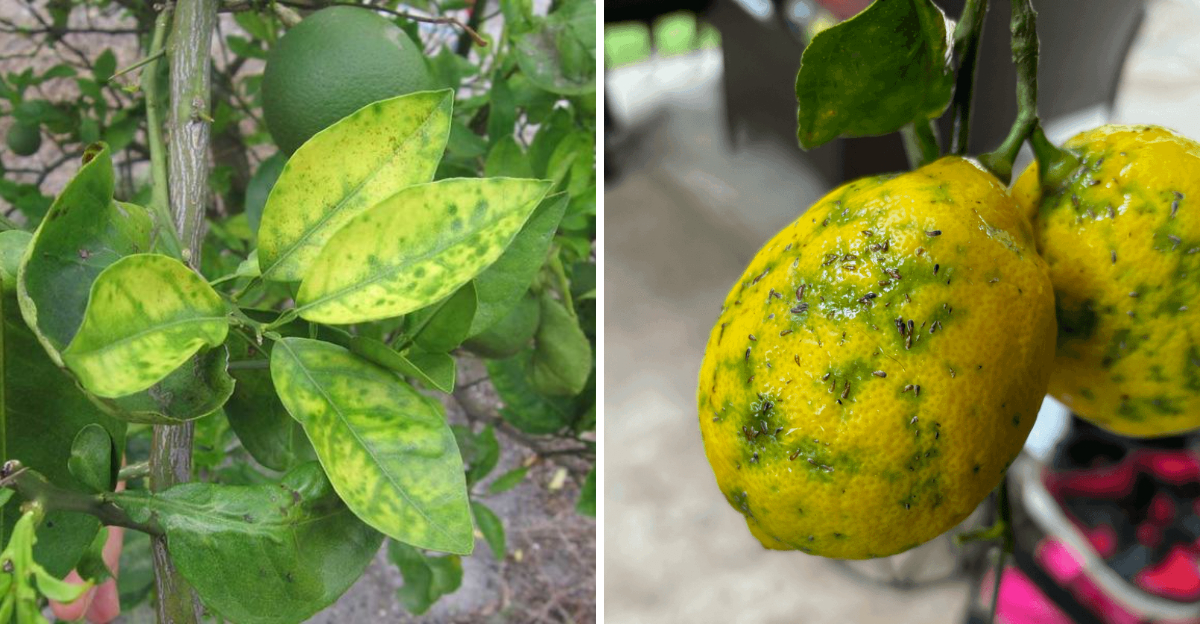
That lemon tree looked fine all summer.
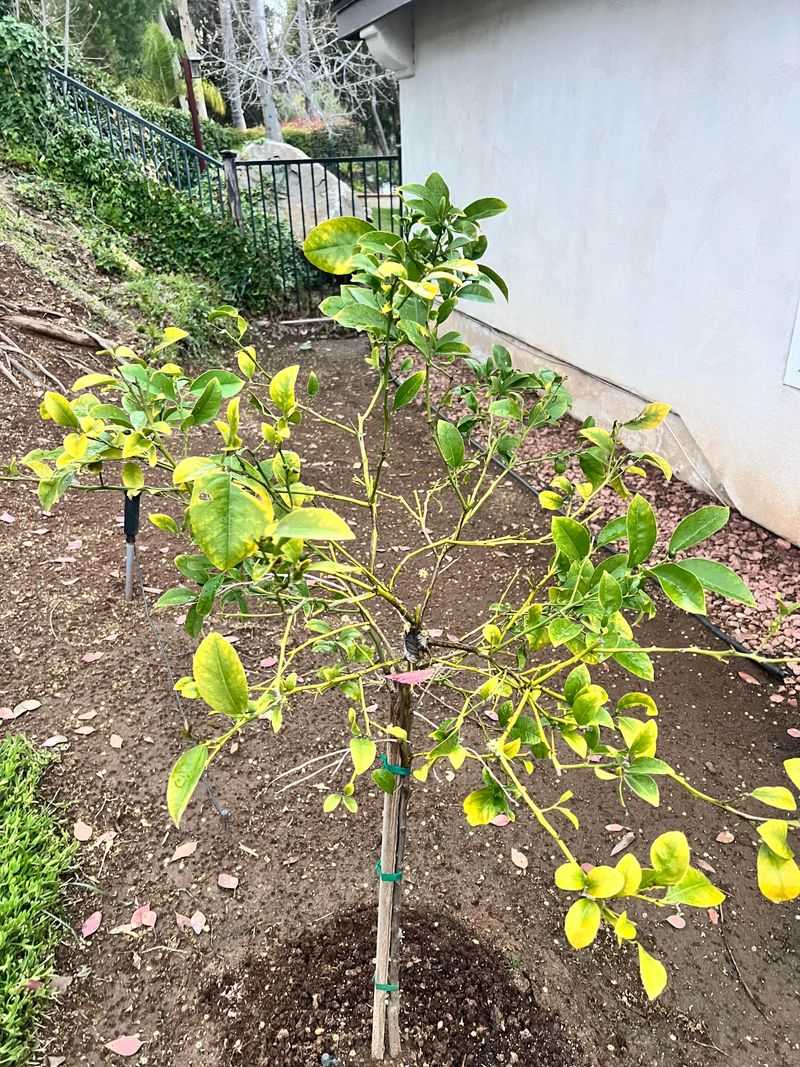
Then one morning the leaves have gone blotchy. Yellow patches, uneven, showing up on one side of a leaf while the other side stays green.
The fruit seems off too. Smaller, lopsided, and when you cut one open the taste is wrong.
Most gardeners reach for fertilizer at this point. It looks like a nutrient problem, and usually that’s exactly what it is.
Occasionally it isn’t.
Here’s what makes this worth understanding. California has one citrus disease serious enough that a positive test triggers mandatory tree removal, handled by state crews.
Not a recommendation. A requirement.
The reason comes down to what happens next if the tree stays, and the mechanism involves an insect roughly the size of an aphid.
There’s a specific detail on those leaves that separates the two situations.
Curious which one you’re looking at?
1. Meet Huanglongbing Citrus Greening Disease
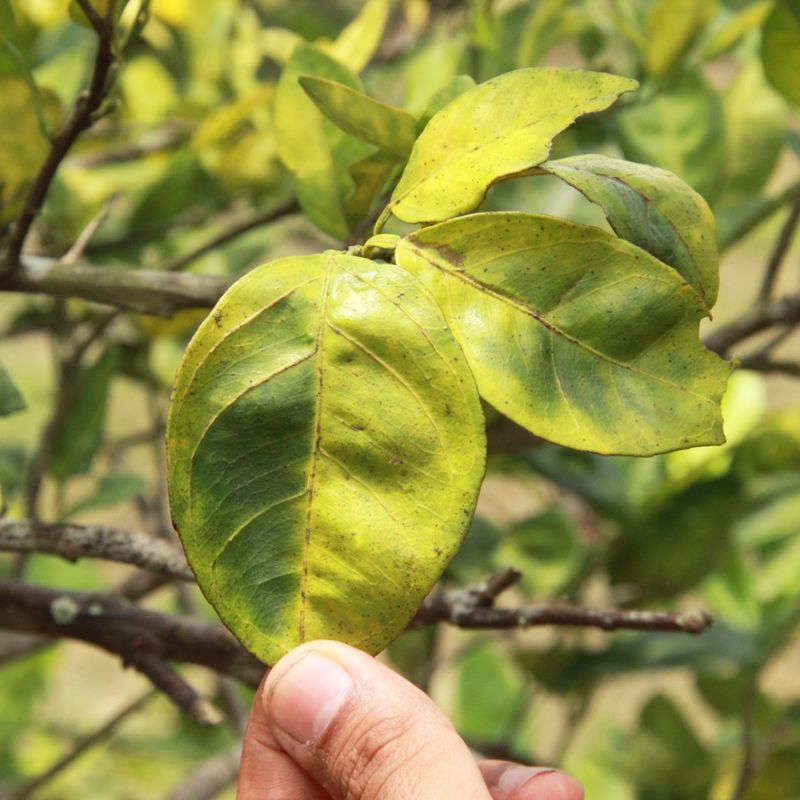
A backyard orange tree can look fine for months, then begin showing signs that don’t match ordinary gardening problems.
Huanglongbing, usually shortened to HLB and also called citrus greening, is treated by California agriculture officials as the most serious citrus disease facing the state.
HLB is linked to a bacterium living inside the tree’s phloem, which is the tissue moving food through the plant.
Once that bacterium is established, the tree gradually loses its ability to move nutrients where they need to go.
Leaves turn blotchy, fruit becomes misshapen and bitter, and the tree does not recover.
No cure currently exists after infection, which is why officials respond quickly when a tree tests positive.
HLB affects orange, lemon, lime, grapefruit, mandarin, and several close relatives including kumquat and calamondin.
The disease harms neither people nor pets, and handling or eating fruit from a suspect tree poses no health risk.
The concern is entirely about spread. Infected trees serve as a source for nearby citrus wherever the insect carrier is present.
HLB has devastated citrus industries in Florida and elsewhere, which is why California’s response looks aggressive by comparison.
Learning the name matters, since early reporting gives state crews a better chance to slow spread and protect both neighborhood trees and the state’s citrus industry.
2. A Tiny Psyllid Spreads The Infection
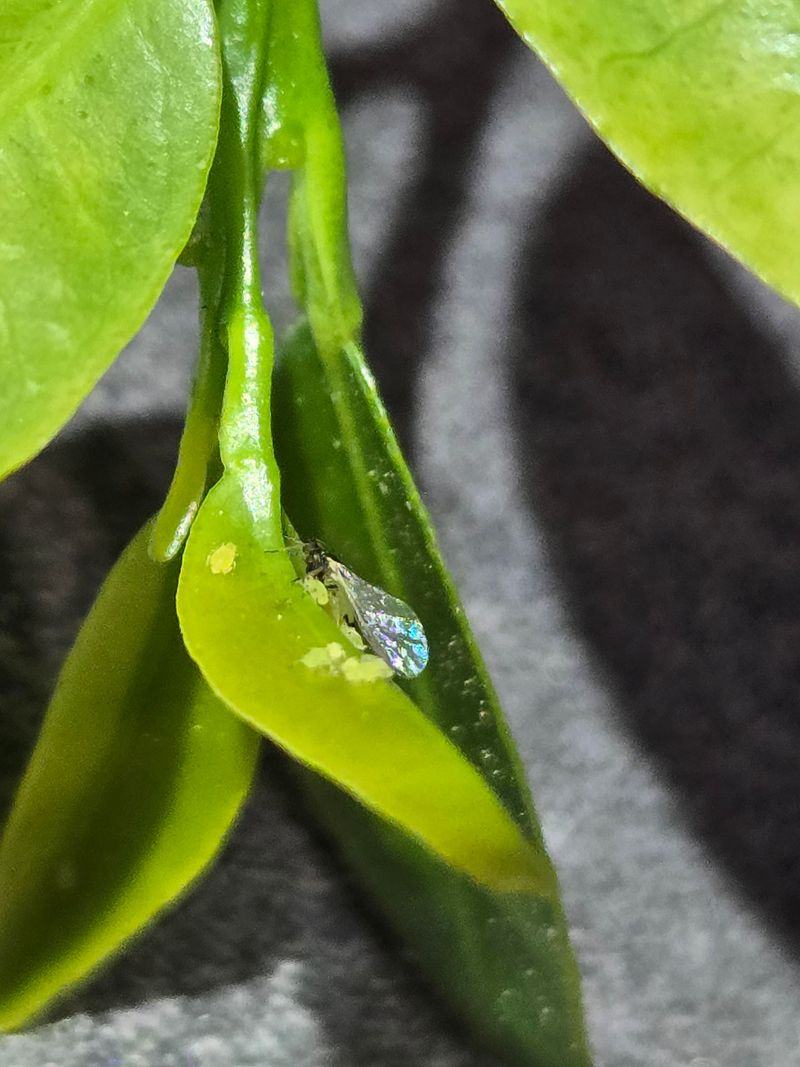
It surprises people that such a significant citrus problem travels with such a small insect.
The Asian citrus psyllid, usually called ACP, is the main carrier moving HLB from tree to tree.
The psyllid picks up the bacterium while feeding on an infected tree, then transmits it during later feeding.
These insects are tiny and their feeding habits make them effective at moving disease.
Adults sit at a distinctive angle on leaves and stems, roughly forty-five degrees, which is one of the easier identification cues.
Young psyllids, called nymphs, feed on tender new growth and produce waxy white tubules that look like small threads.
That’s why fresh leaf flush is the critical inspection period on any citrus tree.
Your California Garden Changes Every Week. Your Plan Should Too.
Gardening in California changes quickly throughout the season. Every Friday you’ll receive a simple weekly plan showing exactly what to plant, prune, fertilize, harvest, and protect so you never miss the right timing.
Trees cannot contract HLB from poor soil, cold weather, or overwatering. The bacterium requires the insect to move between hosts.
Avoid transporting citrus plant material between areas unless state rules permit it.
Clipped branches, nursery stock, and home propagation all increase risk where psyllids are active.
Home grafting and sharing budwood deserve particular caution, since infected material spreads the disease directly without any insect involved.
Checking your tree regularly, watching for insects on new growth, and following current quarantine guidance all reduce the chance of spreading trouble past your own yard.
3. Mottled Yellow Leaves Signal Trouble
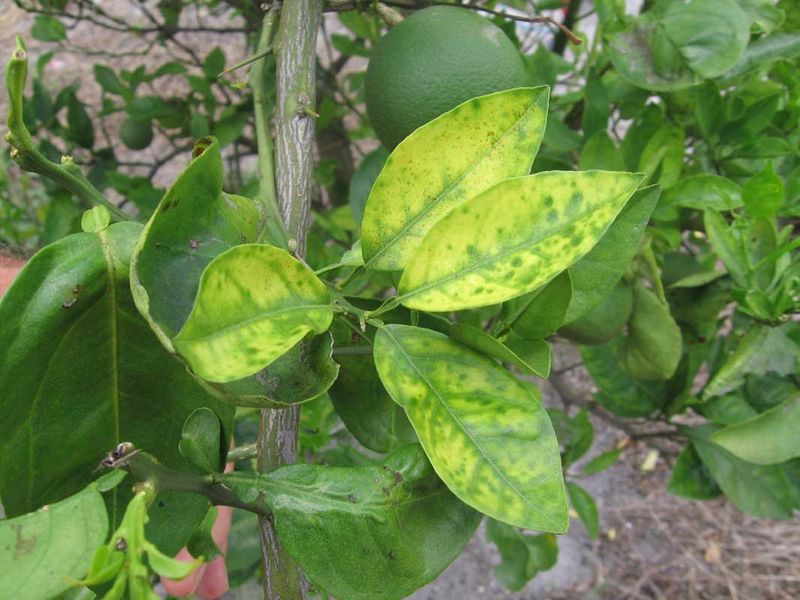
Many gardeners first notice something wrong when green leaves develop yellow patches that seem uneven and hard to explain.
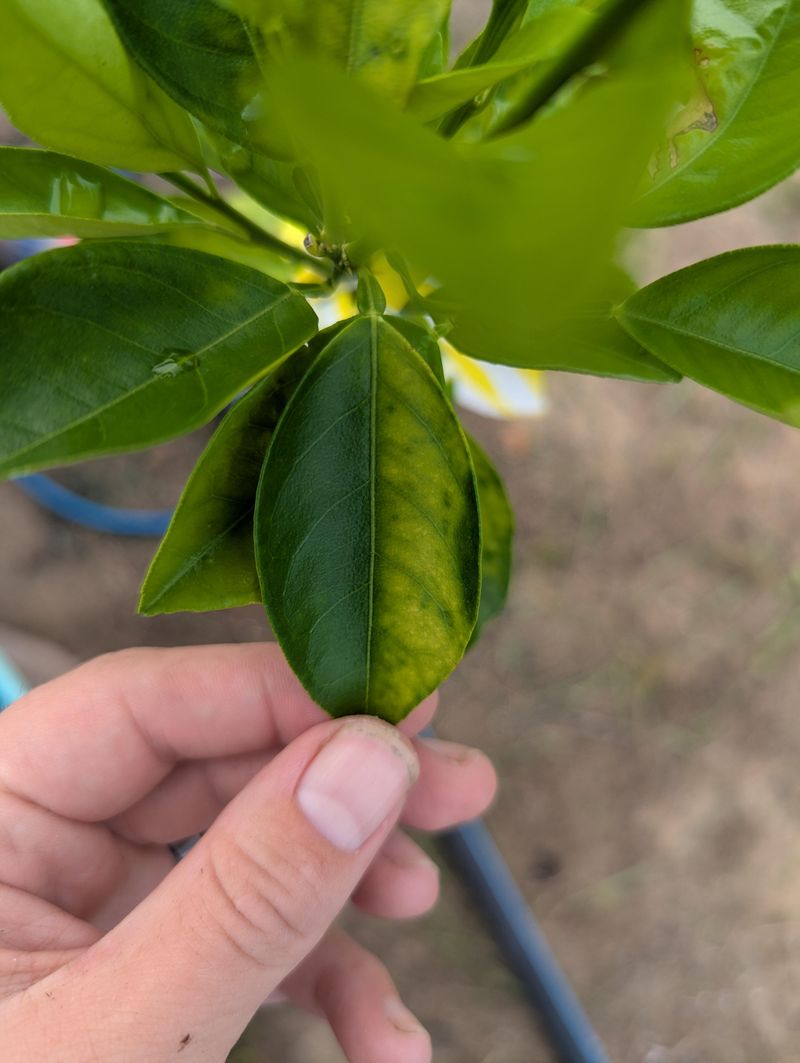
One of the better-known HLB indicators is asymmetrical mottling, where the yellow and green pattern doesn’t mirror across the leaf’s midrib.
That blotchy uneven look helps separate HLB symptoms from a simple nutrient shortage.
Common nutrition problems generally produce discoloration that appears balanced from one side of the midrib to the other.
Zinc deficiency, for instance, creates yellowing between veins that looks symmetrical rather than random.
HLB tends toward a patchy irregular pattern instead, which is the detail worth learning.
That distinction matters because people spend valuable time treating fertilizer issues while an infected tree continues declining.
Leaf symptoms alone don’t confirm HLB, since citrus reacts to weather stress, root problems, and other pests with similar signs.
Unusual mottling still deserves attention, particularly alongside odd fruit, poor growth, or psyllid activity nearby.
Check several branches in bright daylight, including older leaves and new growth.
Comparing leaves from different parts of the tree beats focusing on one twig.
Yellowing veins are another reported sign, along with twig dieback and overall thinning of the canopy.
If the blotchy yellowing looks lopsided and irregular, skip home guesswork and contact official reporting channels.
4. Bitter Lopsided Fruit Is Another Clue
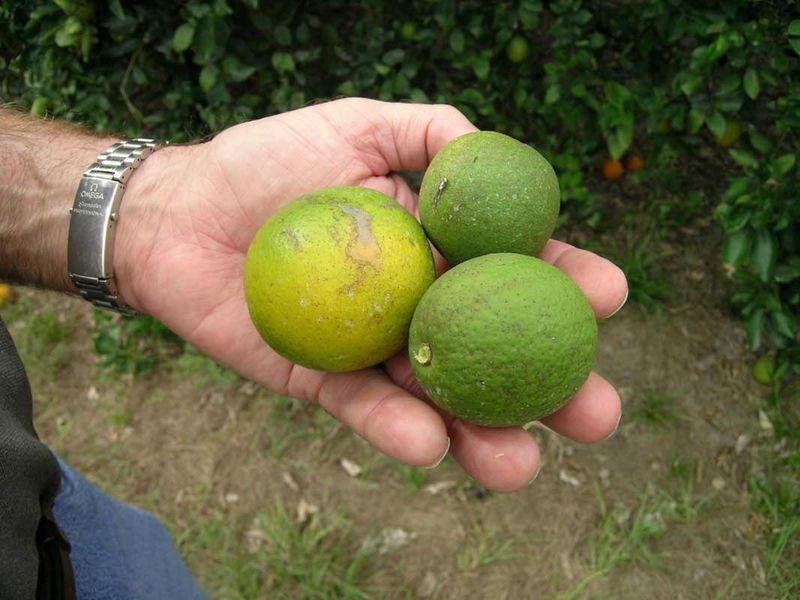
Fruit often tells the story more clearly than leaves do.
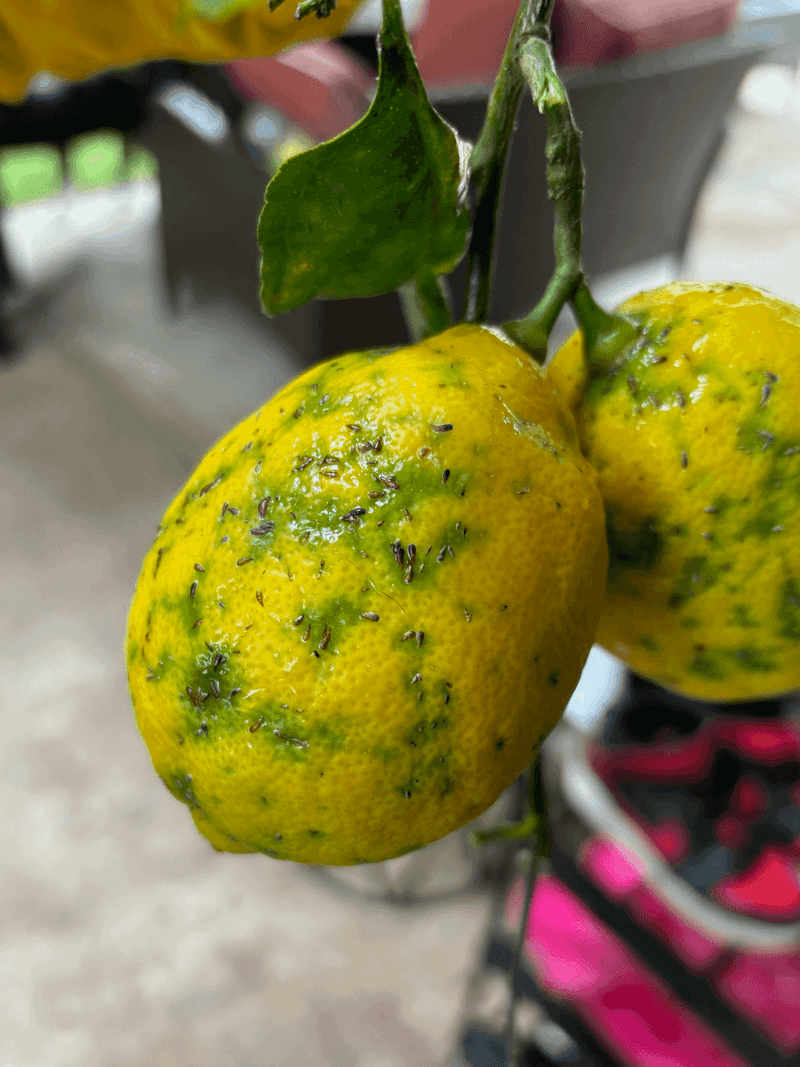
A citrus tree with HLB may produce fruit that looks lopsided, smaller than normal, poorly colored, or unevenly ripened.
The taste gets described as bitter or off, which is particularly disheartening for anyone expecting a normal harvest.
Internal changes can be equally noticeable.
Some infected citrus shows color inversion, with the stem end staying green while the blossom end colors first.
That pattern is essentially backwards from normal ripening, which is why it stands out.
Seeds may be aborted or dark, and fruit often holds less juice than expected.
Excessive fruit drop is another commonly reported symptom, with trees losing fruit before it matures.
Not every ugly lemon indicates HLB. Heat stress, inconsistent watering, and various pests all affect size and shape.
What raises suspicion is the combination of fruit problems with blotchy asymmetric leaf mottling and psyllids in the area.
If you cut open fruit and find bitterness, uneven ripening, or an odd appearance, keep that fruit and any clippings on your property.
Clear photos of both exterior and interior help when reporting.
Acting promptly gives experts a better chance to evaluate whether official testing is warranted.
5. No Cure Exists Once Trees Are Infected
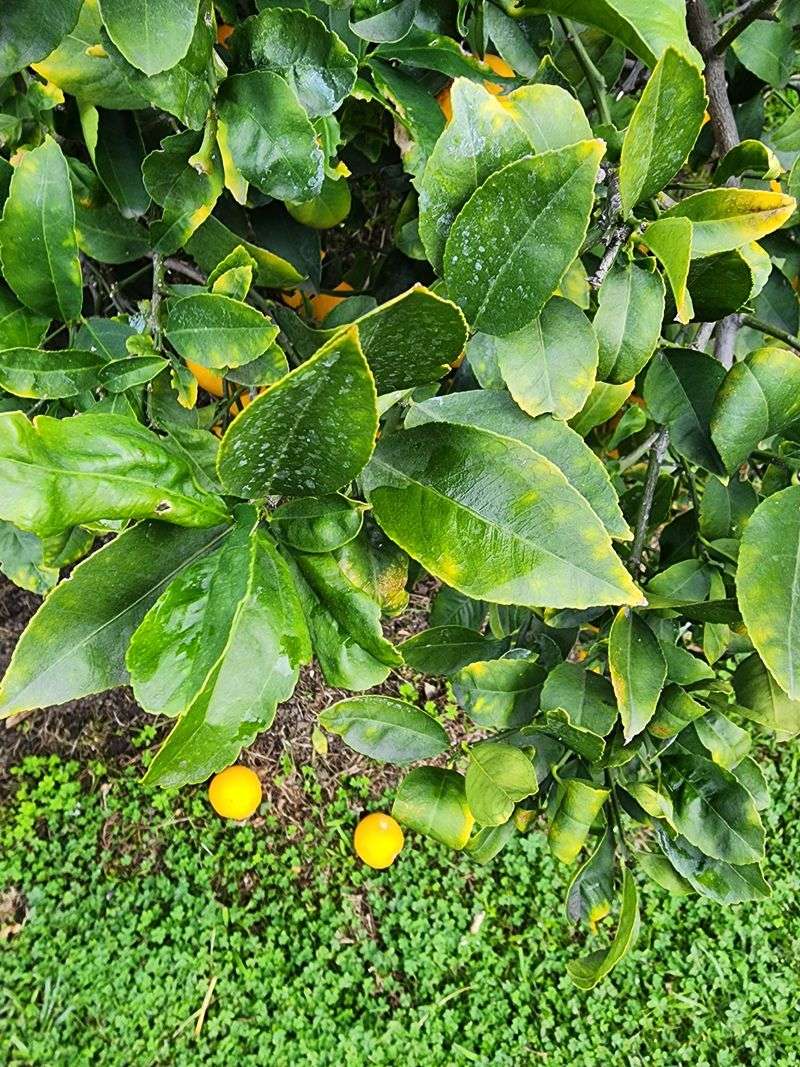
Here’s the part no citrus owner wants to hear: once a tree is infected with HLB, no cure currently exists that restores it to health.
Infected trees will not recover, which is why agencies focus on finding cases early and removing confirmed sources.
That means homemade sprays, additional fertilizer, pruning, deep watering, and internet remedies cannot address HLB.
Some of those steps improve general tree care or help manage psyllids without removing the bacterium.
Months spent on random treatments give psyllids more time to spread the problem to neighboring trees.
Nutritional programs have been tried extensively in Florida, and while they may extend a tree’s productive life somewhat, they do not eliminate infection.
Testing matters because symptoms overlap with other problems.
California’s program relies on official sampling and laboratory diagnosis, including PCR testing, to confirm HLB.
A positive lab result differs entirely from a gardener’s suspicion, and that distinction protects homeowners from unnecessary alarm while ensuring genuine cases get handled.
Infected trees can also test negative early on, since the bacterium takes time to distribute through the tree, which is why repeat sampling sometimes occurs.
The practical takeaway stays simple. A suspicious tree calls for reporting and inspection rather than miracle cures.
Good care still matters for healthy trees, especially psyllid control.
6. State Crews May Remove Infected Trees
For many homeowners, the difficult part is learning that removal may not be a choice.
Under California’s HLB program, a citrus tree confirmed positive through PCR testing must be removed.
Crews perform that removal at no cost to the property owner.
The rule exists because one confirmed tree becomes an ongoing source of infection whenever psyllids feed and move on.
Quick removal protects neighboring yards, community gardens, and commercial groves.
That’s cold comfort when the tree has been part of a landscape for decades, and the reasoning is about limiting spread while cases remain manageable.
The process typically begins with official contact after sampling and lab confirmation.
Homeowners receive information about the result, the reason removal is required, and what crews will do on the property.
Ask for identification and direct information from CDFA rather than relying on neighborhood rumors or social media.
Replanting rules vary by location and quarantine status, so asking about that during the process saves confusion later.
Quarantine areas and response protocols change over time, so checking the CDFA HLB program page or California Citrus Threat gives you current maps and instructions.
Don’t remove a suspect tree yourself before getting guidance, since proper handling is part of the coordinated response.
7. Report Symptoms To Protect Your Neighbors
One call or online report makes a genuine difference with HLB.
Blotchy uneven yellow leaves, strange fruit, or signs of Asian citrus psyllids all warrant reporting through official channels rather than guessing alone.
Prompt reporting gives trained staff a chance to assess the tree and determine whether sampling is needed.
The disease harms neither humans nor pets, so panic serves no purpose.
Spread to nearby citrus is the actual concern.
A single unreported infection can put backyard trees across a whole block at risk once psyllids move between properties.
Next steps are straightforward. Take clear photos of leaves, fruit, and any insects you find.
Keep fruit, clippings, and potted citrus on your property unless current guidance permits movement.
Check the CDFA HLB page or California Citrus Threat for current reporting links and quarantine boundaries, since those change.
Buying citrus only from licensed California nurseries matters too, since uncertified trees have introduced problems repeatedly.
Psyllid control on healthy trees helps as well, and local guidance covers current recommendations for homeowners.
Reporting feels like inviting trouble onto your property. It’s closer to protecting every citrus tree within a few blocks, including the ones you never think about.
8. Protect Healthy Trees Before Problems Start
Prevention is where homeowners have actual leverage, since infection offers none.
Inspection is the foundation. Check your citrus monthly, and more often during flush periods when tender new growth appears.
Psyllids concentrate on that new growth, so spring and fall flushes deserve the closest attention.
Look for adults angled on stems, nymphs on young leaves, and the waxy white tubules they produce.
A hand lens helps considerably, since these insects are genuinely small.
Timing your inspections to flush cycles matters more than checking randomly, because that’s when psyllid populations build.
Trees can be managed to flush less frequently, which reduces the window psyllids have to establish.
Avoiding heavy nitrogen and excessive pruning both help there, since both push new growth.
Beneficial insects contribute too. Tamarixia wasps have been released across California specifically to attack psyllid nymphs, and lady beetles and lacewings feed on them as well.
Skipping broad-spectrum insecticides preserves those allies.
Buy trees only from licensed California nurseries, and avoid accepting citrus plants or budwood from anyone outside official channels.
That single habit prevents more spread than any spray program.
Ants deserve mention, since they protect psyllids from predators in exchange for honeydew, so ant control on citrus indirectly helps.
None of this cures HLB. It reduces the odds your tree ever encounters it.