The Compact Native Ohio Shrub That Works Better Than Boxwood Near Foundations
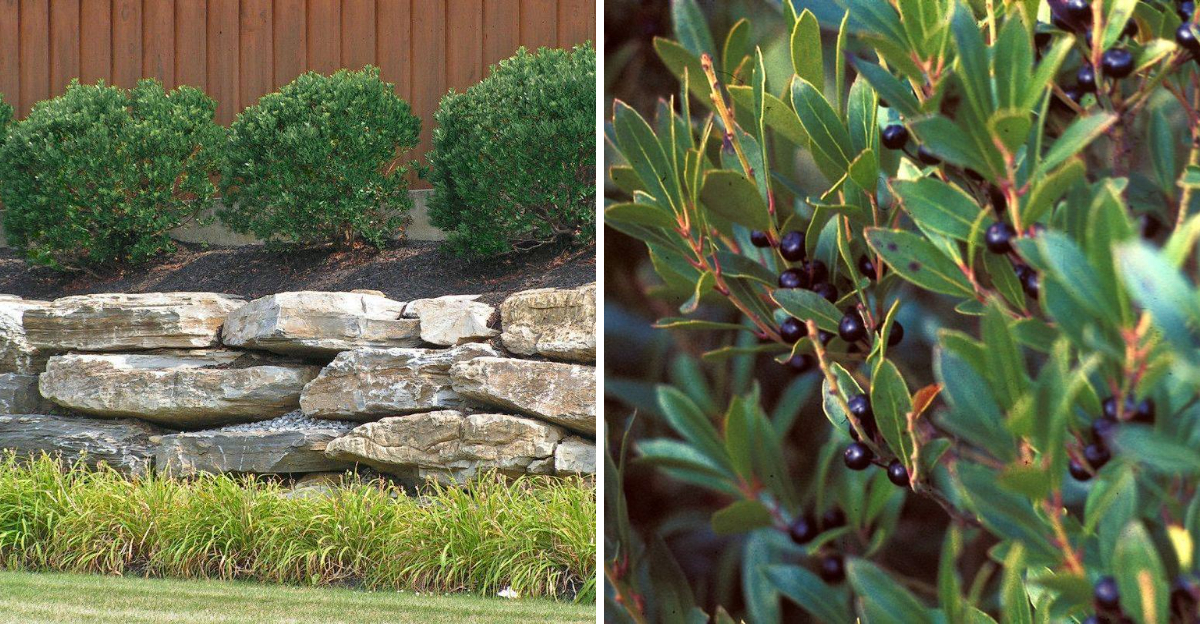
Boxwood has been the default foundation shrub in Ohio yards for decades, and it is not hard to understand why. Tidy, evergreen, and easy to shape into whatever form a foundation bed demands.
But boxwood in Ohio comes with a growing list of problems. Disease pressure, winter damage, and a maintenance routine that adds up faster than most homeowners bargain for when they first plant it.
There is a compact native shrub that fits foundation beds just as naturally and holds its own through Ohio winters. It also belongs in this landscape in a way boxwood never quite does.
It does not get the same shelf space at garden centers. That has more to do with what nurseries have always stocked than with how the plant actually performs.
For foundation beds where boxwood keeps disappointing, this native deserves a serious look
1. Choose Compact Inkberry For A Native Boxwood Look
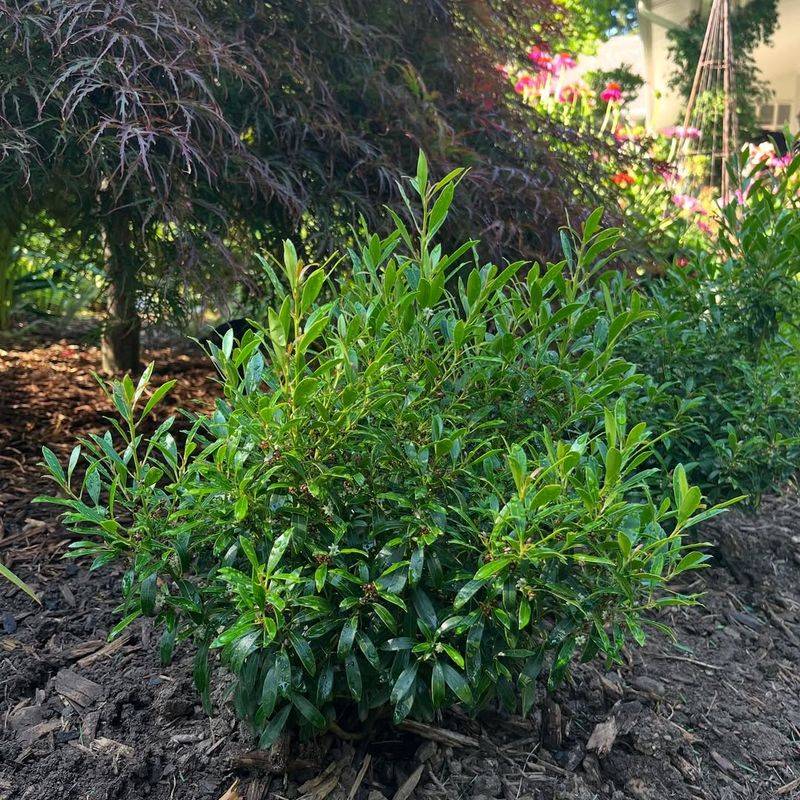
A foundation bed can look tidy from the street and still feel like the same old green hedge up close. Compact inkberry holly, Ilex glabra, gives you a way to break that pattern without sacrificing the clean evergreen look that foundation beds rely on.
Its small, glossy, dark green leaves create a polished appearance that reads as structured from a distance.
The key difference from boxwood is the feel. Inkberry has a softer, more relaxed shape that does not demand constant shearing to look intentional.
It fits naturally into a mixed planting or works as a repeated anchor without looking like a clipped hedge from the 1990s.
The comparison to boxwood is not a perfect one. Inkberry will not mimic the tight boxy form that formal landscapes rely on.
But for gardeners who want evergreen presence near the house without the rigidity, compact inkberry offers a genuinely different look. It is native to this region, which means it is already adapted to local soils and seasonal patterns.
That regional fit is part of what makes it worth considering for foundation beds across the state.
2. Get Evergreen Structure Without Another Boxwood Row
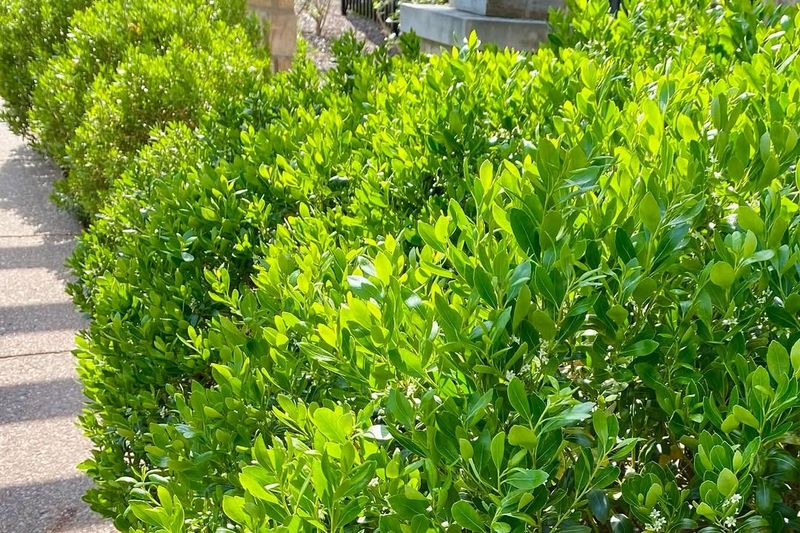
Foundation beds do a specific job. They connect the house to the ground, soften hard edges near windows and porches, and give the yard a finished look through every season.
Without evergreen structure, those beds can go bare and flat from late fall through early spring.
Compact inkberry holds its dark green leaves through winter, which means it keeps doing that structural work even when nearby perennials have gone dormant. Near a front porch or along a walkway, that consistency matters.
Visitors and neighbors see the house year-round, not just during peak bloom season.
The appeal here is not just that inkberry is native. It is that it performs a real function in the landscape.
Boxwood has long filled this role, and it does it well in the right conditions. But planting another identical row of boxwood when other options exist is a habit worth questioning.
Compact inkberry can provide similar visual bones with a slightly looser, more naturalistic quality. It does not look wild or unkempt.
Your Ohio Garden Changes Every Week. Your Plan Should Too.
Gardening in Ohio changes quickly throughout the season. Every Friday you’ll receive a simple weekly plan showing exactly what to plant, prune, fertilize, harvest, and protect so you never miss the right timing.
It looks settled and purposeful, which is exactly what a well-planned foundation bed should feel like throughout the year.
3. Use Glossy Leaves To Keep Foundations Looking Polished
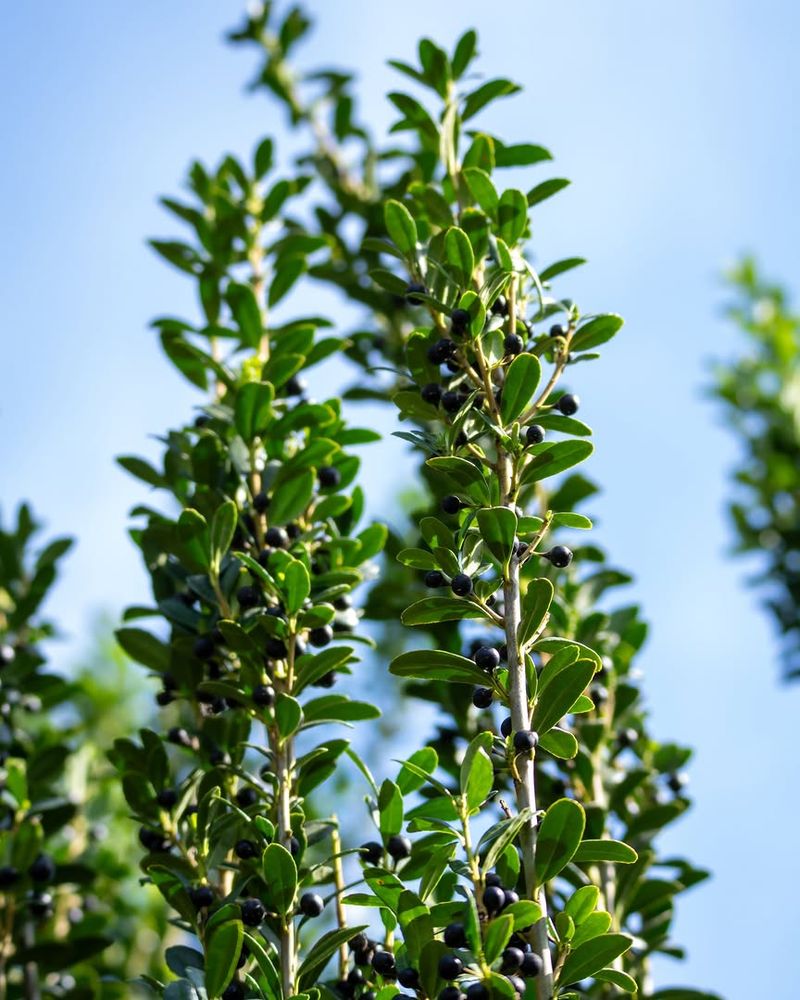
Foliage does most of the visual work in an Ohio foundation bed. Flowers come and go, but leaves are what you see every single day.
Inkberry earns its place near the house largely because of those leaves. They are small, oval, and have a natural shine that catches light without looking artificial.
That glossy surface gives the planting a finished quality through spring, summer, and fall. Even in winter, when the rest of the yard turns gray and brown, the leaves stay dark green and reflective.
Near a light-colored house, that contrast can make the whole front of the home look more intentional.
The look is different from boxwood in a meaningful way. Boxwood leaves are smaller and the texture is denser, especially in clipped forms.
Inkberry has a slightly airier quality, which makes it feel less like a formal hedge and more like a thoughtful plant choice. For gardeners who want their foundation beds to look cared for without looking stiff, that distinction matters.
The glossy foliage holds up well through seasonal stress and does not bronze or discolor the way some evergreens do during cold snaps in this state.
4. Pick Compact Cultivars That Stay Neat Near The House
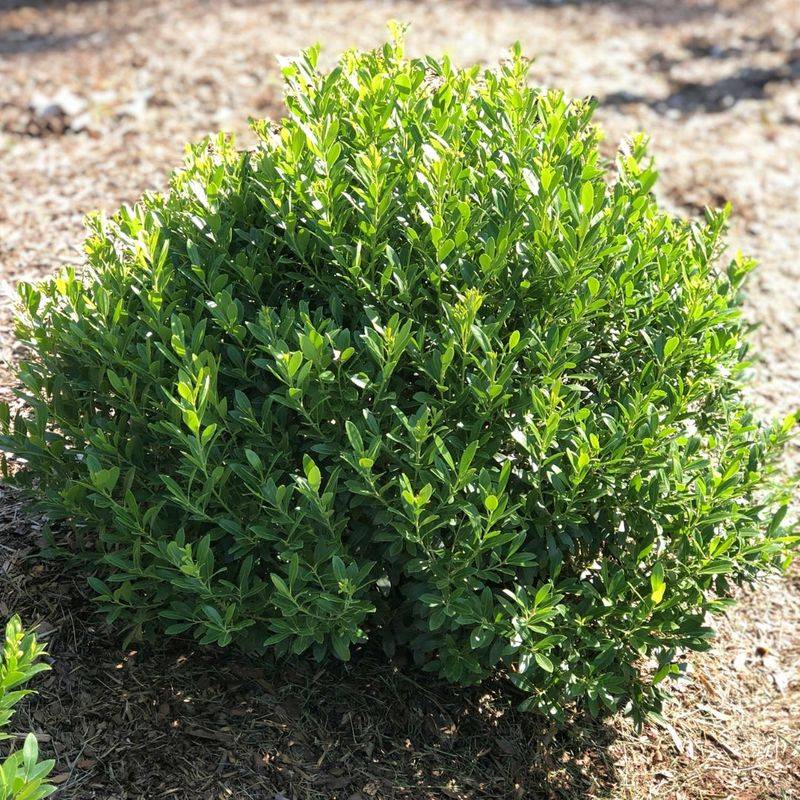
Stopping at the nursery and grabbing whatever inkberry is on the shelf can lead to a planting problem a few years down the road. The straight species of Ilex glabra can reach six to eight feet tall and spread just as wide.
That size works in a rain garden or a naturalized area, but it can overwhelm a foundation bed near a window or porch.
Compact cultivars were developed specifically to address this. Selections like Shamrock and Strongbox are often mentioned in horticultural references as more restrained options, typically staying in the three to four foot range.
Always check the mature height and width listed on the plant tag before buying, because cultivar behavior can vary by region and growing conditions.
Reading the tag takes about thirty seconds and can save years of frustration. A shrub that outgrows its space will block windows and crowd walkways.
It will also require heavy pruning that stresses the plant and defeats the purpose of choosing a naturally tidy form. Compact cultivars are not just smaller versions of the species.
They are selections chosen for their ability to stay proportional in the kinds of tight, structured spaces that foundation beds typically offer.
5. Give Inkberry Moist Acidic Soil For Stronger Growth
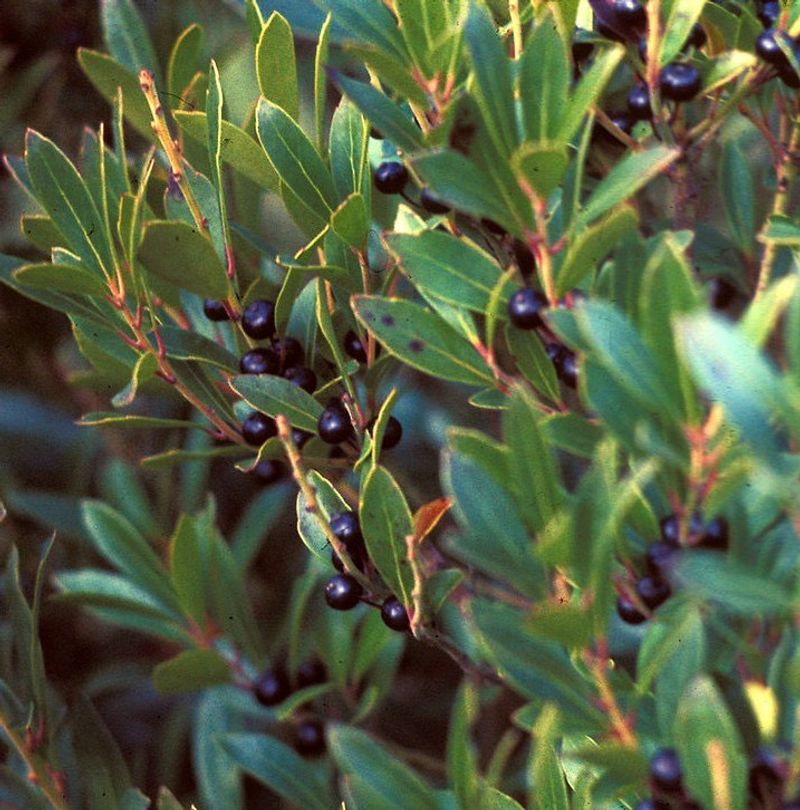
Soil conditions make or break a foundation planting. Inkberry naturally grows in moist, acidic soils across its native range, which includes wetland edges and low-lying woodland areas throughout the eastern United States.
That background tells you a lot about what it needs to perform well near a house.
Moist, well-drained soil with a slightly acidic pH is the target. Inkberry is more tolerant of wet conditions than many foundation shrubs, which can be a real advantage near downspouts or in low spots that collect water after rain.
It does not want to sit in standing water, but it handles periodic moisture far better than boxwood typically does.
Before planting, it helps to test the soil pH if you are unsure. Many soils in Ohio tend toward neutral or slightly acidic, which can work in inkberry’s favor.
If the soil is compacted or low in organic matter, working in compost before planting will improve drainage and feed the root zone. Matching the shrub to conditions that already exist near your house is a smarter strategy than fighting the site for years.
Give inkberry what it naturally prefers, and it will settle in and grow steadily.
6. Avoid Dry Alkaline Spots That Stress The Shrub
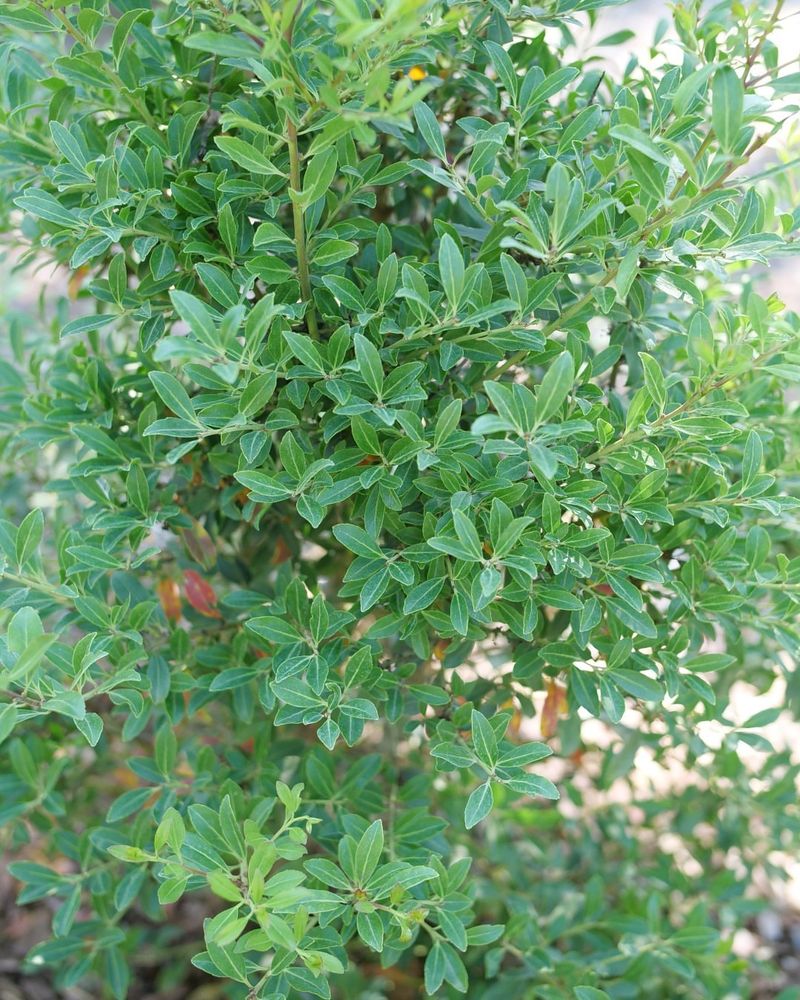
Not every spot near a house is a good spot for inkberry. Some foundation beds are genuinely difficult places to grow anything well.
Concrete foundations, sidewalks, and driveways can leach lime into nearby soil over time, raising the pH and creating alkaline conditions that stress acid-loving shrubs.
Reflected heat from siding or pavement can also dry out the root zone faster than rainfall can replenish it. Spots on the south or west side of the house, especially those backed by a light-colored wall, can get surprisingly harsh in summer.
Inkberry in those conditions may struggle to establish and could show yellowing leaves, a sign that it is not getting what it needs from the soil.
If the site has compacted soil, poor drainage, or a history of struggling plants, take that as useful information before buying anything.
Improving the soil with compost, watering consistently during the first two seasons, and mulching the root zone can help in marginal spots.
But if conditions are genuinely wrong, choosing a different shrub is not a failure. It is just smart planting.
Inkberry rewards gardeners who match it to the right site, not those who force it into conditions that work against it.
7. Check Mature Size Before Planting Near Windows
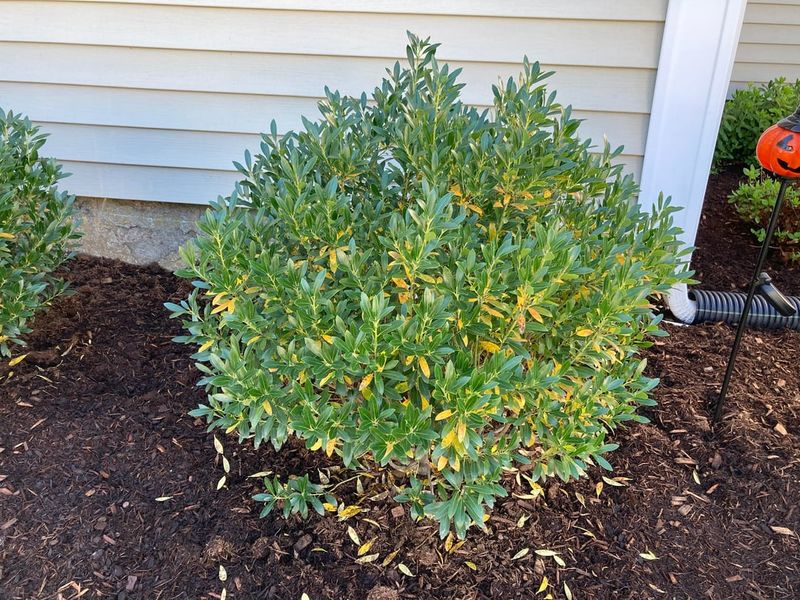
Planting too close to a window is one of the most common mistakes in foundation beds. A shrub that looks modest in a one-gallon container can double or triple in size within five years.
Once it starts blocking light or pressing against siding, the options are either to prune it constantly or to remove it entirely.
Compact inkberry cultivars are more forgiving than the straight species, but they still need adequate room. Before buying, measure the width of the space from the house wall to the edge of the bed.
Then compare that measurement to the mature spread listed on the plant tag. Leave enough room so the shrub can reach its natural size without crowding the window or the neighboring plants.
Pruning can help guide shape and keep a shrub tidy, but it should not be a constant battle against the plant’s natural growth habit. A shrub that is routinely cut back hard to fit a space it was never meant to occupy looks stressed and uneven over time.
Choosing the right size from the start means less work and a healthier, more attractive planting for years ahead. Measure twice, plant once, and let the shrub do what it was selected to do.
8. Build A Softer Native Evergreen Foundation Planting
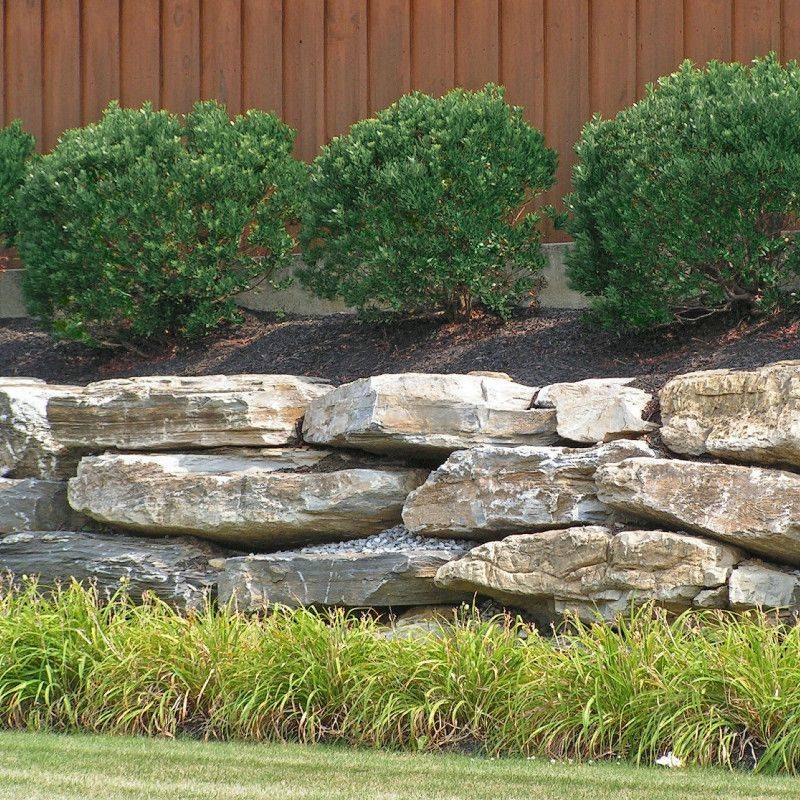
A foundation bed built around compact inkberry can look genuinely different from the standard clipped hedge, and in a good way. The shrub brings evergreen structure without the formality of boxwood.
Its native roots also give the planting a connection to the regional landscape that non-native hedges simply cannot offer.
Pairing inkberry with other site-appropriate natives can make the bed feel layered and intentional.
Native ferns, sedges, or low-growing perennials that tolerate similar moisture and light conditions can fill in around the base without competing heavily with the shrubs.
The goal is a planting that looks polished from the street and supports local wildlife at the same time.
Inkberry produces small black berries that birds tend to find attractive in fall and winter. That wildlife value is a quiet bonus that boxwood does not offer.
The planting still looks tidy and structured, but it is doing more ecological work than a clipped non-native hedge. For homeowners who want their front yard to feel cared for and regionally grounded, compact inkberry is a practical starting point.
It is not a magical fix for every foundation bed, but in the right conditions, it can anchor a planting that feels both polished and genuinely local.