The Cool-Season Seeding Window Illinois Lawns Get One Shot At Each Fall
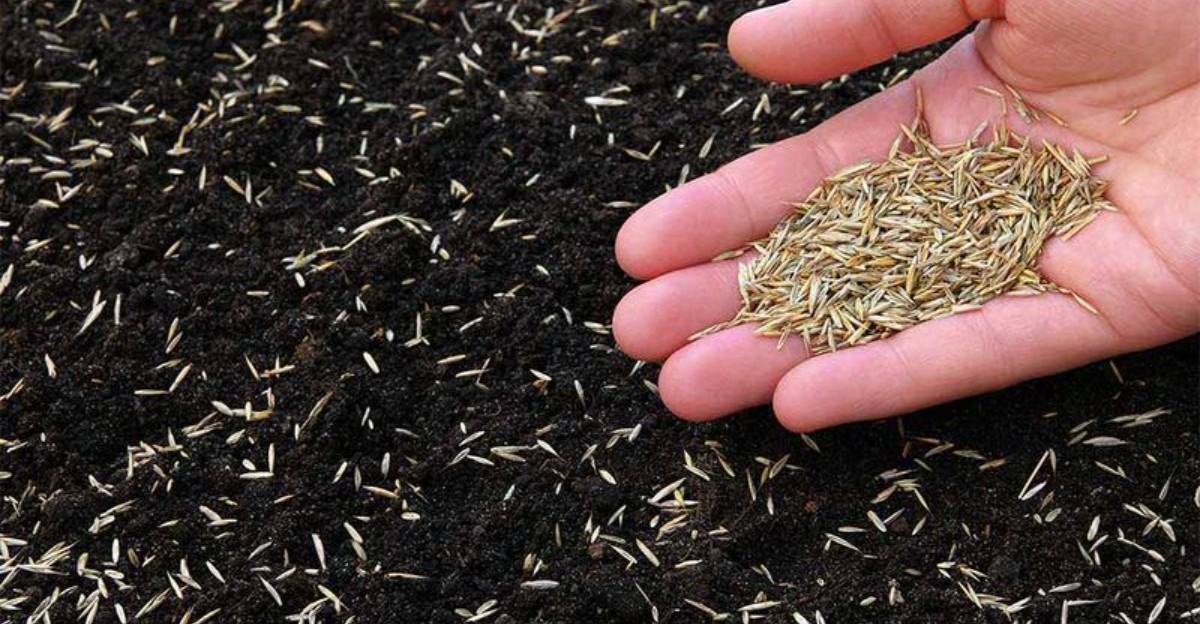
Something shifts underground across Illinois the moment the heat finally breaks, and your yard either responds or it doesn’t. Grass roots start pushing outward again, chasing moisture and warmth that summer stole from them for months.
Your soil temperature holds the real clue, dropping into a narrow stretch that won’t stick around long. Miss that stretch and every seed you scatter sits there doing nothing but waiting for a spring that never arrives the way you planned.
Illinois weather swings hard between seasons, so your margin for error shrinks faster than expected. Neighbors down the block seem to nail it year after year while you watch bare patches spread across your own lawn.
Timing separates a thick green lawn from a thin patchy mess by next spring, and there isn’t a redo button. You already know which side of that gamble you’d rather be on.
The Six-Week Stretch That Decides Everything
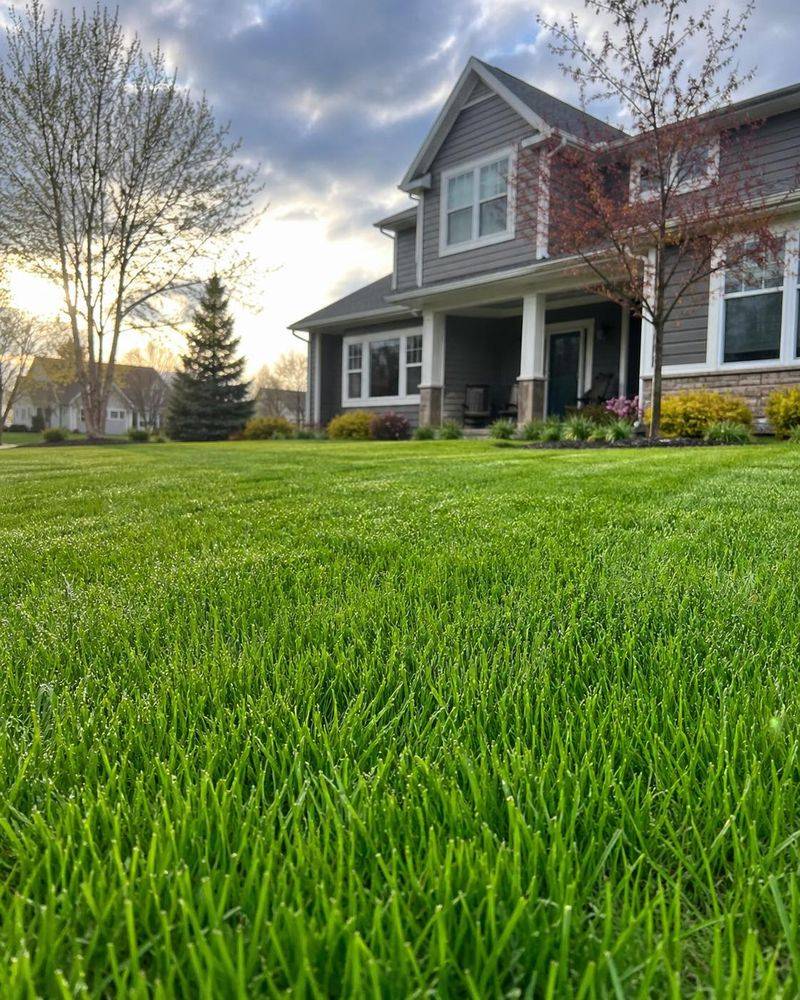
Late August through the middle of October hands Illinois lawns the best odds they will see all year. Soil still holds summer warmth, air temperatures ease into the sixties and seventies, and rainfall shows up more often than it did in July.
Cool-season grasses such as Kentucky bluegrass, tall fescue, and perennial ryegrass grow hardest when air sits between 60 and 75 degrees, and autumn delivers that range for weeks at a stretch instead of a few scattered days. Roots push downward while top growth slows, which is exactly the order you want.
Spring seeding sounds reasonable, and plenty of neighbors try it every April, but spring seedlings get roughly eight weeks before July heat rolls in while crabgrass sprouts right alongside them. Fall seedlings get the opposite arrangement, with cooling weather ahead and far less weed competition.
Exact timing shifts depending on where you live in the state, with northern counties near Rockford and the Chicago collar suburbs wanting seed down by roughly September 15. Central areas around Springfield and Bloomington can stretch into late September, while southern Illinois near Carbondale often has until the first week of October.
The reason the window shuts is straightforward, since new grass needs about six weeks of decent growing weather to build roots strong enough to handle winter heaving and repeated freeze cycles. Seed spread in November mostly sits and waits through the cold, and a good portion of it simply will not be there when April arrives.
Soil Temperature As The Real Calendar
Calendars can fool you. Some Septembers stay muggy well into October, others cool off during the first week, and your lawn pays attention to the ground rather than the number hanging on the wall.
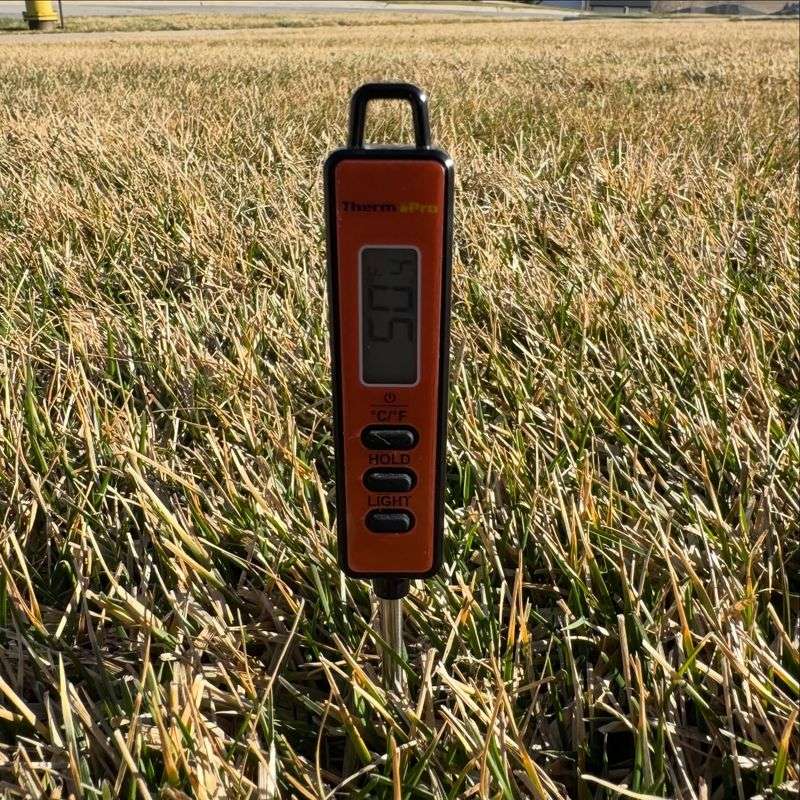
Soil temperature gives the honest signal, since cool-season seed germinates best when the top few inches sit between 50 and 65 degrees, measured early in the morning. Warmer than that and seedlings struggle, cooler and sprouting slows to a crawl.
A cheap probe thermometer from any garden center handles this in seconds, pushed about two inches down in one shaded spot and one sunny spot so you can average the two readings. Check three mornings in a row before committing, because a single cool snap does not prove the trend has turned.
Your Illinois Garden Changes Every Week. Your Plan Should Too.
Gardening in Illinois changes quickly throughout the season. Every Friday you’ll receive a simple weekly plan showing exactly what to plant, prune, fertilize, harvest, and protect so you never miss the right timing.
Illinois soil usually crosses that threshold during the first two weeks of September up north and closer to the last week of September downstate. Lake Michigan moderates conditions along the shoreline, so lawns in Evanston and Waukegan can run several days behind inland yards at the same latitude.
Tracking soil temperature also protects you from the opposite error, which is waiting too long, since once morning readings sit under 50 degrees and stay there, seed goes dormant rather than sprouting. Some of it may germinate the following spring, though the stand comes in thin and uneven.
The Illinois State Water Survey posts regional soil temperature readings online throughout the season. Bookmark that page in August and you can stop guessing entirely.
Ground Prep Before The Seed Ever Lands
Seed tossed onto hard, matted ground is basically an expensive bird buffet. Real contact with soil is what turns a bag of seed into an actual lawn, and that takes some sweat up front.
Begin by mowing shorter than usual, down around two inches, and bag the clippings so shorter blades let sunlight reach the soil surface and give seedlings a fair shot against established grass. Rake out matted debris while you are down there.
Thatch thicker than half an inch behaves like a doormat that seed cannot get past. A dethatching rake handles small yards fine, and a rental power rake earns its cost on anything over a few thousand square feet.
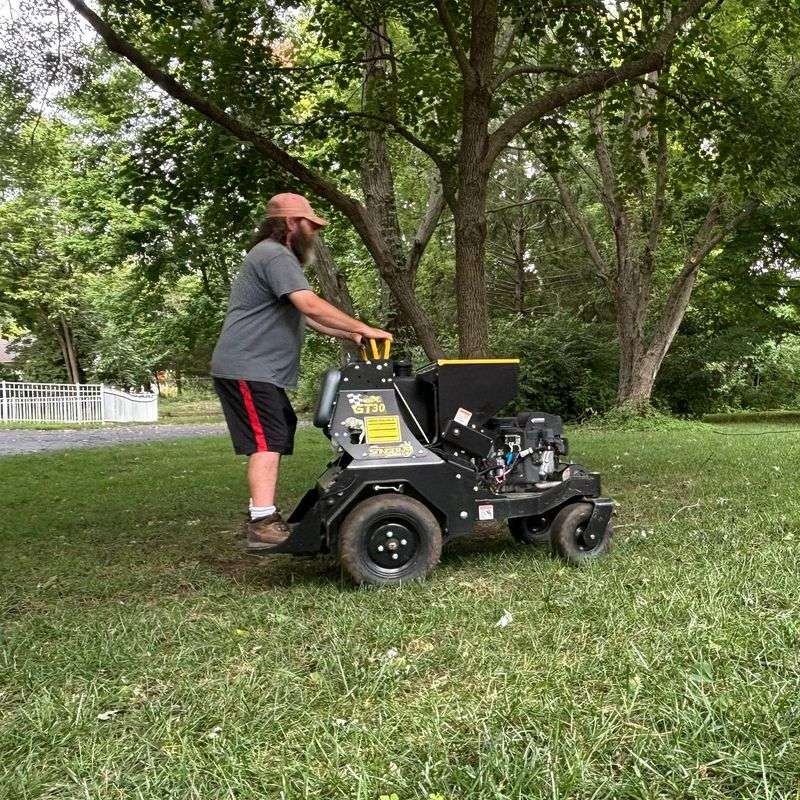
Core aeration is the other heavy hitter, especially in the dense clay soil common across central Illinois, and the machine pulls finger-sized plugs that leave thousands of small pockets where seed settles and roots spread out. Leave those plugs on the surface and let rain break them down over a couple of weeks.
Bare or compacted patches deserve extra attention, so loosen the top inch with a stiff rake, work in a thin layer of compost, and level the area before spreading seed. Compost holds moisture and gives young roots something soft to push through.
Skip mystery topsoil from unknown sources unless you enjoy pulling weeds. Bagged compost or screened blends cost more, but they arrive without a decade of buried weed seed sitting there waiting for its moment.
Seed Choice For Illinois Yards
Grass seed bags all look about the same on the store shelf, which is exactly how people end up hauling home the wrong one. Illinois lawns want cool-season blends, and what is inside the bag matters far more than the picture on the front.
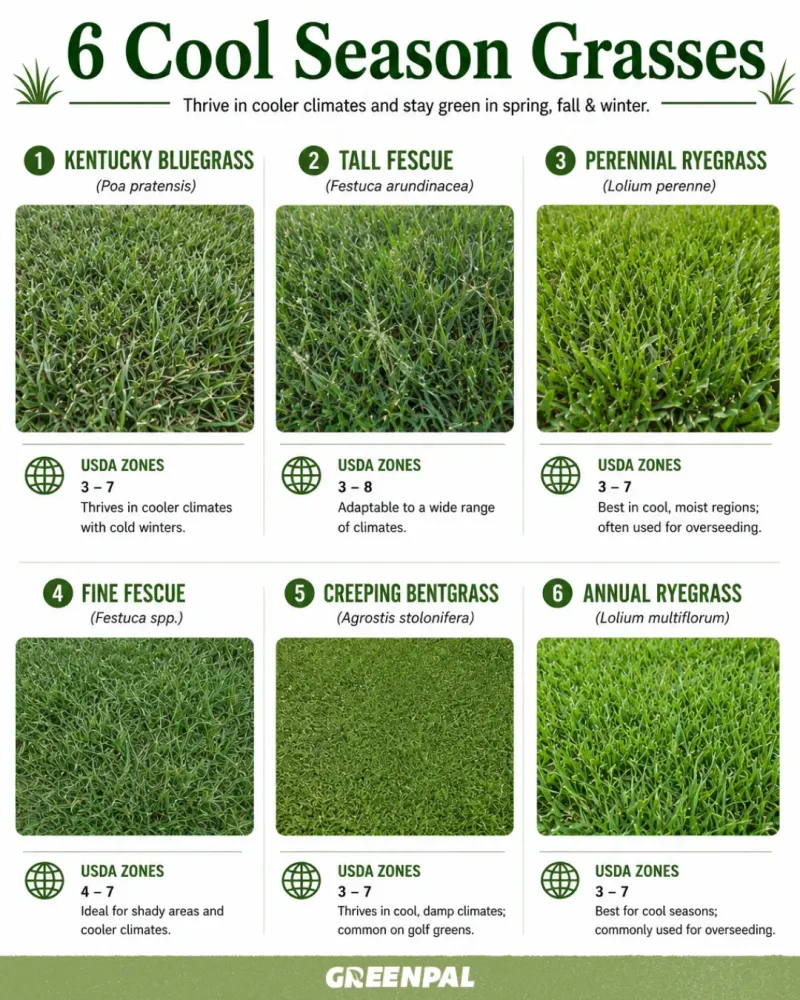
Kentucky bluegrass remains the classic choice here, spreading through underground stems and patching itself over time. The tradeoff is patience, since it takes two to four weeks to germinate and prefers plenty of sun.
Turf-type tall fescue has been quietly winning converts across central and southern parts of the state. Deep roots handle August drought and clay soil better than bluegrass, and modern varieties look far finer than the coarse pasture fescue older folks remember.
Perennial ryegrass sprouts in five to seven days, which makes it handy for quick cover on a bare slope, though loading up on too much of it crowds out the slower species you actually want long term. Keep it under twenty percent of any blend.
Fine fescues shine in the shade beneath maples and oaks where other grasses sulk. If the north side of your house has been thin for years, a shade mix built around creeping red fescue is worth trying.
Flip the bag over and read the analysis label. Anything listing more than half a percent weed seed belongs back on the shelf, and named cultivars tested by the National Turfgrass Evaluation Program beat generic species listings every time.
The Watering Mistake That Wastes Good Seed
Here is where most fall seeding projects quietly fall apart. Homeowners do everything else right, then water the way they would water established turf, and the seedlings dry out by day four.
Fresh seed has no root system yet, and it sits in the top quarter inch of soil, a thin layer that bakes dry within a couple of hours on a breezy 70-degree afternoon. One deep soaking per week does almost nothing for it.
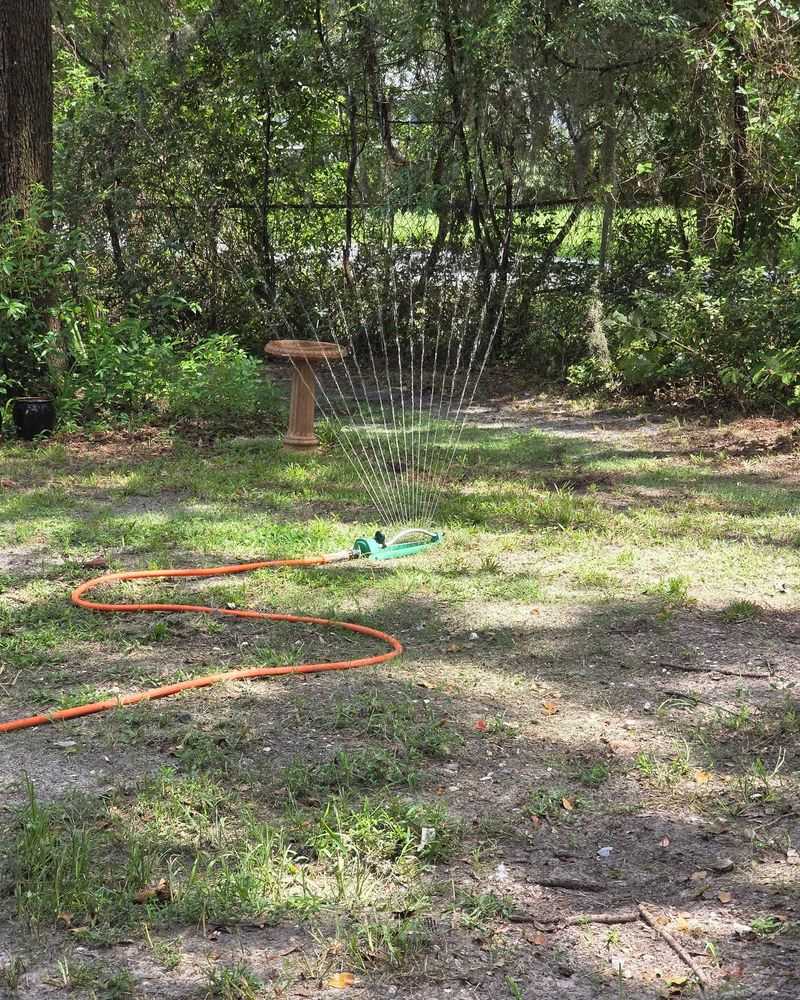
For the first two weeks, the rule is light and frequent, so mist the surface two or three times daily, just enough to keep it looking dark, roughly ten minutes per zone. Morning, midday, and late afternoon covers it nicely.
Once seedlings reach an inch tall, back off to once a day and run the water a little longer, then by the fourth week shift to every other day with deeper soakings that pull roots downward. That gradual change trains grass to reach rather than loaf near the surface.
Too much water creates its own headaches, since puddles float seed into low corners and soggy ground encourages damping off, a fungus that flattens seedlings before they get established. Soil should look damp, not shiny.
Autumn rain in Illinois helps plenty, though it rarely arrives on your schedule. A basic hose timer covers that midday cycle without much cost, and it is the one everybody skips because they are stuck at work.
Starter Fertilizer And Fall Feeding
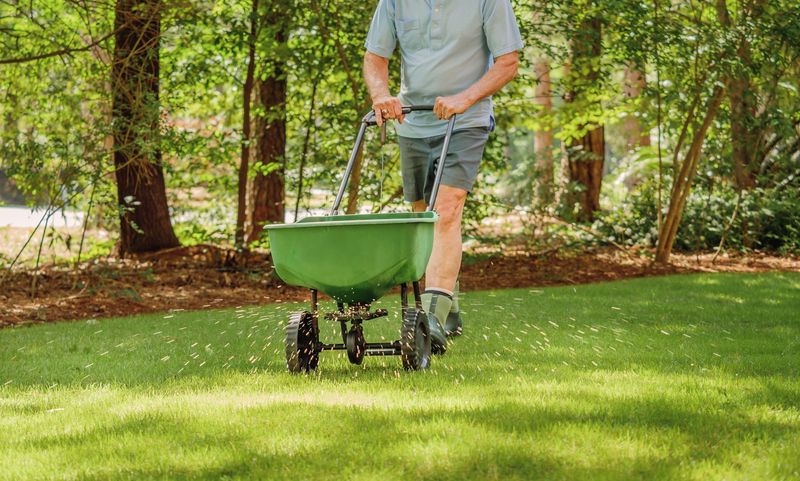
Young grass eats differently than mature turf does. A starter fertilizer, heavier on phosphorus, gives seedlings the fuel to build root mass before the ground cools down for good.
Spread it the same day the seed goes down, aiming for roughly one pound of nitrogen per thousand square feet, and look for a ratio such as 12-24-12 printed on the bag. That middle number is the phosphorus young roots are hungry for.
Illinois restricts phosphorus fertilizer on established lawns to protect rivers and lakes from runoff. New seeding falls under an allowed exception, so starter products are legal where a routine feeding would not be.
Round two arrives four to six weeks later, once the new grass has been mowed a couple of times, so switch to a balanced nitrogen product at a similar rate. Late October works well across most of the state.
The last application of the season, often labeled a winterizer, goes down in early to mid November while blades are still green. Roots keep working after top growth stops, storing energy for a quick green-up in March.
Sweep stray granules off sidewalks and driveways back onto the turf. Fertilizer that rinses into a storm drain does your lawn no favors, and it ends up in local waterways rather than feeding the grass you just paid to plant.