The Easiest Privacy Plants For Narrow Spaces In Pennsylvania
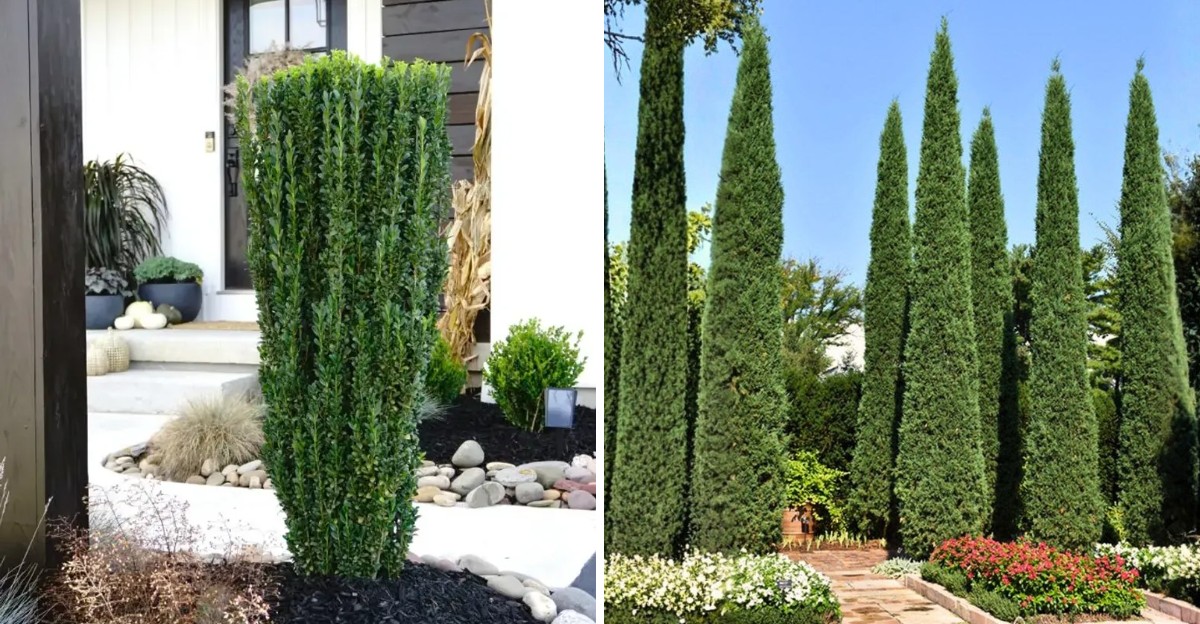
Some evergreens grow taller than a basketball hoop, yet they stay skinnier than the average front door. That trick makes them pure gold for anyone squeezed between a tall fence and a neighbor’s kitchen window.
Narrow side yards are common across Pennsylvania, especially in older towns packed with rowhomes and tight lot lines. Wide shrubs gobble up those strips fast, so slim upright growers solve a very real space problem.
I have to admit, I once planted a bushy hedge in a three-foot gap and regretted it. You learn quickly that pruning a sprawling shrub every month feels like a chore nobody signed up for.
Thankfully, a handful of tough, cold-hardy picks handle Pennsylvania winters and still fit those skinny spaces with room to spare.
1. American Pillar Arborvitae
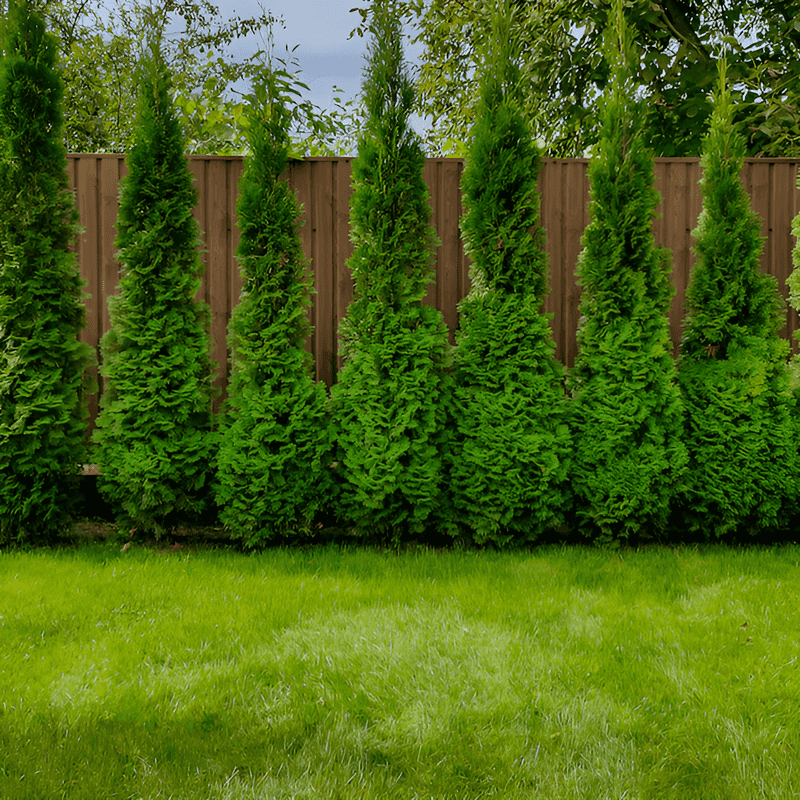
Few evergreens shoot upward with as much confidence as this one, sometimes adding around three feet in a good year. I love how it stays slim enough to tuck beside a driveway without swallowing your parking space.
Its botanical name is Thuja occidentalis ‘American Pillar’, a selection of the arborvitae native to eastern North America. Mature plants often reach twenty to thirty feet tall while staying roughly three to five feet wide.
Give it at least six hours of direct sun, because shade makes the lower branches thin and leggy. Well-drained soil keeps the roots happy, and the plant handles USDA zones 3 through 7 with ease.
For a solid screen, space plants about three to four feet apart along your fence line. They knit together within a few seasons, and you rarely need shears to keep that tidy column shape.
Water young trees deeply once a week during their first summer, especially when rain goes missing for a while. A two-inch layer of mulch holds moisture, but keep it pulled back a few inches from the trunk.
Deer can be a real issue, since hungry herds often browse arborvitae foliage during long snowy winters. Wrapping young plants with burlap or netting in late fall helps them reach spring looking full and green.
Personally, I think this cultivar is the easiest way to turn an exposed backyard into a private hideaway. Heavy snow can bend tall columns, so gently brush off thick loads with a broom after big storms.
2. Emerald Green Arborvitae
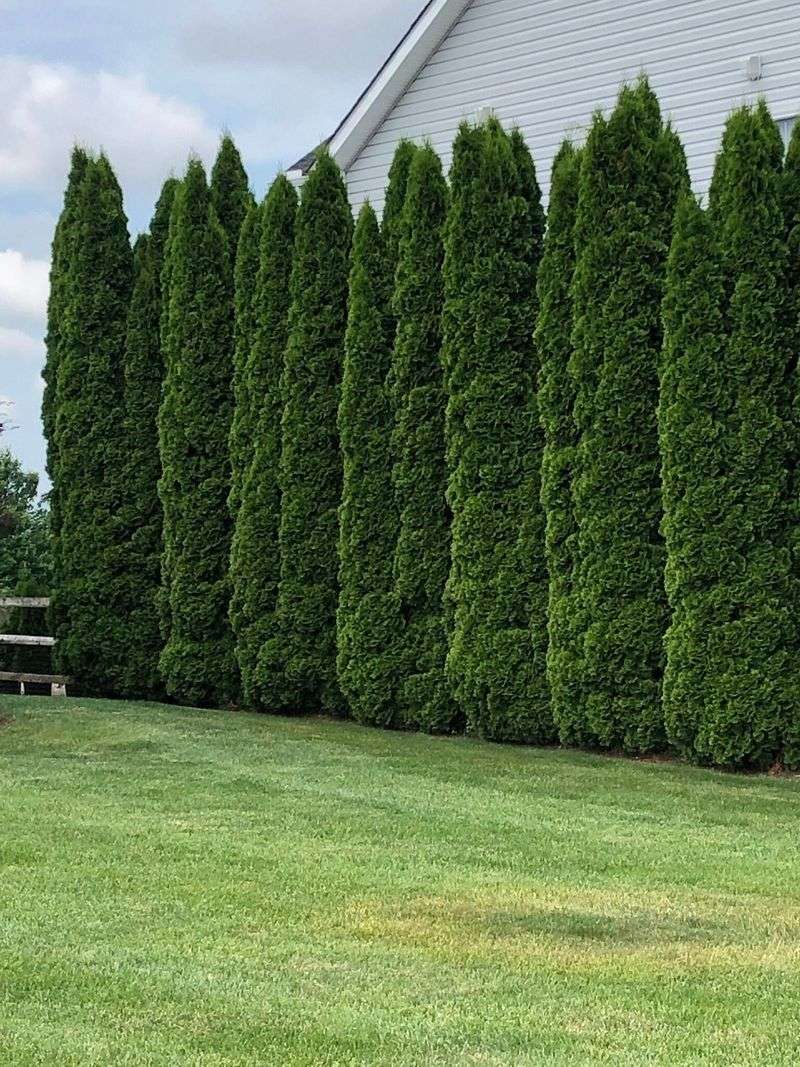
Walk through almost any Pennsylvania neighborhood and you will spot rows of this glossy evergreen guarding back patios. Its rich color holds up through winter better than many arborvitae, which can turn bronze in cold weather.
Gardeners also know it as Thuja occidentalis ‘Smaragd’, a name that comes from the Danish word for emerald. It usually tops out around ten to fifteen feet tall and only three to four feet wide.
That modest height makes it a smart pick for small yards where a towering tree would feel overwhelming. I like how it blocks a ground-floor view without shading out the vegetable bed next door.
Plant it in full sun to light shade, and choose soil that drains well after heavy rain. Soggy clay is its biggest weakness, so raise the planting area slightly if water tends to puddle.
Growth is moderate, often six to twelve inches each year, so buy larger plants for faster privacy. Spacing them about three feet apart creates a dense wall within a handful of growing seasons.
Young trees need regular deep watering, while established plants handle short summer dry spells fairly well. A slow soak at the base beats a quick sprinkle that barely reaches the root zone.
Deer browsing varies by neighborhood, so watch for chewed lower branches when winter food runs low. Fencing or a repellent spray can protect your investment until the plants grow above the browse line.
3. Sky Pencil Holly
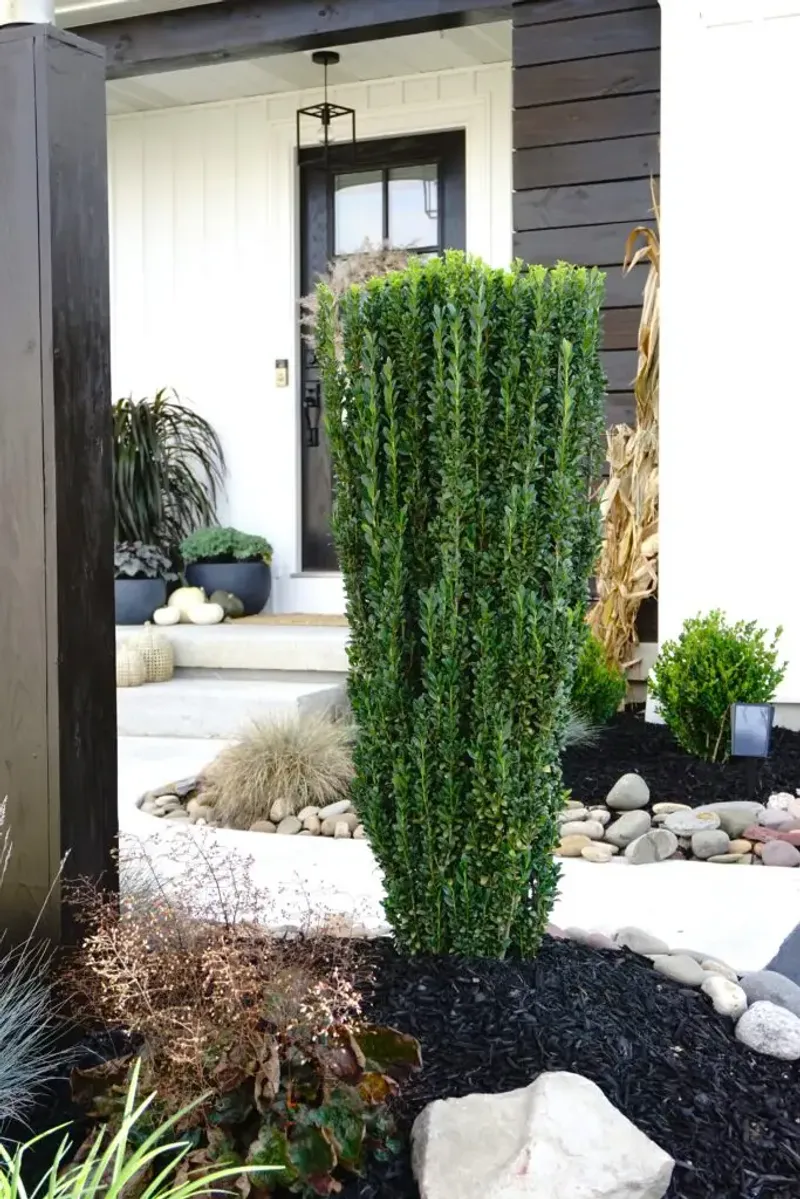
Squeeze a plant into a two-foot gap between a walkway and a wall, and most shrubs will sulk. This skinny holly seems built for the job, rising straight up like a green exclamation point.
Its botanical name is Ilex crenata ‘Sky Pencil’, and it was introduced through the U.S. National Arboretum from Japan. Mature plants commonly reach eight to ten feet tall but stay only one to two feet wide.
Small, glossy leaves look more like boxwood than the spiky holly you might picture on holiday cards. Female plants can produce small black berries, though they need a nearby male Japanese holly for pollination.
It is generally rated for USDA zones 5 or 6 through 9, depending on the source you check. In chilly northern counties, plant it near a sheltered building wall that blocks harsh winter winds.
Slightly acidic, moist, well-drained soil keeps it thriving, and partial shade is welcome in hot afternoons. Clay that stays wet can lead to root rot, so improve drainage with compost before planting.
Several stems sometimes splay outward after heavy snow, which surprised me the first winter I grew it. A loose loop of soft garden twine around the middle section keeps everything upright and neat.
Pruning needs are tiny, since the natural column shape mostly takes care of itself year after year. For privacy, space plants about eighteen inches to two feet apart along a narrow fence line.
4. Hicks Yew
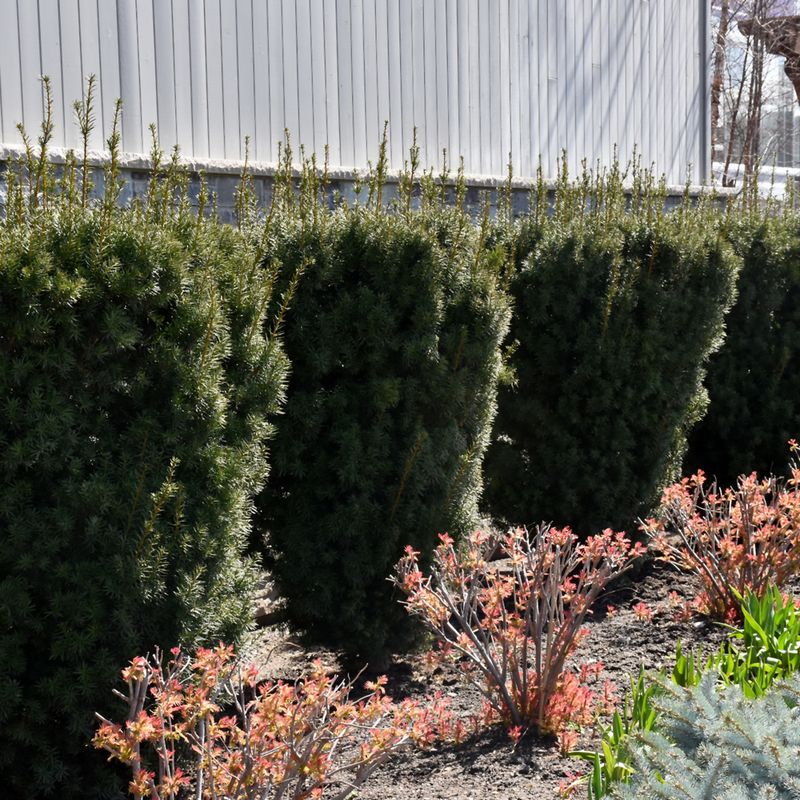
Shade along the north side of a house stumps plenty of evergreens, but this yew barely flinches. I honestly can’t think of a tougher privacy plant for that gloomy strip beside your garage.
Known botanically as Taxus x media ‘Hicksii’, it is a hybrid between English and Japanese yew. Plants often reach ten to twenty feet tall, with widths around three to six feet over time.
Its soft, dark green needles create a formal look that pairs nicely with brick homes and stone walls. Shearing is well tolerated, so you can keep a hedge narrow with one trim each summer.
Full sun to full shade works, which makes it rare among narrow evergreens for tight urban lots. Drainage matters most, because yews struggle quickly when roots sit in waterlogged soil for long periods.
Female plants form bright red, fleshy cups around seeds, and birds often enjoy them in fall. Almost every plant part is toxic to people and pets, so keep curious kids and dogs away.
Deer love yews, which is a real drawback in many suburban and rural neighborhoods across the state. Protective fencing or repellents during winter help keep the lower branches from getting stripped bare by hungry deer.
Growth is slow to moderate, so buying larger nursery plants gets you real privacy a little sooner. Spacing them about two to three feet apart builds a solid wall that lasts for decades.
5. Skyrocket Juniper
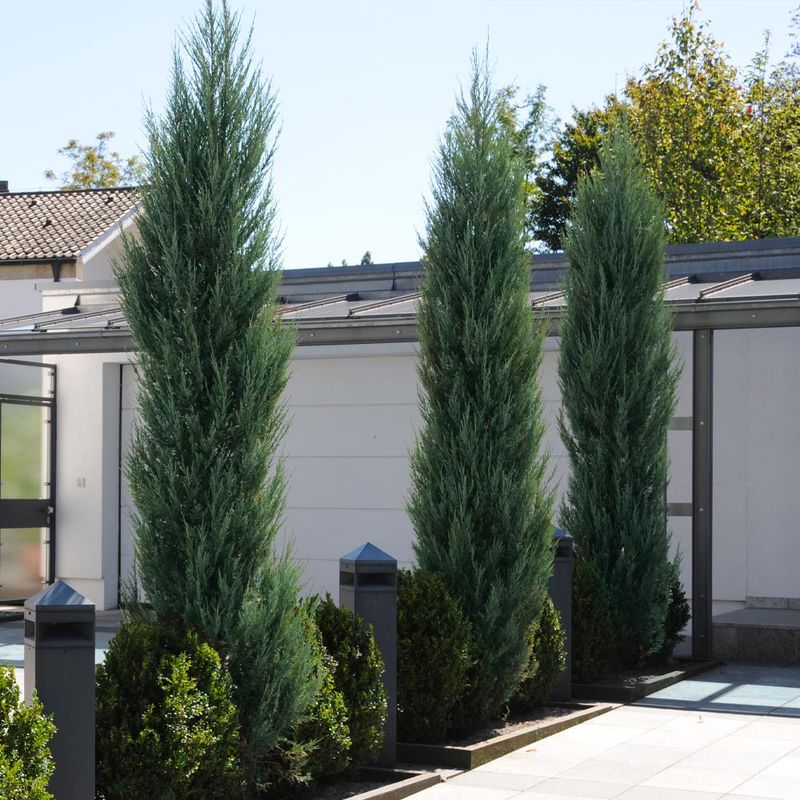
Silvery blue foliage makes this juniper look almost frosted, even on a hot and sticky August afternoon. I love how its cool color stands out beautifully beside darker evergreens and old red brick walls.
It is usually sold as Juniperus scopulorum ‘Skyrocket’, though some experts link it to eastern red cedar. Most references list a height of fifteen to twenty feet with a width of only two to three feet.
Full sun is essential, since shaded branches thin out and lose that tight and tidy pencil-like silhouette. Poor or rocky soil suits it well, as long as water drains away quickly after storms.
Once established, it handles drought like a champ, which saves you trips with the garden hose. Water weekly during the first season, then cut back as roots spread deeper into the ground.
Deer and rabbits usually leave it alone, thanks to its prickly texture and strong resinous scent. That makes it handy along open property lines where hungry wildlife often roams freely through the yard.
One caution involves cedar-apple rust, a fungal disease that bounces between junipers and nearby apple trees. If you grow apples or crabapples, pick rust-resistant fruit varieties or plant them much farther apart.
Older plants can open up at the top under heavy snow, leaving a gap in the column. Tying loose branches back together in late fall keeps the shape tight and your view blocked.
6. Taylor Juniper
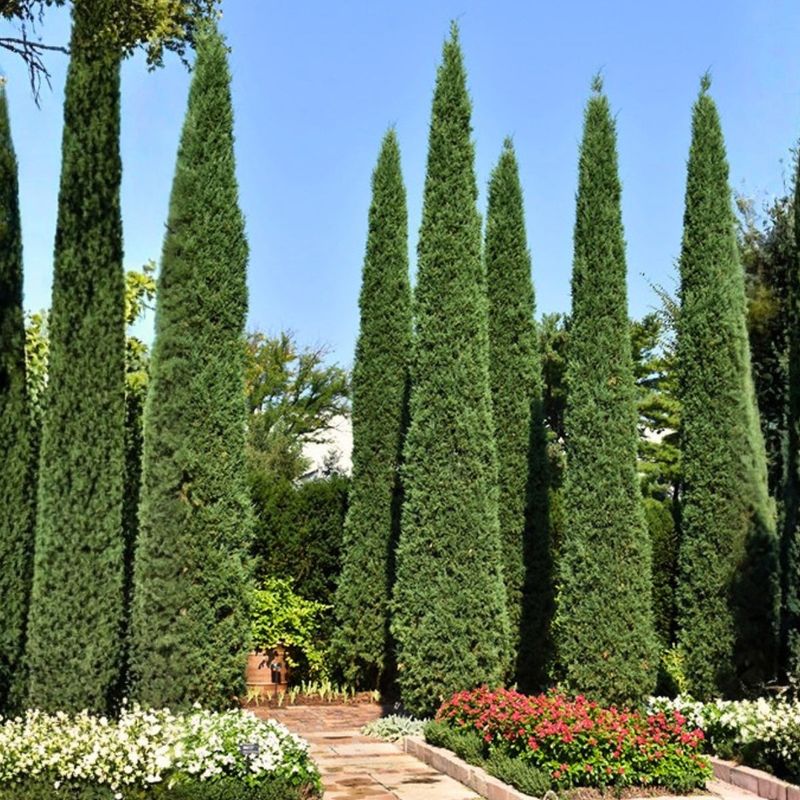
Native plant fans, this one is for you, since it comes from a tree that grows wild across Pennsylvania. Taylor juniper is a narrow form of eastern red cedar, and birds adore its berry-like cones.
Its botanical name is Juniperus virginiana ‘Taylor’, and it was originally found growing near Taylor, Nebraska. Mature plants reach about twenty to thirty feet tall, yet they stay only three to four feet wide.
Female plants produce bluish cones that cedar waxwings and other birds eagerly snack on in winter. I like knowing my privacy screen doubles as a winter snack bar for our feathered backyard visitors.
Hardy in USDA zones 3 through 9, it shrugs off brutal cold and humid summers alike. Full sun keeps it dense, while shady spots leave the inner branches sparse and a bit see-through.
Dry or clay soil rarely bothers it, as long as the planting spot does not stay soggy. Established trees need little watering, which makes them great for busy gardeners who travel in summer.
Like its blue cousin, it can host cedar-apple rust, so keep that in mind near orchards. The orange jelly-like galls look alarming in spring rains, but they rarely harm the juniper itself.
Space plants about three feet apart for a continuous screen that thickens quickly over a few seasons. Personally, I think this native pick deserves far more attention than it gets at garden centers.
7. Graham Blandy Boxwood
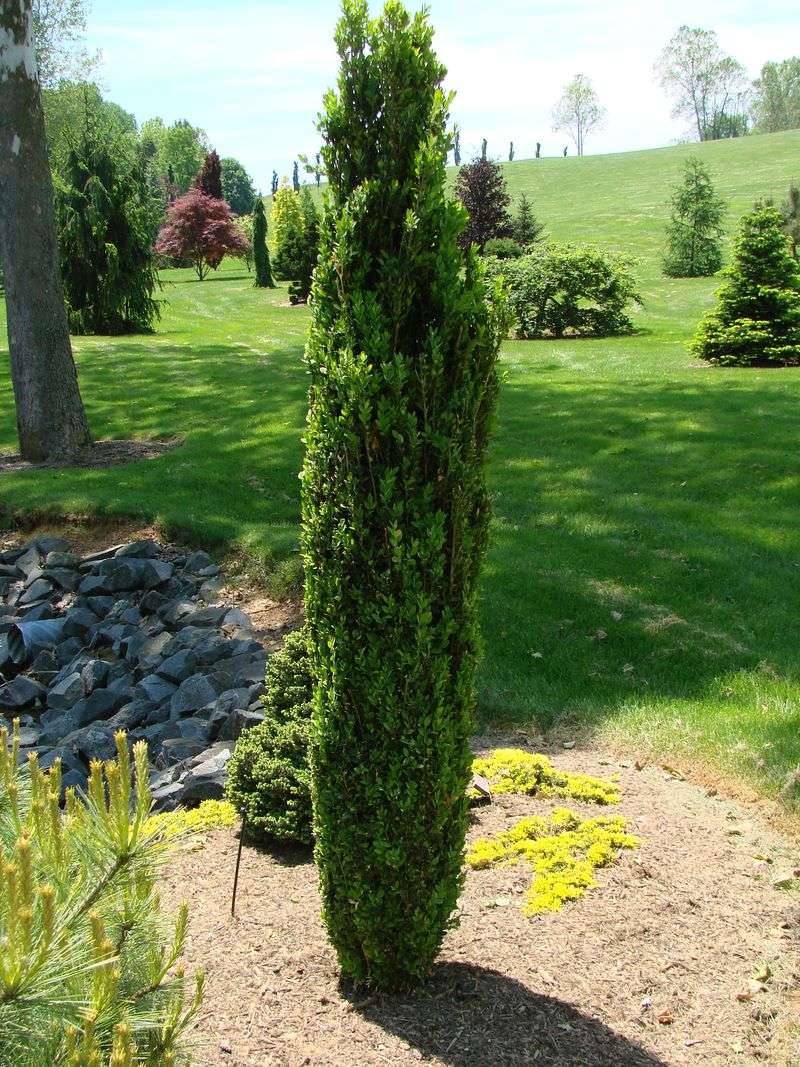
Most boxwoods spread into rounded mounds, but this oddball grows straight up like a tall green candle. I still smile whenever a visitor asks if I spent hours carefully shaping it with garden shears.
Its full name is Buxus sempervirens ‘Graham Blandy’, honoring Graham Blandy, whose Virginia farm became the state arboretum. Plants often reach eight to fifteen feet tall while staying roughly two to three feet wide.
Its small, glossy leaves stay green through winter, giving narrow spots structure when everything else looks bare. It fits USDA zones 5 through 8, which covers most of the state except the coldest pockets.
Partial shade suits it nicely, since harsh winter sun and wind can bronze or burn the foliage. A spot sheltered from strong northwest winds helps keep the leaves fresh and green until spring.
Well-drained, slightly alkaline to neutral soil works best, and mulch helps protect its shallow, fibrous roots. Avoid piling mulch against the stems, because constant moisture there invites stem rot and other fungal problems.
Boxwood blight is a fungal disease to watch for, causing dark leaf spots and sudden leaf drop. Buy plants from reputable nurseries and space them for good airflow to lower that disease risk.
Deer usually skip boxwood, which feels like a small miracle in many suburban Pennsylvania yards with heavy browsing. Plant them about two feet apart, and enjoy a tidy screen that rarely needs heavy pruning.