The Fast-Growing Ohio Native That Screens A Yard By Next Summer
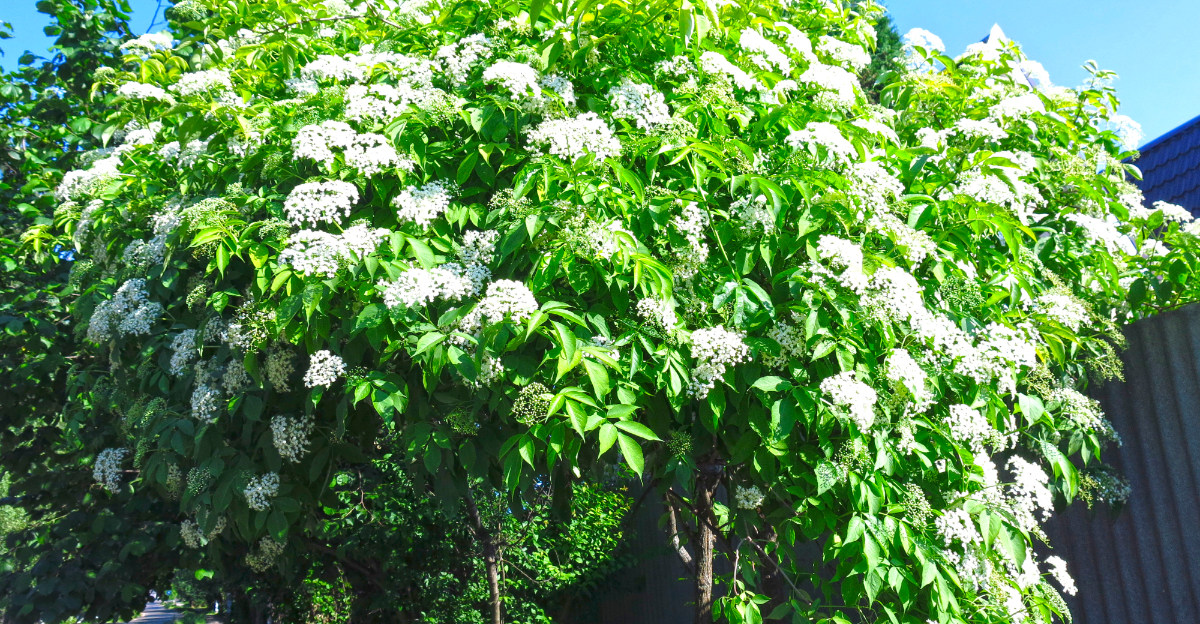
Your neighbor’s yard is fully visible from your patio right now. By next summer, one fast native plant could change that completely.
Most privacy shrubs take years to fill in enough to actually block a view, leaving homeowners stuck staring at the same gap season after season.
One Ohio native skips that wait almost entirely, growing fast enough to create real screening within a single growing season.
Height isn’t the only thing working in its favor. Dense branching fills in low to the ground too, closing off the kind of gaps that leggy, slow-growing shrubs leave open for years.
Privacy this fast usually comes with a catch somewhere. This plant barely has one, and by next summer, that open view from your patio could be gone for good.
1. Plant Elderberry For Fast Summer Privacy
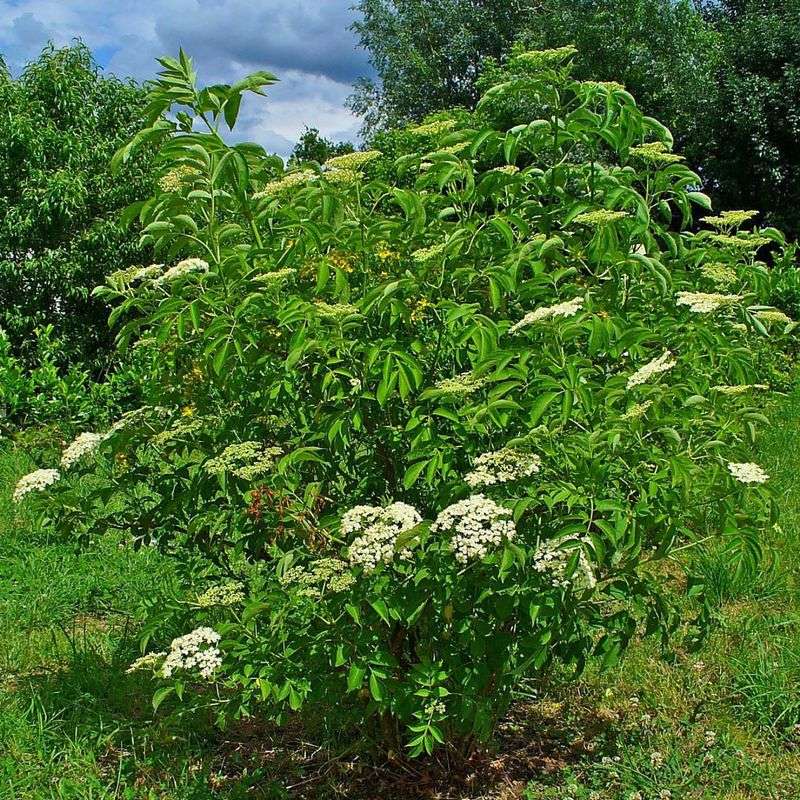
A row of bare fence posts offers zero visual cover. A young elderberry planting, even in its first or second season, starts doing something a fence post never will: growing leaves, pushing new stems, and filling space.
American Elderberry (Sambucus canadensis) is a deciduous, multistemmed native shrub. Ohio State University Extension identifies it as native and broadly distributed across the state.
The Ohio Weedguide describes American elder as a perennial shrub capable of reaching 10 feet or more at maturity. Other Extension sources place the mature height range at roughly 5 to 12 feet depending on site conditions, plant age, and cultivar.
That range matters because no two planting sites are identical. A shrub in fertile, moist soil with full sun may develop more vigorously than one placed in a shaded, dry corner.
Because elderberry is deciduous, its leaves fall in autumn and return in spring. That means the screening effect is strongest during the leafy growing season, roughly late spring through early fall.
Winter screening will be noticeably reduced once the foliage drops, so homeowners who need year-round visual cover should plan accordingly. A healthy shrub can begin filling visual gaps quickly under favorable conditions.
It can create noticeable seasonal privacy as it establishes over one or two growing seasons.
2. Let Dense Growth Block The View
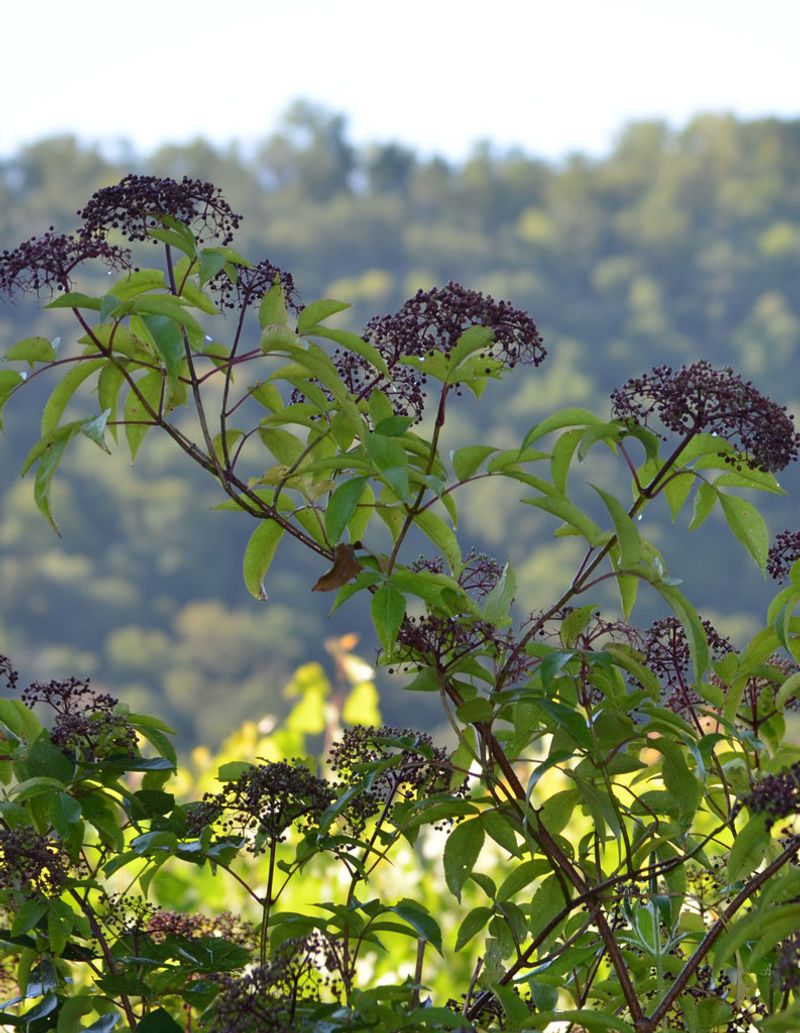
A sight line across an open yard is easy to ignore until something appears on the other side of it that you’d rather not see. A single-trunk ornamental tree can shade a patio, but it leaves the lower few feet of the view wide open.
That’s exactly where a multistemmed shrub like elderberry earns its place.
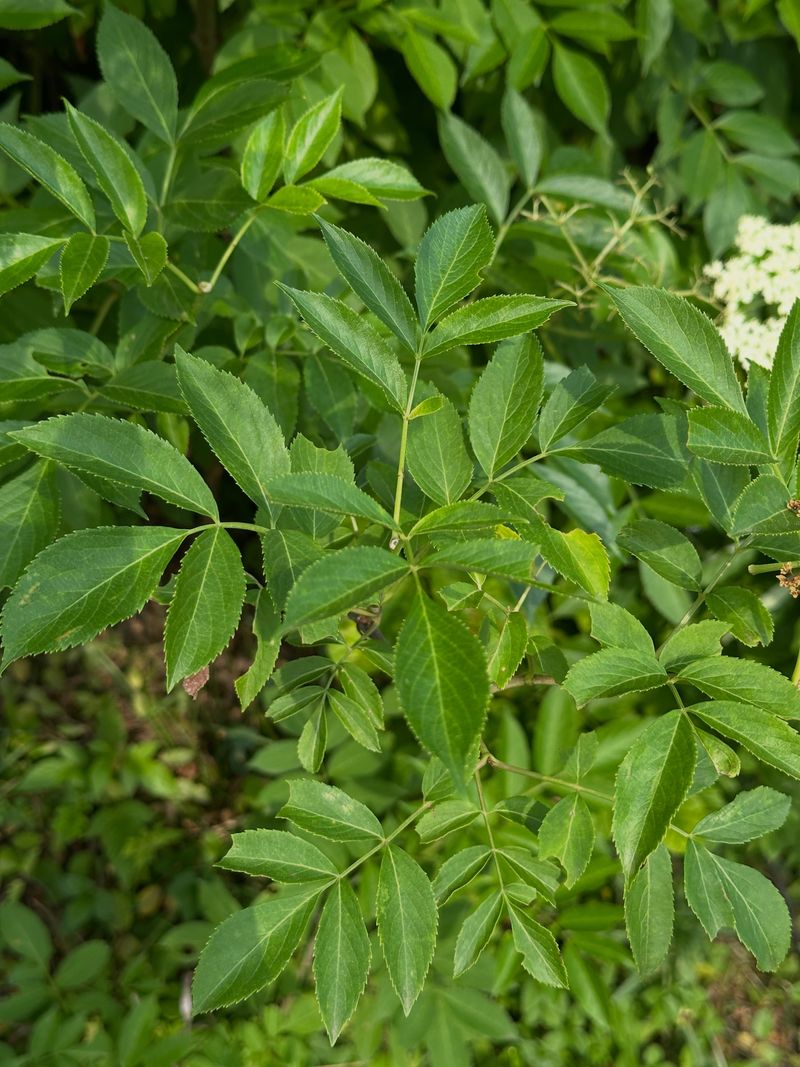
The Ohio Weedguide describes American elder as capable of forming dense thickets. Multiple upright stems rise from the base, each carrying broad, compound leaves that overlap and layer as the colony fills in.
That layered structure creates the kind of visual mass that actually blocks sight lines rather than framing them.
A colony growing along a property edge, behind a patio, or across a wide naturalized border can obscure an unwanted view without being shaped into a geometric hedge.
Elderberry suits informal screening well. Its natural habit is loose and slightly arching rather than stiff and formal.
Your Ohio Garden Changes Every Week. Your Plan Should Too.
Gardening in Ohio changes quickly throughout the season. Every Friday you’ll receive a simple weekly plan showing exactly what to plant, prune, fertilize, harvest, and protect so you never miss the right timing.
That makes it a good fit for naturalized borders, rain garden edges, and wide side yards. Width and stem density do the work here more than height alone.
Keep in mind that once leaves drop in late fall, the winter screening effect will be reduced. Planning the planting site with that seasonal change in mind helps set realistic expectations from the start.
3. Give It Sun For Stronger Growth
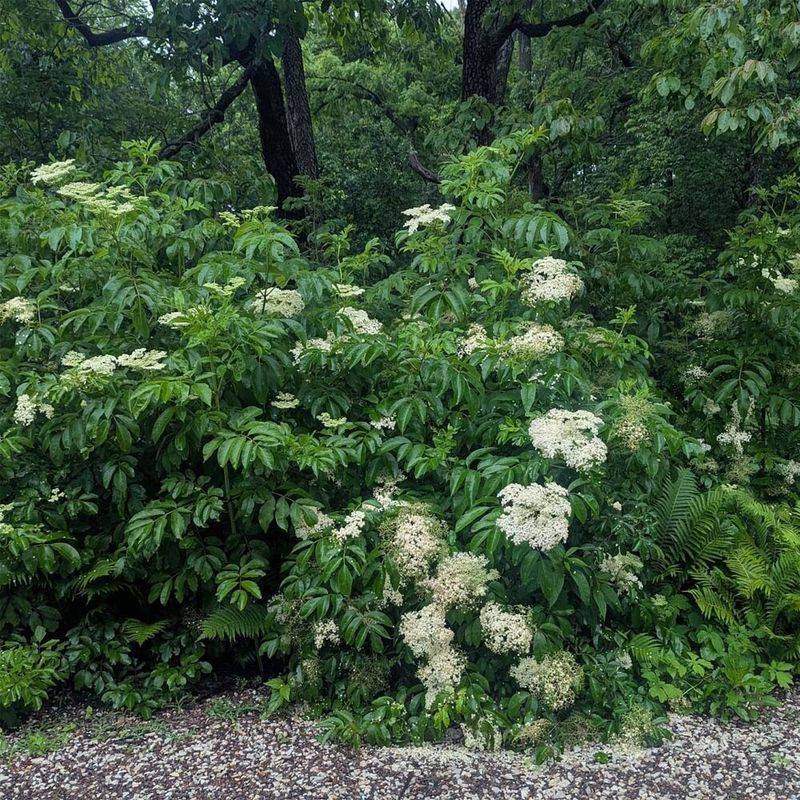
A sunny patch beside a fence line or along a south-facing property edge gives elderberry exactly what it wants most. Ohio State Extension guidance indicates that elderberry can grow in sun to light shade, making it adaptable to a range of yard conditions.
That flexibility is genuinely useful for homeowners working with mixed light situations.
Full sun generally supports stronger, leafier growth. A plant receiving good light through most of the day is better positioned to push out the vigorous stems and dense foliage that make an informal screen effective.
Partial or light shade can still support healthy growth, but the canopy may be somewhat less dense, and flowering and fruiting may be reduced compared to a sunnier site.
Heavy shade is a different matter. Deep shade beneath a dense tree canopy is not the right environment for a shrub that needs to produce a leafy screen.
Before choosing a planting location, observe how much direct light the area receives throughout the day. Nearby trees, buildings, tall fences, and neighboring structures all affect available light.
Moisture and soil quality still influence how well the shrub establishes, so sun alone does not guarantee vigorous growth. Choosing a site with both good light and adequate soil moisture gives elderberry the best start for developing into a useful seasonal screen.
4. Put Moist Ground To Good Use
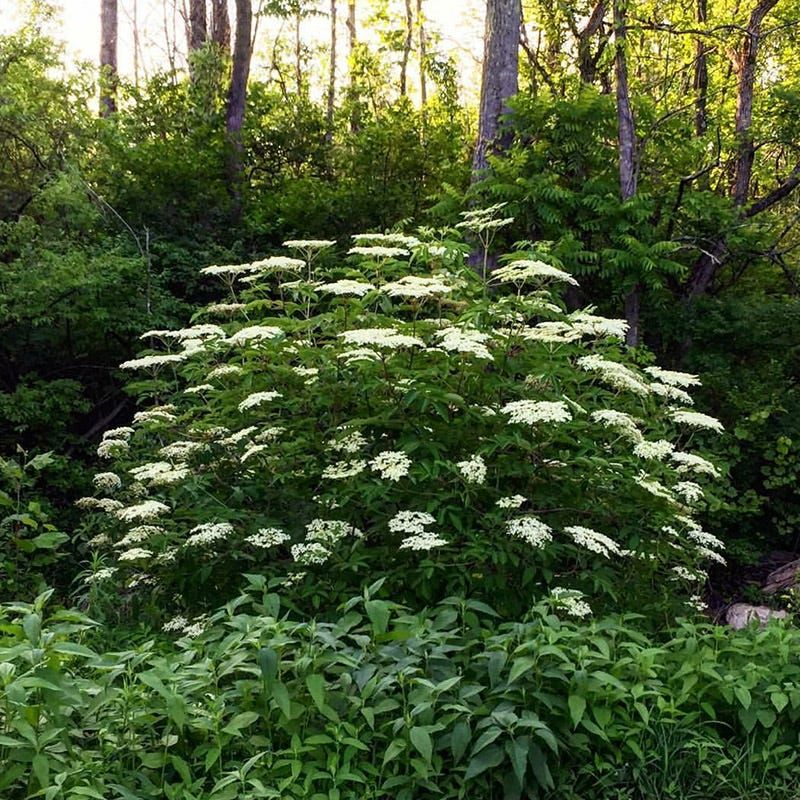
Low corners of a yard, areas near drainage swales, and edges along moist property boundaries can be tricky spots to plant. Many common landscape shrubs struggle in consistently damp ground.
Elderberry, by contrast, is right at home there.
The Ohio Weedguide describes American elder as common throughout Ohio in moist habitats including stream edges, pond edges, low fields, marshes, and thickets.
It notes a preference for fertile soil and moist to wet conditions, while also pointing out that established plants can persist in drier situations.
Penn State Extension similarly describes elderberry as well-suited to moist or wet, well-drained conditions. That combination makes it a practical choice for rain garden edges, moist naturalized borders, and low areas where water tends to collect after heavy rain.
Adequate moisture supports vigorous establishment, which matters most during the first growing season. Newly planted shrubs benefit from consistent soil moisture while roots develop.
Monitor soil conditions and rainfall rather than following a rigid watering schedule, since site conditions vary widely across yards. Avoid planting elderberry in sites that remain severely waterlogged with no drainage.
Stagnant water differs from the moist, periodically wet conditions where this shrub naturally thrives.
Matching the plant to the right spot in the yard is one of the most practical decisions a homeowner can make before the first shovel goes in the ground.
5. Leave Plenty Of Room To Spread
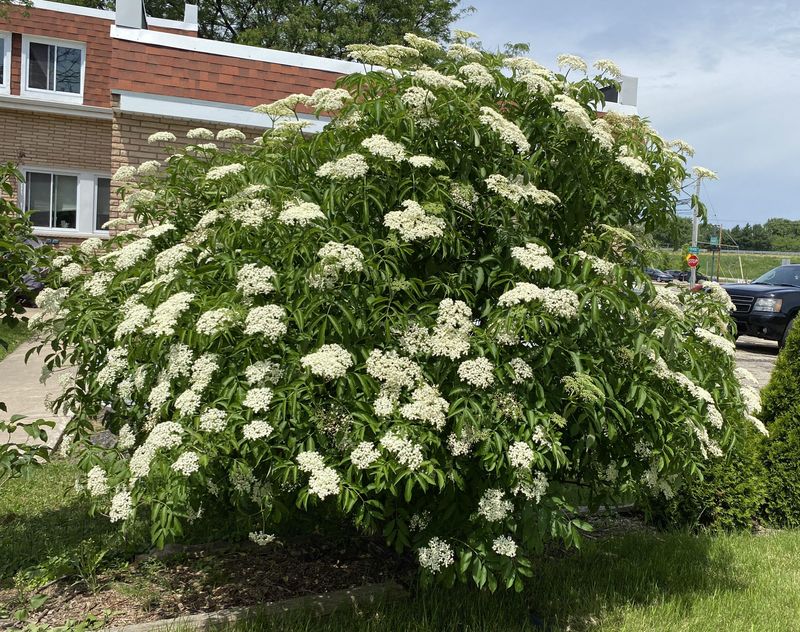
Squeezing a broad, multistemmed shrub into a narrow bed beside a door or along a tight walkway is a recipe for constant frustration. Elderberry is not a restrained foundation plant.
It grows wide, pushes new stems outward over time, and can become considerably broader than a homeowner might expect based on a small nursery container.
Mature elderberry plants can develop a substantial spread as new shoots fill in around the original stems. Extension sources recommend considering mature size before selecting a planting location.
For a privacy screen along a property edge or open boundary, that spread is an asset. Along a narrow side yard, tight path, or directly beside a structure, it becomes a management problem that compounds each season.
Property lines deserve careful thought. A colony that spreads naturally may eventually extend past the intended planting area.
Give elderberry enough setback from a neighbor’s property line. This allows the colony to develop without creating disputes or requiring hard cutbacks that reduce screening density.
Tight spacing between plants is sometimes suggested for faster coverage, but crowding shrubs together does not replace thoughtful site planning.
Plants that lack adequate space compete for light and resources, and the resulting growth is rarely as strong or dense as a properly spaced planting.
Choosing the right location from the start avoids the need to correct an oversized planting later.
6. Turn Root Suckers Into A Thicker Screen
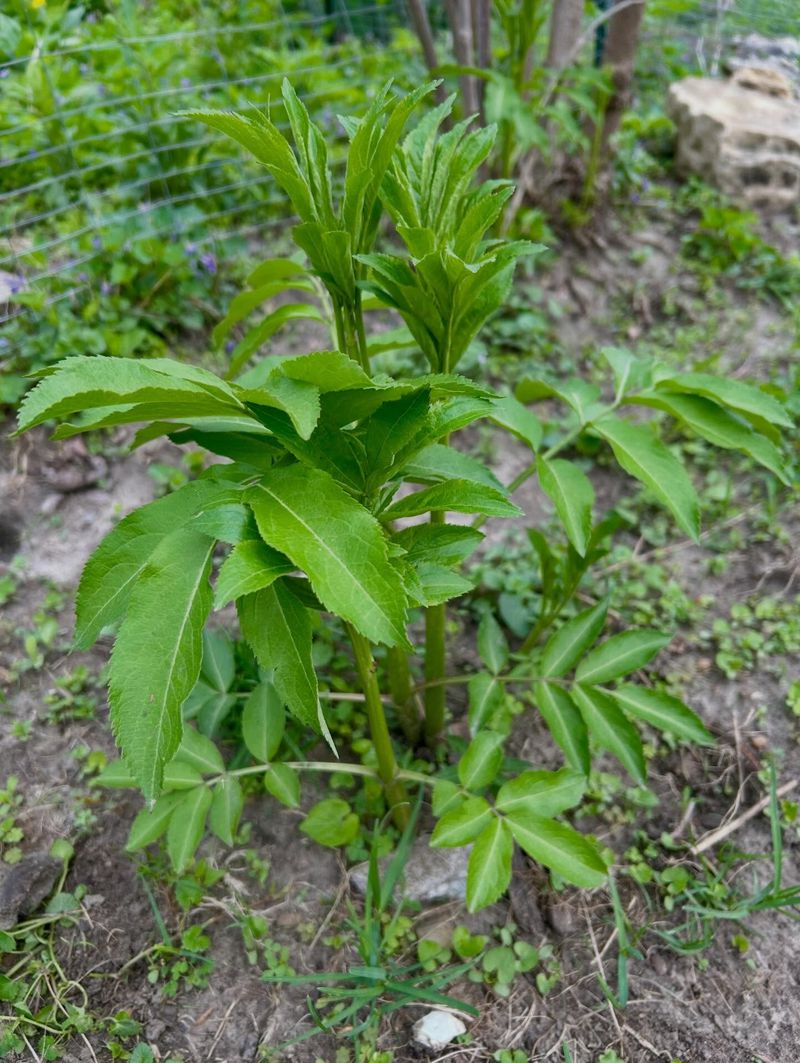
A fresh sucker pushing up through the soil a foot or two from the main stems is one of elderberry’s most useful traits for an informal screen. Penn State Extension describes American elderberry as a shrub that spreads through root suckers.
New shoots arise away from the original plant and gradually widen the colony.
In simple terms, root suckers are new stems that sprout from the root system rather than from the main crown. Over time, those shoots can fill gaps between original plants, thicken the colony, and extend the screen along a property edge without any extra planting.
For a broad naturalized border or an informal wildlife planting, that natural expansion is genuinely useful.
The same trait can be less welcome in a small, formal bed where the planting needs to stay within defined edges. Unwanted suckers in those situations can be removed at ground level as they appear.
Soil, moisture, plant age, cultivar, and growing conditions all influence how readily a given plant suckers, so the rate of spread varies. Avoid disturbing roots deliberately to encourage more suckering.
The plant’s natural habit will do the work on its own over time. Managing which new stems stay and which ones get removed is a straightforward part of keeping an elderberry screen healthy and within its intended footprint.
7. Bring Birds In With Summer Berries
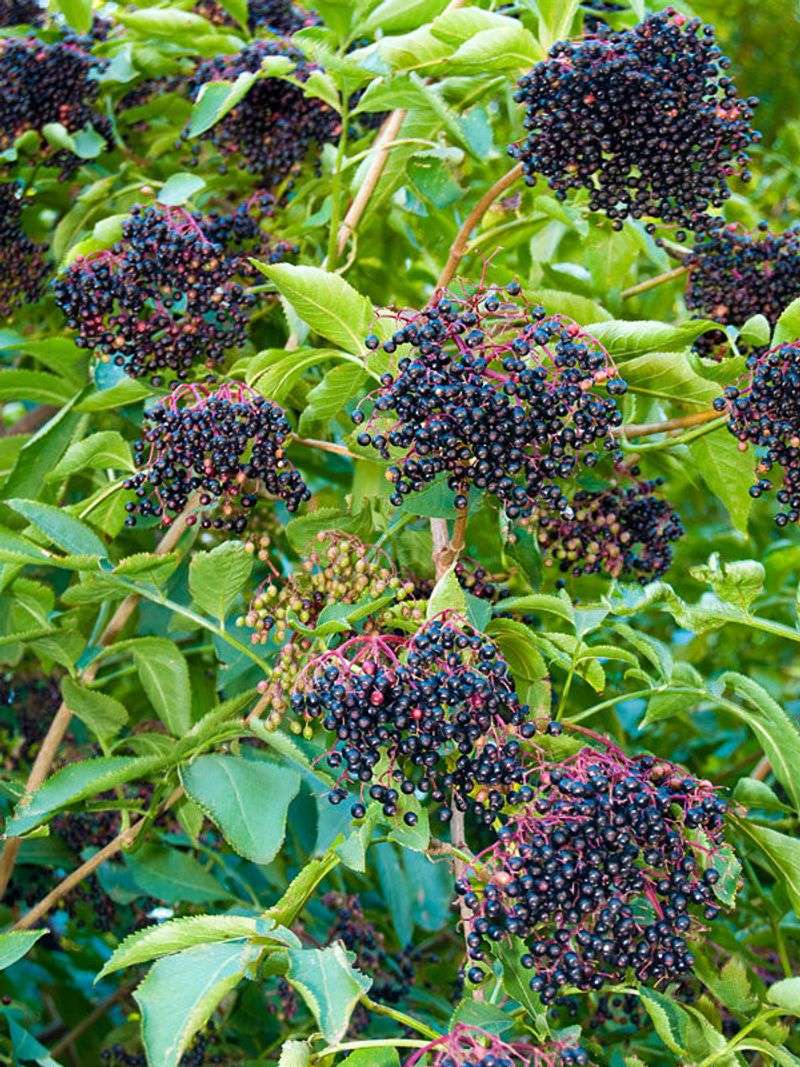
Birds arrive fast when elderberry fruit ripens. Ohio State Extension identifies elderberry as a native shrub with significant wildlife value.
OSU Extension has also documented birds feeding heavily on ripening elderberry fruit. That makes a screening planting along a property edge more than just a visual barrier.
The fruit follows flat-topped clusters of white flowers that typically appear in early to midsummer. As the season progresses, those flower clusters develop into drooping bunches of dark purple to blackish berries.
Birds may remove ripe fruit quickly, sometimes before a homeowner realizes the crop is ready. Fruit production varies with plant age, sunlight, pollination, weather, cultivar, and growing conditions.
Because of these factors, a heavy berry crop every year is not guaranteed.
Younger plants may take a season or two to produce fruit reliably. Older, well-established shrubs in good light generally produce more consistently.
Planting more than one elderberry improves cross-pollination opportunities, which can support better fruit set. The wildlife benefit adds real ecological value to what might otherwise be a purely functional planting.
A screening shrub that also feeds birds connects a yard to the broader landscape in a way a solid fence or nonnative evergreen never could.
If human use of the fruit is a consideration, consult Extension guidance carefully, since proper preparation and positive identification always matter.
8. Prune The Spread Before It Takes Over
A pruning decision made before growth becomes inconvenient is always easier than one made after a colony has pushed well past where it belongs. Elderberry’s suckering habit means new stems will appear over time.
Homeowners should occasionally decide which stems belong in the screen and which ones should be removed.
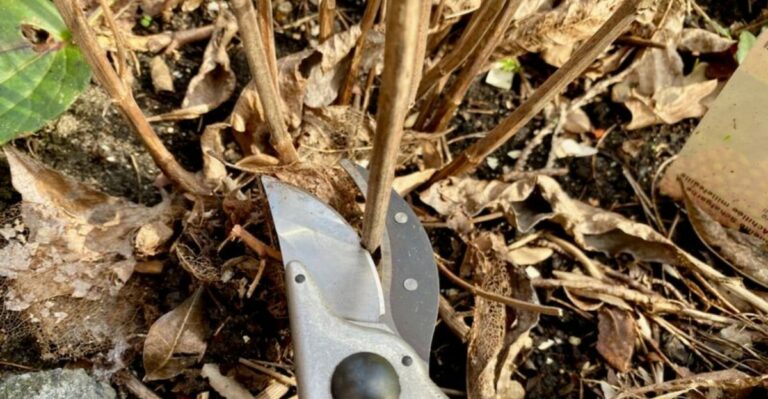
Unwanted suckers can be removed at ground level as they appear. Damaged stems, poorly positioned growth, and stems that crowd the interior of the colony can also be cleared out selectively.
Ohio State Extension guidance on native shrub management supports selective pruning that works with a plant’s natural multistemmed form rather than against it.
Shearing elderberry into a rigid clipped hedge is not consistent with its natural habit and is not a standard recommendation from Extension sources.
Older stems can be removed periodically to encourage vigorous new growth from the base. The timing and frequency of that work should follow authoritative guidance rather than guesswork.
Be aware that heavy pruning reduces the amount of foliage available to block a view, so there is a real tradeoff between aggressive cutting and screening density.
A colony managed with selective removal rather than severe annual cutbacks generally maintains better visual cover through the growing season.
Good management begins before the first plant goes into the ground. Choose a location large enough for the shrub to develop fully without constant correction.
9. Plan The Planting For Long-Term Success
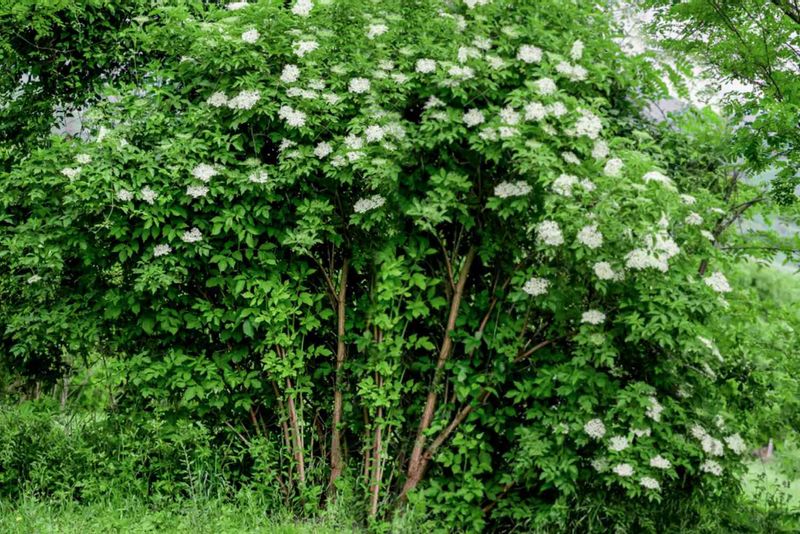
One common landscaping mistake is planting without considering mature size, site conditions, and long-term management. Think through those factors before putting the plant in the ground.
Elderberry rewards thoughtful placement and resists being forced into a situation it was never suited for.
Start by mapping the planting area. Identify how much light the site receives and whether the soil stays moist or drains quickly.
Also determine how much horizontal space the colony has to expand over several years. Consider neighboring properties, structures, pathways, and any underground utilities before digging.
Call 811 before any planting project to have utilities marked.
Select plants from reputable nurseries that carry native stock appropriate for Ohio. Not all elderberry cultivars are straight Sambucus canadensis, and some cultivars may differ in size, vigor, or fruiting habit compared to the native species.
Ask questions before purchasing. Once planted, give newly established shrubs consistent moisture through the first growing season to support root development.
Mulching around the base helps retain soil moisture and moderate soil temperature without burying the crown. Avoid heavy fertilization without a soil test, since elderberry in fertile, moist ground generally establishes well without added nutrients.
Matching the right plant to the right site produces more reliable growth and requires less intervention. It also provides better seasonal screening than a plant placed hastily in a poor location.