What It Means When A Wood Stork Lands In Your Florida Yard
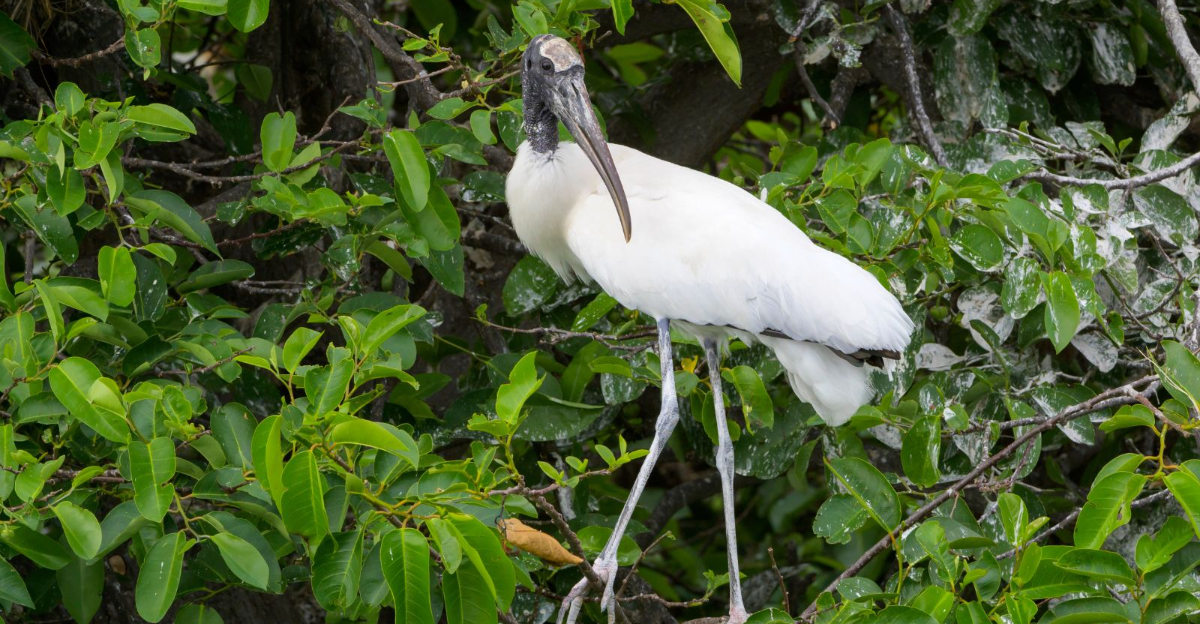
There are few backyard moments quite as surprising as looking up and finding a large, long-legged wood stork standing at the edge of your yard like it owns the place.
These striking wading birds move through wetlands, canals, residential ponds, and drainage areas throughout Florida, and they have a talent for showing up in spots that catch homeowners completely off guard.
A wood stork in the yard is not a cause for alarm, even if the bird’s bald head and serious expression might suggest otherwise.
More often than not, the bird is simply responding to nearby water, shifting conditions in the area, or the appeal of a quiet spot to rest for a while.
Florida’s mix of natural wetlands and human-made water features creates a surprisingly useful landscape for wading birds, and the wood stork knows how to take advantage of it.
1. Shallow Water Nearby May Be Offering A Feeding Opportunity
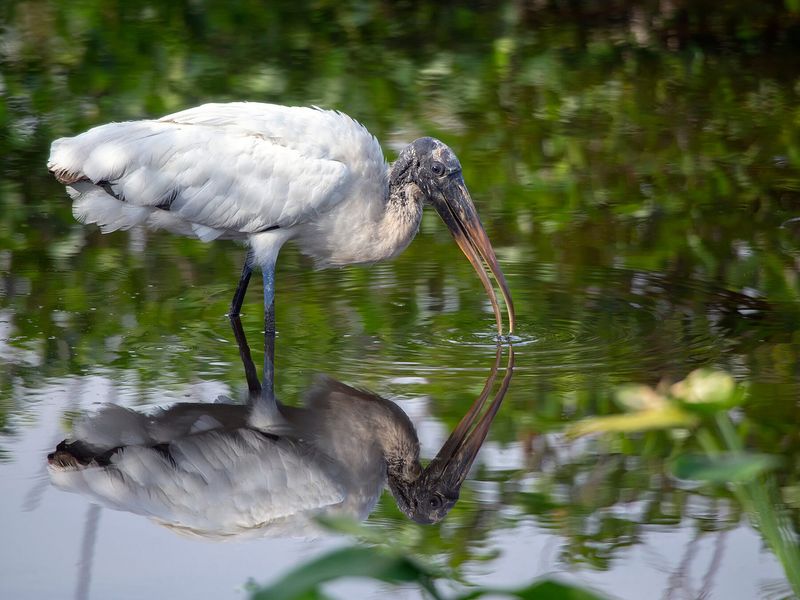
Standing at the edge of a quiet pond or flooded yard depression, a wood stork looks almost prehistoric as it sweeps its open bill slowly through the water.
Wood storks use a specialized feeding method called tactile foraging, meaning they rely on touch rather than sight to catch prey.
When their bill contacts a fish or other small animal, it snaps shut almost instantly, making this technique remarkably effective in murky or low-visibility water.
Shallow, calm water is where this feeding style works best. A residential pond edge, a flooded low spot in a yard, or a shallow canal margin can temporarily offer the right conditions.
Water depth plays a big role in whether a spot becomes attractive to a foraging wood stork, and relatively shallow areas where fish have less room to escape are often where the bird will spend the most time.
Florida’s mix of natural wetlands and human-made water features means that suitable foraging conditions can appear in unexpected places. Not every wood stork standing near water is actively feeding at that moment.
Some birds may be assessing an area before committing to forage. If the water depth, clarity, and prey availability seem right, the bird may stay for a while and work the shoreline carefully before moving on to the next spot.
2. Dropping Water Levels May Be Concentrating Fish Nearby
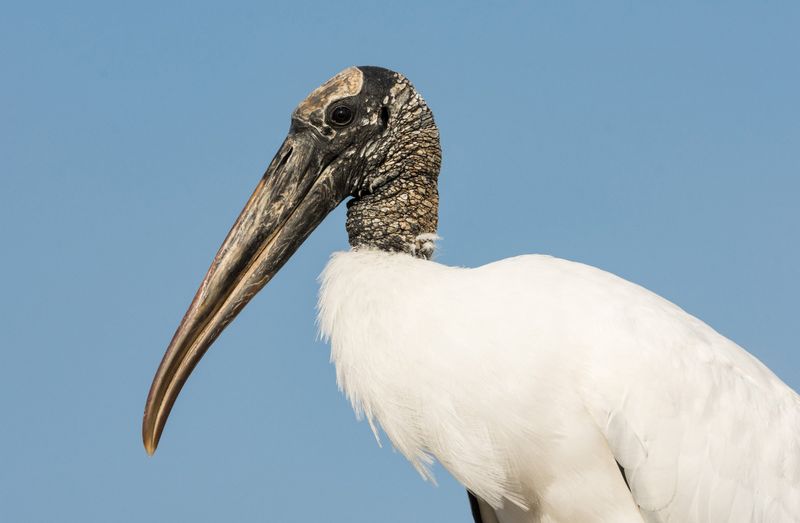
Receding water is one of the most reliable triggers that draws wood storks toward a particular location.
As water levels drop gradually in a Florida pond, wetland, or drainage feature, fish and other aquatic prey become crowded into smaller and shallower areas.
That concentration of prey can make a spot far more productive for a foraging wading bird than it would be when water levels are higher and fish have more room to spread out.
Florida experiences seasonal shifts in rainfall and water levels that affect ponds, canals, ditches, and natural wetlands throughout the state.
During drier periods, or when a retention pond or drainage area loses water more quickly than usual, the conditions can temporarily become very favorable for wood storks and other wading birds.
Your Florida Garden Changes Every Week. Your Plan Should Too.
Gardening in Florida changes quickly throughout the season. Every Friday you’ll receive a simple weekly plan showing exactly what to plant, prune, fertilize, harvest, and protect so you never miss the right timing.
Homeowners who notice birds gathering near a shrinking pond or puddle are often witnessing this process playing out in real time.
The wood stork is not making a personal choice about whose yard to visit. The bird is responding to prey availability and habitat conditions that happen to exist near a particular property at a particular time.
Once water levels rise again or prey becomes harder to find, the bird will likely move on.
Seasonal changes in water across Florida’s residential and natural landscapes can shift these conditions quickly, which is why wood stork sightings in yards often follow dry spells or periods of drainage activity.
3. A Pond Or Drainage Ditch Can Function As Foraging Habitat
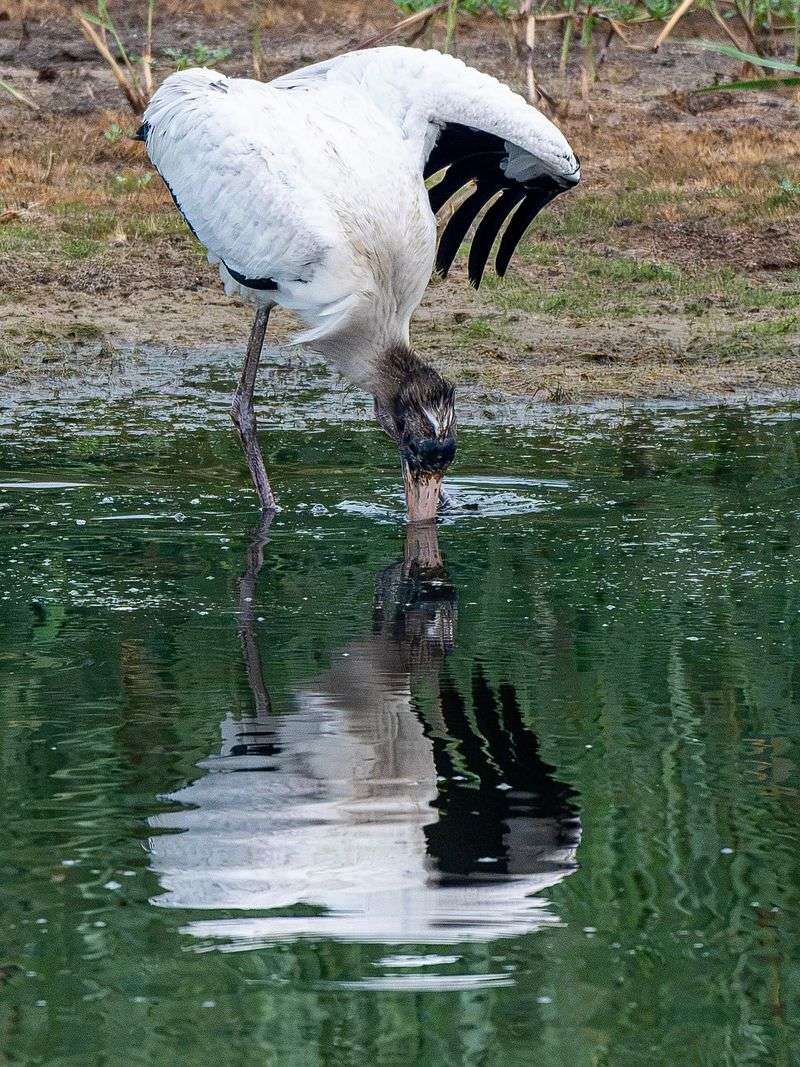
Florida’s residential neighborhoods are full of water features that most people overlook as wildlife habitat.
Retention ponds, stormwater basins, roadside ditches, and backyard canals are often designed to manage water flow, but they can also attract wading birds when conditions are right.
A wood stork does not require a pristine natural wetland to find a meal. If the water is shallow enough and prey is available, a human-made water feature may serve as a temporary foraging location.
Drainage ditches in particular can become surprisingly productive spots for wood storks after rain events or during periods when water is slowly receding.
Small fish, crayfish, and other aquatic animals can become concentrated in these narrow channels, making them easier to catch.
The wood stork’s tactile feeding technique works well in these confined spaces where prey has limited room to move.
That said, not every ditch or backyard pond automatically qualifies as quality foraging habitat. Water depth, prey density, and the degree of disturbance from people, pets, and traffic all influence whether a wood stork will actually spend time in a given spot.
A bird may investigate a drainage ditch and then move on without feeding if conditions are not suitable.
Seeing a wood stork near a pond or ditch suggests that something about that location caught its attention, but it does not mean the feature is exceptional habitat by any measure.
4. The Bird May Simply Be Resting Near A Feeding Area
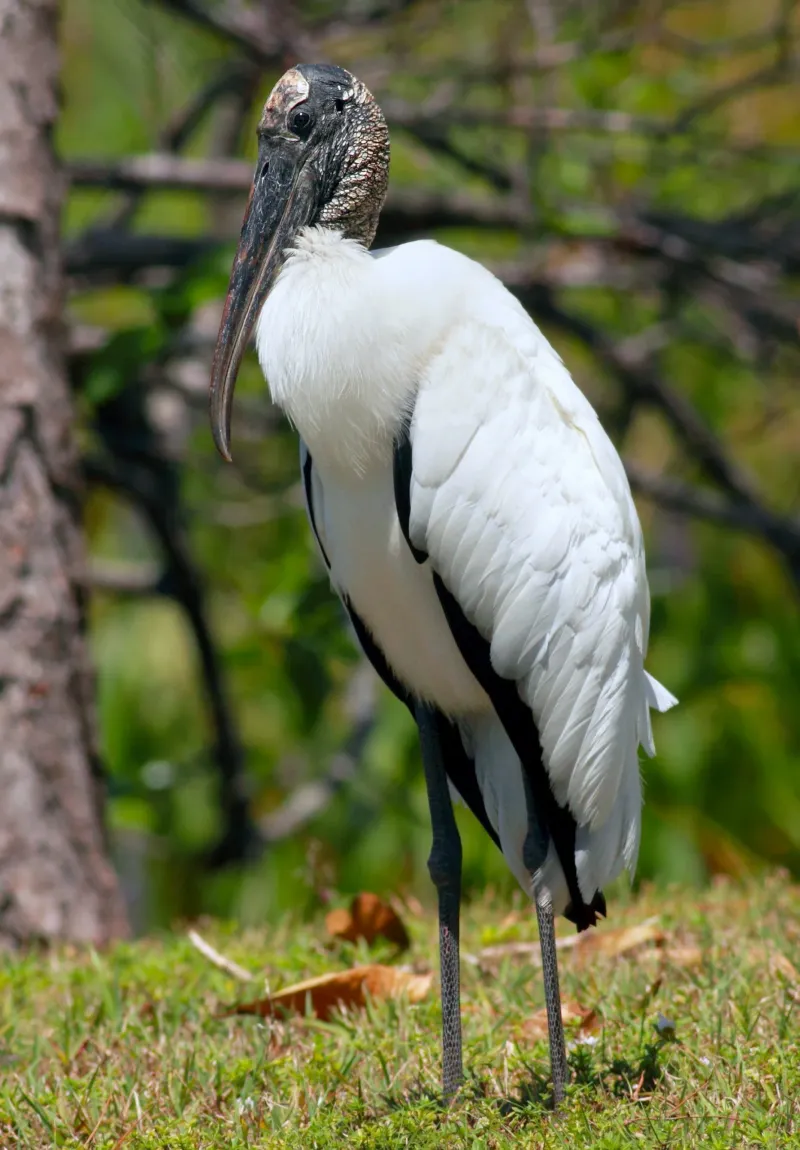
Not every wood stork standing in a Florida yard is actively hunting. Wading birds spend a surprising amount of time simply resting, preening, or loafing near areas where they have recently fed or plan to feed later.
A wood stork that appears to be doing nothing may simply be taking a break between foraging bouts, which is completely normal behavior for this species.
Open grassy areas near water, exposed mudflats, pond levees, and quiet yard spaces can serve as temporary resting spots.
Wood storks may stand in one place for extended periods, sometimes with their heads tucked or their wings slightly spread to catch warmth from the sun.
A bird standing motionless for several minutes or longer is not automatically in distress. Resting is a natural and necessary part of a large wading bird’s daily routine.
Florida homeowners who see a wood stork standing very still in the yard sometimes worry that something is wrong. In most cases, the bird is simply resting and will move on when it is ready.
Unless the bird is visibly injured, unable to stand properly, or showing clear signs of distress, the best approach is to observe from a comfortable distance and let it rest undisturbed.
Approaching or startling a resting bird causes unnecessary stress and may push it away from an area where it was finding food or shelter nearby.
5. Your Yard May Be Part Of A Larger Foraging Area
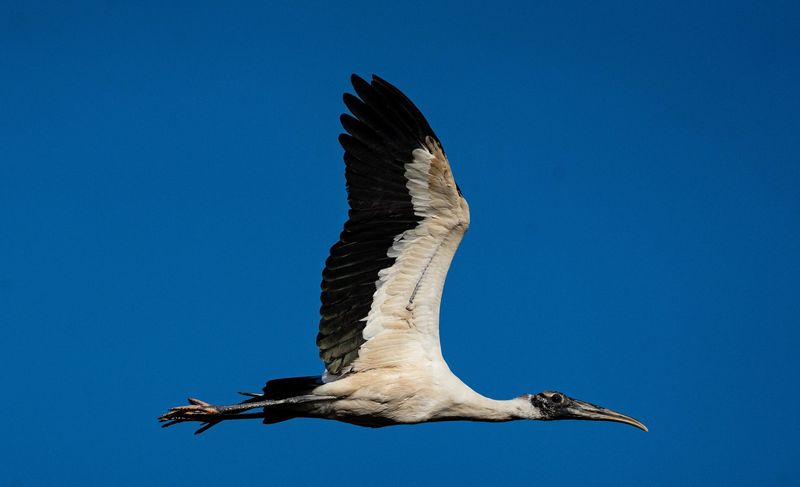
A single Florida yard rarely tells the whole story of why a wood stork is there. These birds can travel considerable distances between nesting colonies, resting areas, and feeding sites, sometimes covering many miles in a single day.
What looks like a random yard visit may actually be one stop along a much larger route the bird uses regularly as it moves through the landscape.
During nesting season, adult wood storks often forage well away from their colony, returning with food for their chicks. A yard situated near a canal, pond, or wetland corridor may simply fall within the broader area the bird is working that day.
Florida’s network of drainage canals, retention ponds, and interconnected wetlands creates natural travel corridors that wading birds use to move between feeding areas efficiently.
Repeated wood stork sightings in the same yard do not necessarily mean the bird has claimed the property or developed a preference for that particular homeowner’s lawn.
More likely, the yard happens to sit near a water feature that the bird visits regularly as part of a wider foraging pattern.
The presence of suitable habitat nearby, rather than anything specific about the yard itself, is usually what brings the bird back.
Florida’s suburban landscapes can support surprisingly complex wildlife movement patterns that most residents never notice until a large, striking bird like a wood stork suddenly appears at the edge of the grass.
6. A Visit Does Not Mean The Bird Is Nesting In Your Yard
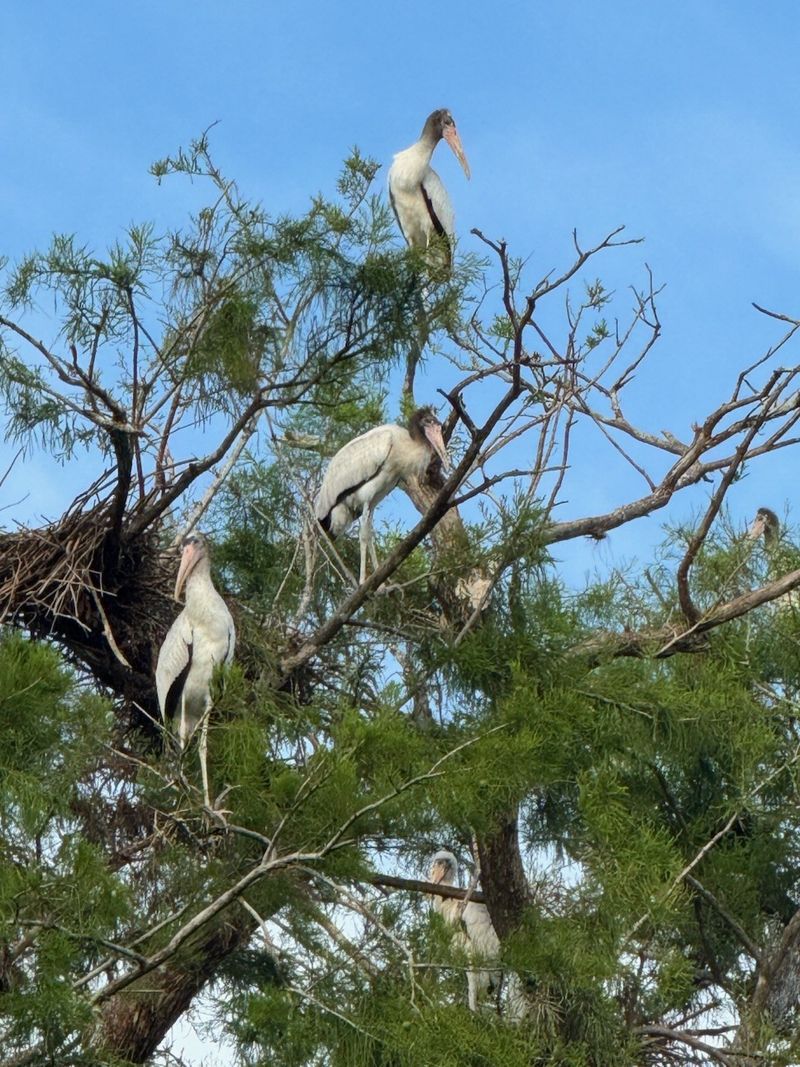
Seeing a wood stork walk through a yard or stand near a pond can make some homeowners wonder whether the bird is planning to set up a nest. Colonial nesting is a key part of wood stork biology, and understanding it can clear up that concern quickly.
Wood storks nest in groups, often in large numbers, typically in trees or shrubs that are surrounded by or closely adjacent to water. A single bird foraging or resting in a residential yard is not the same thing as a nesting colony forming on the property.
Nesting wood storks in Florida tend to use wooded areas near wetlands, including cypress swamps, mangrove forests, and similar habitats that offer both elevated nesting sites and nearby water.
These colonies can be quite large and are generally located in natural or protected areas rather than in the middle of residential neighborhoods.
A lone bird or even a small group of birds moving through a yard is almost certainly foraging or resting rather than scouting for a nest site.
If a homeowner ever notices a large number of wood storks gathering repeatedly in trees near their property, it may be worth contacting the Florida Fish and Wildlife Conservation Commission for guidance.
However, a single bird or an occasional pair passing through a yard should not cause alarm.
Feeding and resting visits are far more common in residential Florida landscapes than any nesting activity.
7. The Wood Stork Is Looking For Natural Prey Rather Than A Handout
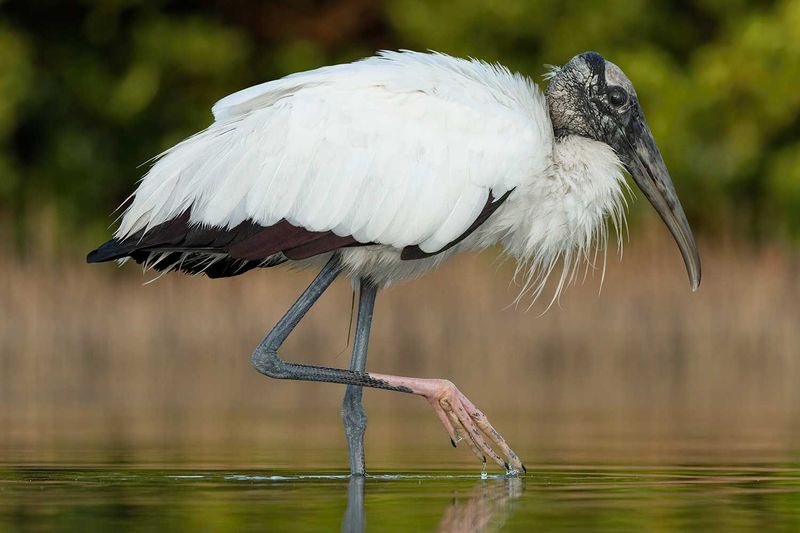
Fish make up much of a wood stork’s diet, and the bird is well adapted to catching them on its own without any help from people.
Other aquatic animals such as crayfish, frogs, and certain large invertebrates may also be part of the menu depending on what is available in a given area.
A wood stork walking through a yard or along a pond edge is searching for these natural food sources, not looking for a meal from a homeowner.
Offering food to a wood stork, whether it is fish from a bucket, pet food, table scraps, or any other handout, is not a good idea.
Feeding wild birds can encourage them to associate people with food, which changes their natural behavior and can make them less cautious around humans and pets.
Over time, birds that have been fed by people may become dependent on those handouts or begin approaching people in ways that cause problems for both the bird and the household.
Florida wildlife guidelines consistently recommend letting wild animals find their own food.
A wood stork that can forage successfully in nearby ponds, ditches, and wetlands without human involvement is far better off than one that has learned to expect a meal from a yard.
Watching the bird hunt on its own is also a much more rewarding experience than tossing it food, and it keeps the bird’s natural instincts sharp and its behavior safe.
8. The Best Response Is To Give The Bird Space And Watch Quietly
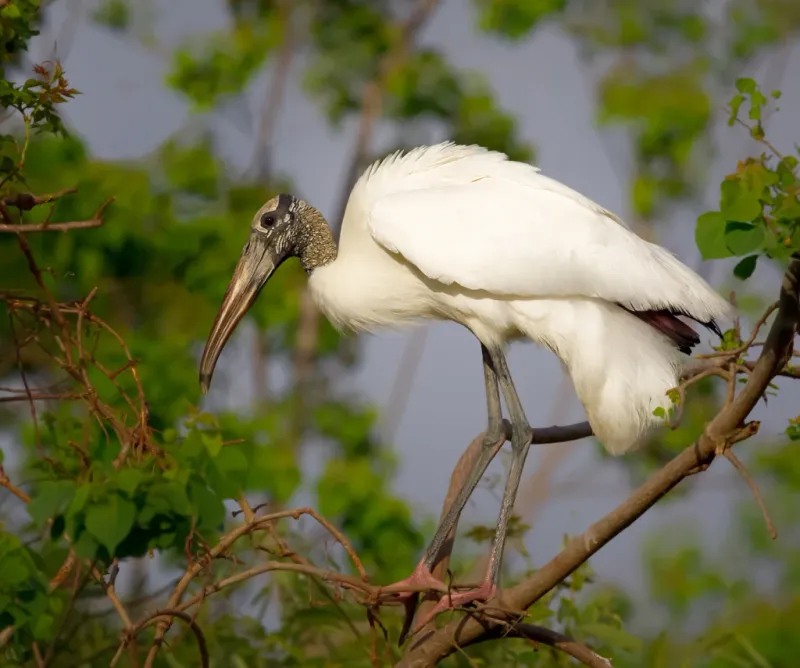
Few wildlife encounters in Florida are as memorable as watching a wood stork up close in a residential yard. The best way to make the most of that experience is also the simplest: keep your distance, stay calm, and let the bird do what it came to do.
Wood storks are large and relatively calm birds, but they are still wild animals that can become stressed when people or pets get too close.
Keeping dogs and cats indoors or on a leash while the bird is present helps prevent unnecessary chasing or harassment.
Even a dog that is just being curious can frighten a wood stork into an abrupt departure, cutting short what might have been a longer and more interesting visit.
Children should be encouraged to watch from a comfortable distance rather than running toward the bird or trying to touch it.
Binoculars or a camera with a zoom lens are ideal tools for getting a closer look without disturbing the bird.
Wood storks have distinctive markings, including their bare, dark-skinned heads and large, slightly downward-curved bills, that make them fascinating to observe up close even from across a yard.
If the bird appears injured, is unable to move normally, or seems genuinely distressed after an extended period, contacting the Florida Fish and Wildlife Conservation Commission or a licensed wildlife rehabilitator is the appropriate step.
Otherwise, enjoy the visit quietly and let the bird leave on its own terms.