The Florida Trees That Become Wildlife Magnets Once Fall Fruit and Seeds Appear
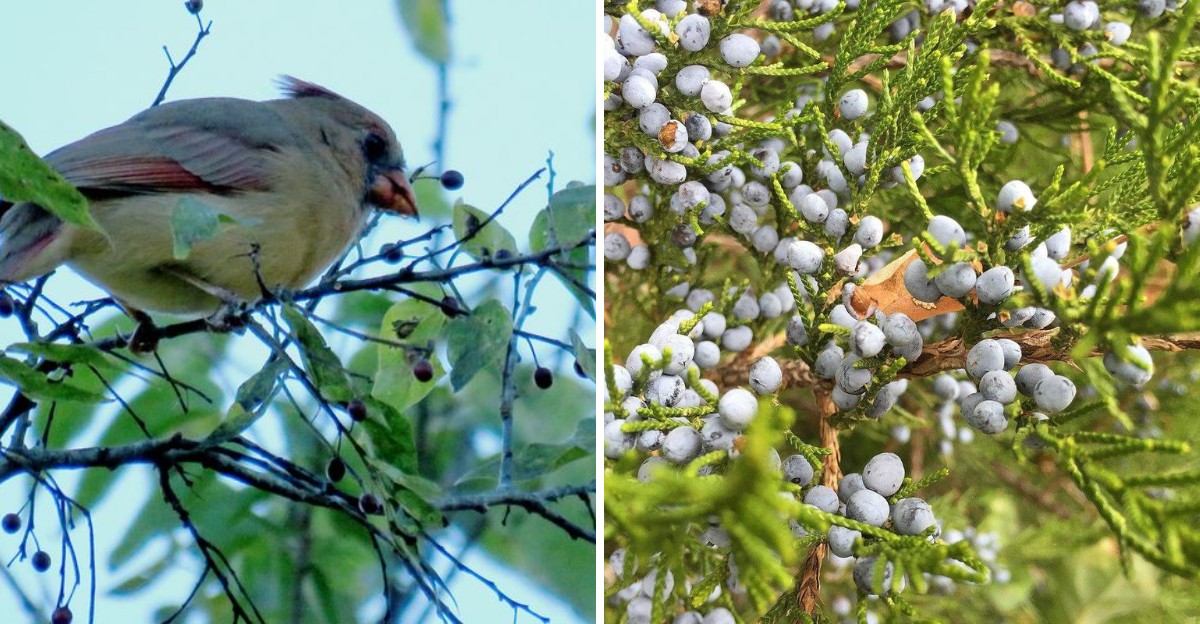
Branches heavy with berries, acorns, or seed cones can turn a quiet corner of the yard into the busiest spot on the block.
Birds and small mammals spend much of fall fattening up or fueling migration, so they go where food is easy. A few native trees produce exactly that as the season shifts.
Their fruits and seeds ripen at different times, which can keep visitors coming back for weeks or even months.
Planting even one of these trees can change what you see from your kitchen window.
Migrating songbirds rely heavily on fall fruit as they move through. Florida sits along one of their busiest routes, so a well-stocked yard can make a real difference.
Think about which trees in your yard already draw the most activity, and why.
1. Live Oak Acorns Feed Deer, Turkeys, And Squirrels Through Fall
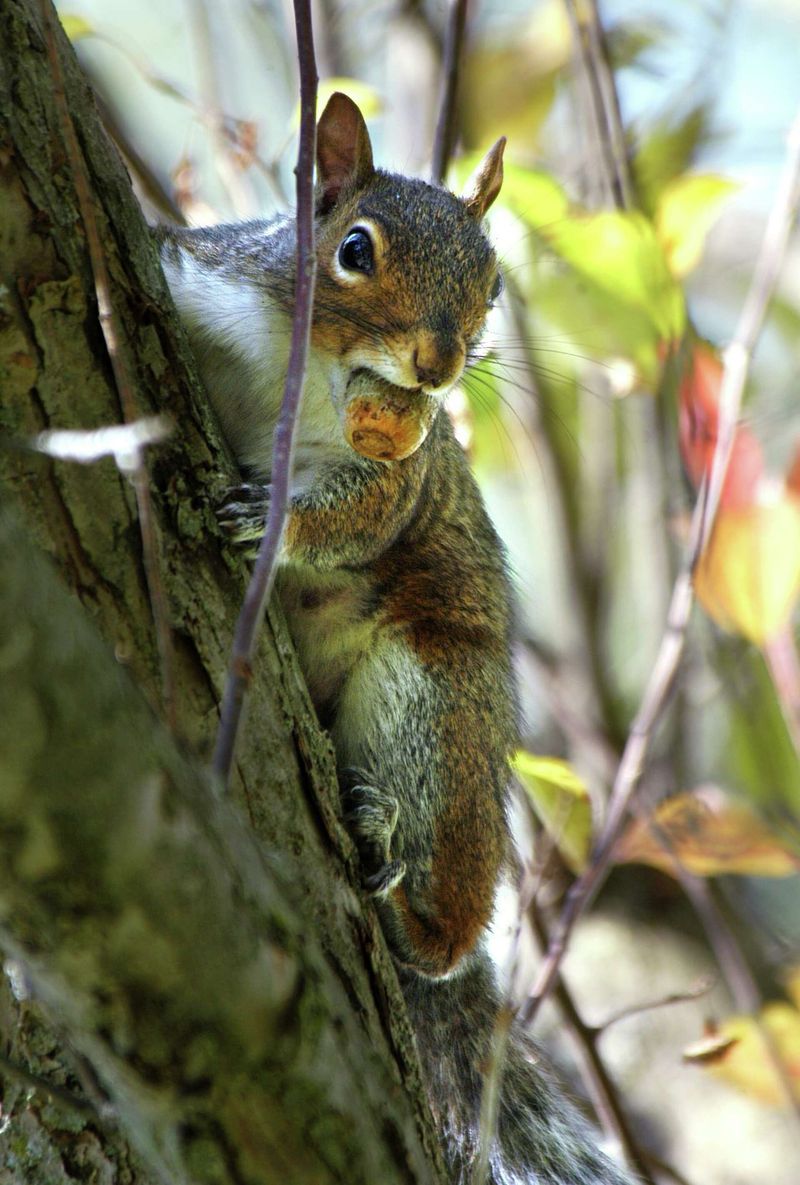
Stand under a big live oak in October and you may hear acorns tapping the ground around you. Those small, dark nuts are one of the most important fall foods in the state.
White-tailed deer, wild turkeys, and gray squirrels all eat them, along with blue jays, raccoons, and wood ducks.
Live oak acorns tend to taste less bitter than those of some other oaks. Wildlife often gets to them quickly, so a fresh drop can disappear in just a few days.
Crop size changes a lot from year to year. Some falls bring a heavy load, while other years produce only a light scattering, depending on weather and the tree’s own cycle.
Across most of Florida, acorns usually ripen and fall from about September into early winter.
If you have a live oak, try leaving some fallen acorns in a corner of the yard instead of raking them all away. Squirrels and jays will often bury a share, and a few forgotten acorns may sprout into seedlings.
Planning to plant one? Give it plenty of room, since a mature live oak spreads wide and can live for centuries.
Young trees usually take several years before they bear a good acorn crop. Once it starts, the yearly show can bring a steady parade of visitors.
2. Bright Red Seeds Spill From Southern Magnolia Cones
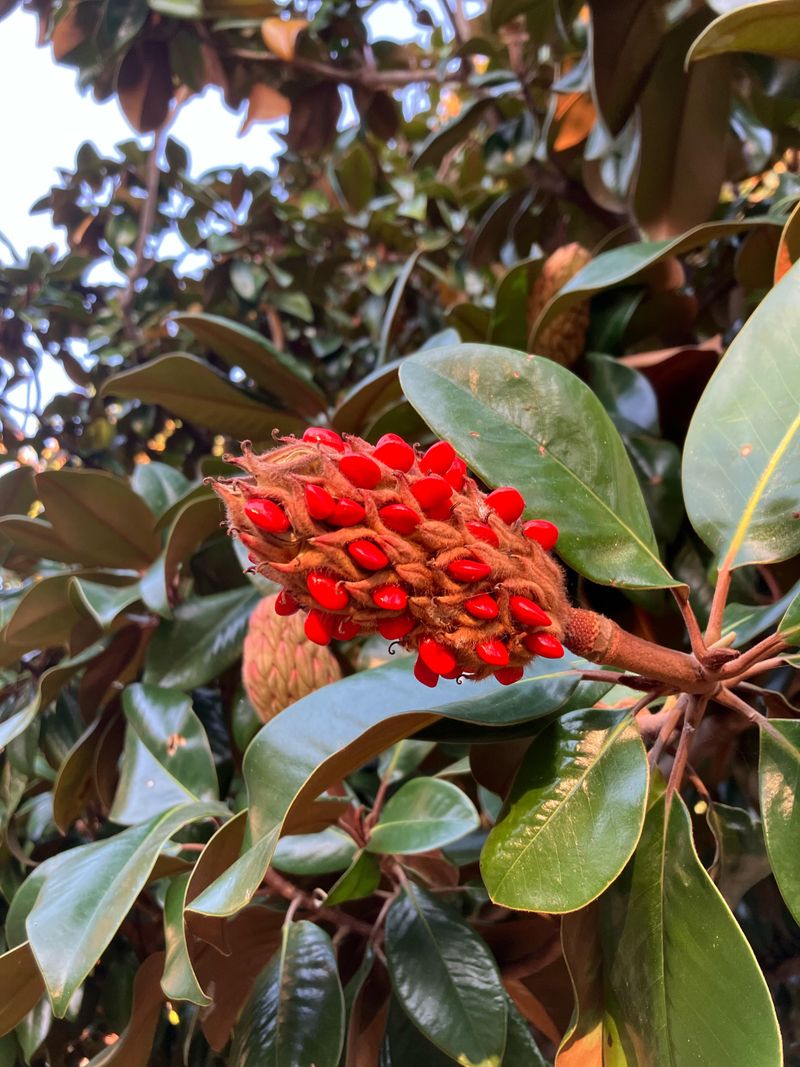
Pop open a southern magnolia cone in early fall and you will find something surprising. Bright red seeds peek out of the fuzzy, knobby pod like little candies.
As the cones ripen in late summer and fall, the seeds slip out and dangle on thin, silky threads.
That hanging display catches the eye of birds. Mockingbirds, blue jays, northern cardinals, and woodpeckers will pluck the seeds right off the cone.
Squirrels and opossums also eat seeds that drop to the ground.
Each seed has a fatty red coating, which helps explain why animals seek them out during a season when energy matters. Migrating birds passing through can use that boost too.
Southern magnolia is native to North and Central Florida and is planted farther south, though it tends to perform best where winters bring some cool weather.
Your Florida Garden Changes Every Week. Your Plan Should Too.
Gardening in Florida changes quickly throughout the season. Every Friday you’ll receive a simple weekly plan showing exactly what to plant, prune, fertilize, harvest, and protect so you never miss the right timing.
Seed crops vary between trees and years. A young tree may need quite a while before it produces cones in large numbers.
If you have one, skip the urge to clean up every fallen cone right away. Leaving a few under the tree gives ground-feeding animals a chance to find the seeds.
Magnolia leaves are thick and slow to break down, so a little tidying is still fine. Mulch beneath the tree instead of planting grass, since turf struggles in that dense shade.
3. Migrating Birds Seek Out Flowering Dogwood’s Glossy Red Berries
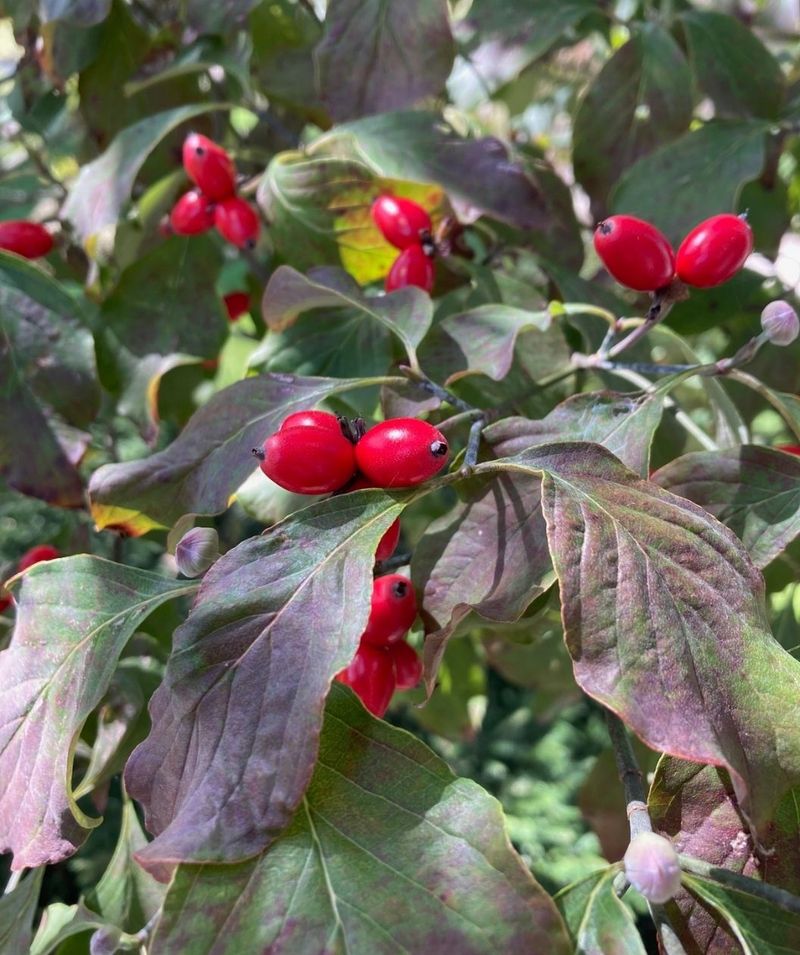
Fall migration turns a flowering dogwood into a busy rest stop. Its clusters of glossy red berries ripen in early fall, just as thrushes, vireos, and other travelers move south.
Those berries are rich in fat, which gives birds quick fuel for long flights.
American robins, northern cardinals, gray catbirds, and woodpeckers also visit. Squirrels and deer may nibble any berries that fall.
Some years a tree gets stripped within days, so do not be surprised if the show is short.
Dogwood grows naturally in North and Central Florida, usually under taller trees in partial shade. It is not a good fit for South Florida, where winters are too warm for it.
Site choice makes a big difference. Give it moist but well-drained soil and some afternoon shade, since full sun and drought can stress the tree.
Spring flowers are the main reason people plant it, but fall is when wildlife benefits most.
Planting a few native shrubs nearby can give visiting birds cover while they feed.
A bonus comes later in the season. Leaves often turn red to purple, though the color is milder in warm areas than up north.
Dogwoods can struggle in poor conditions, so buy plants suited to your area. Local native plant nurseries are a good place to ask.
4. American Holly Berries Often Linger Until Hungry Birds Arrive In Winter
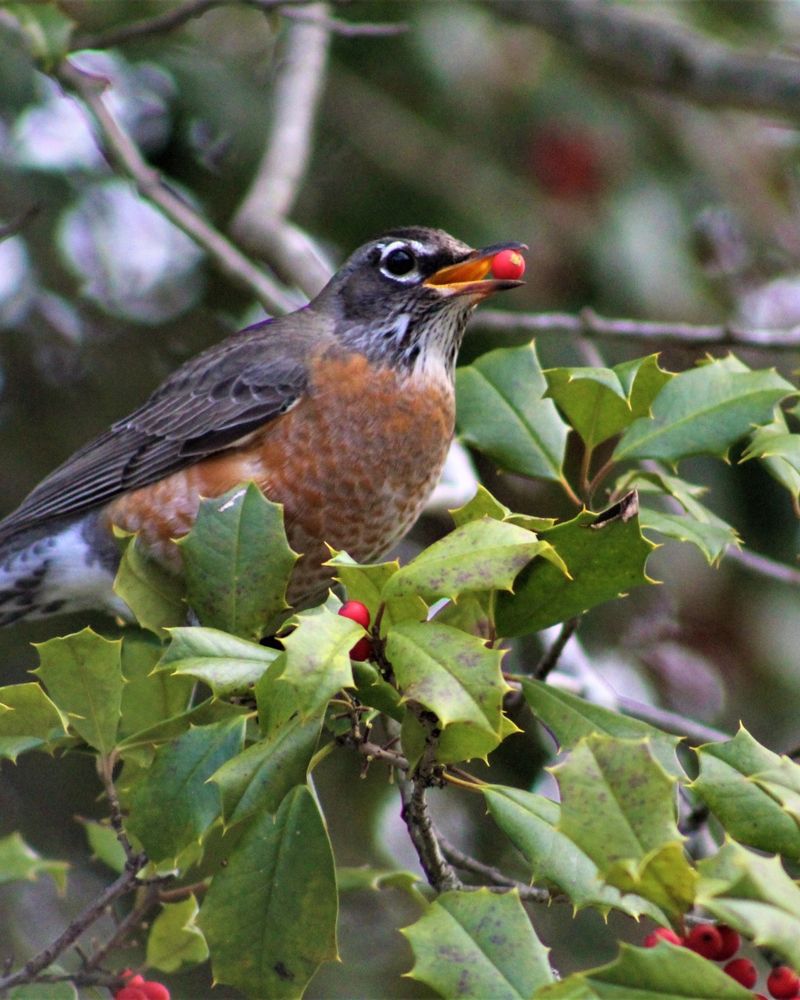
Not every berry gets gobbled right away. American holly fruit turns red in fall, yet it often hangs on the branches for weeks or even months.
Birds seem to save it for later, possibly because the berries soften and become more appealing after some time on the tree.
When winter flocks of American robins and cedar waxwings arrive, a loaded holly can be cleaned off in a single visit. Mockingbirds, bluebirds, and catbirds also eat the berries.
Some yards see the berries vanish by January, while others keep color into early spring, depending on how many birds pass through.
Here is the catch. Only female trees make berries, and they need a male holly somewhere nearby for pollination.
If you buy a holly for wildlife, look for a named female plant or ask the nursery before you buy.
American holly is native to North and Central Florida. It handles sun or partial shade and prefers soil that is slightly acidic and drains well.
Dense, spiny leaves offer songbirds a safe place to perch and even nest.
Holly berries are not safe for people or pets to eat, so keep that in mind around small kids and dogs. Birds handle them without trouble.
Hold off on heavy pruning in fall if you want a strong berry crop to last into winter.
5. Fallen Persimmons Become A Feast For Raccoons And Opossums
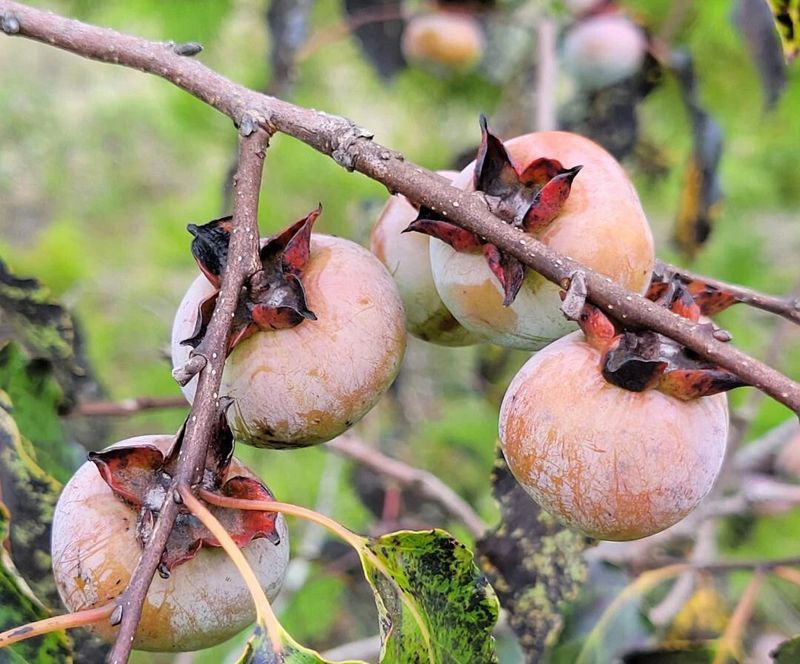
Ever stepped on a squishy orange fruit in the woods? It may have come from a common persimmon, a native tree that grows across most of Florida.
Fruits ripen in fall and often drop to the ground once they turn soft.
That is when nighttime visitors show up. Raccoons and opossums are known for feasting on fallen persimmons, and foxes, deer, and coyotes join in too.
Squirrels and birds will peck at fruit that still hangs on the branches.
Unripe fruit is very bitter and makes your mouth pucker. Animals usually wait for the soft, wrinkled stage, when the flesh turns sweet.
Like holly, persimmons have separate male and female trees. Only females produce fruit, so a single tree may not bear if no male grows within range.
A trail camera set near a fruiting tree can be a fun way to see who comes by after dark.
Persimmon handles a wide range of soils, from sandy to moist, and tolerates some drought once established. It can sucker and form small thickets, which some wildlife gardeners enjoy and others prefer to manage.
Fallen fruit can get messy near patios or driveways, so plant it in a back corner or natural area.
People can eat ripe persimmons too, though you may have to beat the raccoons to them.
6. Cabbage Palm Fruit Clusters Turn Dark And Attract Wildlife
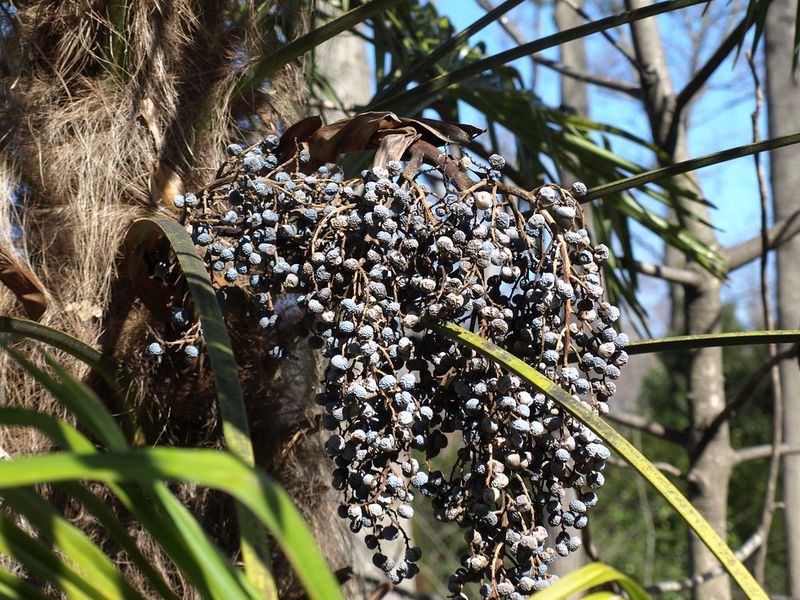
Florida’s state tree is more than a pretty trunk. Cabbage palms send out long, drooping clusters of small fruits that start green and ripen to black, often in fall and early winter.
Each fruit is about the size of a pea, but a single palm can hold thousands of them.
Raccoons, deer, black bears, and wild turkeys eat the fruit. Birds like American robins, mockingbirds, fish crows, and pileated woodpeckers do too.
Timing can shift from place to place and year to year.
Cabbage palm grows wild nearly statewide, from coastal hammocks to pine flatwoods. It handles salt spray, wind, and poor sandy soil well.
Homeowners often trim palms hard and remove the flower stalks for a neat look. Leaving those stalks in place lets fruit form and gives wildlife a reason to visit.
Fallen fruit can stain pavement, so think about placement near walkways and pools. A thick mulch layer underneath can help.
Seeds that pass through animals often sprout in odd spots, so expect a few volunteer palms in garden beds.
Old leaf bases, often called boots, also matter. Tree frogs, lizards, and bats may shelter in them, so consider leaving them unless they pose a safety concern.
Palms look best with only brown, fully withered fronds removed rather than green ones cut back.
7. Pignut Hickory Nuts Keep Squirrels Busy Stashing Food
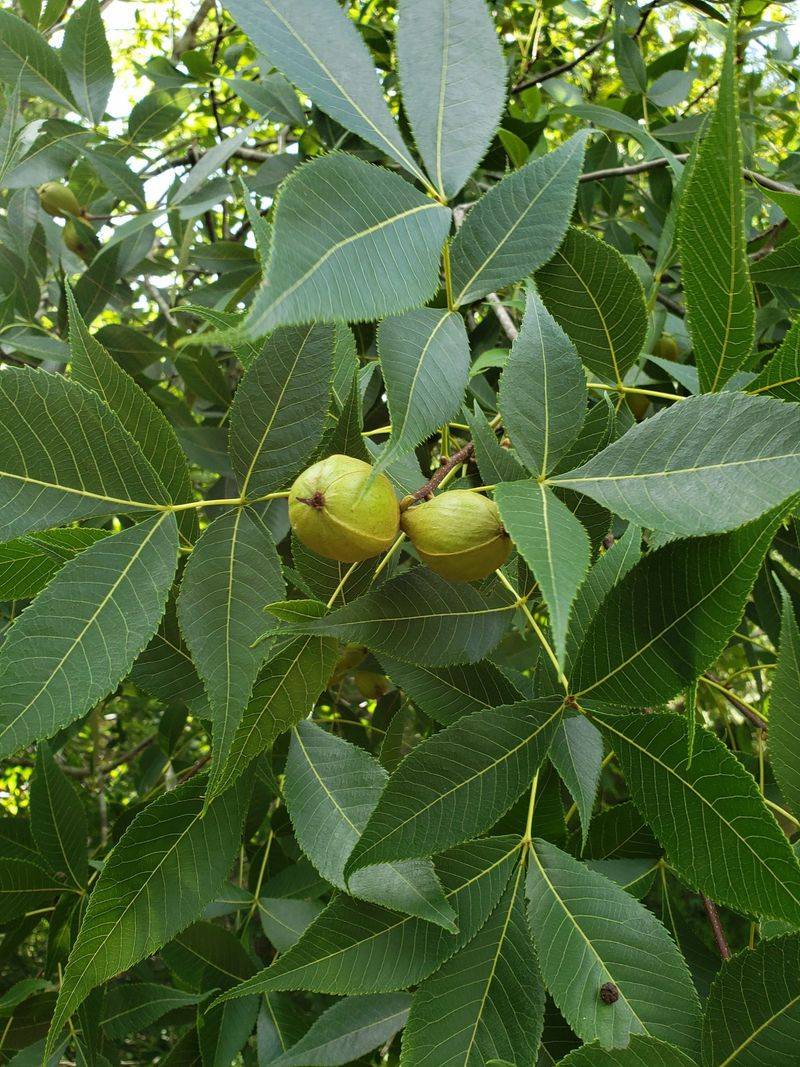
Squirrels act like they are on a schedule once pignut hickory nuts start falling. You will see them dashing back and forth, burying nut after nut around the yard.
Nuts usually drop from late summer into fall in North and Central Florida, where this native hickory grows.
Gray squirrels and fox squirrels are the main fans. Their habit of hiding nuts and forgetting some helps new hickories sprout far from the parent tree.
Wild turkeys, deer, and raccoons may eat nuts too, though the hard shell makes them tough for smaller animals.
Pignut nuts have a thick shell and a small kernel. People sometimes find the taste a bit bitter, which is part of how the tree got its name.
Crops can swing widely between years. A heavy fall may follow a light one.
Pignut hickory grows into a tall tree with a deep taproot, so it can be hard to move once it is in place. Plant small trees and choose a spot with plenty of space.
Expect falling nuts and husks in fall, which can be noisy on roofs and cars parked below.
Leaf color can turn a nice gold in autumn, a treat in a state where fall color is often subtle.
If you want to watch the action, a bench nearby gives a front-row seat to the squirrel hustle.
8. Small Sugarberry Fruits Provide Food For Birds Into Winter
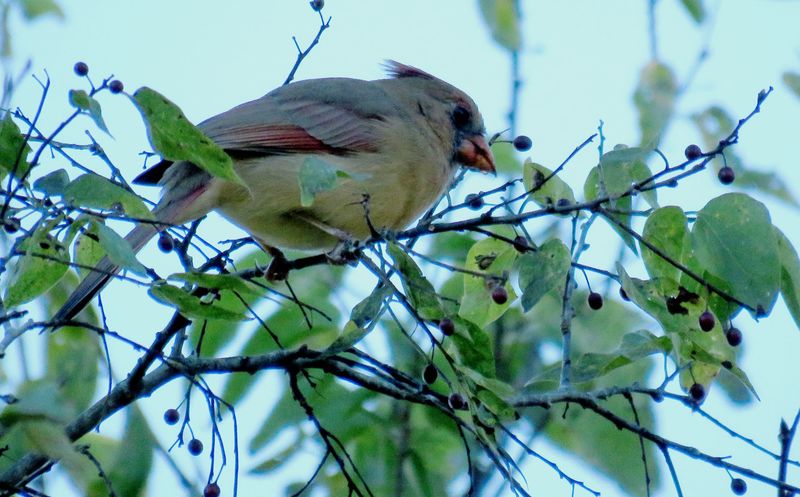
Small fruits can still make a big difference. Sugarberry, a native hackberry, produces pea-sized fruits that ripen in late summer and fall, turning orange-red to dark purple.
Plenty of them stay on the branches into winter, giving birds a food source when other options thin out.
Northern mockingbirds, American robins, cedar waxwings, and yellow-bellied sapsuckers are common visitors. Squirrels and other small mammals eat the fruit as well.
A single tree can host a steady stream of feeders through the cold months.
Sugarberry grows across much of Florida, often along rivers, in bottomlands, and in disturbed spots. It tolerates wet soil and periodic flooding better than some trees.
Birds spread the seeds, so seedlings may pop up in beds and fence lines. Pull unwanted ones while small, since roots get tougher with time.
Leaves also feed caterpillars of several butterflies, including the hackberry emperor and tawny emperor.
Gray bark with warty bumps makes the tree easy to spot in winter. Branches can be weak, so keep an eye out after storms and trim damaged limbs.
Messy fruit on sidewalks and cars is the main complaint, though birds help clean much of it up.
Plant it away from your house, where its spreading crown and fruit drop will not cause trouble.
9. Eastern Red Cedar’s Bluish Cones Draw Bluebirds And Other Birds
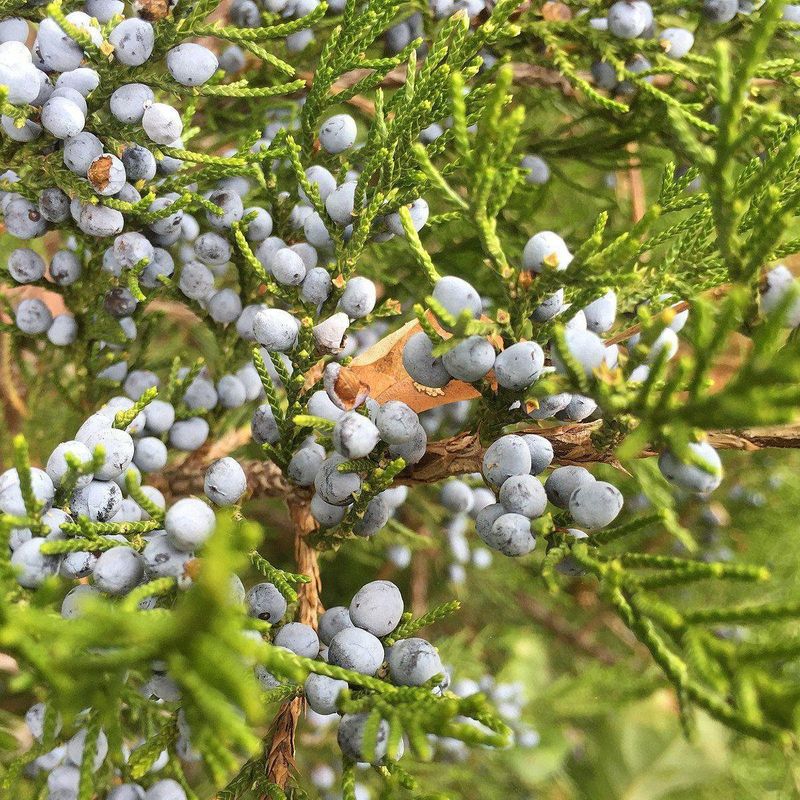
Watch a red cedar in winter and you might spot a flash of blue. Eastern bluebirds often perch in these evergreens to pick off the small, bluish cones.
Those cones look and act like berries, with a waxy, dusty coating that rubs off when touched.
Cedar waxwings, mockingbirds, yellow-rumped warblers, and robins also feed on them. Cones ripen in fall and can hang on into winter.
Only female trees bear the cones, while male trees release pollen in late winter.
Buying several plants raises the odds of getting at least one female tree with cones.
In Florida, the native type is often called southern red cedar, and it grows well in coastal areas thanks to good salt tolerance. It handles sandy soil and dry spells once established.
Thick, scented foliage gives birds shelter from wind and cold. Sparrows and other songbirds may roost or nest inside.
Red cedar can host cedar-apple rust, a fungus that also affects apples and related plants, though it is rarely a big problem in most home yards.
Grow it in full sun for the densest shape. Shade tends to make the tree thin and open.
A row of cedars can work as a windbreak or privacy screen that doubles as a winter bird buffet.