The Garden Center “Native” Michigan Shoppers Should Double-Check Before It Spreads Past The Bed
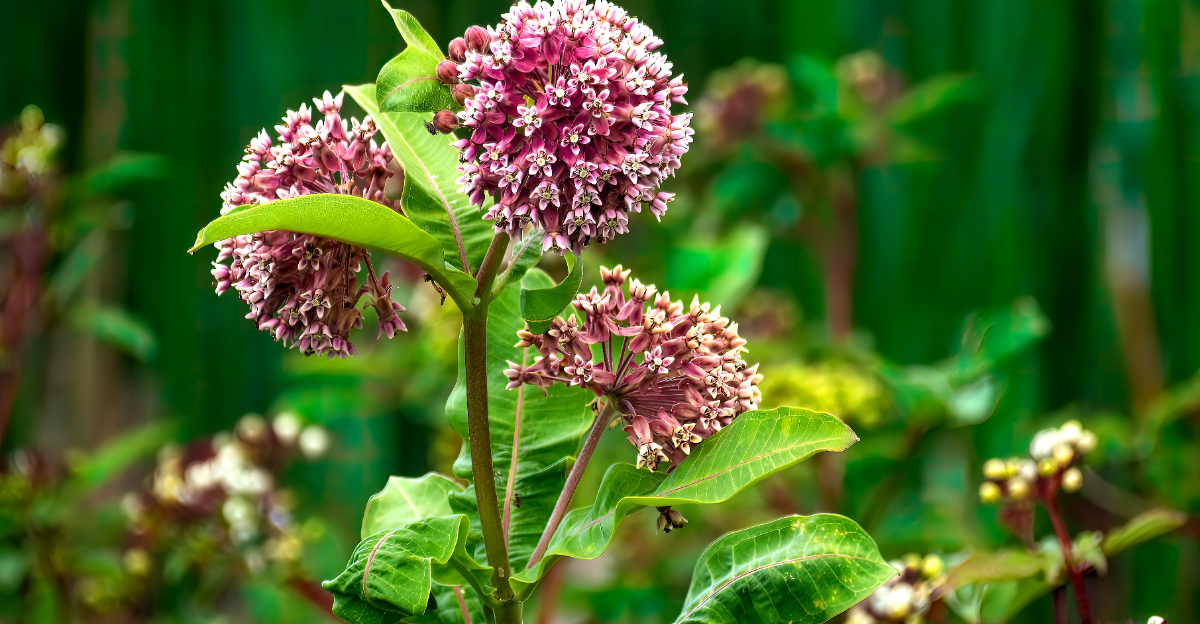
Common milkweed often gets labeled simply as native at Michigan garden centers, but shoppers should understand its aggressive spreading habit before adding it to smaller beds.
This plant spreads through extensive underground rhizomes, often popping up several feet away from its original planting location within just one or two seasons.
While it plays an important role supporting monarch butterflies, its spreading nature makes it a poor fit for tightly designed or small garden spaces.
Gardeners wanting milkweed’s benefits without the spread often choose butterfly milkweed instead, which stays more clumped and manageable.
Planting common milkweed in a contained area, like a large pot sunk into the ground, can help control its spread more effectively.
Removing unwanted shoots early prevents the root system from becoming too extensive to manage later.
Understanding this behavior beforehand helps gardeners avoid frustration once the plant establishes itself more aggressively than expected.
Choosing the right milkweed variety depends heavily on how much space you’re actually willing to dedicate.
1. Check The Botanical Name Before Buying
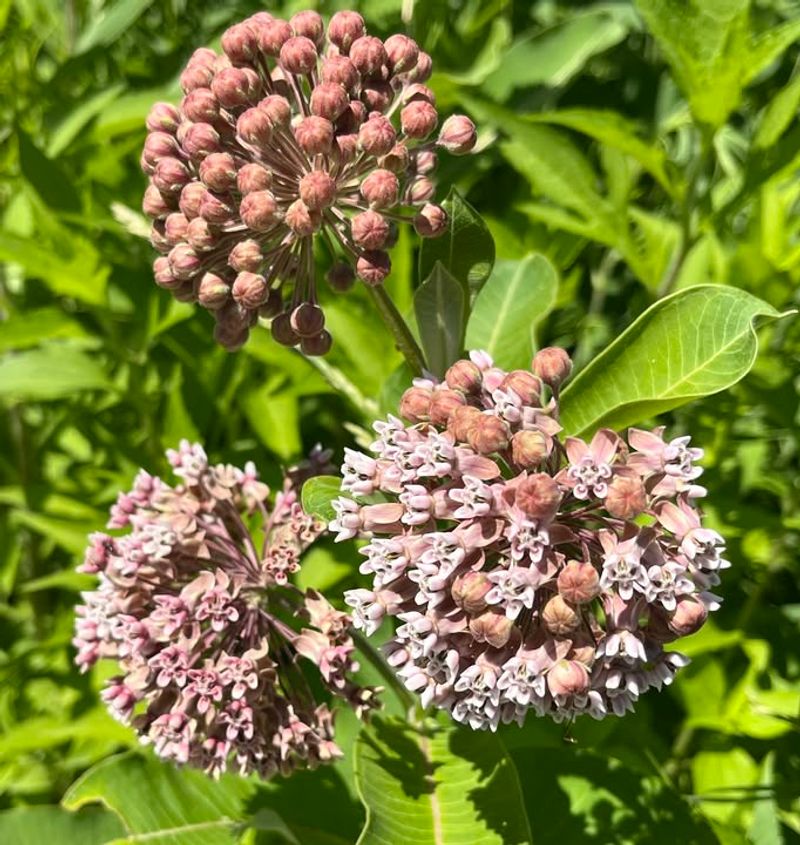
Not every plant labeled “native milkweed” at a garden center is the same species.
Michigan nurseries may stock several milkweed varieties under similar-sounding names, and the labels do not always make the differences obvious.
Common Milkweed, Asclepias syriaca, is just one of those options, and it behaves very differently from the others when it comes to spreading through a garden bed.
Some milkweed species stay as neat, compact clumps. Others grow tall and need consistent moisture.
Common Milkweed is the one especially known for forming wide, expanding colonies through underground stems called rhizomes.
Choosing based on flower color or the single word “native” on the tag can land you with a plant whose spreading habit does not match your garden space at all.
Reading the full plant label before purchasing takes only a moment and gives you the most useful information.
Look for the complete botanical name, the mature height, the moisture requirements, and any notes about spreading habit.
A good nursery staff member can also point you toward the right species for your specific bed size and soil type.
Knowing exactly which plant you are buying means you can plan its placement thoughtfully rather than figuring out its behavior after it has already spread past its original spot.
Matching the right species to the right location is genuinely the most important step in the entire process, and it starts right there at the garden center shelf.
2. Common Milkweed Is Truly Native To Michigan

Common Milkweed has grown across Michigan for thousands of years, long before anyone called it a garden plant.
You can find it thriving along roadsides, in open fields, along fence lines, and in sunny spots between properties all over the state.
It belongs here, and calling it invasive is simply not accurate. Invasive plants are species from other regions that disrupt local ecosystems, and Common Milkweed is not that.
What it is, though, is vigorous. A native plant can still spread more than a small or carefully arranged garden bed can comfortably handle.
Your Michigan Garden Changes Every Week. Your Plan Should Too.
Gardening in Michigan changes quickly throughout the season. Every Friday you’ll receive a simple weekly plan showing exactly what to plant, prune, fertilize, harvest, and protect so you never miss the right timing.
That distinction matters a lot when you are planning a planting. The plant itself is not the problem; the problem only shows up when it ends up in a space that cannot accommodate its natural growth habit.
Michigan gardeners who understand this difference tend to make much better planting decisions.
Rather than avoiding Common Milkweed entirely out of concern for spreading, the smarter move is choosing the right location for it in the first place.
A sunny meadow area, a wide property edge, or an informal pollinator patch can all welcome its growth without any issue.
Thinking of it as a plant that needs room rather than a plant that causes trouble shifts the whole approach.
Common Milkweed genuinely earns its place in Michigan gardens and natural areas, and with a little planning, it can be one of the most rewarding native plants you ever put in the ground.
3. Underground Rhizomes Carry New Shoots Past The Bed
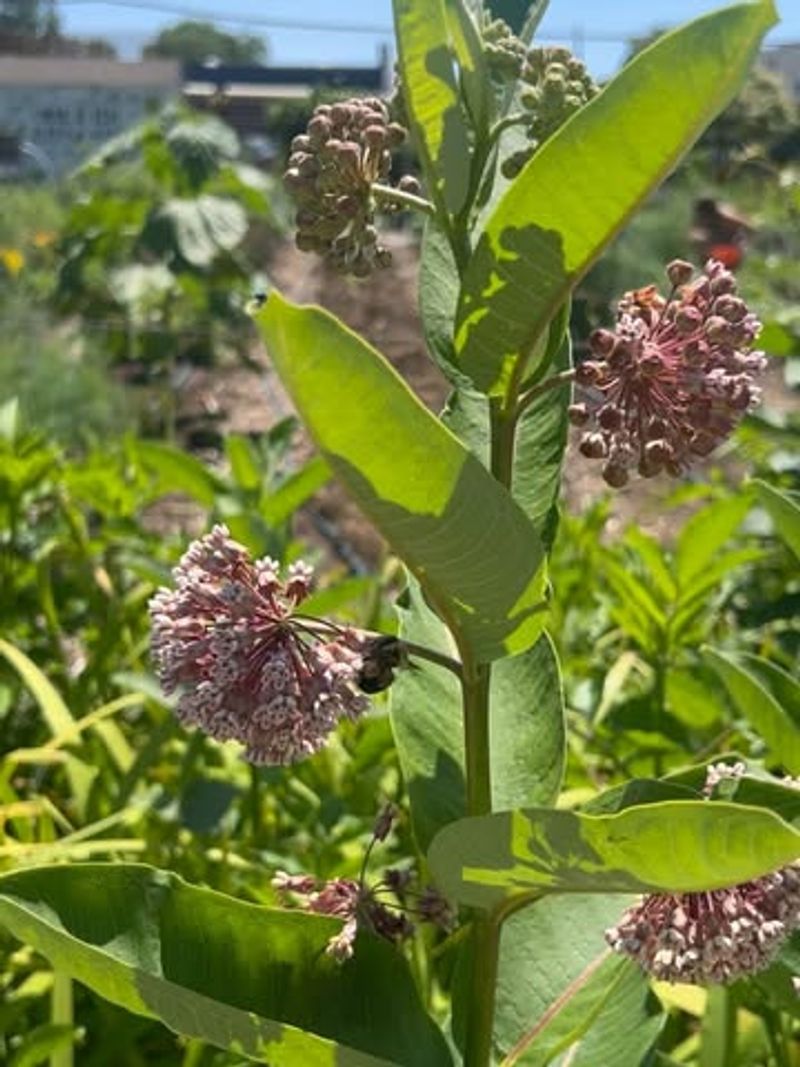
Here is the part that surprises most first-time Common Milkweed growers: the plant travels underground.
It spreads through horizontal underground stems called rhizomes, which can push outward several feet from the original planting over the course of a growing season.
New shoots pop up from these rhizomes, and they can emerge right in the middle of a neighboring perennial, beside a walkway, or even out in the lawn beyond your garden edging.
Pulling a single visible stem does not solve the problem because the underground rhizome network stays intact.
The shoot you remove was just one connection point on a much longer underground stem. Another shoot can appear nearby within a few weeks.
Physical barriers like deep metal or rubber edging can slow the spread, but rhizomes that grow deep enough will eventually find a way around shallow borders.
Gardeners who place Common Milkweed in a narrow border often find themselves managing its spread more than enjoying the plant.
Understanding this rhizome habit before you plant makes a real difference in how you approach placement.
A wide open area with no delicate neighbors gives the rhizomes room to move without causing problems.
If your garden is made up of tightly spaced perennials or defined borders with edging, a different milkweed species will likely serve you much better.
Knowing how the plant moves underground is honestly the single most useful piece of information a Michigan shopper can have before making a purchase at the garden center.
4. One Plant Can Develop Into A Large Colony
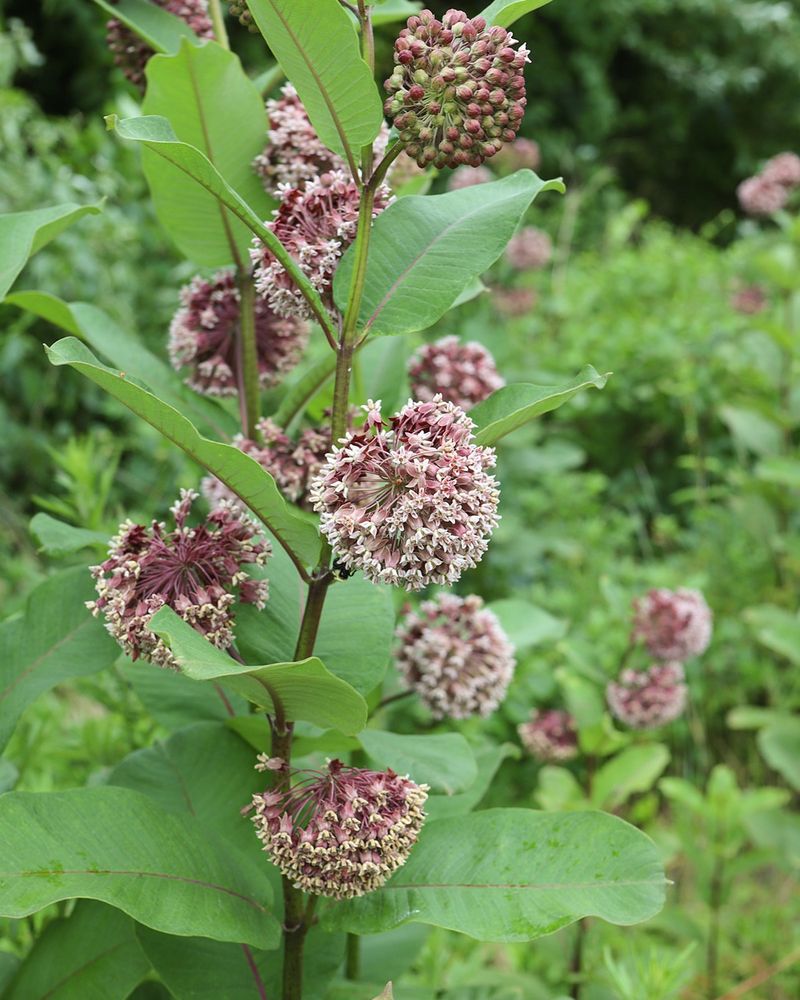
Buying one small pot of Common Milkweed at the garden center does not mean you will have one plant next summer.
This species naturally grows as an expanding colony, sending out new shoots from its rhizome network season after season.
Within a few years, a single original plant can develop into a substantial patch that covers a wide area of ground. That colony habit is actually a wonderful thing in the right setting.
A large patch of Common Milkweed provides a serious amount of habitat for Monarch caterpillars, which feed exclusively on milkweed foliage.
More plants mean more food available for caterpillars at different stages of development, and a bigger patch is simply more useful to the Monarch population than a single isolated stem could ever be.
The challenge appears when that same colony starts competing for space with smaller or slower-growing plants nearby.
Compact perennials, ground covers, and ornamental grasses can all get crowded out as the milkweed colony expands outward.
Plants that need good air circulation can also struggle when the tall milkweed stems close in around them.
Presenting this growth habit as something to plan around rather than something to fear is the most helpful framing. In a tightly planted decorative bed, the colony habit creates headaches.
In a roomy naturalized area or meadow garden, that same spreading energy turns into a thriving, wildlife-friendly habitat patch that practically manages itself once it gets established. The plant is doing exactly what it evolved to do.
5. Wind Carried Seeds Can Extend Its Reach
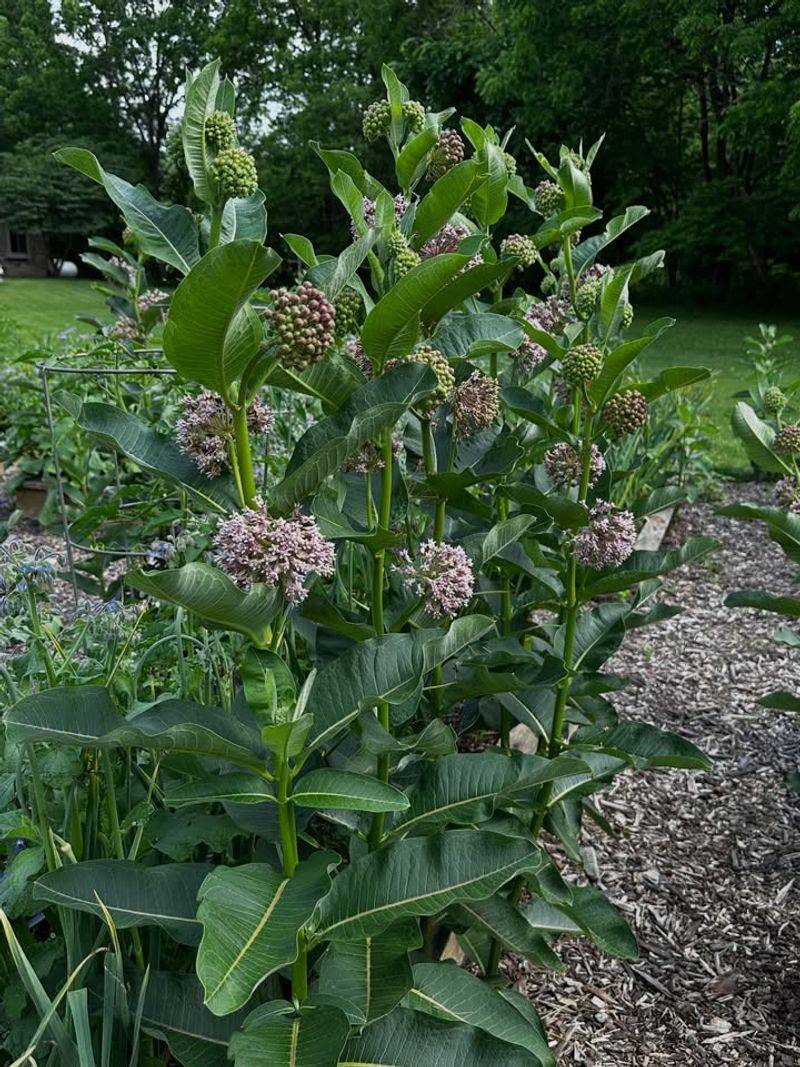
Beyond rhizomes, Common Milkweed has a second way of spreading that is just as fascinating to watch as it is worth understanding. By late summer and into fall, the plant produces large, rough-textured seed pods.
When those pods split open, they release flat seeds attached to long, silky white fibers that catch the wind and carry seeds considerable distances from the original plant.
It is a genuinely beautiful sight, but it also means seedlings can show up in unexpected places around the yard.
Seedlings tend to appear in bare or exposed soil where the wind-carried seeds can make good contact with the ground.
Garden beds with open mulched areas, vegetable plots, and freshly turned soil are all spots where milkweed seedlings might show up the following spring.
They are easy to recognize once you know what young milkweed looks like, with their broad oval leaves and distinctive upright growth.
Removing a few selected pods before they fully open is an easy way to reduce seed movement when you want to keep the plant within a certain area. Snipping pods while they are still green and firm prevents the seeds from dispersing.
Worth noting, though, is that underground rhizomes are usually responsible for the most immediate and significant expansion around an established patch.
Wind-carried seeds create new plants in separate spots, while rhizomes steadily push the main colony outward.
Managing both spreading methods gives gardeners the most control over where Common Milkweed shows up across the yard.
6. The Spreading Growth Creates Valuable Monarch Habitat

Monarch butterflies cannot complete their life cycle without milkweed. The foliage is the only food source Monarch caterpillars will eat, which makes every Common Milkweed plant genuinely important to their survival.
An expanding colony provides far more caterpillar food than a single contained plant ever could, and that extra capacity matters during peak migration season when many caterpillars may be feeding at the same time.
The flowers bring in a whole crowd beyond Monarchs, too.
Common Milkweed blooms are rich in nectar and attract a wide variety of visitors including many other butterfly species, native bees of all sizes, honey bees, and various other pollinating insects.
The blooms have a sweet fragrance that carries on warm summer evenings, and watching the activity around an established milkweed patch on a sunny afternoon is genuinely impressive.
Pairing Common Milkweed with other nectar-producing native plants creates an even more complete habitat.
Plants like wild bergamot, purple coneflower, black-eyed Susan, and native goldenrods extend the bloom season and support a broader range of pollinators beyond those that visit milkweed specifically.
A milkweed patch surrounded by diverse native plantings becomes a functioning wildlife garden rather than just a single-purpose Monarch stop.
For Michigan gardeners who want to make a real positive impact for pollinators, an established Common Milkweed colony in a naturalized area is one of the most effective things you can plant.
The spreading habit that challenges a tidy border becomes a genuine strength when the goal is wildlife support.
7. Larger Naturalized Areas Are The Best Locations

Choosing where to plant Common Milkweed is honestly just as important as choosing whether to plant it.
This species performs best and causes the least management stress when it has room to spread naturally without running into plants or structures it should not disturb.
Sunny meadow gardens, broad property edges, open field margins, and informal pollinator patches are all settings where its colony-forming habit becomes a feature rather than a frustration.
Spots to steer clear of include narrow walkway borders, small foundation beds near the house, vegetable plots, and any area close to a property boundary where new rhizome shoots might become an inconvenience for neighboring yards.
Delicate perennials that need consistent spacing and air circulation are also poor companions for an expanding milkweed colony.
Placing a vigorous spreader next to plants that cannot hold their ground is a setup that rarely ends well for the smaller plants.
Planning for the plant’s future spread rather than judging only the size of the original nursery pot is the key mindset shift here.
A small plant in a four-inch pot at the garden center can look completely harmless, but that same plant may send rhizomes three or four feet in multiple directions by its second or third season.
Visualizing the mature colony size and marking out that space before you plant helps enormously.
Michigan gardeners who give Common Milkweed the open, sunny real estate it genuinely needs tend to end up with thriving, low-maintenance habitat patches that reward them season after season with wildlife activity and beautiful blooms.
8. Smaller Beds Need A More Manageable Milkweed

Good news for gardeners with smaller beds: you do not have to choose between supporting Monarchs and keeping your garden manageable.
Two other Michigan native milkweed species offer all the caterpillar-supporting benefits of Common Milkweed without the same aggressive rhizome spreading habit, and both are widely available at native plant nurseries across the state.
Butterfly Weed, Asclepias tuberosa, is a standout option for sunny, dry, freely draining beds.
It grows as a compact clump rather than a spreading colony, stays under two feet tall in most garden conditions, and produces vivid orange flower clusters that attract Monarchs, other butterflies, and native bees from midsummer onward.
Unlike Common Milkweed, it spreads primarily by seed rather than runners, which makes it far easier to manage in a defined border.
It also tends to be a bit slower to establish, so patience in the first season pays off with a long-lived, well-behaved plant.
Swamp Milkweed, Asclepias incarnata, is the better pick for moist or occasionally wet sites. It produces pretty pink flower clusters, grows to around four feet tall, and forms clumps that stay reasonably contained over time.
Both species still support Monarch caterpillars just as effectively as Common Milkweed does.
Matching the milkweed species to your available space, sunlight level, soil moisture, drainage, and how much spreading you are comfortable managing is the whole game when it comes to buying milkweed at a Michigan garden center.
The right species in the right spot makes all the difference.