The Garden Pests Virginia Gardeners Should Tackle In July, While They’re Still Manageable
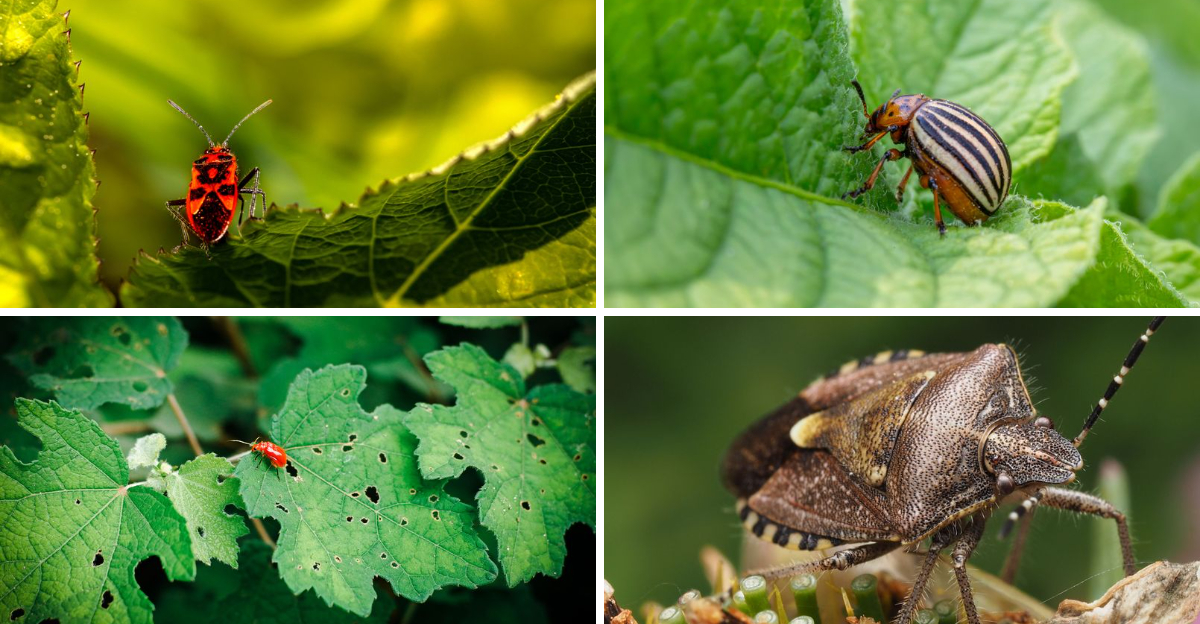
July in a Virginia garden moves fast, and so do the pests. Heat and humidity turn your beds into an all-you-can-eat buffet for aphids, squash bugs, and Japanese beetles, and their numbers can triple in the time it takes you to finish your morning coffee.
One week your squash leaves look fine. The next, they’re lace. That’s how quickly things can turn. The upside is that late July populations are still small enough to manage without reaching for anything drastic.
Learn to recognize the early signs, because a few chewed leaves today can mean a stripped plant by the weekend. Check the undersides of leaves, watch for sudden wilting, and don’t wait for damage to look “bad enough” before you act.
Your tomatoes, beans, and peppers are counting on it. So is your August harvest.
1. Japanese Beetles
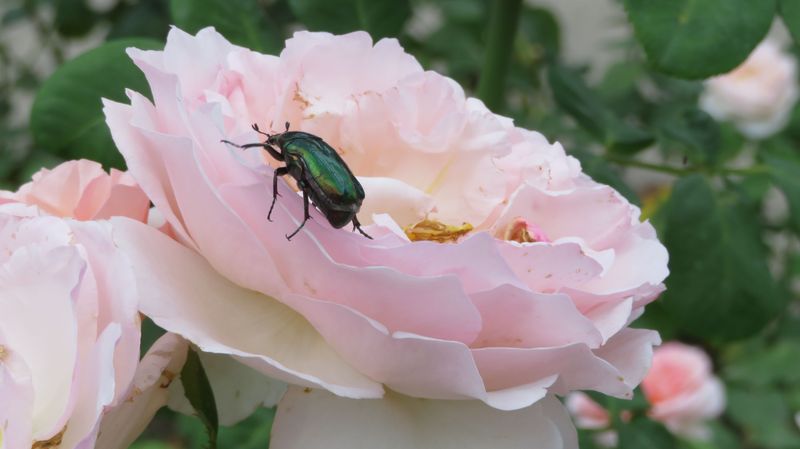
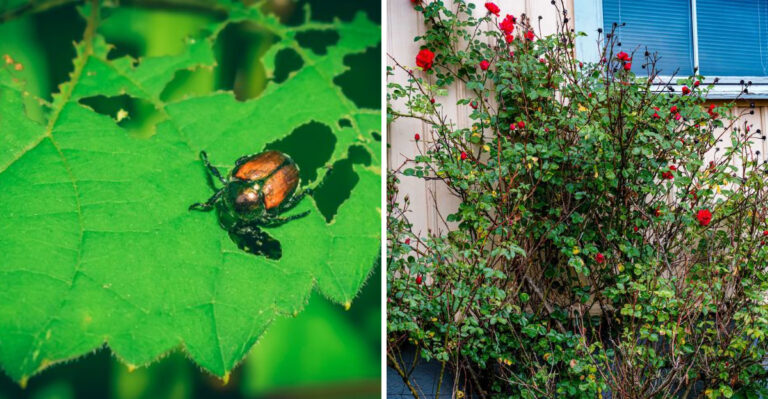
Your roses looked perfect yesterday. Today, they look like green lace with wings attached. Japanese beetles are among the most recognized garden pests in Virginia, and July is peak feeding season.
These shiny, copper-winged insects skeletonize leaves with shocking speed. They feed in groups, which makes a small problem become a large one fast.
Hand-picking works surprisingly well for small infestations. Drop the beetles into a bucket of soapy water early in the morning, when they move slowly and are easiest to catch.
Neem oil sprays disrupt feeding and egg-laying behavior without harming pollinators when applied in the evening. Repeat every seven to ten days for best results.
Avoid Japanese beetle traps sold at hardware stores. These traps tend to attract far more beetles than they capture, making your yard a destination rather than a solution.
Milky spore, a natural soil bacteria, targets beetle grubs underground. Apply it in late summer to reduce next year’s adult population before it starts.
Row covers protect vulnerable plants like beans and raspberries during peak beetle season. Remove covers when blooms appear so pollinators can still do their job.
Consistency is your greatest weapon here. A few minutes of daily scouting prevents the kind of infestation that becomes much harder to manage by mid-August.
2. Squash Vine Borer
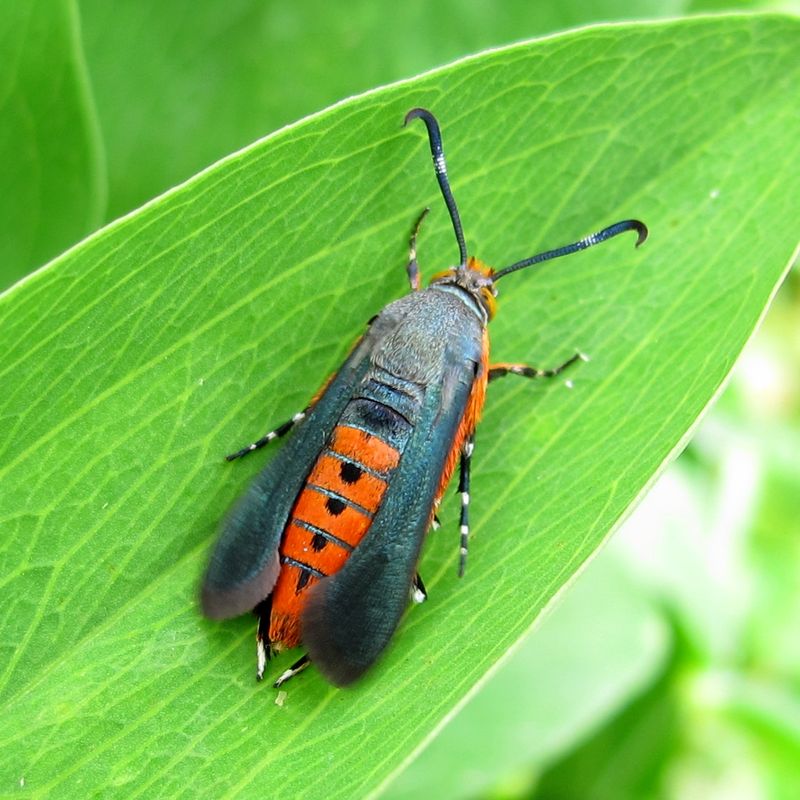
One morning your zucchini plant looks lush and healthy. The next, it collapses like a deflated balloon with no warning at all. That is the squash vine borer at work, and it is one of the sneakiest garden pests Virginia gardeners face.
The adult is a red-and-black moth that lays flat, brown eggs at the base of squash stems. Once the larvae burrow inside, they feed on the plant from within.
Check stems near the soil line for tiny brown eggs that look like flattened sesame seeds. Remove them by hand before they hatch to stop damage before it starts.
If you notice sawdust-like frass near the base of a wilting plant, the borer is already inside. Use a sharp blade to slit the stem lengthwise, remove the larva, and mound soil over the wound.
The plant can often recover if you act quickly and keep the soil moist around the buried section. New roots will form along the buried stem within a week or two.
Your Virginia Garden Changes Every Week. Your Plan Should Too.
Gardening in Virginia changes quickly throughout the season. Every Friday you’ll receive a simple weekly plan showing exactly what to plant, prune, fertilize, harvest, and protect so you never miss the right timing.
Row covers placed over plants at transplant time greatly reduce the chances of adult moths laying eggs. Just remember to remove them when flowers appear so bees can pollinate your crop.
Planting a second round of squash seeds in late June gives you a backup crop that matures after adult moth season winds down. Succession planting is one of the smartest moves a squash grower can make.
3. Tomato/Tobacco Hornworm
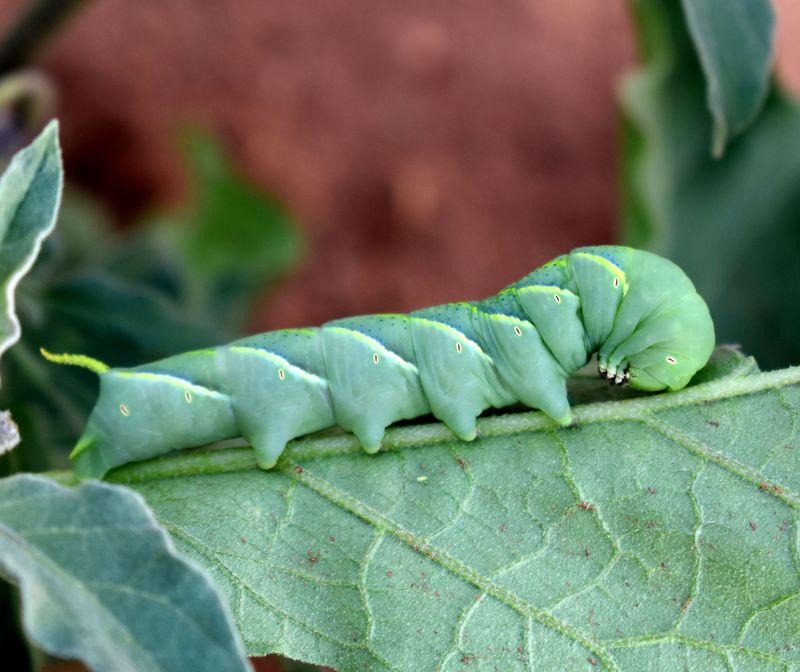
Something ate half your tomato plant overnight, and you cannot find the culprit anywhere. Welcome to the hornworm experience, where a creature the size of your finger hides in plain sight.
Tomato hornworms are bright green with white diagonal stripes, making them nearly invisible against tomato foliage. Their camouflage is genuinely impressive, even for experienced gardeners.
Look for dark green or black droppings on leaves below the feeding site. Follow the frass upward and you will almost always find the hornworm within a few inches.
Hand removal is one of the most effective control methods for these large caterpillars. Drop them into soapy water or relocate them far from your garden if you prefer a gentler approach.
Braconid wasps are natural allies in this fight. If you spot a hornworm covered in small white cocoons, leave it alone because those are wasp pupae that will hatch and hunt more hornworms.
Bacillus thuringiensis, commonly called Bt, is a natural spray that targets caterpillars without harming birds or beneficial insects. Apply it to foliage in the evening for the best absorption rate.
Planting dill or basil nearby attracts parasitic wasps that naturally keep hornworm populations in check. Companion planting is a low-effort strategy with long-term payoffs for your whole garden.
Checking plants every two to three days in July catches hornworms while they are still small and easier to manage before they cause serious damage.
4. Mexican Bean Beetle
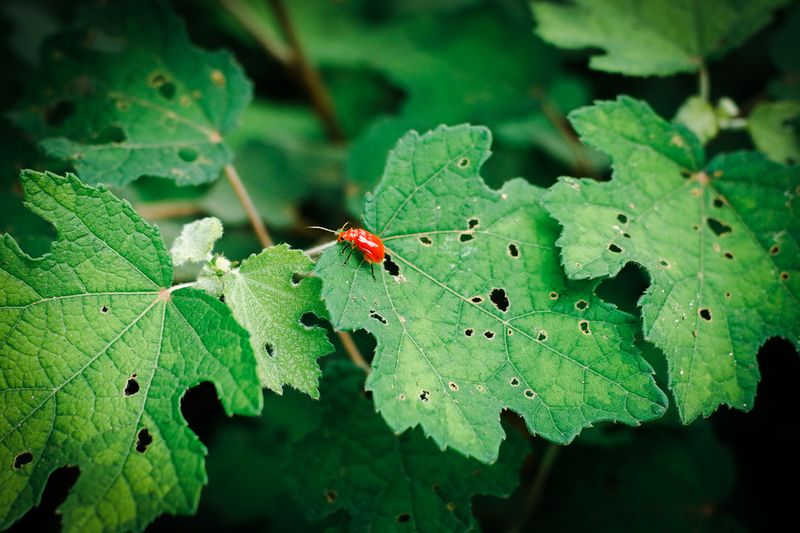
If your bean leaves suddenly look like they went through a paper shredder, the Mexican bean beetle has arrived. This copper-colored, spotted beetle is a close relative of the ladybug, but it acts nothing like one.
Adults and larvae both feed on the undersides of bean leaves, scraping away tissue and leaving a lacy, skeletonized pattern. Heavy infestations can strip a bean plant bare within days.
Flip leaves over regularly during July scouting sessions to catch yellow egg clusters early. Crush the eggs between your fingers before they hatch into the soft, spiny yellow larvae.
Spinosad, a natural insecticide derived from soil bacteria, is highly effective against Mexican bean beetle larvae. It breaks down quickly in sunlight, making it a safer choice around edible crops.
Beneficial insects like the spined soldier bug and parasitic wasps prey on this beetle naturally. Planting flowers like marigolds and dill nearby helps attract and support these helpful predators.
Remove and bag infested plant debris at the end of the season to reduce overwintering adults near your beds. Beetles hide in leaf litter and emerge hungry in June the following year.
Rotating your bean planting location each season disrupts the beetle’s life cycle significantly. Even moving crops a modest distance can make a noticeable difference in infestation pressure the following summer.
Staying ahead of this pest in July keeps your bean harvest strong right through September, and the extra scouting time pays off.
5. Squash Bugs And Cucumber Beetles
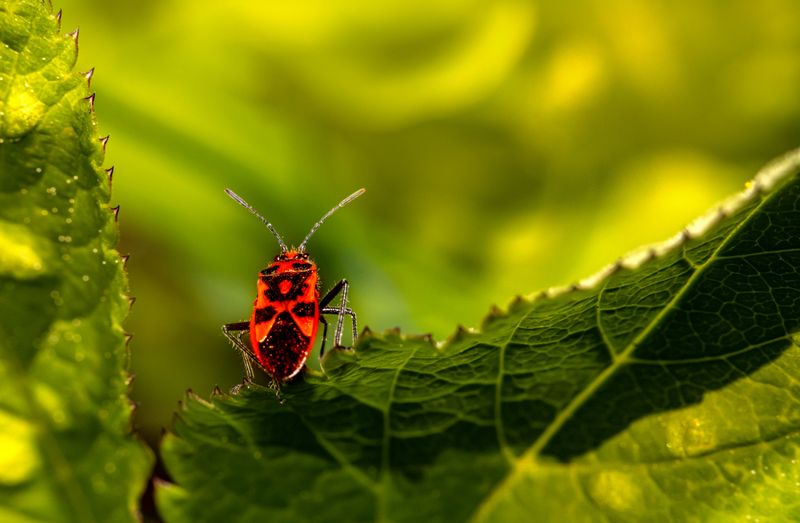
Two pests, one chaotic July garden bed. Squash bugs and cucumber beetles often show up at the same time in Virginia gardens, and both can devastate cucurbit crops before the month ends.
Squash bugs are flat, gray-brown insects that hide under leaves and along stems. They suck plant sap, causing wilting that looks deceptively like drought stress at first glance.
Cucumber beetles come in striped and spotted varieties, both equally troublesome. Beyond direct feeding damage, they spread bacterial wilt, a disease that clogs plant vascular tissue and causes rapid collapse.
Check the undersides of squash and cucumber leaves for reddish-brown squash bug egg clusters. Remove leaves with eggs attached and seal them in a plastic bag before discarding.
Boards placed near plants overnight attract squash bugs seeking shelter. Check under the boards each morning and drop the gathered bugs into soapy water to reduce their numbers fast.
Yellow sticky traps catch cucumber beetles effectively and give you a visual count of how bad the infestation has become. Knowing your pest pressure helps you decide how aggressively to respond.
Kaolin clay sprayed on plants creates a gritty barrier that confuses and irritates both pests without using synthetic chemicals. Reapply after heavy rain since the coating washes away easily.
Resistant cucumber and squash varieties exist and are worth growing next season if these pests hit your garden hard. Prevention through plant selection is one of the smartest long-term strategies available to home growers.
6. Brown Marmorated Stink Bug
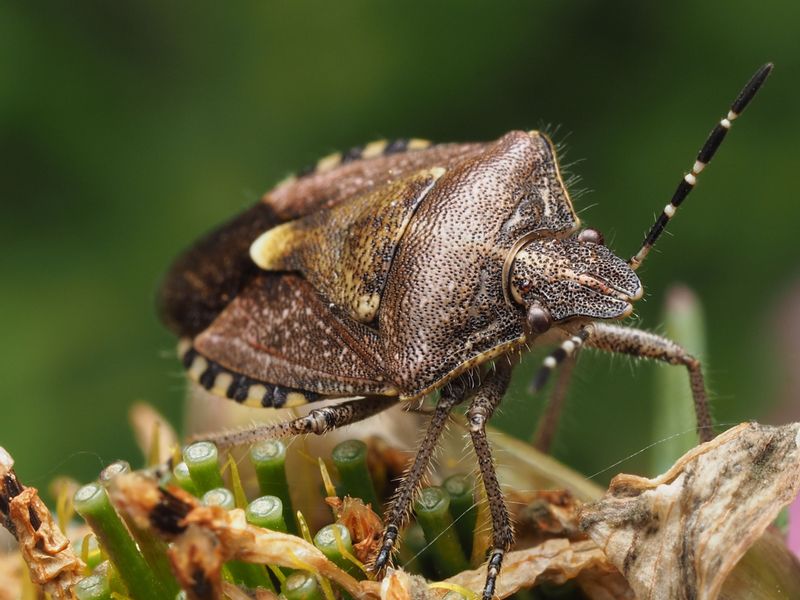
Most gardeners remember their first accidental stink bug crush. That sharp, cilantro-like smell is hard to miss, and so is the crop damage these insects cause every July in Mid-Atlantic gardens.
Originally from Asia, this invasive pest arrived in the United States in the late 1990s and has been a nuisance ever since. It feeds on over 100 plant species, making it one of the least picky garden pests found across Virginia.
Stink bugs pierce fruit and vegetable skin to feed, leaving behind sunken, discolored spots called cat-facing on tomatoes and peppers. The damage looks cosmetic at first but creates entry points for rot and disease.
Kaolin clay applied to fruit surfaces makes the texture unappealing to feeding bugs without any chemical residue concerns. It works best when applied before heavy pest pressure begins in early July.
A simple trap made from a pan of soapy water placed under a light source catches large numbers overnight. The bugs are attracted to light and fall into the water when they land nearby.
Netting or fine mesh row covers protect fruiting plants during peak feeding periods. Make sure covers are secured tightly at the base so bugs cannot crawl underneath from the soil.
Natural predators like the samurai wasp are being studied and released in parts of the Mid-Atlantic as a long-term biological control option. For now, physical removal and barriers remain the most reliable tools for home gardeners tackling these garden pests in July.
7. Spider Mites
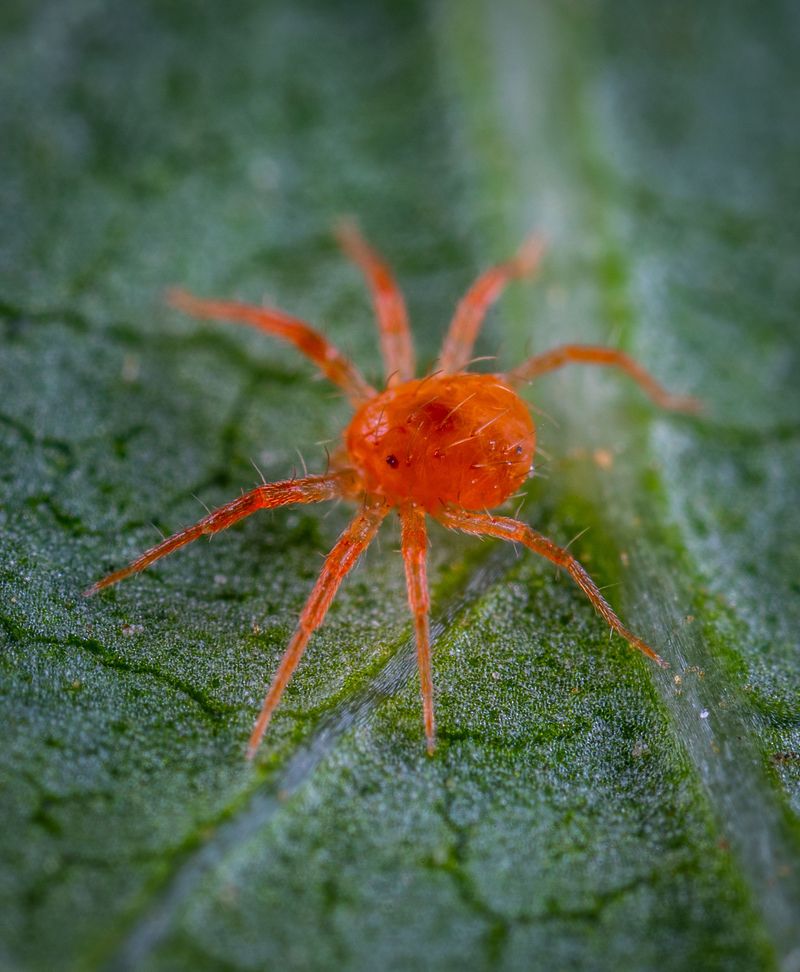
Hot, dry July weather in Virginia is basically a welcome mat for spider mites. These microscopic arachnids thrive when temperatures climb and humidity drops, making Mid-Atlantic summers their favorite time of year.
Spider mites are barely visible to the naked eye, but their damage is unmistakable. Leaves develop a stippled, bronze, or silvery appearance as mites drain chlorophyll from individual cells one by one.
Fine webbing on the undersides of leaves is a telltale sign the infestation has grown serious. Shake a branch over white paper and watch for tiny moving specks to confirm you are dealing with mites.
A strong blast of water from a garden hose knocks mites off foliage effectively. Repeat this every two to three days since mites reproduce fast and a single treatment rarely solves the problem.
Insecticidal soap sprays suffocate mites on contact without leaving harmful residues on edible plants. Coverage of the leaf undersides is critical because that is where mites feed and lay eggs.
Predatory mites, available from garden supply companies, are natural enemies that feed on spider mites aggressively. Releasing them early in an infestation gives them time to establish before populations explode.
Keeping plants well-watered and mulched reduces the heat stress that makes them vulnerable to mite attacks in the first place. Stressed plants may emit chemical signals that draw spider mites in from surrounding areas.
Catching spider mites in July, before August heat intensifies, gives you the best shot at protecting your plants through the rest of the season.
8. Colorado Potato Beetle
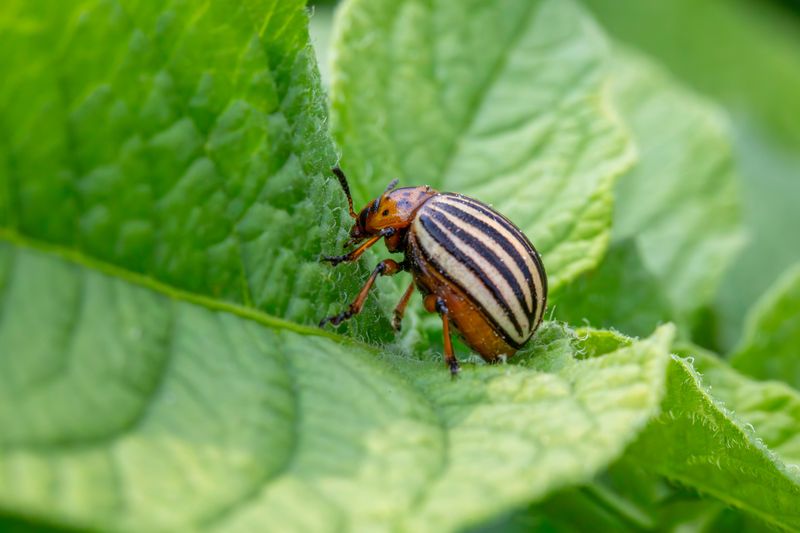
Potato plants can look lush on Monday and nearly bare by Friday when Colorado potato beetles move in. These bold, yellow-and-black striped beetles make no effort to hide, feeding out in the open.
Adults lay bright orange egg clusters on the undersides of potato, tomato, and eggplant leaves. The larvae that hatch are plump, reddish-orange grubs that feed just as aggressively as the adults do.
Hand-picking adults and larvae into soapy water is the first line of defense for smaller gardens. Check plants every two days in July because populations can double in size quickly during warm weather.
Bt var. tenebrionis is a specific strain of Bacillus thuringiensis that targets beetle larvae without harming beneficial insects. Apply it to foliage in the evening when larvae are actively feeding for maximum effect.
Neem oil disrupts the beetle’s hormonal development, reducing its ability to reproduce and feed normally. Combining neem with hand-picking creates a two-pronged approach that works better than either method alone.
Crop rotation is essential for managing Colorado potato beetles long-term. Moving nightshade-family plants to a different bed each year prevents beetles from emerging near their food source in the following season.
Straw mulch around potato plants has been shown to confuse adult beetles searching for host plants. The reflective surface of the straw disorients them, reducing the number that successfully locate and colonize your crop.
Staying consistent with these garden pests in July keeps your potato harvest intact and your eggplants thriving well into fall.