The Ghost Orchid Is Florida’s Most Mysterious Native Plant
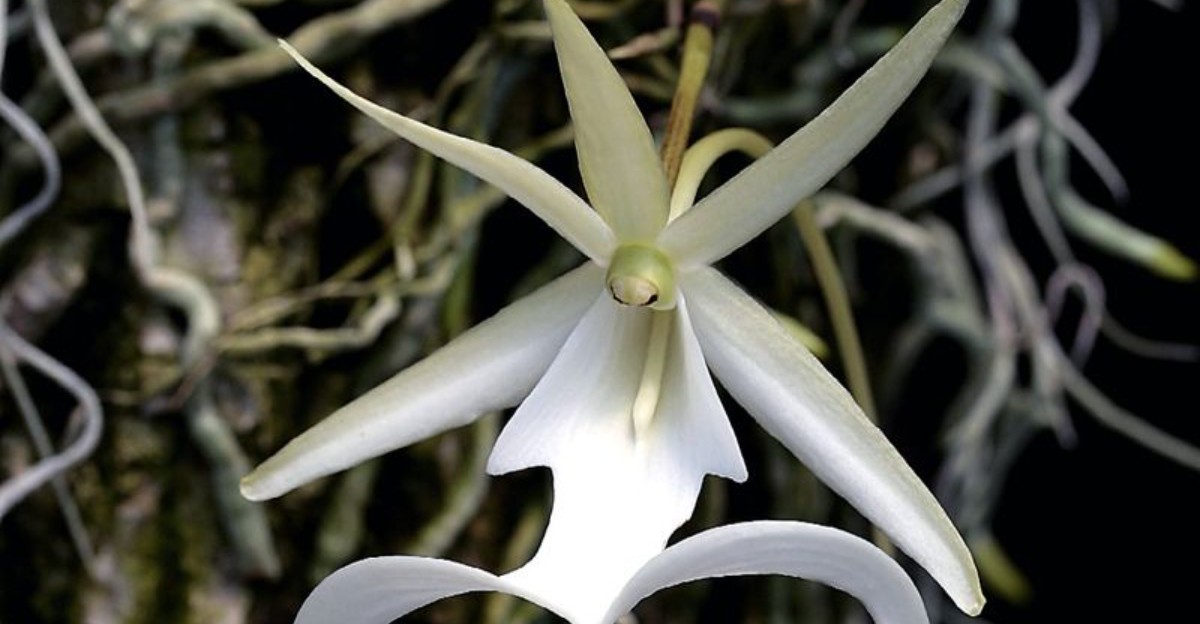
Somewhere deep in a Florida swamp, a white flower hangs in midair with no leaves, no stem, and no obvious way to stay alive. Visitors who spot one tend to go quiet.
Few plants have drawn crowds like this one. Photographers wait for it.
Botanists argue over it. A bestselling book once built a whole story around the hunt.
Yet most people who live a short drive from its home have never laid eyes on it. The flower keeps its secrets well. Its roots do the work leaves usually handle.
Its blooms show up on a schedule nobody can fully predict. Even the visitor that makes the whole thing possible shows up only after dark.
Every year, a few lucky hikers catch the show. Most go home with nothing but mud on their boots and a good story.
Read up before you pack your bags. This one rewards the prepared.
1. It Has No Leaves At All
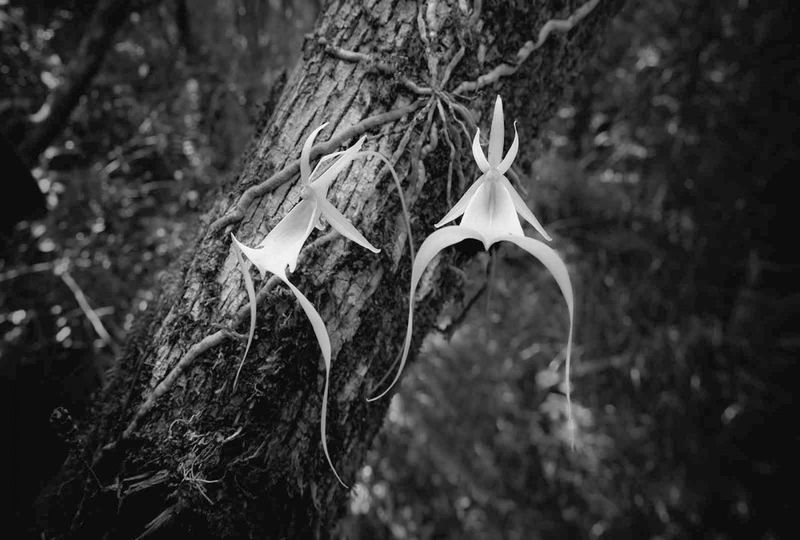
Imagine walking past a plant and not even knowing it was there. That happens all the time with the ghost orchid, because it skips the leafy look most plants wear.
Most plants grow leaves to catch sunlight. The ghost orchid took a different path.
Its leaves shrank over time into tiny scales that are hard to spot.
From a few feet away, a grown plant looks like a bundle of green strings stuck to a tree. Its stem is so short that many people cannot find it at all.
You could stand right next to one and think it was just a bit of vine.
Why would a plant give up leaves? Scientists think it helps the orchid save energy and water.
Leaves can lose moisture, and skipping them means one less thing to keep healthy in a swamp full of ups and downs.
Here is a fun way to think about it. Most plants are like houses with big solar panels on the roof.
The ghost orchid tucked its power system somewhere else, which we will talk about next.
If you ever go looking for one, train your eyes to search tree trunks for green squiggles. Bring binoculars and patience, since spotting this plant without its bloom is a real nature challenge.
2. Its Green Roots Do The Work Of Leaves
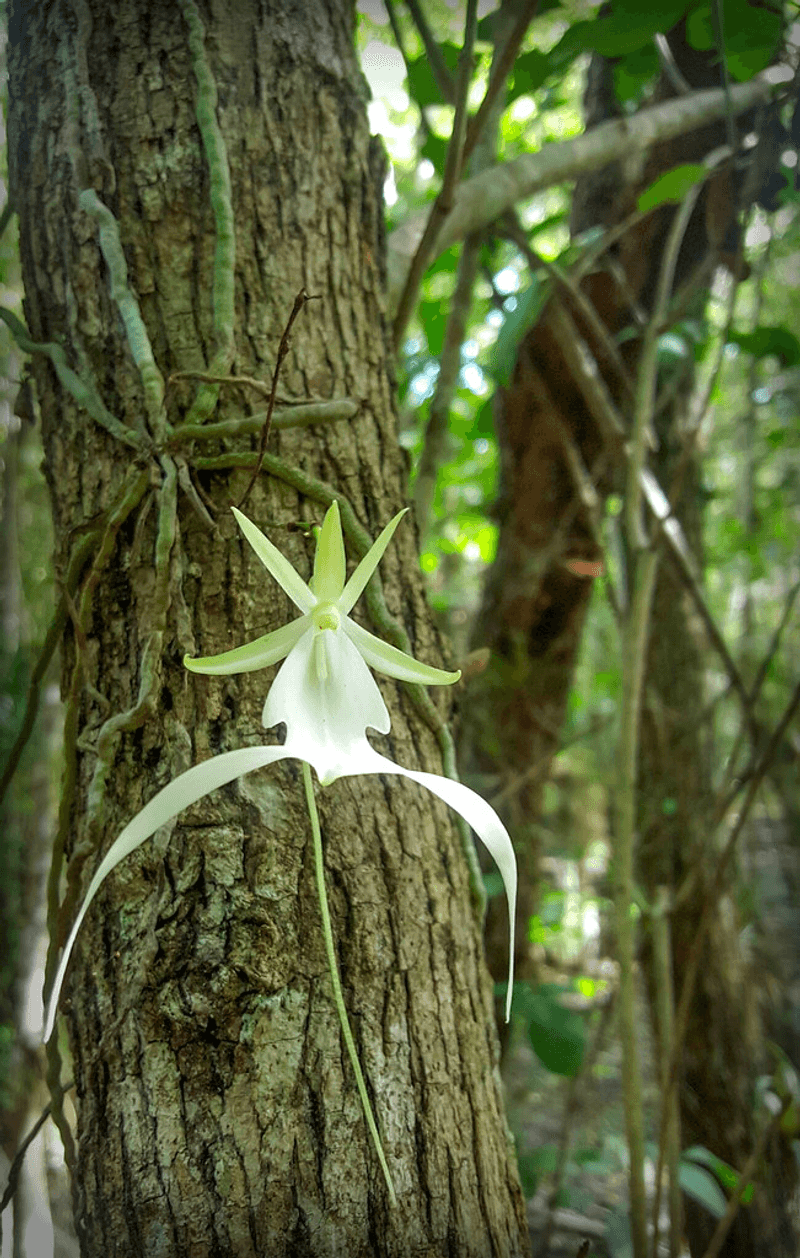
Talk about a team of multitaskers. The roots of the ghost orchid hold the plant in place, soak up water, and make food all at once.
Those roots are green because they carry chlorophyll. That is the same stuff that makes leaves green and lets them turn sunlight into sugar.
So when light filters through the swamp trees, the roots get busy cooking up energy.
The roots spread out in a tangled mat that hugs the bark tightly. Unlike the flowers, which come and go, the roots stay visible all year.
They are the part of the plant you are most likely to see.
There is also a hidden partner in this story. The roots team up with a special fungus.
Your Florida Garden Changes Every Week. Your Plan Should Too.
Gardening in Florida changes quickly throughout the season. Every Friday you’ll receive a simple weekly plan showing exactly what to plant, prune, fertilize, harvest, and protect so you never miss the right timing.
The fungus helps the orchid pull in nutrients, and the orchid shares some of its sugar in return.
Think of it like a trade between neighbors. One brings snacks, and the other helps fix the fence.
Both come out ahead.
Did you know? This fungus partnership is one big reason ghost orchids are so hard to grow at home.
Without the right fungus, the plant struggles, so leave wild orchids where they are and enjoy them with your eyes only.
3. It Clings To Pond Apple, Pop Ash And Cypress Trunks
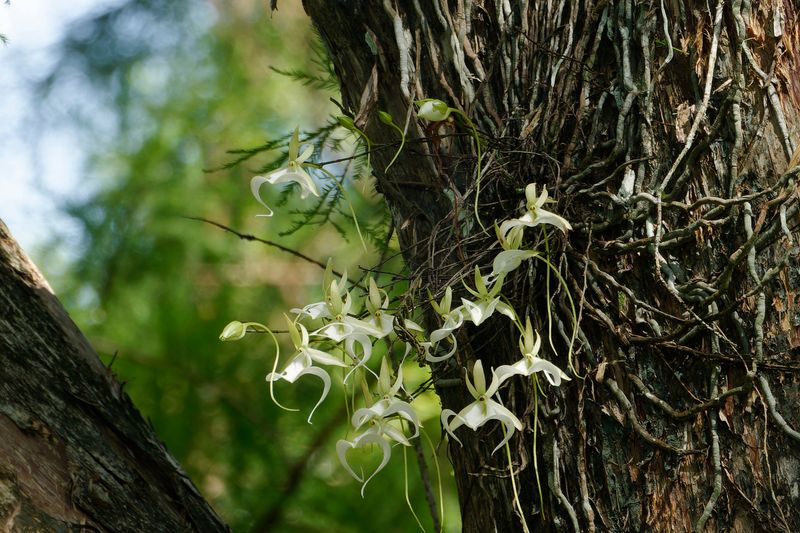
Every great hideout needs a sturdy home base. For the ghost orchid, that means the trunks and big branches of living swamp trees.
The orchid is an epiphyte, a fancy word for a plant that grows on another plant. Some folks worry it hurts the tree, but it does not.
It simply uses the bark for support, like a kid riding piggyback.
In Florida, its favorite hosts include pond apple, pop ash, and bald cypress. Once in a while, it shows up on a maple tree too.
These trees grow in wet, shady swamps where the air feels thick and damp.
Here is a surprise for orchid hunters. Many ghost orchids sit about at eye level or a little higher.
That makes them easier to spot than you might expect, if you know which trees to check.
Pond apple trees are worth learning to recognize. They have smooth, gray bark and produce a green fruit that wildlife enjoys.
Pop ash has a narrower trunk and compound leaves.
When you visit a swamp boardwalk, pick out a few of these trees and scan their trunks slowly. Even if you do not find an orchid, you will learn a lot about how swamp plants share space.
4. Most Ghost Orchids Grow On The North Side Of Trees
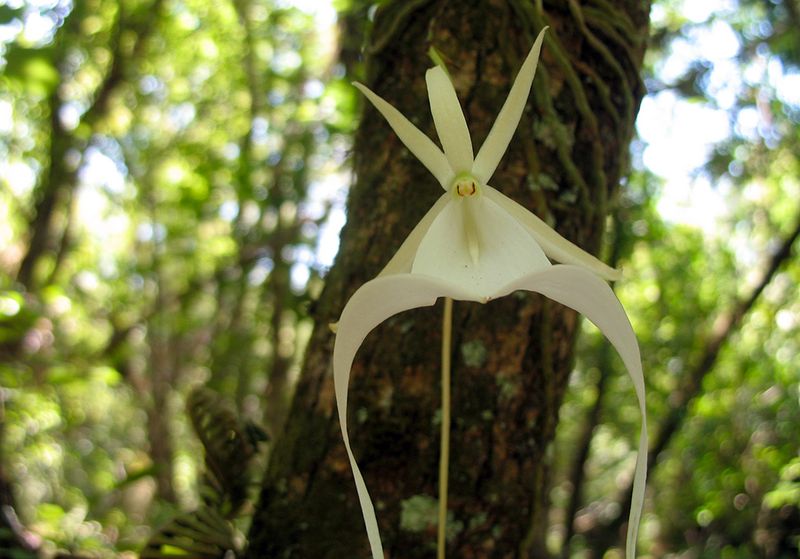
Some people swear by a simple trick when hunting ghost orchids: check the shady side of the tree first. Many observers say these plants often turn up on the north side of trunks.
Honestly, solid research on this pattern is still thin. What we do know for sure is that ghost orchids love dappled shade and very damp air.
The north side of a tree in Florida usually gets less harsh sun, which fits those needs nicely.
Think about how you feel on a blazing summer day. You probably hunt for a shady spot.
The orchid’s roots can dry out or get scorched in strong light, so a softer glow suits them better.
Humidity matters just as much. Swamps keep the air moist, and shaded bark holds water longer after rain.
That steady dampness keeps the roots plump and working.
So should you only look on the north side? Not quite.
Treat it as a helpful hint instead of a rule, since plants do not read guidebooks.
A good habit is to walk slowly around a tree and look at every side. Note where you find orchids and how much light reaches them.
You might just add a clue to this ongoing swamp mystery.
5. Only A Small Share Bloom In Any Given Year
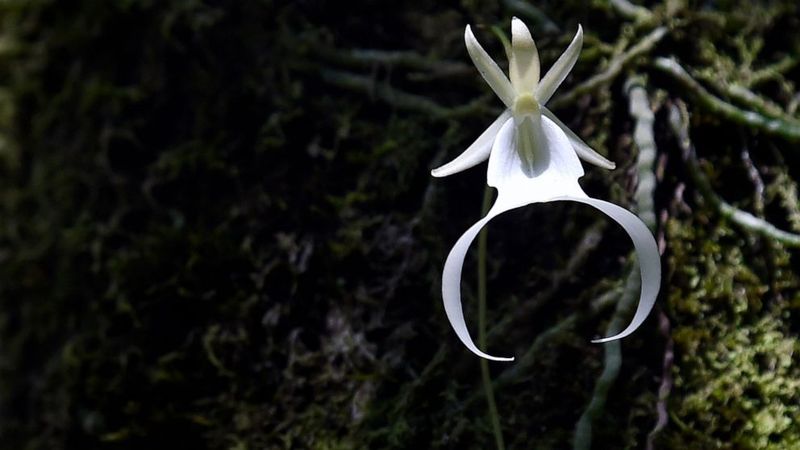
Here is a number that might surprise you: only about 5 to 10 percent of ghost orchids in South Florida bloom in a typical year. That means out of 100 plants, maybe just five to ten put on a show.
The rest stay quiet, looking like plain green roots on a tree. Some plants skip a year, or even several years, before flowering again.
It makes every bloom feel like finding a rare trading card.
Why so stingy with flowers? Blooming takes a lot of energy.
A plant has to store up enough food before it can afford to make a flower, and swamp conditions change from year to year.
Weather plays a part too. Droughts, cold snaps, and storms can stress the plants.
Losing habitat and illegal collecting make things even harder for wild populations.
This is one reason the ghost orchid is listed as endangered in Florida. With so few flowers, there are fewer chances to make seeds and new plants.
If you go searching in summer, keep your hopes realistic. Many visitors come back several times before seeing one in bloom.
Rangers and guided tours can point you toward recent sightings, which boosts your odds and protects the plants from trampling.
6. Its White Flowers Appear Between June And August
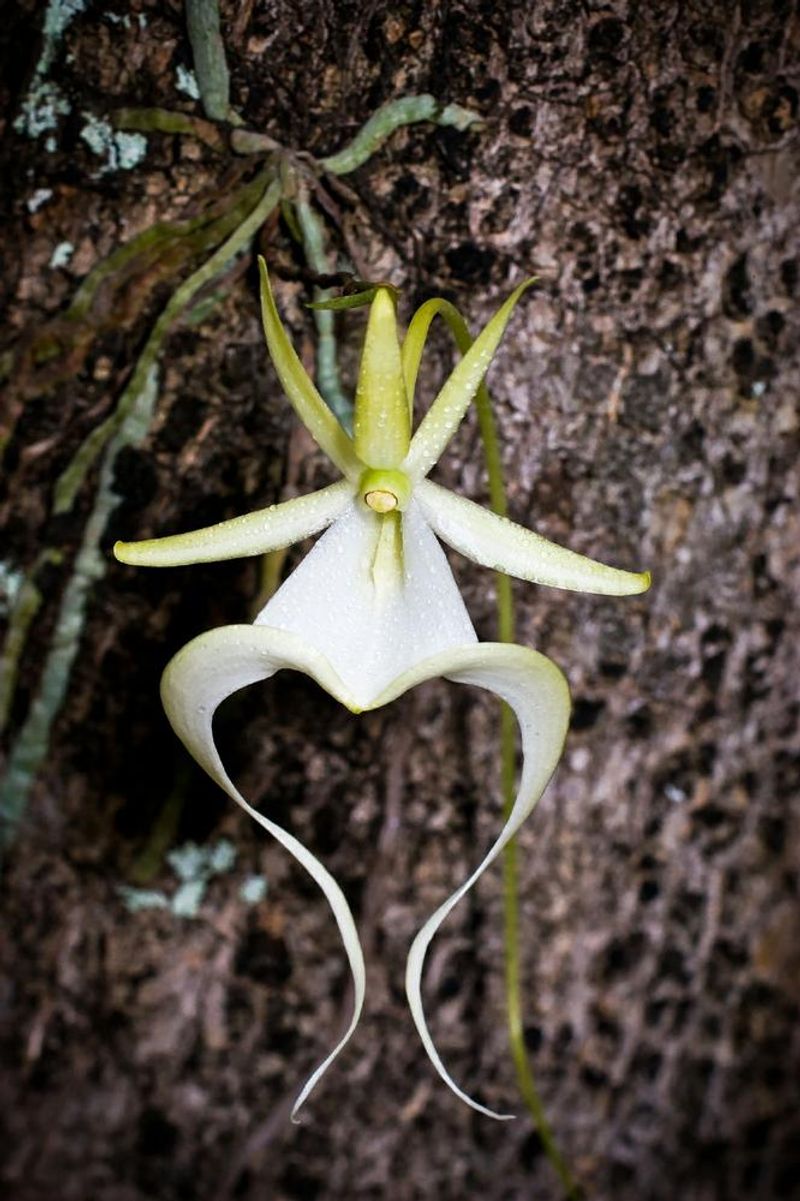
Summer in Florida means heat, thunderstorms, and if you are lucky, a glimpse of something that looks like a tiny white frog leaping through the air. That is the ghost orchid flower, and it usually opens between June and August.
Some reports say blooms can start as early as May. Others note flowers popping up into the fall.
Still, early to late summer is the main window to watch.
The flower itself is a stunner. It is pure white with two long tendrils that curl and twist downward.
Since the stem is so thin and the plant has no leaves, the bloom seems to hover in midair.
Many people say it looks like a dancer, a ghost, or a frog mid-jump. What do you see?
It is fun to compare ideas with friends.
Once a bud opens, the flower lasts about one and a half to two weeks. Then it fades, and the plant goes back to its quiet, rooty look.
Planning a trip? Visit in July for your best chance.
Bring water, a hat, and bug spray, since swamp summers are hot and buggy. A camera with zoom helps you photograph blooms without stepping off the trail.
7. Night-Flying Sphinx Moths Pollinate It
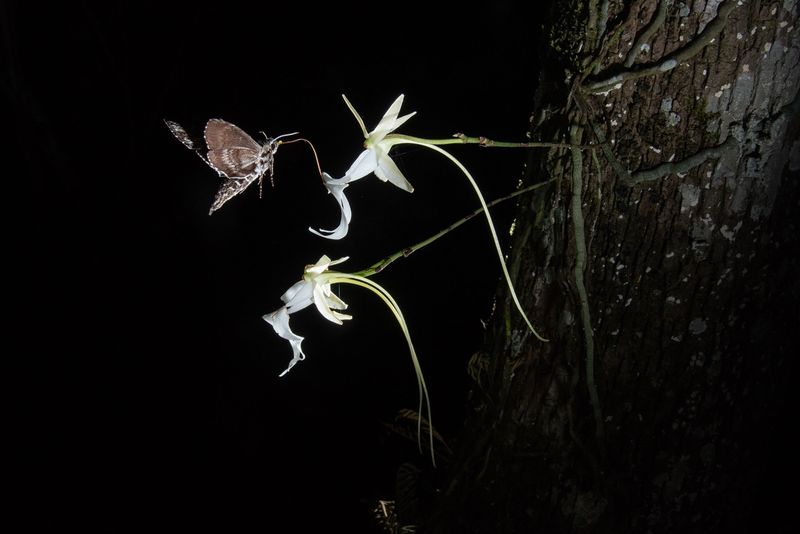
When the sun goes down, the swamp gets a new crew of visitors. Big sphinx moths zoom through the dark, and some of them are on a mission to find ghost orchid nectar.
The flower hides its sweet nectar at the bottom of a long, skinny tube called a spur. Only moths with very long tongues, called proboscises, can reach it.
While sipping, a moth picks up sticky pollen packets and carries them to the next flower.
For years, experts thought just one moth did this job, the giant sphinx moth. Its tongue can stretch several inches, which seemed like a perfect match.
Then scientists set up remote cameras in the swamp. The footage showed other sphinx moths stopping by, including the fig sphinx moth.
At least five moth species have been recorded visiting, and two were seen carrying orchid pollen.
That discovery was a big deal. It means the orchid may have more helpers than anyone guessed, which is good news for its future.
Fun fact: the white color helps the flower stand out at night. Pale petals glow in moonlight, almost like a landing light.
Protecting native moths and their host plants helps the orchid keep its nighttime partners around.
8. Corkscrew Swamp’s Super Ghost Orchid Draws Crowds Every Summer
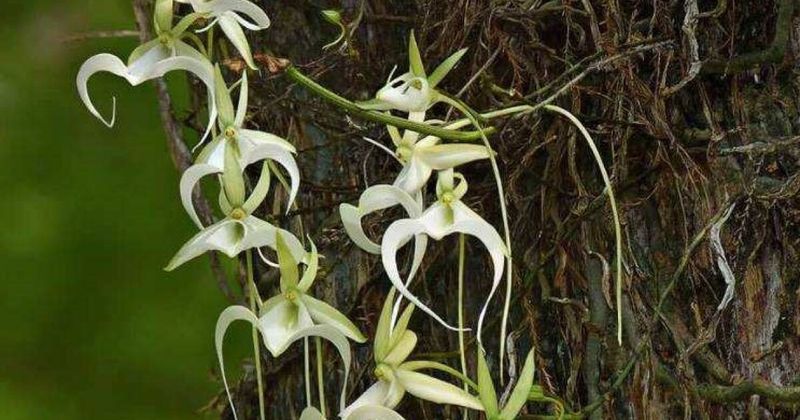
Back in July 2007, someone at Audubon’s Corkscrew Swamp Sanctuary looked up and spotted a ghost orchid unlike any other. People soon gave it a fitting nickname: the Super ghost orchid.
Most ghost orchids are shy bloomers. This one is a show-off in the best way.
In one year it produced more than 40 flowers, which is almost unheard of for this plant.
It is also the largest ghost orchid found so far. It has bloomed year after year, often in early summer, and sometimes for weeks at a stretch.
Over time, it has even flowered in every month of the calendar.
Word spread fast. Photographers, nature lovers, and curious families travel to see it each summer.
Some come from other countries just for a peek.
The best part? You can see it from the sanctuary boardwalk without wading into the swamp.
It sits fairly high on a cypress tree, so binoculars or a zoom lens help a lot.
Planning tip: check the sanctuary’s website or social media for bloom updates before you go. Arrive early in the morning to beat the heat and crowds.
While you are there, enjoy the rest of the boardwalk, which winds through an old-growth bald cypress forest.
9. UF Scientists Grow Them In The Lab To Return To The Wild
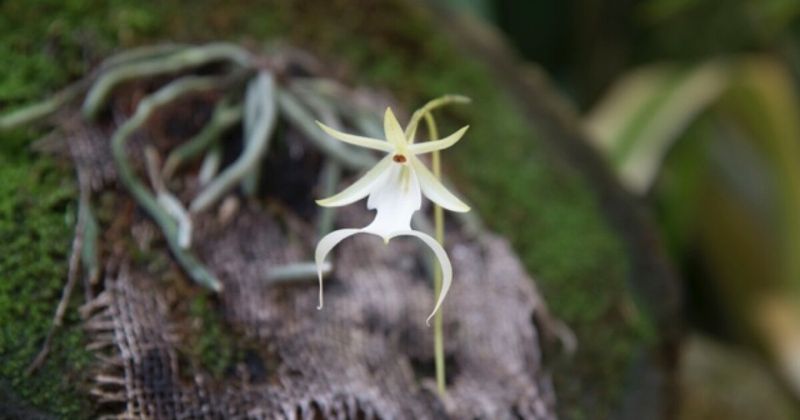
Picture a glass flask holding seeds smaller than specks of dust. At the University of Florida, scientists have turned seeds like these into healthy young ghost orchids.
Researchers at UF’s Institute of Food and Agricultural Sciences figured out how to grow the plants from tiny seeds in the lab. It was not easy.
Ghost orchid seeds need help from a special fungus to sprout, and the team has worked hard to copy that partnership.
After the seedlings grow strong enough, they move to a greenhouse. There they get used to real light and air before heading outdoors.
It is a bit like training wheels for plants.
Then comes the exciting part. The young orchids are attached to trees in places like the Florida Panther National Wildlife Refuge.
Many of them have survived and kept growing well in their new homes.
This work does two jobs. It adds more plants to wild populations, and it teaches scientists how the orchid reproduces.
Want to help? Never buy ghost orchids taken from the wild, and report anyone collecting them illegally.
Support groups that protect swamps. Saving the habitat matters just as much as growing new plants, since the orchids need a safe place to live.