The Ground-Nesting Bees California Gardeners Often Mistake For Yellow Jackets
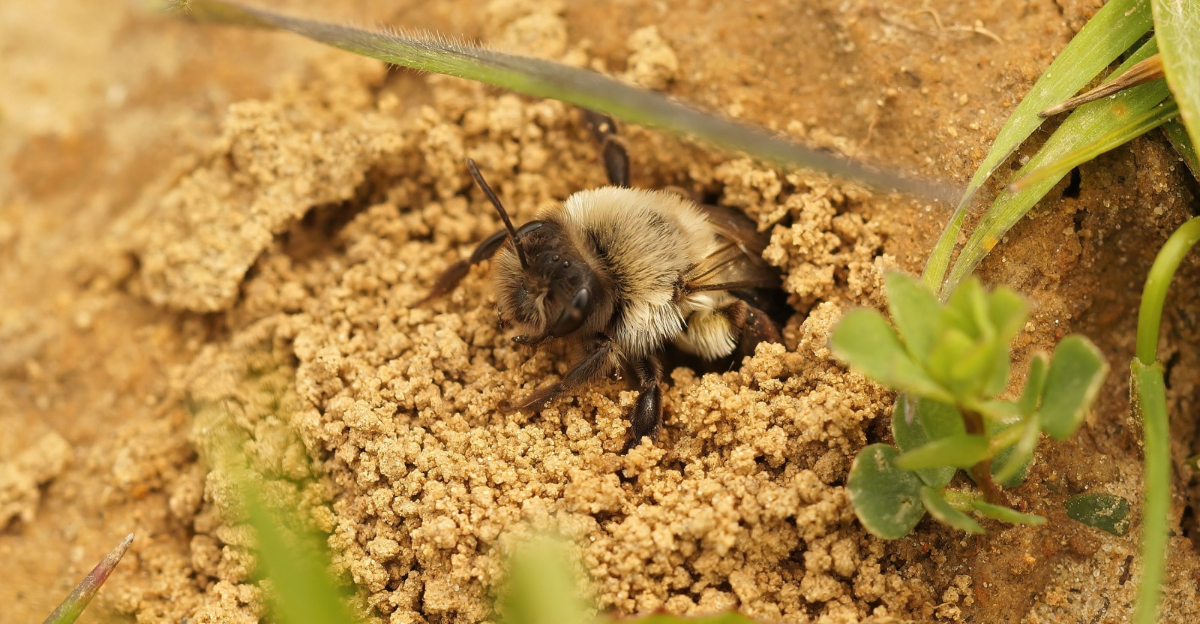
There is a moment that plays out in California yards every spring and summer, and it usually involves someone spotting small, fuzzy insects buzzing low over a patch of bare dirt and immediately panicking about yellow jackets.
Totally understandable reaction.
The thing is, what you are probably looking at is mining bees, and they deserve a much better reputation than they get.
These solitary native bees nest right in the ground, mind their own business, and quietly handle a serious amount of pollination work for your local flowers.
Yellow jackets, on the other hand, are social wasps that build shared nests and get genuinely aggressive around food. Completely different vibe.
Learning to tell them apart means you can stop reaching for the spray can and start appreciating one of the most helpful, low-key visitors your garden has.
1. Mining Bees Nest In Bare Soil
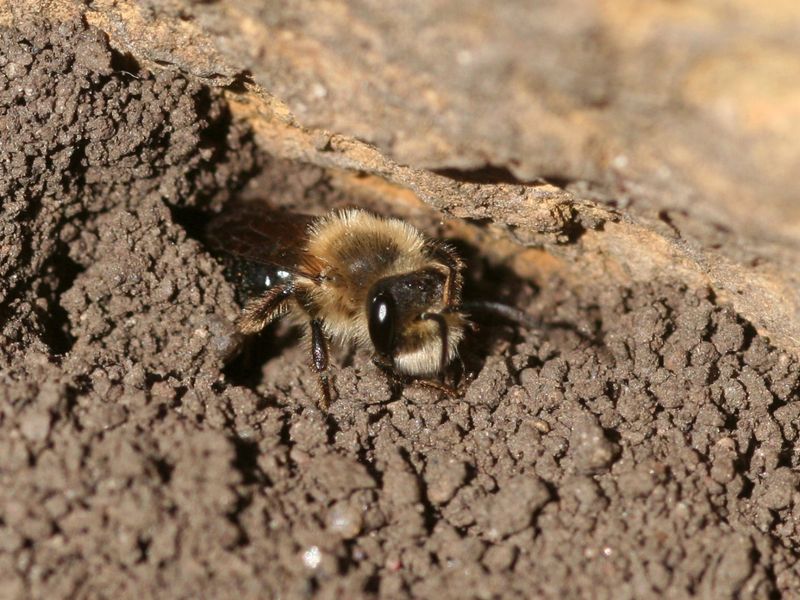
Watching a small bee hover low and then disappear into the ground can feel alarming at first glance.
However, that behavior is completely normal for mining bees, a group of solitary native bees that build their nests directly in the soil rather than in trees, walls, or hives.
In California, these bees tend to favor spots where the soil is bare, dry, and warmed by direct sunlight.
Mining bees use their legs and mouthparts to dig narrow tunnels, sometimes reaching several inches deep. At the bottom of each tunnel, a female bee creates small chambers where she deposits pollen, nectar, and a single egg.
She seals each chamber before moving on, working entirely alone without the help of a colony or queen.
Spots that often attract mining bees include south-facing garden slopes, edges of lawn paths, dry patches near vegetable beds, and compacted bare areas along fences or patios.
These locations offer the warm, loose, or lightly compacted soil that mining bees prefer for nesting.
Unlike honey bees or bumble bees, mining bees do not build wax combs or store large amounts of honey.
Seeing them in your California yard simply means the soil conditions are right and the local habitat supports native pollinators. That is actually a good sign for a healthy garden ecosystem.
2. Tiny Dirt Mounds Mark Their Entrances
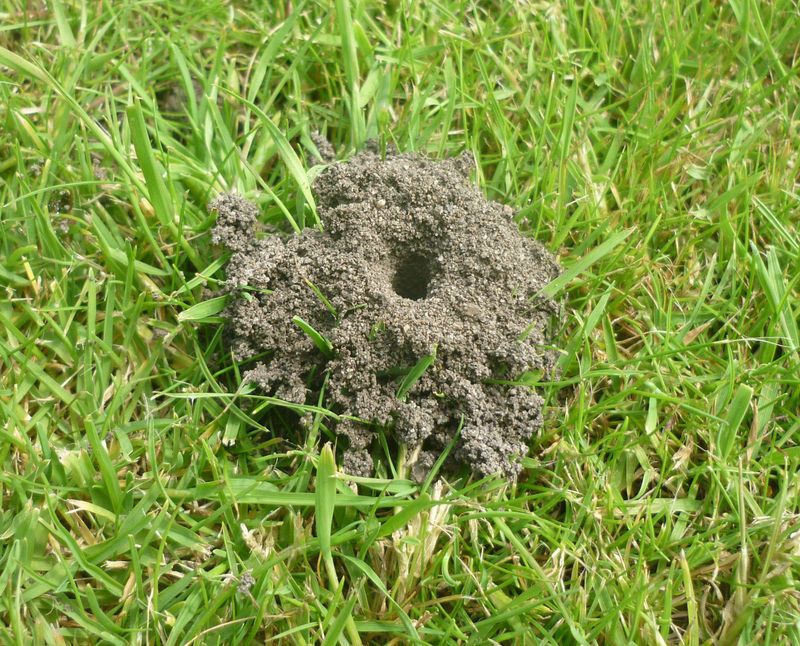
Noticing small piles of loose dirt scattered across a lawn or garden bed can send a California gardener straight into pest-control mode. Those tiny mounds, often no bigger than a quarter, are usually the clearest sign that mining bees have moved in.
Each mound sits right at the entrance of an individual bee tunnel and is formed from the soil the bee pushes out while digging.
The holes themselves tend to be about the width of a pencil, sometimes slightly wider depending on the bee species. If you look closely on a warm morning, you may spot a small bee hovering just above the mound before ducking inside.
The activity around each hole is usually calm and brief, very different from the constant, urgent traffic you would see at a yellow jacket nest.
Your California Garden Changes Every Week. Your Plan Should Too.
Gardening in California changes quickly throughout the season. Every Friday you’ll receive a simple weekly plan showing exactly what to plant, prune, fertilize, harvest, and protect so you never miss the right timing.
In California gardens with sandy loam, well-drained soil, or dry bare patches, these little mounds can appear in clusters because multiple females may nest near each other in the same favorable area.
Even so, each tunnel belongs to one individual bee.
There is no shared entrance, no communal food storage, and no colony defending the site as a group.
Gardeners who spot these mounds in spring should resist the urge to rake them flat right away. The mounds are temporary, and the nesting season for most mining bee species wraps up within a few weeks.
3. Several Small Holes Mean Separate Nests
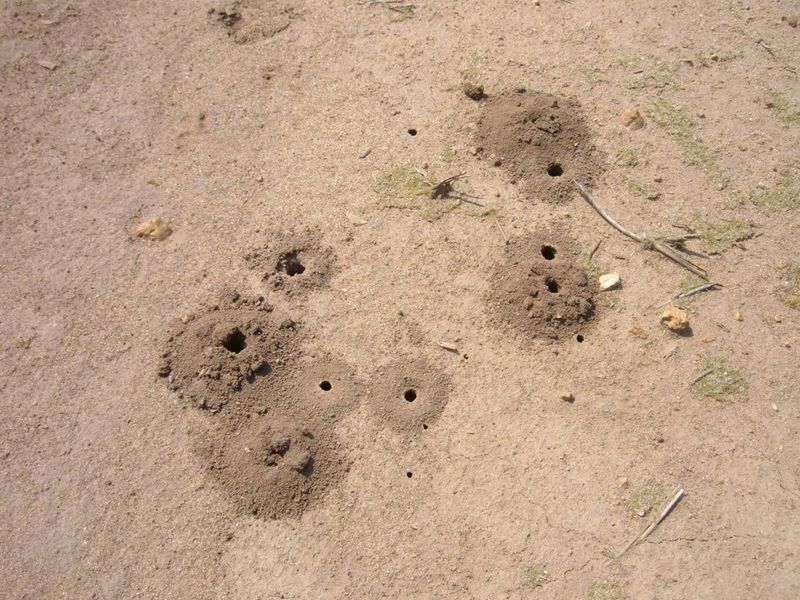
Stumbling across a patch of soil dotted with a dozen or more small holes can make any gardener nervous. The natural assumption is that something large and organized has taken over the yard.
In reality, a field of small holes spread across a bare area is one of the most recognizable signs of a mining bee aggregation, where many individual females nest close together without actually sharing a nest.
Each hole leads to a completely separate tunnel dug and maintained by a single female bee. She chose that spot because the soil type, sun exposure, and moisture level suited her needs, and so did many of her neighbors.
The result looks like a colony from a distance, but up close the activity around each hole is independent and unhurried.
In California yards with dry, sunny soil patches, these aggregations can appear along garden borders, near driveways, or in lawn areas with thin grass cover. The number of holes can range from just a few to well over a hundred in favorable conditions.
Despite the visual impact, the bees are not defending a shared territory the way yellow jackets or other social insects would.
Gardeners who notice multiple holes and feel uncertain can observe the area from a short distance for a few minutes. Mining bees tend to fly in, enter their own hole, and leave again without much interaction with people or other bees nearby.
4. Yellow Jackets Use One Busy Entrance
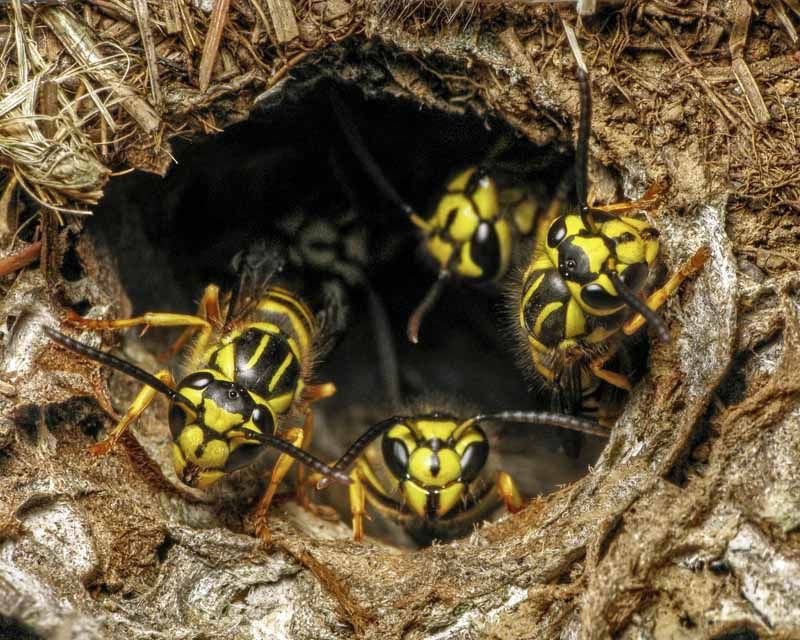
One of the quickest ways to tell a mining bee aggregation from a yellow jacket nest is to watch the entrance. Yellow jackets are social wasps that live in large colonies, and all of that activity funnels through a single shared opening.
That entrance tends to look busy, with workers flying in and out in steady streams, especially on warm afternoons.
The traffic at a yellow jacket nest has a different energy than what you see around mining bee holes. Yellow jackets move with purpose and speed, and the nest entrance may show worn, smooth soil around it from all the repeated landings and takeoffs.
Workers guard the entrance actively, and the colony can react quickly when they sense vibration or disturbance nearby.
In California, yellow jacket ground nests often appear in lawns, garden beds, and along the edges of structures. They tend to expand through summer and into fall, when colonies can grow quite large.
The nest itself is made of paper-like material built from chewed wood fiber, and it may extend several inches underground.
Mining bee holes, by contrast, look quiet and unhurried most of the time. Each bee manages her own tunnel on her own schedule.
If you notice a single high-traffic hole with fast-moving, yellow-striped insects, treating it as a yellow jacket situation and keeping a safe distance is a reasonable response until you can get a closer identification.
5. Mining Bees Visit Flowers, Not Picnics
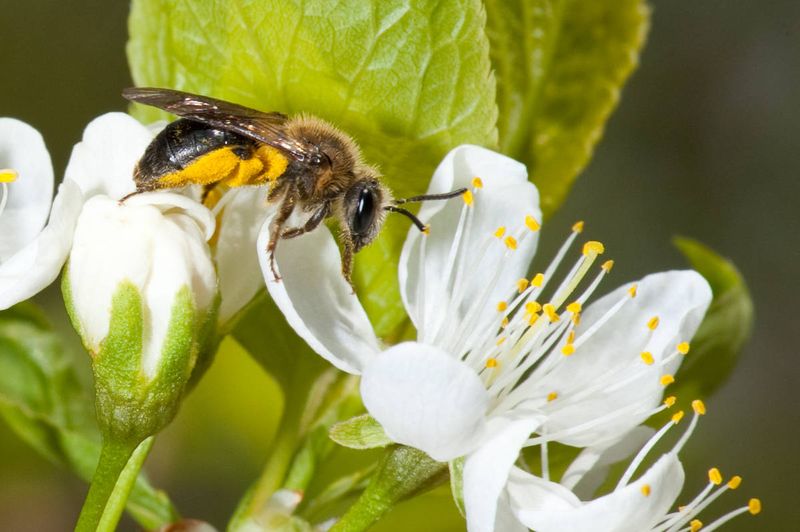
One of the easiest behavioral clues that separates mining bees from yellow jackets is what attracts them.
Yellow jackets are well known for showing up at outdoor meals, hovering around soda cans, investigating meat on the grill, and generally making summer picnics less enjoyable.
Mining bees have no interest in any of that.
A mining bee spends her foraging time moving between flowers, collecting pollen and nectar to bring back to her underground nest. She is focused entirely on the task of provisioning her egg chambers with food.
Bright blooms in California native plant gardens, vegetable beds in flower, and pollinator-friendly landscapes are the kinds of places you are likely to spot her working.
Because mining bees are solitary and not defending a shared food source or a colony full of larvae, they have very little reason to pay attention to people.
A bee that lands on your arm while you are gardening near her flowers is far more likely to leave on her own than to sting.
She is simply passing through on her way to the next bloom.
Gardeners who plant California native wildflowers, cover crops, or flowering herbs near bare soil areas may notice more mining bee activity in spring.
That combination of nesting habitat and food source in the same garden space supports local pollinator populations and can quietly boost the overall health and productivity of the garden over time.
6. Most Mining Bees Are Gentle Pollinators
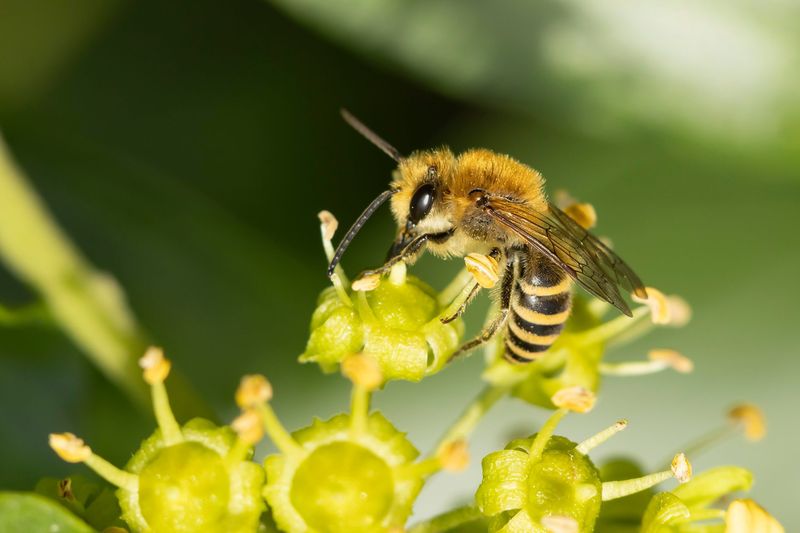
Few garden insects get a worse first impression than a small bee flying low over the soil on a warm spring morning. Most people back away quickly, assuming the worst.
But mining bees are among the least aggressive insects a California gardener is likely to encounter near a flower bed or lawn edge.
Female mining bees do have a stinger, but they are not naturally inclined to use it unless they are physically handled or trapped against skin. Because they are solitary, there is no colony to defend and no alarm signal that calls in backup.
A mining bee going about her day is focused on pollen, not on the person standing nearby.
Male mining bees, which sometimes hover around nesting areas during mating season, do not have stingers at all. Their low, looping flight over bare soil can look threatening, but it is entirely harmless.
People who are stung near a mining bee aggregation often discover the culprit was a different insect entirely.
For children and adults who spend time in California gardens, understanding this distinction can reduce unnecessary fear and help protect a genuinely useful group of native pollinators.
Mining bees are responsible for pollinating a wide range of flowering plants, including many that support fruit and vegetable production in home gardens.
Treating them with calm curiosity rather than alarm tends to result in a much better outcome for both the gardener and the bees.
7. Spring Activity Usually Fades Quickly
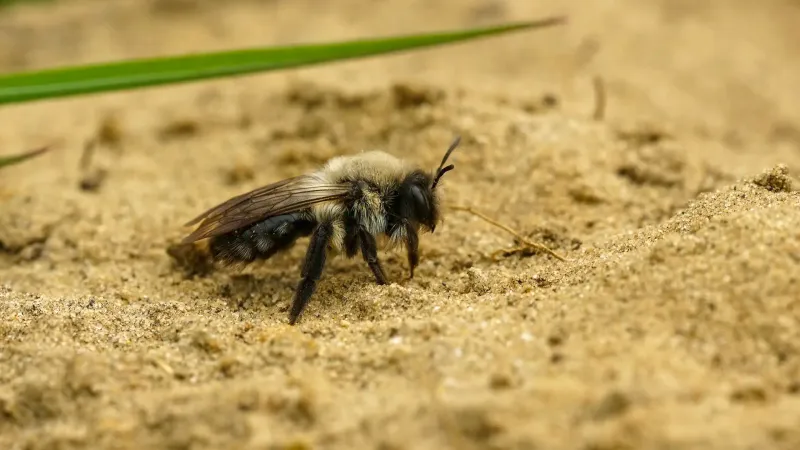
Spotting a busy patch of ground-nesting bee activity in March or April can feel like a permanent problem, but for most mining bee species the season is surprisingly short.
Adult mining bees are active for only a few weeks during spring, timed closely to the blooming of the native and garden plants they depend on for pollen.
Once a female has dug her tunnel, provisioned her egg chambers, and sealed them shut, her above-ground activity slows and eventually stops.
The eggs she laid will develop underground through spring and summer, with new adult bees emerging the following year to repeat the cycle.
The nesting site may look completely undisturbed through most of the year.
In California, the exact timing of mining bee activity varies by species and region. Coastal areas with mild winters may see earlier activity, while warmer inland valleys might have slightly different peak periods depending on local plant bloom times and soil temperature.
Either way, the window of visible activity at a nest site tends to close on its own within a few weeks.
Gardeners who wait out the season rather than disturbing the nesting area often find that the soil returns to its normal appearance without any intervention at all.
Knowing that the activity is temporary makes it much easier to share the yard with these native pollinators during their short but important spring window.
8. Leaving The Nesting Area Alone Helps
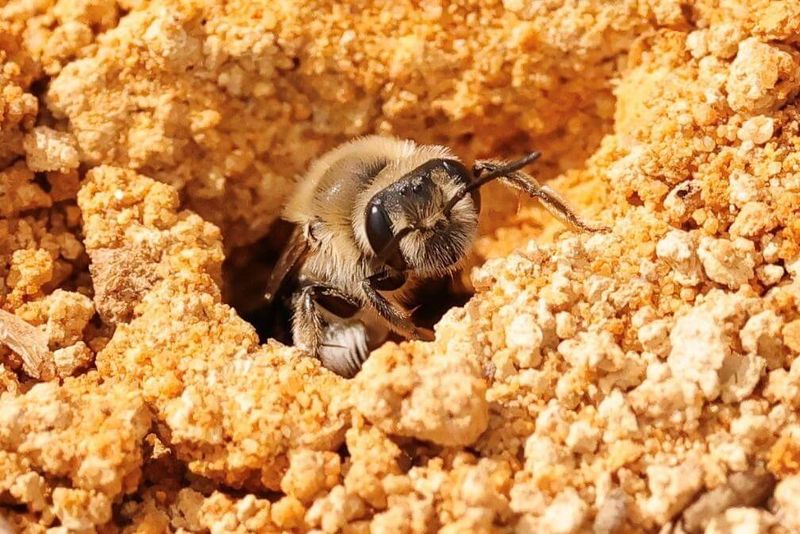
Bare soil patches in a California yard might seem like a landscaping problem worth fixing right away, but if mining bees have already moved in, leaving that area undisturbed through the nesting season is one of the most helpful things a gardener can do.
Covering the soil, heavy watering, or digging through the area can disrupt nests that took a female bee considerable effort to build.
If the nesting spot is in a high-traffic area like a garden path or near a play area, temporarily redirecting foot traffic around the patch gives the bees space to finish their season without conflict.
A simple ring of stones or a small garden marker can signal to family members that the area is temporarily off-limits for stepping or digging.
After the nesting season ends, gardeners who want to reduce future nesting in a particular spot can try adding mulch, ground cover plants, or low-growing native plants that fill in bare soil over time.
This approach addresses the habitat conditions rather than targeting the bees directly and tends to work gradually over one or two seasons.
Supporting mining bees in California gardens ultimately supports a healthier local ecosystem.
These native pollinators contribute to plant reproduction across a wide range of species, and their presence in a yard often reflects good soil conditions and a diverse planting palette.
Giving them a little space in spring costs very little and returns real ecological value.