The Helpful Wasps Georgia Gardeners Should Not Remove
Not every useful thing in a garden comes from a seed packet. Some of the biggest helpers arrive on their own and get almost no credit for the work they do.
They move quietly between flowers, shrubs, and vegetable plants while most people focus on watering, pruning, and pulling weeds.
It is easy to pay attention to colorful blooms or a successful harvest. Far less attention goes to the insects sharing that same space.
Yet many gardens would look very different without them. Some help move pollen.
Others interact with common pests in ways that can benefit the entire landscape.
That makes first impressions a little misleading. An insect that seems unwelcome at first glance may actually be contributing more than expected.
Several wasps found in Georgia fall into that category, which is why removing them is not always the best decision.
1. Mud Daubers Remove Unwanted Spiders
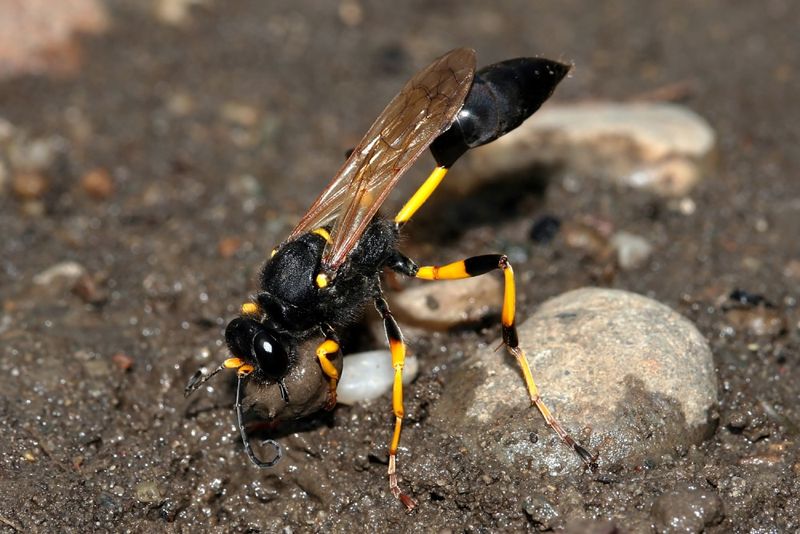
Mud daubers have a reputation for being creepy, but they are actually doing something genuinely useful around your home and garden.
These slender, metallic-looking wasps build small mud tubes on walls, fences, and garden structures. Inside each tube, they store paralyzed spiders as food for their larvae.
A single mud dauber can collect dozens of spiders before sealing a tube.
Mud daubers are known for targeting spiders, including black widows. They collect spiders to stock their nests.
That can help reduce spider activity around sheds, garages, and garden beds. For gardeners who spend time working close to the ground or in tight spaces, that can be a useful benefit.
Mud daubers are solitary wasps. Solitary means no colony defending a shared nest, which makes them far less likely to act defensively toward people.
Stings are rare and typically only happen if the wasp is physically handled.
Their mud tubes are not permanent structures. After the larvae develop and leave, the tubes are empty and harmless.
Scraping them off is easy if the location is inconvenient, but there is no urgency to remove them quickly.
Mud daubers are common across the Southeast and active during summer. Letting them patrol around garden sheds, raised beds, and fences costs nothing.
Fewer spiders hiding in your gardening gloves or tool storage is a trade most gardeners would gladly accept without a second thought.
2. Blue Winged Wasps Target Lawn Grubs
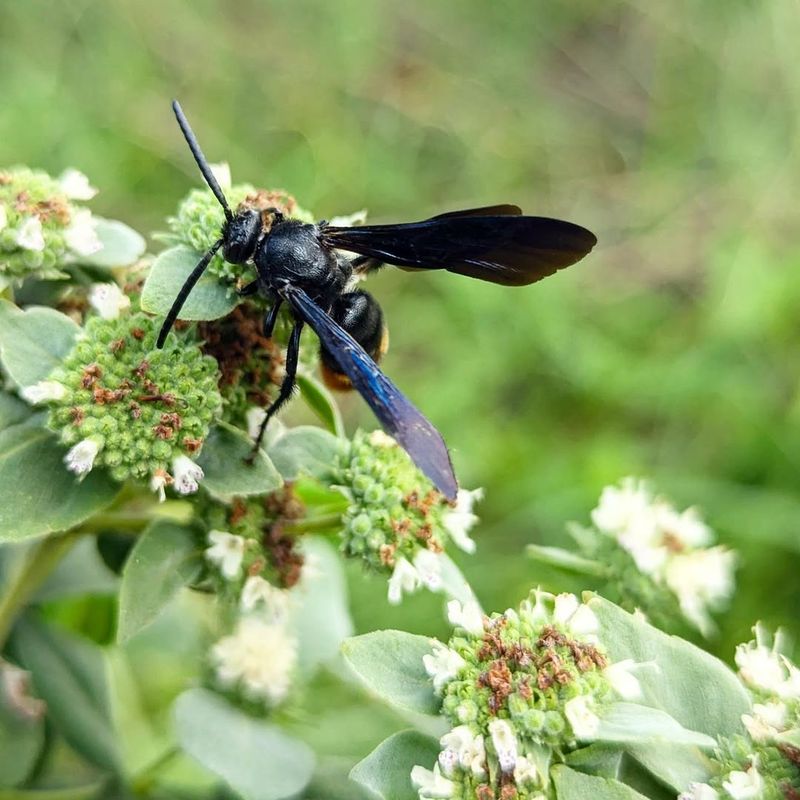
Lawn grubs are a serious problem that most gardeners do not even see coming. Blue-winged wasps are one of the few insects that go directly after them underground.
Blue-winged wasps are striking insects with orange bodies and blue-black wings. They are solitary and spend much of their time walking low over grass, using their antennae to detect grubs buried in the soil.
Once a grub is located, the wasp paralyzes it and lays an egg on it.
Japanese beetle larvae are a primary target. These grubs feed on grass roots and can turn a healthy lawn brown in patches during late summer.
Having blue-winged wasps present means natural pressure on that grub population before the damage becomes visible.
Your Georgia Garden Changes Every Week. Your Plan Should Too.
Gardening in Georgia changes quickly throughout the season. Every Friday you’ll receive a simple weekly plan showing exactly what to plant, prune, fertilize, harvest, and protect so you never miss the right timing.
Adult blue-winged wasps also feed on flower nectar. That means they double as pollinators while they hunt.
Gardens with flowering plants nearby benefit from both services at once.
Stings from blue-winged wasps are uncommon. Females can sting but are not aggressive and typically ignore people walking nearby.
Males cannot sting at all, though they may hover close out of curiosity.
Reducing pesticide use on your lawn encourages these wasps to stay and work. Broad-spectrum insecticides wipe out grub hunters along with grubs, which often makes pest pressure worse over time.
Letting blue-winged wasps do their job is a smarter long-term approach for any lawn or garden space.
3. Great Golden Digger Wasps Control Crickets
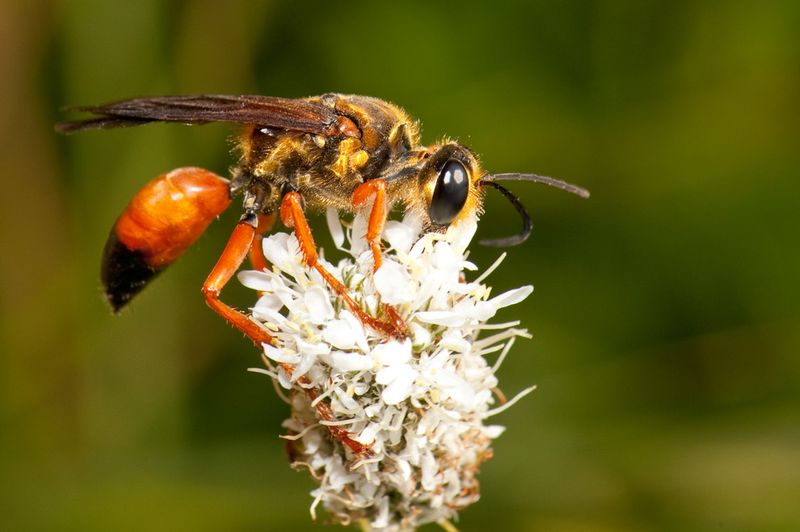
Not every pest problem happens above ground. Great golden digger wasps go after insects that live in the soil and leaf litter, including crickets that can damage seedlings and roots.
Great golden digger wasps are large and visually impressive. Adults can reach over an inch long, with bold orange and black coloring on the abdomen and golden hairs covering the thorax.
Despite their size, they are docile and rarely interact with people.
Females dig burrow nests in loose, dry soil. Each burrow contains paralyzed prey, usually crickets or katydids, stored as food for larvae.
A single female may dig multiple burrows over a season, removing a steady number of prey insects from the surrounding area.
Crickets can cause real damage in gardens, especially to seedlings, strawberries, and leafy greens. Large cricket populations chew through stems and young plants quickly.
Great golden digger wasps provide consistent, natural pressure on those numbers without any chemical input needed.
Adults also visit flowers for nectar and pollen. Flat-topped flowers like Queen Anne’s lace and native wildflowers attract them easily.
Planting a small pollinator strip near the garden gives these wasps a reason to stay close and keep working.
Bare or sandy patches of ground in a sunny spot are ideal nesting sites. Avoiding heavy mulch in one small area of the yard can encourage nesting.
These wasps are worth accommodating for the pest control they provide all season long.
4. Thread Waisted Wasps Help Protect Garden Plants
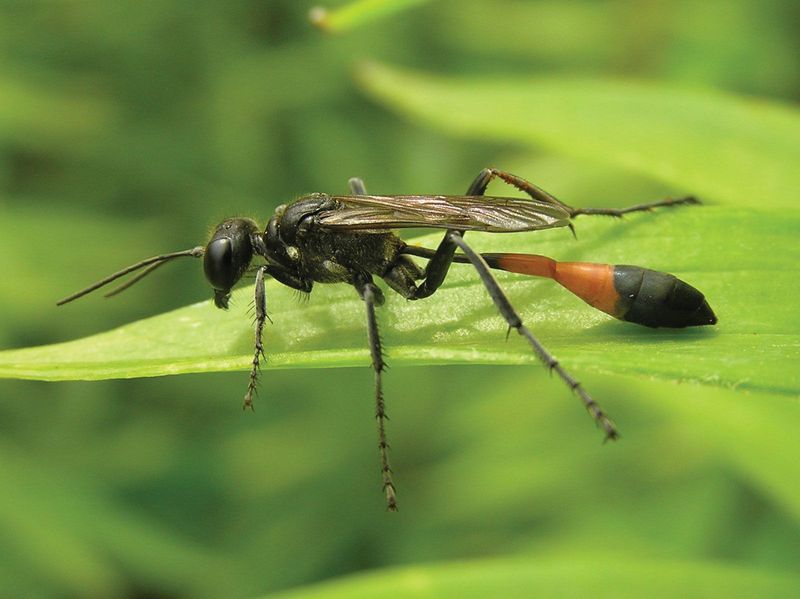
Few wasps look as unusual as the thread-waisted wasp. That long, narrow connection between the thorax and abdomen makes it unmistakable.
But beyond the distinctive look, this wasp is a real asset in any garden dealing with caterpillar or grasshopper pressure.
Thread-waisted wasps are solitary hunters. They paralyze prey and drag it back to a burrow in the ground, where it becomes food for larvae.
Caterpillars are a common target, and some species focus on grasshoppers, which can cause widespread leaf damage in summer gardens.
Adults are frequently seen nectaring on flowers between hunts. They are calm around people and do not defend territory aggressively.
Watching one work a garden bed is actually a good sign that pest populations in that area are being kept in check.
These wasps prefer nesting in loose, undisturbed soil. Sandy or bare patches in a sunny garden corner work well.
Compacted or heavily mulched soil makes nesting harder, which can push them out of an area even when prey is plentiful.
Reducing tillage in sections of the garden helps protect existing nests. Disturbing burrow sites mid-season interrupts the reproductive cycle and reduces the local population over time.
Small adjustments to how you manage bare soil can make a meaningful difference in keeping these wasps present.
Thread-waisted wasps are common across warm Southern states and active through the hottest months when pest pressure peaks. Their timing lines up well with when gardens need the most help.
5. Potter Wasps Collect Plant Eating Caterpillars
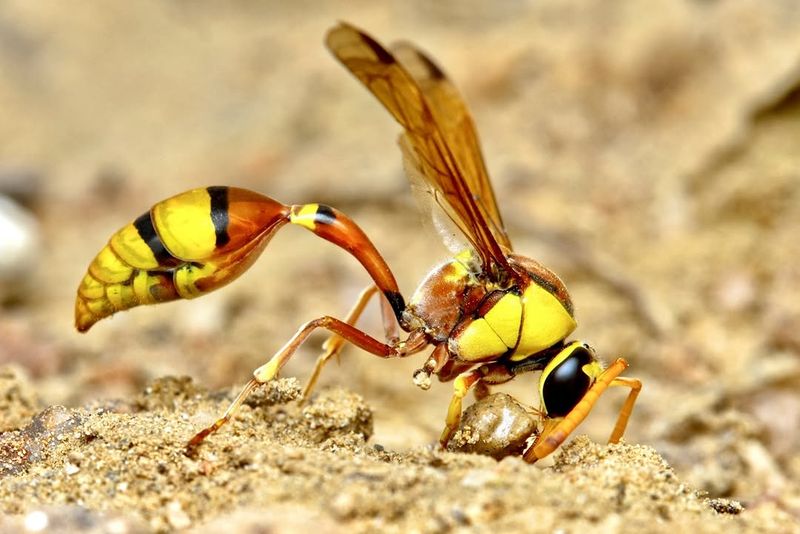
Potter wasps build one of the most recognizable nests in the insect world. Small, round, and shaped like a clay jug, these mud nests are often found on plant stems, twigs, and fence rails throughout the garden.
Each pot-shaped nest is constructed by a single female. She fills it with paralyzed caterpillars before sealing it shut with a single egg inside.
When the larva hatches, it has a fresh food supply waiting and does not need any further care from the parent.
Caterpillars that feed on plant leaves are the primary prey. Loopers, leafrollers, and small hornworms are commonly targeted.
Gardens with high caterpillar pressure during summer often have noticeable reductions in leaf damage when potter wasps are active nearby.
Adults feed on nectar and are gentle fliers around flowers. Planting native flowering plants encourages them to stay in the area.
They are not territorial and show almost no interest in people moving through the garden.
Potter wasps are solitary, which means no colony and no group defense behavior. Stings are extremely uncommon and typically only result from direct handling of the wasp.
Most gardeners never experience any issue with them at all.
Leaving small mud nests on twigs and stems undisturbed is the simplest way to support them. Removing nests out of habit eliminates developing larvae and reduces next season’s population.
Recognizing the little clay pots as a sign of healthy pest control activity changes how most gardeners see them entirely.
6. Yellow Jackets Help Remove Pest Insects
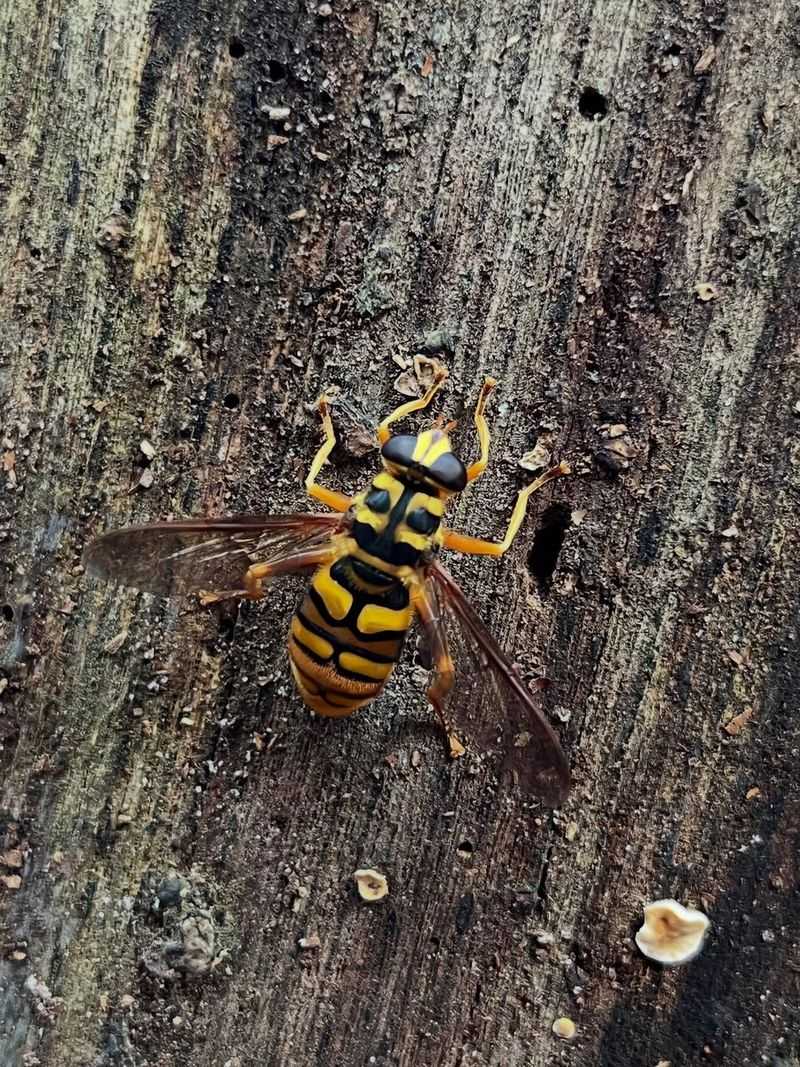
Yellow jackets have a tough reputation, and around food or garbage, that reputation is fair. But in the garden, away from picnic tables and trash cans, they behave very differently.
Yellow jackets are active hunters during the early part of the season. Colonies focus heavily on protein sources to feed developing larvae, and that means catching large numbers of soft-bodied insects like caterpillars, flies, and beetle larvae.
A single colony can remove thousands of pest insects over a summer.
Aphid populations, fly larvae in compost, and caterpillars on vegetable plants are all fair targets. Yellow jackets forage aggressively and cover a wide range from the nest.
Gardens within that foraging range benefit from consistent pest pressure reduction.
Aggression increases in late summer when colonies shift focus toward sweet foods and the nest reaches peak population. Keeping yellow jacket nests away from high-traffic areas reduces conflict.
Nests in low-traffic spots like wood edges or ground areas away from paths are generally manageable.
Avoiding strong floral perfumes and keeping food covered near the garden helps reduce unwanted encounters. Understanding seasonal behavior makes coexistence much more practical than most people realize at first.
Yellow jackets also contribute to pollination, though less efficiently than bees. Some native plants do benefit from their visits.
Recognizing them as seasonal pest hunters with predictable behavior patterns, rather than random threats, makes it easier to work alongside them without unnecessary conflict in the garden.
7. Native Wasps Support Natural Pest Control
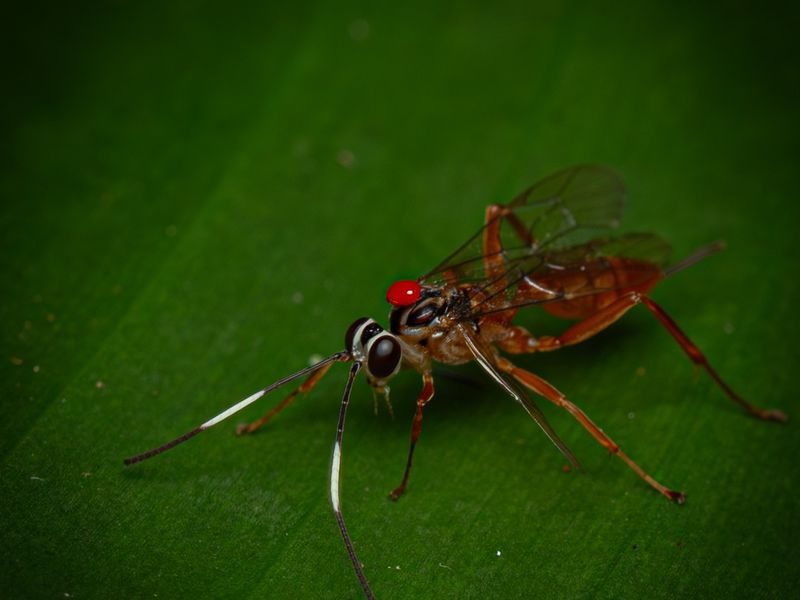
Beyond the well-known species, Georgia is home to dozens of native wasp species that quietly manage pest populations across gardens, lawns, and natural areas every season.
Parasitic wasps are among the most valuable. Tiny and often overlooked, these wasps lay eggs inside or on pest insects like aphids, whiteflies, and caterpillars.
The larvae develop inside the host, reducing that pest’s ability to reproduce or feed further. No chemical needed, no visible action required.
Braconid wasps are a well-documented example. Tomato hornworms covered in small white cocoons have been parasitized by braconid wasps.
Those cocoons contain developing wasp larvae, and the hornworm stops feeding effectively once parasitized. Gardeners who recognize this can leave the hornworm in place and let the process finish.
Supporting native wasps starts with reducing or eliminating broad-spectrum pesticide use. Many native wasp species are small and sensitive to chemical exposure.
Even one application during active season can reduce local populations significantly.
Planting native flowering plants provides nectar for adult wasps and draws them into the garden. Leaving some areas of bare or undisturbed ground supports ground-nesting species.
Small habitat adjustments add up quickly when done consistently across the yard.
Natural pest control works best as a system. Native wasps, birds, beneficial beetles, and spiders all contribute.
Encouraging that system costs very little and reduces the need for repeated chemical treatments that disrupt the balance gardeners are trying to build.
8. Paper Wasps Help Reduce Caterpillar Damage
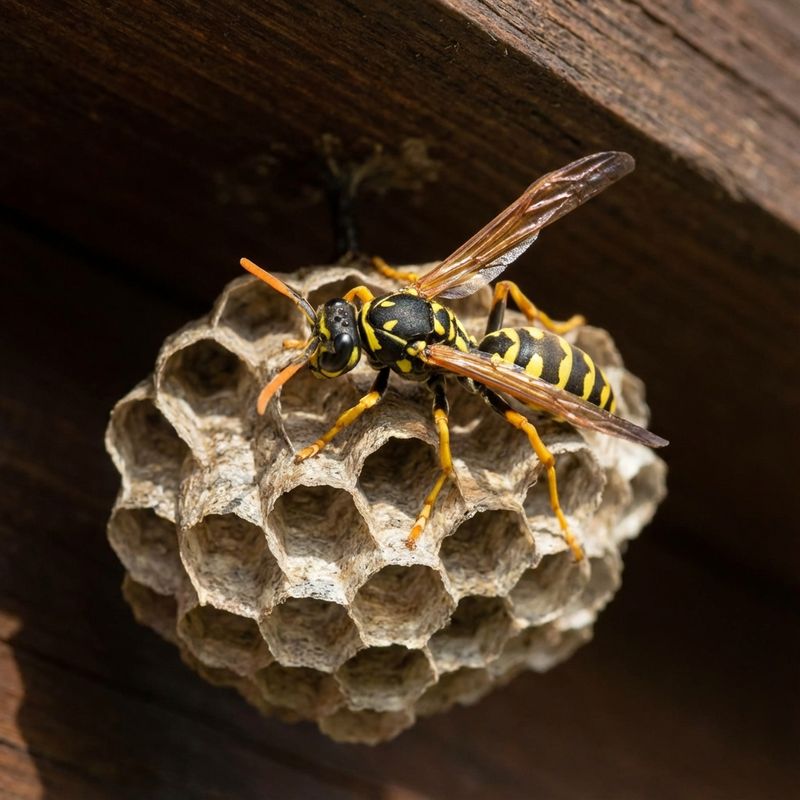
Caterpillars can shred a vegetable garden faster than most gardeners expect. Paper wasps are one of the most effective natural answers to that problem.
Paper wasps hunt caterpillars aggressively throughout the warm months. A single colony can remove hundreds of caterpillars from nearby plants over the course of a season.
They chew them up and carry the pieces back to feed their larvae.
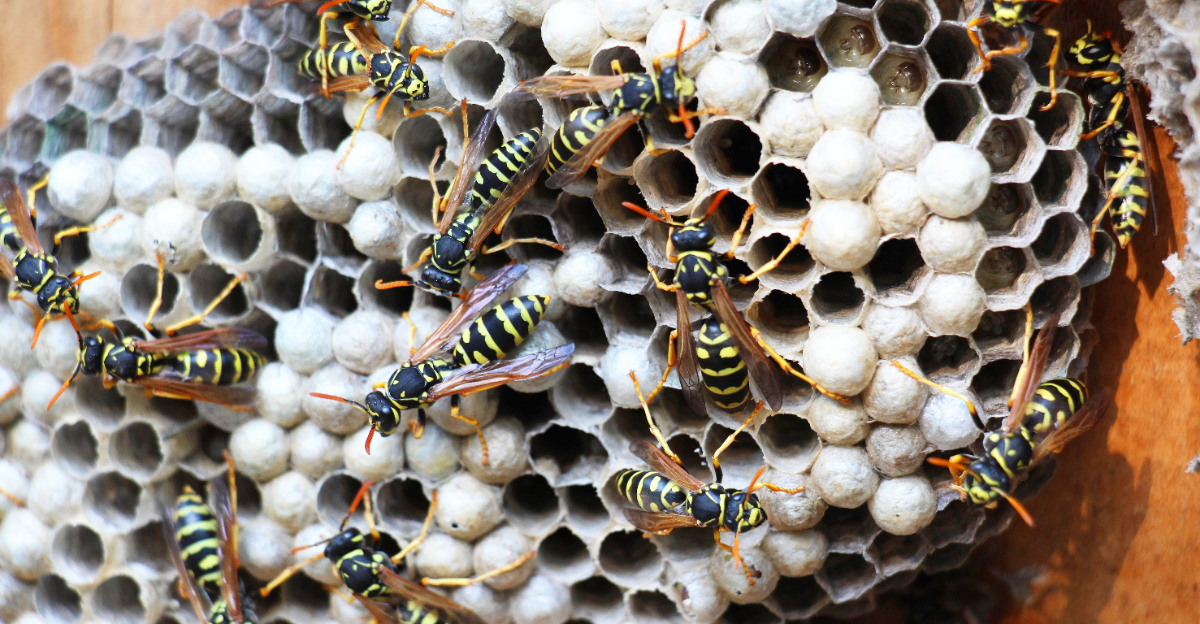
You will usually find paper wasp nests tucked under porch eaves, fence rails, or garden structures. The nests look like small upside-down combs made of gray papery material.
Colonies stay relatively small, usually under 30 adults.
Paper wasps are not naturally aggressive toward people. They will defend the nest if directly threatened, but they generally ignore humans working nearby.
Leaving their nest alone is usually all it takes to keep the relationship peaceful.
Tomatoes, peppers, and leafy greens benefit most from having paper wasps around. Hornworm caterpillars, which can strip a tomato plant overnight, are a favorite target.
Gardeners who tolerate paper wasp nests near their vegetable beds often notice noticeably less caterpillar damage by midsummer.
Avoid spraying near their nests and let them work. Relocating a nest is an option if placement is truly problematic, but removal is rarely necessary.
Paper wasps are low-maintenance garden helpers that show up every year without any invitation needed.