The Late Summer Blooms Texas Pollinators Still Need
Have you ever stopped to think about what happens to Texas pollinators when the late summer garden runs out of flowers?
Most people assume that bees and butterflies simply manage on their own, moving through the landscape and finding what they need the way wildlife always seems to.
But late summer is actually one of the most critical and most difficult stretches of the year for pollinators in Texas, and the gap in available blooms during this period has real consequences for the insects that keep gardens and ecosystems functioning.
They need more than most gardens are currently offering. Native bees are building winter reserves. Monarch butterflies are beginning their migration and need fuel.
Other beneficial insects are completing life cycles that depend on reliable late season nectar and pollen.
The gardens that still have something blooming in August and September are not just nice to look at. They’re genuinely important to the wildlife that depends on them.
1. Turk’s Cap
August in Texas is not for the faint of heart. Temperatures regularly crack triple digits, the soil bakes, and most flowering plants tap out entirely.
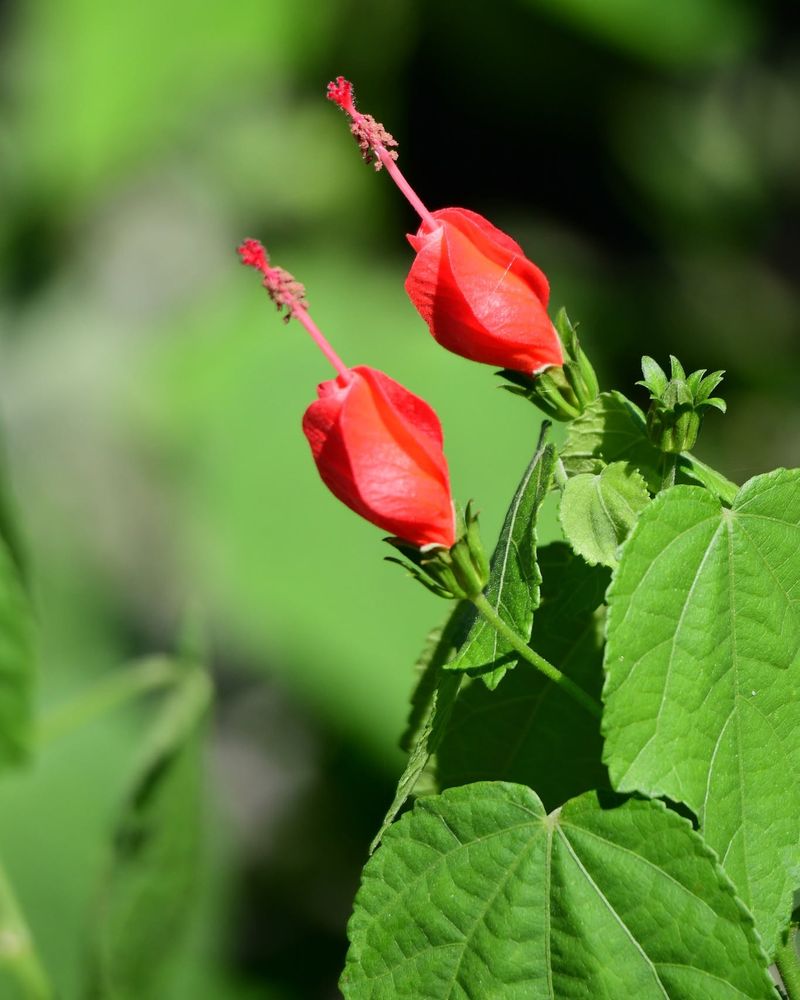
Turk’s Cap, though, does not seem to notice. It keeps pushing out those cheerful red, turban-shaped blooms right through the punishing heat, week after week, without complaint.
Gardeners who discover this plant often say it changed how they think about summer gardening.
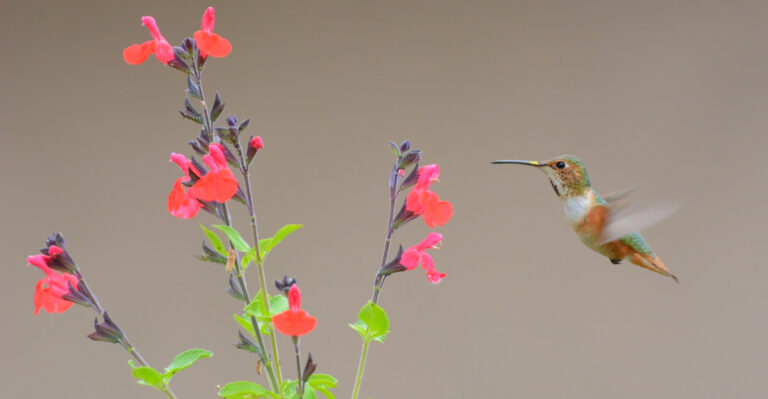
For ruby-throated hummingbirds heading south for the winter, Turk’s Cap is basically a roadside diner that never closes. These tiny birds need reliable nectar sources to fuel their long migration, and a well-established Turk’s Cap can provide exactly that.
The twisted red flowers are perfectly shaped for hummingbird feeding, and the plant produces new blooms constantly, so there is always something fresh available.
Beyond hummingbirds, bees, butterflies, and even some birds that eat the small red fruits enjoy spending time around Turk’s Cap.
The fruits themselves look like tiny apples and are actually edible for people too, with a mild, cranberry-like flavor. Kids especially get a kick out of discovering that detail.
Turk’s Cap grows happily in full sun but genuinely prefers some afternoon shade, making it one of the few flowering plants that actually performs better in a spot that gets a break from the harshest rays. It can get quite large over time, so give it room to spread.
Once established, it needs very little water and almost no maintenance, making it one of the most rewarding plants you can add to a Texas pollinator garden.
2. Gregg’s Mistflower
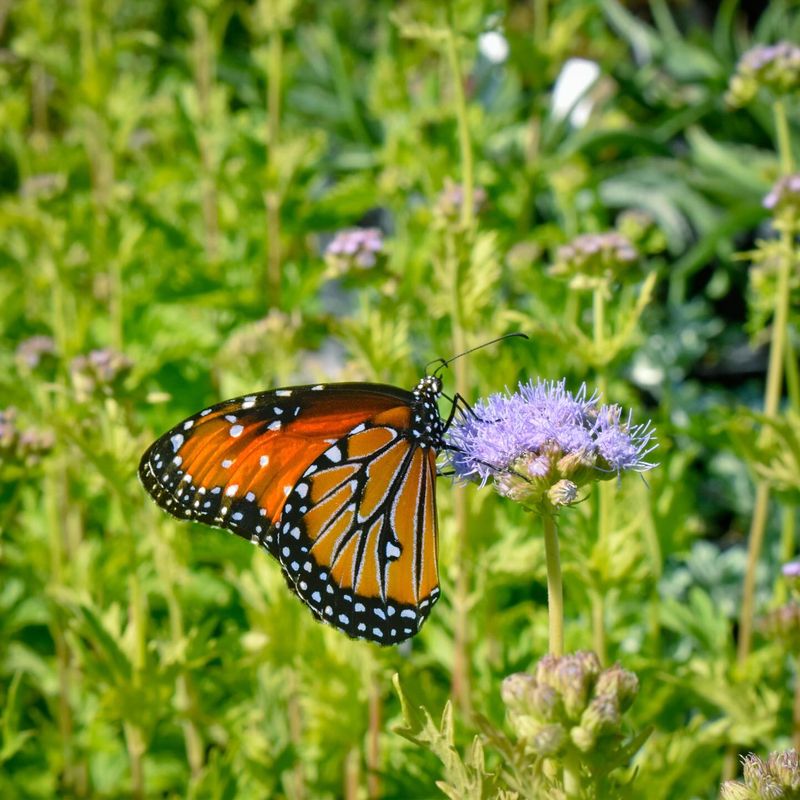
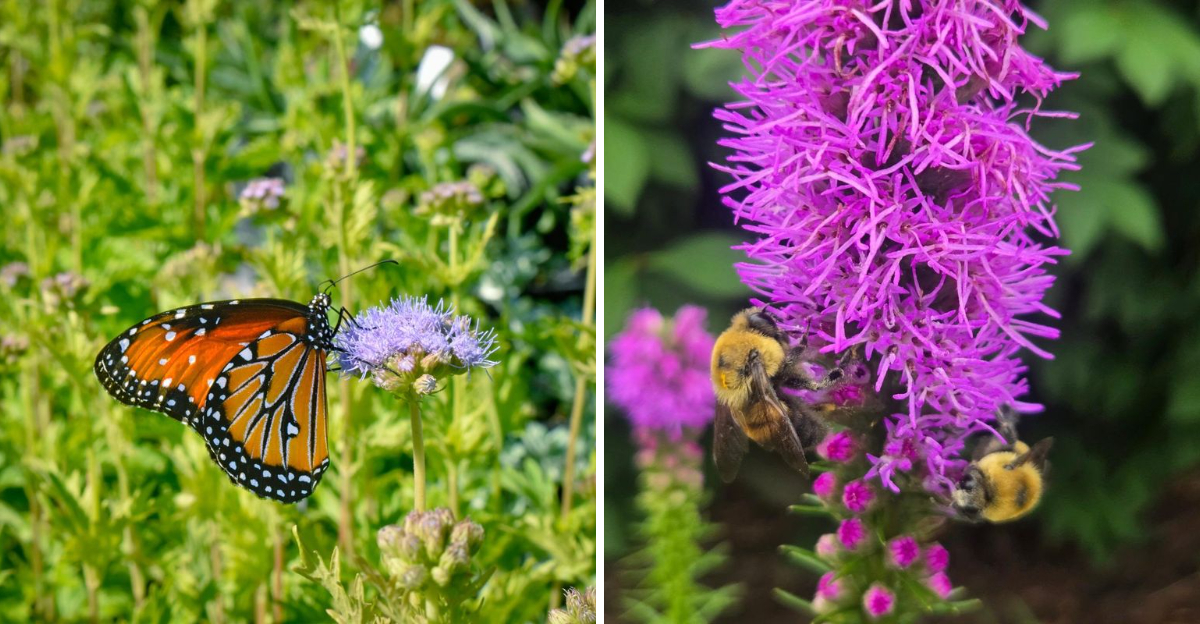
If you have ever watched a monarch butterfly drift southward through Texas in the fall, you already know how magical that moment feels. Gregg’s Mistflower is one of the plants that makes that journey possible.
Its soft, fuzzy clusters of blue-violet flowers keep blooming when most other plants have long since given up, offering nectar at exactly the right time for migrating monarchs.
What sets this native apart is its staying power. In central and south Texas, Gregg’s Mistflower can bloom from late summer all the way through October and sometimes even beyond.
Your Texas Garden Changes Every Week. Your Plan Should Too.
Gardening in Texas changes quickly throughout the season. Every Friday you’ll receive a simple weekly plan showing exactly what to plant, prune, fertilize, harvest, and protect so you never miss the right timing.
That extended bloom window is rare and valuable, especially in a season when nectar sources get scarce. Monarchs are not the only fans either. Native bees, painted ladies, and other butterflies flock to the flowers with real enthusiasm.
Growing it is not complicated. Gregg’s Mistflower thrives in full sun to partial shade and handles Texas heat with ease.
It spreads naturally over time, filling in gaps in garden beds and creating drifts of soft color. Established plants are drought tolerant, though they appreciate occasional watering during especially dry stretches.
Cutting it back after blooming keeps it tidy and encourages fresh growth. For gardeners who want to support the monarch migration without a lot of fuss, this plant is a genuine standout.
Plant it near other late-season bloomers like Turk’s Cap or Black-Eyed Susan to create a layered pollinator buffet that stays active well into the cooler months.
Once you see the monarchs gathering on those blue-violet clusters, you will be glad you made room for it.
3. Cardinal Flower
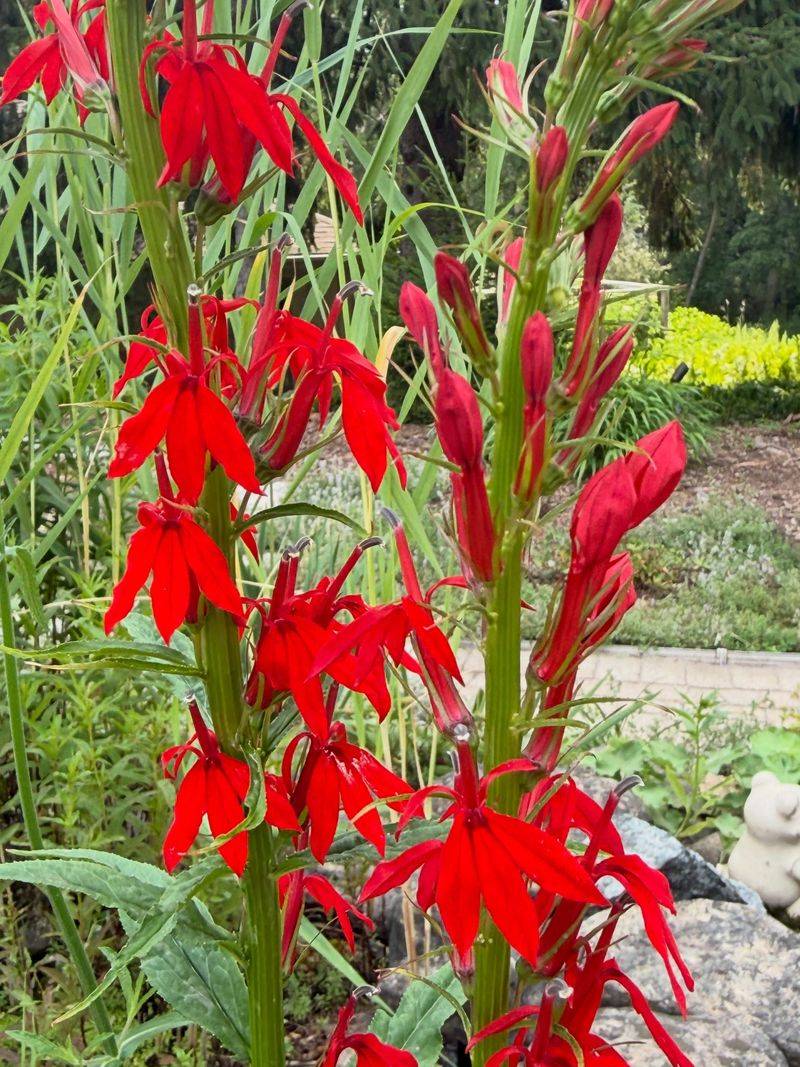
There is nothing subtle about Cardinal Flower. Those towering spikes of fire-red blooms are impossible to miss, and hummingbirds spot them from a surprising distance.
Lobelia cardinalis is one of the showiest native plants in Texas, and it earns every bit of that attention by blooming reliably through August and often well into September. Few plants deliver that kind of drama during the late summer stretch.
Hummingbirds are drawn to red flowers almost instinctively, and Cardinal Flower is practically designed for them. The tubular shape of each bloom fits a hummingbird’s beak almost perfectly, and the plant produces nectar in generous amounts.
Swallowtail butterflies and certain native bees also visit regularly, though the hummingbirds tend to dominate the scene whenever they are around.
In the wild, Cardinal Flower grows along stream banks, in low-lying wet meadows, and in spots where the soil holds moisture well. In the garden, that translates to a plant that loves consistent watering and does not appreciate drying out.
If you have a rain garden, a low spot in the yard, or a spot near a dripping hose, Cardinal Flower will likely thrive there.
It grows best in partial shade in Texas, where afternoon protection from the intense sun keeps the foliage looking healthy and the blooms coming strong. Full sun can work if the soil stays consistently moist.
The plants tend to be short-lived on their own, but they self-seed readily, meaning new plants pop up naturally each year. Grouping several together creates a bold column of red that stops both human visitors and migrating hummingbirds in their tracks.
4. Butterfly Weed
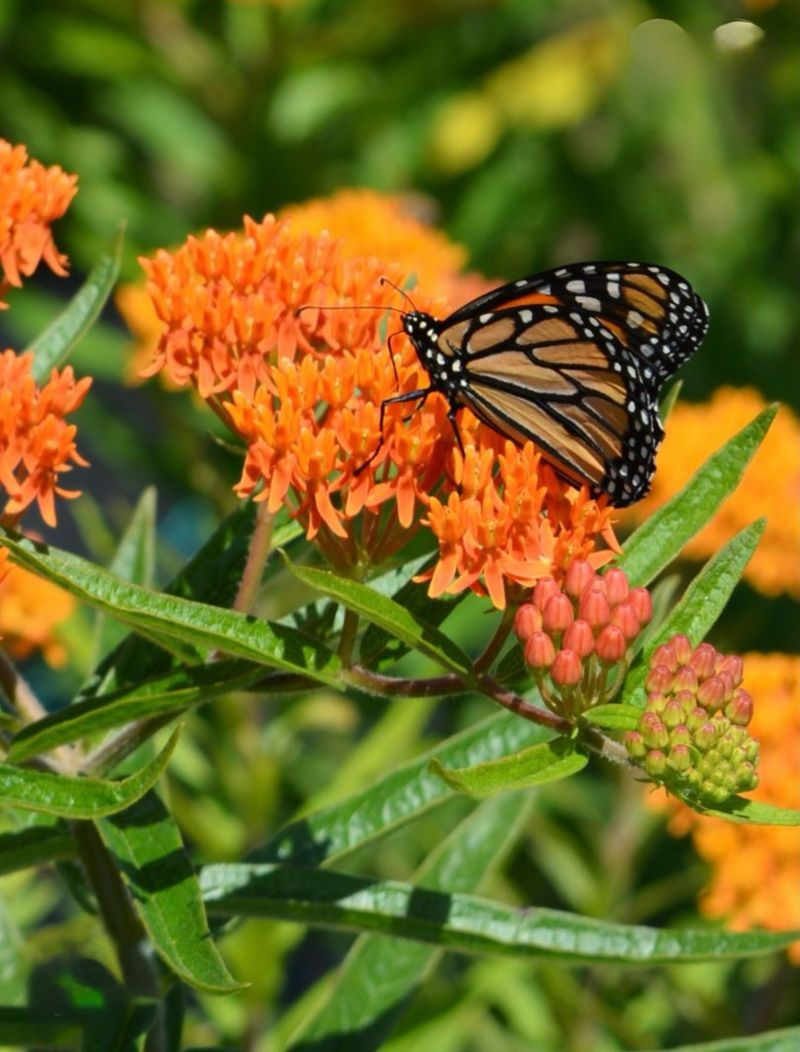
Bright orange flowers that practically glow in the Texas sun, a tough constitution that laughs at drought, and the ability to support monarch butterflies at every stage of their life cycle – Butterfly Weed brings a lot to the table.
Most late-summer bloomers offer nectar for adult pollinators, but Butterfly Weed goes further.
As a milkweed species, it is also a host plant for monarch caterpillars, meaning monarchs can actually lay eggs on it and the caterpillars can feed on its leaves.
That distinction matters more than many gardeners realize. Adult monarchs need nectar to migrate, but the species as a whole needs milkweed to reproduce.
Planting Butterfly Weed means you are not just feeding passing travelers, you are also potentially contributing to the next generation of monarchs. That makes it one of the most meaningful plants you can add to a Texas pollinator garden.
Beyond monarchs, the vivid orange blooms attract a wide range of native bees, painted ladies, swallowtails, and other butterflies.
The flowers are dense with nectar and bloom over a long period, especially when the plant is happy in a full-sun location with well-drained soil.
Unlike some milkweeds, Butterfly Weed does not spread aggressively, making it a well-behaved garden citizen.
One thing to keep in mind: Butterfly Weed has a deep taproot that makes it drought tolerant once established, but that same taproot means it does not transplant well. Choose your spot carefully and plant it there for good.
Pair it with Black-Eyed Susan or Blazing Star for a bold, pollinator-packed late-summer border that stays colorful for weeks.
5. Blazing Star
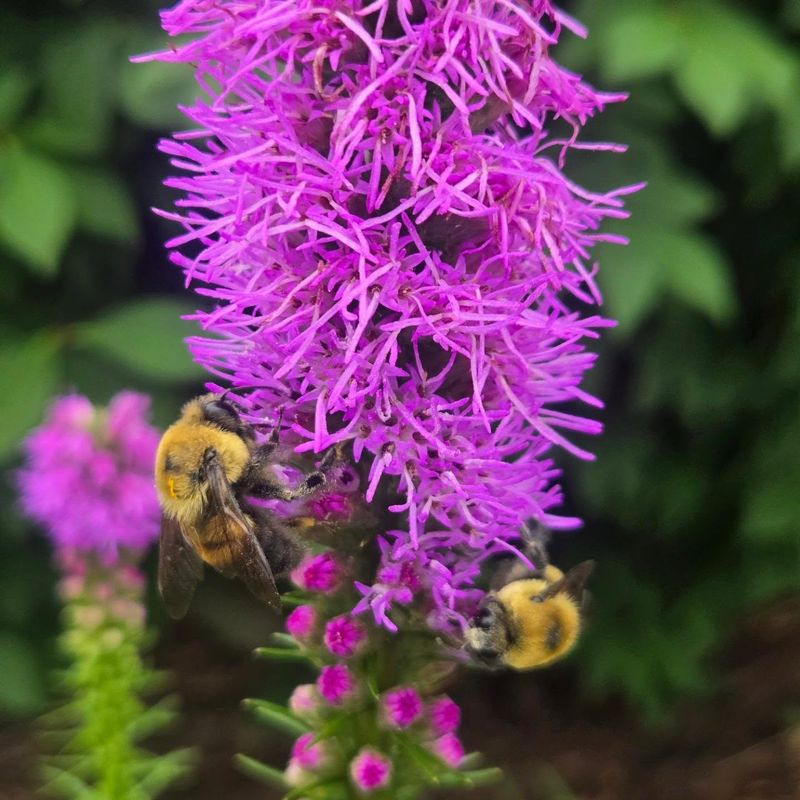
Most flowers open from the bottom up, but Blazing Star does the opposite. The top blooms on each bottlebrush-shaped spike open first, and then the flowers continue opening downward over several weeks.
That quirky sequence is not just interesting to watch. It also means each individual plant stays in bloom for an extended period, keeping nectar available long after a typical flowering plant would have finished.
Liatris aspera, sometimes called Button Blazing Star or Rough Blazing Star, blooms in August with tall, upright spikes covered in small rosy-purple flowers.
The vertical form is eye-catching in a garden bed, and it mixes beautifully with rounded, horizontal plants like Black-Eyed Susan or Butterfly Weed.
Bumblebees absolutely love it, visiting repeatedly throughout the day. Monarchs and swallowtails show up regularly too.
Growing Blazing Star in Texas is straightforward as long as you get the drainage right. It prefers sandy or rocky, well-drained soil and full sun.
Heavy clay soil that holds water can cause the corms to rot, so amending the planting area or choosing a naturally well-drained spot is worth the extra step. Once it finds the right conditions, it asks for very little attention.
After blooming, the seed heads that develop are another gift. Goldfinches and other small seed-eating birds pick through them eagerly in the fall and winter.
So even after the blooms fade, the plant keeps giving. Planting Blazing Star in groups of three or more creates a stronger visual impact and gives pollinators a larger, easier-to-find nectar source during the busy late-summer migration season.
6. Black-Eyed Susan
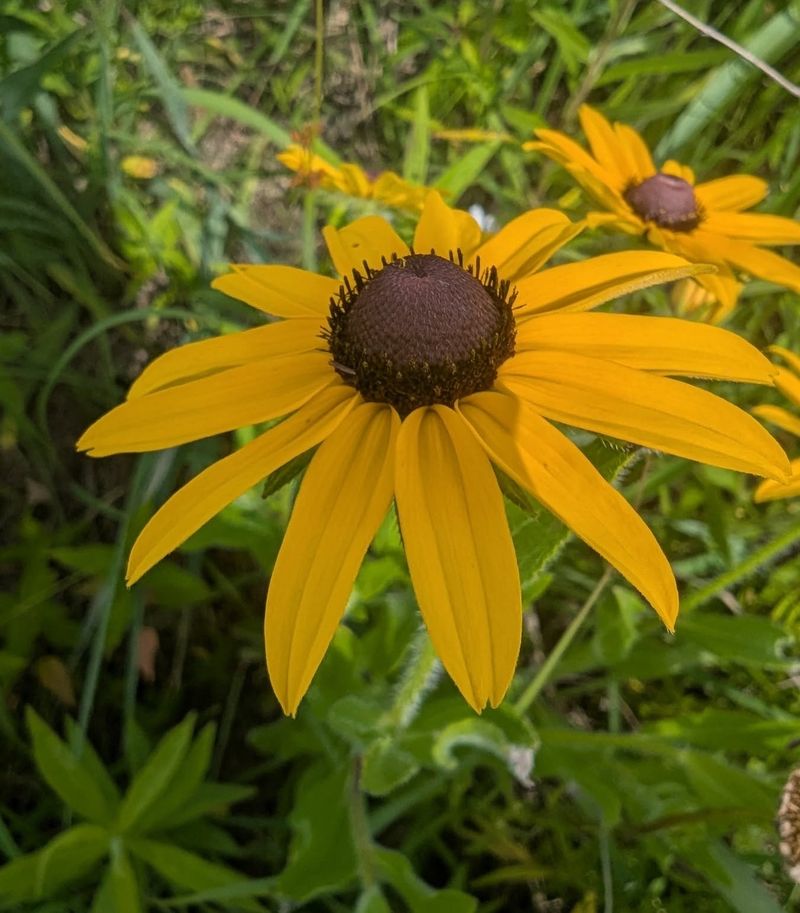
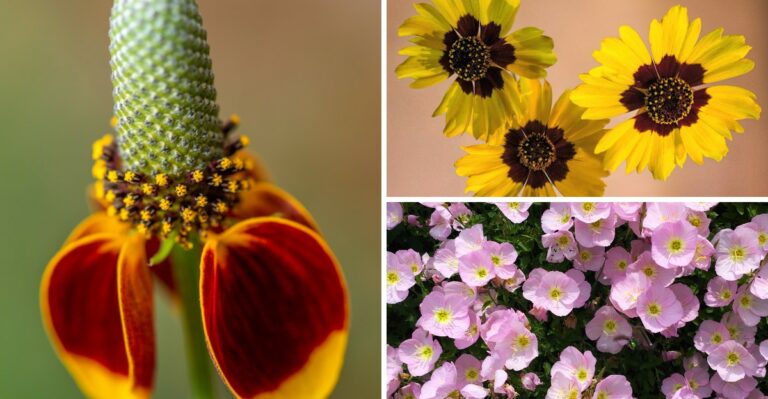
Golden yellow petals surrounding a dark brown center – Black-Eyed Susan is one of those flowers that feels instantly familiar, like something out of a childhood summer memory. But beyond its cheerful good looks, this native wildflower is a serious pollinator workhorse.
It keeps producing fresh blooms well into August, offering a steady supply of nectar and pollen during a time when many other garden plants have already called it quits.
Native bees are some of its biggest fans. Bumblebees, sweat bees, and longhorn bees all visit regularly, gathering pollen from the central disk.
Butterflies stop by for nectar too, and later in the season, small birds like goldfinches pick at the seed heads.
Planting Black-Eyed Susan gives you something for pollinators at multiple stages, from active bloom through seed set, which extends the benefit well beyond the flowers themselves.
Full sun and well-drained soil are the basic requirements, and once those are met, Black-Eyed Susan is genuinely low-maintenance. It handles Texas heat well and tolerates dry spells with reasonable grace.
Deadheading spent blooms encourages more flowers, but leaving some seed heads in place rewards the birds and allows the plant to self-seed naturally for next year.
Mixing Black-Eyed Susan with Butterfly Weed and Blazing Star creates a bold, layered pollinator border that stays interesting from midsummer into fall.
The colors complement each other naturally, orange, yellow, and purple working together in a way that looks intentional without requiring a design degree.
For gardeners who want reliable late-summer color with genuine wildlife value, this classic native rarely disappoints.
7. Plumbago
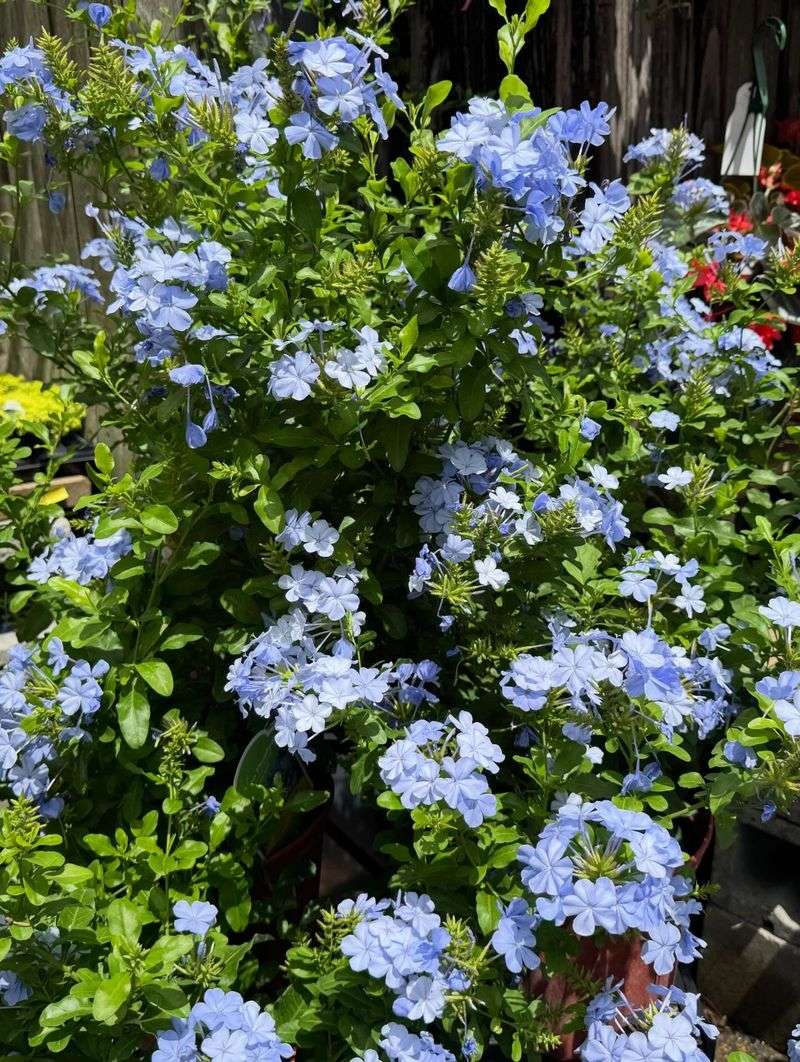
Not every plant on this list is a Texas native, but Plumbago has earned its place in Texas gardens through sheer performance. When summer heat is at its worst and most flowering plants are struggling to keep up, Plumbago just keeps going.
Heavy clusters of sky-blue flowers cover the plant almost nonstop from spring through the hottest weeks of late summer, and the color it brings to a garden during that stretch is genuinely hard to match.
Blue flowers are relatively rare in the garden world, which makes Plumbago especially valuable from a design standpoint. But beyond looks, the blooms attract a consistent stream of pollinators.
Butterflies visit regularly, and native bees find the flowers easy to work. The plant produces nectar reliably, making it a dependable fuel stop during the late-summer period when migrating and resident pollinators alike are searching hard for food.
One of Plumbago’s most useful traits is its flexibility. It thrives in full Texas sun but handles partial shade better than most heat-loving plants.
That adaptability makes it a smart choice for garden beds that get a mix of sun and shade throughout the day. It can grow quite large, spreading several feet wide, so giving it room to roam pays off in a bigger, showier display.
Watering needs are moderate once the plant is established. It appreciates consistent moisture but does not like sitting in waterlogged soil.
Pruning it back lightly after heavy bloom flushes encourages fresh growth and more flowers.
For gardeners looking for a flexible, long-blooming plant that pollinators genuinely love through the toughest weeks of a Texas summer, Plumbago is a smart and satisfying choice.