The Meaning Behind Seeing A Great Blue Heron In Your Florida Yard
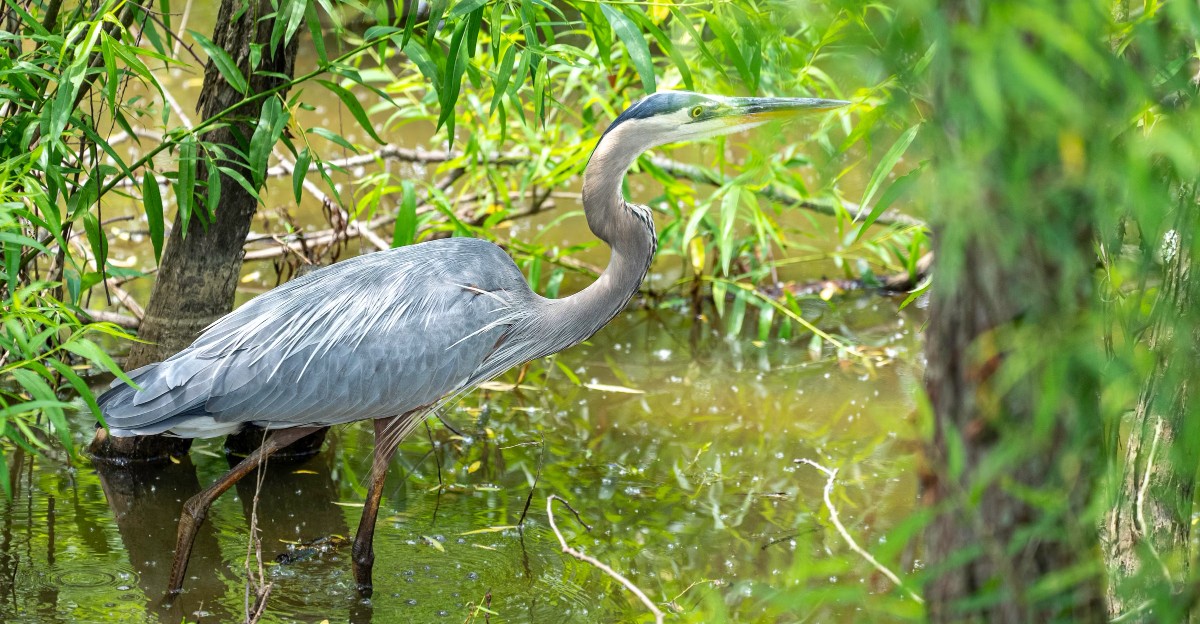
A bird that stands about four feet tall can weigh only five or six pounds. Its hollow bones make that possible, and so does a coat of feathers that looks far bulkier than the body underneath.
I still remember the first time one landed beside my Florida pond. It froze like a garden statue for ten whole minutes. Then it struck faster than I could blink.
You might wonder if a visit like that means something special. Some people see a sign of patience or good luck. Others see a hungry hunter scouting an easy meal, and honestly, both views have a point.
Personally, I love that a wild wetland giant would choose my little patch of lawn. Your yard may be telling a bigger story than you realize.
Could the real reason be something hiding in your grass that you’ve never even noticed?
1. That Tall Gray-Blue Wader Is Probably Following Its Stomach
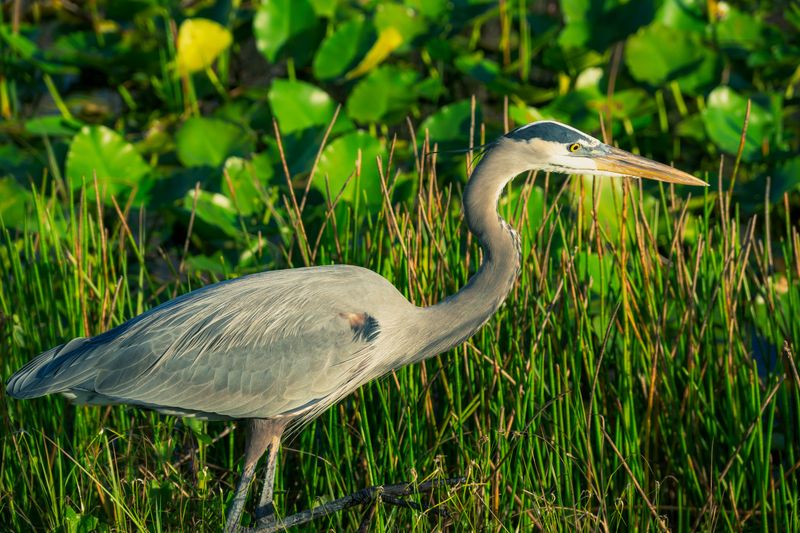
Food is the number one reason a great blue heron shows up near your house. These birds are patient, clever hunters, and they notice easy meals fast.
A backyard pond stocked with koi or goldfish looks like an open snack bar to a heron. Shallow edges make it even better, since herons hunt by wading slowly in water less than knee-deep on them.
Canals, retention ponds, and lake shorelines behind many homes also draw them in.
Your lawn can attract herons even without water. Cornell Lab of Ornithology notes these birds eat mice, voles, frogs, snakes, and lizards.
A heron stalking across grass is often hunting rodents or Florida’s plentiful anoles.
I find it funny how sneaky they look while doing it. They lift each foot carefully, lean forward, and wait.
Then the long neck shoots out like a spring.
So the plain meaning of a heron sighting is simple. Something in or near your yard is worth eating.
That might be fish, frogs, or the small critters living under your shrubs.
Once you understand that, the rest of their behavior makes much more sense. Watch where it stands, and you will learn what it is hunting.
2. A Heron On Your Lawn Can Be A Sign Of Healthy Wetlands Nearby
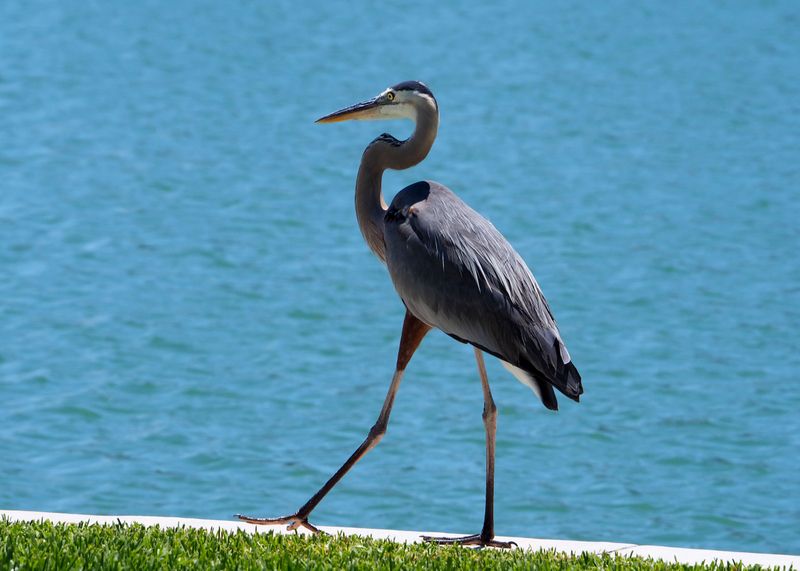
Here is a happier way to read the visit. Scientists often treat wading birds like herons as indicators of wetland health.
Herons sit near the top of the food chain in many watery places. They need steady supplies of fish, crayfish, frogs, and insects to survive.
When prey is plentiful, herons stick around, and when water quality slips, wading birds often decline.
That means a heron near your home hints that local ponds, ditches, or marshes are still producing food. It is not a lab test, of course.
Still, it is a hopeful clue about the neighborhood ecosystem.
The great blue heron is common across the state all year. Many stay put, while extra birds from up north arrive in fall and winter.
You may notice more visitors during the cooler months for that reason.
I like to think of each sighting as a small report card for the landscape around me. Native plants, clean runoff, and fewer chemicals all help keep that grade high.
Your yard is one tiny piece of a much larger web. A tall bird standing in it reminds you the web is still working.
3. The Patient Heron Carries Old Stories Of Wisdom And Calm
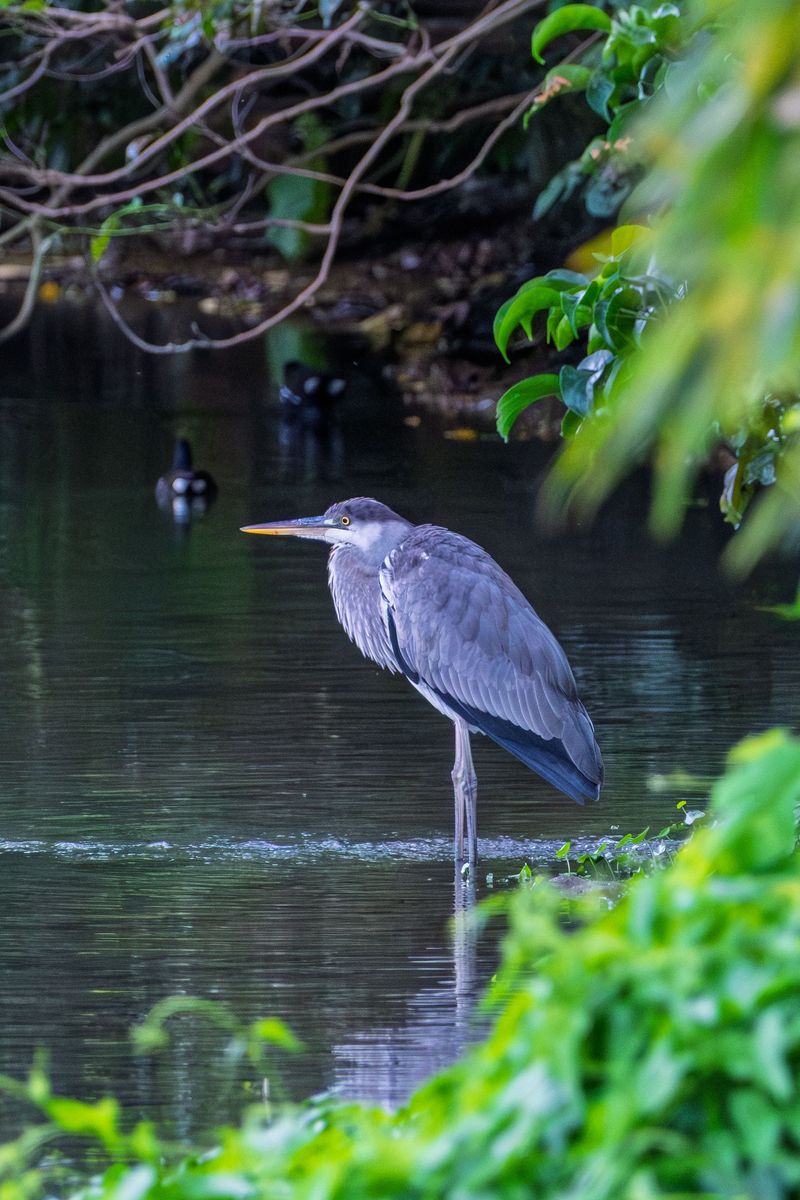
Long before birdwatching apps existed, people watched herons and found lessons in them. Many cultures tied this bird to patience and quiet judgment.
Some Native American traditions describe the heron as a symbol of wisdom and self-reliance. Its habit of standing alone and still, then acting at just the right moment, made it a natural teacher.
Meanings vary from tribe to tribe, so no single interpretation fits everyone.
Modern folks often borrow the same ideas. A heron sighting might nudge you to slow down, wait for the right time, or trust your own path.
I admit I feel calmer after watching one fish for a while.
Herons also appear in old Egyptian art. The Bennu bird, linked to the sun and renewal, was often shown looking much like a heron.
None of this is scientific, and that is fine. Symbols work because they help people reflect.
If a quiet heron in your yard reminds you to breathe and be patient, that meaning is real for you. Just enjoy the moment without needing it to predict the future.
4. Make Sure It Is A Great Blue Heron And Not A Sandhill Crane
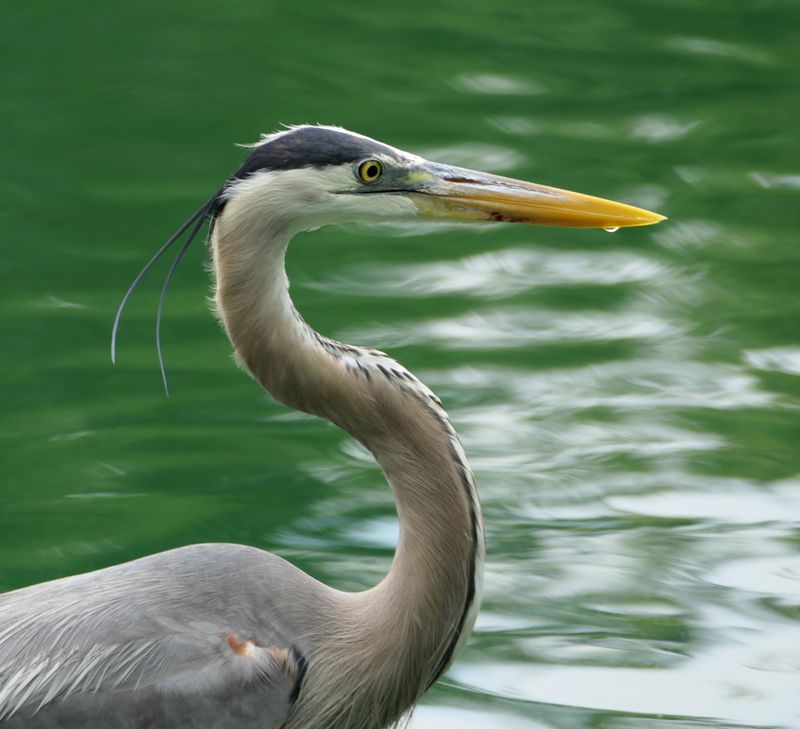
Florida yards get a few tall gray visitors, and mix-ups happen all the time. Telling them apart is easier than you might expect.
Great blue herons stand around four feet tall with a wingspan near six feet. They have blue-gray bodies, a long dagger-shaped yellowish bill, and a white face with a black stripe above the eye.
Shaggy plumes often hang from the neck and back.
Sandhill cranes, common in central Florida, have a red patch on the forehead and a shorter bill. They usually walk in pairs or family groups.
Herons mostly hunt alone.
Flight gives the easiest clue. Herons tuck their necks into an S-shape while flying.
Cranes fly with their necks stretched straight out.
Listen too. Herons give a harsh, croaky squawk, while cranes make a rolling, trumpet-like call you can hear far away.
In the Florida Keys and parts of south Florida, you might spot an all-white form called the great white heron. It is the same species, just a different color.
Knowing which bird you have helps you read its visit correctly.
5. Your Koi Pond Needs Hiding Spots Once A Heron Finds It
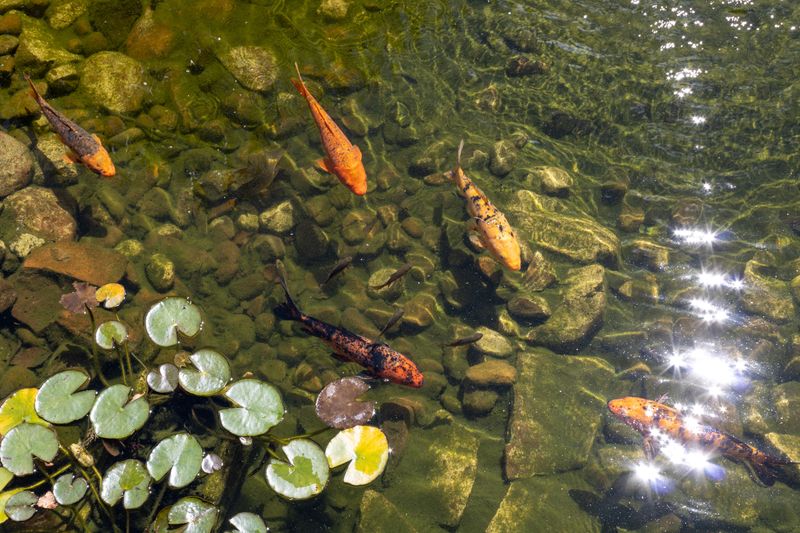
Losing a favorite koi to a heron stings. I have heard plenty of pond owners share that heartbreak, and the fix is mostly about design.
Herons hunt by wading. Ponds with steep sides and water deeper than about two feet are much harder for them to work.
Avoid shallow shelves along the edges if fish safety matters to you.
Give your fish places to hide. Short pieces of wide PVC pipe or special fish caves on the bottom work well.
Native water lilies and other floating plants add shade and cover too.
Netting stretched over the water is the most reliable barrier. Some owners run a low fishing line or fence around the pond edge, since herons usually walk in rather than land in the water.
Motion-activated sprinklers can startle a heron away. Decoy herons sometimes help briefly, but birds often figure them out.
Change things up every few weeks so the bird stays cautious. A heron that keeps failing will usually move on to easier fishing spots.
6. Feeding The Heron By Hand Causes More Harm Than Good
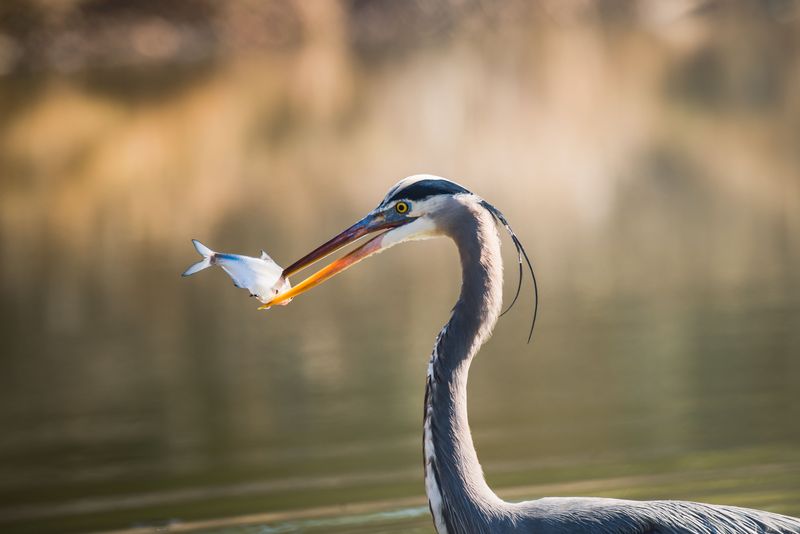
Anyone who has fished from a Florida pier knows the scene. A heron strolls up and stares at your bait bucket like it pays rent.
Tossing scraps feels friendly, but it creates problems. Florida law prohibits feeding many wild animals, and the Florida Fish and Wildlife Conservation Commission strongly discourages feeding wading birds.
Great blue herons are also protected under the federal Migratory Bird Treaty Act, so harming, capturing, or keeping one is illegal.
Birds that get handouts lose their caution around people. They may grab food from hands, hang around roads, or get tangled in fishing line.
Bread and processed food also offer poor nutrition.
Fish carcasses with bones can be risky, since big bones may injure a heron’s throat. Leftover line and hooks are a serious hazard too.
The kindest choice is to let the bird hunt on its own. Watch from a distance and keep pets inside while it visits.
If you find an injured heron, call the FWC or a licensed wildlife rehabilitator. Please avoid handling it yourself, because that sharp bill can cause real injuries.
7. Native Plants And Clean Water Keep Wading Birds Coming Back
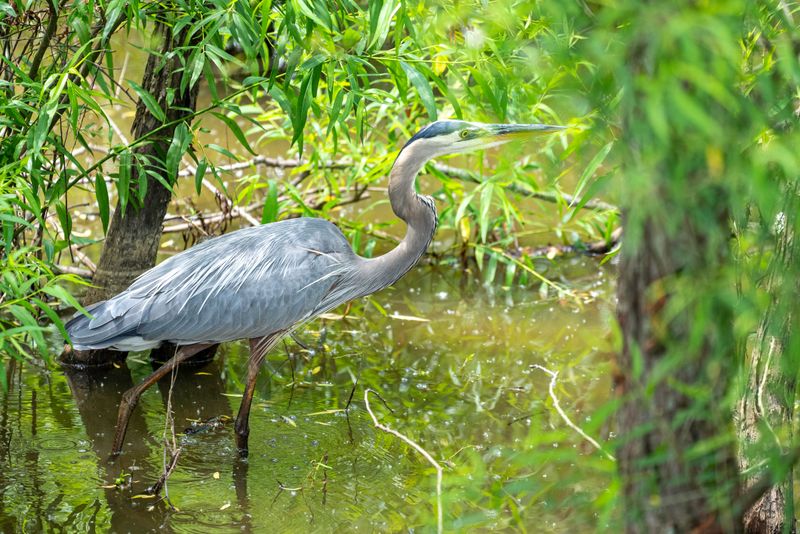
Want herons to keep stopping by without sacrificing pet fish? Build a yard that supports the whole food web, and the birds will follow.
Plant natives along any water edge. Pickerelweed, Florida blue flag iris, and duck potato shelter frogs and small fish.
Pair them with native shrubs like wax myrtle for cover. Skip invasive plants such as water hyacinth, which crowd out healthy habitat.
Cut back on fertilizers and pesticides, especially near ponds and canals. Runoff can feed algae blooms and reduce the prey herons need.
Many counties restrict fertilizer use during the summer rainy season, so check local rules.
Leave a quiet corner where you rarely mow or walk. Small mammals and lizards love those spots, and so do hunting herons.
Keep a pair of binoculars near your back door. I promise a heron hunting through your native plantings is better than any TV show.
The bigger takeaway is this. A great blue heron in your yard means your space is still part of wild Florida, and small choices help keep it that way.