The Mulch Mistake Florida Crape Myrtles Suffer Through Every Fall
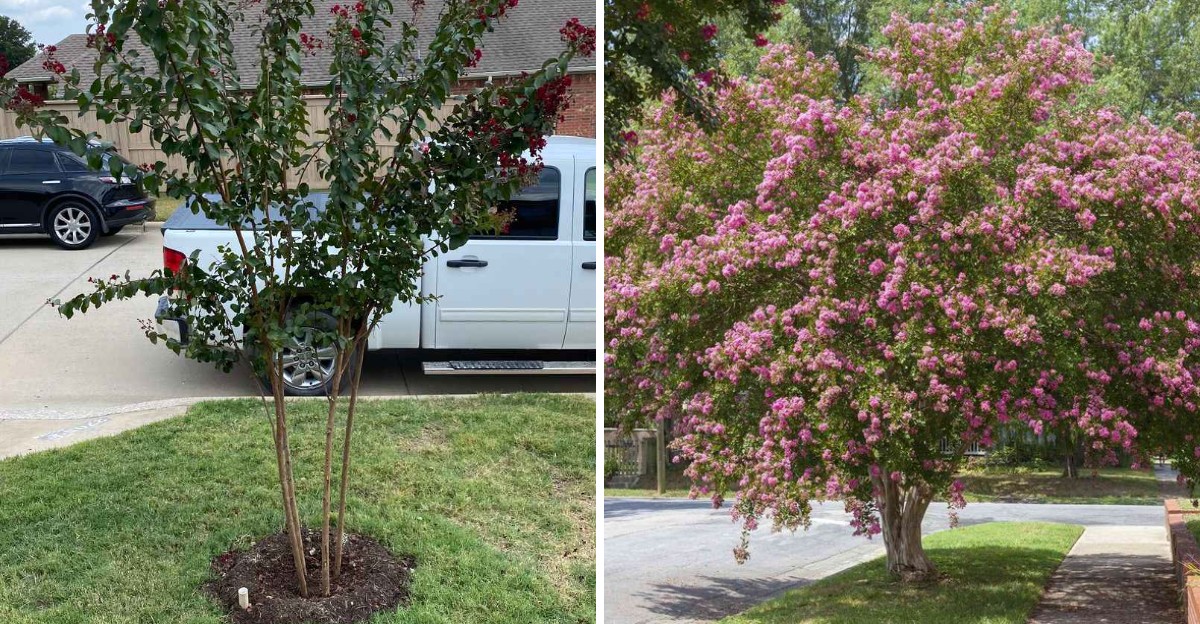
Mulch is supposed to be the helpful part of the job. For a crape myrtle in Florida, it often plays the villain.
Every fall, the same pile lands in the same spot, and the tree foots the bill for months. Nothing looks wrong at first.
The trouble stays out of sight until spring, when bark and leaves finally spill the beans.
It’s an easy habit to pick up. Neat beds feel right, and nobody questions a chore that looks this tidy.
Pull back the mulch and take a hard look at the trunk base this week. A small fix now spares the tree a long, quiet slide.
1. Volcano Mulching Buries The Trunk
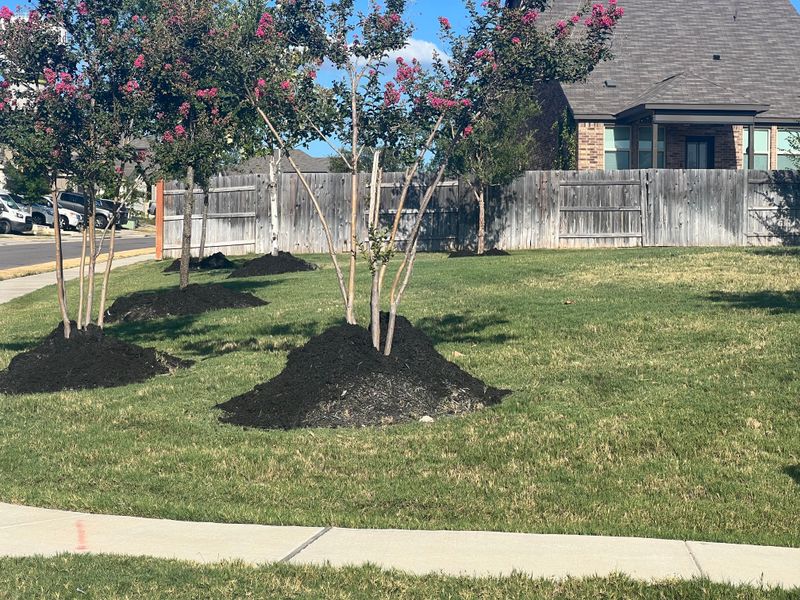
Drive through almost any Florida neighborhood in October and you will spot them. Tall brown cones of mulch rise around tree trunks like tiny backyard volcanoes.
Landscapers and homeowners pile it high because it looks neat and generous. Unfortunately, more mulch is not better when it climbs up the trunk.
Every tree has a root flare, the spot where the trunk widens as it meets the roots. That flare is built to sit in open air, not under a heap of wood chips.
When the flare gets buried, the tree loses its natural breathing zone at the base. Bark in that area is not designed to stay covered or damp for long.
Crape myrtles often have several thin trunks, so a volcano can bury all of them at once. That multiplies the risk for one of the South’s favorite flowering trees.
Here is a fun fact for your next garden chat. Tree experts have used the nickname mulch volcano for years, and many extension offices run campaigns against it.
Take a quick walk around your yard and look at each tree base. If you cannot see the trunk spread out at the bottom, you likely have a volcano on your hands.
Spotting the problem is the first step toward a healthier, happier crape myrtle. The rest of this list shows why it matters and how to fix it.
2. Piled Mulch Can Rot The Trunk
Think about wearing wet socks all day long. Your feet would feel soggy, wrinkly, and pretty miserable by dinnertime.
Tree bark feels something similar when mulch sits pressed against it. The mulch holds water like a sponge and keeps the trunk damp for days.
Bark is the tree’s protective skin, and it works best when it can dry out. Constant moisture softens it, and soft bark starts to break down.
Florida makes this worse with its warm temperatures and frequent afternoon storms. Fall can still bring humid days, so piled mulch rarely gets a chance to dry.
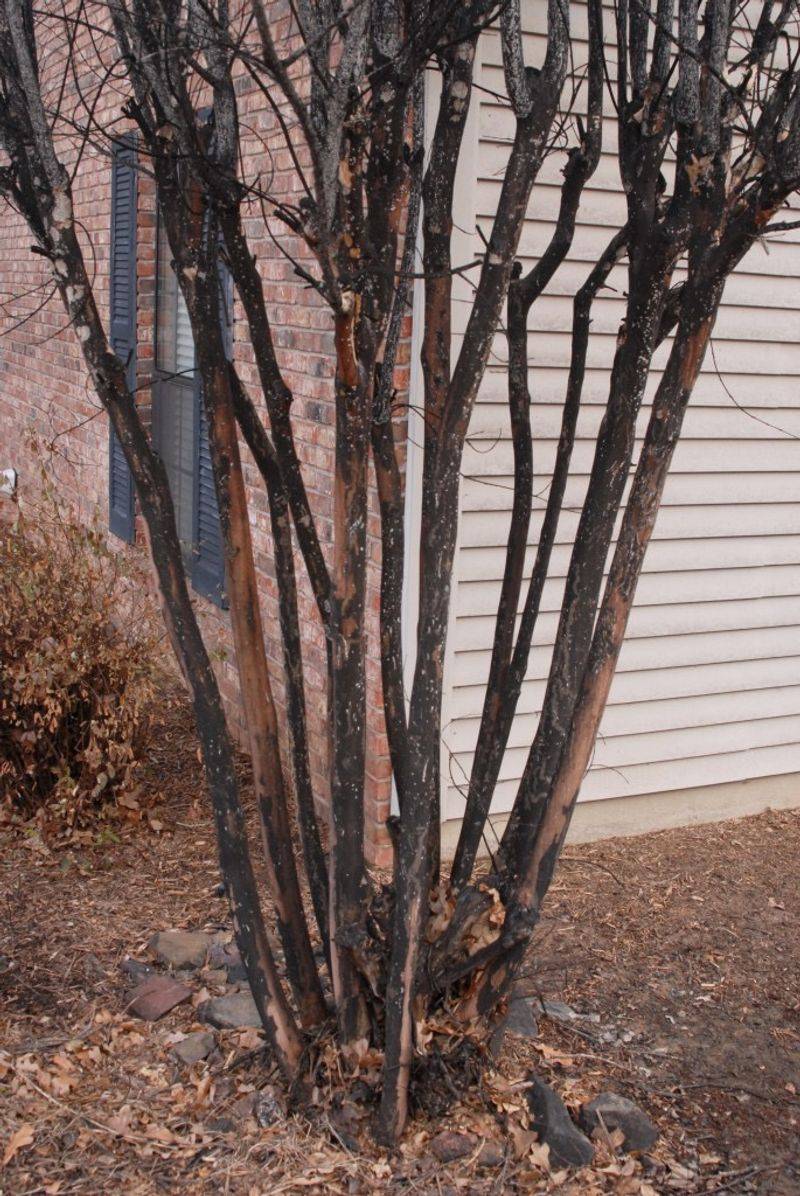
Once the bark weakens, it opens a door for fungi, bacteria, and wood-boring insects. Cankers, which are sunken sore spots on the trunk, may also form.
Splits and cracks can follow, weakening the tree’s structure over time. A crape myrtle with a damaged base may lean, struggle, or lose vigor season after season.
Your Florida Garden Changes Every Week. Your Plan Should Too.
Gardening in Florida changes quickly throughout the season. Every Friday you’ll receive a simple weekly plan showing exactly what to plant, prune, fertilize, harvest, and protect so you never miss the right timing.
The sneaky part is that you cannot see the decay while the mulch hides it. Many gardeners only notice when they finally pull the pile away.
So give your trunks a quick check this weekend. Brush back the mulch with your hand and look for dark, mushy, or peeling bark near the soil line.
Catching it early gives your tree a far better shot at bouncing back.
3. It Cuts Off Oxygen To The Roots
Roots need to breathe, just like you do. That surprises a lot of people, since roots spend their whole lives underground.
Soil has tiny air pockets that hold oxygen for roots to use. A thin mulch layer lets air pass through, but a deep pile acts like a heavy blanket.
When oxygen runs low, roots cannot do their main job well. They struggle to take in water and nutrients the tree needs to grow and bloom.
Here is where things get strange. Some trees respond by sending new roots up into the mulch itself, hunting for air and moisture.
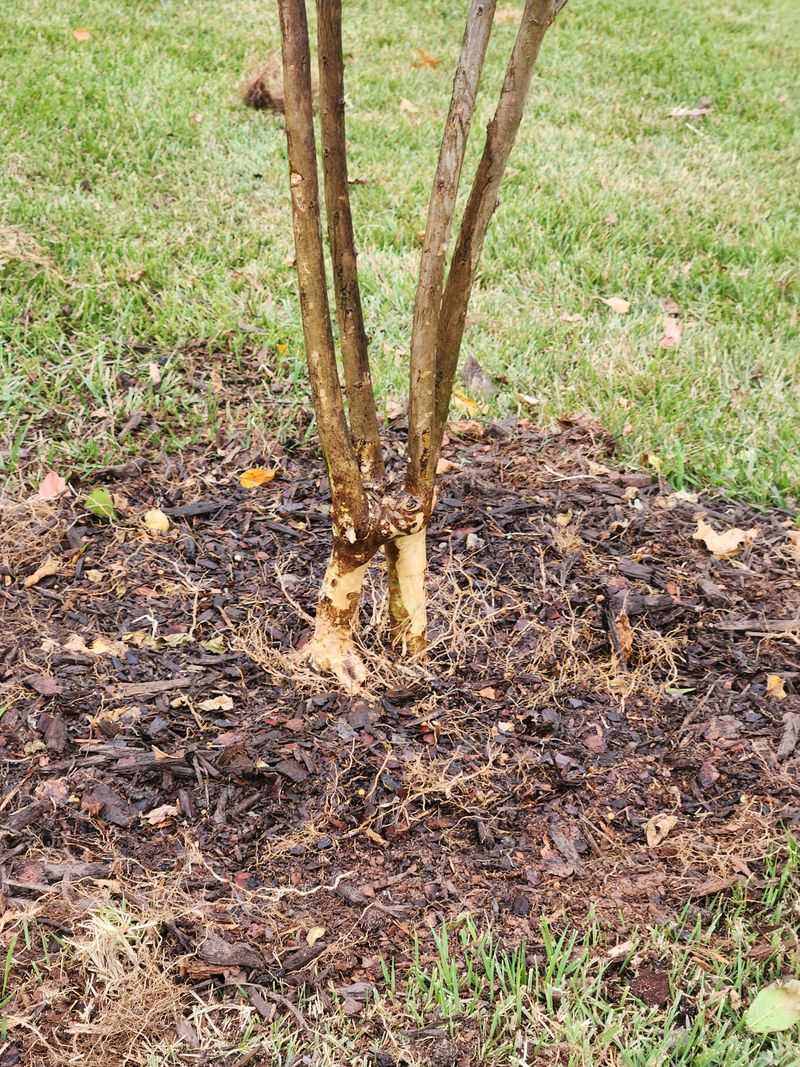
Those roots can wrap around the trunk as they grow. Arborists call them stem girdling roots, and they act like a belt that gets tighter every year.
A girdling root can slowly pinch the flow of water and food inside the trunk. Your crape myrtle might show thin leaves, fewer flowers, or weak new growth.
The changes can take years to show up, which makes the cause easy to miss. By then, a professional may need to cut the roots away.
Keeping mulch thin is a simple way to avoid all of this. Healthy roots in airy soil mean bigger blooms and stronger branches each summer.
Your tree will thank you with a bright pink, purple, or white show.
4. Rain And Irrigation Can’t Get Through
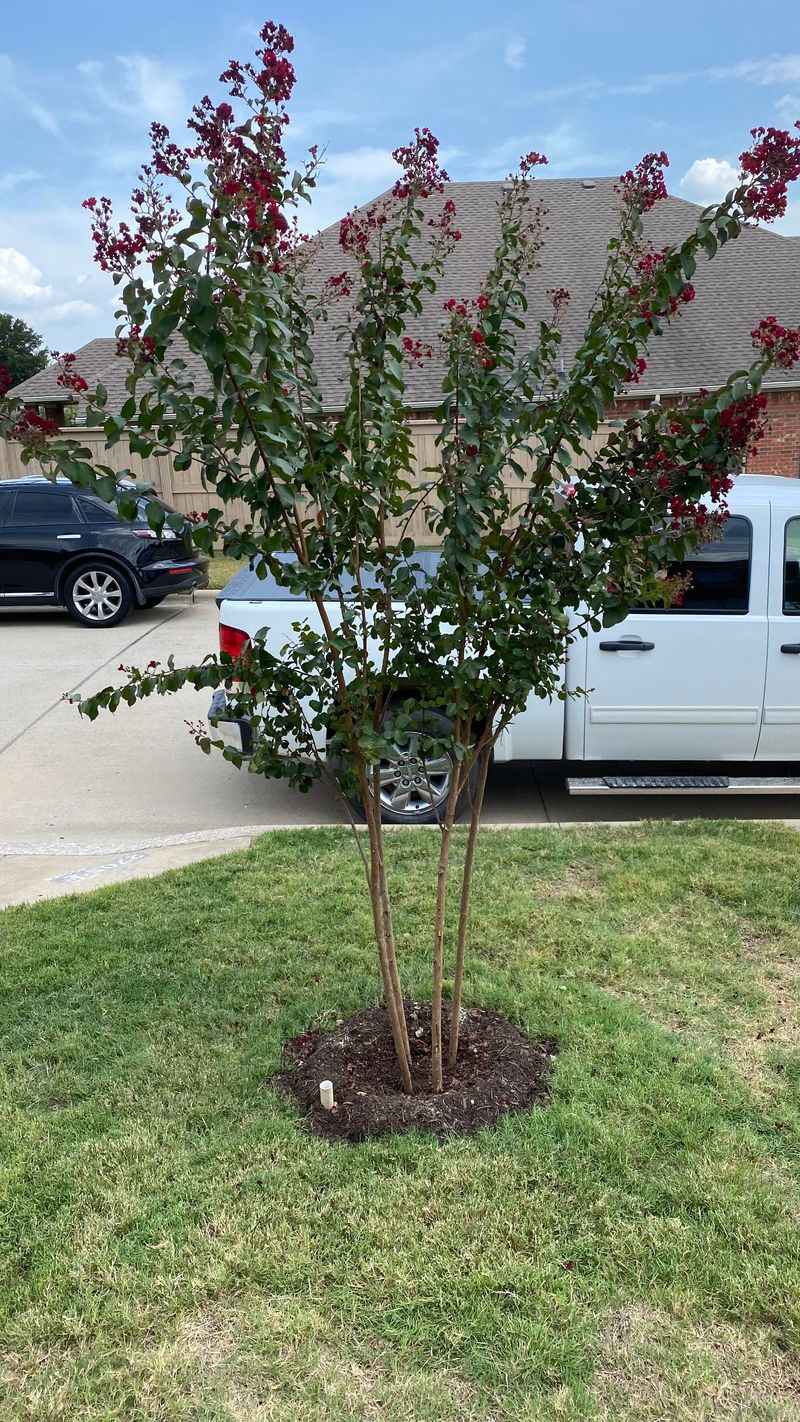
Picture a sprinkler running for twenty minutes while the roots below stay thirsty. It sounds odd, but it happens in plenty of Florida yards.
Thick mulch can pack down and form a tight, crusty layer over time. Water hits that crust and slides off instead of soaking in.
A volcano shape makes the problem even worse. Water rolls down the slopes like rain off a roof and lands on the grass instead.
Meanwhile, the roots under the pile get only a small share of moisture. Your crape myrtle may look droopy even after a big storm.
Shredded wood and fine bark are common troublemakers here. They mat together easily, especially when they stay wet and then bake in the sun.
A simple test can tell you what is going on. Water the area, wait an hour, then dig a small hole with a trowel to see if the soil is damp.
If the soil underneath is dry, your mulch is likely blocking the flow. Loosening or thinning the layer helps water find its way down again.
Crape myrtles are fairly drought tolerant once settled, but young trees need steady moisture. Good water flow helps them build deep, sturdy root systems.
Saving water and helping your tree at the same time is a nice win.
5. Insects, Fungi And Rodents Move In
Build a cozy, damp hideout and guests will show up. A deep mulch pile works like a free hotel for critters you do not want around.
Fungi love moist, shady spots with little airflow. Thick mulch against the bark gives them exactly that, right where the tree is most exposed.
Small rodents like mice and cotton rats also enjoy the shelter. They can tunnel under the pile and nibble on tender bark, leaving wounds behind.
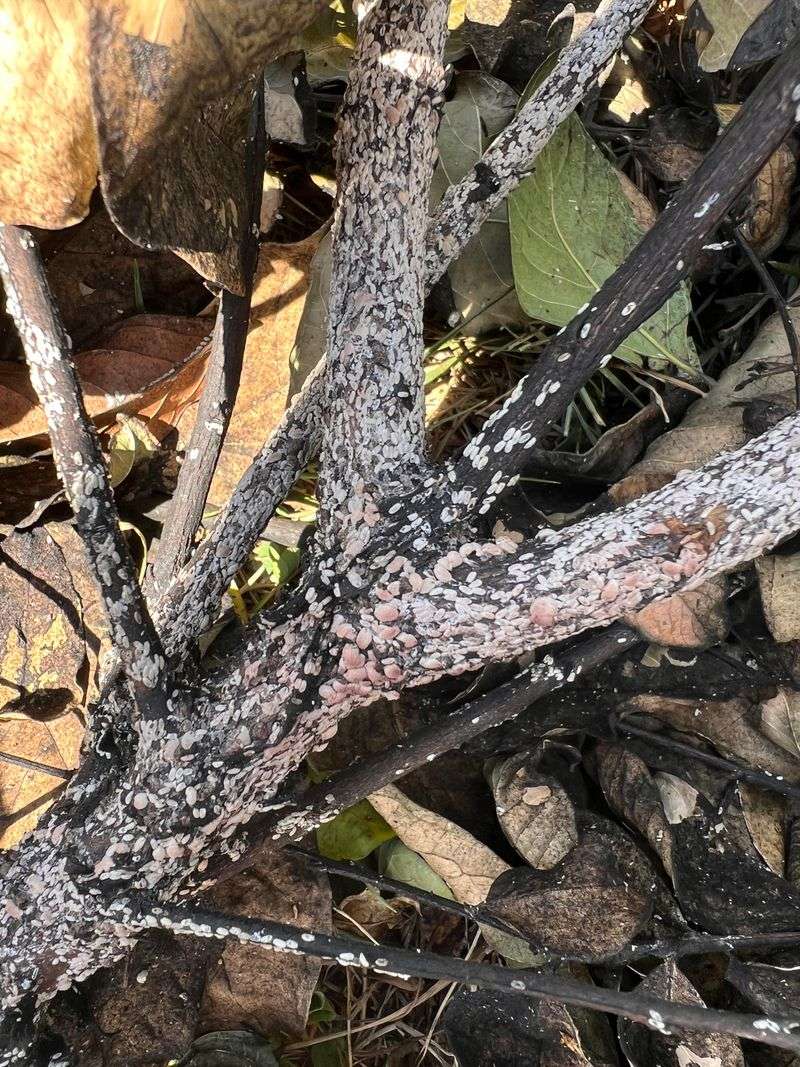
Crape myrtles have their own list of common pests too. Aphids and crape myrtle bark scale feed on the tree and leave sticky honeydew behind.
That honeydew feeds sooty mold, a black fungus that coats branches and leaves. It grows fast in warm, humid weather with poor air circulation.
Powdery mildew is another familiar visitor, showing up as a white dusty film. It also thrives in high humidity and still air around the plant.
Here is a quirky fact for you. Crape myrtle bark scale was first found in the United States in Texas in 2004 and has since spread across the South.
Thinning your mulch will not solve every pest issue alone. Still, it removes a major welcome mat and lets the base of your tree dry and breathe.
Fewer hiding spots often means fewer headaches later on.
6. Keep Mulch 2 To 3 Inches Deep
Grab a ruler from the junk drawer, because this tip is all about numbers. The sweet spot for mulch around crape myrtles is about 2 to 3 inches deep.
That depth does plenty of good work. It holds moisture, keeps soil temperatures steady, and blocks many weeds from sprouting.
Some sources suggest as little as 1 to 2 inches, while others allow up to 4. Most experts agree that the settled depth should stay around 3 inches or less.
Settled is the key word here. Fresh mulch looks fluffy at first, then sinks as rain and time press it down.
If you already have an old layer, measure it before adding anything new. You might find you only need a light sprinkle on top, or none at all.
Florida gardeners have lots of mulch choices, like pine bark, pine straw, and eucalyptus. Pine straw stays airy and light, which many folks like around crape myrtles.
Try to avoid cypress mulch if you can. Harvesting it can harm wetland forests, and other options work just as well.
Spread the mulch wide rather than tall, ideally out toward the drip line. That is the edge of the tree’s canopy, where many feeder roots live.
Wide and shallow beats tall and narrow every time.
7. Leave At Least A Foot Clear Around The Trunk
Forget the volcano and think donut instead. A mulch donut has a hole in the middle, and that hole is where your trunk lives.
Leaving open space around the base lets air move freely. The bark can dry after rain, which keeps rot and pests from settling in.
Many guides say to keep mulch at least 6 inches away from the trunk. Others recommend starting the taper about a foot out for extra breathing room.
For Florida’s humid climate, more space is a smart choice. Aim for roughly a foot when you can, especially with multi-trunk crape myrtles.
Start thin near that open circle and build up slowly as you move outward. The deepest part of the layer should sit farther from the tree, not right against it.
Kids and pets sometimes kick mulch back toward the trunk while playing. A quick sweep with your foot or a rake every few weeks keeps things tidy.
The bare ring might look a little unusual at first. Neighbors may even ask why your tree looks different from theirs.
That is a great chance to share what you have learned. You might save a few more crape myrtles on your street this fall.
A simple donut shape can protect your tree for years to come.
8. Rake Old Mulch Back Before Adding More
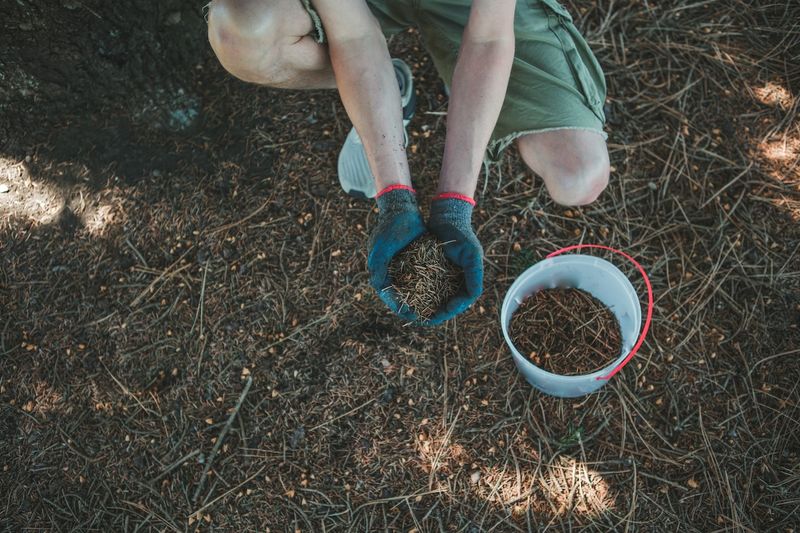
Many of us love the look of fresh, dark mulch each fall. The trouble starts when new bags get dumped on top of last year’s pile, and the year before that.
Layer by layer, those piles grow into the problems you read about above. A rake can help you break that cycle.
Good news first, though. You often do not need to remove old mulch if it is loose and partly broken down.
That older material is slowly feeding the soil as it decays. Gardeners sometimes call it free compost.
Before adding anything, rake the old layer to loosen it up. This step, sometimes called cultivating, breaks up crusts and helps air and water move again.
Some mulch should go, however. Remove it if it is matted, soggy, moldy, smells sour, or shows signs of disease.
Also pull some away if adding new mulch would push you past 3 inches. Scoop the extra into a compost pile or spread it thinly in other beds.
Once the old layer is loose and the right depth, top it off lightly. A thin fresh layer gives you that clean look without smothering the roots.
Your crape myrtle gets a refresh, and your wallet gets a break too. Fewer bags each fall add up to real savings.
9. Pull Mulch Away Until The Root Flare Shows
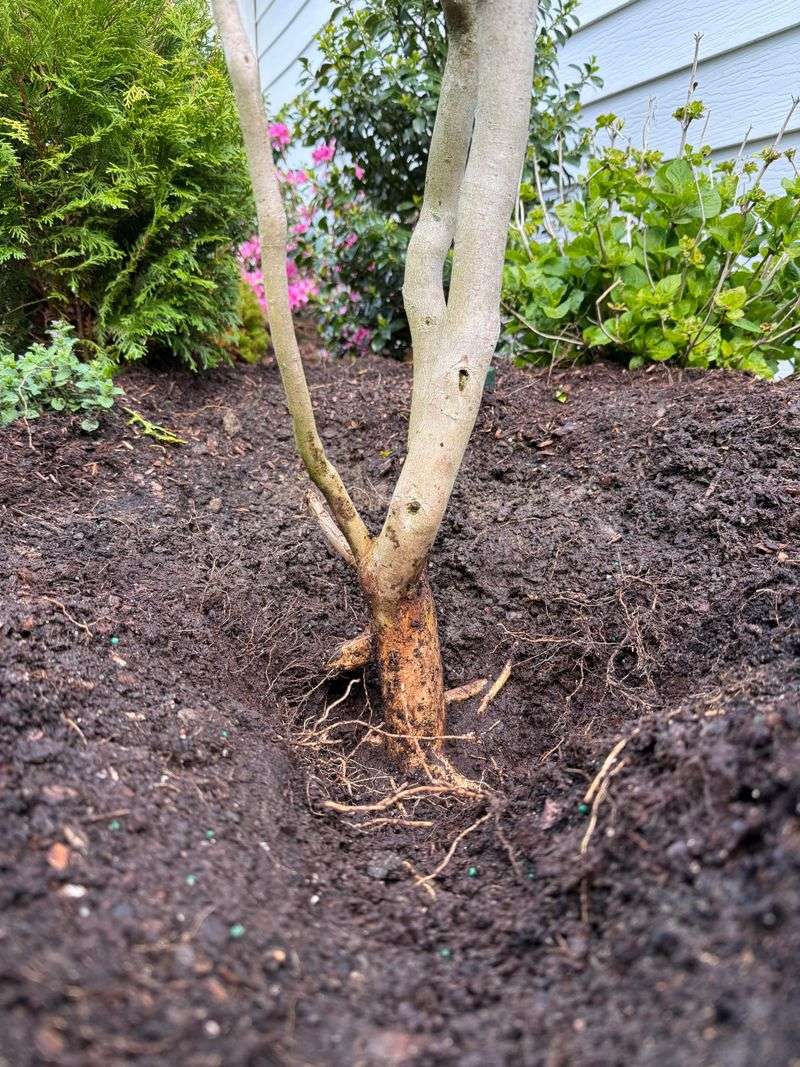
Ready for the most satisfying chore on this list? Grab your gloves, kneel down, and start uncovering your tree’s ankles.
The root flare is that wide spot where the trunk spreads out into roots. On a healthy tree, it should be easy to see right at the soil line.
Use your hands or a small trowel to pull mulch and loose soil away. Go slowly so you do not scrape the bark or nick any surface roots.
Keep going until the trunk visibly widens at the bottom. If you dig a few inches and still see a straight, pole-like trunk, the tree may be planted too deep.
In that case, call a certified arborist for advice. They can check for girdling roots and suggest the safest next steps.
Once the flare is exposed, the bark can dry out and exchange gases properly. That small change supports better health from the ground up.
Here is a handy trick for next year. Snap a quick phone photo of the cleared flare so you remember how it should look.
Then, when fall cleanup comes around again, compare before you add any mulch. It keeps old habits from sneaking back in.
A visible flare is a happy sign that your crape myrtle can breathe easy.