The Native Florida Plant That Can Make Pond Edges More Alligator-Friendly
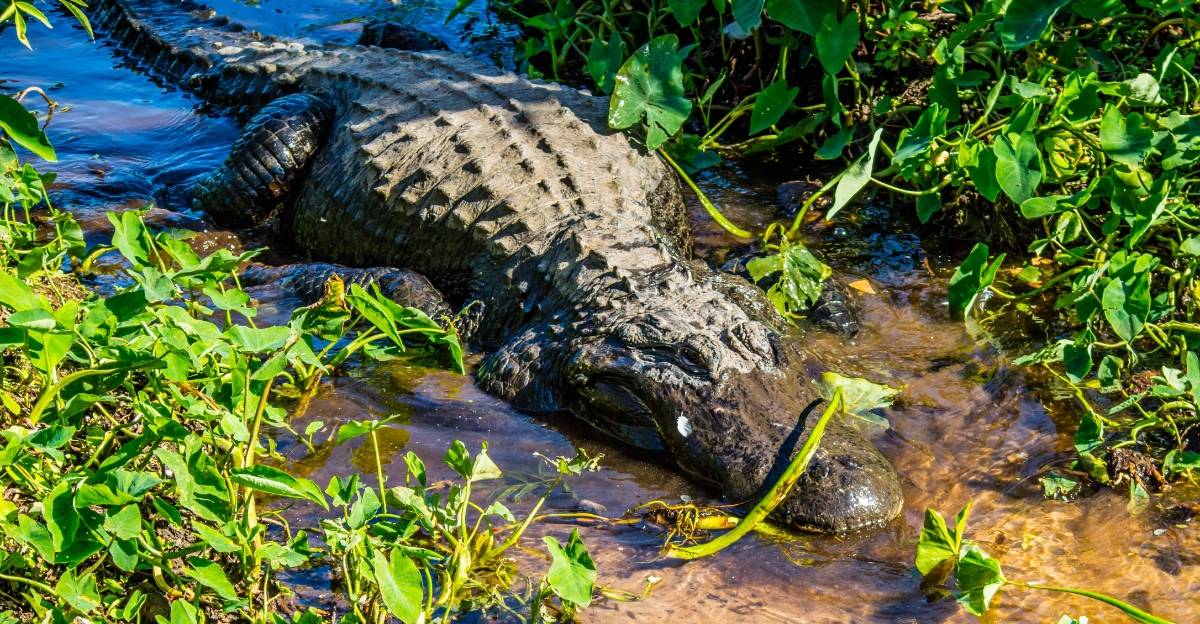
Certain plants along a Florida pond edge don’t just look natural. They roll out a welcome mat for the exact animal most people don’t want getting comfortable that close to the yard.
Alligators favor specific conditions when picking a spot to bask, hide, or nest near water, and plant cover plays a bigger role in that decision than most homeowners realize.
Dense, low growth right at the water’s edge creates exactly the kind of cover and easy access alligators look for when choosing where to spend their time.
Removing that plant entirely isn’t necessarily the answer either, since it serves a real purpose for pond health and other wildlife. The real issue comes down to how close it grows to the water and how it’s managed over time.
Your pond edge might already be sending out an invitation without you realizing what’s growing there.
1. Sawgrass Creates The Kind Of Marsh Cover Alligators Use
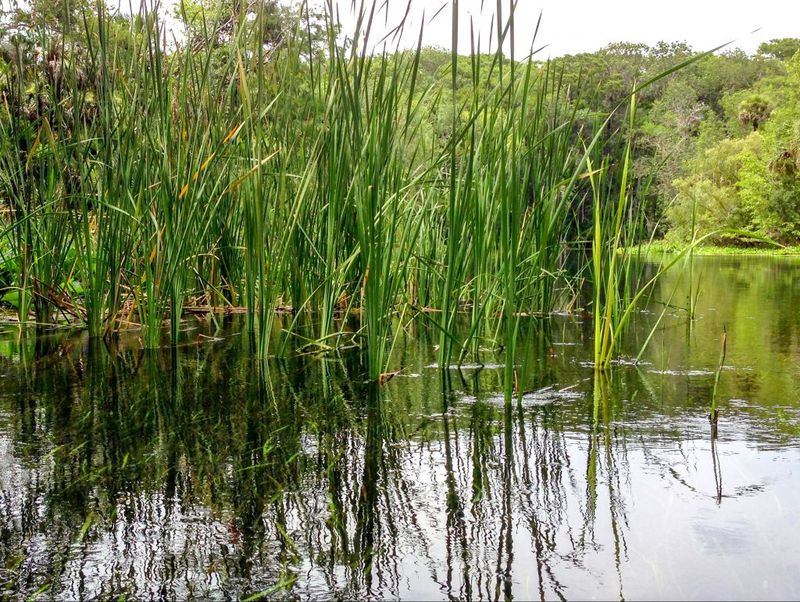
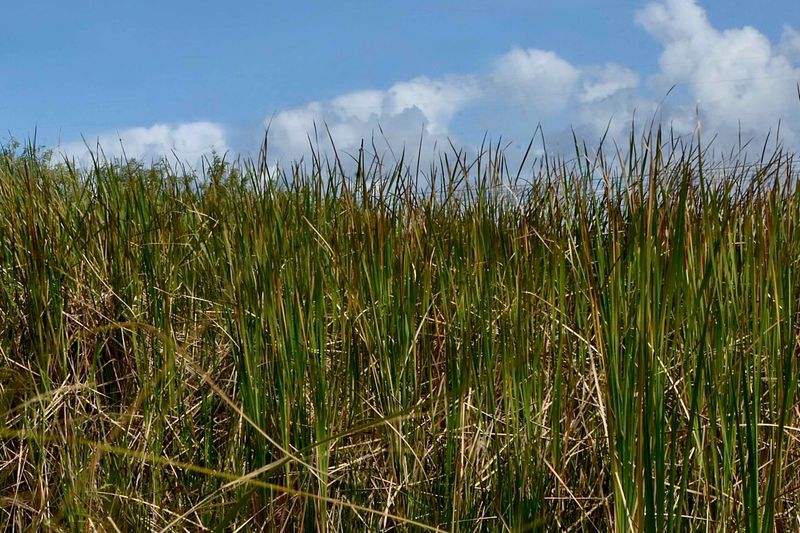
Few plants are as closely tied to Florida’s wetland identity as sawgrass, Cladium jamaicense.
Tall, stiff, and capable of forming dense, nearly impenetrable stands, it dominates vast stretches of the Everglades and countless freshwater marshes across the state.
Its serrated leaf edges give it a sharp, almost defensive character that most animals avoid walking through directly.
The Florida Museum of Natural History documents that American alligators nest and shelter in dense freshwater marsh vegetation. Sawgrass stands provide exactly that kind of structure.
The plant grows in shallow, slow-moving, or still freshwater, creating layered cover above and below the waterline.
Alligators do not seek out sawgrass as a food source or a scent marker. The connection is ecological rather than direct.
Sawgrass is one feature within a much larger wetland system, and alligators are one animal that evolved alongside it. Both thrive in the same wet, warm, low-flow conditions that define Florida’s freshwater marshes.
The plant creates the setting; the animal uses what that setting offers. Recognizing that relationship helps explain why densely planted pond edges can resemble natural marsh margins.
That can happen even when the pond is nowhere near a true marsh.
2. Dense Growth Can Turn An Open Shoreline Into Useful Cover
A bare pond bank is easy to read. You can see across it, walk along it, and spot anything moving near the water with little effort.
A shoreline thick with tall emergent plants is an entirely different environment. The vegetation creates visual barriers, sheltered pockets of calm water, and zones of shade that change the character of the edge completely.
Sawgrass, when established in meaningful stands, adds vertical structure that an open bank simply cannot offer. Stems can reach six to nine feet in height.
A mature stand reduces wind and softens wave action along the shoreline. It also creates layered habitat that many wetland animals use for shelter and movement.
Larger water bodies surrounded by dense emergent vegetation begin to resemble functional marsh margins rather than manicured pond edges. That structural shift matters more to wildlife than any single plant species.
Your Florida Garden Changes Every Week. Your Plan Should Too.
Gardening in Florida changes quickly throughout the season. Every Friday you’ll receive a simple weekly plan showing exactly what to plant, prune, fertilize, harvest, and protect so you never miss the right timing.
A clump of sawgrass beside a small garden pond will not transform a yard into a marsh. Scale and surrounding landscape context are essential.
Along larger ponds, canals, or retention areas, established sawgrass can meaningfully change how a shoreline functions. It creates more structural complexity for wildlife that relies on cover during daily activity.
3. The Water Matters More Than The Plant
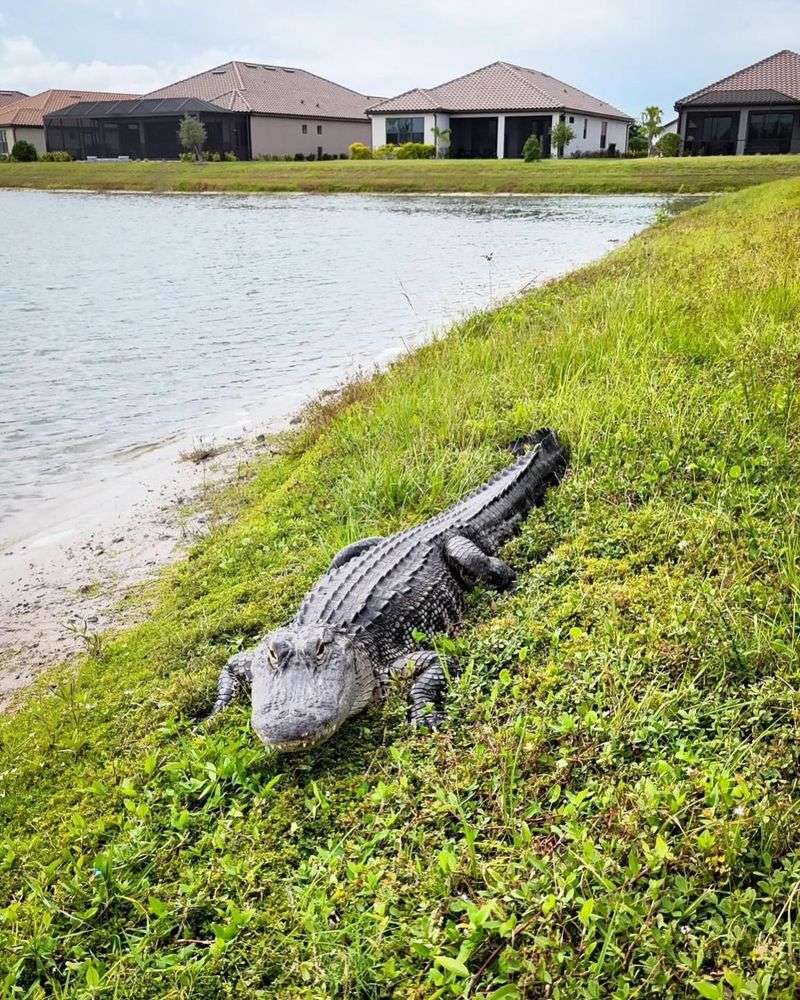
Stand at the edge of a Florida retention pond on a warm morning and look at the water first. Its depth, temperature, access to other water systems, and the prey living in it matter far more to an alligator than what grows along its banks.
The Florida Fish and Wildlife Conservation Commission confirms that alligators use many freshwater habitats. These include lakes, ponds, marshes, swamps, rivers, and canals across Florida.
Sawgrass often grows in the exact wet conditions alligators already occupy. That overlap can make it seem like the plant draws the animal, but the logic runs the other way.
Alligators move toward suitable water. Sawgrass establishes itself in suitable water.
Both end up in the same places because the environment supports both, not because one causes the other to appear.
A pond with warm freshwater, fish, frogs, and connections to a broader wetland system is more relevant to alligator presence. Shoreline planting plays a smaller role by comparison.
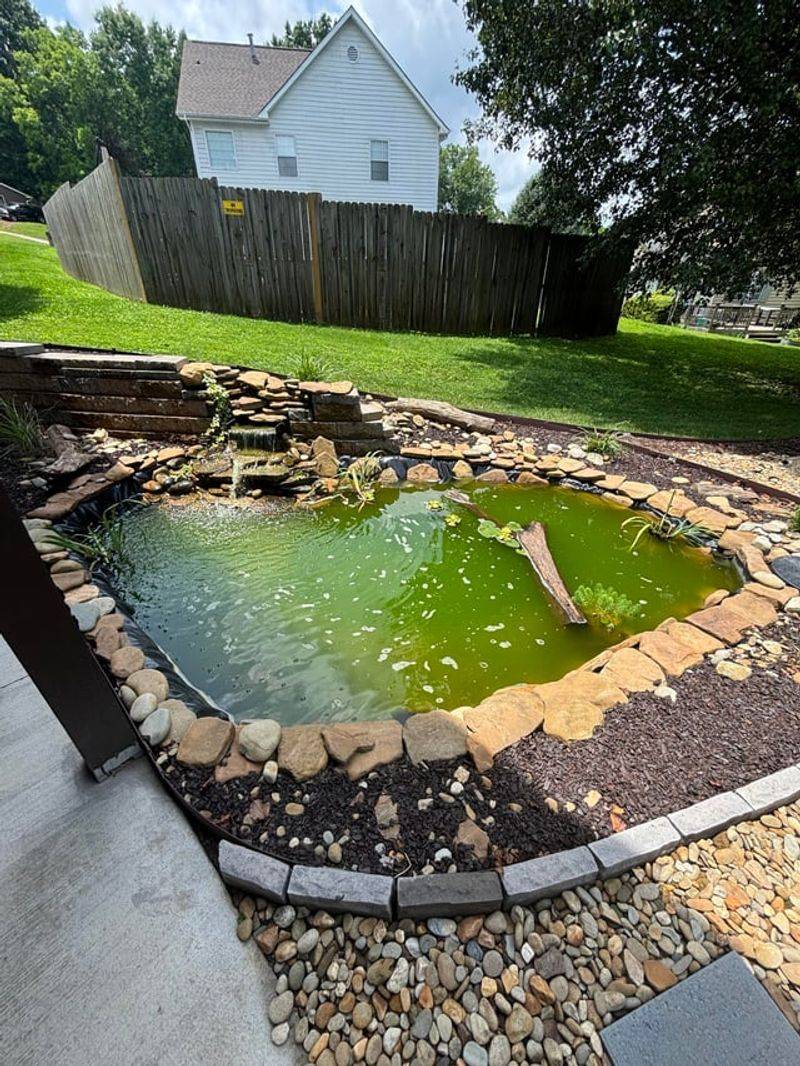
Planting sawgrass beside a chlorinated backyard water feature or a small decorative pond does not create alligator habitat. The water body itself must already meet the basic requirements.
No plant can substitute for the right aquatic conditions. Recognizing this distinction keeps the relationship between vegetation and wildlife grounded in ecological reality rather than oversimplified cause and effect.
4. Vegetated Water Edges Can Support More Potential Prey
Look closely at any healthy vegetated pond edge and you will find a surprisingly busy community of small creatures. Insects lay eggs on submerged stems.
Tadpoles cluster in the shallows where plants slow the current. Small fish find cover among roots and stalks.
Wading birds probe the margins for anything that moves. A complex shoreline supports a complex food web.
Aquatic and shoreline vegetation, including emergent plants like sawgrass, can provide structure that supports insects, amphibians, small fish, and other invertebrates. These animals form the lower levels of the food web in freshwater systems.
University of Florida IFAS Extension research notes that vegetated pond edges generally support greater biodiversity. Bare or heavily managed shorelines tend to support less.
Alligators are opportunistic predators. They eat fish, turtles, birds, mammals, and nearly anything else they can catch near the water.
A more biologically active pond edge may support more of those prey species over time. That said, planting sawgrass will not cause prey populations to spike quickly enough to attract a large reptile on its own.
The relationship between shoreline vegetation and prey availability is gradual, ecological, and part of a broader system.
The plant contributes to a richer habitat, and a richer habitat may eventually support more of the animals that larger predators rely on across a much wider home range.
5. Sawgrass Has An Even Stronger Connection During Nesting
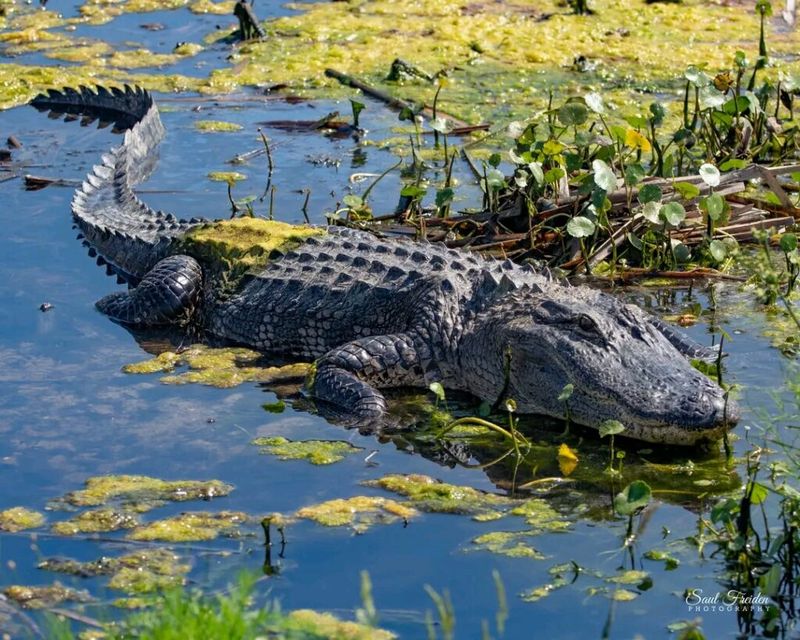
Nesting season changes the way female alligators interact with shoreline vegetation. Between late May and early July, females begin constructing mound nests from whatever organic material is nearby.
Leaves, stems, mud, and decaying plant matter get piled into mounds that can reach two feet high and five feet across. The decomposition of that material generates warmth that helps incubate the eggs.
The Florida Museum of Natural History notes that alligators commonly nest in freshwater marsh habitats where dense emergent vegetation is available. Sawgrass stands provide both building material and visual concealment for nests.
A female may select a site at the edge of a dense stand where she can monitor the nest while remaining partially hidden.
Not every sawgrass stand contains a nest, and most never will. Dense shoreline vegetation is only one factor a female alligator considers when choosing a nest site.
Proximity to water, stable ground, and distance from disturbance also matter. Nesting season does make dense wetland vegetation more ecologically relevant to alligators than it might be at other times of year.
Readers should not search thick shoreline vegetation for nests. A nesting female will defend her nest, and approaching one is genuinely unsafe.
Awareness of the seasonal connection is useful; physical investigation is not.
6. A Backyard Pond Is Not The Same As An Everglades Marsh
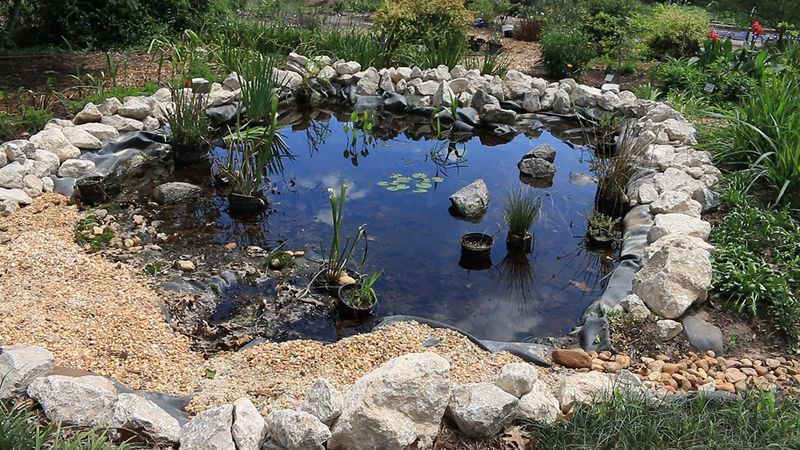
Homeowners sometimes worry that adding native plants to a backyard pond creates a wildlife risk. That concern deserves a straightforward answer.
A small ornamental pond, a fountain feature, or a compact rain garden is not equivalent to natural marsh habitat. Scale, water volume, connectivity, and surrounding landscape all shape what wildlife a water body can actually support.
The FWC explains that alligator presence tends to increase around larger residential water bodies. Connections to broader wetlands and suitable prey and habitat also make those areas more attractive.
A retention pond in a subdivision near a canal system carries more potential than a backyard water feature surrounded by lawn and fencing. A lakefront property bordering a large natural lake is different again.
Planting sawgrass along a small decorative pond will not make that pond function like an Everglades marsh. The water body simply does not have the depth, the area, the prey base, or the connectivity to support a large reptile long-term.
Ordinary backyard water features are not inherently dangerous, and they should not be treated as though they are.
Alligator likelihood rises with suitable habitat conditions and access to larger water systems, not because a homeowner chose native plants over ornamental grasses.
Context matters enormously when assessing real-world wildlife risk.
7. Thick Shoreline Plants Can Also Make Alligators Harder To See
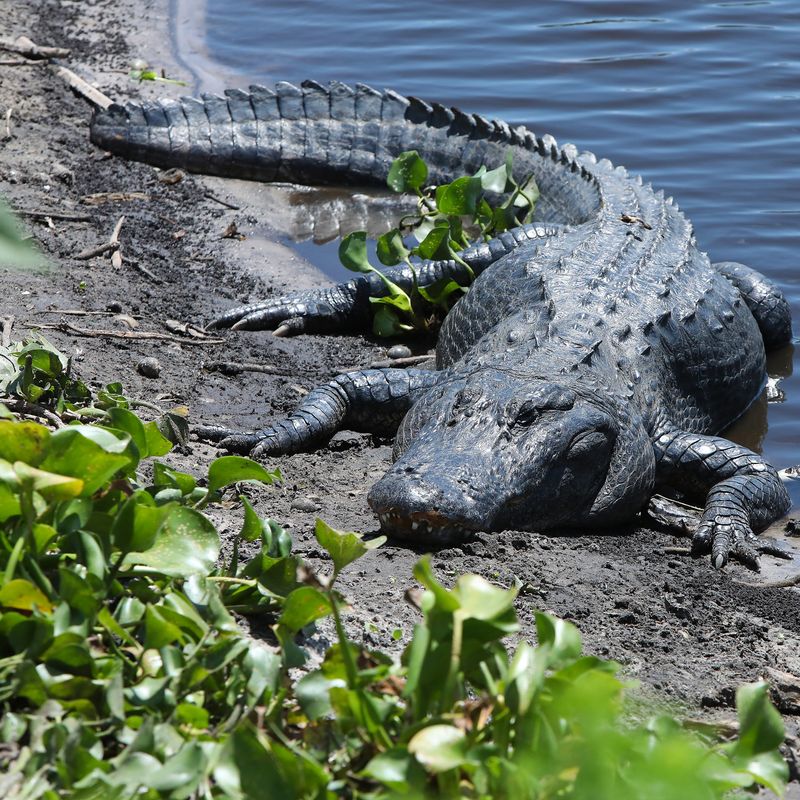
Dense native vegetation along a larger pond or canal edge offers genuine ecological value. Roots hold soil and reduce erosion.
Stems filter runoff. The habitat supports birds, insects, and small animals that keep the shoreline biologically active.
Removing every native plant from a pond bank to improve visibility would cause real ecological harm and is not what responsible shoreline management recommends.
At the same time, tall, thick vegetation along actively used areas can reduce the sight lines that keep people and pets safe. Docks, walking paths, seating areas, and spots where dogs regularly enter the water are places where visibility matters.
The FWC advises maintaining awareness around larger water bodies where alligators may be present, and clear sight lines around high-use areas support that awareness.
Balanced shoreline management keeps native vegetation intact away from heavily used areas. It also maintains reasonable visibility near paths, docks, and places where pets approach the water.
Mowing or thinning a narrow strip near a dock does not require clearing an entire shoreline. Sawgrass and other tall emergent plants can remain valuable along most of the bank.
The goal is not a bare shoreline but a thoughtfully managed one. Vegetation and safety are not opposites.
With some planning, both can coexist along the same pond edge without sacrificing either ecological function or reasonable visibility.
8. Plant Choice Is Only One Piece Of The Alligator Puzzle
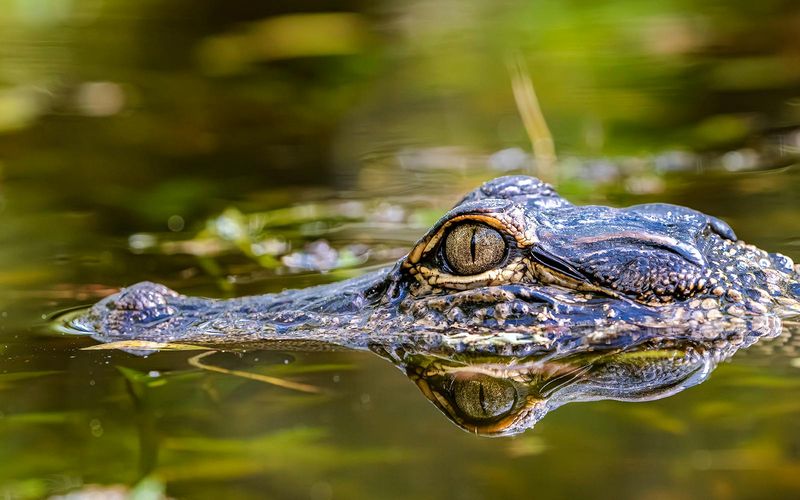
Pull back from the shoreline and look at the full picture. Water type, depth, and temperature set the foundation.
Prey availability determines whether a large predator can find enough food. Cover provides safety and concealment.
Shoreline structure shapes where nesting, basking, and movement are possible. Wetland connections allow animals to travel between water bodies.
Season influences behavior from nesting to thermoregulation.
Sawgrass can contribute to several of those factors at once. Dense stands offer cover.
Decomposing plant material builds nesting mounds. The root zone supports invertebrates that feed small fish and amphibians.
But no single plant determines whether an alligator appears near a given water body. The entire system has to be suitable, and even then, presence is never guaranteed.
The FWC recommends staying at least 50 feet from any alligator and never feeding one. Pets should also be kept away from larger water bodies, especially around dawn and dusk.
Feeding alligators causes them to lose their natural wariness of people, which creates real safety problems for both the animal and the public. Sawgrass does not lure alligators into a yard.
Beside the right body of water, though, it can help create the marsh-style habitat they naturally use. That is the honest, ecologically grounded connection between this native plant and one of North America’s most remarkable reptiles.