The Native Florida Shrub More Neighborhoods Are Quietly Adding Along Property Lines For Cooling
A hot fence can change the whole feel of a Florida backyard.
By noon, wood, stucco, concrete block, and vinyl can soak up heat and send it right back into the yard. The space beside the property line starts to feel harsher, brighter, and less inviting, especially during the long stretch of summer.
That is why more homeowners are turning to a shrub that already knows Florida well.
Southern wax myrtle is native, evergreen in much of the state, fast enough to make a difference, and dense enough to soften hard edges.
It can screen a fence, cool the view, support birds, handle moist soil, and ask for far less fuss than many formal hedge plants.
This is not just a privacy plant.
It is a living buffer between your yard and the heat radiating off all those hard surfaces.
So why are Florida neighborhoods quietly adding southern wax myrtle along property lines?
Because it brings shade, structure, wildlife value, and year-round green cover to places that used to feel hot, bare, and difficult to use.
Southern Wax Myrtle Is The Shrub
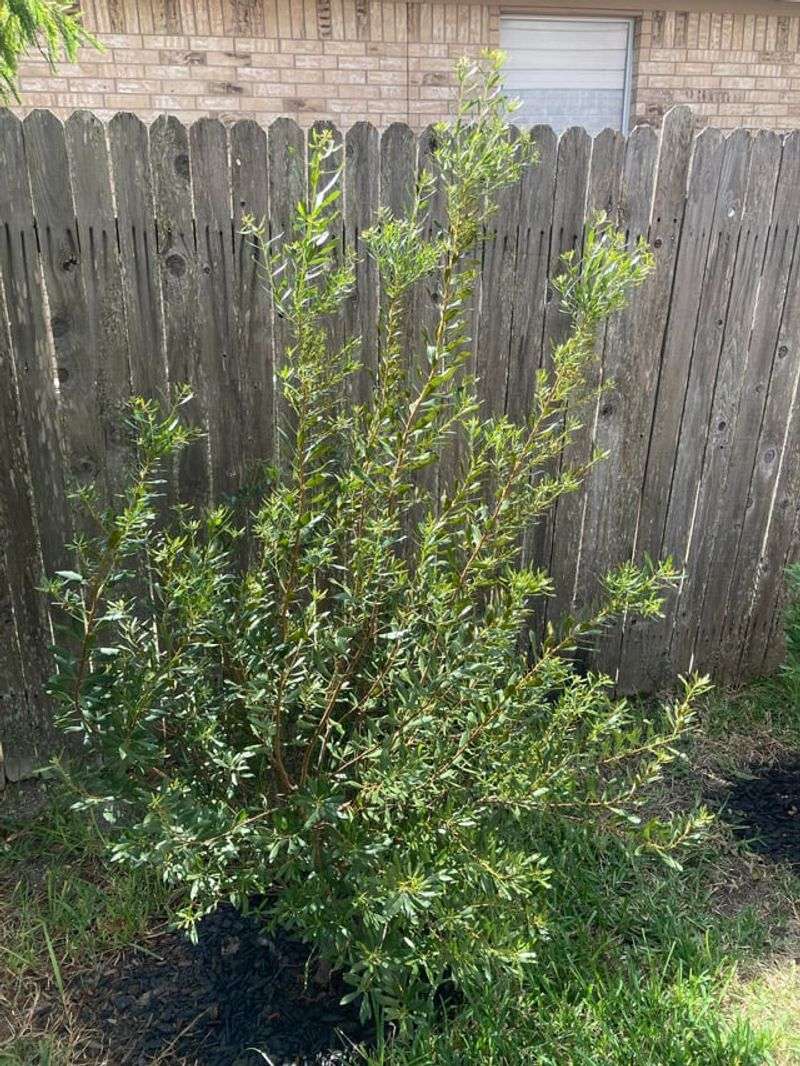
Southern wax myrtle is built for Florida conditions.
Its botanical name is Morella cerifera, though many gardeners simply call it wax myrtle. It grows naturally across the state in flatwoods, hammock edges, wet prairies, and other landscapes that deal with heat, humidity, sandy soil, and seasonal moisture swings.
That wide native range says a lot.
A plant that already grows across Florida usually needs less convincing than one brought in from a completely different climate. Wax myrtle is adapted to the rhythm of wet summers, mild winters, and lean soils.
It stays green through most of the year.
In much of Florida, wax myrtle is evergreen. In colder northern areas, it may thin slightly after an unusual cold snap, but it usually keeps enough foliage to remain useful as a screen.
The leaves have a pleasant scent.
Brush the foliage, and it releases a fresh bayberry-like fragrance. That small detail makes a hedge feel more alive than a plain wall of greenery.
Growth is flexible.
Left alone, wax myrtle becomes a large, multi-stemmed shrub, often reaching 10 to 15 feet tall and nearly as wide. With pruning, it can also become a small multi-trunk tree.
It can improve the soil around it.
Wax myrtle forms root associations that help it fix nitrogen, which gives it an advantage in low-fertility sandy soil and can quietly benefit nearby plantings.
For a property line, that combination is hard to beat.
It screens, scents, shades, and settles into Florida soil like it belongs there, because it does.
Dense Growth Softens Hot Fences
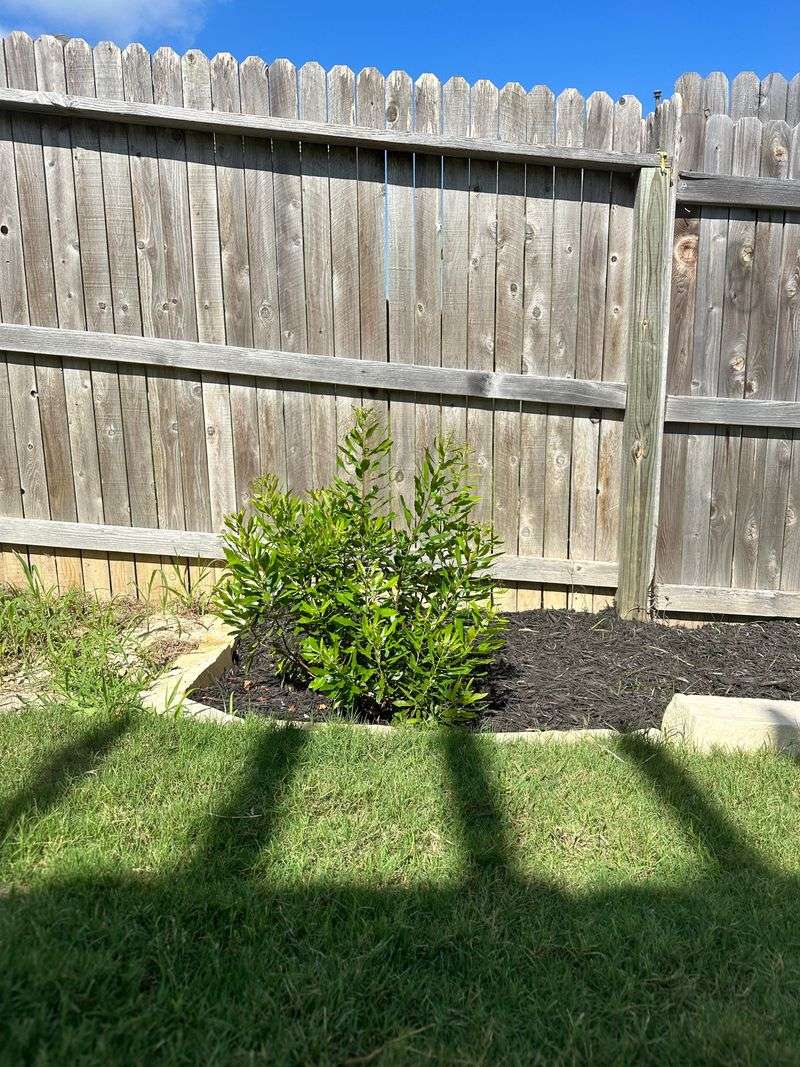
A fence in full sun can become a heat wall.
Wood, block, stucco, and vinyl absorb sunlight through the day, then release that heat back into the yard. Planting dense foliage in front of that surface helps interrupt the cycle before the wall gets as hot.
Wax myrtle gives coverage from low to high.
That matters because a shrub that leafs out only at the top leaves the lower fence exposed. Wax myrtle can stay full from the base when it gets enough light and room.
Your Florida Garden Changes Every Week. Your Plan Should Too.
Gardening in Florida changes quickly throughout the season. Every Friday you’ll receive a simple weekly plan showing exactly what to plant, prune, fertilize, harvest, and protect so you never miss the right timing.
The shade changes the surface.
Foliage blocks direct sun from hitting the fence or wall. Less direct sun means less stored heat and less glare bouncing into the yard.
Spacing matters from the start.
Plants set about six to eight feet apart can usually grow together into an informal screen over time. Planting too tightly may create crowding, weak airflow, and extra pruning work later.
Give the fence some breathing room.
Mature wax myrtle can get wide, so planting several feet away from the fence helps prevent branches from constantly rubbing against wood, paint, stucco, or screens.
Check before digging.
Property lines can hide utilities, irrigation lines, and easements. Calling before planting a long shrub row prevents expensive surprises.
Do not force it into a narrow strip.
Wax myrtle works best when allowed to develop natural depth. A little space makes the screen healthier, cooler, and easier to maintain.
The fence may still be there.
But once wax myrtle fills in, it stops feeling like the hottest surface in the yard.
Evergreen Cover Cools The View
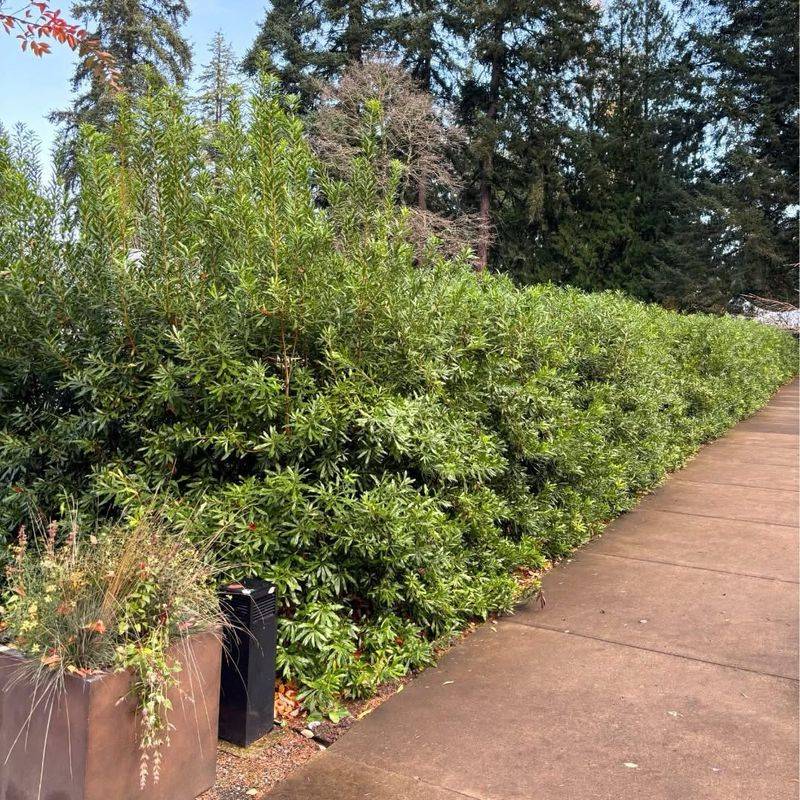
Green cover can make a yard feel calmer.
A bare fence, pale wall, or bright hardscape reflects light and heat into the space around it. A living screen absorbs and softens that glare before it reaches your eyes and skin.
Wax myrtle keeps the effect going year-round.
Because it holds foliage through most Florida winters, the view does not open back up into bare stems for half the year. The property line stays softened.
Leaves cool in more than one way.
Plants release moisture through their foliage, which can slightly cool the air close to the canopy. One shrub row will not cool an entire property, but it can make the area near the planting feel more comfortable.
That matters beside seating areas.
A bench, patio edge, side yard, or play space near a hot fence can feel noticeably more pleasant when a dense green screen replaces bare reflected heat.
The visual relief counts too.
A leafy backdrop makes outdoor areas feel shaded even before the temperature changes dramatically. That softer view can make a small yard feel more private and relaxed.
Do not expect a miracle energy saver.
Wax myrtle is not going to single-handedly lower the whole home’s cooling bill. Its real strength is improving the comfort of the immediate outdoor zone.
Plant where people actually feel the heat.
A property line beside a patio, walkway, or west-facing fence will benefit more than a hidden corner nobody uses.
Cooling is not always about deep shade.
Sometimes it starts with replacing glare and hard edges with living green.
Birds Use The Waxy Berries
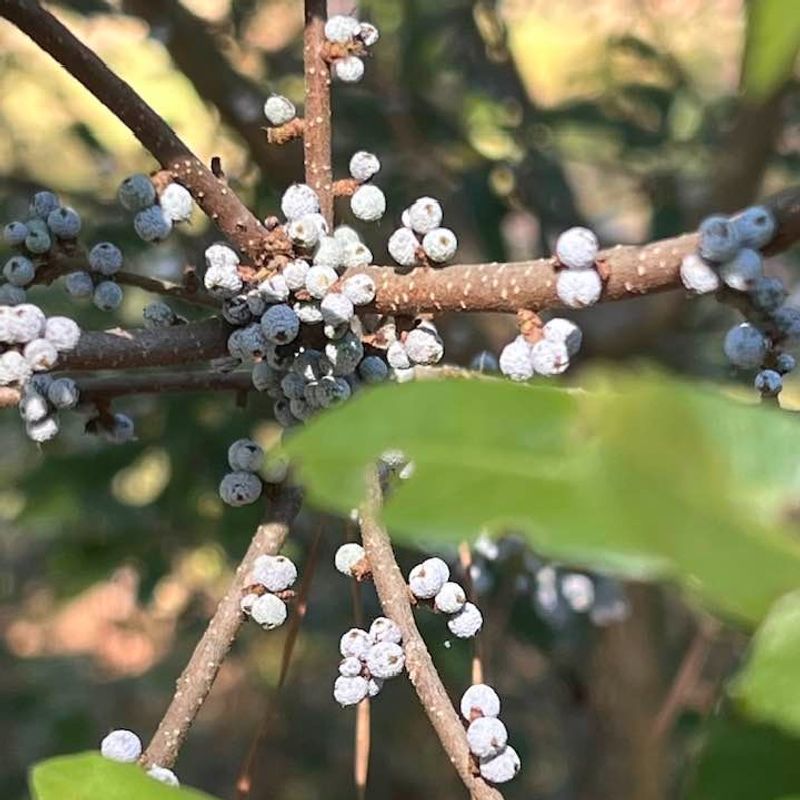
A wax myrtle hedge can turn lively in winter.
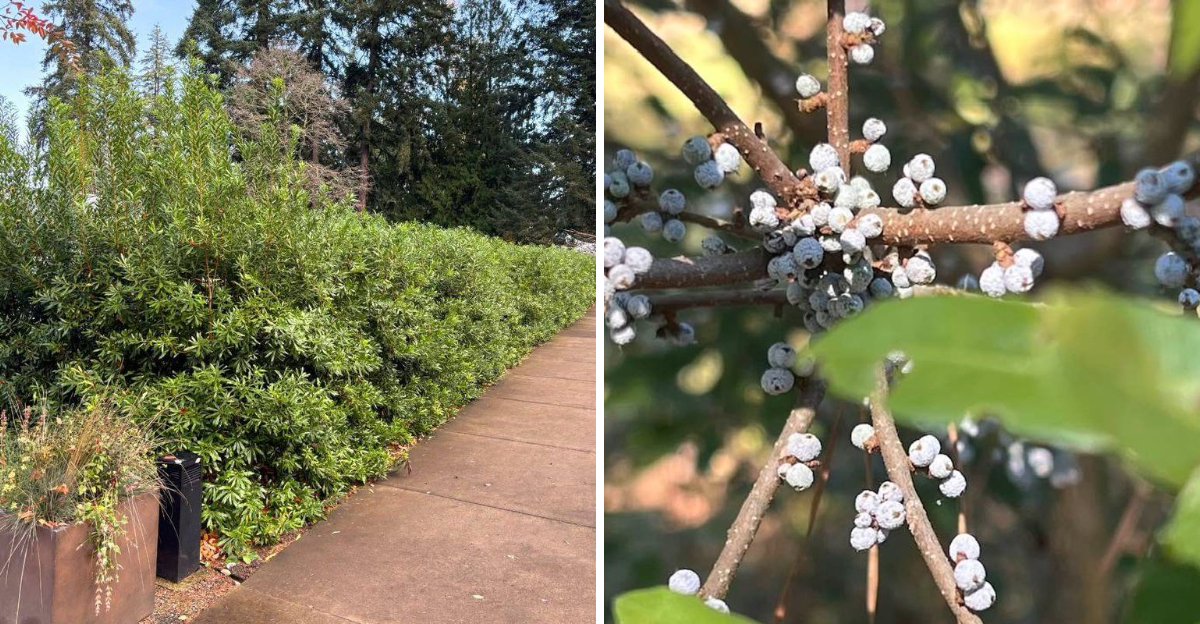
Female plants produce blue-gray waxy berries that many birds use as food. Yellow-rumped warblers are especially famous for visiting them, but wrens, swallows, and other birds may stop by too.
The berries are part of the name.
That waxy coating was historically used for bayberry candles. It is not a snack for people, but birds that can digest the waxy fruit make good use of it.
Male and female plants matter.
Wax myrtle plants are usually either male or female. Female plants produce berries, but they need a male nearby for pollination.
A mixed planting helps.
Using several plants increases the chance of having both male and female shrubs in the row. That makes berries more likely than planting one mystery shrub by itself.
Birds also use the structure.
Dense branches create cover from predators and weather. Even when berries are not present, the shrub row can become part of a backyard habitat corridor.
Insects benefit too.
Wax myrtle supports caterpillars and other small wildlife, which adds more food for birds beyond the berries.
A property-line screen can do more than block a view.
With wax myrtle, it can feed and shelter the birds that make the yard feel alive.
Roots Handle Moist Florida Soil
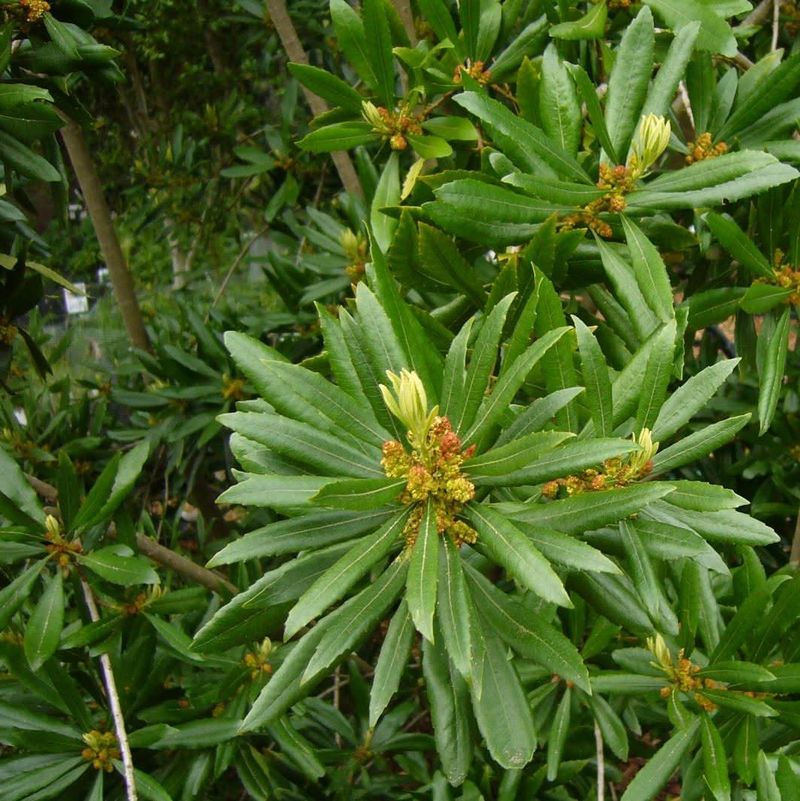
A damp side yard does not scare wax myrtle.
Many Florida landscapes have low spots, swales, compacted edges, or areas that stay moist after storms. Some ornamental shrubs struggle there, but wax myrtle is naturally adapted to places that see periodic wetness.
Moist is different from waterlogged.
Wax myrtle can handle damp soil and seasonal wet periods, but roots still need oxygen. Soil that stays flooded all the time can stress almost any shrub.
It also handles sandy upland soil.
That flexibility is one reason the plant works across so much of Florida. It can grow in lean, fast-draining ground as well as areas that hold more moisture after rain.
The root system supports tough conditions.
Its nitrogen-fixing associations help it manage low-fertility soil without constant feeding. That makes it a strong fit for low-input property-line planting.
New plants still need water.
During the first growing season, regular watering helps roots establish. Once the shrub shows active growth and settles in, irrigation can usually be reduced.
Established plants need less fuss.
In many Florida yards, wax myrtle can rely mostly on rainfall once rooted well, except during severe dry stretches.
Avoid overwatering out of habit.
A plant that tolerates moisture does not need soggy soil every day. Too much irrigation can still reduce oxygen around the roots.
For difficult Florida spots, this shrub has range.
It can handle the wet-dry rhythm that makes many property-line beds hard to plant.
Pruning Keeps Screens Tidy
Wax myrtle looks best when it is guided, not boxed in.
Hard shearing can turn it into a stiff wall that needs constant correction. The plant naturally wants a looser, layered shape, and working with that habit saves time.
Selective pruning is the smarter approach.
Instead of flattening the outside repeatedly, reach into the canopy and remove crossing branches, dead wood, and stems growing toward the fence or wall.
That keeps airflow moving.
A dense hedge still needs air inside the plant. Better airflow reduces trapped humidity and helps the shrub stay healthier through Florida’s sticky summer months.
Decide on the form early.
Wax myrtle can be kept as a full shrub screen or trained into a small multi-trunk tree. Waiting too long makes the structure harder to shape.
Shrub form gives the best privacy.
Keeping foliage low to the ground blocks views from fence height down. That is usually the better choice for property-line screening.
Tree form creates usable shade below.
Selecting a few main trunks and gradually lifting the canopy can make space for groundcovers or seating near the base.
Late winter is a good pruning window.
Heavier shaping before spring growth gives the plant time to recover. Light touch-ups can happen as needed, but avoid major pruning during drought stress.
The goal is not perfection.
A tidy wax myrtle screen should still look alive, natural, and soft enough to cool the edge of the yard.