The Native Ohio Vine To Grow Instead Of Trumpet Vine Without The Aggression
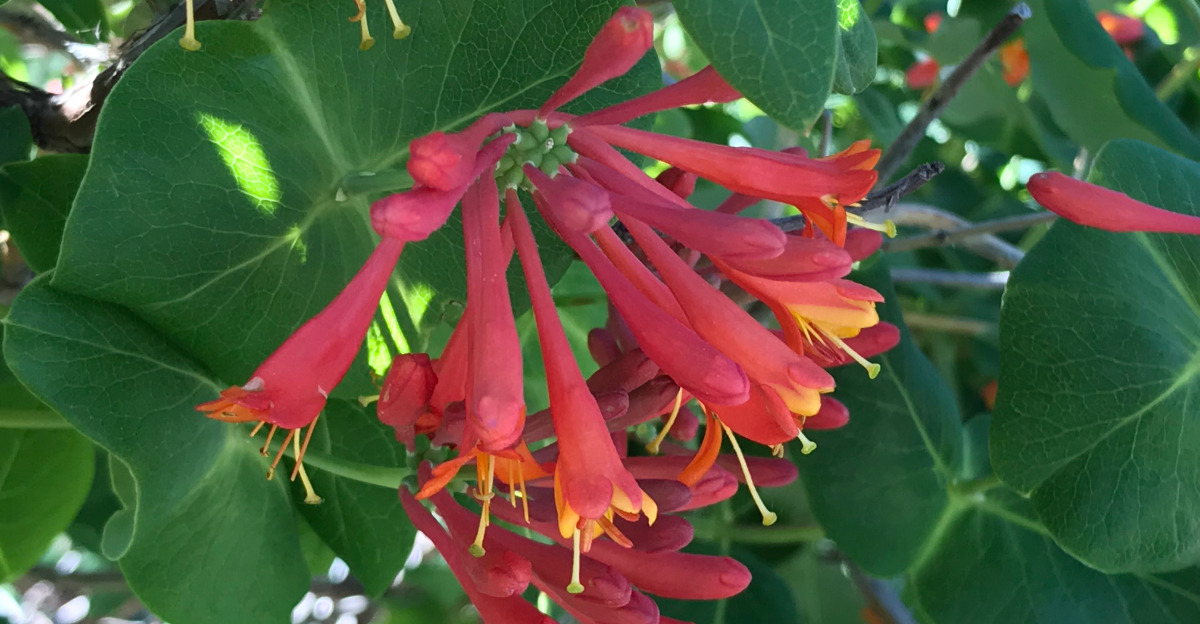
Trumpet vine delivers. Big orange blooms, hummingbirds on cue, a wall of color that earns attention from across the street.
Then the runners appear. Under the fence, through the lawn, up through the neighbor’s garden.
Trumpet vine does not respect boundaries and Ohio landscapes have the evidence to prove it. A native Ohio vine offers the same hummingbird appeal, a similar flower shape, and a bloom season that runs just as long.
Without the runners. Without the aggressive spread.
Without the annual negotiation between what looks good and what has gotten completely out of hand. It climbs, it covers, it performs.
It just does all of that without treating the surrounding yard as an expansion opportunity. One swap.
A trellis that stays manageable. And hummingbirds that never noticed the difference.
1. Choose Coral Honeysuckle Instead Of Trumpet Vine
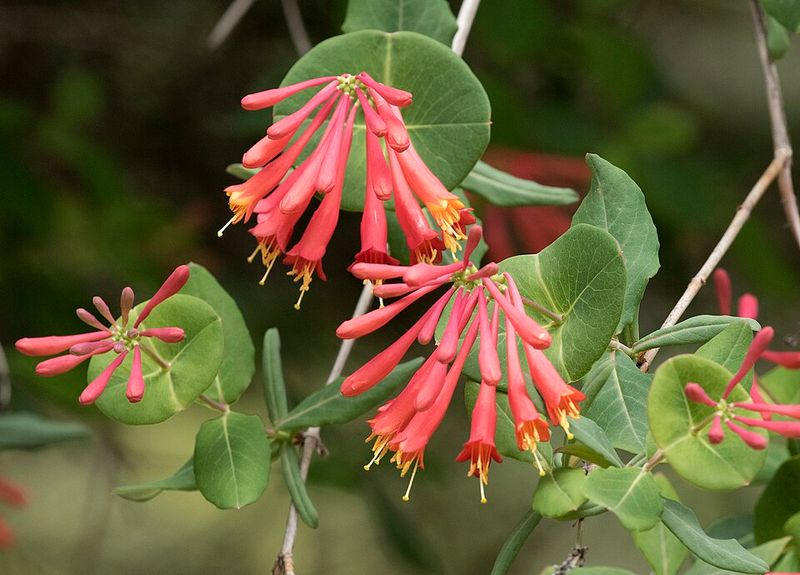
A plant tag at a reputable Ohio native nursery can change your whole gardening season. When you spot Lonicera sempervirens beside a trellis display, you are seeing a practical native climbing vine.
It works well for home landscapes in this state. Coral honeysuckle, also called trumpet honeysuckle, offers tubular blooms and a vertical climbing habit.
It gives much of trumpet vine’s appeal without the aggressive reputation. It will not leave gardeners pulling suckers from their lawns for years.
Trumpet vine, Campsis radicans, is native to parts of the eastern United States and genuinely valuable for wildlife. However, university extension sources widely note that it can sucker heavily and self-seed.
It can also become difficult to control near structures, fences, and small beds. Many home gardeners simply do not have the space to manage it well.
Coral honeysuckle fills a similar visual role with considerably less pushback.
When shopping, always check the botanical name. Ask specifically for Lonicera sempervirens and buy only nursery-propagated plants from a reliable native plant source.
Avoid mystery starts or unlabeled cuttings. Choosing the right plant from the start saves a lot of frustration later, and coral honeysuckle is genuinely worth the effort to find correctly.
2. Give Hummingbirds Tubular Blooms Without The Takeover
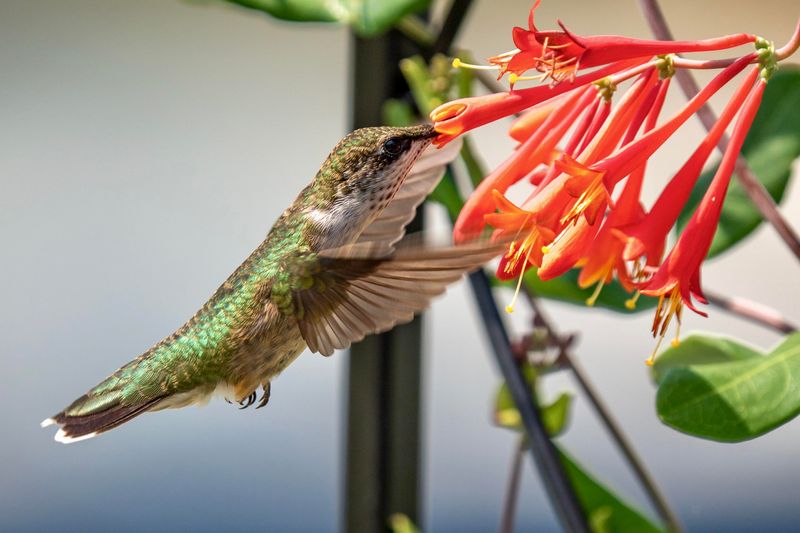
A flash of green wings near a red cluster of blooms is one of the most exciting sights a garden can offer. Coral honeysuckle’s tubular flowers are well-suited to ruby-throated hummingbirds.
This is the hummingbird species most commonly seen in the eastern United States during warmer months. The Lady Bird Johnson Wildflower Center notes Lonicera sempervirens as a hummingbird-attracting native plant.
Its long, narrow flower shape fits hummingbird feeding habits well.
Trumpet vine also draws hummingbirds with its large, showy orange-red blooms. The key difference is not the wildlife appeal but the management challenge that comes with the plant.
Coral honeysuckle can bring hummingbird activity near your patio or garden path. It does that without constant sucker removal or aggressive pruning to keep it in check.
For the best results, place coral honeysuckle where you can actually watch the action. A trellis beside a seating area, a fence panel near a kitchen window, or a garden gate column all work beautifully.
Your Ohio Garden Changes Every Week. Your Plan Should Too.
Gardening in Ohio changes quickly throughout the season. Every Friday you’ll receive a simple weekly plan showing exactly what to plant, prune, fertilize, harvest, and protect so you never miss the right timing.
Keep in mind that nectar plants work best as part of a broader native habitat. Adding other native flowering plants nearby can increase your chances of regular hummingbird visits over time.
3. Train It On A Trellis Before It Wanders
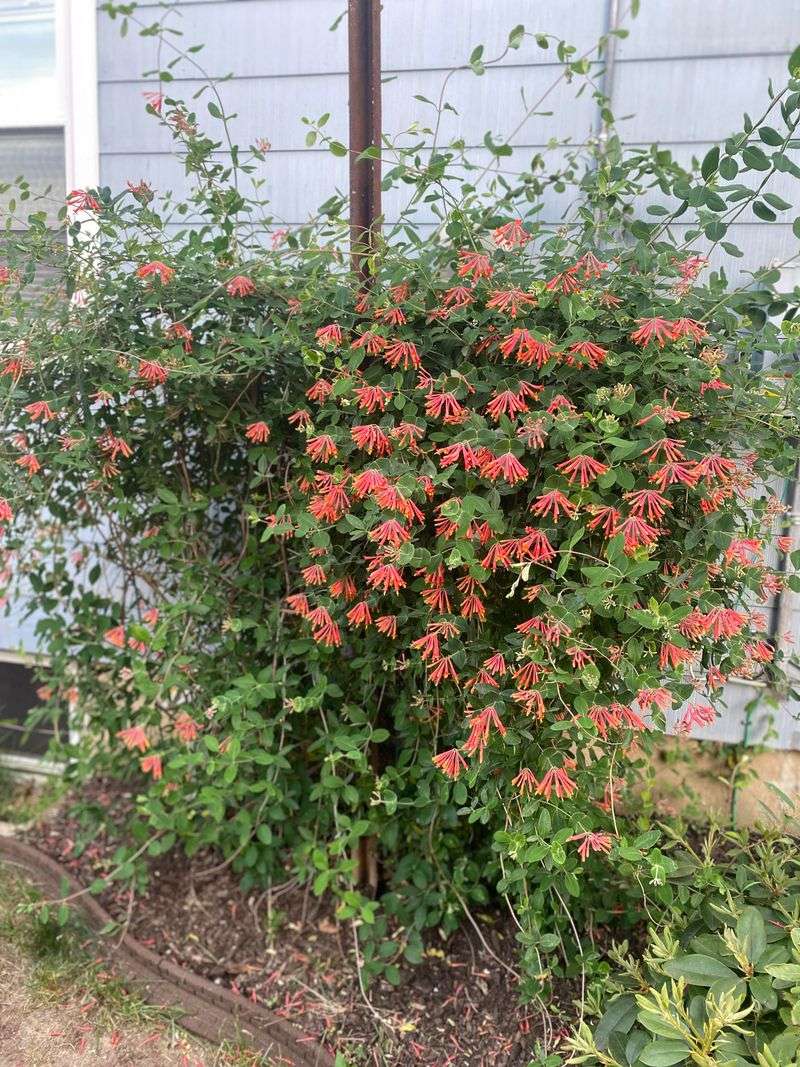
Early training is one of the smartest investments you can make with any climbing vine. Coral honeysuckle is a twining vine, meaning it wraps its stems around supports rather than clinging with adhesive pads or aerial rootlets like some other climbers.
That growth habit makes it well-suited for trellises, arbors, fence panels, obelisks, and similar structures. It also means you need to guide young stems from the start.
When you first plant coral honeysuckle, gently direct the new growth toward your support structure and tie the stems loosely with soft garden twine or plant ties. Check those ties regularly as the stems thicken, because ties that are too tight can cut into the vine over time.
OSU Extension and similar university resources generally advise keeping climbing vines off siding, gutters, and roof edges. Use a proper freestanding structure to separate the plant from the building.
Starting this guidance early prevents the messy, tangled growth that can develop when a vine is left to find its own path. A vine that wanders into nearby shrubs can be difficult to separate without damaging both plants.
A little hands-on direction in the first season pays off with a neater, healthier plant in every season that follows.
4. Plant It In Sun For The Strongest Flower Show
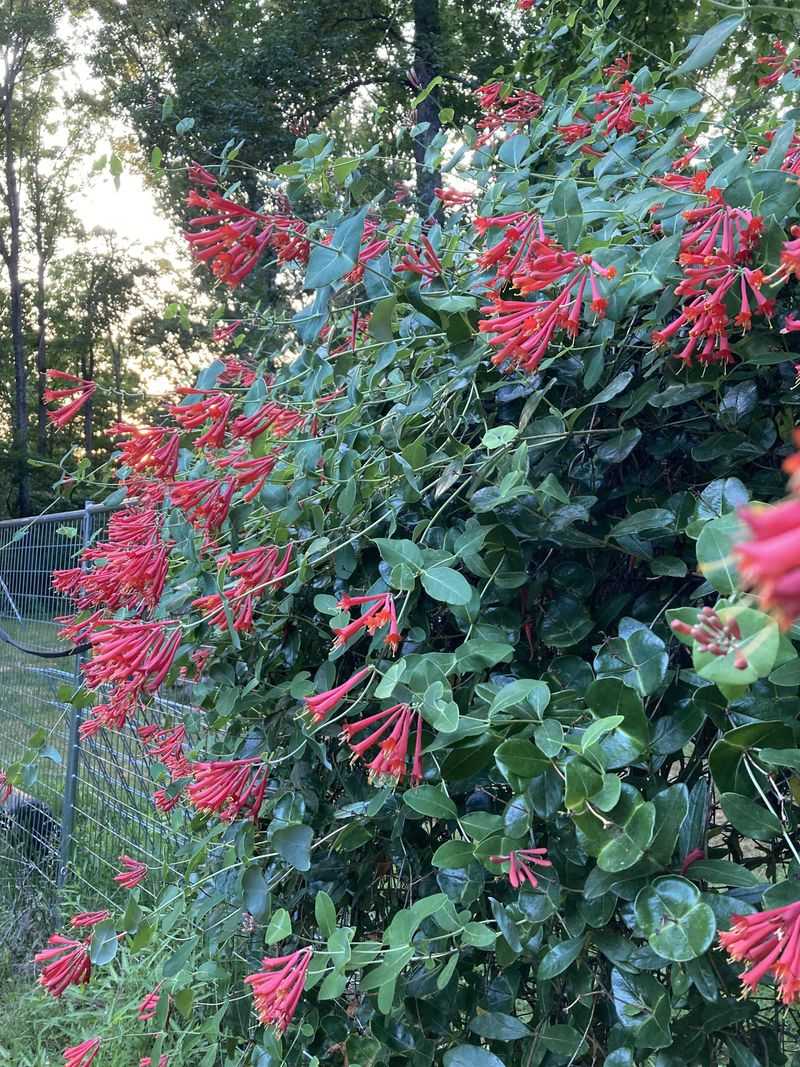
Placement matters more than most gardeners realize when it comes to flowering vines. Coral honeysuckle generally produces its best bloom display in a site with good sun exposure.
University extension sources and native plant guidance describe Lonicera sempervirens as performing well in full sun to partial shade. Flowering is usually strongest in sunnier conditions.
If your goal is a vine covered in red blooms that draw hummingbirds and brighten the garden, a sunny or bright location gives you the best shot at that result.
Partial shade may still support healthy foliage and some flowering, depending on the intensity and duration of light. However, deep shade tends to reduce bloom production noticeably.
When choosing your planting spot, look for a location that receives at least several hours of direct sun each day. Morning sun with some afternoon shade can also work well in hotter parts of the growing season.
Beyond light, keep the soil reasonably moist during establishment, especially in the first summer after planting. Coral honeysuckle can adapt to a range of soil types, but consistent moisture while roots are getting established helps the plant settle in faster.
Good airflow around the vine also reduces the chance of fungal issues. Give the plant enough room to breathe and it will reward you with a stronger, healthier display season after season.
5. Use It Near Patios Fences And Garden Gates
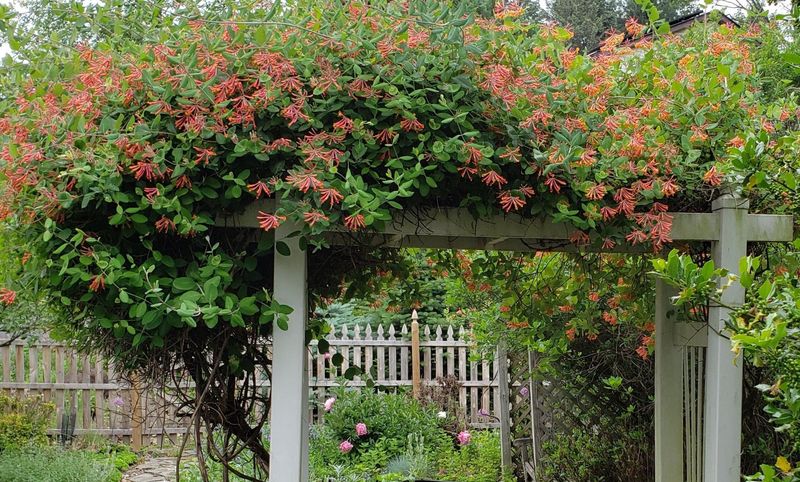
Few things dress up a garden entrance quite like a flowering vine in full bloom. Coral honeysuckle is a natural fit for spots like garden gates, patio trellises, fence panels, and column posts near seating areas.
Its tubular red flowers add vertical color and movement without the overwhelming spread that makes trumpet vine a poor choice in tight spaces.
When given a proper support structure and enough room to grow, it can soften a hard fence line or frame a gate beautifully.
Before planting near any structure, think about the mature size of the vine and how much space is available. Coral honeysuckle is not a tiny plant.
It can reach significant heights with support, so placing it where the full-grown vine fits comfortably prevents problems later. Leave enough space between the vine and any walkway, window, or path so that mature growth does not block movement or sightlines.
Native plant guidance suggests coral honeysuckle may suit smaller home landscapes better than trumpet vine. It also works near patios and structures where suckering would be a problem.
It brings real color and wildlife value to those spaces without the same level of ongoing battle. A fence that needs softening or a gate that needs a finishing touch is exactly the kind of spot where this vine earns its place.
6. Prune Lightly To Keep The Vine Neighborly
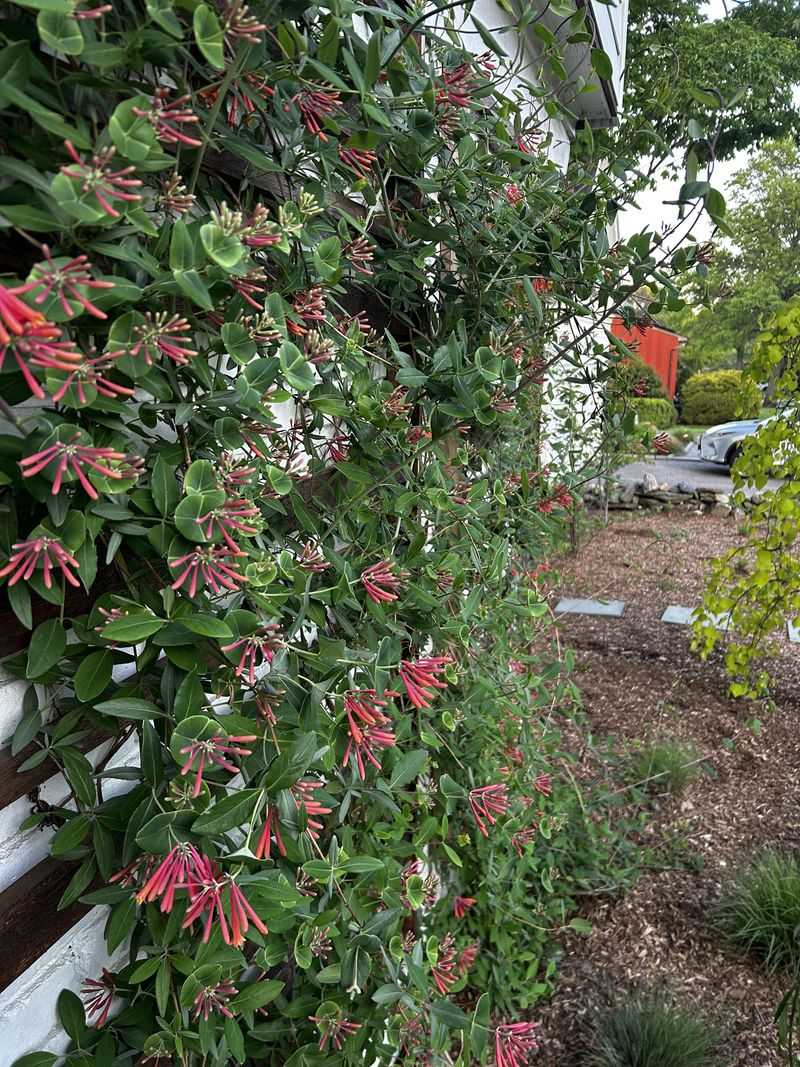
Neglected vines have a way of reminding you they exist. Coral honeysuckle is not a high-maintenance plant, but it is still a vine.
Vines that go unpruned too long can become tangled, woody at the base, and harder to manage. Light, regular pruning is the easiest way to keep the plant shaped, contained, and looking its best without resorting to heavy cutbacks that stress the plant.
Native plant and horticulture sources generally suggest removing withered, damaged, or wayward stems as needed throughout the growing season. Trimming lightly after the main flush of flowering can encourage tidier growth.
It may also support additional blooming, though timing can vary by region and growing conditions. Check guidance from OSU Extension or a reputable local native plant society for timing recommendations specific to your area before making significant cuts.
Avoid severe pruning unless the vine has become truly overgrown and a source-backed rejuvenation approach is being followed. Heavy pruning can reduce flowering and stress the plant, especially if done at the wrong time of year.
Staying on top of light maintenance each season is far easier than trying to rescue a vine that has been left alone for several years. A little attention each year keeps coral honeysuckle cooperative and looking exactly the way you want it to.
7. Do Not Confuse It With Japanese Honeysuckle
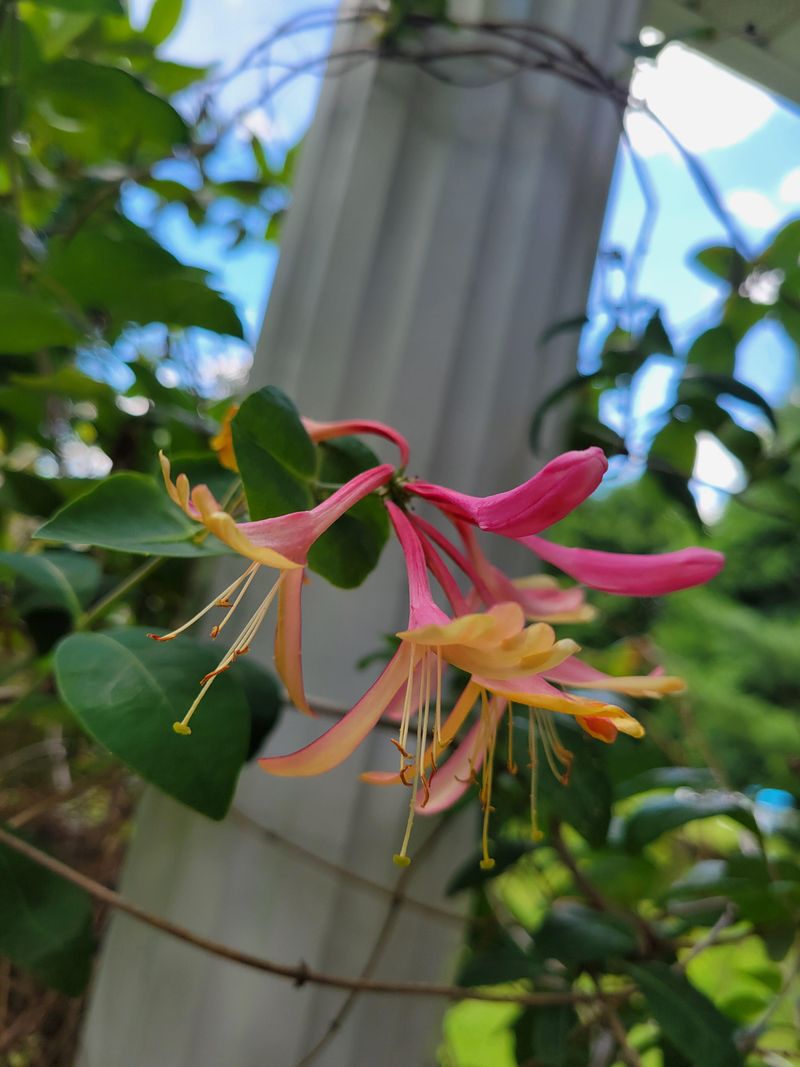
Not every honeysuckle vine belongs in your garden. Before planting any honeysuckle, know the difference between Lonicera sempervirens and Lonicera japonica.
The first is native coral honeysuckle. The second is Japanese honeysuckle.
Japanese honeysuckle is listed as invasive in Ohio by the Ohio Invasive Plants Council and many other regional sources. It spreads aggressively, smothers native vegetation, and is very difficult to remove once established.
Planting it by mistake is a serious problem for local ecosystems.
The two plants look different up close. Coral honeysuckle typically has solid, unfused leaves near the stem tips and bright red to orange-red tubular flowers.
Japanese honeysuckle usually has fragrant white and yellow flowers and a much more aggressive, sprawling growth habit. However, the safest way to avoid confusion is to check the botanical name on the plant label every single time you buy.
Purchase coral honeysuckle only from reputable native plant nurseries that clearly label their stock as Lonicera sempervirens. Avoid accepting unknown honeysuckle cuttings, starts from untrusted sources, or plants without clear identification.
Ohio Invasive Plants Council guidance and university extension resources both recommend being very careful about honeysuckle species identification before planting. When in doubt, skip the mystery plant and find a properly labeled native source instead.
8. Let A Native Climber Add Color Without Chaos
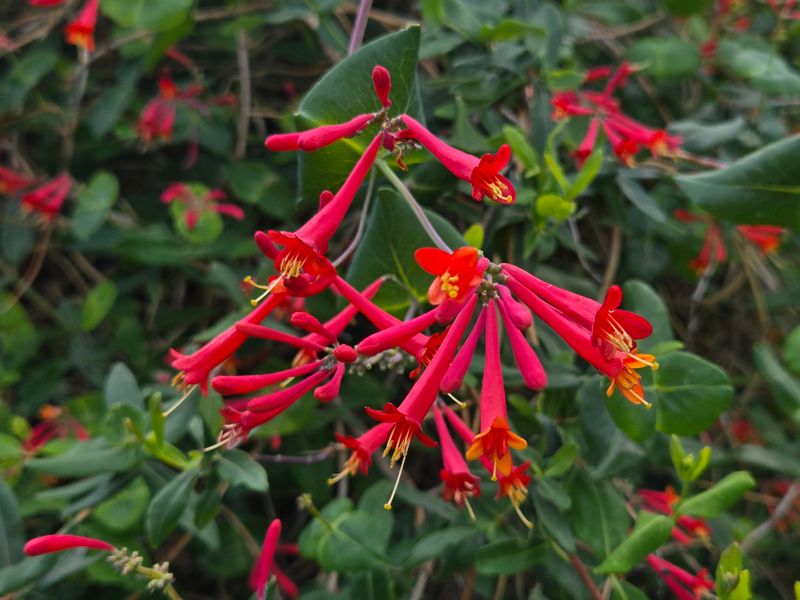
A garden that works with nature instead of against it is a genuinely satisfying place to spend time. Coral honeysuckle lets you enjoy a native flowering vine with tubular blooms and real wildlife value.
Its climbing habit fits most Ohio home landscapes better than trumpet vine does. Choosing it over Campsis radicans in a small yard, near a patio, or along a fence is practical.
It avoids the nightmare of suckering and is backed by solid native plant reasoning.
The checklist for success with this vine is straightforward. Buy nursery-propagated Lonicera sempervirens from a reputable source.
Check the botanical name carefully, and plant it in a sunny to partially shaded spot with good airflow. Give it a proper trellis or support structure from day one, train the young stems early, and keep up with light pruning to maintain a tidy shape.
Avoid confusing it with invasive Japanese honeysuckle, and consider pairing it with other native flowering plants to build a richer habitat over time.
The right vine brings color, vertical movement, and hummingbird interest to a garden without turning the whole space into a wrestling match. Coral honeysuckle is not a maintenance-free plant, but it is a manageable, rewarding, and genuinely native one.
That combination is hard to beat when you want beauty and a little wild energy without the takeover.