The New York Trees To Fertilize In September And The Ones To Skip
Fall in New York has a way of turning everyone into an amateur arborist. The leaves start turning, the air gets crisp, and suddenly every homeowner wants to grab a bag of fertilizer and sprinkle it around like plant confetti.
Sounds productive, right? Not so fast.
Here’s the thing: trees do not read the calendar. They read their soil, their roots, and whatever nutrients are actually available to them.
So dumping fertilizer on a tree just because September rolled around is a bit like taking vitamins you do not need because it is Tuesday. Some trees genuinely want a nutrient boost.
Others are thriving just fine and would rather be left alone. The real trick is figuring out which is which, so your landscape gets exactly what it needs, nothing more, nothing wasted.
1. Confirmed Nutrient Deficiencies That May Call For Targeted September Feeding
Trees showing unusual symptoms may sometimes have a nutrient-related problem, but appearance alone does not provide a complete diagnosis.
Yellowing leaves, poor growth, smaller-than-normal foliage, or changes in leaf color can be connected to several different causes.
Nutrient shortages are one possibility, but issues such as drought stress, compacted soil, root damage, pests, diseases, and unfavorable soil conditions can create similar symptoms.
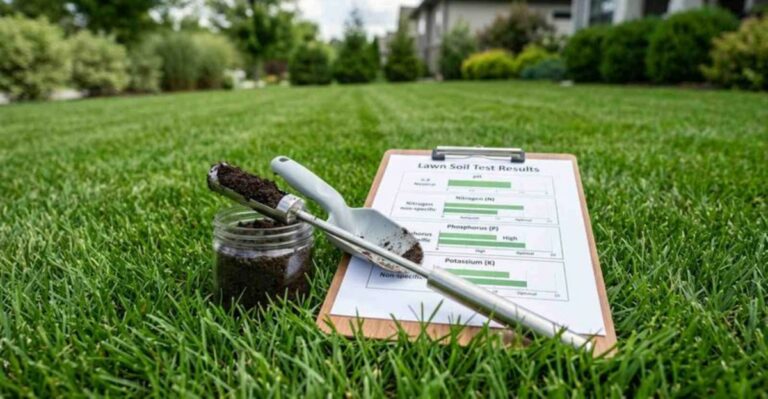
In New York landscapes, where soils vary widely from region to region, testing provides a clearer picture than guessing. A soil test through a Cornell Cooperative Extension resource can help identify nutrient levels and important soil characteristics such as pH.
In some situations, additional evaluation may be needed to understand whether the tree is able to access available nutrients properly.
Applying fertilizer before confirming the problem can create unnecessary costs and may not solve the issue affecting the tree. For example, adding nutrients to a tree struggling because of poor drainage or root stress may not address the real cause.
A test-based approach helps homeowners choose a treatment that matches the actual need.
When a nutrient deficiency is confirmed, a targeted fertilizer application may be considered. The timing and product choice should depend on the tree species, the nutrient involved, and recommendations based on testing results.
September should not be treated as a universal fertilizer month for all New York trees, but a documented deficiency may require a carefully planned response.
Applying only the recommended nutrients and using appropriate rates helps avoid excessive applications. Fertilizer should be distributed across the appropriate root area rather than concentrated near the trunk.
Keeping records of test results and treatments can also help homeowners make better decisions in future seasons.
2. Restricted Root Areas With A Documented Need For Nutrient Support
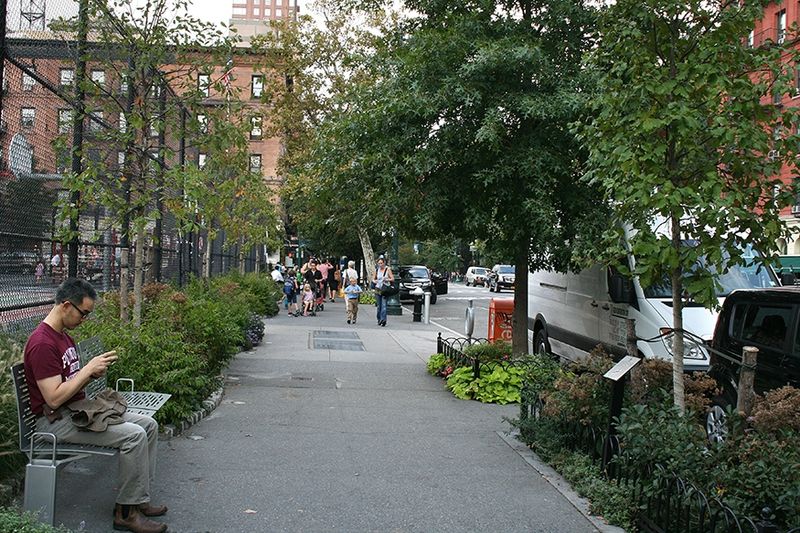
Trees growing in restricted spaces can face challenges that are less common in open landscapes.
Street trees planted between sidewalks, trees growing in narrow planting strips, and trees surrounded by pavement often have smaller areas where roots can expand.
In New York cities and suburbs, these conditions can affect access to water, oxygen, organic matter, and available nutrients. However, a limited root area does not automatically mean a tree needs fertilizer.
Your New York Garden Changes Every Week. Your Plan Should Too.
Gardening in New York changes quickly throughout the season. Every Friday you’ll receive a simple weekly plan showing exactly what to plant, prune, fertilize, harvest, and protect so you never miss the right timing.
The first step is identifying what is actually limiting growth and whether a nutrient shortage is part of the problem.
A soil test can help determine whether nutrients are lacking, while a broader evaluation can reveal other issues such as compacted soil, poor drainage, or inconsistent watering.
If testing confirms a nutrient deficiency, targeted fertilization may be considered as one part of a larger care plan.
The goal is not to feed every tree growing in a difficult location, but to address a specific problem with the least unnecessary input.
In compact urban planting areas, improving the soil environment can sometimes be just as important as adding nutrients.
Mulch applied around the root zone, while keeping it away from direct contact with the trunk, can help conserve moisture and support healthier soil conditions.
Reducing soil compaction and protecting the available rooting space can also improve long-term tree performance.
When fertilizer is recommended, a product and application rate should match the documented need. Slow-release fertilizers may be useful in some situations because they release nutrients gradually, but they are not a solution for every restricted-root problem.
Proper assessment helps ensure that fertilizer supports the tree rather than simply adding nutrients without a clear purpose.
3. Fruit Trees With Fertilizer Needs Confirmed Through Soil Or Leaf Testing
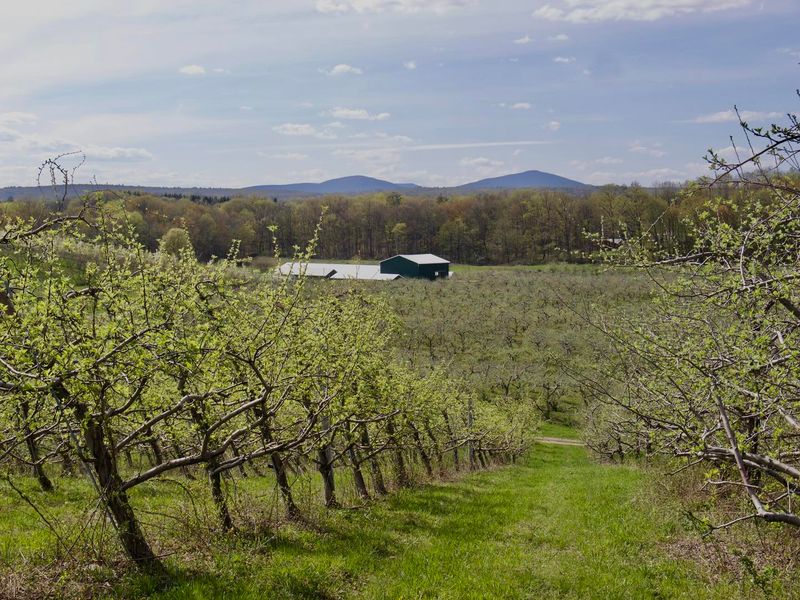
New York fruit trees, including apples, pears, peaches, and plums, benefit from careful nutrient management, but they should not be fertilized simply because fall has arrived.
Fruit trees have specific nutrient requirements that can change depending on the variety, soil conditions, crop load, age of the tree, and overall growing environment.
Applying fertilizer based only on the season or habit can lead to unnecessary nutrient additions that may not improve tree performance.
Soil testing and leaf analysis are valuable tools for determining whether a fruit tree has a nutrient shortage. In commercial orchards, growers often use these methods to guide fertility decisions and avoid applying more nutrients than the trees require.
Home gardeners can use the same principle by testing first and then choosing a fertilizer approach based on actual results rather than assumptions.
Nitrogen is especially important because it influences leafy growth and overall plant development. However, applying too much nitrogen late in the growing season may encourage growth that does not align with the tree’s natural preparation for winter.
For this reason, fertilizer timing should be considered carefully and adjusted according to the tree’s needs rather than following a simple calendar schedule.
When a nutrient deficiency is confirmed, a targeted application may help correct the issue. The fertilizer should be applied at the recommended rate and placed where active roots can access it.
Keeping records of soil tests, leaf tests, and harvest performance can help homeowners make better decisions over time.
For backyard fruit trees in New York, the same principle applies as in larger orchards: testing provides better guidance than routine feeding.
A healthy fruit tree does not automatically need fertilizer in September, but a tree with a confirmed nutrient issue may benefit from a carefully planned approach.
4. By Contrast, Healthy Established Shade Trees Don’t Need A September Feeding
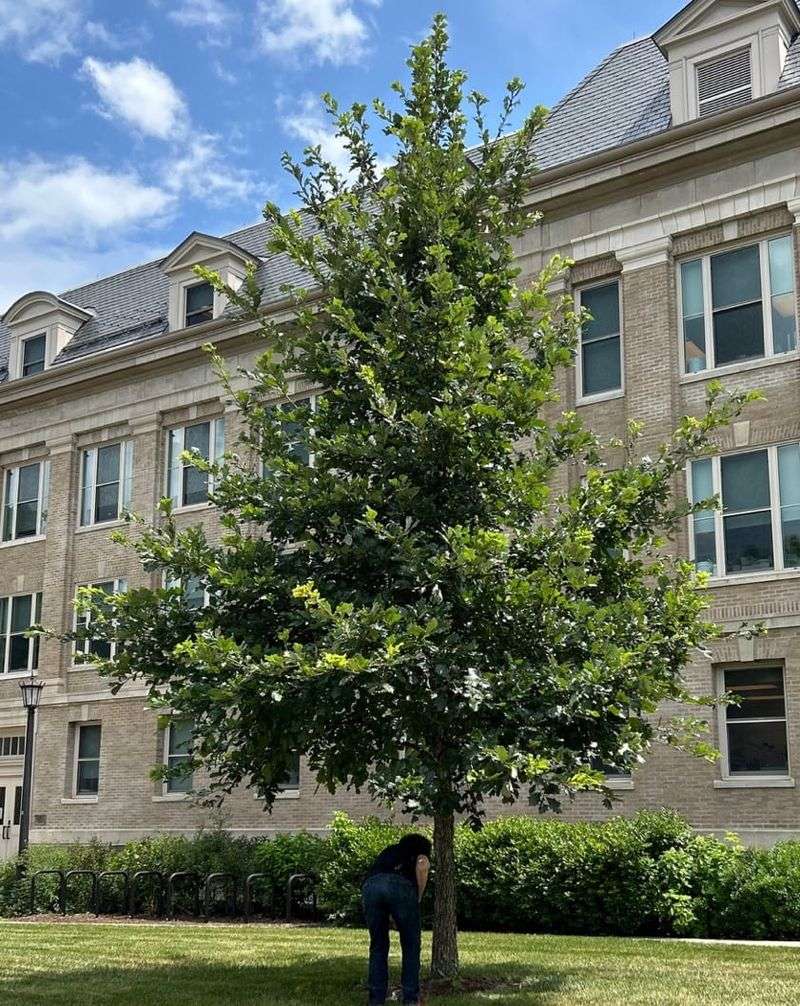
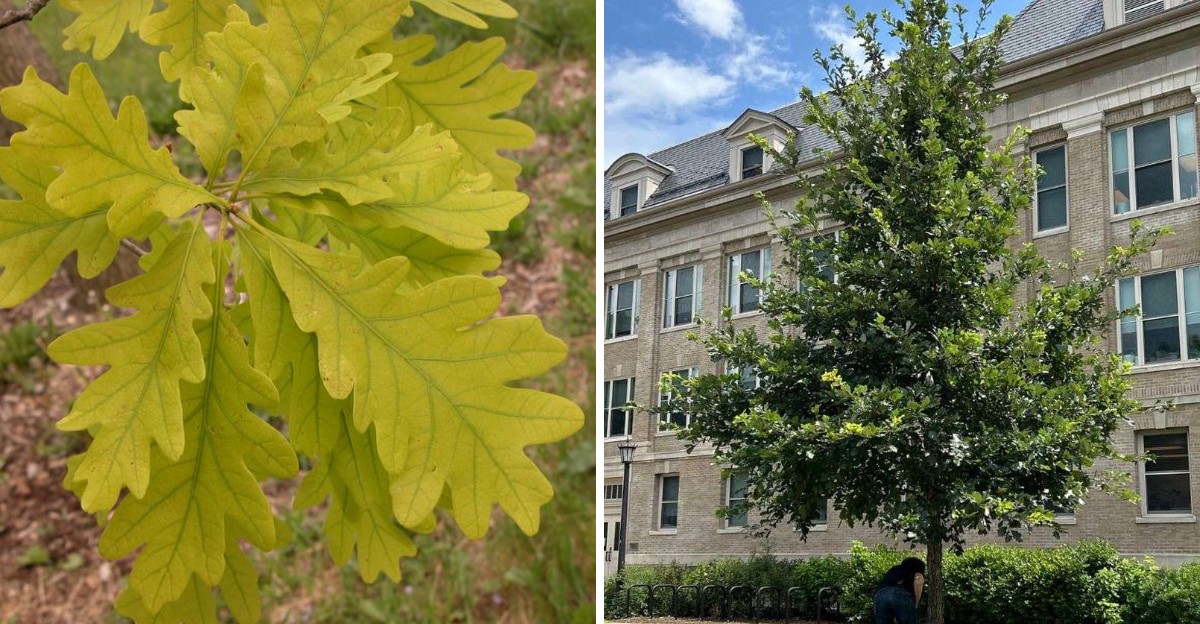
Mature shade trees such as oaks, maples, and lindens often do not require routine fertilizer applications when they are healthy and growing normally.
Many established trees have extensive root systems that allow them to access available nutrients from the surrounding soil.
In natural settings, nutrients are also returned through organic matter such as fallen leaves and decomposing plant material, which helps maintain soil fertility over time.
A common mistake is assuming that every large tree needs fertilizer as part of fall maintenance. In reality, fertilizer is most useful when it addresses a specific need.
If a mature tree has good leaf color, normal growth, and no signs of nutrient stress, adding fertilizer may provide little benefit. Unnecessary applications can increase costs and may contribute to nutrient movement into nearby soil and waterways.
Instead of focusing on fertilizer, homeowners can support established shade trees through basic landscape care. Maintaining a layer of mulch around the root zone can help conserve moisture and moderate soil temperatures.
Mulch should be kept away from the trunk to reduce moisture-related problems near the bark. Protecting roots from soil compaction and providing supplemental water during extended dry periods can also support tree health.
A tree showing changes such as reduced growth, thinning foliage, or unusual leaf symptoms may need further evaluation. Those signs should be investigated rather than automatically treated with fertilizer.
Soil testing or advice from a qualified professional can help determine whether nutrients are actually involved.
For many healthy established trees in New York, the best September care is not feeding but maintaining the conditions that allow the tree to continue growing successfully.
A careful approach helps preserve tree health while avoiding unnecessary fertilizer use.
5. Newly Planted Trees That Benefit From Time Before Fertilization
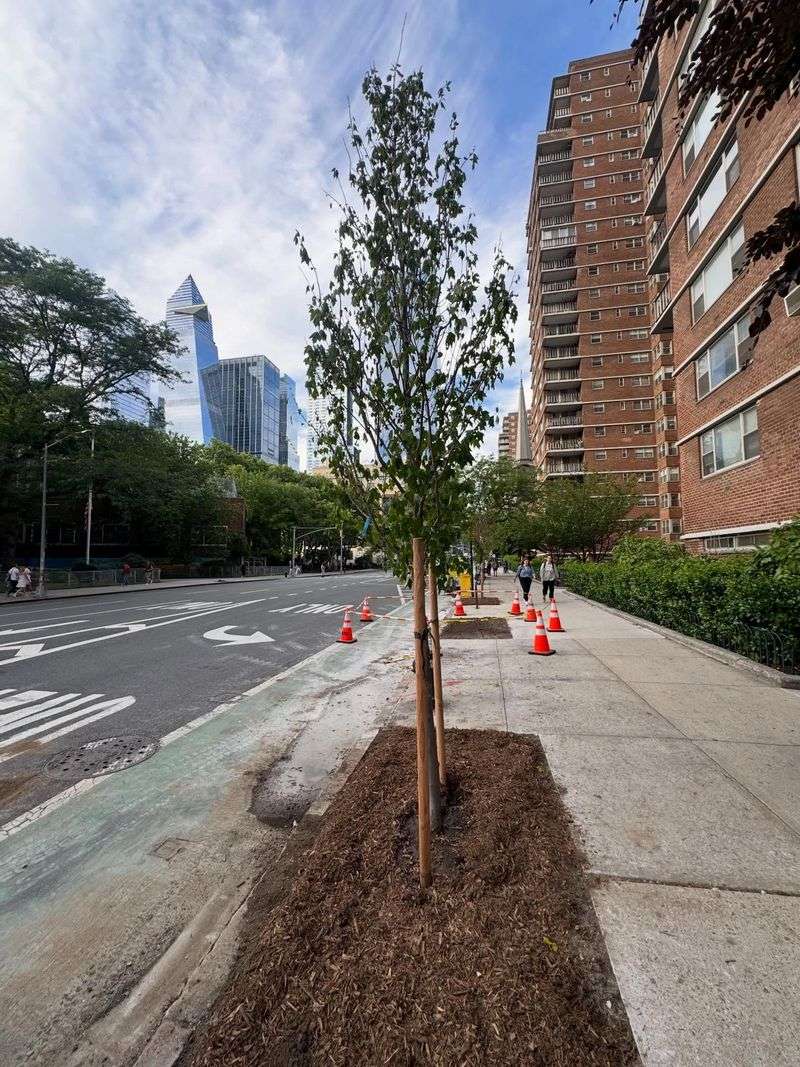
Newly planted trees require a different type of care than established trees because their root systems are still adjusting to a new environment.
After planting, much of the tree’s energy goes toward rebuilding and extending roots rather than producing large amounts of new top growth.
This adjustment period is especially important during the first growing season, when consistent moisture and proper planting practices often have a greater impact than additional fertilizer.
Adding fertilizer immediately after planting or during early establishment is not generally recommended unless a specific need has been identified.
Newly planted trees can be sensitive to excess nutrients, and encouraging rapid top growth may not match the tree’s ability to support that growth with newly developing roots.
A balanced approach gives the tree time to establish naturally.
For New York homeowners, water management is one of the most important parts of caring for young trees. Newly planted trees often need regular monitoring because their smaller root systems are more vulnerable to drying out.
Deep watering when needed encourages roots to grow outward into surrounding soil. Applying mulch around the root zone can also help conserve moisture and reduce temperature fluctuations.
Before considering fertilizer, observe how the tree is establishing. Healthy new growth, stable leaves, and gradual improvement are signs that the tree is adjusting well.
If problems appear, it is better to identify the cause rather than assume fertilizer will solve the issue.
Once the tree has had time to establish, soil testing can help determine whether additional nutrients are needed. In many cases, proper watering, mulch, and protection from stress provide the foundation a young tree needs.
Giving roots time to develop can support stronger long-term growth than adding fertilizer too early.
6. Drought-Stressed Trees That Need Recovery Before Fertilizer Applications
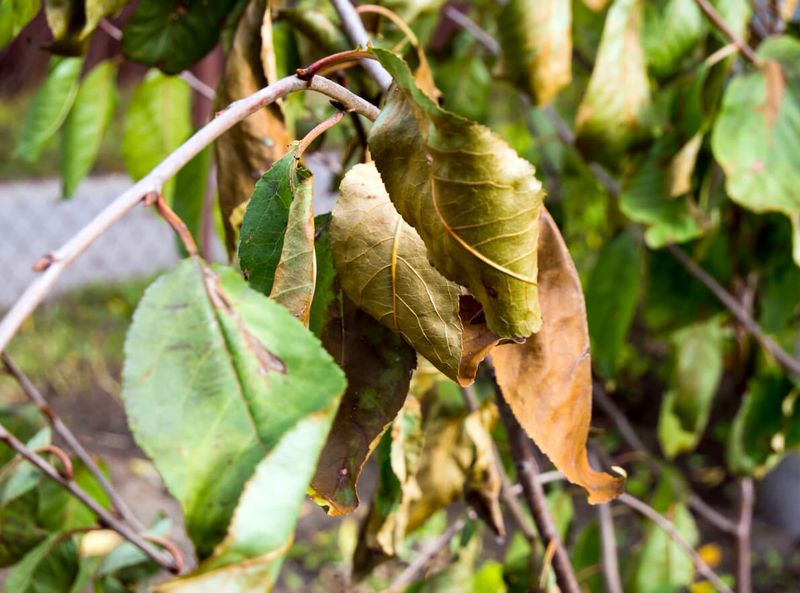
After a hot or unusually dry summer, some New York trees may show signs of water stress. Common symptoms can include leaf scorch, wilting, early leaf color changes, reduced growth, or leaves dropping earlier than expected.
These signs can be concerning, but adding fertilizer immediately is not usually the best response.
A tree under drought stress is already dealing with limited water availability, and improving moisture conditions should be the first priority before considering additional nutrients.
Fertilizer works best when trees have suitable growing conditions and active roots that can absorb available nutrients. When soil is very dry, nutrient uptake can be reduced, and fertilizer applications may not address the underlying problem.
A stressed tree may appear unhealthy because of water limitations rather than because nutrients are missing from the soil.
Providing appropriate irrigation can help drought-stressed trees recover. Water should be applied slowly and deeply so moisture can reach the root zone instead of running off the soil surface.
The exact amount and frequency depend on factors such as tree size, soil type, rainfall, and local conditions. Monitoring soil moisture is more useful than following a fixed schedule.
Mulch can also support recovery by helping reduce moisture loss and moderating soil temperatures. A layer of organic mulch around the root zone can provide benefits when it is kept away from direct contact with the trunk.
Once the tree has recovered from drought stress, homeowners can reassess its condition. If symptoms continue, soil testing or professional evaluation can help determine whether nutrients or another issue are involved.
In many cases, restoring proper moisture and reducing stress provides more benefit than adding fertilizer.
7. Trees Already Receiving Nutrients From Fertilized Lawn Areas
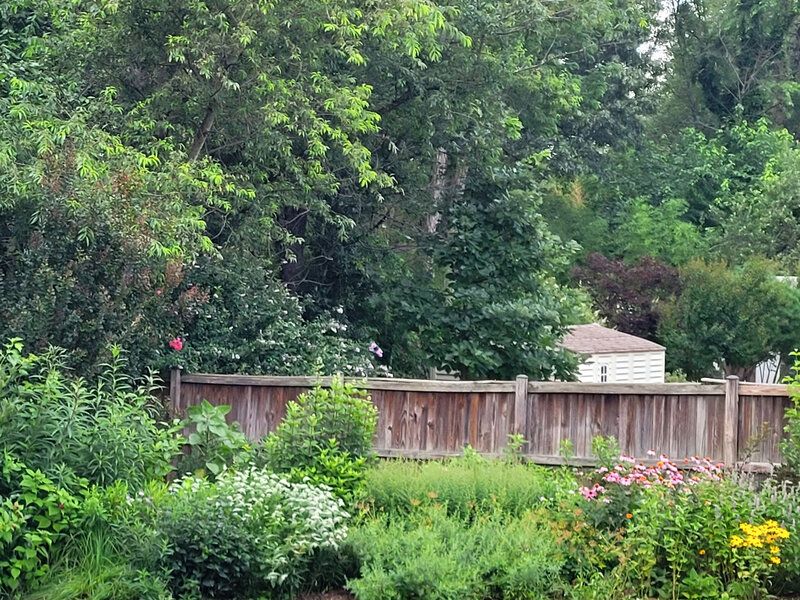
Many homeowners treat lawn care and tree care as separate tasks, but the two areas often overlap. Tree roots can extend beyond the canopy and into nearby lawn areas where fertilizer is applied.
Because of this, trees growing near fertilized lawns may already receive some nutrients from surrounding landscape practices.
The amount of nutrients available to a tree depends on factors such as root distribution, soil conditions, fertilizer type, application methods, and distance from the lawn.
Some trees may benefit from nutrients in nearby soil, while others may not receive enough to meet their needs.
This is why fertilizer decisions should not be based on assumptions alone.
Adding extra fertilizer to a tree that is already receiving nutrients from lawn care may provide little benefit. Unnecessary applications can increase the risk of nutrient movement through the soil, especially during heavy rainfall.
In New York, careful fertilizer use helps reduce the chance of excess nutrients reaching streams, lakes, and other waterways.
Before applying tree fertilizer, consider the entire landscape. A healthy tree growing beside a regularly fertilized lawn may not need additional feeding.
If a tree shows signs of stress, soil testing can help determine whether nutrients are actually lacking or whether another issue is affecting growth.
Managing lawns and trees together creates a more balanced approach. By considering all nutrient sources in the landscape, homeowners can avoid unnecessary fertilizer use and focus care where it provides the most benefit.
8. Trees Without Clear Evidence Of A Nutrient Deficiency

One of the most common fertilizer mistakes is applying nutrients without evidence that a tree actually needs them.
In New York landscapes, many trees grow successfully without routine fertilizer, especially when they have enough space for roots, suitable soil conditions, and proper moisture.
A healthy tree does not automatically benefit from additional nutrients simply because fertilizer is available.
Tree problems can have many causes, and nutrient deficiency is only one possibility. Yellowing leaves, reduced growth, or thinning foliage may be related to soil conditions, drought, root damage, pests, diseases, or environmental stress.
Applying fertilizer without identifying the cause may delay the correct solution and add nutrients that the tree does not require.
Soil testing provides a more reliable way to determine whether fertilizer is needed. Cornell Cooperative Extension resources encourage homeowners to use soil testing to understand nutrient levels and soil conditions before making fertilizer decisions.
Testing can help show whether a nutrient shortage exists or whether another factor needs attention.
When a tree has no clear signs of a deficiency, basic care practices often provide the greatest benefit.
Maintaining appropriate mulch, providing water during dry periods, protecting roots from damage, and monitoring for changes can support long-term tree health.
Avoiding unnecessary fertilizer also helps protect the surrounding environment. Excess nutrients can move through soil and contribute to water quality issues.
Using fertilizer only when there is a documented reason supports both healthier trees and more sustainable landscapes.
For many homeowners, the best September decision is careful observation rather than automatic feeding. Healthy trees often benefit most from consistent maintenance and attention to changing conditions rather than routine fertilizer applications.