The One Thing California Gardeners Should Not Do To Hydrangeas In August
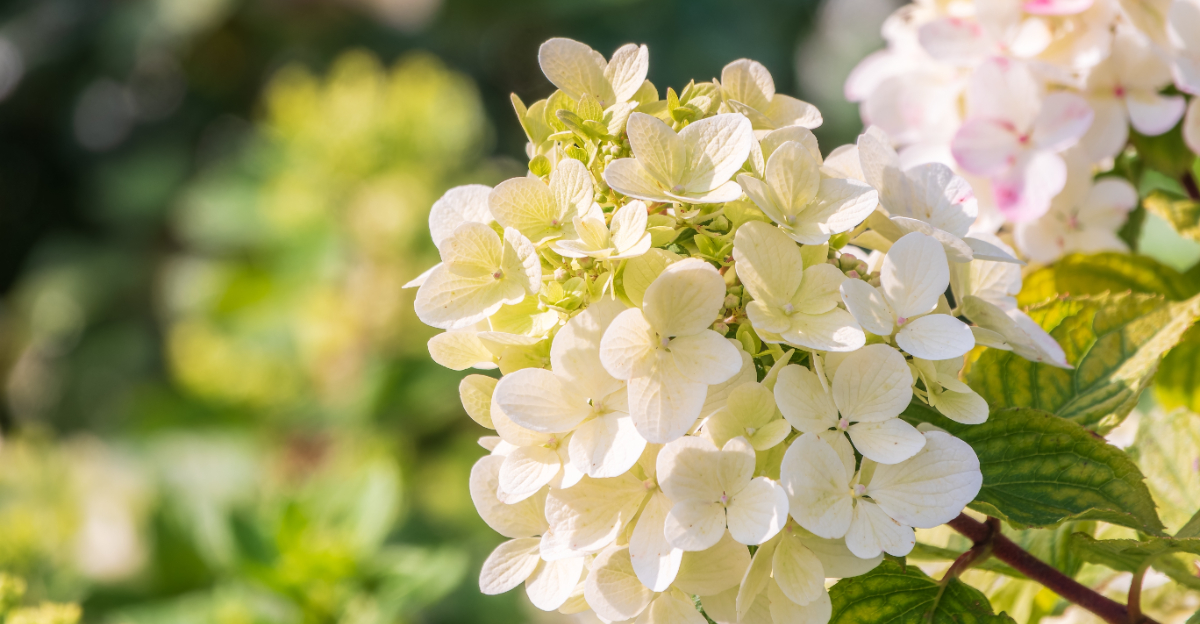
August is not the month to get ambitious with California hydrangeas. Once the main flower show starts fading, those tired stems and spent blooms can make the shrub look ready for a cleanup.
That urge to tidy is exactly where problems can begin. Hydrangeas may already be preparing the growth that will matter next spring, even though there is little happening above ground to suggest it.
A few casual cuts can remove more than old flowers, and the consequences may not become obvious for months. That is what makes late-summer care so easy to get wrong.
The plant may look perfectly healthy through fall, then disappoint when flowering season returns.
Sometimes the most important thing you can do in August is resist the urge to interfere and let the shrub finish the season on its own.
1. Putting The Pruners Down Before Buds Disappear
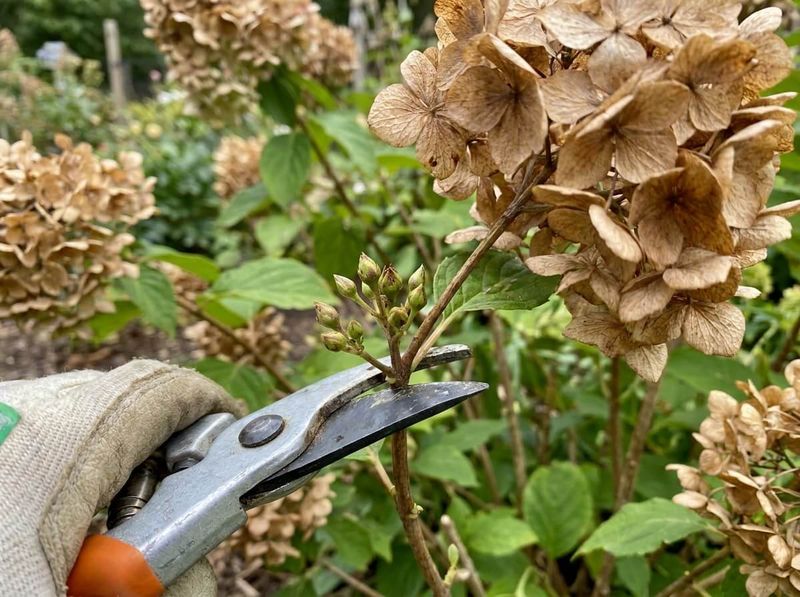
A quiet California August afternoon can make overgrown branches look ready for a quick trim.
Resist that urge, because many hydrangeas have already started preparing the buds that will become next spring’s flowers.
Those buds may be tiny, hidden beside leaves, and easy to mistake for ordinary growth.
Pruning during winter or early spring is common for many shrubs, but old-wood hydrangeas follow a different schedule.
They build flower buds during the previous growing season and carry them through the cooler months.
Removing stems in late summer can erase months of work with only a few cuts.
Put hand pruners in a shed or mark them with a reminder until you know which type you own. You may still remove broken branches or stems with clear damage.
Cut only what is needed, and avoid shaping the whole plant for neatness.
Water deeply when the upper soil feels dry, especially during hot inland weather. Add two or three inches of mulch around the root area, but keep it away from the main stems.
Steady moisture helps new buds stay healthy without pushing soft growth through heavy feeding.
If size has become a problem, plan major pruning for the proper period after flowering. Take photos now so you can remember which branches bloomed.
A little patience in August protects the colorful display you have been waiting to enjoy next year.
2. Old Wood Is Already Holding Next Year’s Flowers
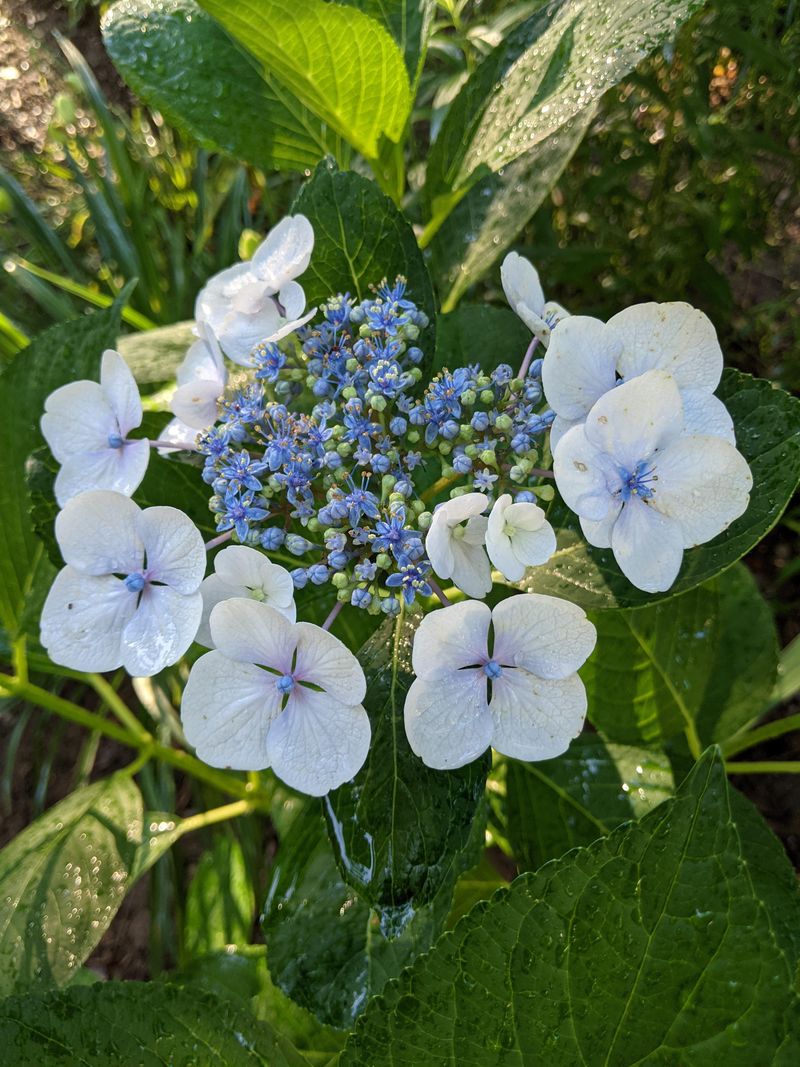
Last year’s brown stems may look plain, yet they can be carrying a hidden floral treasure. Gardeners call them old wood because they formed during an earlier season.
On many popular hydrangeas, small buds along those stems already contain the beginnings of next year’s flower heads.
Look closely where each leaf joins a stem. Healthy buds often appear as small pointed bumps arranged in pairs.
Their size varies by variety, so do not assume a thin or modest stem has nothing valuable to protect.
Old wood also gives the shrub a sturdy framework. It stores energy, supports new leaves, and moves water between the roots and growing tips.
Cutting it in August forces the plant to replace structure instead of preserving its planned flowers.
Your California Garden Changes Every Week. Your Plan Should Too.
Gardening in California changes quickly throughout the season. Every Friday you’ll receive a simple weekly plan showing exactly what to plant, prune, fertilize, harvest, and protect so you never miss the right timing.
Learning to recognize living wood can prevent mistakes. Gently scratch a tiny area of bark with a fingernail only when a stem seems questionable.
Green tissue beneath the surface usually means the branch is alive, while brittle wood without green tissue may be removed carefully.
Leave all uncertain branches until spring growth makes their condition clearer. Tags can help you track stems that produced flowers this year.
Mark one or two with loose garden tape, making sure it does not tighten around the bark.
Think of each older stem as a shelf holding unopened gifts. Keeping that shelf in place through fall and winter gives those buds their best chance to become full, bright clusters when warm weather returns.
3. One August Haircut Can Cost You A Whole Bloom Cycle
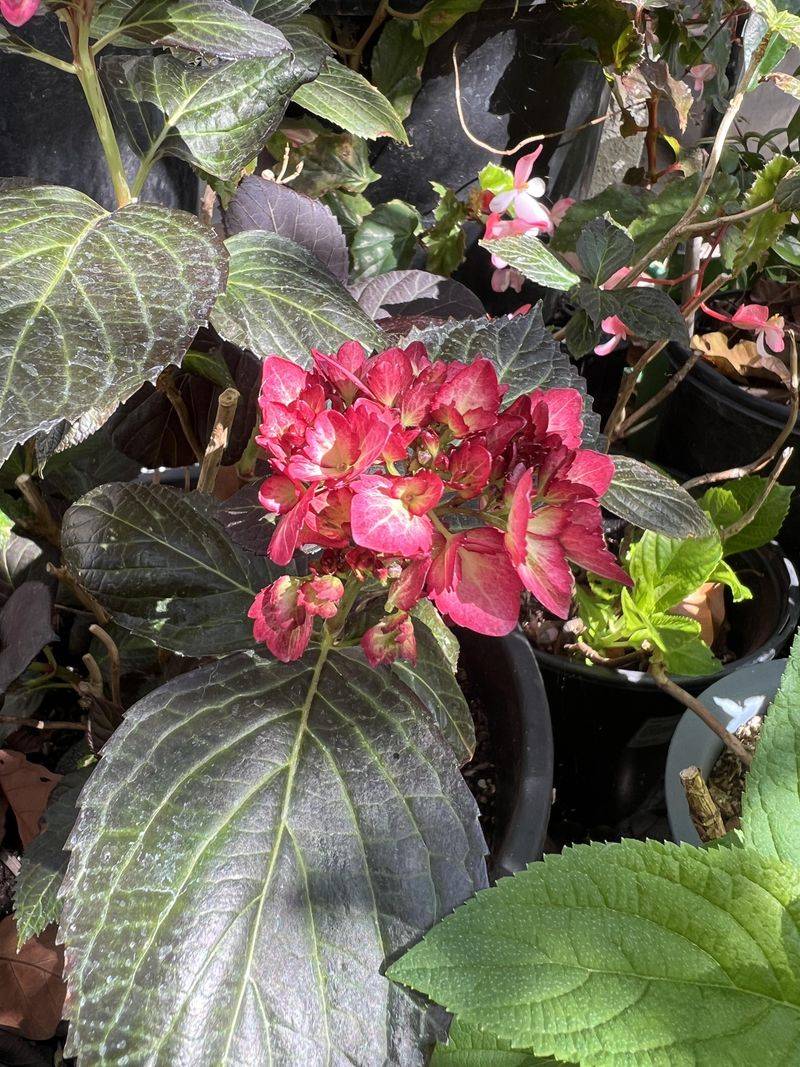
A fast garden haircut feels harmless when branches lean into a path or make the shrub look uneven. Unfortunately, one broad August trimming can remove nearly every prepared flower bud.
The plant may return with healthy leaves next year, but the expected flower show could be missing.
That delay is called losing a bloom cycle. It does not mean the shrub is unhealthy.
It simply needs another growing season to form replacement stems and prepare new buds, provided weather and care remain suitable.
Shearing is especially risky because hedge trimmers cut without showing what lies beside each leaf.
Rounded shaping may suit certain evergreen shrubs, but it works poorly for hydrangeas that bloom on old growth.
Natural branching also looks softer and supports larger flower heads.
When a branch blocks a gate, tie it back loosely rather than shortening it. A soft plant tie, bamboo stake, or small support ring can solve the problem until pruning becomes safer.
Avoid wire that may scrape bark or squeeze a thickening stem.
Major size control should happen soon after flowering, before new buds develop. Exact timing depends on the variety and local climate, so record bloom dates in a garden notebook.
Notes are more reliable than a fixed calendar date because seasonal weather can shift growth.
Missing flowers for a year can feel disappointing after months of care. Skipping an unnecessary August haircut is easier than rebuilding the entire framework.
Let a slightly wild shape remain, and treat it as insurance for spring color.
4. Bigleaf Hydrangeas Are The Ones To Watch Closely
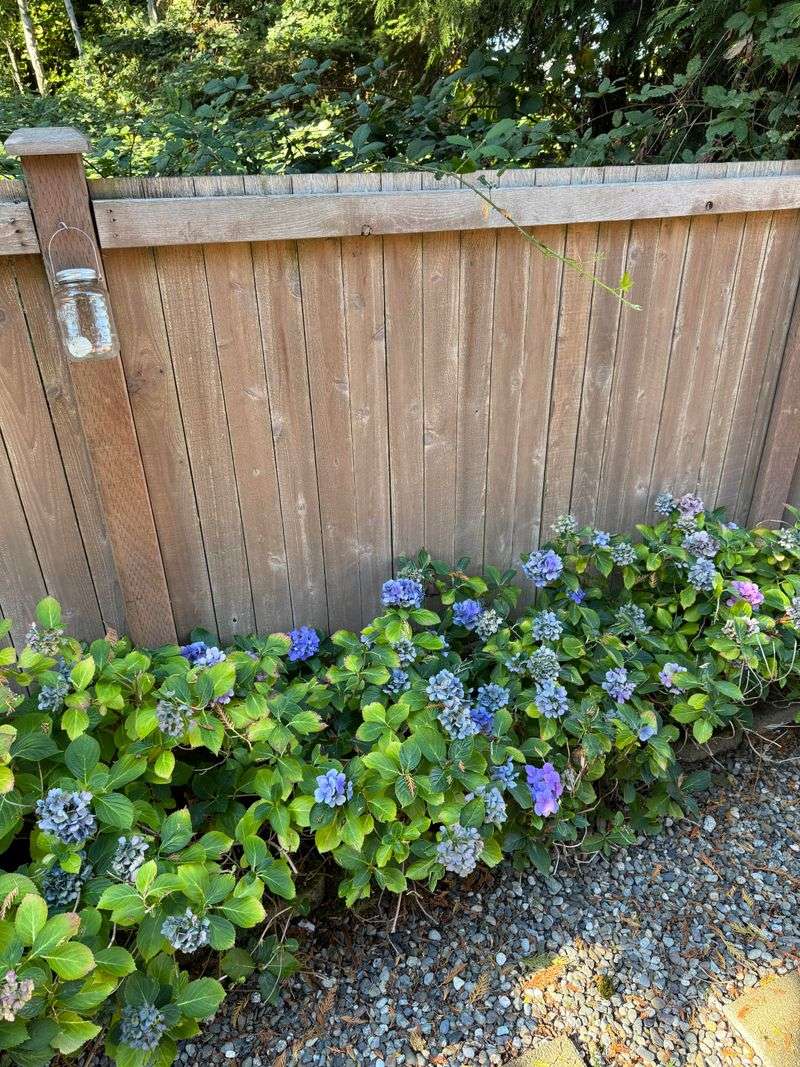
Broad leaves and round, colorful flower clusters often point to a bigleaf hydrangea. Its scientific name is Hydrangea macrophylla, and it includes familiar mophead and lacecap forms.
Many varieties set future flowers on old wood, making late-summer pruning a serious risk.
Mopheads produce large, ball-shaped clusters that may be blue, pink, purple, or white. Lacecaps have a flatter center surrounded by larger showy flowers.
Both forms can carry next season’s buds on stems that remain after this year’s display fades.
Check the plant label if one is still available. Search the variety name online or ask a local nursery whether it blooms on old wood, new wood, or both.
Reblooming types may flower from both kinds of stems, but careless cutting can still reduce their earliest show.
Climate matters as well. Coastal conditions may offer mild temperatures and longer growth, while inland gardens face stronger heat and faster soil drying.
In either setting, protecting mature stems during August gives developing buds a safer path into fall.
Do not identify the shrub by flower color alone. Soil chemistry can change the shades of some bigleaf varieties, so blue and pink plants may belong to the same group.
Leaf shape, bloom form, labels, and growth habits provide better clues.
Once identification is certain, write the name on a weatherproof tag. Add a note that says to prune only after flowering when needed.
That small label can prevent a family member or helpful landscaper from giving the shrub a damaging seasonal trim.
5. Cutting Back Too Far Removes More Than Old Flowers
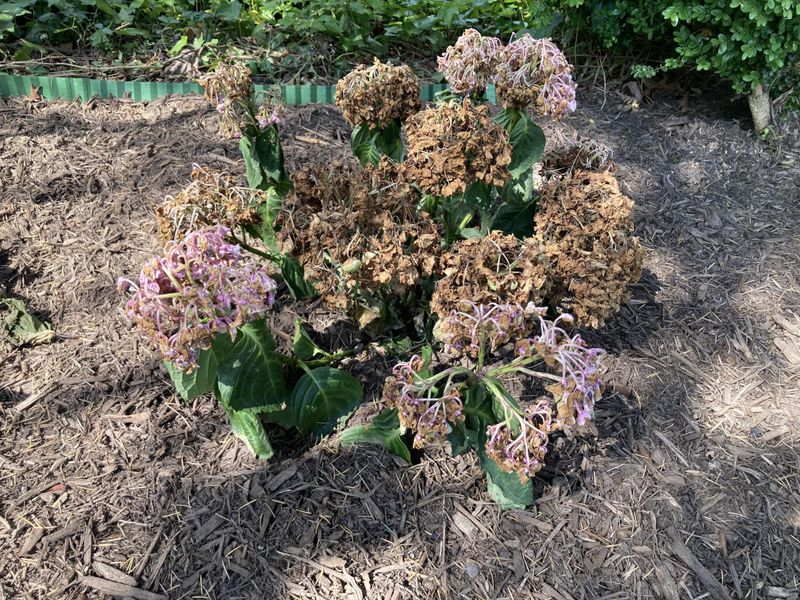
Faded flower heads can make a beautiful shrub seem tired, but the stem below each bloom is still busy.
A long cut made for a tidy appearance may remove healthy leaves, stored energy, and developing buds. The damage reaches farther than the brown petals suggest.
Follow a flower stem downward and inspect every pair of leaves or buds. Future growth often rests close to these joints, also called nodes.
Cutting deep into the branch can remove several nodes at once and leave fewer places for spring flowers to form.
Long stems also help shade the plant’s center during hot afternoons. Their leaves make food from sunlight and support the roots.
Keeping healthy foliage through late summer helps the shrub store enough energy for cooler months and the next growing period.
For a branch that bends under an old bloom, use a support instead of shortening it. A simple hoop or nearby stake can lift the stem away from the ground.
Remove support ties later if they begin pressing into growing bark.
Never cut every stem to the same low height unless reliable instructions for that exact variety call for it. Some new-wood species handle hard pruning, while old-wood kinds may lose most of their flowers.
Similar-looking plants can follow very different blooming rules.
When uncertain, leave more stem rather than less. You can always make another careful cut during the correct season.
Removed growth cannot be attached again, so a cautious pause protects both the shrub’s useful structure and the buds waiting quietly along it.
6. Trimming Is Fine If You Stay Above Healthy Buds
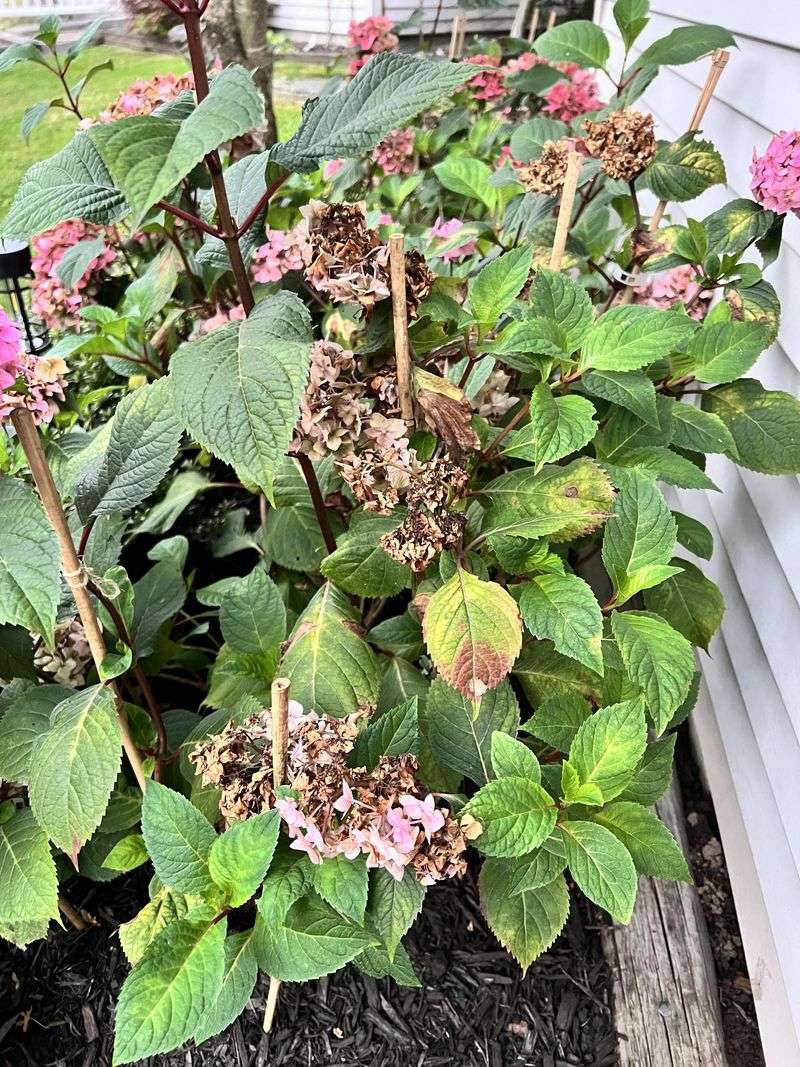
Good news for tidy California gardeners: old flower heads can often be removed without spoiling next year’s display. The secret is making a small, careful cut rather than shortening the whole branch.
It removes only the faded bloom while leaving healthy buds and most of the stem untouched.
Start by tracing the bloom’s short stalk downward. Find the first strong pair of leaves or plump buds beneath the flower head.
Cut just above that pair, leaving a short section of stem so the buds are not nicked or crushed.
Use sharp bypass pruners for a clean cut. Wipe the blades before moving between shrubs, especially if leaves show unusual spots or patches.
Clean tools reduce ragged wounds and help avoid spreading plant problems around the garden.
Some gardeners leave dried blooms in place through fall because they add texture and protect nearby tips. Either choice can work.
Removing them is mostly about appearance, so there is no need to rush through the job during a hot afternoon.
Work slowly and handle one flower head at a time. If buds are hard to see, stop and leave that bloom alone.
Better light in the morning can make stem details easier to identify without guessing.
Place healthy clippings in compost if they show no signs of trouble. Discard spotted or moldy material according to local green-waste guidance.
Careful trimming offers a neat look without stealing future color, proving that small cuts are often safer than dramatic cleanup.
7. Leave The Main Stems Alone For Now
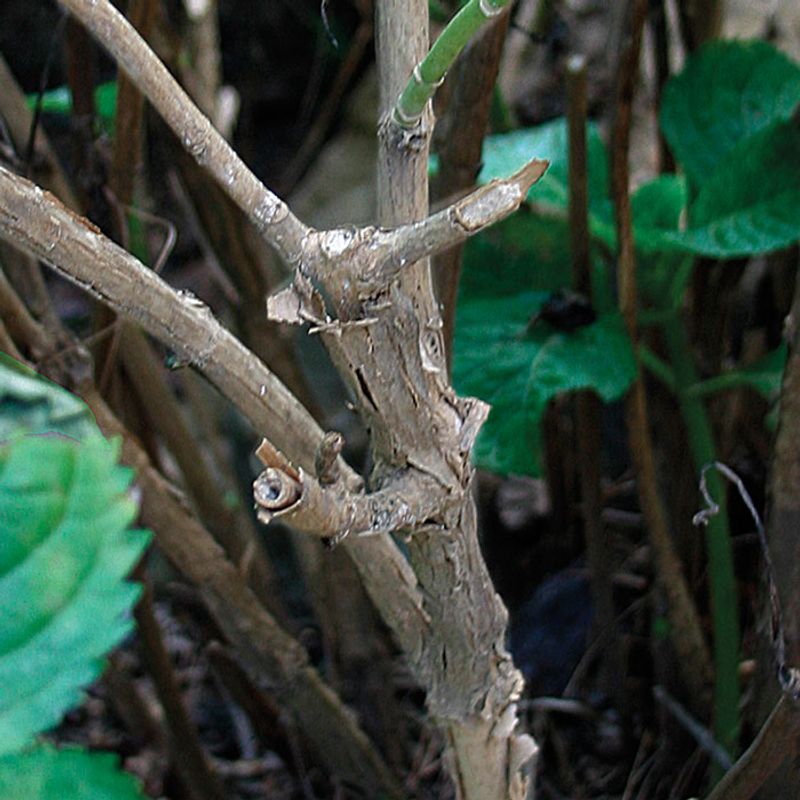
Strong main stems are the backbone of a mature hydrangea, even when their shape looks awkward. They hold the canopy, carry water, and support buds through changing seasons.
August is not the moment to shorten them simply because the plant has grown wider than expected.
Instead, guide leaning branches with soft ties or a wide support ring. Keep each tie loose enough for a finger to slide beneath it.
Check supports every few weeks because stems can thicken and shift as the season continues.
Clear weeds around the base so they do not compete for moisture. Spread organic mulch over the root zone to cool the soil and slow evaporation.
Leave a small open circle around the stems, since piled mulch can trap unwanted moisture against the bark.
Deep watering is better than frequent light sprinkling. Apply water slowly across the root area, then check the soil several inches down.
Moist soil should feel cool and slightly damp, not constantly soaked or dusty.
Avoid strong fertilizer late in the season unless a soil test shows a clear need. Heavy feeding may encourage tender new growth when the shrub should be strengthening existing stems and buds.
Compost or a mild organic amendment is usually a gentler choice when soil needs help.
Plan structural changes after the plant finishes its next flowering period. Remove only a limited number of older stems at ground level if thinning is needed.
For now, preserving the main framework offers the simplest and strongest protection for flowers already being prepared for the next flowering season in California.
8. Fresh Green Growth Is Not The Part To Sacrifice
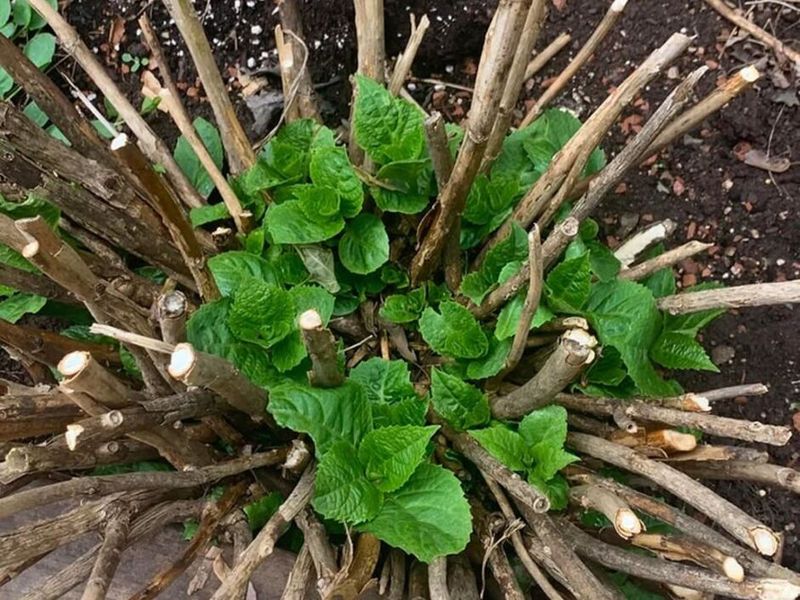
Bright green shoots may look soft and replaceable, yet they are valuable parts of next season’s plan. By late summer in California, some will mature into sturdy wood and carry flower buds through winter.
Removing them for a cleaner outline can reduce both future structure and bloom potential.
Young leaves also act like small solar panels. They use sunlight to make energy that feeds roots, stems, and developing buds.
Keeping healthy foliage allows the entire shrub to build reserves before shorter days and cooler nights arrive.
Watch for shoots that appear far from the main crown before cutting them. Some may come from underground stems and help renew an aging plant.
Others could be unrelated weeds, so trace each one carefully or wait until identification becomes clear.
Fresh growth needs steady moisture during late-summer heat. Check soil beneath the mulch rather than judging by a dry surface alone.
Morning watering limits evaporation and gives wet leaves time to dry if any splashing occurs.
Shield tender foliage from harsh afternoon sun when leaves repeatedly droop or scorch. A temporary shade cloth can help during extreme heat, especially in hot inland areas.
Keep air moving around the shrub and avoid wrapping it tightly.
Minor leaf damage does not always require pruning. Trim only a badly torn leaf when necessary, leaving its stem and nearby buds in place.
By protecting green growth now, gardeners help the shrub finish its seasonal work and enter spring with a strong supply of flower-bearing branches.