The Oregon Plants That Actually Thrive in Wet Winters
If your Oregon yard turns into a soggy sponge every November, you are not alone, and you are not doomed. Plenty of plants struggle through our long rainy season, but some actually love it and look their best when the sky is gray.
Picking the right ones means less rot, less guilt over drowned nursery finds, and more birds and bees visiting when food is scarce. Here are nine rain-loving plants that turn a wet winter into something worth looking forward to.
1. Red Osier Dogwood
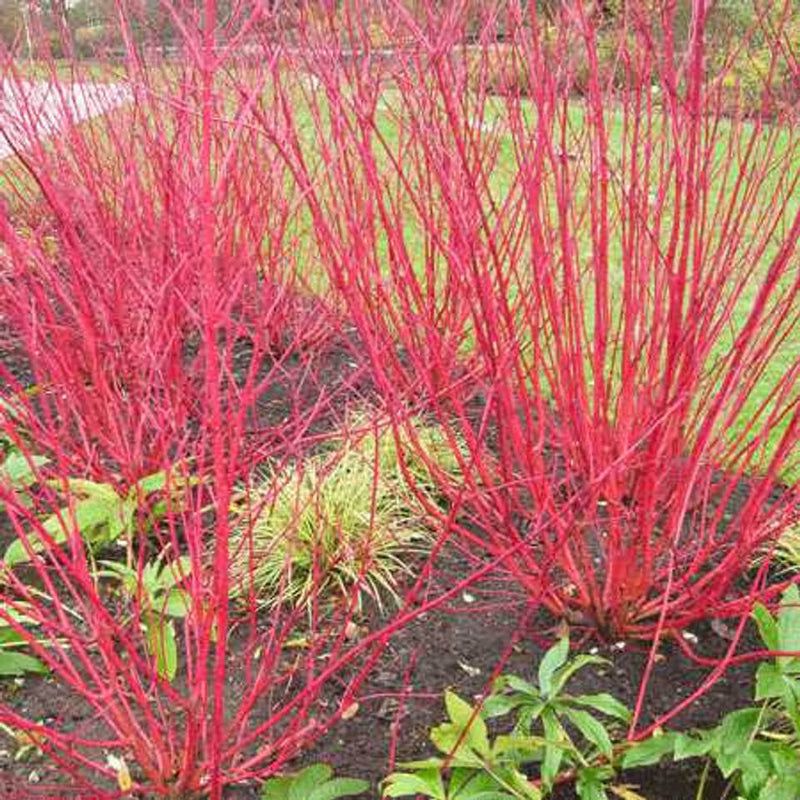
Picture a gray January afternoon in the Willamette Valley, rain dripping off the gutters, and then a flash of scarlet by the back fence. That glowing color comes from red osier dogwood, a native shrub whose stems turn their brightest red after the leaves fall.
It’s the plant that makes you forgive winter a little.
Soggy ground doesn’t bother it at all. In the wild, it lines creeks and wet ditches across western Oregon, so a low spot in your yard where puddles linger feels like home.
It spreads by suckering stems, which makes it handy for holding soil on slopes and along drainage swales.
Wildlife gets a good deal too. Flat clusters of creamy white flowers in late spring can attract native bees and small butterflies, and the whitish berries that follow may feed robins, waxwings, and other hungry birds heading into fall.
Here’s the one chore worth remembering: the newest stems carry the richest color. Every late winter, cut about a third of the oldest, dullest stems down to the ground, and fresh red growth will push up to replace them.
Varieties like ‘Arctic Fire’ stay compact enough for smaller city lots in Portland or Salem.
If you’ve ever bought a plant just because it looked cheerful in a nursery pot, red osier dogwood is the one that keeps paying off years later.
2. Oregon Grape
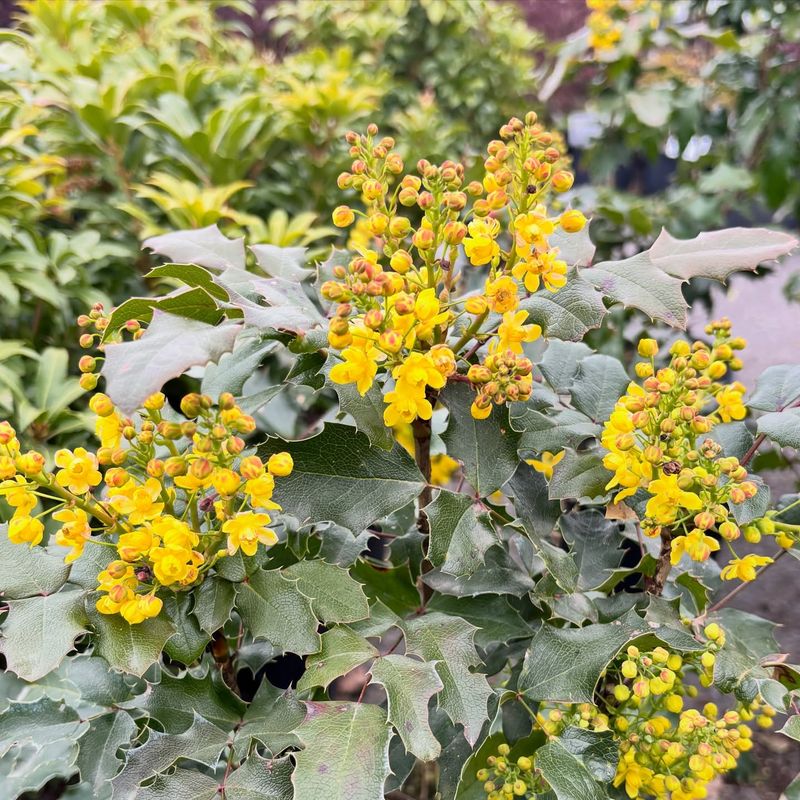
Oregon picked its state flower well. Oregon grape (Mahonia aquifolium) shrugs off months of drizzle, keeps its glossy, holly-like leaves all year, and often blushes reddish purple when the weather turns cold.
The real magic happens in late winter. Bright yellow, lightly fragrant flower clusters can open as early as February in milder parts of western Oregon, right when overwintering Anna’s hummingbirds and the first queen bumblebees are scrounging for food.
For a gardener who worries about doing right by wildlife, few plants offer that much help at such a lean time of year.
By summer, dusty blue berries hang in grape-like bunches. Birds usually find them before you do, though the tart fruit has a long history in homemade jellies.
You have options depending on your space. Tall Oregon grape grows upright to around six feet and makes a sturdy screen.
Cascade Oregon grape (Mahonia nervosa) stays low and loves shade under firs, while creeping Oregon grape (Mahonia repens) handles sunnier edges.
Give it decent drainage rather than a permanent puddle, and it will handle the rest. Once settled, it needs almost nothing from you, which leaves more time for browsing the clearance rack.
Your Oregon Garden Changes Every Week. Your Plan Should Too.
Gardening in Oregon changes quickly throughout the season. Every Friday you’ll receive a simple weekly plan showing exactly what to plant, prune, fertilize, harvest, and protect so you never miss the right timing.
3. Slough Sedge
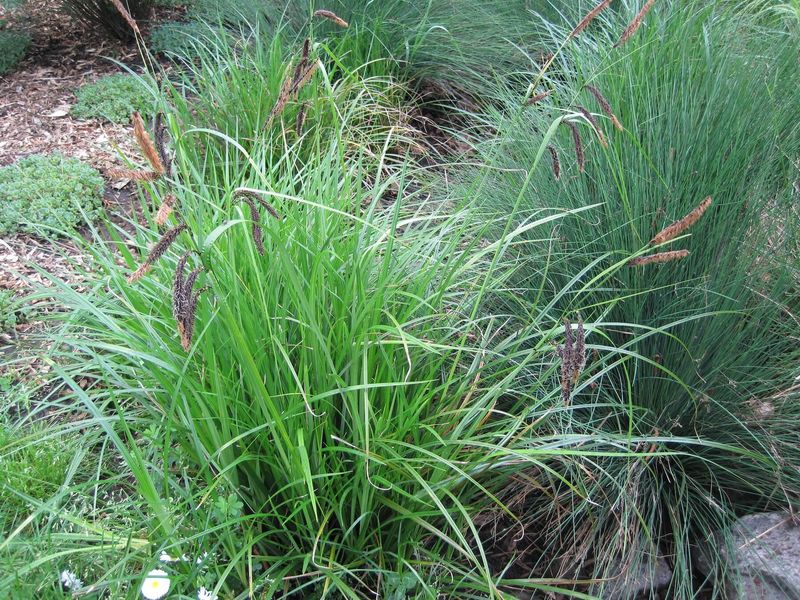
Every yard has that one spot. You know the one: the corner where water pools from November to April and your boots sink with a sad little squelch.
Slough sedge (Carex obnupta) was made for exactly that mess.
A native of coastal marshes and wet meadows from the Oregon coast to the valley floor, it forms thick, arching clumps of dark green blades that stay evergreen through the whole rainy season. It can sit in standing winter water without sulking, then carry on through dry summers once its roots are established.
A little extra water in August keeps it looking lush.
It isn’t flashy, and that’s the point. Dense foliage offers hiding spots for Pacific tree frogs and other amphibians, and song sparrows may pick at the seed heads in fall.
Gardeners building rain gardens around Portland and Eugene lean on it as a backbone plant because its roots help hold soil where runoff rushes through.
A quick handling tip: the leaf edges are rough enough to nick bare hands, so wear gloves when dividing clumps. Plant it in fall so winter rains do the watering for you.
Within a couple of seasons, your problem puddle becomes a tiny wetland you’ll actually be proud of.
4. Salmonberry
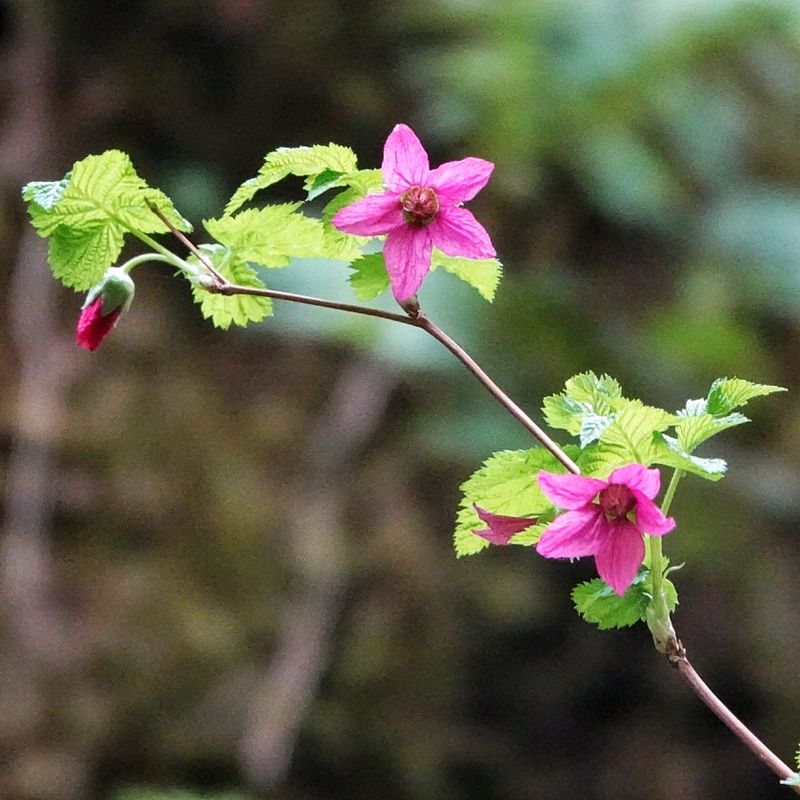
Ask any longtime Oregonian about salmonberry and you might get a story about snacking along trail sides as a kid. Rubus spectabilis grows wild in damp forests and stream edges all over the western part of the state, and it treats soggy soil like a spa day.
Timing is what earns it a spot here. Magenta-pink flowers pop open as early as late February, often right when rufous hummingbirds are arriving back from their long spring migration.
Native bees and orchard mason bees can work those blooms hard too, making it one of the earliest nectar stops in a wet-winter garden.
By May and June, the berries ripen in shades from golden orange to deep ruby. They’re juicy and mild rather than sweet, and birds will gladly share the harvest with you (or take all of it).
Fair warning: salmonberry spreads by underground runners and has prickly stems. It’s happiest at the wild back edge of a property, along a ditch, or in a shady corner you’ve given up on mowing.
Think of it as the friendly neighbor who sometimes wanders over uninvited, and most gardeners find the hummingbird visits more than make up for it.
5. Snowberry
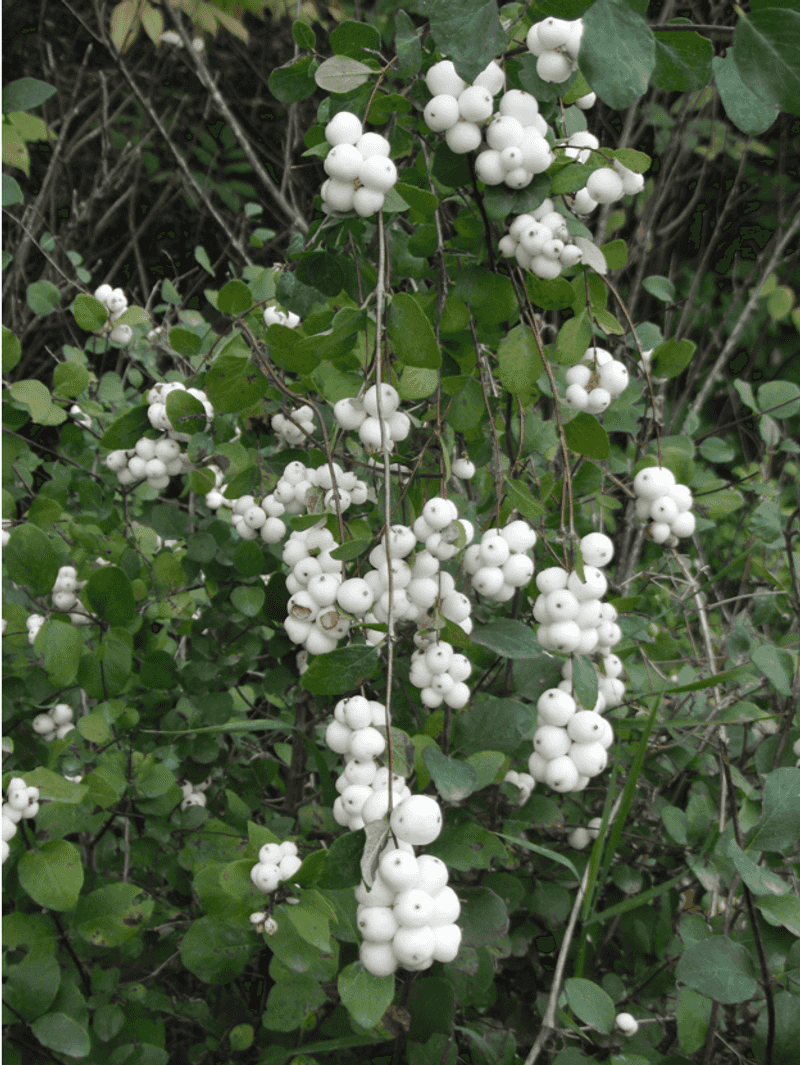
Snowberry is the plant people point at on winter walks and ask, ‘Wait, what is that?’ Pure white, waxy berries hang on bare, wiry twigs long after everything else has gone dormant, like someone strung tiny pearls through the hedge.
Symphoricarpos albus is tough in a quiet way. It handles the heavy clay common across the Willamette Valley, tolerates shade under big conifers, and doesn’t mind months of rain.
Its suckering roots knit together on banks and slopes, which can help reduce erosion when the ground stays saturated.
In spring, small pink bell-shaped flowers draw bumblebees and hummingbirds. The shrub also hosts some moth caterpillars, which in turn can feed nesting songbirds.
The berries are more of a backup winter meal for thrushes and towhees than a first choice, so they tend to stick around and decorate the garden for months.
One thing to know: the berries aren’t for people, so keep curious toddlers from sampling them. Beyond that, snowberry asks for very little.
A quick trim to keep it tidy is about all it needs, and cut stems make lovely winter arrangements for the kitchen table.
6. Vine Maple
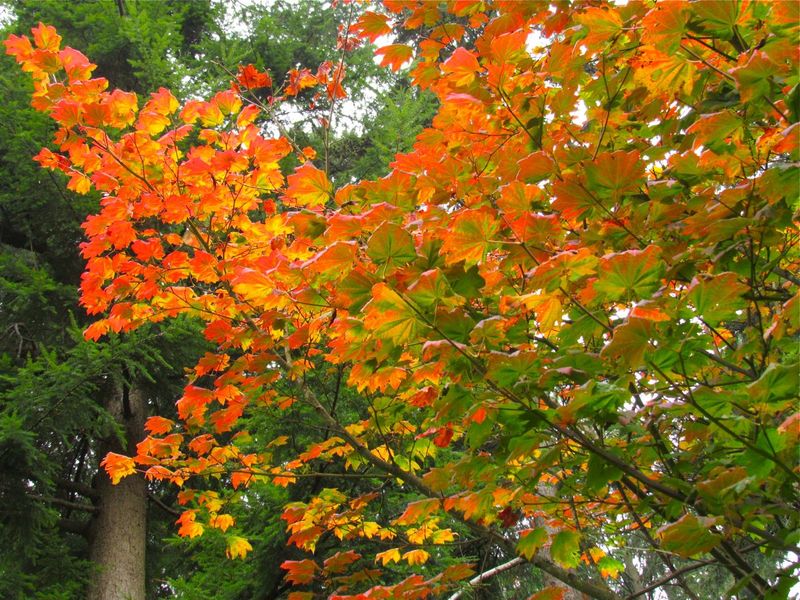
Some trees shout. Vine maple whispers, then quietly steals the show.
Acer circinatum grows with several graceful, twisting trunks, and in the Oregon woods it often leans toward whatever light it can find beneath towering Douglas firs.
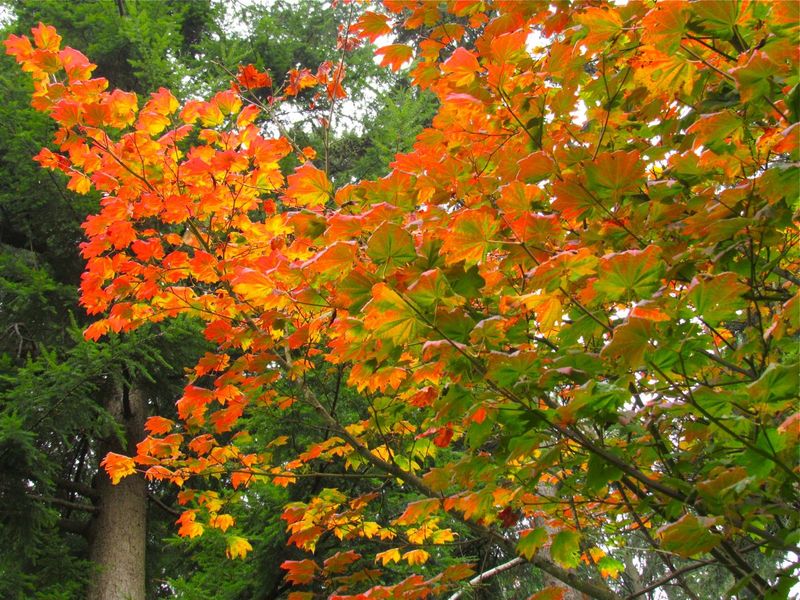
Its comfort zone includes moist, even wet soil, which makes it a smart pick for the damp, shady side of a house where fussier ornamental maples might struggle. Autumn brings a flare of orange, scarlet, and gold.
Once the leaves drop, the sculptural branching and green-tinged bark give winter something to look at through the rain.
Small by tree standards, it usually tops out around 15 to 25 feet, so it fits suburban yards in places like Beaverton or Corvallis. Its spring flowers are tiny but can attract native bees, and the winged seeds, those classic helicopters, may feed birds and squirrels.
Here’s a sweet bonus. Mossy vine maple branches often host licorice ferns and lichens in the wild, building a little ecosystem right on the bark.
If you’ve been feeling guilty about ripping out a lawn corner for just one more plant, vine maple is a very defensible choice.
7. Common Camas
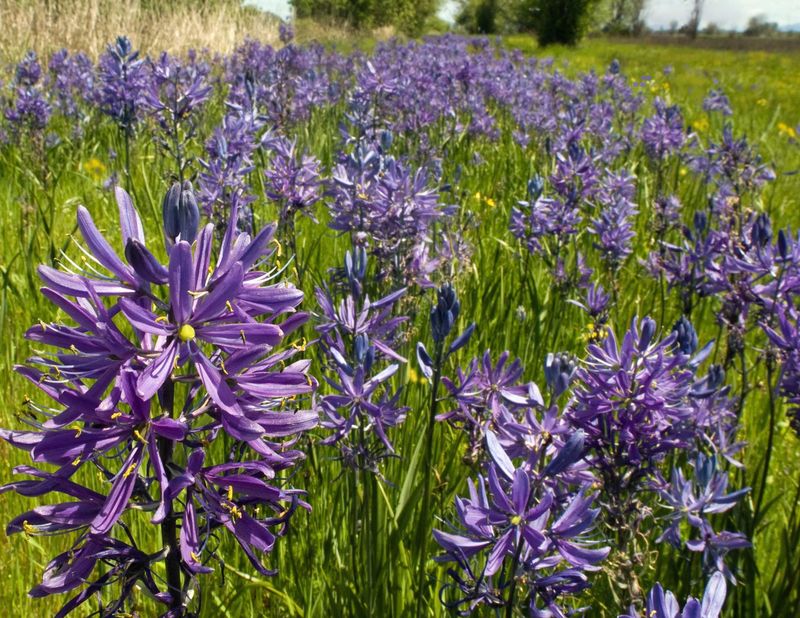
Long before anyone planted tulips in Oregon, meadows in the Willamette Valley turned blue every spring with camas. Indigenous peoples tended and harvested the bulbs for generations, and those wet prairies were among the richest food landscapes in the region.
Camassia quamash and its taller cousin Camassia leichtlinii are built for a very Oregon rhythm: soaked all winter, blooming in April and May, then drying out and going dormant by summer. That makes them ideal for low spots that flood in January and bake in August, a combo that kills plenty of other bulbs.
When the starry blue or white flower spikes open, they can be a major nectar and pollen source for native bees just waking up from winter. Plant a generous drift and you’re essentially rebuilding a small patch of lost prairie.
Fall is bulb season, so tuck them in around October or November, about four inches deep, and let the rains settle them. They look best in groups of a dozen or more, which is a perfect excuse to buy the big bag.
Leave the foliage until it yellows so the bulbs can recharge for next year.
8. Pacific Ninebark
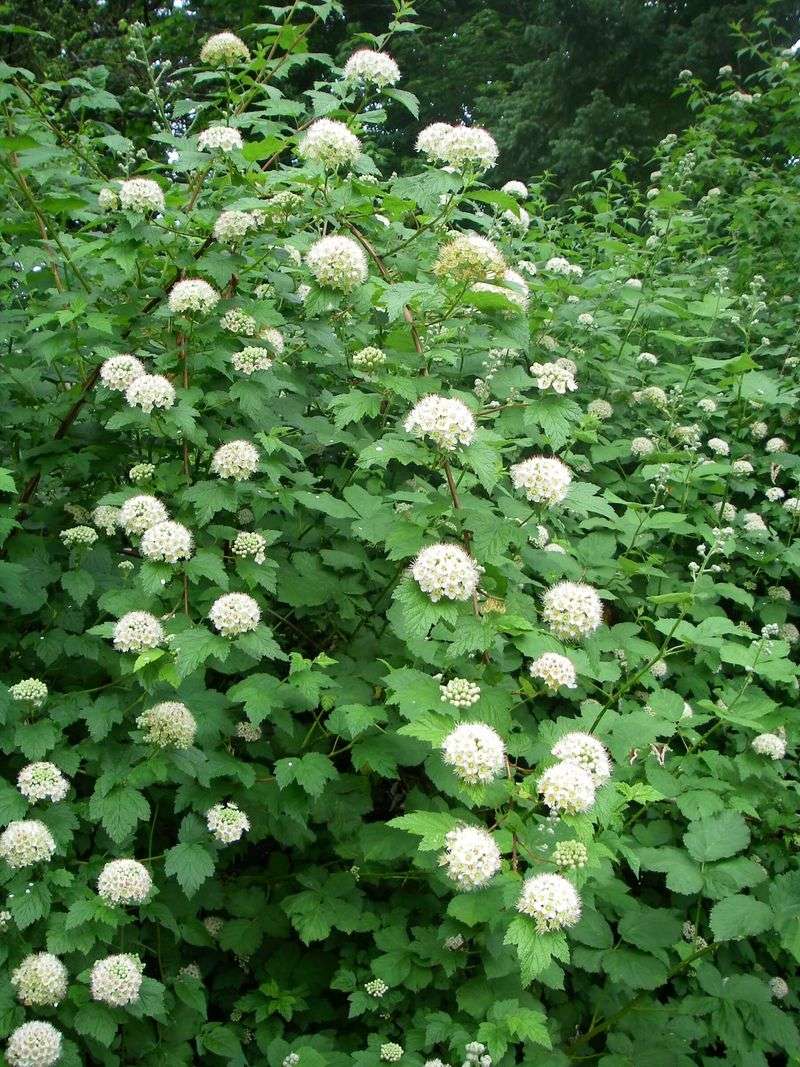
Flaky, peeling bark on a bare stem might not sound exciting, until you see it glowing copper in low winter sun after a storm. Pacific ninebark (Physocarpus capitatus) got its name from that shedding bark, with old folk wisdom claiming it had nine layers.
Along Oregon riverbanks and wetland edges, it grows into a dense, arching shrub that handles wet feet in winter with no complaints. That tolerance is why so many rain garden designers tuck it into the middle zone, where water collects after a downpour but drains within a day or two.
Early summer is its big moment. Round, snowball-like clusters of white flowers, sometimes with a faint blush, can pull in bumblebees, butterflies, and a busy crowd of beneficial insects.
Later, reddish seed capsules add texture into fall.
It grows quickly, often reaching eight feet or more, so give it room or plan for an occasional renewal prune in late winter. Birds appreciate the thick branching as cover from hawks and weather.
For gardeners juggling a soggy yard and a soft spot for bees, ninebark checks both boxes neatly.
9. Western Red Cedar
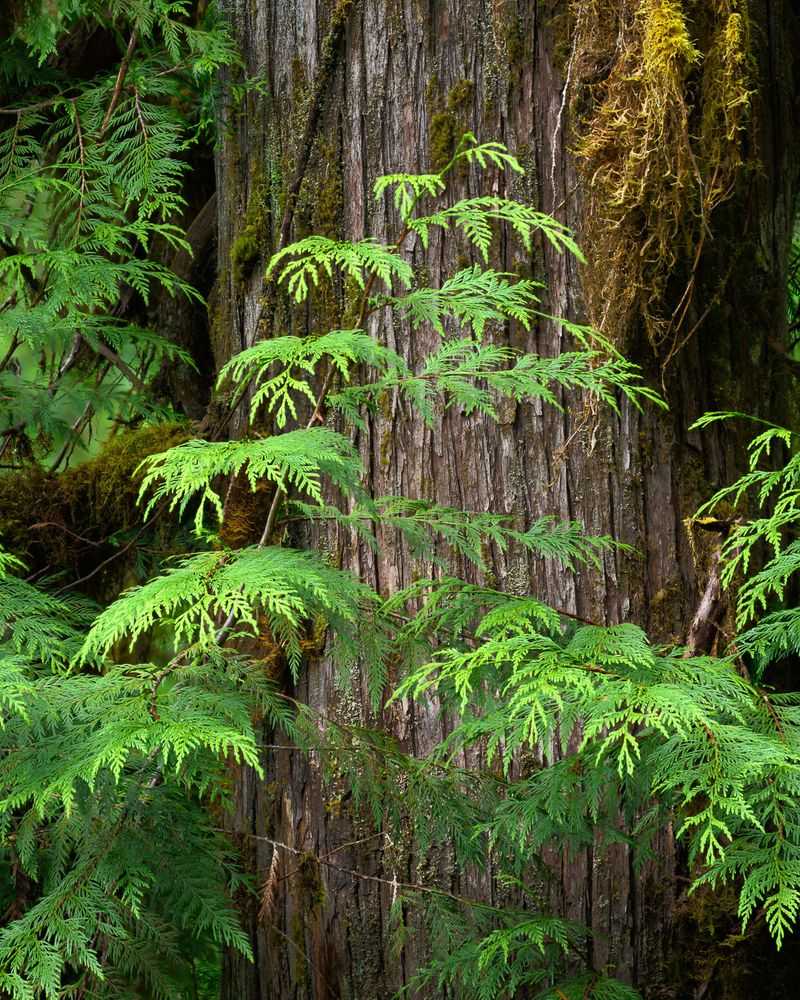
Stand under a big western red cedar during a downpour and you’ll notice something: it’s surprisingly dry down there. The drooping, lacy branches catch a remarkable amount of rain, and the air smells sweet and spicy, like the inside of a hope chest.
Thuja plicata is a true child of Pacific Northwest rain. It thrives in moist to wet soils where many conifers would struggle, and it’s often found in low, damp forests from the Coast Range to the Cascade foothills.
If your property has a spot that stays spongy most of the year, few evergreens will appreciate it more.
For wildlife, a cedar works like an apartment building. Chickadees, kinglets, and juncos can shelter in its dense foliage during cold snaps, and birds may nest in it come spring.
The honest caveat is size. Mature trees can soar past 100 feet, so only plant the straight species where it has space to grow for a century, while smaller cultivars like ‘Can-can’ or ‘Whipcord’ bring the same feathery look to tighter yards.
Water deeply through the first few dry summers, since young cedars dislike drought even though they love winter wet.