The Palm-Sized Spider Stringing Ten-Foot Webs Across Tennessee Yards
Porch lights across Tennessee are pulling in a visitor no field guide ever prepared you for. Strands wider than a car door are stretching between the posts you walk past every evening.
Homeowners near you have started snapping photos of silk thick enough to catch more than moths. Wildlife officials say the calls flooding their offices sound almost identical to yours.
Nothing about this creature’s build matches what you grew up expecting from a Tennessee backyard. Size alone doesn’t explain why its web reaches distances your porch light wasn’t built to cover.
Questions about where it came from are multiplying faster than anyone can answer them for you. You’ll want context before stepping onto your own steps after dark this week.
What’s stringing these webs through the state won’t let you look at your porch the same way again.
The Golden Silk Spider Behind Tennessee’s Largest September Webs
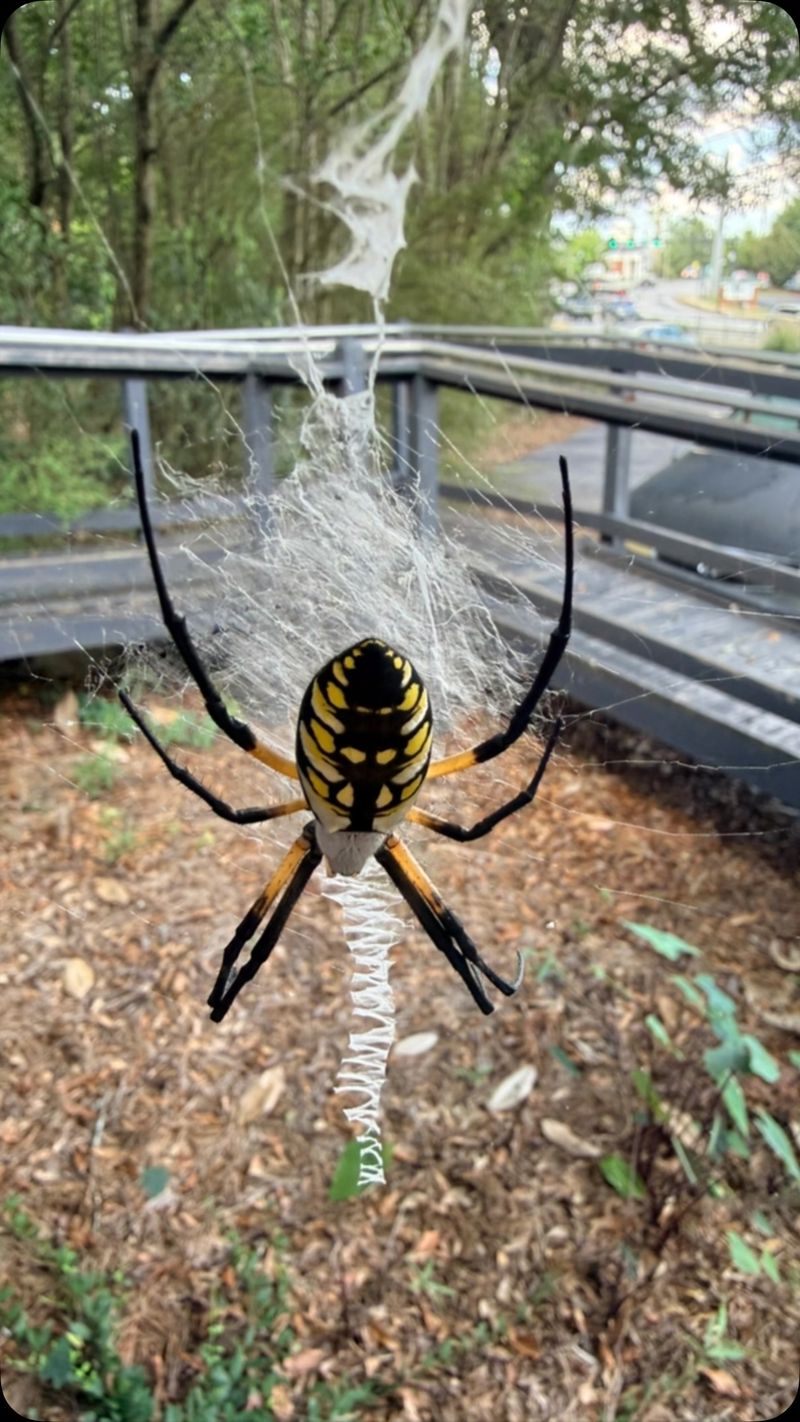
That massive golden web you spotted this morning did not appear by accident. The Joro spider, known scientifically as Trichonephila clavata, is the architect behind the biggest webs appearing across Tennessee this season.
Joro spiders arrived in the United States around 2013, likely hitchhiking on shipping containers from East Asia. Since then, they have spread steadily through Georgia, South Carolina, and now deep into Tennessee neighborhoods.
The web itself is a masterpiece of natural engineering. Joro silk has a golden tint that catches sunlight beautifully, making the web look almost decorative when morning light hits it at the right angle.
These webs are three-dimensional, not flat like a typical orb weaver’s. They have an outer barrier layer and a central orb, giving the whole structure depth and serious strength.
Female Joros are the web builders. They are significantly larger than males, with bodies that can reach nearly an inch long before you even count the leg span.
September is peak season for these webs because females are fully grown and actively feeding before they lay eggs. The cooler nights signal them to ramp up their hunting activity.
Spotting one of these webs is genuinely exciting, not terrifying. You are watching one of nature’s most skilled silk producers doing exactly what she was born to do.
Identifying A Joro By Its Markings And Leg Span
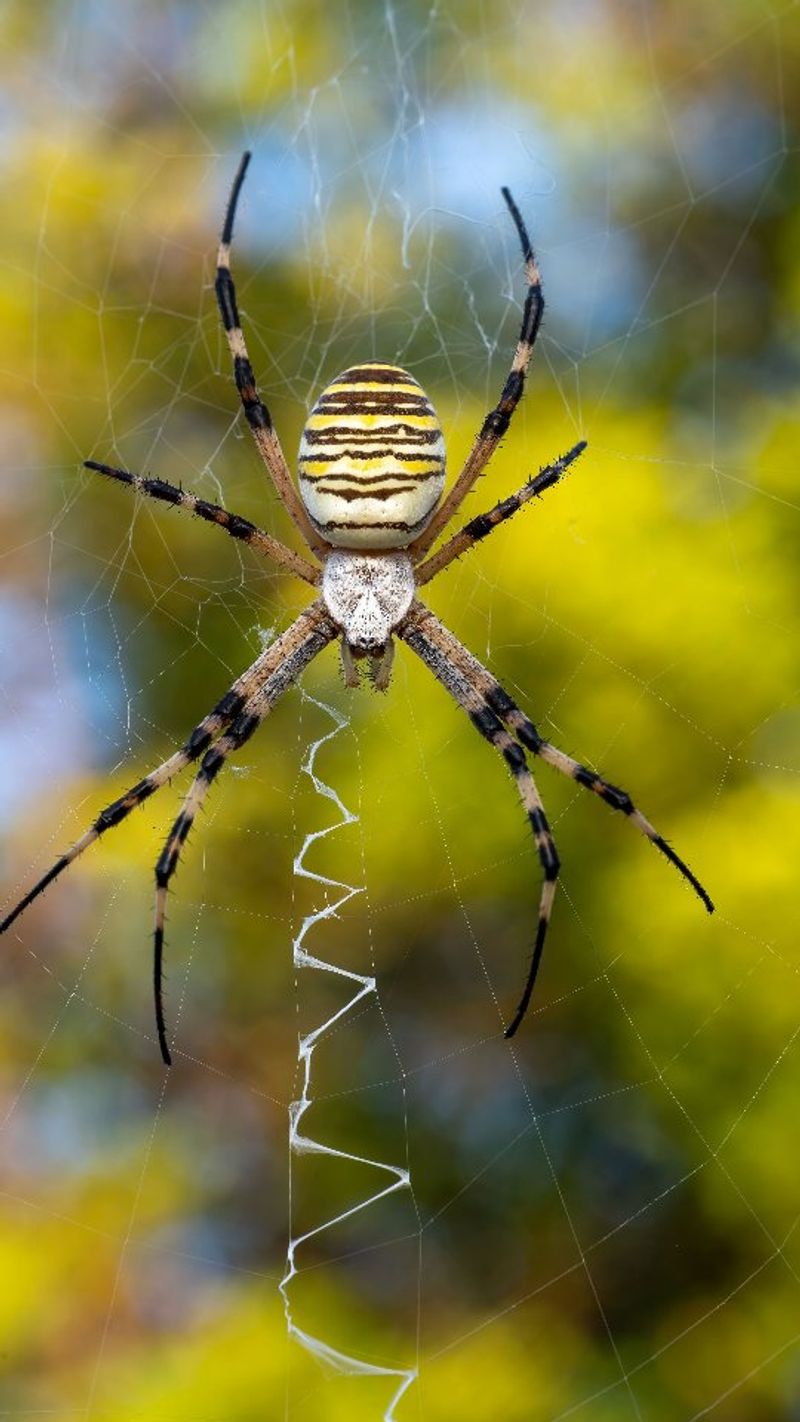
Spotting a Joro for the first time feels like finding a tiny piece of tropical wildlife in your own yard. Their colors are bold enough to make you stop mid-step and stare.
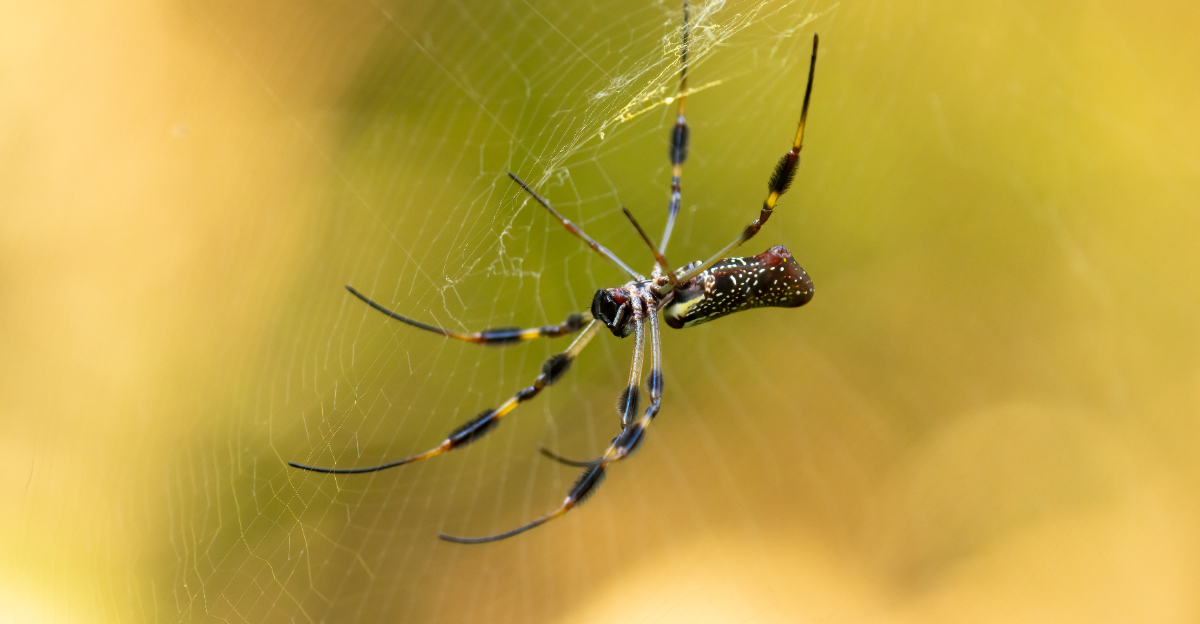
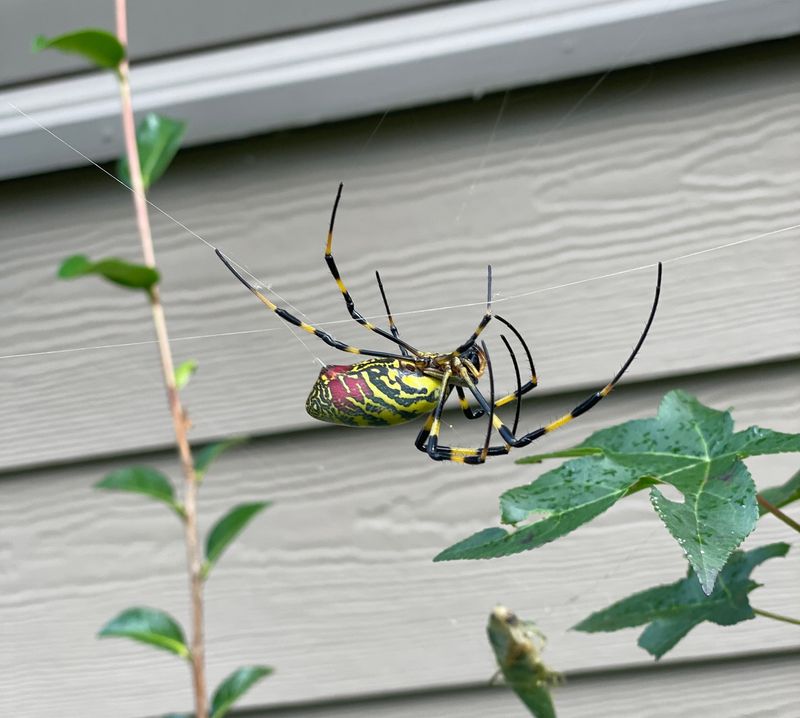
Female Joros have bright yellow and dark blue-black banding across their abdomens. That striped pattern is often compared to a tiny, jewel-toned tiger stretched across a web.
The legs are long, banded in yellow and black, and stretch out wide in all directions. A fully grown female can have a leg span reaching three to four inches, roughly the size of an adult palm.
Males look markedly different and far less dramatic. They are tiny, brownish, and easy to miss unless you look carefully at the edges of the web where they tend to wait.
Your Tennessee Garden Changes Every Week. Your Plan Should Too.
Gardening in Tennessee changes quickly throughout the season. Every Friday you’ll receive a simple weekly plan showing exactly what to plant, prune, fertilize, harvest, and protect so you never miss the right timing.
The underside of a female Joro is just as striking as her top side. She carries a bold red marking on her belly that stands out sharply against darker coloring.
Joros are often confused with the native golden silk orb weaver, which looks similar but has a longer, more tubular body shape. Comparing the abdomen shape helps you tell them apart quickly.
One reliable identification trick is the web itself. Joro webs have that distinctive three-dimensional structure with multiple barrier threads, while native orb weavers build flatter, more classic circular webs.
Once you learn these markings, you’re unlikely to mistake a Joro for anything else in your yard again.
The Reason These Webs Appear So Suddenly In Late Summer
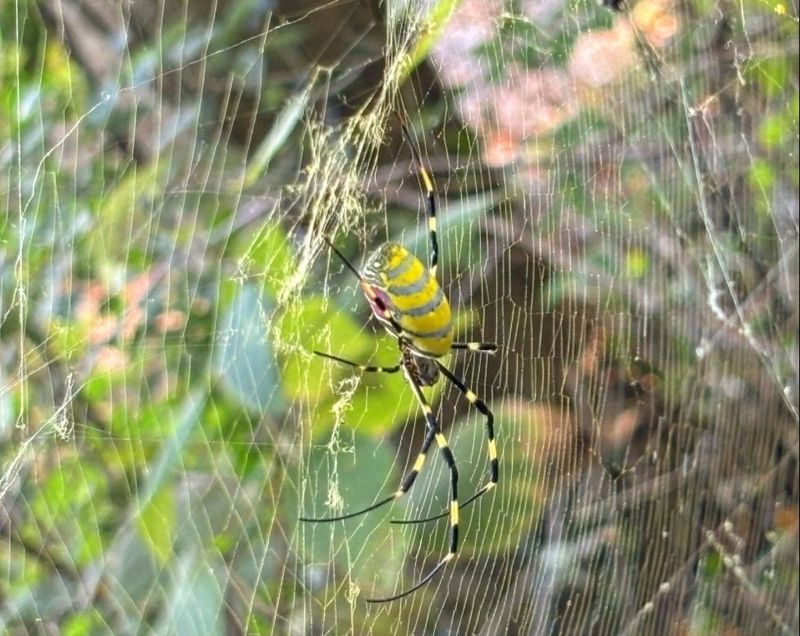
One week your yard is perfectly clear, and the next week a ten-foot web appears out of nowhere. That timing is not random at all.
Joro spiders hatch in spring as tiny spiderlings barely visible to the naked eye. They spend months growing quietly, tucked into corners and low vegetation where most people never notice them.
By late July and August, the females hit a growth surge. They are eating constantly, doubling in size rapidly as they prepare their bodies for egg production.
When September arrives, a fully grown female needs a serious web to catch enough food. She builds her largest, most elaborate structure right at this peak hunting phase.
The sudden appearance also happens because Joros move into more visible spots as they grow. A tiny spiderling hides easily, but a palm-sized adult needs open airspace to build an effective trap.
Cooler overnight temperatures in late August actually trigger more web-building activity. The spiders sense the seasonal shift and respond by ramping up their efforts before winter arrives.
The web itself can go up surprisingly fast. A Joro can spin a full-sized web structure in just one night, which explains why homeowners feel blindsided by morning.
Understanding this seasonal rhythm makes the whole experience less alarming. Your yard has not changed overnight. That spider has been growing quietly nearby for months, and now she is simply ready to be seen.
Safety Around Joro Spiders For People And Pets
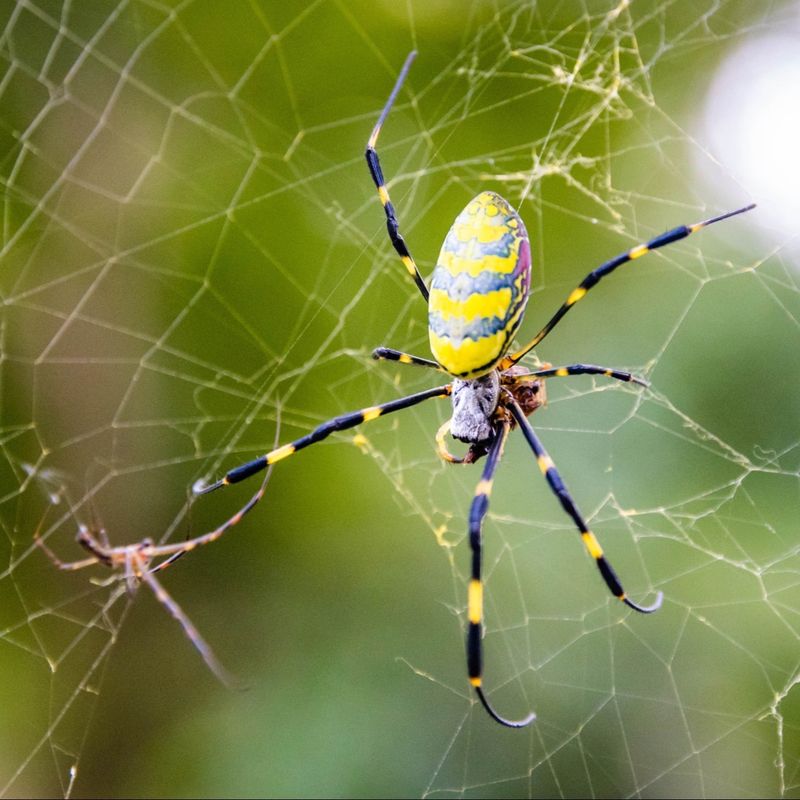
Finding a spider the size of your palm hanging at face level is enough to make anyone’s heart jump. Knowing the actual safety facts helps a lot more than panicking.
Joro spiders are not aggressive toward humans. They have fangs and venom, but they use those tools exclusively for catching insects, not for defending themselves against large animals.
When disturbed, a Joro’s first reaction is to drop from the web and hide. They retreat from threats rather than stand their ground, which makes accidental encounters much less dangerous.
Their fangs are small and not well-suited for piercing human skin. Even in the rare case where a bite occurs, the reaction is typically mild, similar to a minor bee sting.
Pets that sniff or paw at a web are unlikely to experience anything serious either. Dogs and cats are simply too large to trigger a meaningful defensive response from this spider.
The real concern with pets is not the spider itself but the web location. A low-hanging web near a dog’s usual path might mean your pet destroys it repeatedly, stressing the spider unnecessarily.
Children who are curious about the webs should be guided to look without touching. Watching a Joro from a few feet away is genuinely educational and generally safe for kids to observe.
This Tennessee spider is far more interested in catching moths than bothering your family.
Taking Down A Web Without Harming The Spider
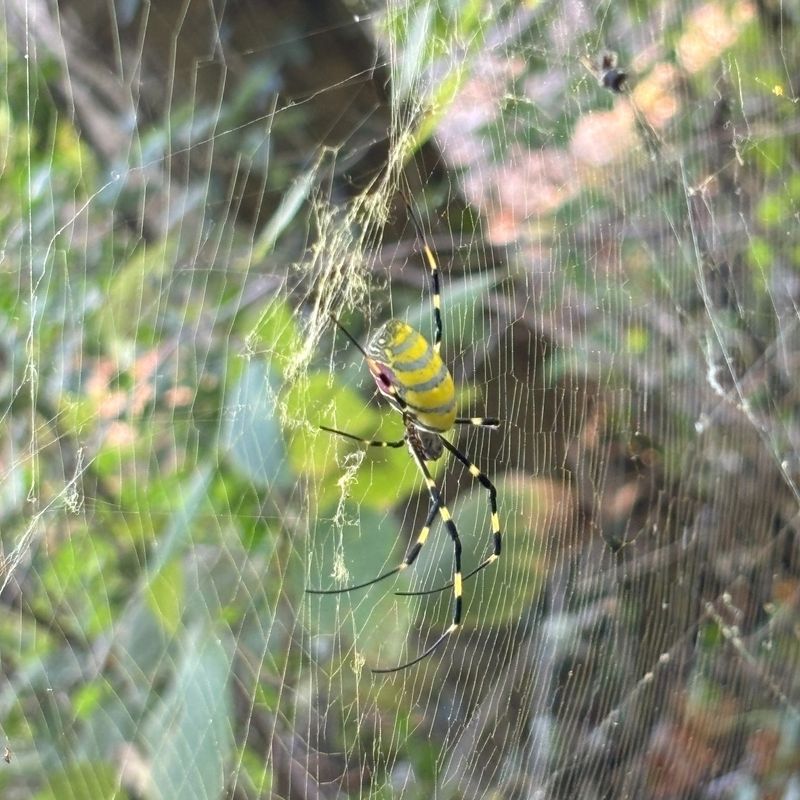
Sometimes a web shows up in the worst possible spot, right across your front walkway or blocking the path to your car. Moving it does not have to mean harming the spider.
The gentlest method involves a long stick or broom handle. Slowly bring the stick close to the web’s anchor threads and let the spider sense the vibration before you make contact.
Most Joros will climb onto the stick willingly or drop to the ground when they feel the web shifting. Give her a moment to react before you start moving anything.
Once the spider has relocated herself, you can remove the remaining silk. Joro silk is sticky and strong, so winding it around the stick in a slow circular motion works better than pulling.
Relocating the spider to a nearby shrub or tree gives her a good starting point for a new web. Choose a spot with good airflow and nearby vegetation where insects naturally travel.
Avoid doing this after dark if possible. Joros are most active at night, and a nighttime relocation attempt is more stressful for both you and the spider.
Avoid pesticides on a Joro web as a first option. These spiders eat enormous quantities of mosquitoes, gnats, and stink bugs, making them genuinely helpful neighbors in any yard.
Moving the web thoughtfully takes about five minutes and leaves everyone, including the spider, in a much better situation than a panicked swat ever would.
Reporting Sightings To Tennessee Researchers
Your backyard spider sighting is actually valuable scientific data right now. Researchers tracking this spider’s spread across Tennessee genuinely need your help.
Citizen science platforms like iNaturalist make reporting incredibly simple. You snap a photo, upload it to the app, add your location, and scientists receive a verified data point within minutes.
University of Georgia researchers, along with regional extension offices, are actively mapping Joro populations. Your single report could fill a geographic gap in their data and help predict where the spider moves next.
Good photos make your report far more useful. Try to capture the spider’s top side, underside, and the web structure if possible. Natural light works better than a flash for showing color accurately.
Include the date and exact location when submitting. Researchers use this timing data to track seasonal movement patterns and understand how quickly the population is expanding northward.
You do not need any scientific background to contribute meaningfully. The iNaturalist community includes expert volunteers who will confirm your identification, often within a few hours of your submission.
Some Tennessee extension offices also accept direct reports through their websites. A quick search for your county’s agricultural extension service will show you exactly where to send information.
Every sighting report adds one more piece to a larger puzzle that scientists are still solving. Your five-minute contribution today could shape how researchers manage this fascinating spider for years to come.