The Pennsylvania Native Tree That Looks Impressive Without Growing Too Large
Finding the right tree for a Pennsylvania yard involves a balancing act that most homeowners underestimate until they’re standing under a tree that has significantly outgrown the space they planted it in.
Trees that look perfectly manageable at the nursery can become genuinely imposing over time, creating issues with overhead lines, neighboring properties, roof clearance, and the kind of relentless leaf cleanup that turns a beautiful yard feature into an ongoing burden.
Scale matters. And native Pennsylvania trees that stay at an impressive but manageable size are rarer than most people realize. There’s one native tree in particular that hits this balance beautifully.
It grows large enough to make a genuine statement in the landscape, provides meaningful seasonal interest through flowers, foliage, fruit, and structure, and tops out at a size that works with most residential yards rather than gradually overwhelming them.
It also supports local wildlife generously, because it evolved alongside Pennsylvania’s native birds and insects in ways that ornamental trees from other regions simply cannot replicate.
Here’s the native Pennsylvania tree that looks impressive without ever becoming a problem.
The Impressive Tree That Doesn’t Grow Too Large
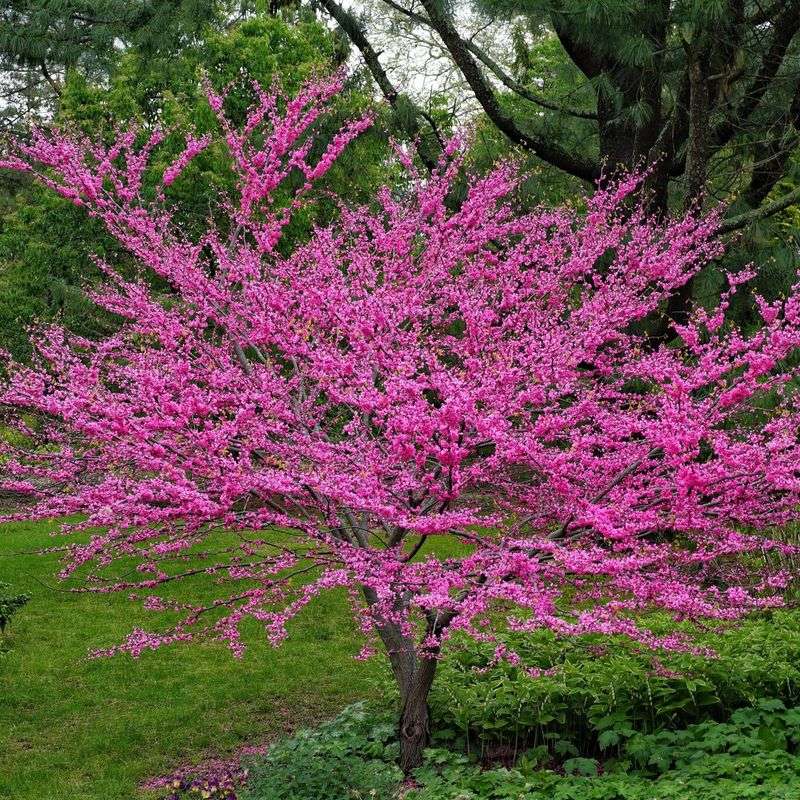
Not every great tree needs to be massive to make a statement. Eastern Redbud (Cercis canadensis) is proof of that.
Native to Pennsylvania and much of eastern North America, this small deciduous tree has been winning over homeowners and gardeners for generations.
It brings the kind of visual impact you would expect from a much larger ornamental tree, without demanding the space to match.
One of the most charming things about Eastern Redbud is its flexibility in form. It can grow with a single upright trunk, or it can develop into a graceful, multi-stemmed shape that looks almost sculptural in the winter landscape.
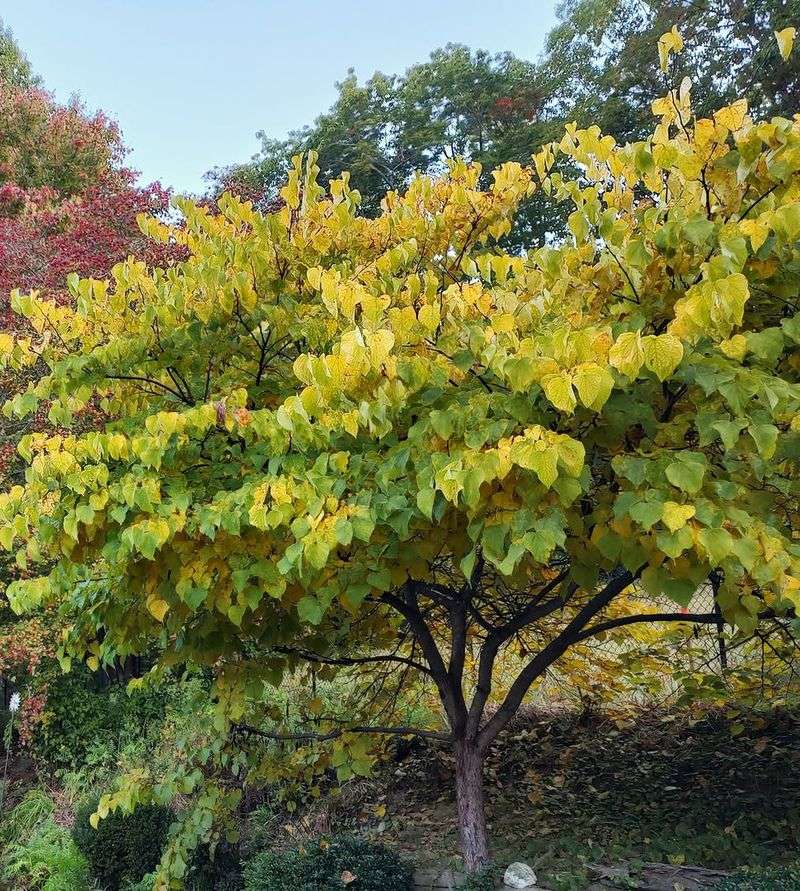
Both forms are attractive, and both work well in a variety of yard settings. The heart-shaped leaves are another standout feature. They emerge with a reddish tint in spring, mature to a rich green in summer, and turn yellow in fall.
That means the tree offers seasonal interest across most of the year. Its rounded canopy adds a soft, welcoming shape to any planting area.
Eastern Redbud is also manageable in size, which is a big deal for homeowners with limited space. It fits well near patios, along driveways, or as a focal point in a mixed border.
Unlike some ornamental trees that quickly outgrow their spot, Redbud stays in its lane. It is a tree that respects boundaries while still looking absolutely beautiful.
If you are looking for a native Pennsylvania tree that delivers big visuals in a compact package, Eastern Redbud belongs at the top of your list.
It Produces A Spectacular Early-Spring Display
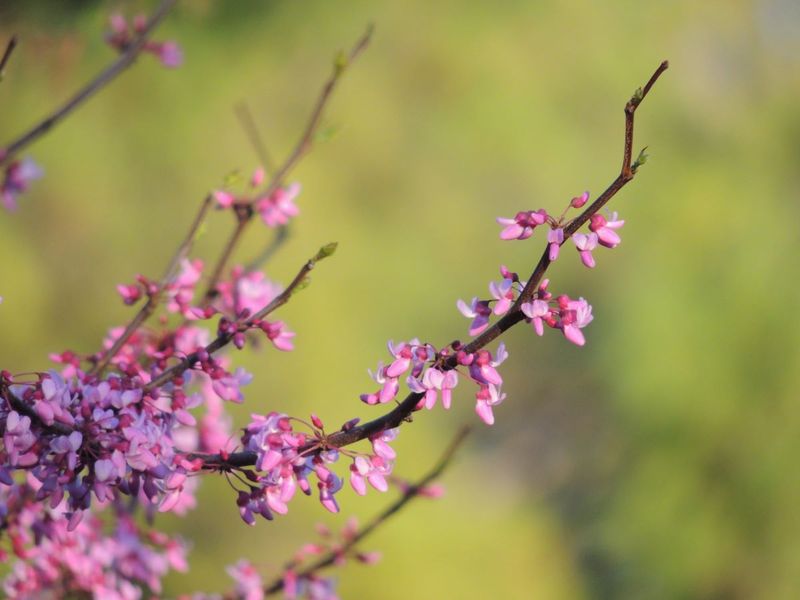
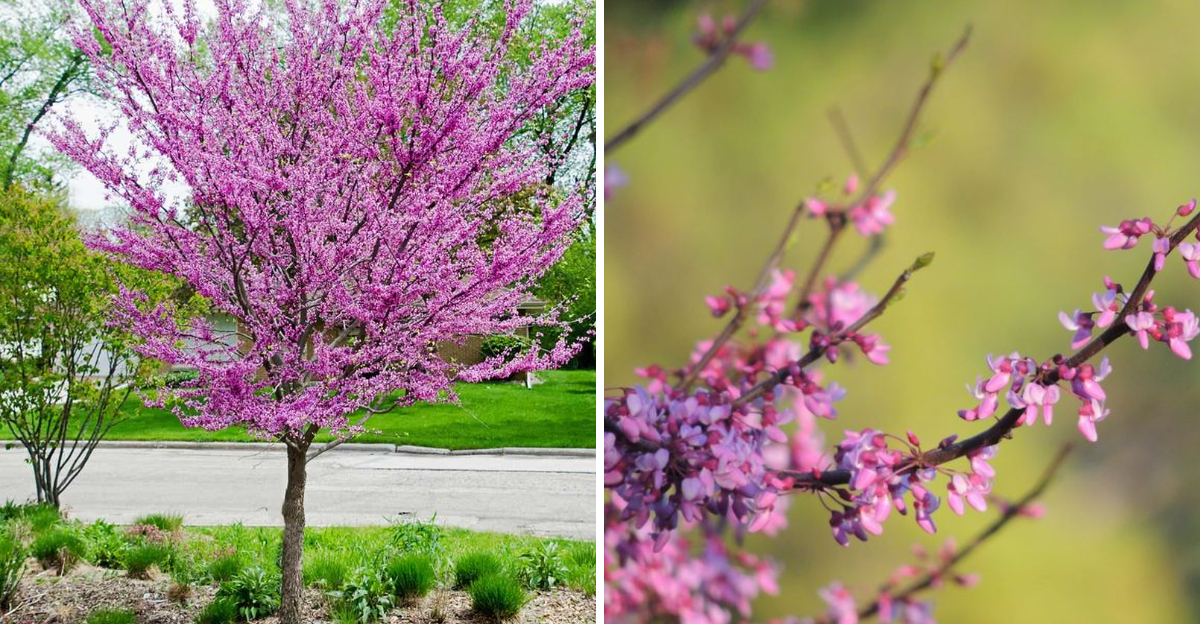
Imagine walking outside in late March or early April and seeing a tree absolutely covered in rosy-pink to purple flowers. That is exactly what Eastern Redbud delivers every single spring, and it never gets old.
The blooms appear before or just as the leaves begin to emerge, which means nothing distracts from the show. The entire tree becomes a cloud of color at a time when most of Pennsylvania is still waking up from winter.
Your Pennsylvania Garden Changes Every Week. Your Plan Should Too.
Gardening in Pennsylvania changes quickly throughout the season. Every Friday you’ll receive a simple weekly plan showing exactly what to plant, prune, fertilize, harvest, and protect so you never miss the right timing.
What makes this display even more remarkable is where the flowers grow. Instead of appearing only at the tips of branches like many flowering trees, Redbud flowers cluster directly along the bare branches and even sprout from the main trunk.
This unusual growth pattern, called cauliflory, gives the tree a full, almost otherworldly appearance. Every inch of the tree seems to be in bloom at once.
The color itself is hard to describe without seeing it in person. It sits somewhere between deep pink and soft purple, depending on the light and the individual tree.
Some cultivars lean more toward magenta, while others offer a softer lavender-pink. Either way, the effect is striking against the gray and brown tones of early spring.
Because Eastern Redbud blooms so early, it often stands out even more against a landscape that has not yet greened up. Neighbors will notice.
Passersby will slow down. The spring bloom season only lasts a few weeks, but it leaves a strong impression that makes people look forward to it year after year. Few trees create this kind of seasonal anticipation.
It Stays Small Enough For Residential Yards
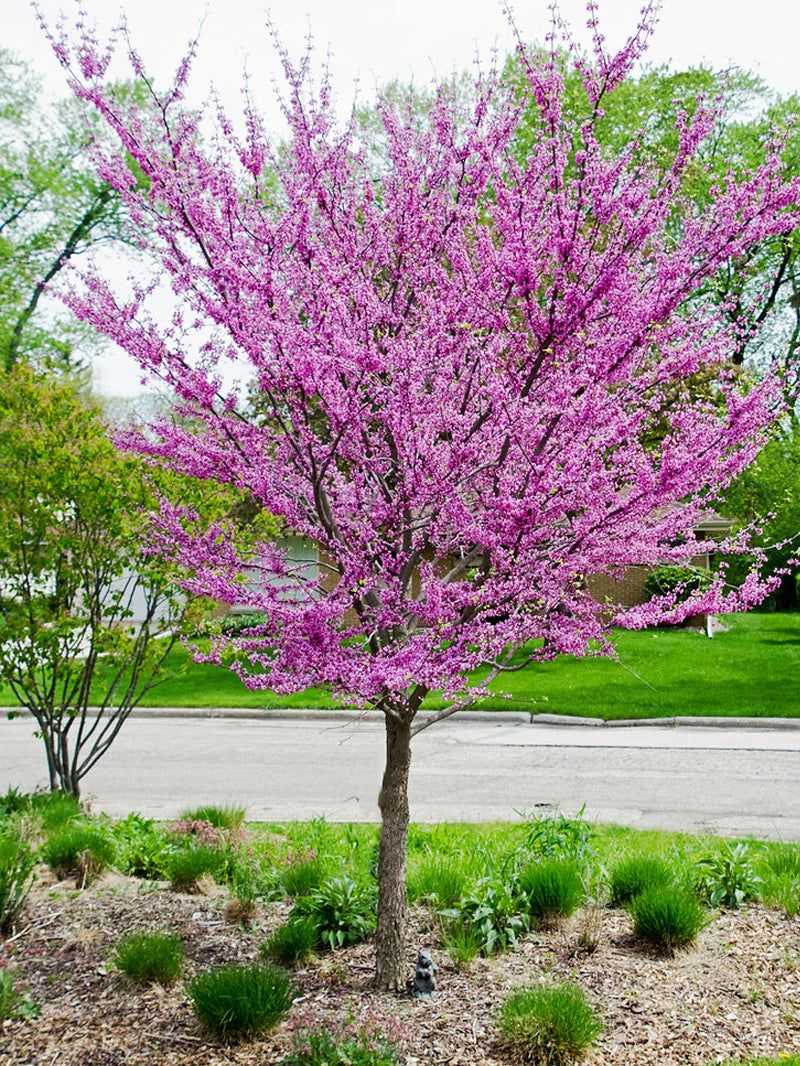
Size matters when you are choosing a tree for a residential yard. Too big, and it crowds your home, shades out your garden, or eventually causes problems with roots and power lines.
Eastern Redbud sidesteps all of those concerns. At maturity, it typically reaches somewhere between 20 and 30 feet tall, which puts it comfortably in the small-to-medium tree category.
That is a very manageable height for most suburban properties. The canopy spread is worth paying attention to as well. Eastern Redbud can spread roughly 20 to 35 feet wide, so while it is not a towering tree, it does appreciate some horizontal space.
Planting it with enough room to spread naturally allows the canopy to develop its signature rounded shape without crowding nearby structures or plantings. A little planning at the start goes a long way.
Versatility is one of the biggest selling points of this tree. Use it as a standalone specimen in the middle of a lawn, tuck it near a patio for light shade and seasonal color, or plant it along the edge of a woodland garden.
It works in formal landscapes and relaxed naturalistic settings alike. That flexibility makes it one of the most useful small trees available to Pennsylvania homeowners.
Another bonus is that Eastern Redbud grows at a moderate pace, adding roughly 7 to 10 feet in height over the first five to six years.
That means you will not be waiting decades to enjoy it, but you also will not be overwhelmed by rapid growth. It finds its mature size and settles in, making it a low-stress choice for almost any yard.
The Flowers Support Early Pollinators
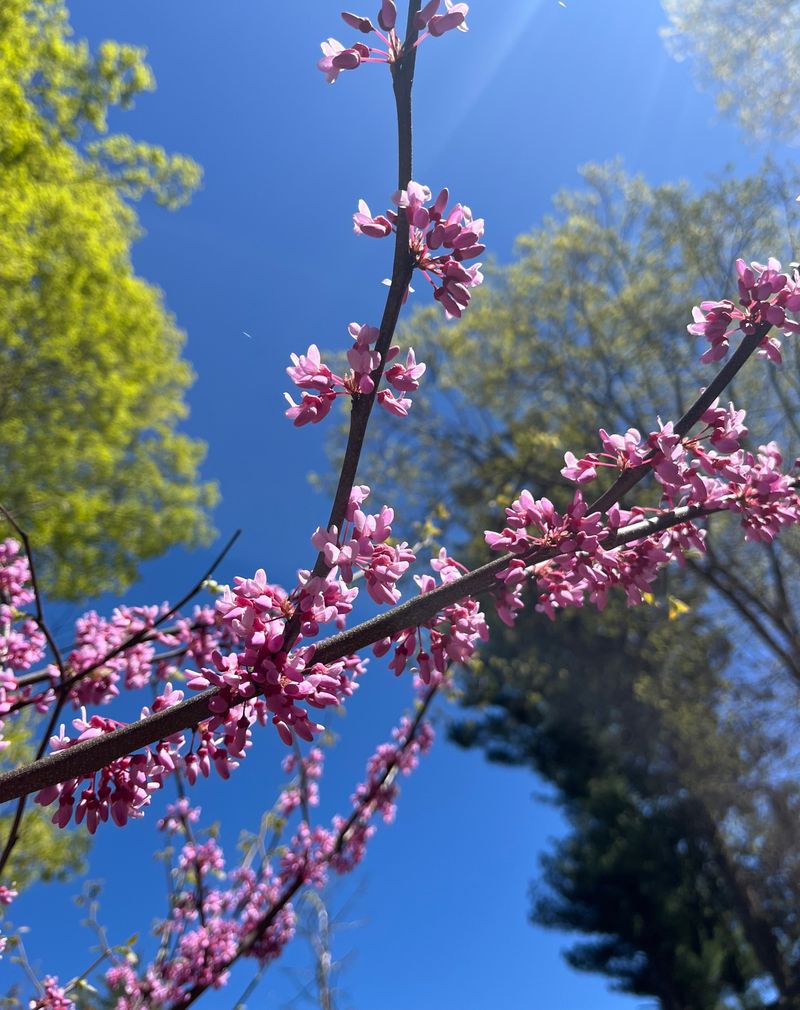
There is something deeply satisfying about planting a tree that gives back to nature. Eastern Redbud does exactly that, and it does it at one of the most critical times of year.
When the flowers open in early spring, most other trees and shrubs are still bare. That makes Redbud one of the few reliable food sources available to pollinators that are just waking up after a long winter. The timing could not be more helpful.
Bumblebees are among the most frequent visitors, and you can often hear them buzzing through the branches on a warm spring day. Mason bees, mining bees, and sweat bees also show up to collect both nectar and pollen.
These early-season pollinators need food to build up their energy and start their colonies, and Redbud provides it generously. Watching the activity on a blooming Redbud is one of the quiet joys of spring gardening.
Beyond bees, Eastern Redbud also serves as a host plant for several butterfly and moth caterpillars. Henry’s Elfin butterfly, for example, relies on Redbud as one of its primary larval hosts.
Supporting caterpillars matters because they are a critical food source for nesting birds, especially during the spring breeding season when parent birds need high-protein food for their chicks.
Planting a Redbud is essentially plugging your yard into a local food web. One tree creates a ripple effect that supports bees, butterflies, moths, and birds all at once.
For anyone interested in creating a wildlife-friendly yard in Pennsylvania, Eastern Redbud is one of the smartest and most beautiful investments you can make in your landscape.
Choose A Protected, Well-Drained Location
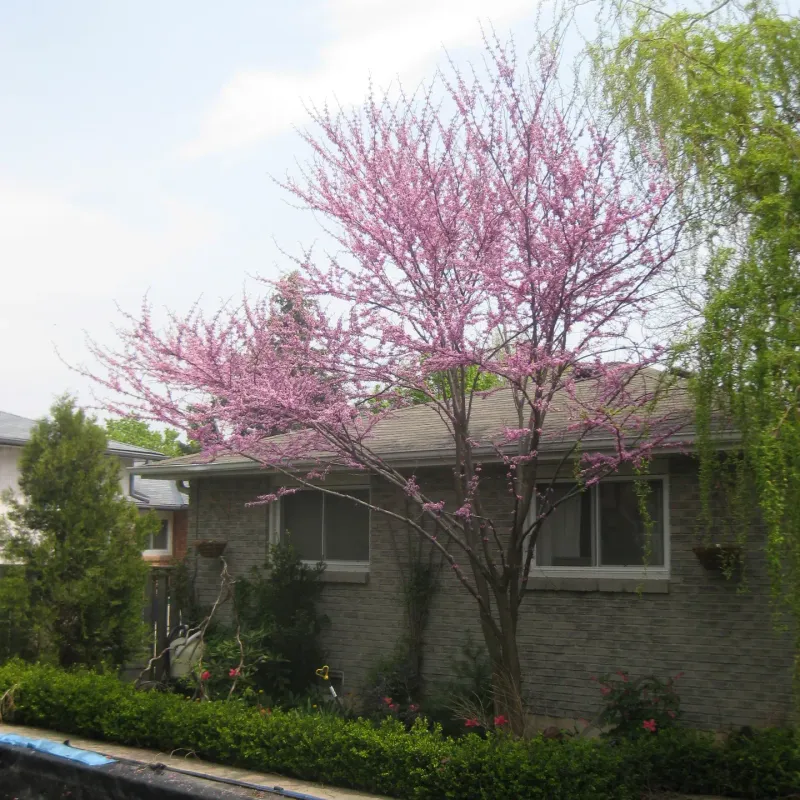
Getting the planting location right makes a huge difference with Eastern Redbud. This tree is adaptable, but it performs best when given the right conditions from the start.
Full sun is ideal for maximum flowering and a dense, healthy canopy. However, partial shade works well too, especially in areas where summer afternoons get intensely hot.
A spot that gets morning sun and some afternoon shade can actually help the tree stay comfortable during Pennsylvania’s warmest months.
Soil quality is another key factor. Eastern Redbud does best in evenly moist, well-drained soil.
It can tolerate a range of soil pH levels, handling both mildly acidic and slightly alkaline conditions without too much trouble. What it does not like is sitting in waterlogged or poorly drained soil for extended periods.
Soggy roots can lead to root rot and weaken the tree over time, so avoid low-lying spots where water tends to collect after rain.
One thing many gardeners overlook is the benefit of a slightly sheltered planting spot. Eastern Redbud is generally cold-hardy in Pennsylvania, but young trees can be sensitive to late-spring frosts that damage early blooms.
Planting near a building, fence, or larger tree can provide a small amount of protection without significantly reducing light. That little bit of shelter can mean the difference between a full bloom season and a disappointing one.
Before you dig, take a few minutes to observe how your yard drains after heavy rain, where the sun hits throughout the day, and whether any frost pockets exist.
A thoughtful site selection takes only minutes but pays off for decades. Eastern Redbud rewards good planning with reliable beauty year after year.
Plant It Carefully Because Redbuds Dislike Root Disturbance
Ask any experienced gardener about Eastern Redbud, and they will likely tell you the same thing: pick your spot wisely, because moving this tree later is not a good idea.
Redbuds are well-known for being sensitive to root disturbance, and transplanting an established tree rarely ends well.
The roots are relatively shallow and wide-spreading, and they do not appreciate being cut or disrupted. That makes choosing the permanent location before you ever dig the first hole absolutely essential.
Once you have chosen the right spot, planting technique matters. Dig a hole that is two to three times wider than the root ball but no deeper than the root ball itself.
Setting the tree too deep is a common mistake that can cause long-term problems. Place the tree so the root flare, the spot where the trunk widens at the base, sits at or just slightly above the soil surface.
Backfill with the original soil and water thoroughly to settle everything in place. After planting, apply a 2 to 3 inch layer of organic mulch over the root zone, extending it out to the drip line if possible.
Mulch helps retain soil moisture, moderates soil temperature, and reduces competition from grass and weeds.
Just make sure to keep the mulch pulled back a few inches from the trunk itself. Mulch piled against the trunk can trap moisture and encourage decay over time.
Water consistently during the first two growing seasons while the root system establishes itself. Once established, Eastern Redbud becomes reasonably drought-tolerant.
Avoid compacting the soil around the tree by keeping foot traffic and heavy equipment away from the root zone. A little extra care in the early years sets this tree up for a long and healthy life.