The Purple Florida Berry That Looks Edible In Fall But Isn’t
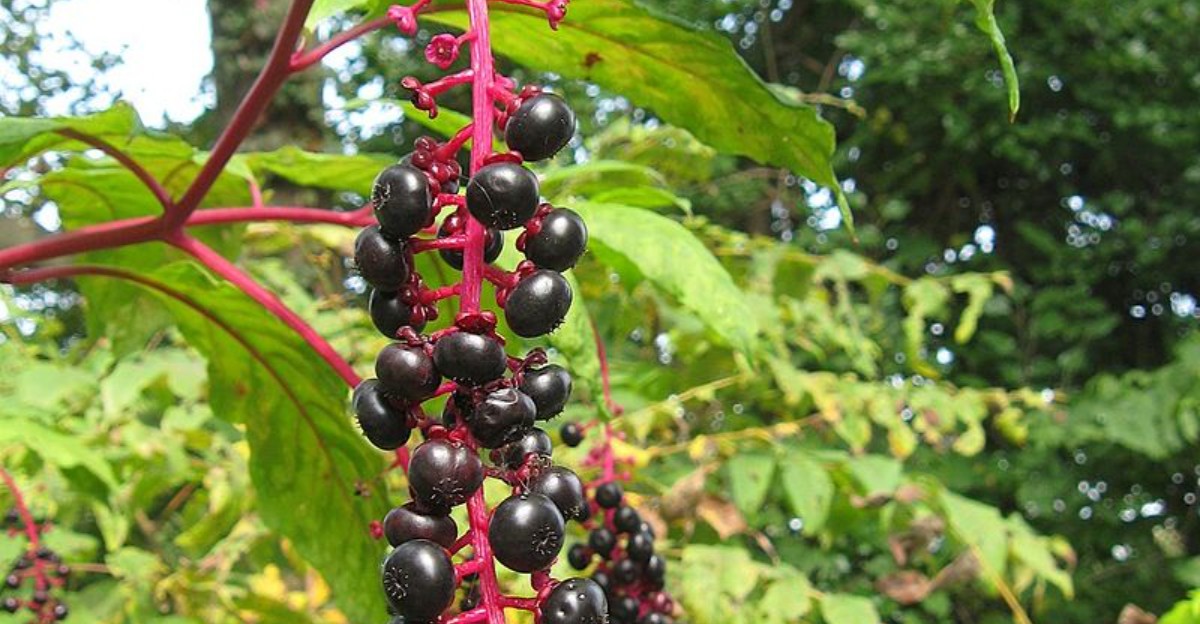
Grape-like clusters sag from bright pink stems along a Florida fence line, and every instinct says free snack. Instinct gets it wrong this time.
Those stems give the first clue. Magenta stalks stand out against the green, almost too cheerful to be trouble.
The berries match, glossy and dark, packed tight on long branches that bow under their own weight. Kids spot them first.
Pets sniff them next.
Birds treat the fruit like candy and fly off fine. You don’t get that same pass.
The plant has a long reputation, and it goes well beyond the berries.
Learn that look before your next walk along the fence. A pretty color has fooled plenty of grown adults.
1. That Purple Berry Is Common Pokeweed
Meet the culprit behind all those tempting purple clusters. Its name is Common Pokeweed, and scientists call it Phytolacca americana.
Folks have given it plenty of nicknames over the years. You might hear pokeberry, inkberry, poke salad, or American nightshade.
The inkberry name has a fun story behind it. Long ago, people crushed the berries to make purple ink, and some letters from the Civil War era were said to be written with it.
So why does it fool so many people? The berries look a lot like grapes or blueberries, and they hang in neat little bunches that seem made for picking.
Kids are often the most curious, since the fruit is shiny and squishy. Pets may sniff around it too, especially when berries drop to the ground.
The good news is that this plant is easy to learn. Once you know a few clues, like the bright stem and long drooping clusters, you will spot it from across the yard.
A smart first step is a family walk around your property. Point out any pokeweed you find and explain that it is a look-but-do-not-taste plant.
Knowing the name also helps if you ever need to call for help. Poison control experts can give better advice when you can say exactly what plant someone touched or ate.
2. It’s A Florida Native That Pops Up Uninvited
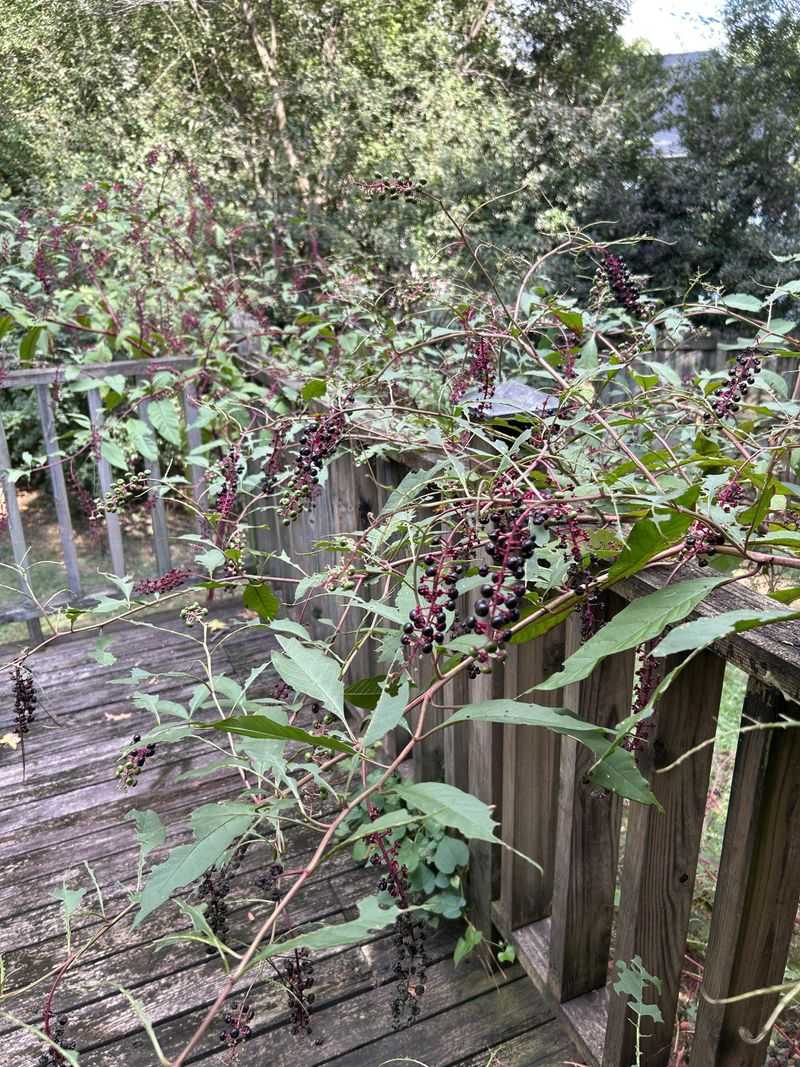
Some guests arrive without an invitation, and pokeweed is one of them. One week your garden edge looks tidy, and the next a leafy giant is standing there like it owns the place.
Here is the surprising part. Pokeweed is not an invader from far away, since it is native to North America, including Florida.
You can find it across much of the eastern United States. It grows in fields, along roads, beside barns, and in sunny gaps at the edge of the woods.
Pokeweed loves disturbed soil. Places where dirt has been dug up, like new garden beds or construction spots, give its seeds the perfect chance to sprout.
Fencerows are another favorite hangout. Birds perch on fences, drop seeds, and before long a row of pokeweed shows up right underneath.
Pastures and empty lots also make cozy homes. The plant handles poor soil and plenty of sun without much fuss.
Your Florida Garden Changes Every Week. Your Plan Should Too.
Gardening in Florida changes quickly throughout the season. Every Friday you’ll receive a simple weekly plan showing exactly what to plant, prune, fertilize, harvest, and protect so you never miss the right timing.
If you garden in Florida, keep an eye on freshly turned beds in spring and summer. Young plants are much easier to pull when they are small, before the root gets big.
Being native does have perks for wildlife. Still, if kids or pets play nearby, you may want to keep it out of those busy areas and let it grow somewhere wilder.
3. Green Berries Ripen To Deep Purple By Fall
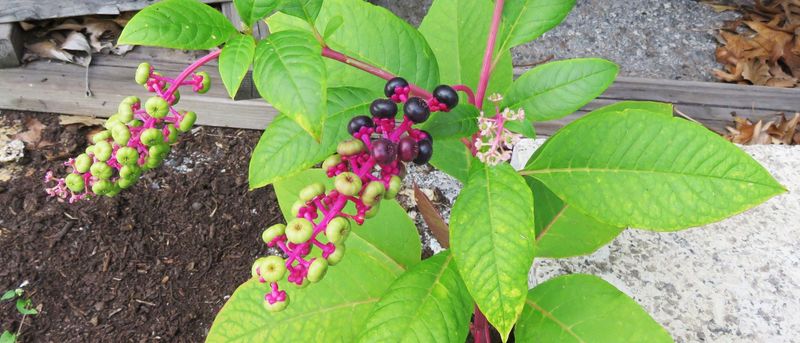
Watching pokeweed fruit change color is like watching a slow magic trick. The show starts in summer and wraps up as fall settles in.
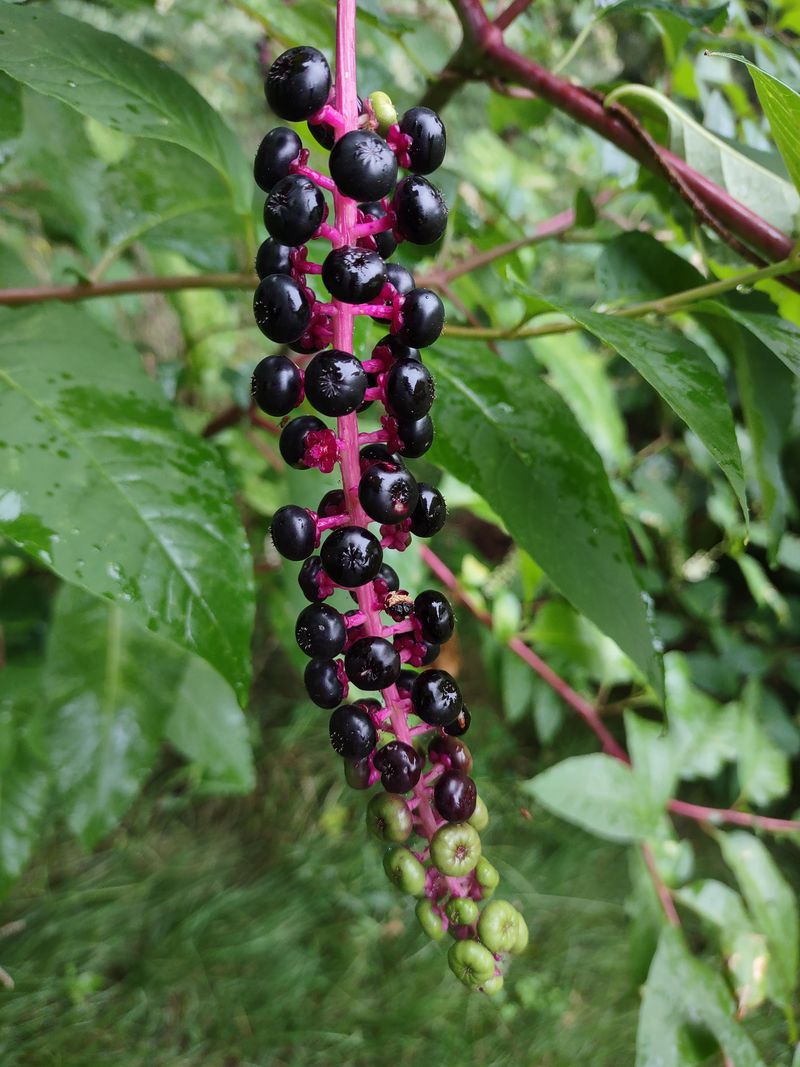
At first, the berries are small and green. They sit along long stalks that look a bit like a bottle brush.
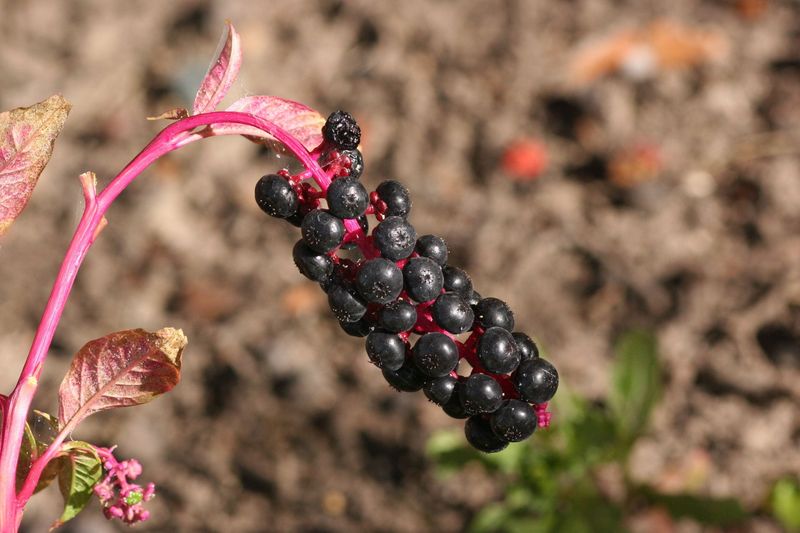
As weeks pass, they swell and may take on a pale or reddish tint. Then they darken into a glossy purple that looks almost black in the shade.
One neat detail is that a single cluster often shows several stages at once. You might see green berries at the tip and ripe purple ones closer to the base.
The clusters droop down as the fruit gets heavier. Each berry is slightly flattened, a little like a tiny pumpkin, with grooves around the sides.
That ripe purple stage is when the plant looks the most like food. It is also when kids are most likely to pop one in their mouth.
Here is a helpful tip. Squeeze a ripe berry with gloves on, and you will see bright magenta juice that stains skin and clothes easily.
Teach children that real blueberries grow on bushes, not in long hanging chains. That one simple rule can stop a lot of curious snacking before it starts.
4. Look For A Thick, Red Stem
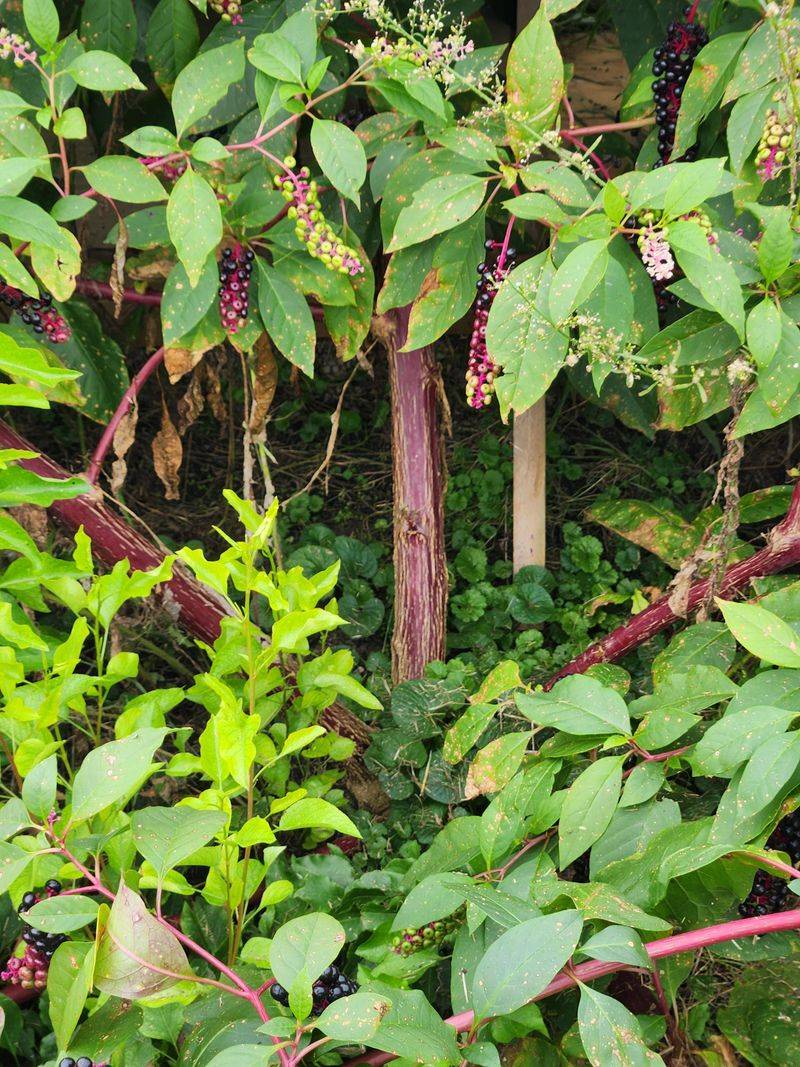
If pokeweed had a signature outfit, it would be its stem. That bold reddish-purple color is like a neon sign saying, here I am.
The stems are thick and smooth, with no hairs or thorns. In young plants they may be green, but they usually blush red or purple as the season goes on.
Older plants can get surprisingly big. Some reach up to 10 feet tall, with a main stem that looks almost like a small tree trunk.
The leaves help too. They are large, oval, and smooth, sometimes close to a foot long, and they sit in an alternating pattern along the stem.
Put those clues together, and identification gets easy. Red stem, big smooth leaves, and dangling berry clusters add up to pokeweed.
This is handy because the stem shows up before the berries do. You can spot the plant in late spring and remove it early if you choose.
Wear gloves whenever you handle the stems. The juice can bother sensitive skin, and you do not want it getting into small cuts or scrapes.
A fun family challenge is a stem-spotting game on walks. Whoever finds the first bright red pokeweed stalk gets to pick the next trail.
5. It’s Toxic To People, Pets And Livestock
Pretty does not mean safe, and pokeweed proves it. Every part of this plant carries compounds that can make people and animals sick.
That includes the roots, stems, leaves, and berries. Humans, dogs, cats, horses, cattle, and pigs can all be affected.
Common symptoms often show up as tummy trouble. A person might feel a burning mouth, stomach cramps, vomiting, or diarrhea after eating part of the plant.
Larger amounts can lead to more serious problems. That is why quick action matters if someone swallows any part of it.
If you think a child ate pokeweed, call Poison Control at 1-800-222-1222 right away. For pets, reach out to your veterinarian or a pet poison helpline.
Try to note how much was eaten and which part. Snapping a quick photo of the plant can help the experts give you better advice.
Livestock owners should check pastures and fencerows often. Most animals avoid it when good food is around, but hungry grazers may nibble it.
Some people in the South once cooked young leaves as poke salad, boiling them several times. Experts today warn against trying this at home, since a small mistake can cause a lot of trouble.
6. The Root Is The Most Toxic Part
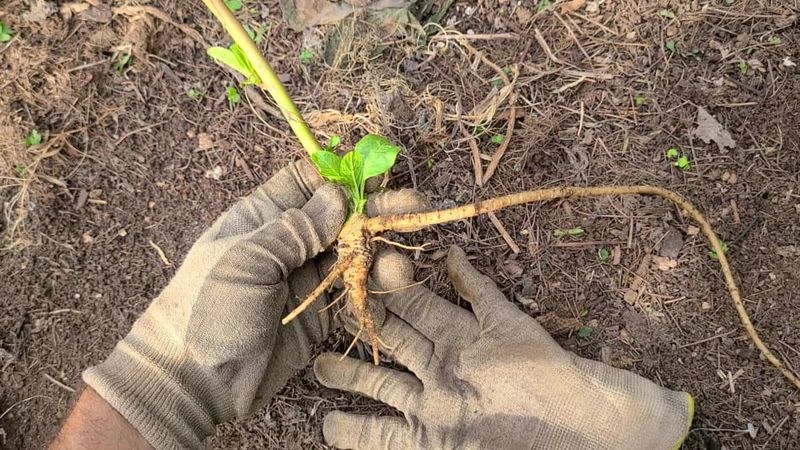
Hidden underground, out of sight, sits the plant’s most dangerous piece. The root holds the highest amount of toxins in the whole pokeweed.
That might surprise you, since the berries get all the attention. They are actually the least toxic part, though they still are not safe to eat, especially for small children.
The root can be mistaken for other things. Over the years, people have confused it with horseradish, parsnips, or even ginseng, which caused some unhappy trips to the doctor.
Here is a simple way to stay safe. Never guess when it comes to wild roots, and only eat ones you bought from a trusted store or grew yourself.
When you dig pokeweed out of your yard, treat the root with care. Wear gloves, keep pets nearby on a leash, and do not leave root pieces lying around.
Bag the root and toss it in the trash. Avoid adding it to compost, since curious animals may dig it up.
Wash your hands and tools after the job is done. A quick scrub keeps any sap from traveling into your kitchen.
Think of the root as the plant’s secret vault. It stores energy and toxins, so respect it from a distance.
7. Birds Eat The Berries Without Harm
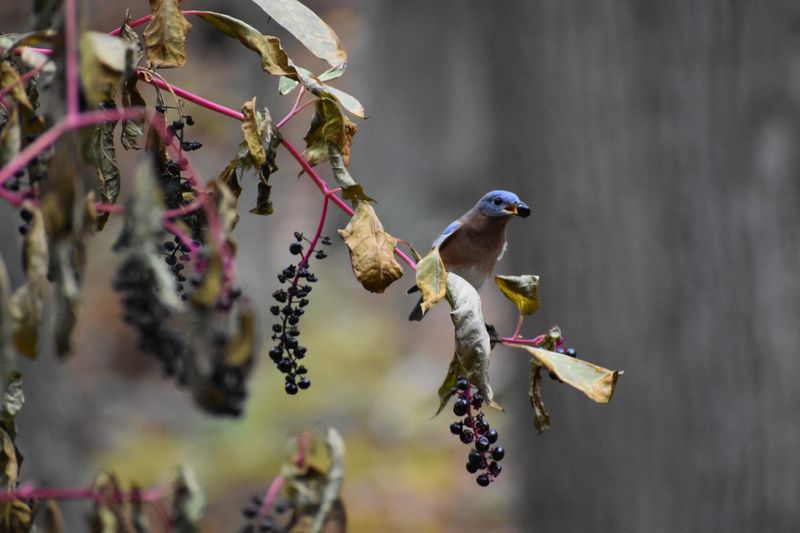
Ever notice purple splotches on your car or patio in fall? Blame the birds, and thank pokeweed for the colorful mess.
Birds can gobble these berries with no trouble at all. Their bodies handle the toxins in a way ours cannot.
Part of the reason is how fast food moves through a bird. The berries pass through quickly, and the hard seeds come out mostly untouched.
That quick trip is great news for the plant. Birds carry the seeds far away and drop them in new spots, which is how pokeweed spreads so widely.
You can think of birds as tiny flying gardeners. They plant pokeweed along fences, under trees, and anywhere they like to rest.
This also explains why pokeweed shows up in places you did not plant it. A bird likely stopped by and left a little gift behind.
For kids, this is a key lesson. Just because an animal eats something does not mean it is safe for people or pets.
If you enjoy birdwatching, a pokeweed patch can be an exciting spot in autumn. Grab some binoculars, stay a few steps back, and watch the berry buffet in action.
8. Cardinals, Mockingbirds And Cedar Waxwings Feast On Them
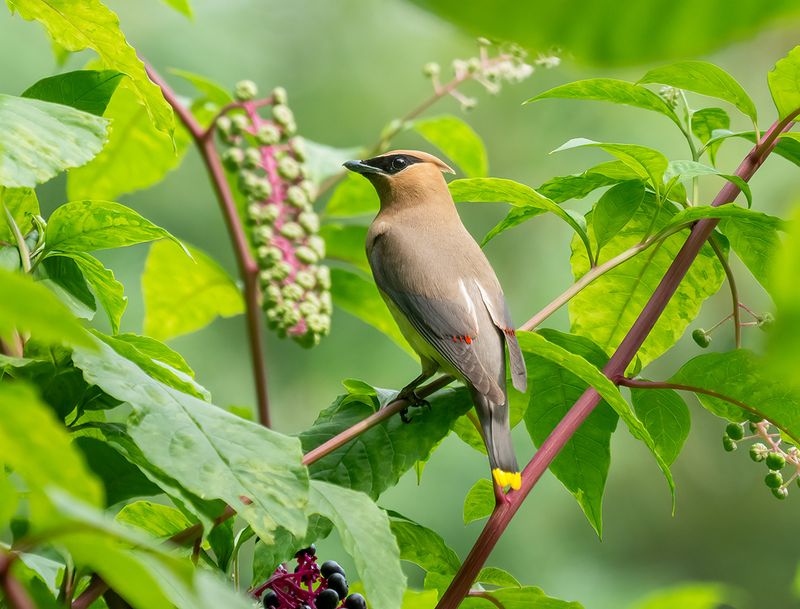
A bright red cardinal gripping a purple berry is a picture worth waiting for. Pokeweed draws a whole crowd of feathered visitors once the fruit ripens.
Northern Cardinals are regulars at this snack bar. Northern Mockingbirds, Gray Catbirds, and Brown Thrashers also love to stop by.
Cedar Waxwings may steal the show. These sleek birds travel in flocks and can strip a plant of berries in a single visit.
Blue Jays, American Robins, and Eastern Bluebirds join in too. Mourning Doves and many warblers also enjoy the fall feast.
The timing helps migrating birds. Many travel through Florida in autumn and need quick energy for their long trips.
If you have room, a patch of pokeweed in a back corner can turn your yard into a bird hotspot. Just pick a spot away from play areas and pet paths.
Bring a notebook and track which birds you see each day. You may be surprised how many species show up for this purple treat.
Fun fact: Cedar Waxwings sometimes pass berries beak to beak down a branch. Watching that friendly sharing is a highlight for many backyard birders.
9. A Big Taproot Keeps It Coming Back
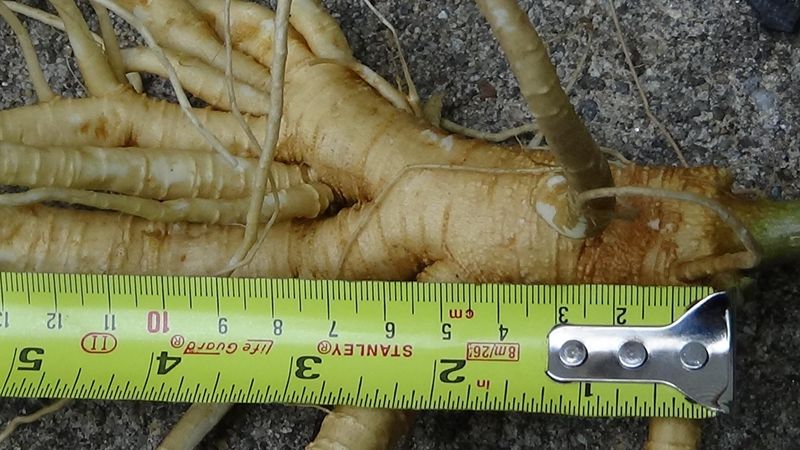
You cut pokeweed down to the ground, and next spring it waves hello again. The secret behind this comeback is a giant root hiding below.
Pokeweed grows from a thick, fleshy taproot. It can be several inches wide and more than a foot long.
That root stores plenty of energy. Even when the top growth fades in winter, the root waits patiently and sends up fresh shoots when the weather warms.
Mowing or chopping the stems slows it down but rarely ends the story. To truly remove it, you need to get the root out.
Young plants are the easiest to pull. Grab them after a good rain, when the soil is soft, and tug firmly from the base.
For older plants, use a shovel or garden fork. Dig around the root and lift out as much as you can, since leftover chunks may sprout again.
Remember to wear gloves and long sleeves. Bag the plant and the root, then place them in the trash.
Removing berry clusters before they ripen also helps a lot. Fewer berries mean fewer seeds for birds to spread around your yard next year.