You Don’t Need A Garden Bed To Grow Kitchen Herbs On A Sunny Arizona Patio
A bare concrete patio in Phoenix or Tucson can turn into a fragrant little kitchen garden with nothing more than a few good pots. Many tough herbs actually prefer the dry heat, fast drainage, and bright light that desert patios offer.
Growing them in containers also lets you chase shade in July, save water, and keep caliche soil out of the picture. Here are eight herbs that earn their spot, plus a few that may even make your patio less inviting to mosquitoes and scorpions.
1. Rosemary
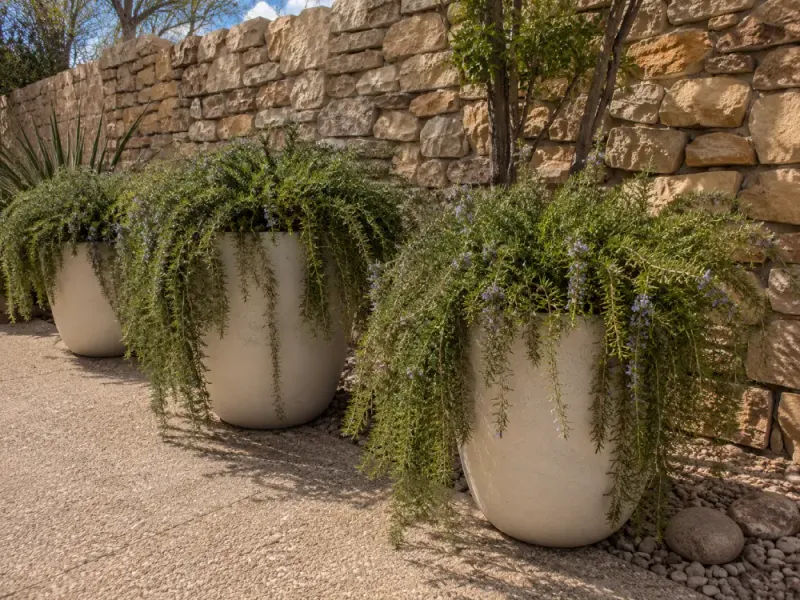
Some plants sulk in July, but rosemary seems to stand up straighter. Native to rocky Mediterranean hillsides, it handles 110-degree afternoons and even the reflected heat bouncing off a block wall or flagstone patio.
Pick a pot at least 14 inches wide with a big drainage hole, and fill it with a gritty, fast-draining cactus or potting mix blended with perlite. Rosemary hates wet feet far more than it hates heat, so let the top couple of inches dry before watering.
In summer that may mean every two or three days; in winter, once a week or less.
Bonus points come from its resinous scent. Rosemary oils are known to be unappealing to mosquitoes and flies, so a pot near your seating area may help make evenings a bit more pleasant.
Brushing the branches as you walk by releases even more aroma.
Fall, especially October, is the best time to bring one home. Planting then gives roots months of mild weather to settle in before summer returns.
Snip sprigs often for roasted potatoes, grilled chicken, or focaccia, since regular harvesting keeps the plant bushy instead of woody. Bees adore its pale blue winter flowers too.
2. Lavender
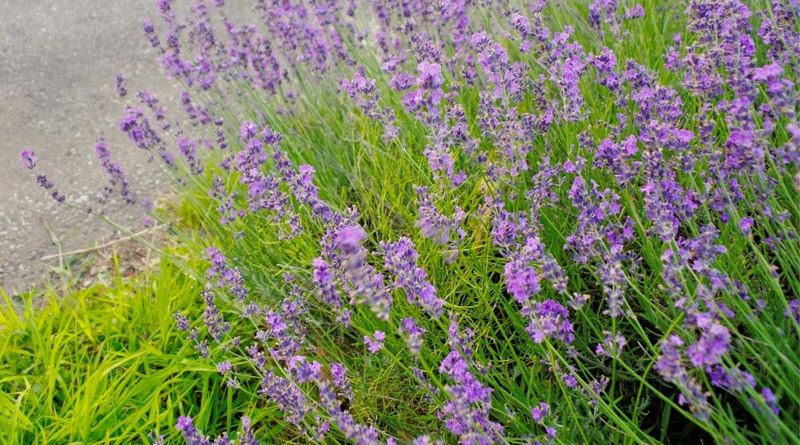
Picture purple wands swaying by your back door while bees hum over them. Lavender brings that scene to a desert patio, and it does it with very little water once settled.
Spanish and French lavender usually cope with low-desert summers better than English types, which tend to struggle in our humid monsoon stretch. Use a light-colored pot so roots stay cooler, and mix in plenty of perlite or small gravel.
Water deeply, then wait until the soil is nearly dry.
Many Arizona homeowners tuck lavender near doorways for another reason. Its strong fragrance is thought to be less inviting to scorpions, and some people scatter dried flowers along window sills.
Results vary, so treat it as one helpful layer alongside sealing cracks and clearing clutter, not a guaranteed shield. The scent may also help nudge mosquitoes away.
Native bees and other pollinators visit the blooms eagerly, adding a little habitat value to even a tiny balcony. Plant in fall, give it full morning sun, and accept that a little afternoon shade in July is welcome.
Snip flower stems for sachets, lemonade, or shortbread, and lightly trim after blooming to keep the mound tidy.
3. Greek Oregano
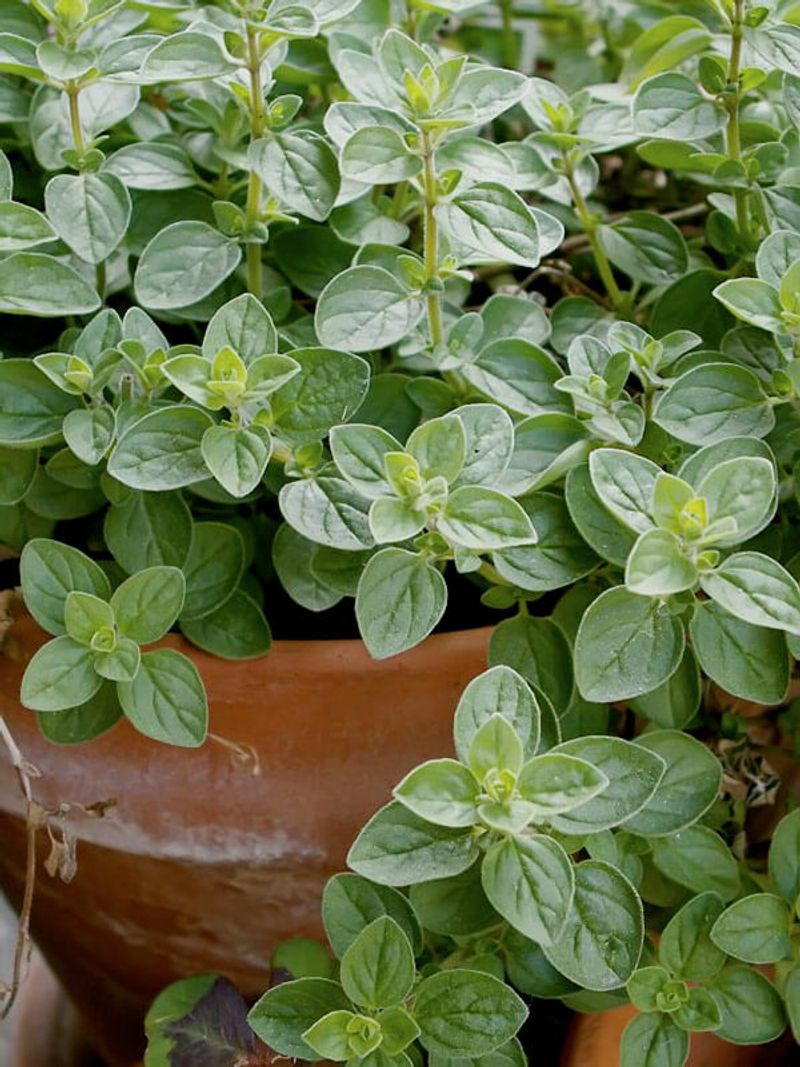
Gardeners joke that the hardest part of growing oregano is getting it to stop. In a low-desert container, that eager spirit is exactly what you want, because the pot keeps it from wandering while the heat keeps its flavor punchy.
Your Arizona Garden Changes Every Week. Your Plan Should Too.
Gardening in Arizona changes quickly throughout the season. Every Friday you’ll receive a simple weekly plan showing exactly what to plant, prune, fertilize, harvest, and protect so you never miss the right timing.
Greek oregano tends to have the boldest taste, and hot, dry conditions concentrate its oils. A wide, shallow bowl works nicely since the plant spreads sideways more than it reaches deep.
Fill it with a free-draining mix and add a thin layer of pea gravel on top to hold moisture and cool the soil.
During peak summer, a spot with morning sun and afternoon shade helps the leaves stay green instead of crispy. Water when the top inch feels dry.
Come fall, trim it back by about a third and it will flush with tender new growth through winter.
Tiny white or pink flowers appear in late spring and draw small native bees and hoverflies, which are helpful garden allies. Leave some blooms for them, then cut stems to dry for pizza night.
Dried oregano from your own patio tastes noticeably brighter than the dusty jar in the pantry.
4. Thyme
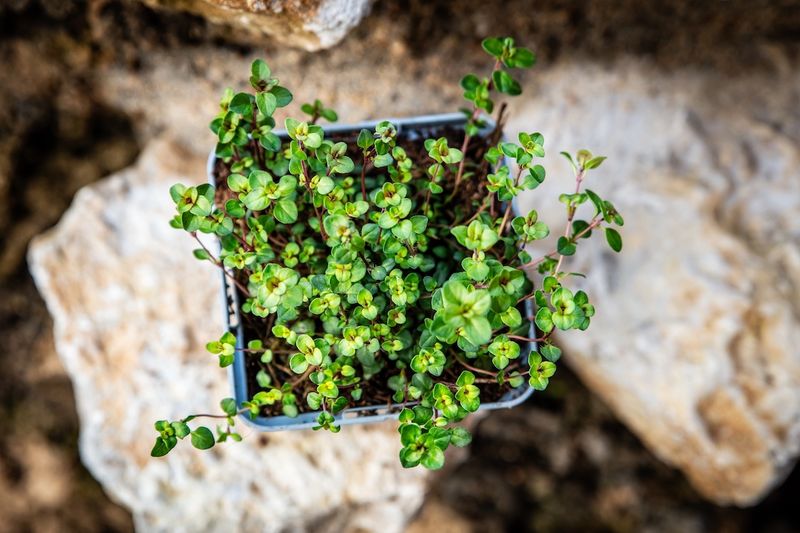
Small but surprisingly tough, thyme is the herb for that blazing corner nobody else wants. It hugs the soil, spreads into a soft mat, and shrugs off reflected heat from pavers and walls.
A strawberry pot or a low, wide container suits its creeping style. Choose a gritty mix, because soggy soil is the main thing that will make thyme fade.
Water deeply, then let it dry out, especially during the mild winter months when growth slows.
Lemon thyme is a fun variety to try. It smells like citrus when you brush it and adds a bright twist to fish, roasted veggies, and iced tea.
Common English thyme stays classic for soups and stews.
Here is a quirky bit of history: ancient Greeks burned thyme as incense, and medieval knights were sometimes given sprigs as a symbol of courage. On your patio it is more humble, but no less brave.
Its tiny flowers bring in bees during spring.
Plant in October for the best start. By the time summer arrives, roots will be settled, and the plant will need only light trims to stay compact and productive.
5. Garden Sage
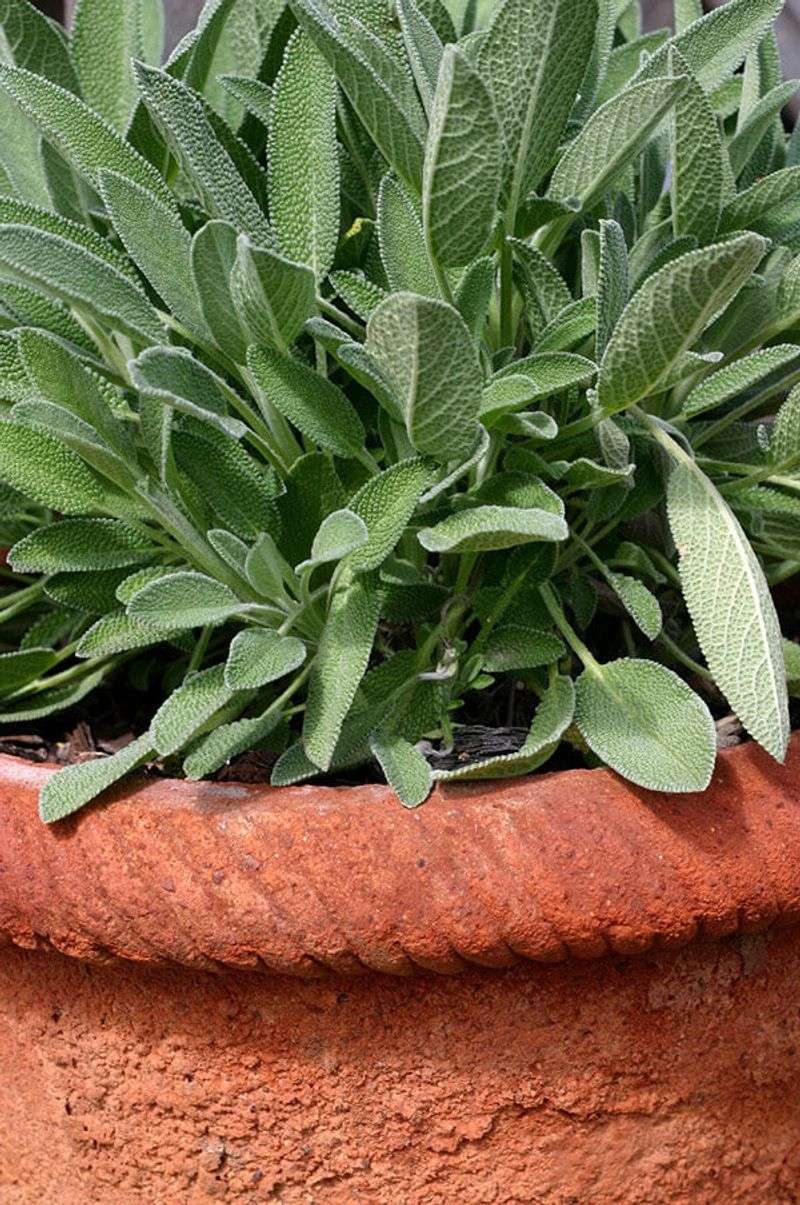
Silvery, fuzzy leaves are nature’s sunscreen, and sage wears plenty of them. Those soft hairs help the plant reflect harsh light and hold onto moisture, which is why it handles dry desert air so gracefully.
The trick with sage is restraint. Water thoroughly, then walk away until the pot feels light and the soil is dry a couple of inches down.
Overwatering is the most common reason potted sage turns yellow and floppy, especially during monsoon weeks when humidity climbs.
Use a container at least 12 inches deep with excellent drainage. A clay pot can be helpful here because it breathes and lets extra moisture escape.
Morning sun with a bit of late-day shade keeps leaves tender through August.
Thanksgiving stuffing is the obvious use, but fresh sage fried briefly in butter over pasta is a weeknight treat worth trying. Purple and tricolor varieties add color to a patio while offering the same flavor.
Sage also sends up blue-violet flower spikes in spring that hummingbirds and bees visit. Cut plants back lightly after blooming, and replace older woody plants every few years with a fresh fall planting for the best leaves.
6. Lemongrass
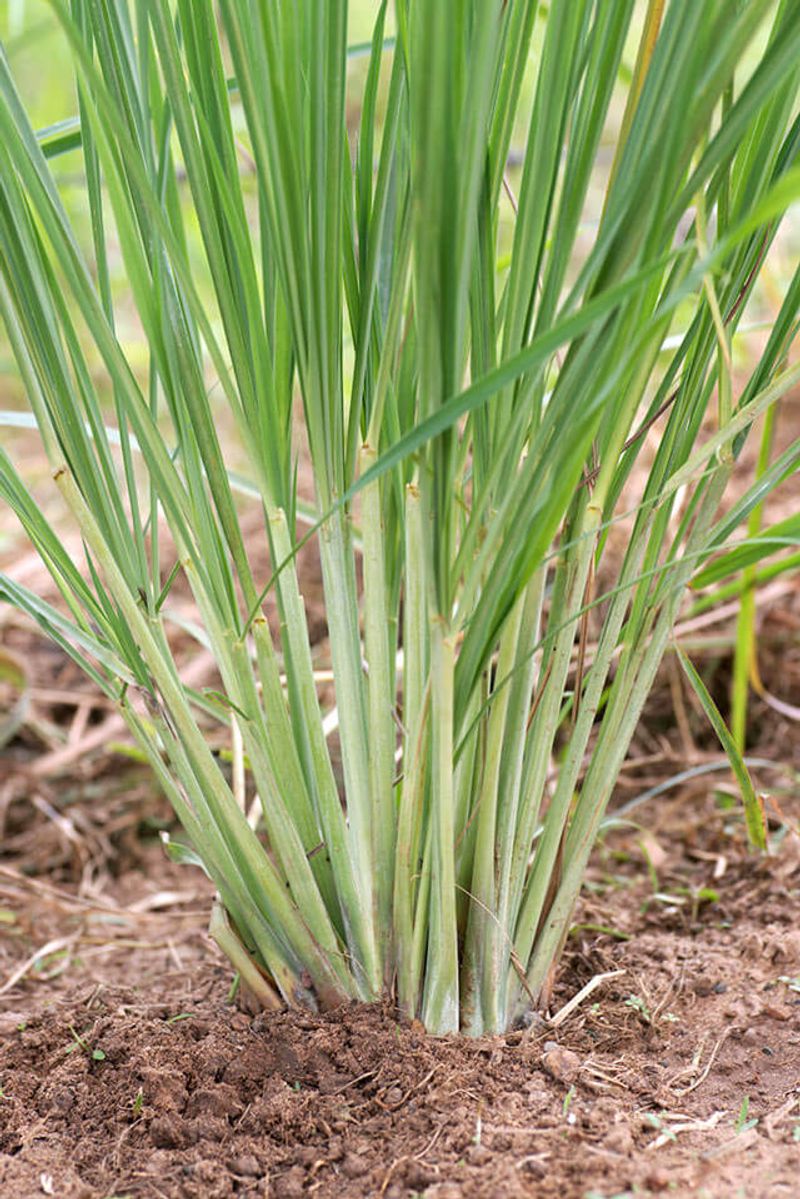
Tall, grassy, and smelling like a lemon drop, lemongrass looks right at home next to a patio chair. It loves Arizona sun, and it may pull double duty as a pleasant-smelling mosquito helper.
The plant contains citral and related oils similar to those found in citronella. Placing a big pot near your seating area may help make the space less attractive to mosquitoes, especially when you crush a leaf or two.
Think of it as a bonus rather than a force field.
Unlike the drought lovers on this list, lemongrass is thirsty. Give it a large pot, at least 16 inches across, filled with rich potting mix, and water whenever the top inch dries.
During summer that might be daily. Grouping it with other moisture lovers keeps watering simple.
Plant in spring after nights warm up, since it dislikes cold. In winter, a frost cloth or a spot against a south-facing wall usually protects it in Phoenix and Tucson.
Harvest by cutting thick stalks at the base for Thai curries, soups, and tea. Some gardeners also say its scent may make areas less appealing to scorpions, another reason to keep it handy.
7. Mint In Its Own Pot
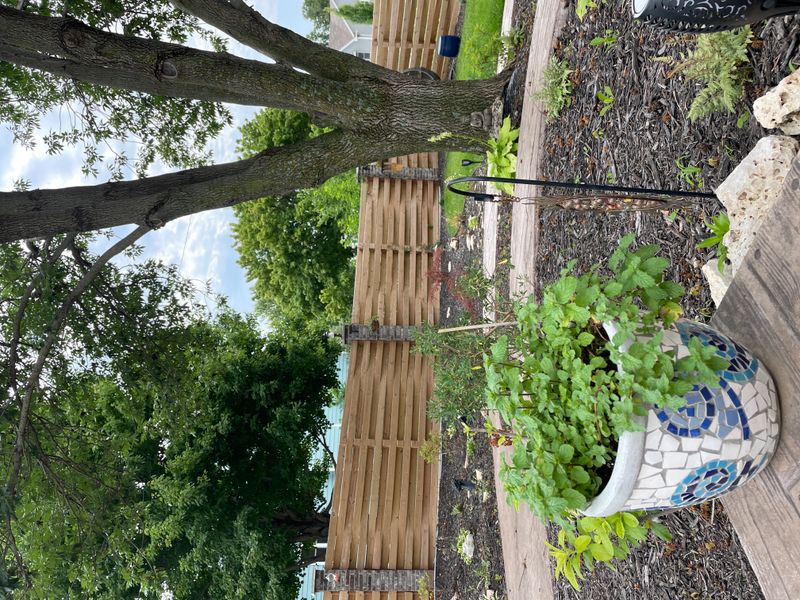
Ever planted mint in the ground and watched it take over a flower bed by June? Containers solve that problem completely, which makes a patio the perfect home for this enthusiastic herb.
Give mint its own pot so it cannot crowd out slower neighbors. Spearmint and peppermint are reliable choices, and chocolate mint is a playful option kids love to sniff.
Unlike rosemary or thyme, mint prefers steady moisture, so plan to water often and maybe twice a day in the hottest weeks.
Placement matters. A spot with morning sun and bright afternoon shade, like under a patio cover or beside a mesquite tree, keeps leaves lush instead of scorched.
A saucer underneath can catch water, but empty it if it sits for long.
Peppermint has a reputation for being unappealing to some pests, and many people keep it near entryways hoping it may help discourage scorpions and mosquitoes. It will not replace good sealing and cleanup, yet it adds another friendly layer.
Harvest constantly for iced tea, agua fresca, and fruit salad. Cutting it back hard in late summer encourages a fresh flush when fall temperatures finally ease up.
8. Basil For The Warm Season
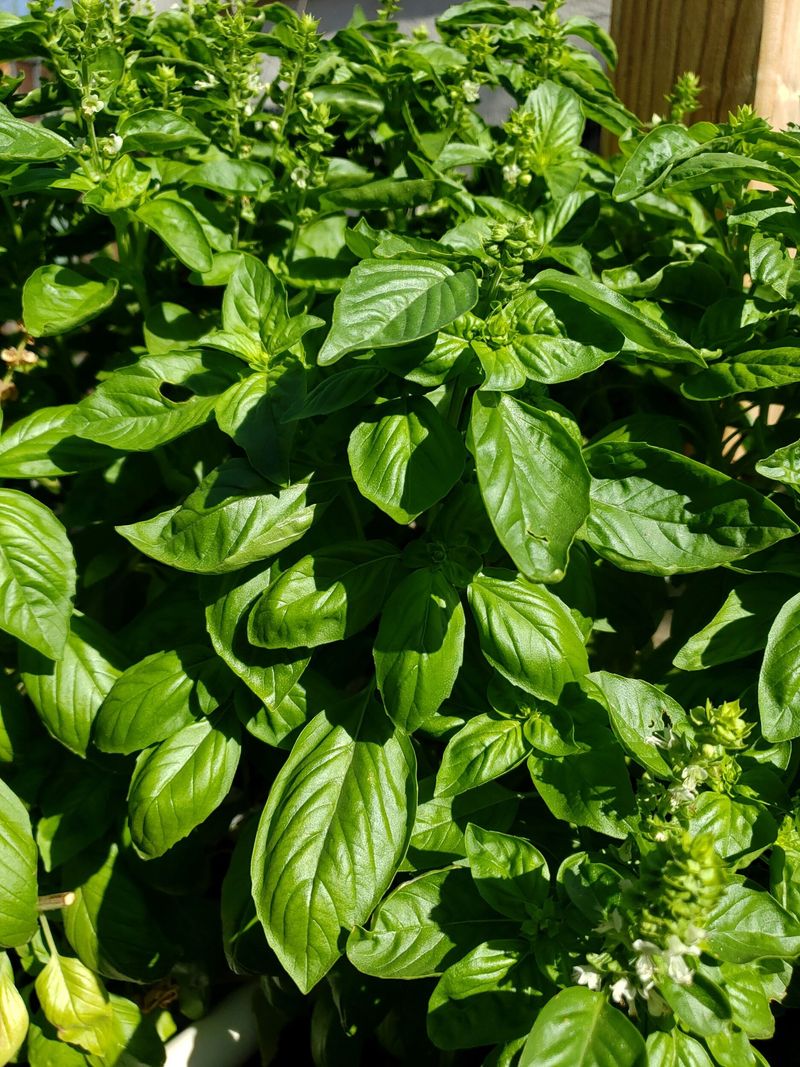
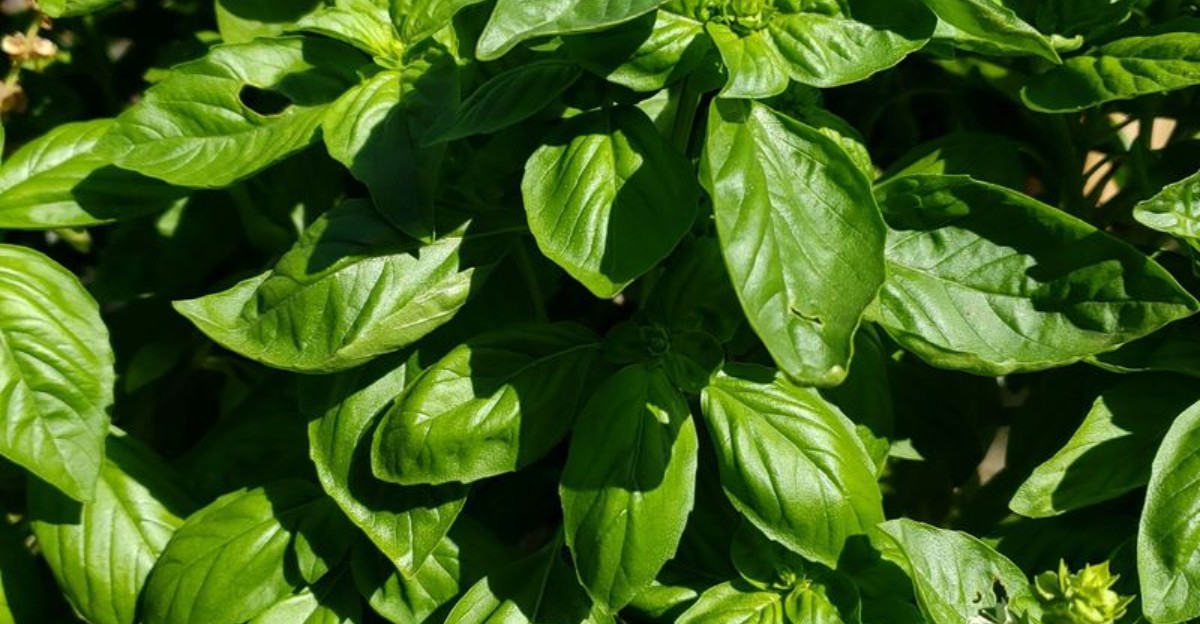
Summer pesto on your own patio is absolutely possible in the desert, as long as you respect basil’s timing. It is a warm-season annual that dislikes cold soil, yet it also wilts fast under 110-degree afternoons.
Plant basil in spring once nights stay comfortably warm, often March or April in the low desert. Containers help here because you can move them as the season shifts.
Start in full sun, then slide the pot under a patio cover or shade cloth once June arrives.
Choose a pot at least 10 inches wide with rich, well-draining mix. Basil drinks more than Mediterranean herbs, so check moisture daily during heat waves and water early in the morning to cut evaporation.
Thai basil and African blue basil tend to handle heat better than classic Genovese. African blue also flowers nonstop and is a favorite stop for bees, adding pollinator value to a small space.
Basil’s scent may also help nudge away mosquitoes.
Pinch off flower buds on culinary types to keep leaves coming. When monsoon humidity rolls in, plants often perk up.
A second planting in late summer can stretch harvests into fall.