The Reason Foxes Keep Circling Back To Certain North Carolina Yards Season After Season

You spot a fox trotting along your back fence at dusk, and three weeks later it shows up again, nosing around the same corner of the yard. Most North Carolina homeowners chalk it up to coincidence, but there is usually more going on. Your yard may be offering something that makes it worth a return trip, and one native tree is a plausible part of that story. Understanding what draws foxes back helps you make smarter choices about what you plant, where you plant it, and how you manage the space around your home.
One Plausible Plant-Based Food Draw
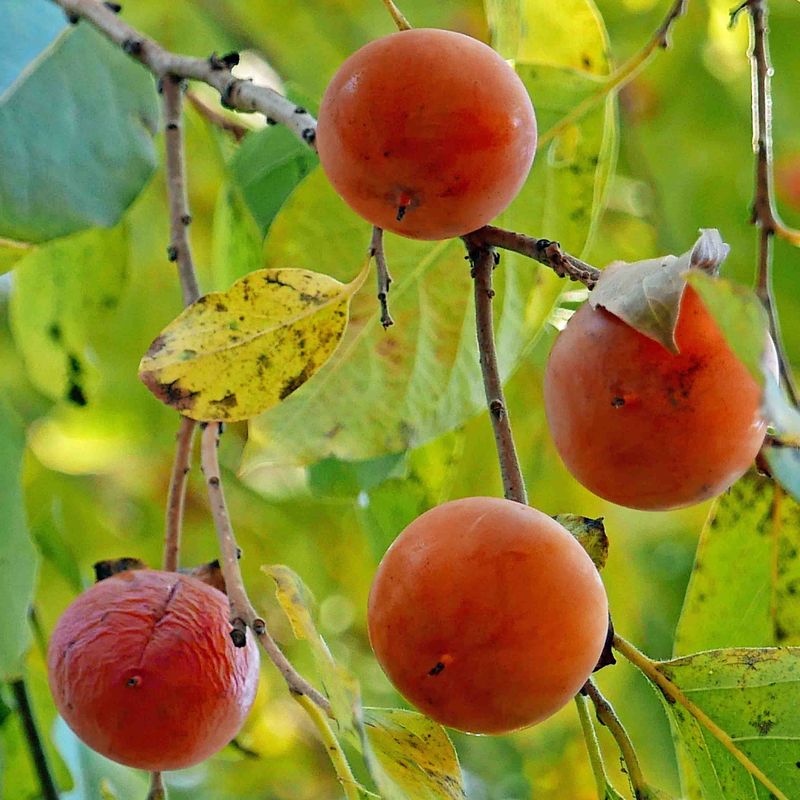
American persimmon, Diospyros virginiana, shows up on the short list of plants that wildlife agencies and extension specialists connect to fox activity in yards. NC State Extension describes the species as fox friendly, noting that its fall fruit feeds foxes alongside raccoons, deer, birds, and a range of other mammals. That is a meaningful data point, and it is worth taking seriously.
What it does not tell you is that persimmon is the only reason a fox shows up, or that planting one tree guarantees annual visits. The evidence documents consumption, not a unique preference. Foxes are generalists, and they eat what is available and convenient. A persimmon dropping ripe fruit in October is one opportunity among several a fox may be tracking across a larger territory.
Penn State Extension also lists foxes among the animals that eat persimmon fruit, and notes that the fruit can remain on the tree well into winter, which matters because most other soft fruit is long gone by then. So the timing, not just the taste, may be part of what makes persimmon a reliable food source during a lean season. But a fox visiting your yard in November could be drawn by fallen persimmons, by mice sheltering in your leaf pile, by a loose garbage lid, or by any combination of those things. Persimmon is one plausible piece of the picture, not the whole story.
Foxes Use Whole Yards, Not Just One Tree
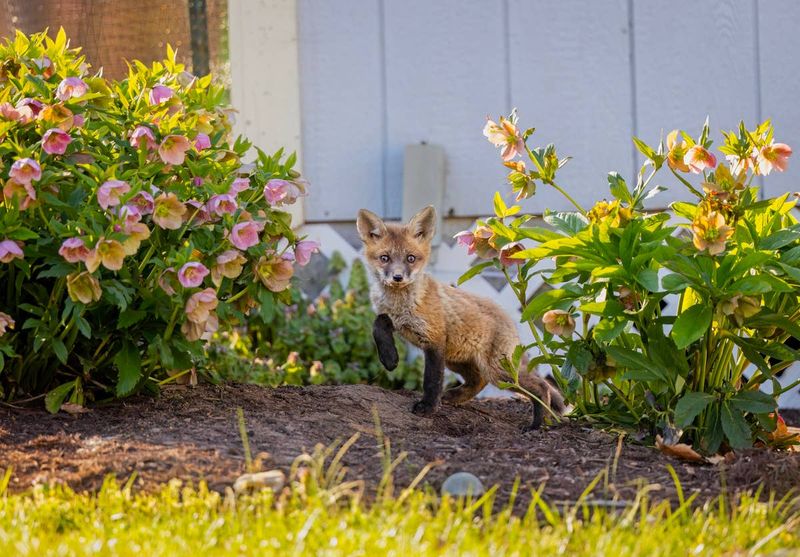
A fox does not come to your yard to stand under a tree. It comes because your yard, taken as a whole, reads as useful habitat. National Park Service guidance on red fox ecology describes them as omnivorous generalists that depend on a mix of food sources, cover, and reliable travel routes. Fruit is one item on a longer menu that also includes mice, rabbits, insects, earthworms, and whatever humans accidentally leave out.
Research from the UW Urban Canid Project shows that foxes maintain home ranges and move repeatedly between reliable resources within that range. Your yard may be one stop among a dozen. The fox you see on Tuesday evening may have visited three other properties before yours and two more before it beds down for the night.
Cover matters just as much as food. Brushy edges, wooded borders, dense foundation plantings, low decks, and brush piles near structures all offer resting or denning opportunities that can make a yard worth revisiting. USDA Forest Service species review data supports the idea that foxes favor open areas with nearby cover, not wide-open lawns with nothing to shelter behind. A persimmon tree sitting beside a shed, a thick hedgerow, or a rodent-rich compost area may be more appealing than the same tree planted in the middle of a bare lawn.
Your North Carolina Garden Changes Every Week. Your Plan Should Too.
Gardening in North Carolina changes quickly throughout the season. Every Friday you’ll receive a simple weekly plan showing exactly what to plant, prune, fertilize, harvest, and protect so you never miss the right timing.
Rutgers Extension notes that suburban and edge habitats can actually support higher fox densities than purely rural areas because they offer a patchwork of food, cover, and prey. So repeated sightings in a North Carolina neighborhood are not unusual, and they do not necessarily mean the same fox is returning. Different animals from the same family group, or unrelated foxes using overlapping ranges, may all be making use of what your yard offers.
When Persimmon Fruit Is Available
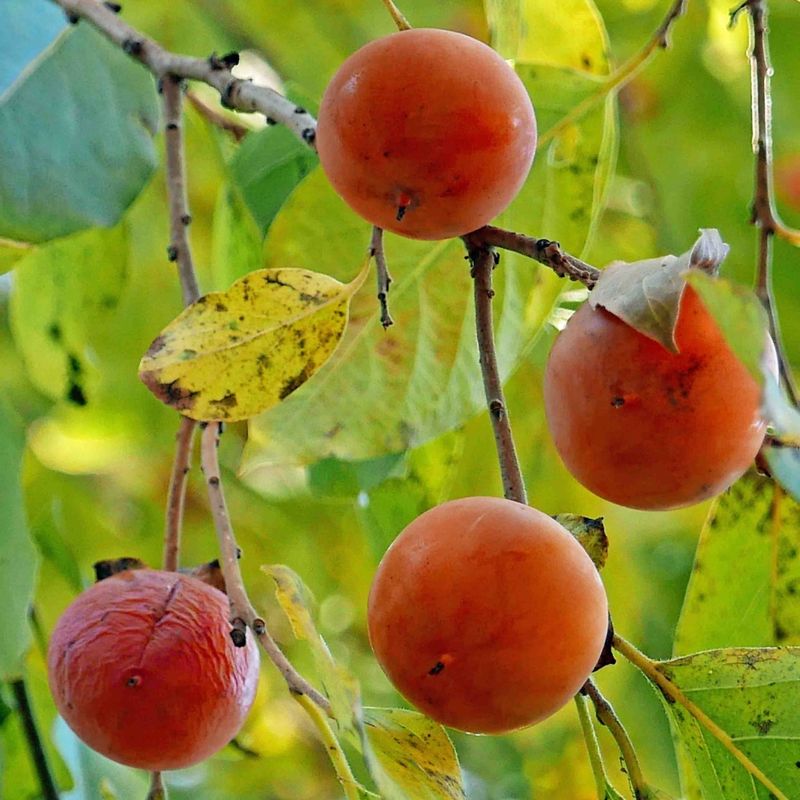
Timing is part of what makes American persimmon worth noticing in a conversation about foxes. NC State Extension lists the display and harvest window from September through December, which covers a stretch when most other soft fruits have already fallen, rotted, or been eaten. That extended availability matters more than any particular flavor preference on a fox’s part.
Here is where it gets a little tricky, though. Not all persimmons are ripe just because they look orange. Penn State Extension notes that native persimmons often ripen near or after the first frost, and that fruit which is merely firm or orange can be intensely astringent, meaning it is genuinely unpleasant to eat before it softens. Ripe fruit is soft, deep orange, and often wrinkled.
Wildlife seem to know the difference, and they tend to move in after frost has done its work.
The fruit can also hang on the tree well into winter if it is not eaten or knocked down by wind, which means the window of availability is longer than most people expect. That extended period does not put fox visits on a predictable schedule, because a fox’s movements depend on far more than one food source. But it does mean that a persimmon on your Piedmont property may be offering something in December that almost nothing else in your yard can match. Whether a fox takes advantage of that depends on what else is happening in its home range, not just on what is hanging in your tree.
Plan For A Large Native Tree
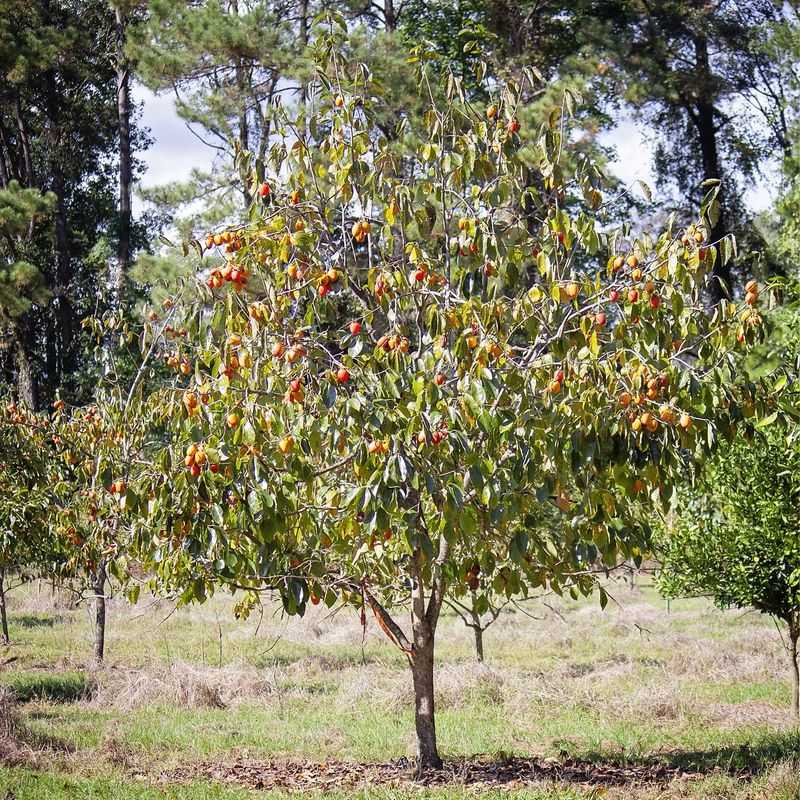
Before you order a persimmon, take a walk around your property and think in terms of decades, not seasons. American persimmon is a native tree that grows across all of North Carolina, from the Coastal Plain to the Piedmont to the mountains, and NC State Extension lists it for USDA Zones 4a through 9b, covering the full range of the state. It prefers at least 6 hours of direct sunlight but tolerates partial shade, and it can grow in clay, loam, or sandy soil as long as drainage is adequate, which matters whether you are in Piedmont red clay or the sandy soils of the Coastal Plain.
The size is not optional. NC Forest Service guidance gives a mature height of roughly 20 to 40 feet with a crown spread of 20 to 30 feet, and recommends at least 25 feet of open space. NC State’s plant database lists a typical planting-space range of 24 to 60 feet or more depending on the site. This is not a shrub you tuck against the house.
Plan for a full-sized canopy tree and site it accordingly.
Fruiting takes patience and sometimes a companion. American persimmons are usually dioecious, meaning male and female flowers grow on separate trees. A female tree may not produce fruit without a male nearby for pollination, though some cultivars have perfect flowers or are self-pollinating. Penn State Extension notes that seed-grown trees may take 4 to 9 years to bear, while grafted trees may fruit in about 3 years under suitable conditions.
NC State Extension’s tree fruit and nuts handbook is a reliable starting point for understanding those timelines in a North Carolina context. No source promises fruit from every tree, and neither should you expect it without confirming your cultivar and pollination situation.
Keep Fruit Away From Conflict-Prone Spaces
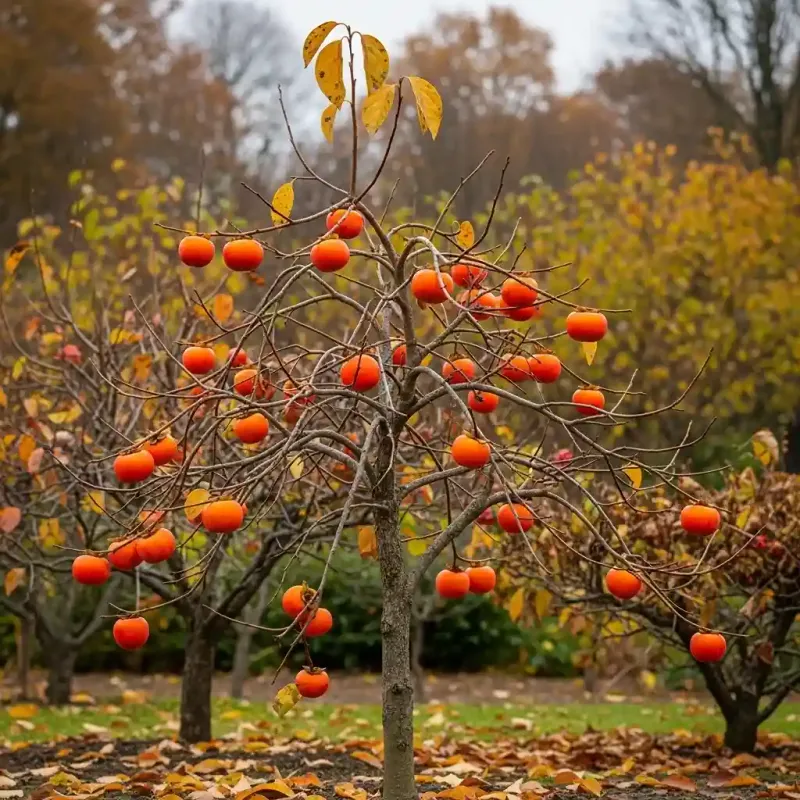
A persimmon tree is genuinely useful to native wildlife and can be a beautiful addition to the right part of a North Carolina yard. The challenge is that ripe fruit falls, and fallen fruit is soft, staining, and slippery. Place a tree over a patio, a concrete walkway, or a play area, and you will spend a good part of October and November cleaning up a sticky, fermented mess. That is not a reason to avoid the tree, but it is a reason to think carefully about where it goes.
NC Forest Service planting guidance recommends keeping the tree away from utility lines and hardscapes, which is practical advice for any large native tree but especially relevant here given the fruit drop. Deep roots also make established persimmons very difficult to transplant, so the spot you choose now is likely the spot you live with for a long time. Site it near the back or side of the property where fruit can fall onto turf or mulch rather than onto surfaces where people walk and children play.
Proximity to chicken runs or rabbit hutches is another consideration worth taking seriously. Penn State Extension notes that fallen fruit attracts a wide range of wildlife, and a tree planted 10 feet from a chicken coop is also advertising the coop to every fox in the neighborhood. Distance and physical barriers matter more than the tree itself in that situation. NC State Extension’s plant profile confirms the broad wildlife appeal of the species, which is a feature in the right location and a liability in the wrong one.
Choose placement based on the tree’s eventual footprint and fruit habits, not on how it looks as a young sapling.
Reduce The Yard’s Unintended Invitations

Managing a yard that foxes visit regularly starts with the things that are easiest to control. Ripe persimmons are worth harvesting when you can reach them, and fallen fruit should come up promptly rather than sitting on the ground for days. That one habit alone removes a reliable food signal that not just foxes but raccoons, opossums, and deer are also reading.
Utah State University Extension’s fox conflict guidance recommends a consistent set of sanitation steps that apply just as well in the North Carolina Piedmont as anywhere else. Secure garbage cans with lids that actually latch. Keep compost in a closed bin rather than an open pile. Bring pet food and water bowls inside at night, because a full water dish is an attractant on its own during a dry stretch.
Bird feeders are worth reconsidering if you are seeing regular fox activity, since spilled seed draws rodents, and rodents draw foxes.
Supervision of pets is not optional. Small dogs and cats are genuinely at risk when a fox is actively using a yard, and keeping them inside after dark or within sight during the day is a straightforward protective measure.
Indiana DNR fox guidance echoes the same advice for small pets and poultry.Dense hiding places close to the house are worth reducing if fox activity is becoming a concern. Brush piles, low gaps under decks and sheds, and thick foundation plantings near entry points can all function as resting or denning spots. NC State Extension’s animal damage control guidance supports habitat modification and exclusion as the most reliable long-term tools. None of these steps will stop a fox from traveling through your neighborhood, but together they can make your specific yard a less appealing destination.
Know When To Give A Fox More Distance
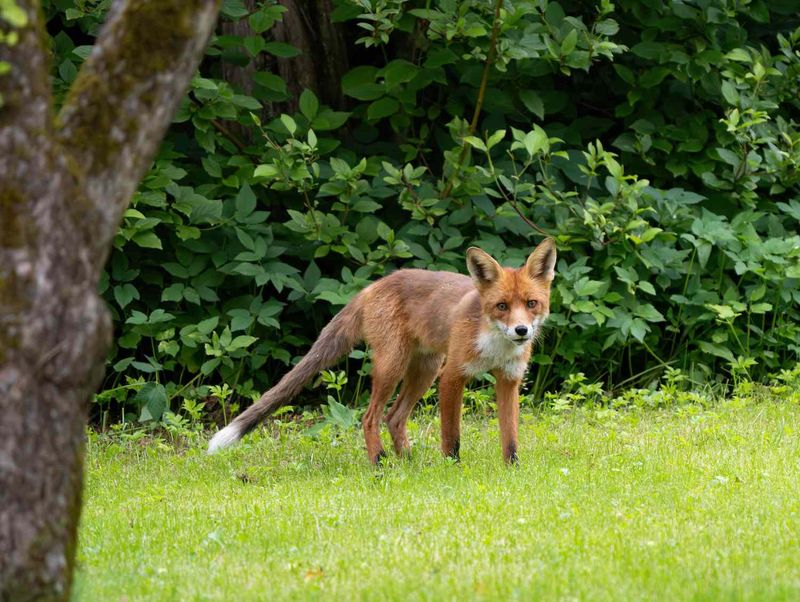
Both red foxes and gray foxes live in North Carolina, and a quick glance across the yard is rarely enough to tell them apart reliably. For practical purposes, the guidance is the same regardless of species. Most foxes you see are healthy animals doing what foxes do, moving through a home range, checking food sources, and keeping a comfortable distance from people.
Daytime activity on its own is not a warning sign. Foxes can be active at any hour, though dawn, dusk, and nighttime are more common. What actually warrants a call to your local animal control or public health office is a different pattern: a fox that seems unusually tame or unafraid of people, one that is staggering, moving in circles, dragging a limb, or behaving aggressively without provocation. Those signs, not a midday sighting in your backyard, are the ones worth acting on.
NC DHHS rabies control guidance lists both red and gray foxes among animals that can carry rabies in the state, and recommends keeping rabies vaccinations current for dogs, cats, and ferrets. If your pet has been in contact with a fox, or if a person has been bitten or scratched, report it promptly to animal control or your local health department. NC DHHS disease information on rabies clarifies that transmission requires direct contact with saliva or nervous-system tissue, most commonly through a bite. A fox trotting across your lawn does not constitute an exposure.
USU Extension is direct on what not to do: do not feed foxes, approach them, try to chase them off, or handle them under any circumstances. Keep your distance, keep your pets close, and let the animal move on. A fox that feels cornered or harassed is far more likely to behave in a way that creates an actual problem. The best response to a healthy fox in your yard is usually calm observation from inside the house.
Protect The Garden Without Erasing Habitat
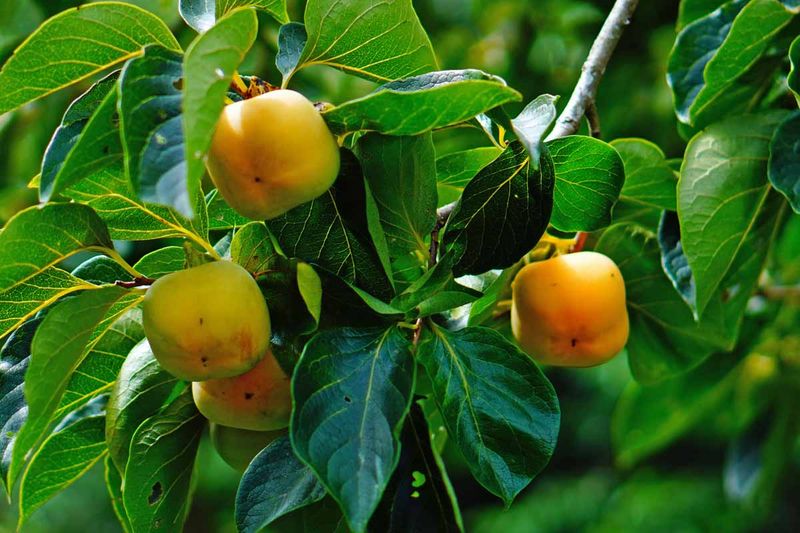
A persimmon tree at the far edge of your property can feed birds, foxes, raccoons, and deer across a September-to-December window while your vegetable beds stay 40 feet away behind a wire fence. The goal is not to eliminate every native fruiting plant from your yard. The goal is placement and management that keeps wildlife and people in their respective lanes.
Food-garden safety is worth taking seriously if wildlife are active nearby. Penn State Extension’s home garden food safety guidance recommends discarding any produce that may have been contacted by wildlife feces rather than washing and eating it. Physical barriers are your most reliable tool: fencing at least 4 to 6 feet tall, netting over low-growing crops, and row covers over beds that wildlife are investigating. These are not perfect solutions, but they are genuinely effective layers of protection that do not require you to remove the persimmon tree or declare war on the local fox population.
UW Urban Canid Project research frames suburban fox activity as a feature of how these animals use patchy, resource-rich landscapes. Your yard is one piece of a larger system, and foxes are going to move through your neighborhood regardless of what you plant. The more useful question is whether your yard is set up to reduce conflicts while still supporting native habitat where that makes sense. Place or manage your persimmon based on its eventual size, its fruit habits, and how close it sits to people, pets, and food gardens.
That practical calculus, more than any single plant or wildlife behavior, is what keeps a yard working well for everyone in it.