What It Means When Native Mining Bees Leave Tiny Holes In North Carolina Garden Soil
North Carolina soil can look busy before breakfast.
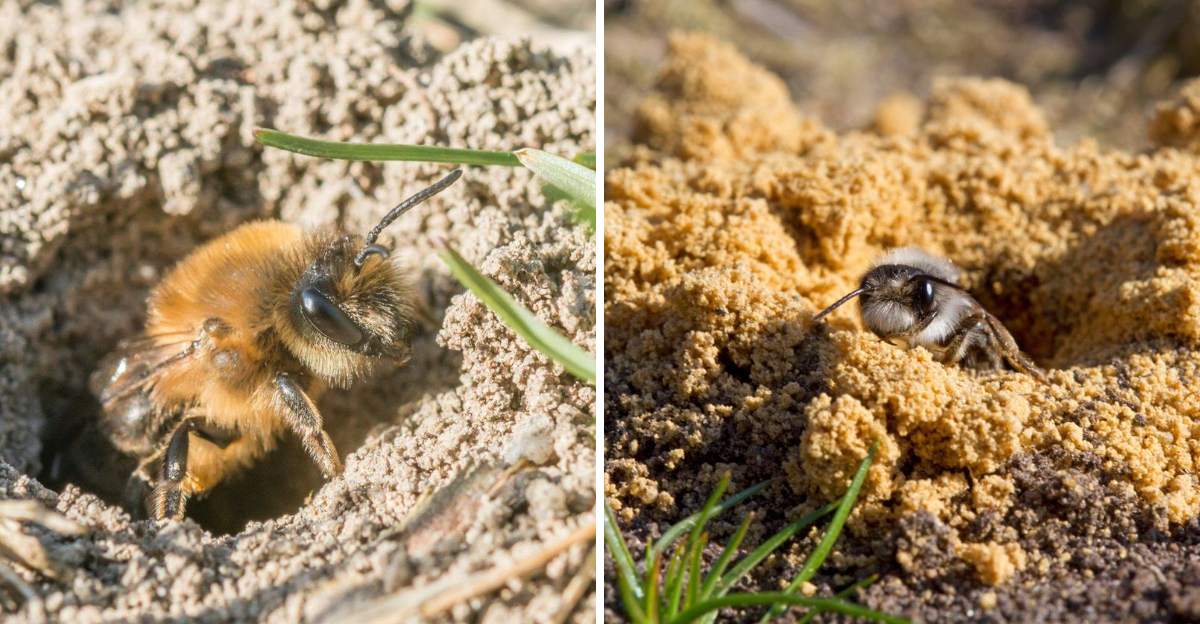
One day, the bed beside your walkway is smooth. The next, round holes dot the surface, each with a neat sprinkle of fresh dirt around it.
Then little bees dart low across the ground.
That scene can make a gardener wonder who moved in overnight and how fast the shovel should come out.
The better clue sits inside those tiny doorways.
A surprising group of native pollinators spends part of spring below your feet, with each female focused on a private project beneath the soil.
No giant hive waits under the mulch. No honey stash needs protection. The commotion above ground hides a much quieter story below it.
So what do dozens of tiny holes actually say about your garden?
They can reveal something about sun, soil, flowers, and the kind of habitat your yard quietly provides.
Before you fill a single entrance, watch the traffic.
Your smallest spring tenants may help your garden far more than those dirt piles ever suggest.
1. Read Tiny Holes As Solitary Bee Nests
A patch of tiny holes can look like a miniature construction zone.
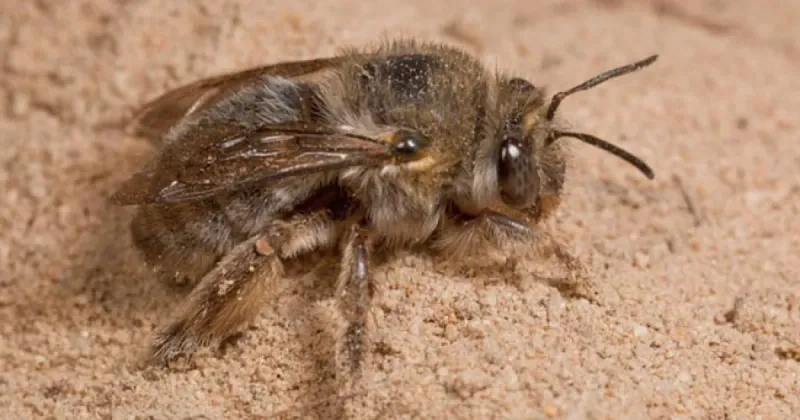
For many North Carolina mining bees, each opening marks the entrance to a nest a female dug for her own young. She works alone, without a queen, worker crew, or shared honey supply.
Below the surface, the tunnel branches into small brood cells. The female gathers pollen and nectar, places that food inside a cell, adds one egg, then seals the chamber before she starts the next one.
That quiet routine explains all the traffic.
One bee disappears underground. Another pops out nearby. A third crosses the bed with pollen packed onto her body. From above, the whole patch can look coordinated.
It is not.
Many females may choose the same good soil, but each one handles her own tiny household. That difference matters because solitary bees do not defend one shared nest the way social insects can.
Stand nearby and watch for a minute.
You may see bees enter specific holes again and again without much interest in you. Give them room, keep curious hands away, and let the tiny doors stay open.
Your garden has not turned into bee headquarters.
It has become a very small neighborhood where every resident insists on her own front door, pantry, nursery, and construction schedule.
2. Expect Many Nests Without A Bee Colony
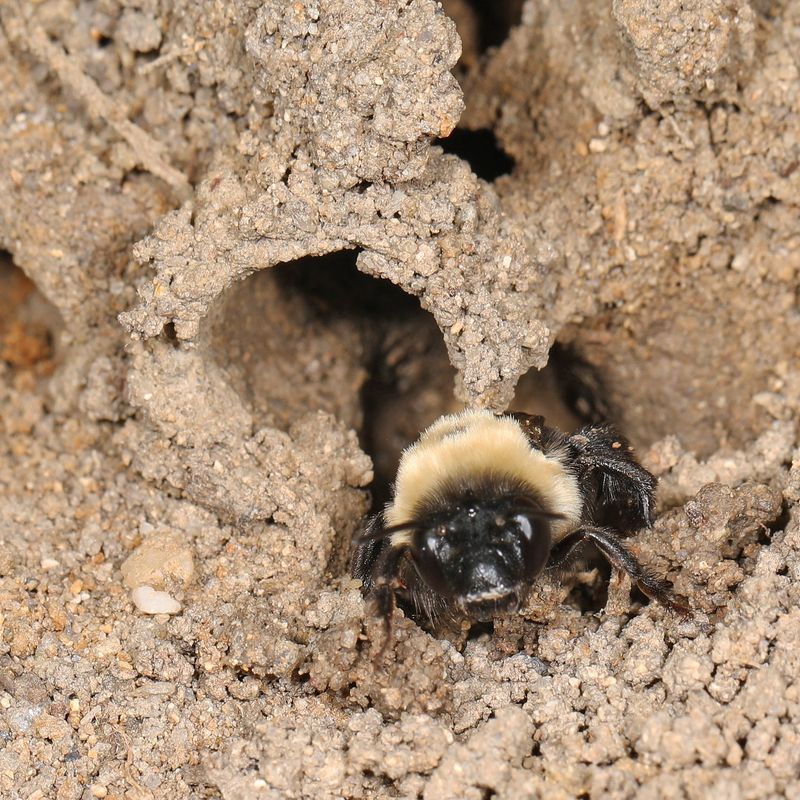
Thirty holes in one bed can make a gardener assume a hive sits underneath.
Mining bees prefer a much less organized arrangement.
Large groups of nest entrances can form where many females independently select the same useful patch of soil. Biologists refer to this kind of cluster as an aggregation, not a social colony.
That distinction takes a lot of drama out of the scene.
No central queen controls the group. No worker force patrols the bed. One female does not rush over to defend another female’s tunnel. Each bee has her own nest and her own set of brood cells below ground.
Your North Carolina Garden Changes Every Week. Your Plan Should Too.
Gardening in North Carolina changes quickly throughout the season. Every Friday you’ll receive a simple weekly plan showing exactly what to plant, prune, fertilize, harvest, and protect so you never miss the right timing.
The crowd above the soil can still look busy.
Males may hover over the area as they search for mates. Females come and go with pollen. Several entrances may sit only inches apart.
You can stand at the edge, watch the whole rush, and stay outside the event.
Females can sting when handled or trapped against skin, so hands-off respect still makes sense. Males lack stingers, despite all the confident air traffic they may create over a nest patch.
The busy bed is less like one giant apartment complex and more like a street full of tiny detached houses.
Everybody picked the same neighborhood.
Nobody agreed to a homeowners association.
3. Notice Sunny Dry Bare Soil
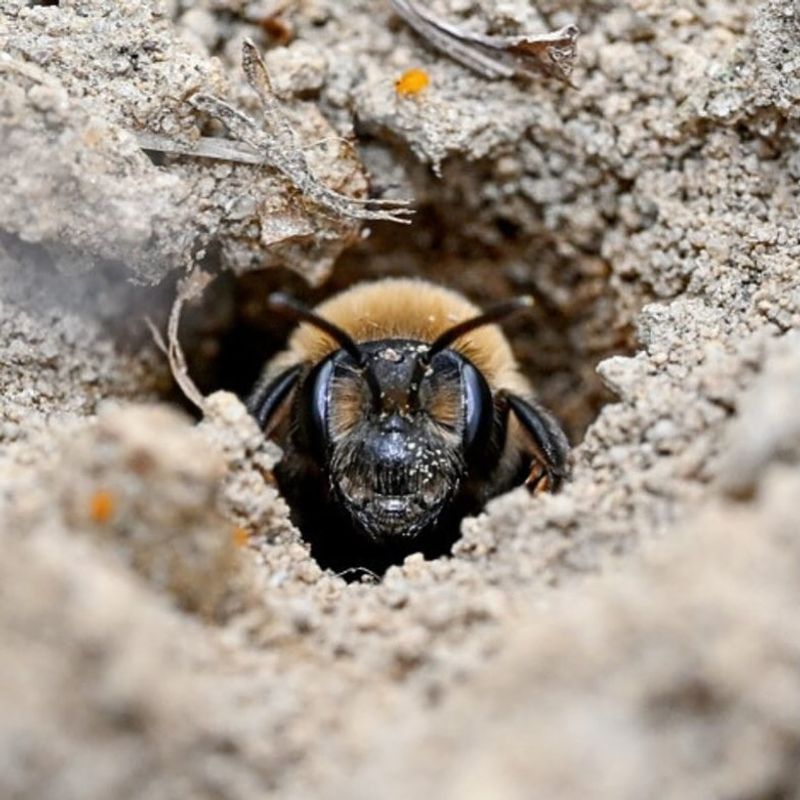
The bees may reveal something very specific about that bare patch.
Mining bees often choose warm, well-drained soil with sparse plant cover. Sun helps the site warm up, while open ground gives a female direct access to the surface.
That is why one section of a yard can become popular while the lush bed five feet away gets ignored.
Thin turf, a dry edge beside a walkway, sandy soil, or an uncovered garden patch can all offer useful nest conditions. Dense mulch and thick plant cover make access much harder.
Pay attention to where the holes appear.
A sunny slope can attract far more activity than a shady corner. A patch with loose, exposed soil may become a favorite again the next spring when a new generation emerges.
That repeat appearance does not mean the problem grew underground all year.
The site simply kept the features that bees liked the first time.
For gardeners who enjoy the visitors, a small undisturbed patch can become valuable habitat. For a walkway or play area where holes create conflict, plant cover can change the invitation after bee activity ends.
The soil basically posts a rental ad.
Warm. Dry. Easy entrance. Great flowers nearby.
Mining bees read that ad remarkably well, and apparently the curb appeal is excellent.
4. Watch Females Carry Pollen Underground
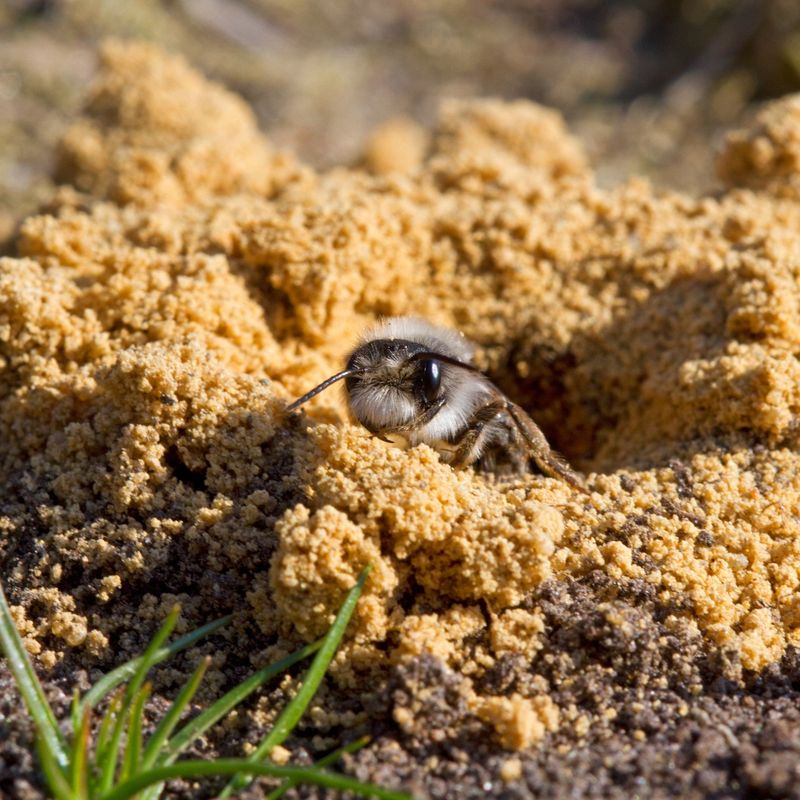
A female that returns dusted with yellow pollen gives away the whole purpose of the nest.
That pollen is not her own grocery haul.
The pollen and nectar become food for her future young. She places a supply inside each brood cell before she seals it, which means every trip between flowers and soil connects two parts of the garden.
That makes the little dirt holes much more interesting.
Watch a female land near her entrance. She may pause for a second, find the right doorway, then disappear below the surface with pollen on her legs or body. A short time later, she heads back toward flowers for another load.
Some mining bee species visit many kinds of blooms. Others have much narrower pollen preferences, so local flowers can matter a great deal to the bees that use your yard.
Early spring bloom becomes especially useful because many mining bees appear during that part of the season.
Keep a mix of flowers available across spring rather than rely on one short burst. Native shrubs, trees, and perennials can give bees several places to collect what they need.
The payoff reaches beyond the nest.
Every flower visit can move pollen from bloom to bloom before the bee returns underground.
She may look like a tiny gardener with dusty pants.
Unlike most gardeners, she never forgets where she put the groceries.
5. Treat Small Soil Mounds As Normal Excavation
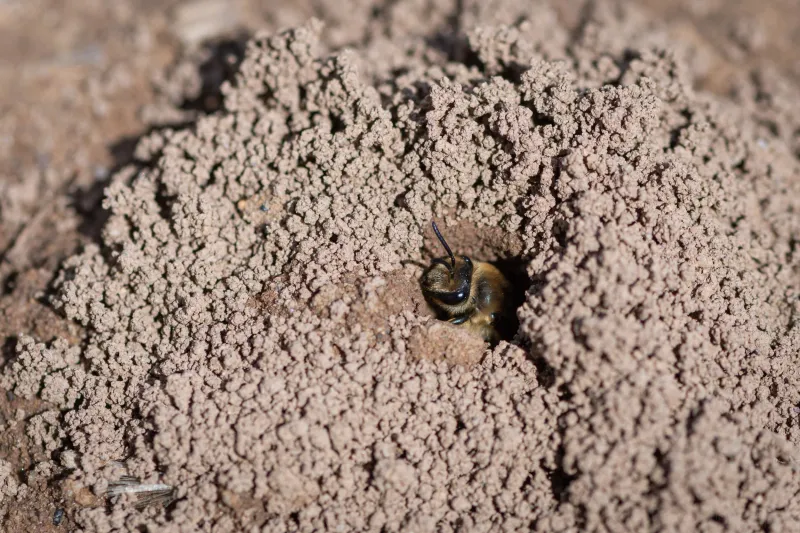
The little mound beside each entrance is not damage in the usual garden sense.
It is simply the soil a female moved out of her tunnel.
As she digs below the surface, loose particles end up around the opening. The pile may form a small ring, crescent, or uneven sprinkle that makes the hole much easier for you to spot.
Up close, it can look impressive.
Across an entire lawn or bed, the disturbance usually stays shallow and small. North Carolina turf guidance describes damage from ground bees as minimal in most cases, even where many holes sit close together.
Leave the mounds alone while bees remain active.
A rake can flatten entrances and interfere with females that still need access to their brood cells. Heavy foot traffic can also press the loose surface down at exactly the wrong time.
Once the short active period ends, rain and normal yard use often soften the little piles on their own. A light touch-up later can tidy anything that remains.
No miniature excavator crew has plans for the patio.
The bees need tunnels for their young, not a basement addition beneath your hydrangeas.
That tiny fan of soil is closer to a receipt for work already completed.
A few crumbs of dirt above ground bought a nursery below it, which feels like a pretty fair construction deal.
6. Give Solitary Bees Time To Finish Nesting
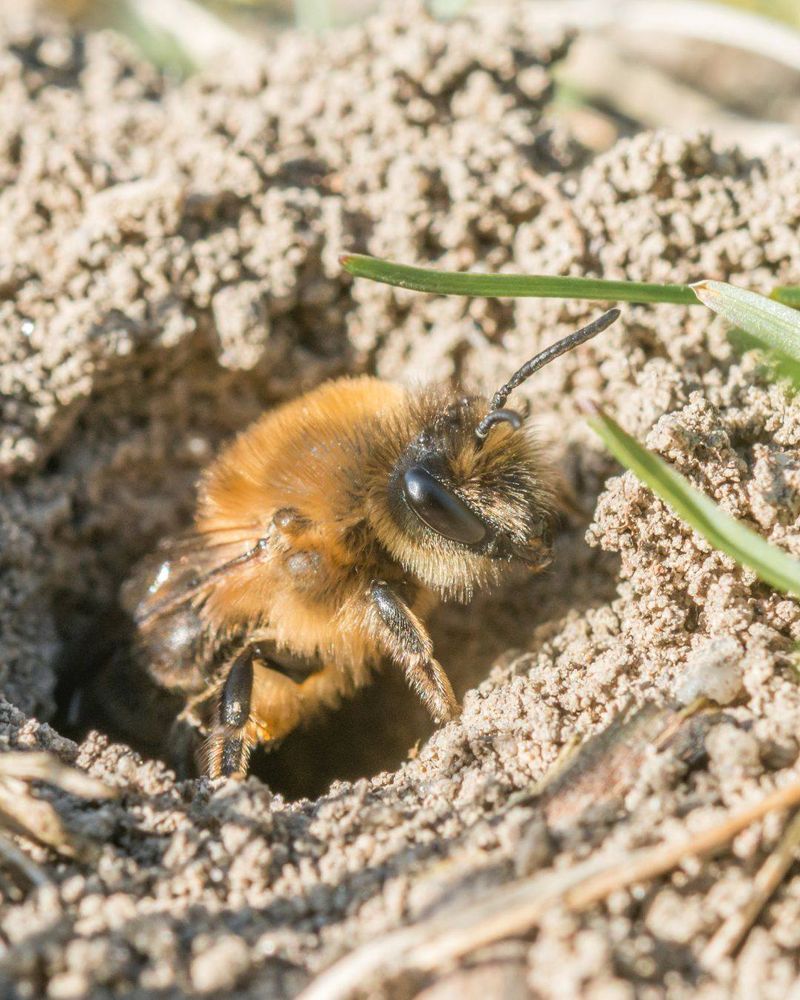
Spring mining bee activity can look intense because so much happens in a short stretch.
The good news for a busy garden is that the rush does not last forever.
Many ground bees become noticeable for only a few weeks during their adult season. Females dig nests, collect pollen, provision brood cells, and finish the work that supports the next generation below the soil.
Then the visible traffic fades.
That short schedule makes patience one of the easiest responses. Mark the area with a small garden stake when people often cross it.
Guide children and pets around the busiest patch for a while. Keep shoes on near dense activity and leave the entrances alone.
The bees have little reason to chase people across the yard.
Females focus on their nests and flowers. Males may hover near the site, but they cannot sting.
Avoid a shovel project in the middle of the busy period.
Deep soil work can disrupt brood cells below the surface, while heavy soil compaction can block access to tunnels. Save major bed changes for later, after the adult traffic disappears.
A few weeks can feel long when the lawn resembles a tiny airport.
Then one morning, the departures stop.
No cancellation notice appears. No new address arrives.
The neighborhood simply goes quiet, and the next generation keeps its plans underground.
7. Skip Pesticides When Damage Stays Minor
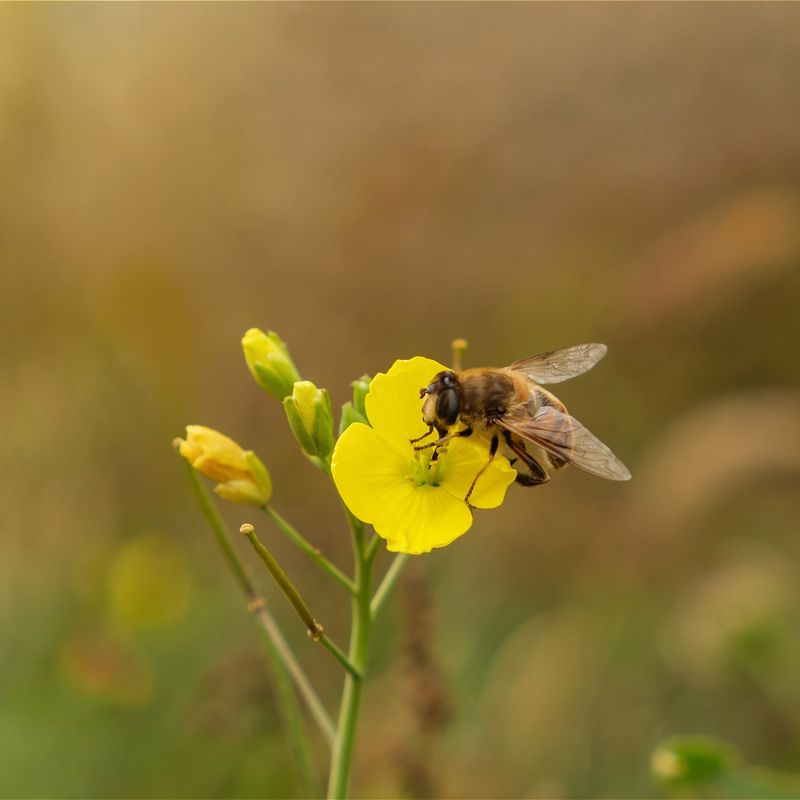
A can of insecticide can feel like the obvious answer when dozens of bees appear over the soil.
For mining bees, that response usually solves a problem the garden never really had.
These native bees provide pollination, and their small soil mounds rarely cause meaningful landscape damage. North Carolina turf guidance notes that chemical control is almost never necessary for ground bees.
That makes identification the first job.
Watch the holes from a respectful distance. Mining bees tend to use many small entrances rather than one heavily defended opening.
A social wasp nest can behave very differently, so uncertainty deserves a clear photo or expert identification before any treatment.
Skip routine sprays around confirmed mining bee nests.
Products that reach the soil can affect adult bees and the young below ground. They can also reach other insects that use the same garden.
A better response starts with tolerance where the nests cause no real conflict.
Keep people away from the busiest patch for the short active season. Plan habitat changes later when one specific area must stay bee-free.
That approach protects useful pollinators and avoids a chemical project over a temporary dirt pattern.
Your garden already hired free flower help.
The crew does not deserve a chemical performance review for a little soil near the doorway.
8. Cover Bare Ground If You Want Fewer Nests
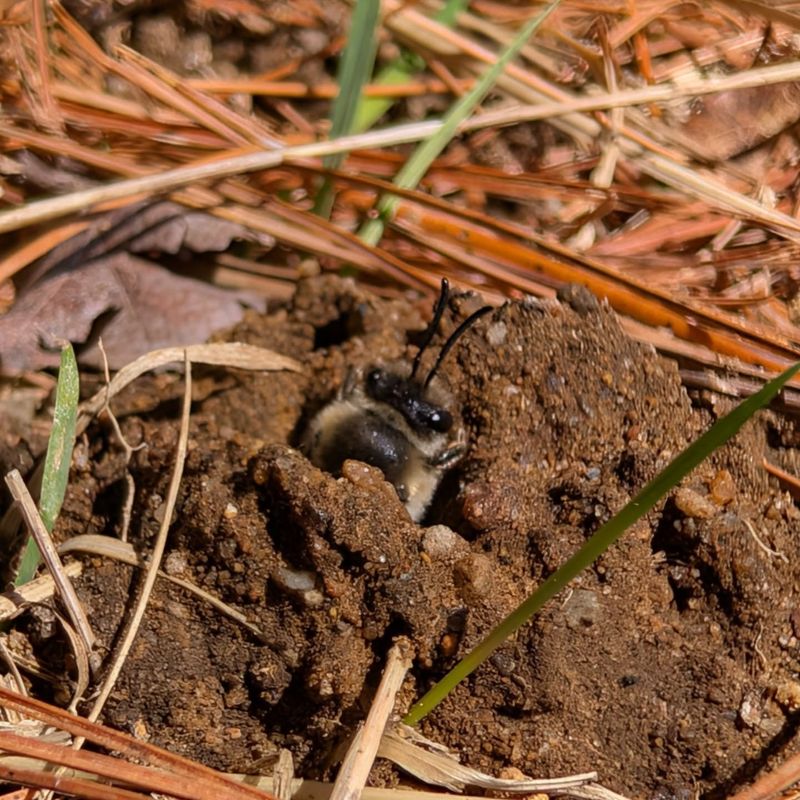
Some nest patches sit in exactly the wrong place.
A sunny strip beside the front step may get too much foot traffic. A play area may need a smoother surface. In that case, change the habitat after the bees finish their seasonal work rather than target the bees themselves.
Start with the bare soil.
Mining bees favor exposed, well-drained sites with sparse vegetation. A denser lawn can make a thin turf patch less attractive in a future season.
Garden beds can use mulch or suitable groundcover to reduce open soil where you do not want nests.
Match the fix to the location.
Do not pile mulch against plant crowns just to discourage bees. Choose a normal mulch depth for the bed and keep stems clear.
In lawn areas, repair bare patches with turf that suits your region, light, and soil rather than force grass into a spot where it never performs well.
Leave any active entrances open until the bees disappear for the season.
That protects the brood below and gives females time to finish their work.
You can still keep another sunny corner less polished for native ground bees.
The goal does not need to be eviction from the entire property.
A little garden diplomacy works better.
You choose where bare soil stays. The bees choose from the vacancies.
Everybody gets a neighborhood, and nobody has to argue over the lease.